

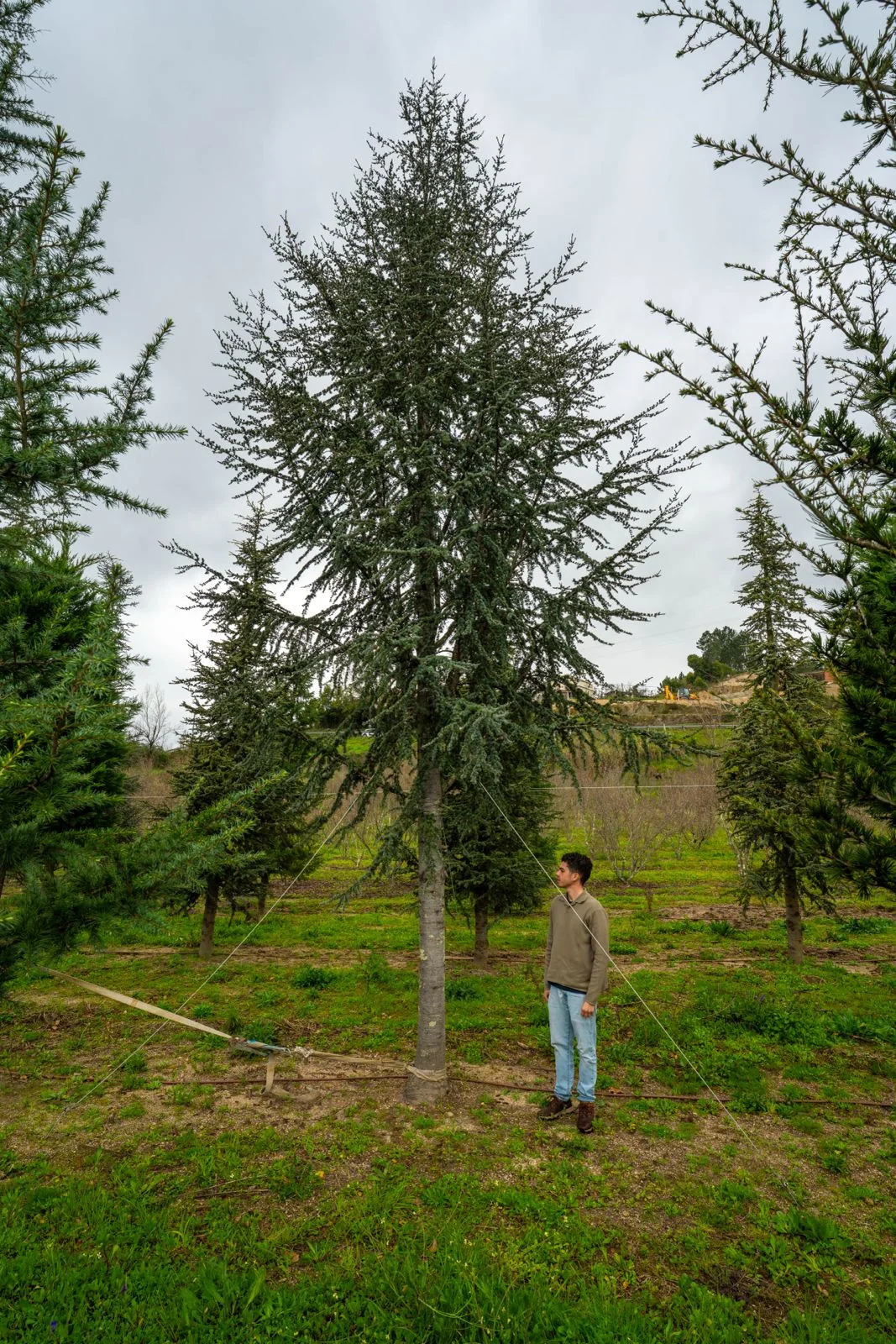
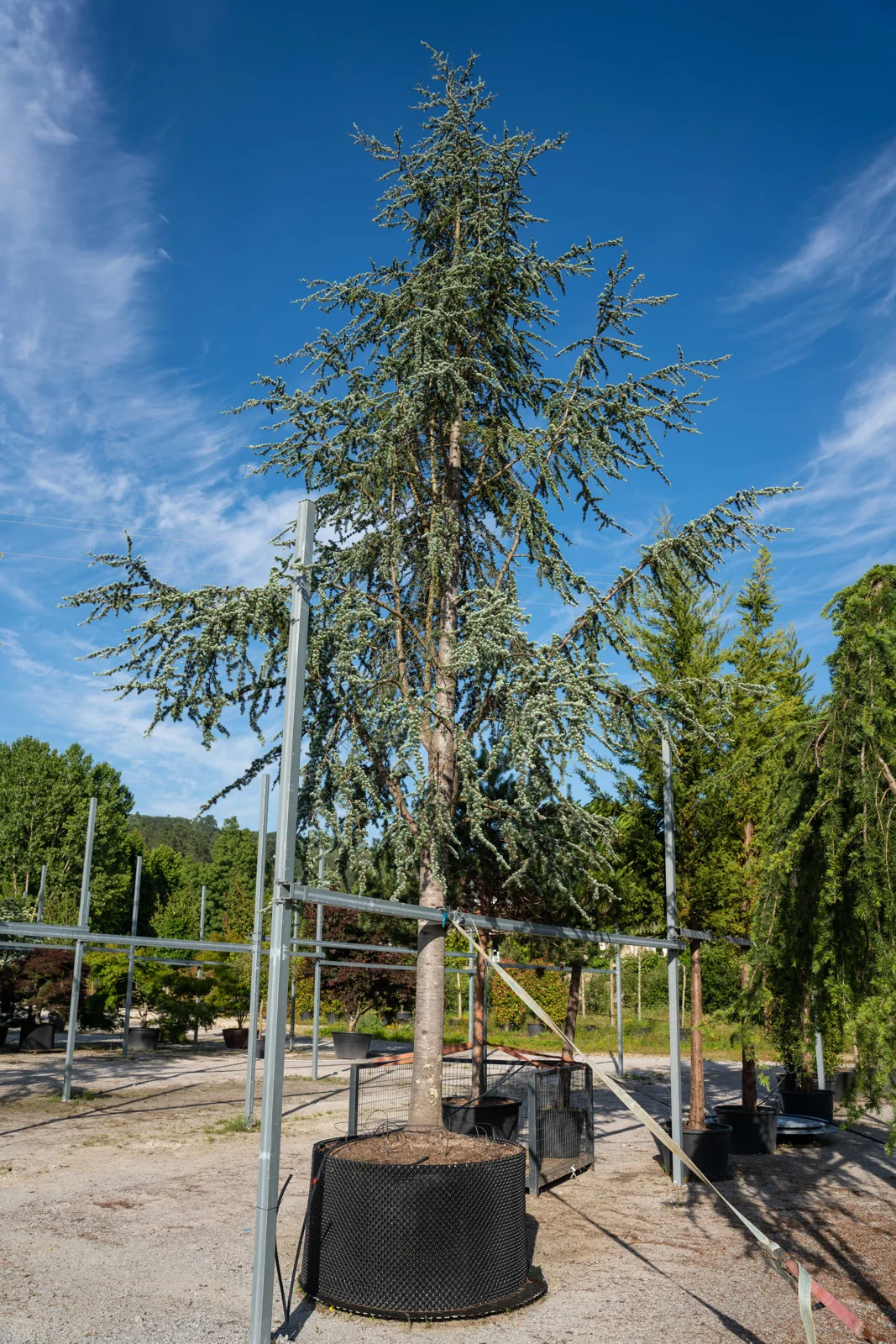
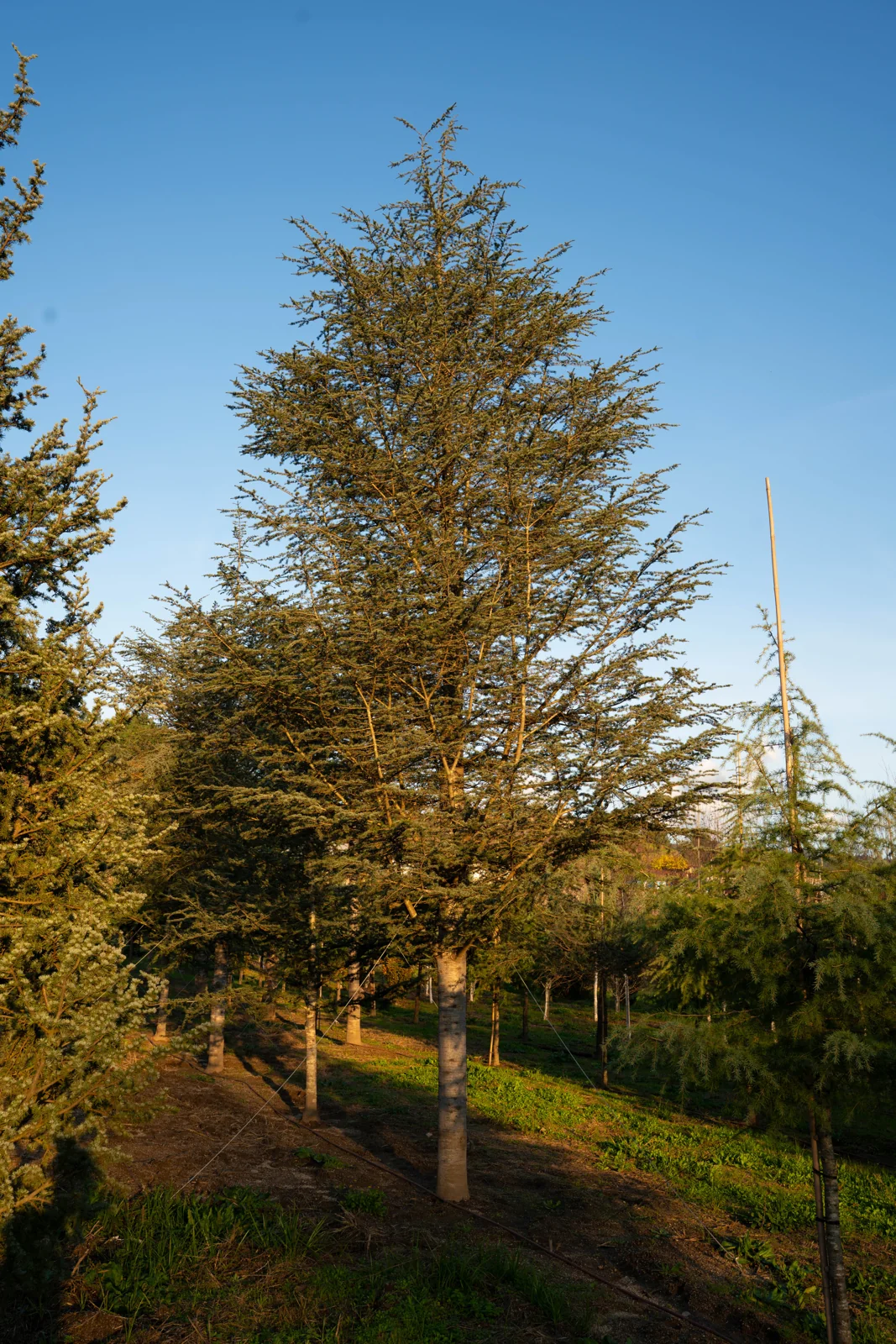
A blue-silver cedar for the Portuguese estate
Atlas Cedar ‘Glauca’ · Cedrus atlantica ‘Glauca’
A long-lived evergreen conifer with blue-silver foliage, specified as a focal specimen or in formal alignments for parks, large gardens, and avenues across Portugal where soils are well-drained and the planting site can accept its mature scale.
- Silver-blue evergreen presence reaching 15 to 20 metres at maturity
- Tolerant of dry heat and alkaline soils across the central Algarve
- Drought-tolerant on its own root after the first two or three summers
Key Facts
About this Cultivar
The cultivar's defining character is the blue-silver foliage of the Glauca group, a steel-toned needle colour held in dense tufted clusters on short spur shoots. In Portuguese cultivation the tree reaches 15 to 20 metres tall and 6 to 10 metres wide. The crown is pyramidal in youth, opening with age into a horizontal, architectural form on a strongly…
Read more
Show less
The cultivar's defining character is the blue-silver foliage of the Glauca group, a steel-toned needle colour held in dense tufted clusters on short spur shoots. In Portuguese cultivation the tree reaches 15 to 20 metres tall and 6 to 10 metres wide. The crown is pyramidal in youth, opening with age into a horizontal, architectural form on a strongly structured framework.
Native to the Atlas mountains of Morocco and Algeria, the species is calibrated for sun, dry summers, and well-drained mineral soils; it tolerates acidic and alkaline ground, sand and friable clay, and urban pollution. Drought tolerance is reliable once the deep taproot is established, which makes the interior Alentejo's hot, dry continental summers a sound match. Drainage is the limiting factor: in the humid Minho and Douro, raised or improved profiles are advisable, since Phytophthora cinnamomi pressure rises sharply on retentive sites. Salt tolerance is low, which qualifies its use on the immediate estuarine front in Lisbon and on the exposed Algarve coast.
On a Portuguese project, the tree reads as a feature specimen or framework focal point rather than a continuous alignment species. The silver-blue mass sits well against the deeper greens of pinheiro-manso (Pinus pinea), sobreiro (Quercus suber), and azinheira (Quercus rotundifolia), and against stone and lime render. Historic uses include nineteenth-century estate gardens and the entrance alameda of the larger quintas. Specify as a single-stem specimen for parks, public squares (praças), broad avenues, and the foreground of large private gardens, allowing 8 to 10 metres of clear root and crown space.
Growth is slow to moderate, which makes this a long-horizon planting, not a fast canopy. The deep taproot reduces surface conflict with pavements and services, but the same root behaviour precludes narrow planting pits and compacted street profiles. Formative pruning is minimal once the leader is established; pest pressure in Portugal is low on free-draining sites, with tip blight occasional and Phytophthora the principal risk where drainage fails. A specimen placed correctly will hold its role on the project for over a century.
Advice on this species
Want to know more about Cedrus atlantica 'Glauca'?
Tell us about your project and we'll advise you on this species — where it thrives, which size makes sense, and what to expect once planted.
- Produção própria
- Exemplares adultos
- Resposta em 1–2 dias
Sem compromisso · orçamento personalizado