

An upright hornbeam for formal Portuguese gardens
European Hornbeam ‘Fastigiata’ · Carpinus betulus ‘Fastigiata’
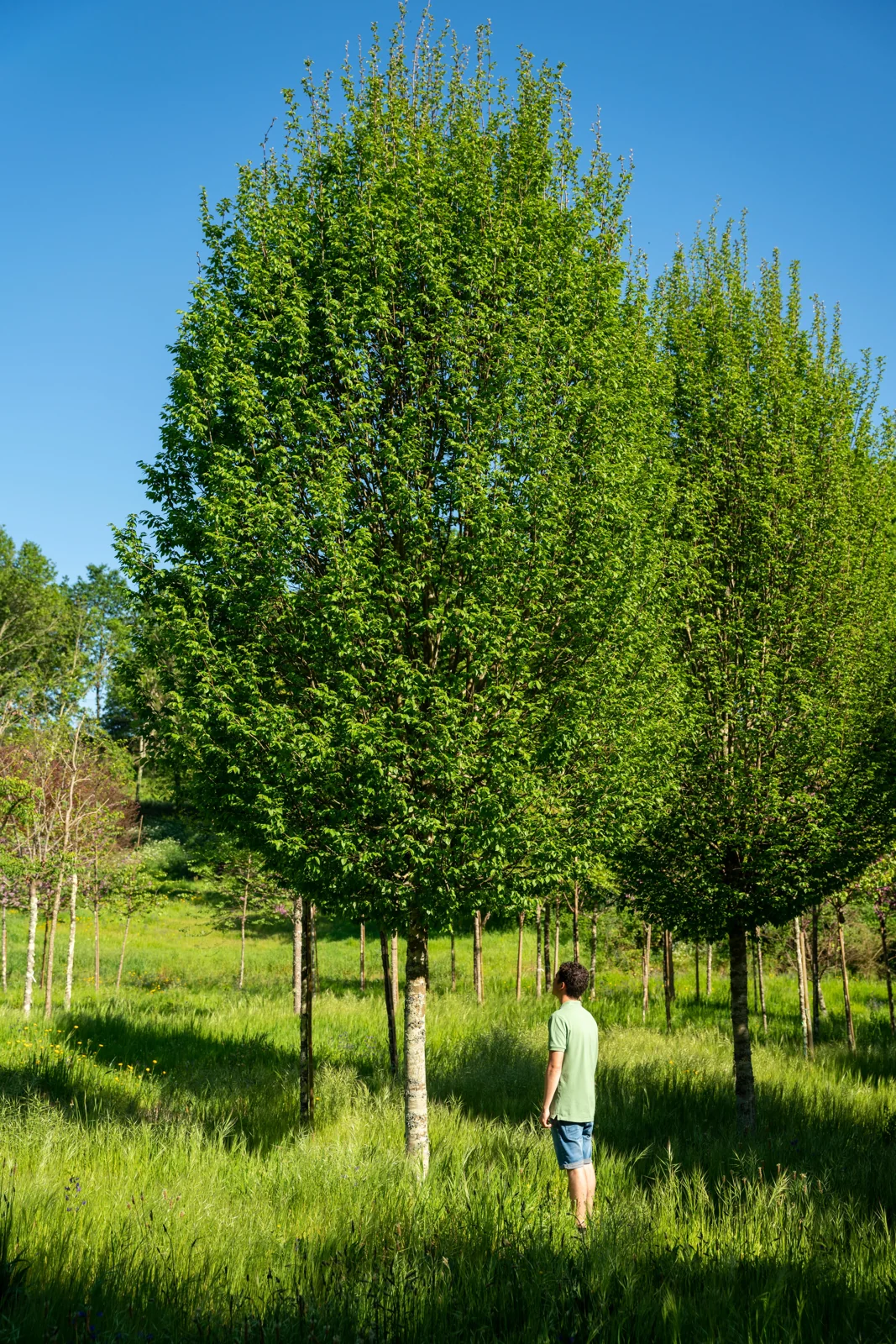
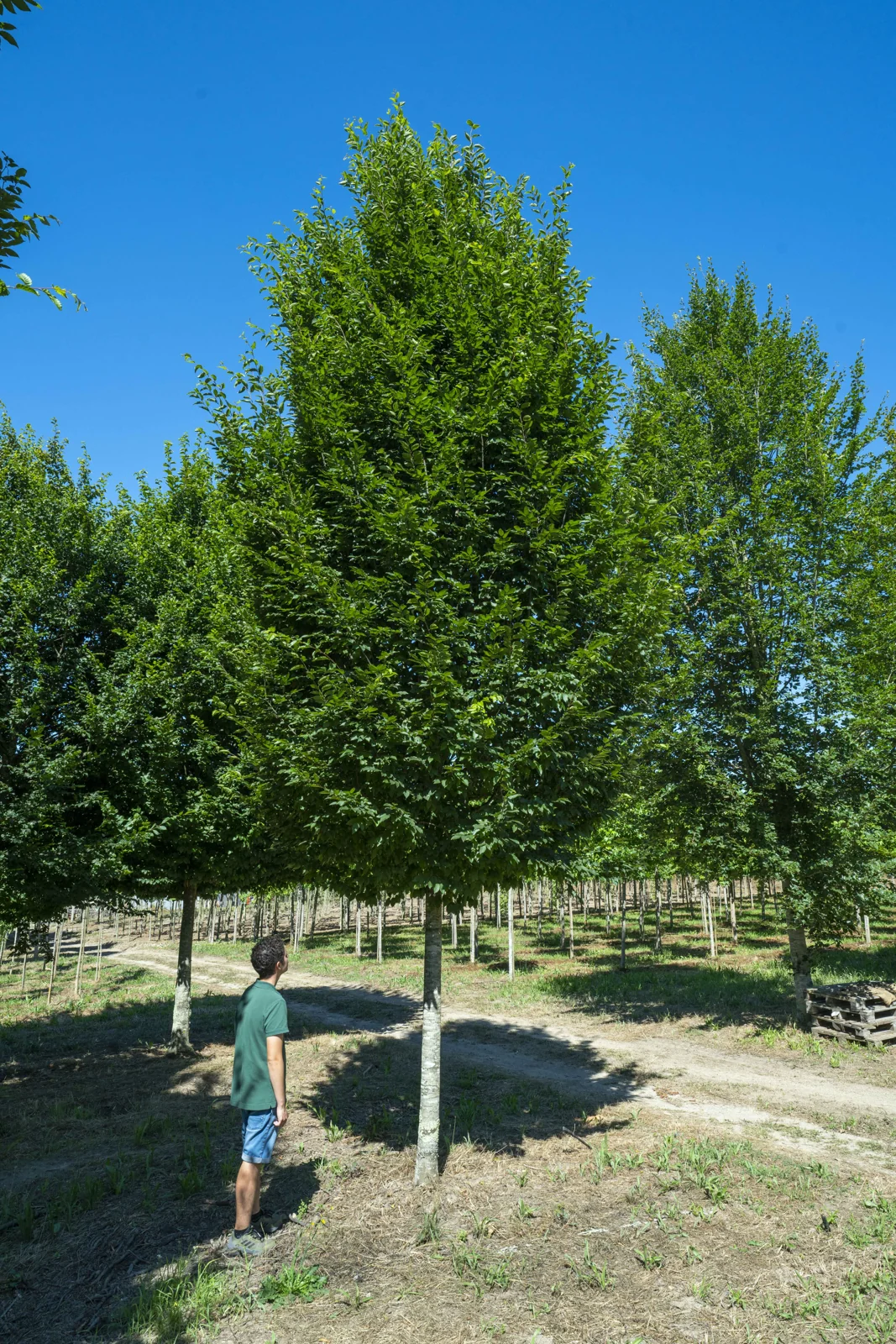
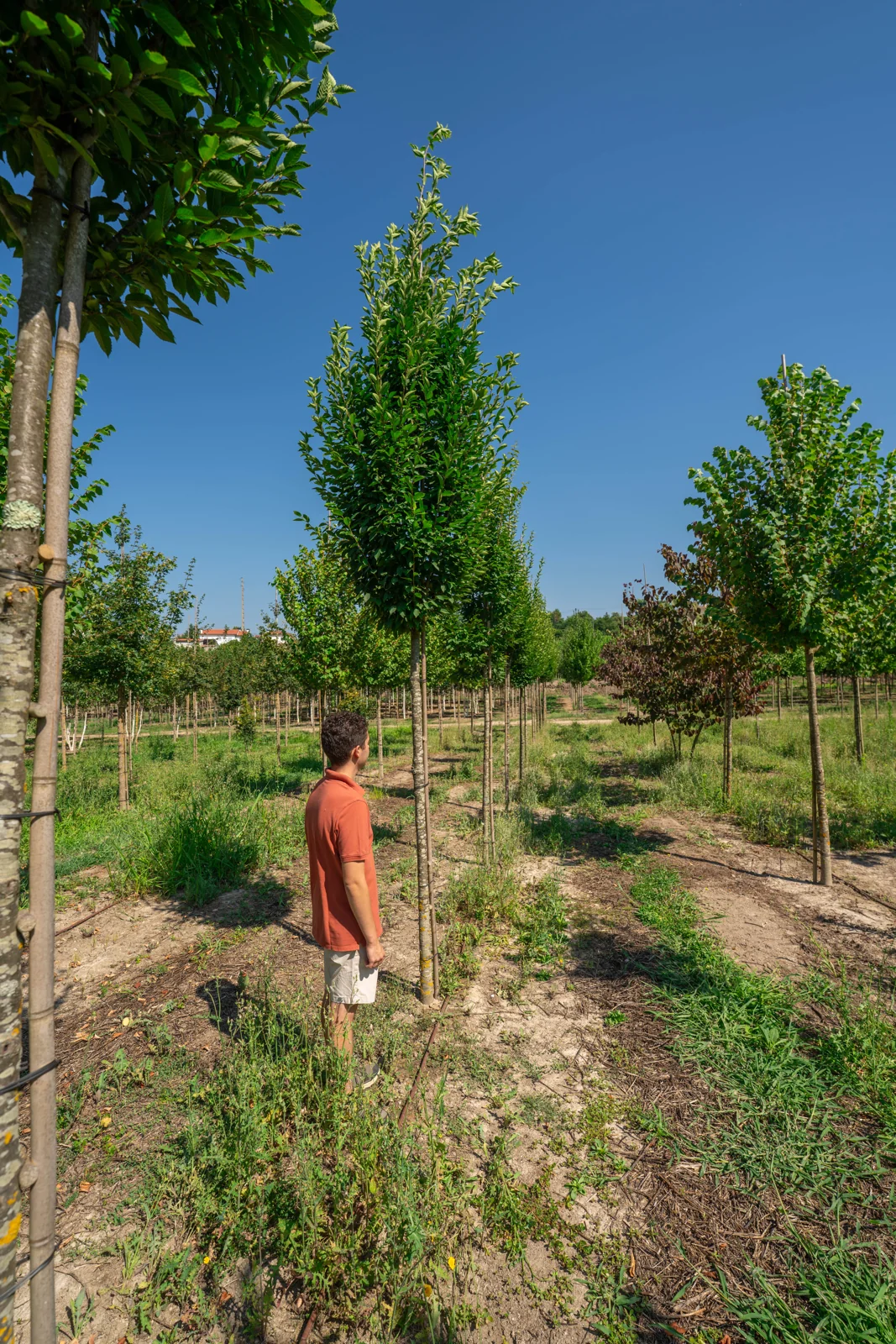
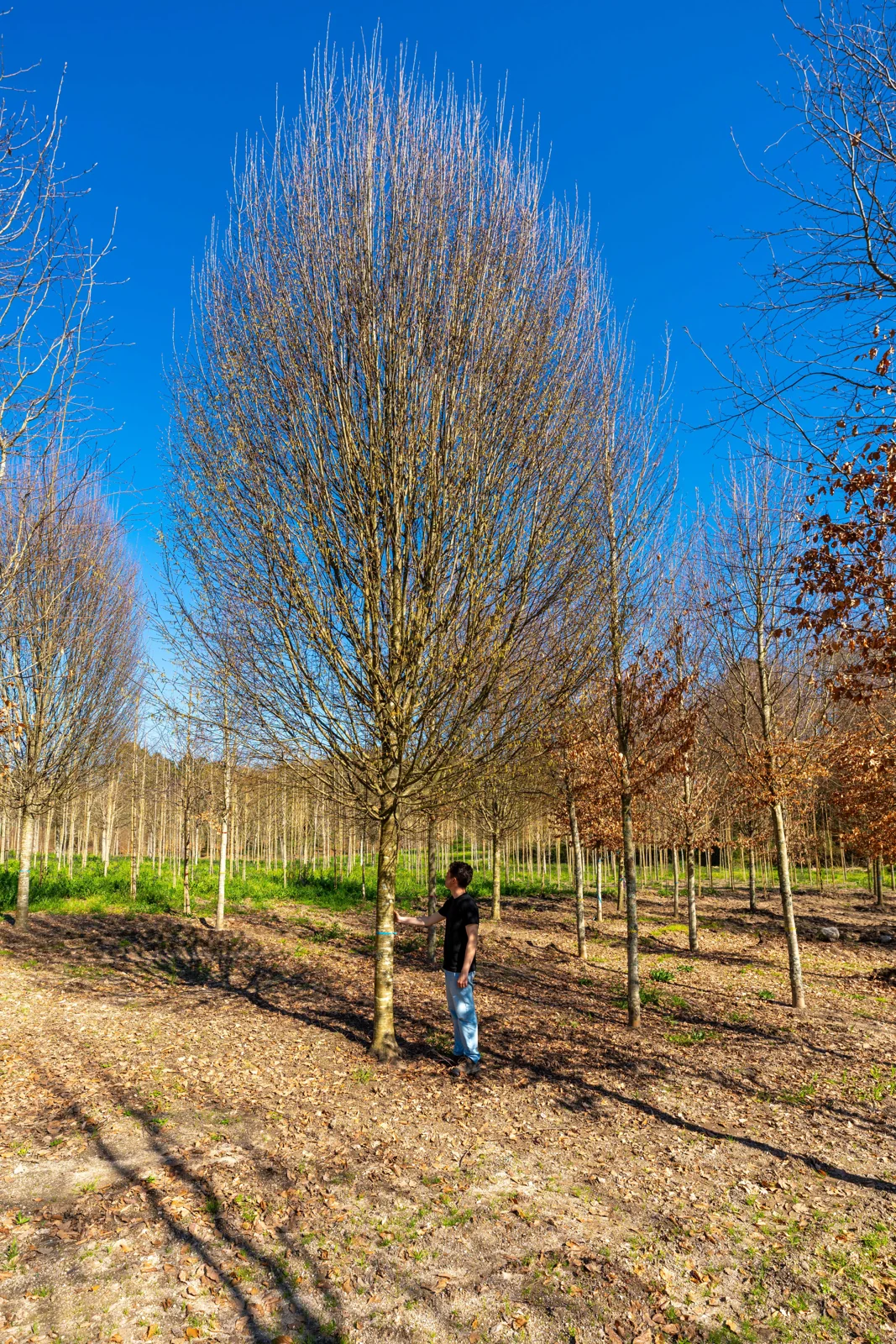
A columnar selection of European hornbeam (carpino), specified where a formal vertical line is required and lateral space is constrained. Suits street alignments, formal alamedas, and structured plantings in Portuguese urban schemes.
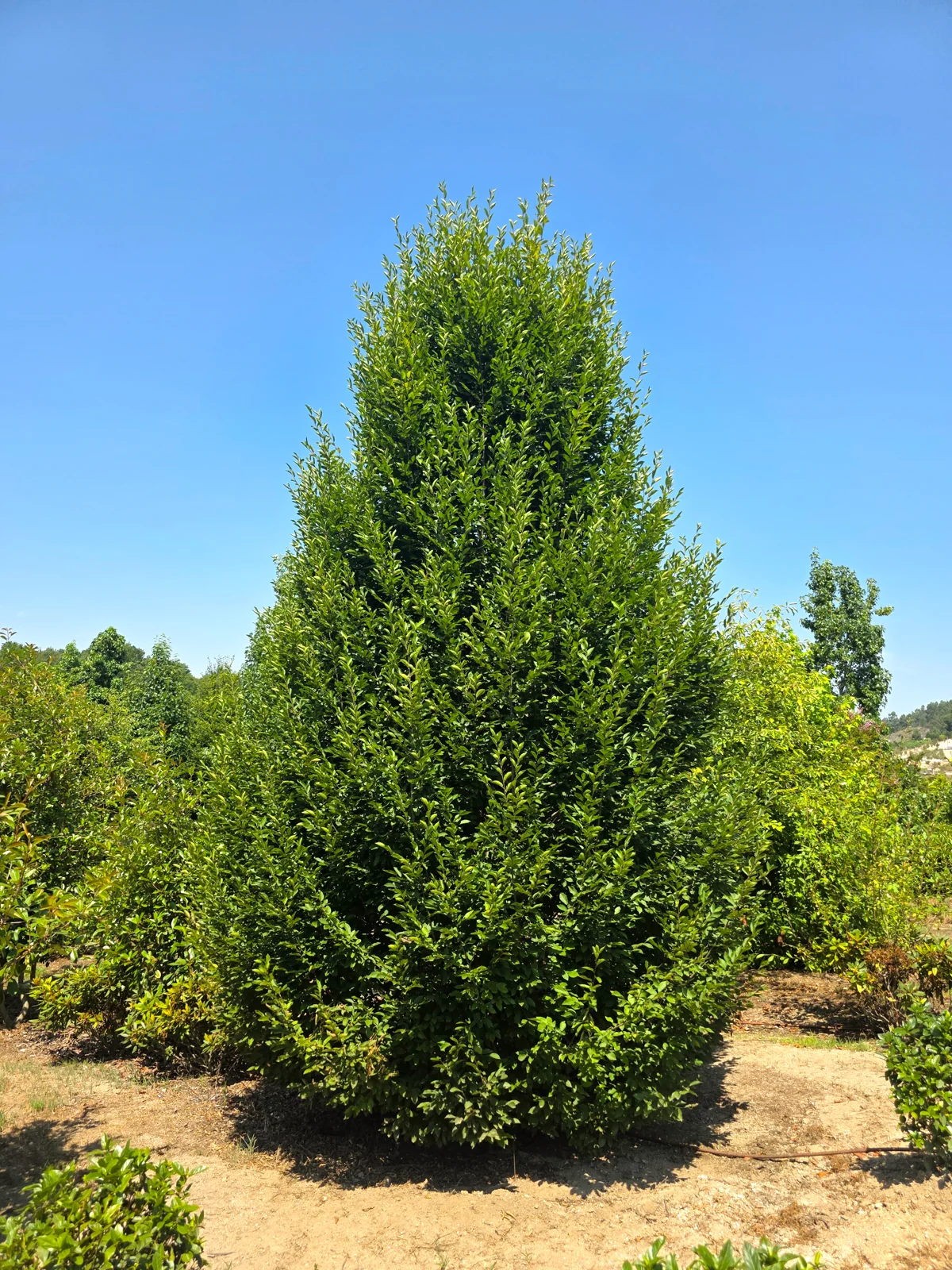
- Narrow oval-pyramidal habit, ideal for drives, allées, and confined garden spaces
- Mature canopy of 10 to 15 m within twenty to thirty years
- Tolerates heavier clay and seasonal damp where beech would struggle
Key Facts
About this Cultivar
Carpinus betulus 'Fastigiata', known in Portuguese as carpino-piramidal, holds an erect, oval-pyramidal crown that broadens only gradually with age. Mature specimens reach 10 to 15 metres in height with a spread of 4 to 6 metres, giving a reliable vertical silhouette that suits narrow arruamentos, formal alameda alignments, and the framework planting of a…
Read more
Show less
Carpinus betulus 'Fastigiata', known in Portuguese as carpino-piramidal, holds an erect, oval-pyramidal crown that broadens only gradually with age. Mature specimens reach 10 to 15 metres in height with a spread of 4 to 6 metres, giving a reliable vertical silhouette that suits narrow arruamentos, formal alameda alignments, and the framework planting of a praca where rounded crowns would crowd the facade line.
The parent species is native to central, eastern, and southern Europe and Western Asia, and tolerates a broad range of soils, including acidic, alkaline, and clay profiles, provided drainage is adequate. The cultivar holds the same wide soil tolerance and accepts the limestone-derived soils typical of Greater Lisbon and the calcareous to sandy soils of inland Algarve quintas. Performance is strongest on fertile, fresh, well-drained ground; in interior Alentejo schemes, deep planting and a measured establishment irrigation cycle are advisable through the first summers given low annual rainfall and prolonged summer drought.
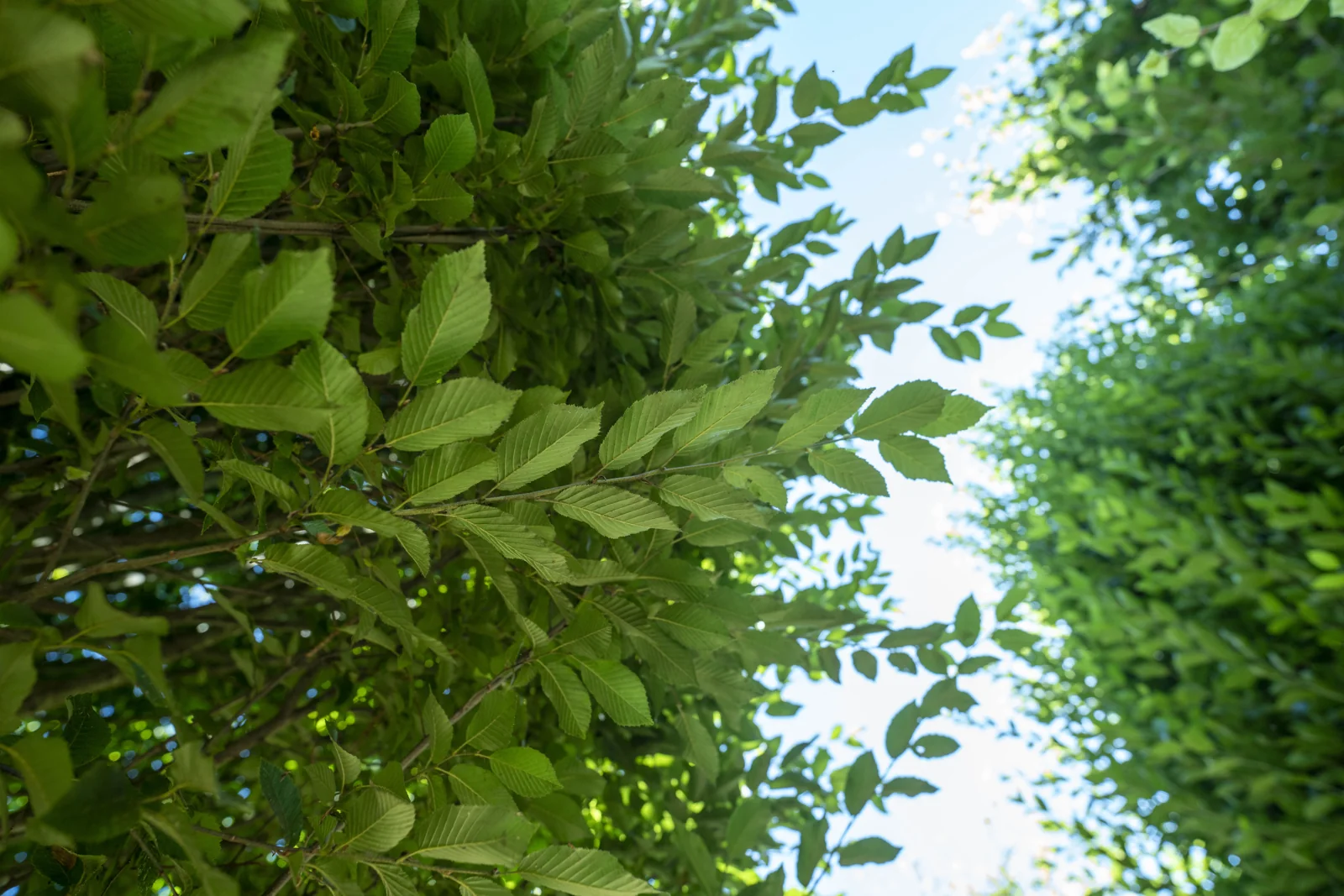
Leaves are deciduous, ovate, with serrated margins and prominent corrugated veining, dark glossy green through spring and summer and turning yellow-gold in autumn. Part of the dried foliage often persists on the branches through winter, adding texture in the off-season, a useful trait for schemes that require visual mass year-round. Discreet spring catkins produce small winged samaras that feed local bird populations.
The species is resistant to common pests and foliar diseases, tolerates urban pollution, and responds well to formative pruning and crown lifting, which makes the cultivar suitable for clipped formal hedging and architectural lines as well as free-standing specimens. Maintenance is low once established. Field-grown in Amarante under approximately 950 mm of annual rainfall, mild winters and dry summers, the trees enter Portuguese projects already calibrated to the climate they will occupy.
Advice on this species
Want to know more about Carpinus betulus 'Fastigiata'?
Tell us about your project and we'll advise you on this species — where it thrives, which size makes sense, and what to expect once planted.
- Produção própria
- Exemplares adultos
- Resposta em 1–2 dias
Sem compromisso · orçamento personalizado