

A white-barked birch for cooler, well-watered Portuguese gardens
Himalayan Birch ‘Jacquemontii’ · Betula utilis ‘Jacquemontii’
A deciduous feature specimen for cooler Portuguese microclimates, where bright peeling bark and golden autumn foliage carry ornamental presence across the seasons. Best specified for irrigated schemes north of the Tejo or sheltered estate gardens with reliable summer moisture.
- Pure white peeling bark holds presence through every season
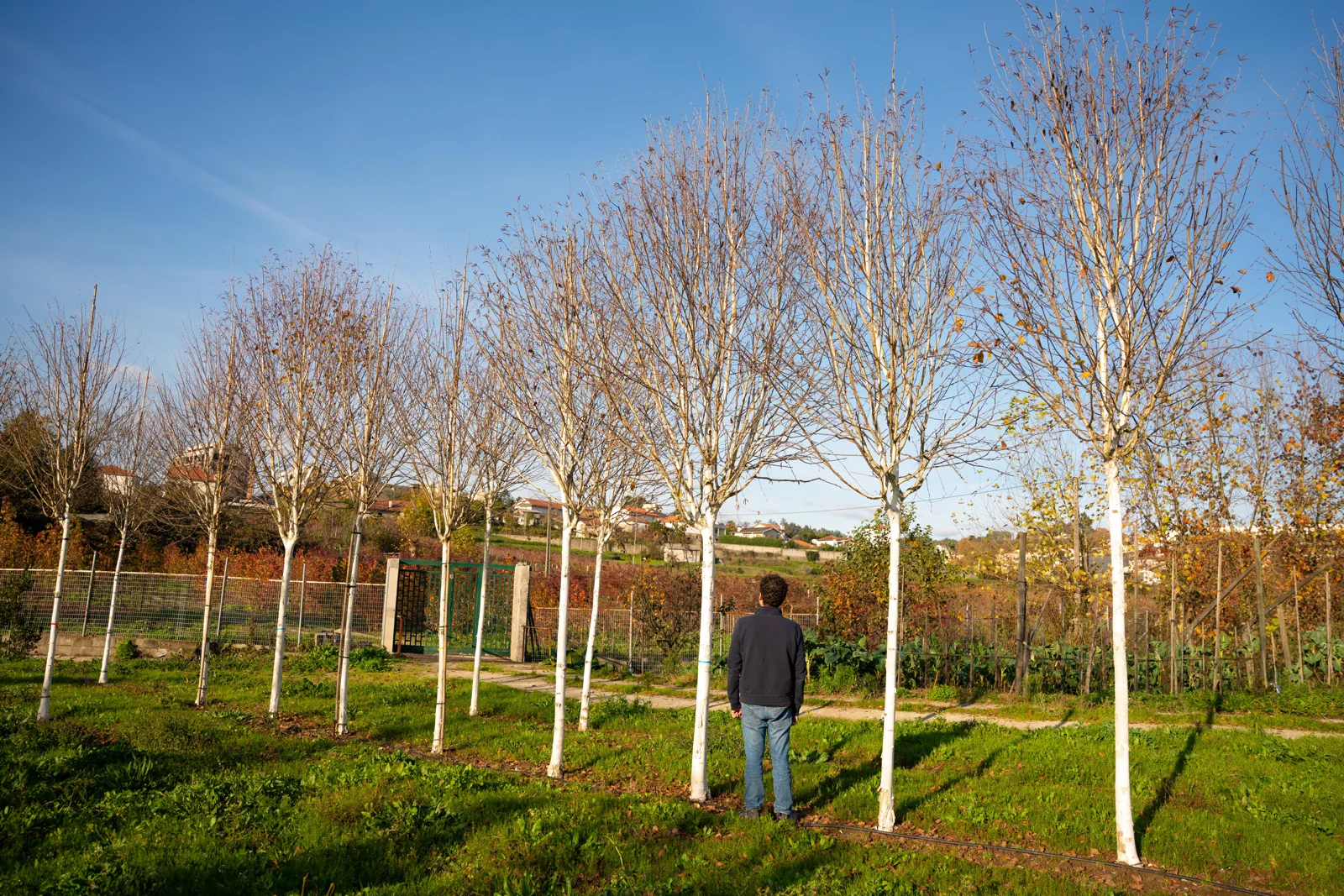
- Reaches around 12 to 15 m in Portuguese cultivation
- Suited to cooler northern microclimates and reliably irrigated gardens
Key Facts
About this Cultivar
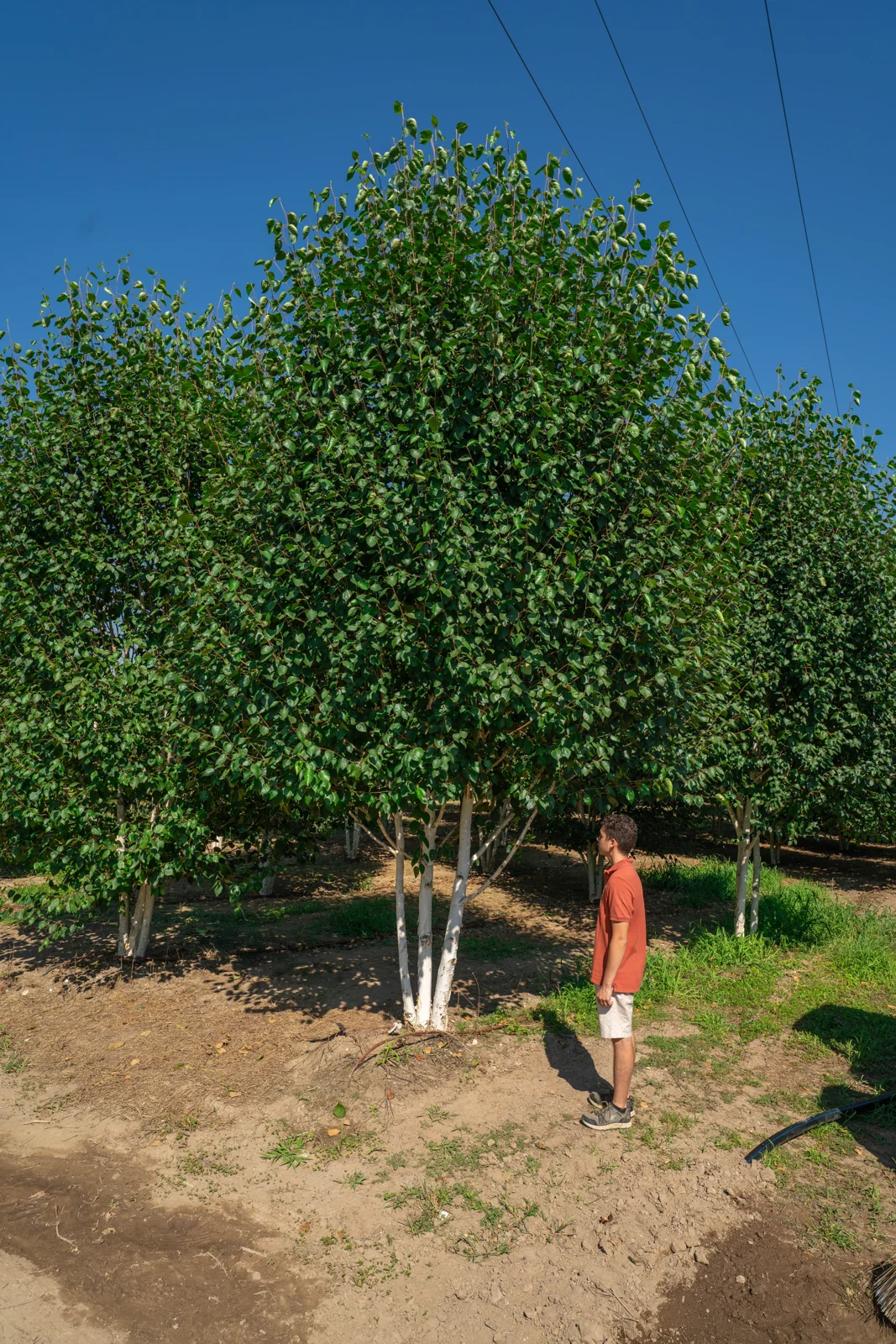
Betula utilis 'Jacquemontii' (bétula-do-Himalaia) is selected from the white-barked western Himalayan populations of the species and reaches 12 to 18 m in height with a 6 to 10 m spread in Portuguese cultivation, holding an open pyramidal to oval crown. The defining feature is the chalk-white bark, which peels in fine papery sheets and reads clearly against…
Read more
Show less
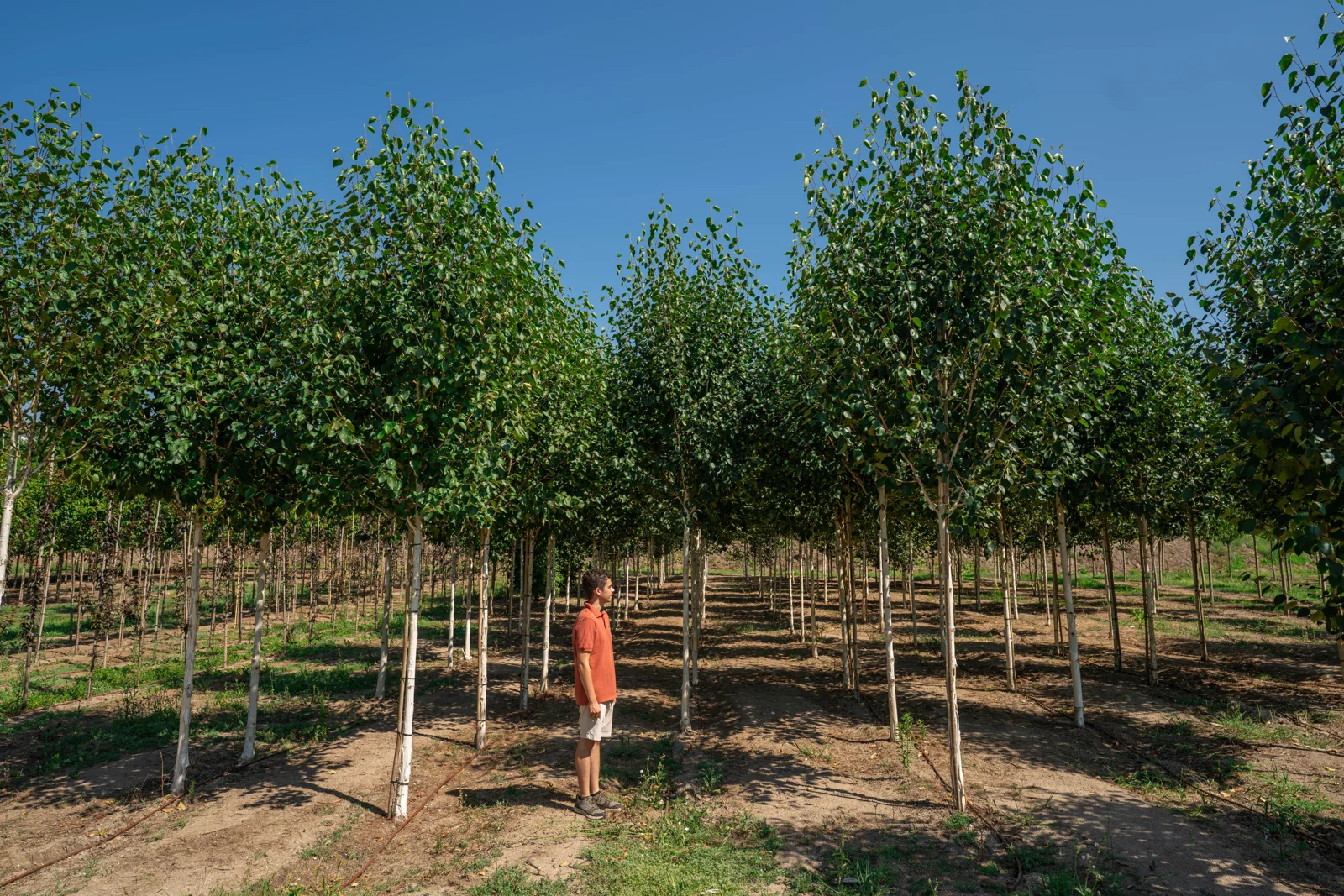
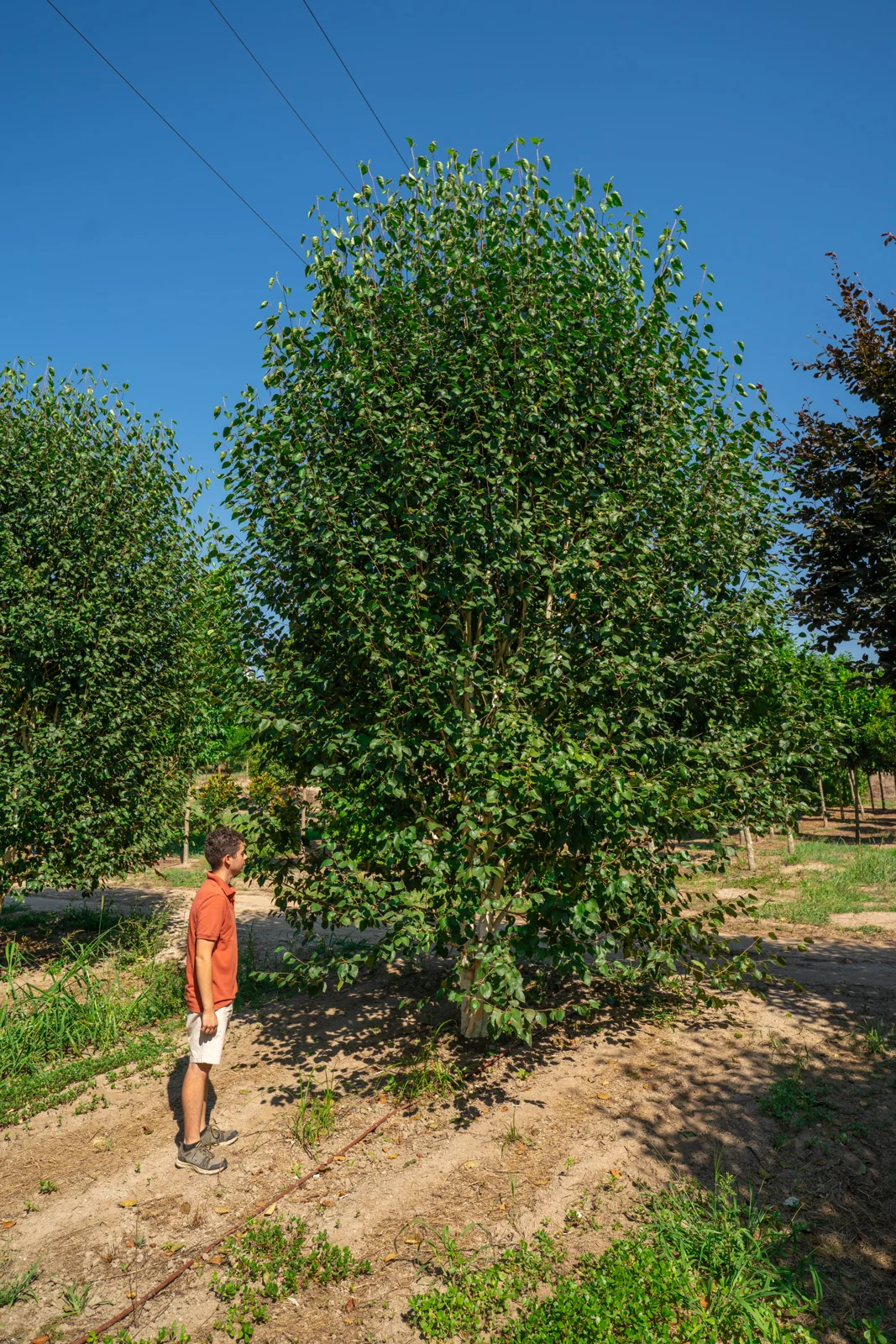
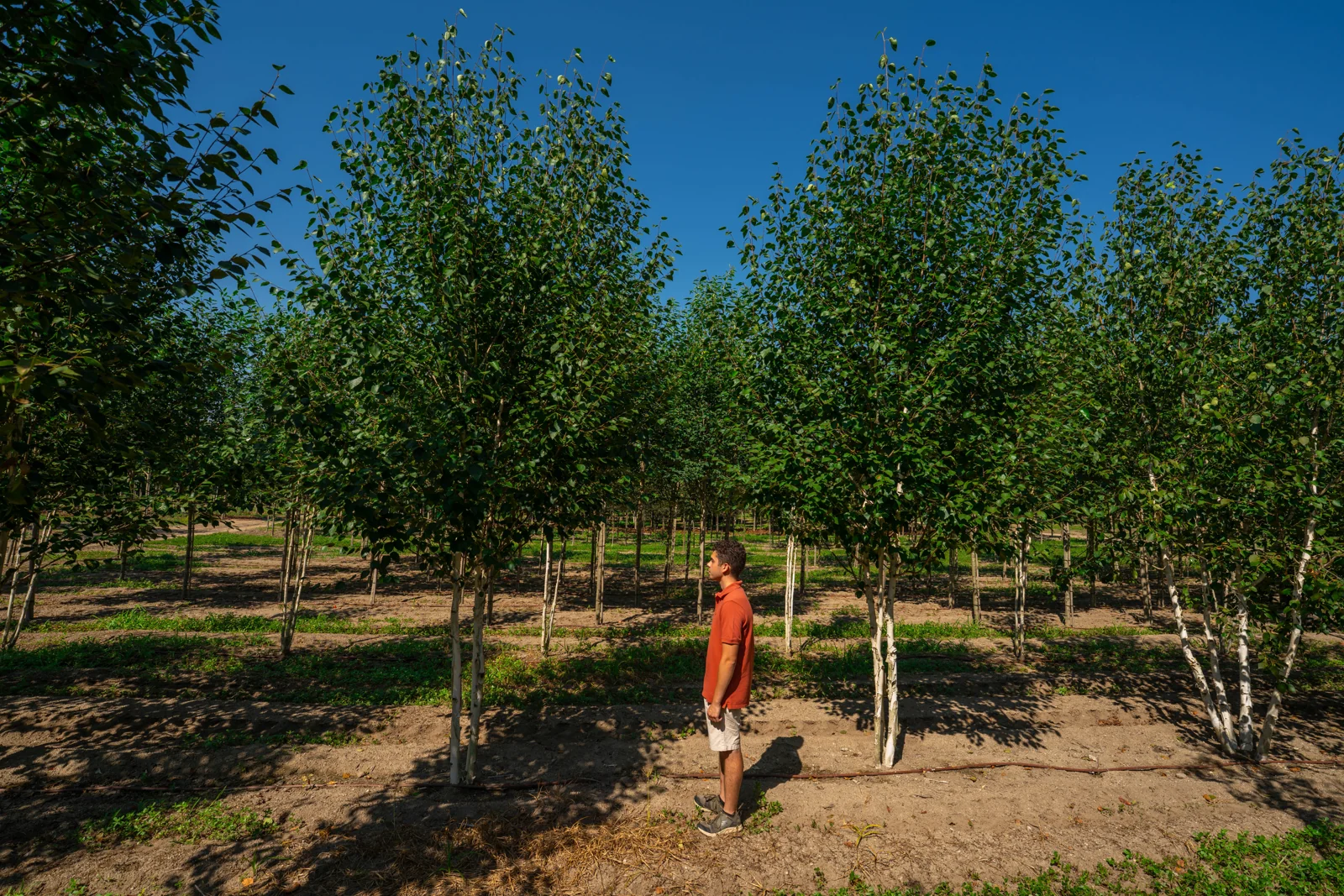
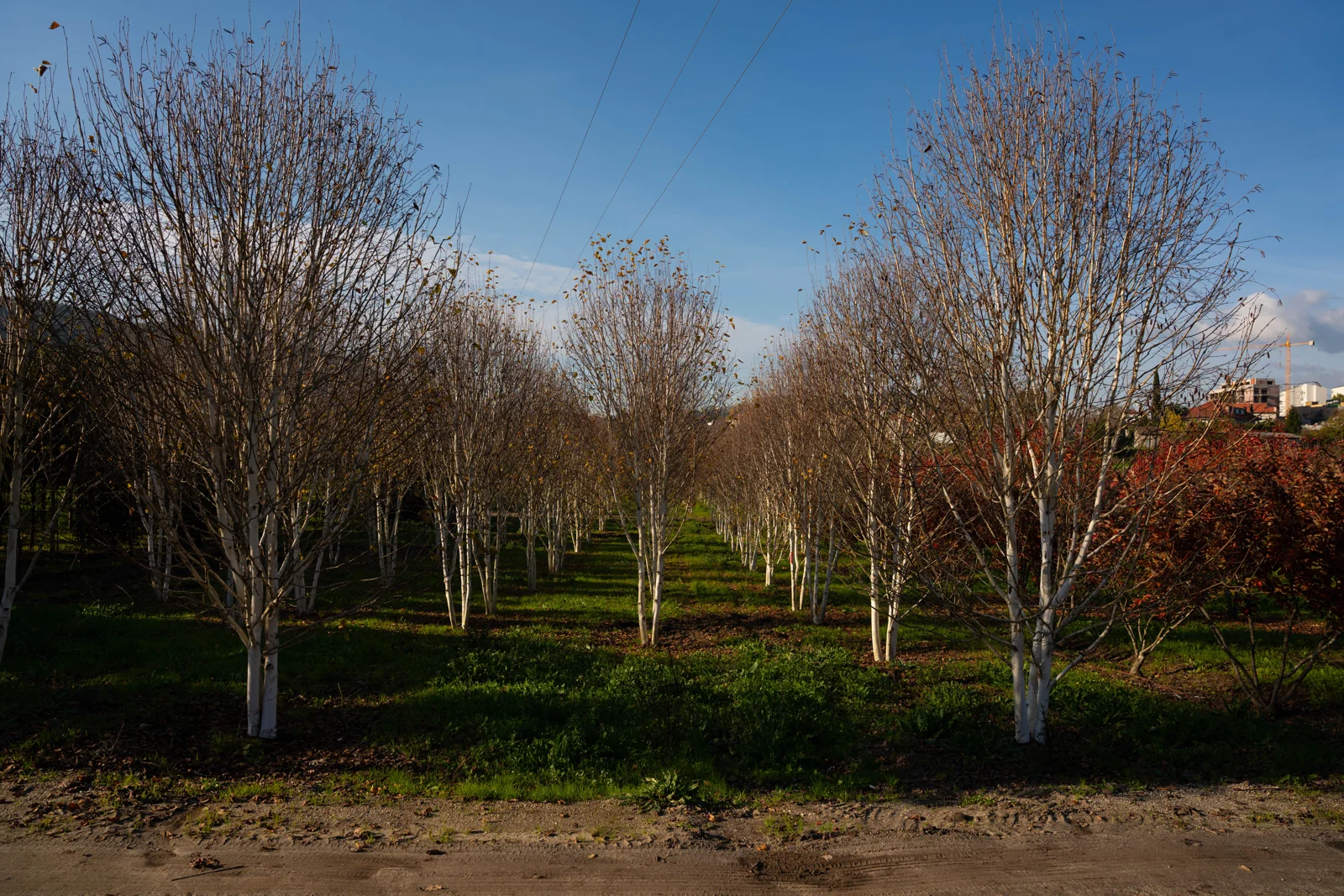
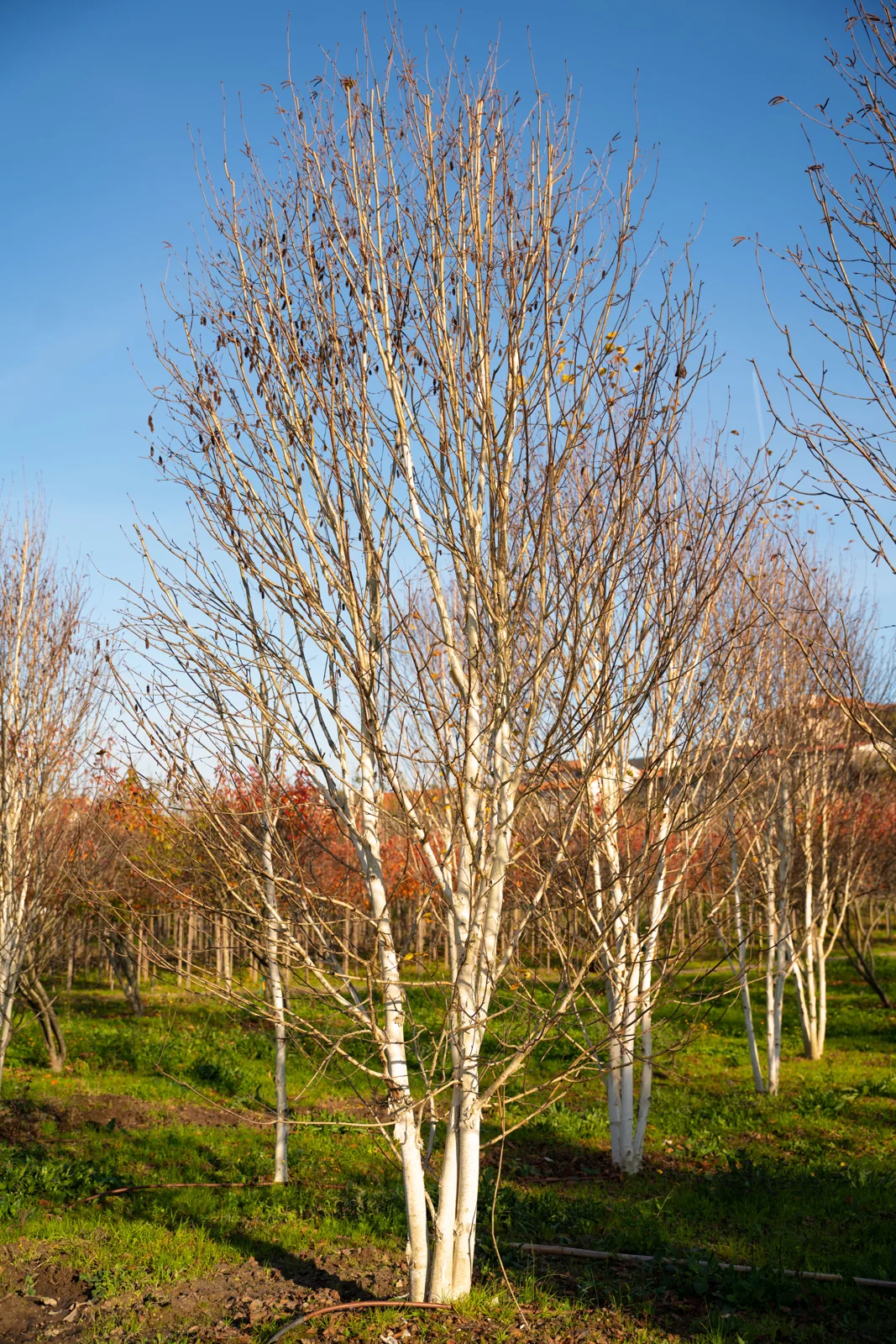
Betula utilis 'Jacquemontii' (bétula-do-Himalaia) is selected from the white-barked western Himalayan populations of the species and reaches 12 to 18 m in height with a 6 to 10 m spread in Portuguese cultivation, holding an open pyramidal to oval crown. The defining feature is the chalk-white bark, which peels in fine papery sheets and reads clearly against dark hedges, brick, or rendered facades from autumn through to leaf emergence in spring. Ovate serrate foliage turns clean golden-yellow in October and November before falling.
This is a Himalayan high-altitude species and its siting in Portugal must reflect that. It performs reliably in the humid Minho and Douro interior, in the foothills of the Serra da Estrela, and on northern-aspect estate gardens (quintas) where summer night temperatures fall and root zones remain moist. It is not a candidate for the coastal Algarve, the interior Alentejo, or any scheme without secure irrigation infrastructure. In Greater Lisbon and Greater Porto, specify it only where afternoon shade, reliable drip irrigation, and bark mulching of the root zone can be guaranteed for the life of the planting.
The species accepts a broad range of soil textures, including sandy and clay-based substrates, provided drainage is sound and the profile remains consistently moist. Acidic to neutral pH is preferred. Field-grown in Amarante (approximately 950 mm annual rainfall, mild winters, moderate summers), Diaplant specimens transfer into comparable cooler-Atlantic Portuguese sites with one establishment irrigation cycle and seasonal mulching of the root zone.
Maintenance is straightforward where the climate fits the species. Formative pruning is performed in the dormant winter window; spring cuts during sap rise bleed heavily and are avoided. Litter is light and the root system is non-aggressive, which suits planting above paved surfaces and adjacent to underground services. Under heat or drought stress the species becomes vulnerable to bronze birch borer and cankers, which is the operational reason for confining specifications to the cooler, well-watered Portuguese microclimates above.
Advice on this species
Want to know more about Betula utilis 'Jacquemontii'?
Tell us about your project and we'll advise you on this species — where it thrives, which size makes sense, and what to expect once planted.
- Produção própria
- Exemplares adultos
- Resposta em 1–2 dias
Sem compromisso · orçamento personalizado