

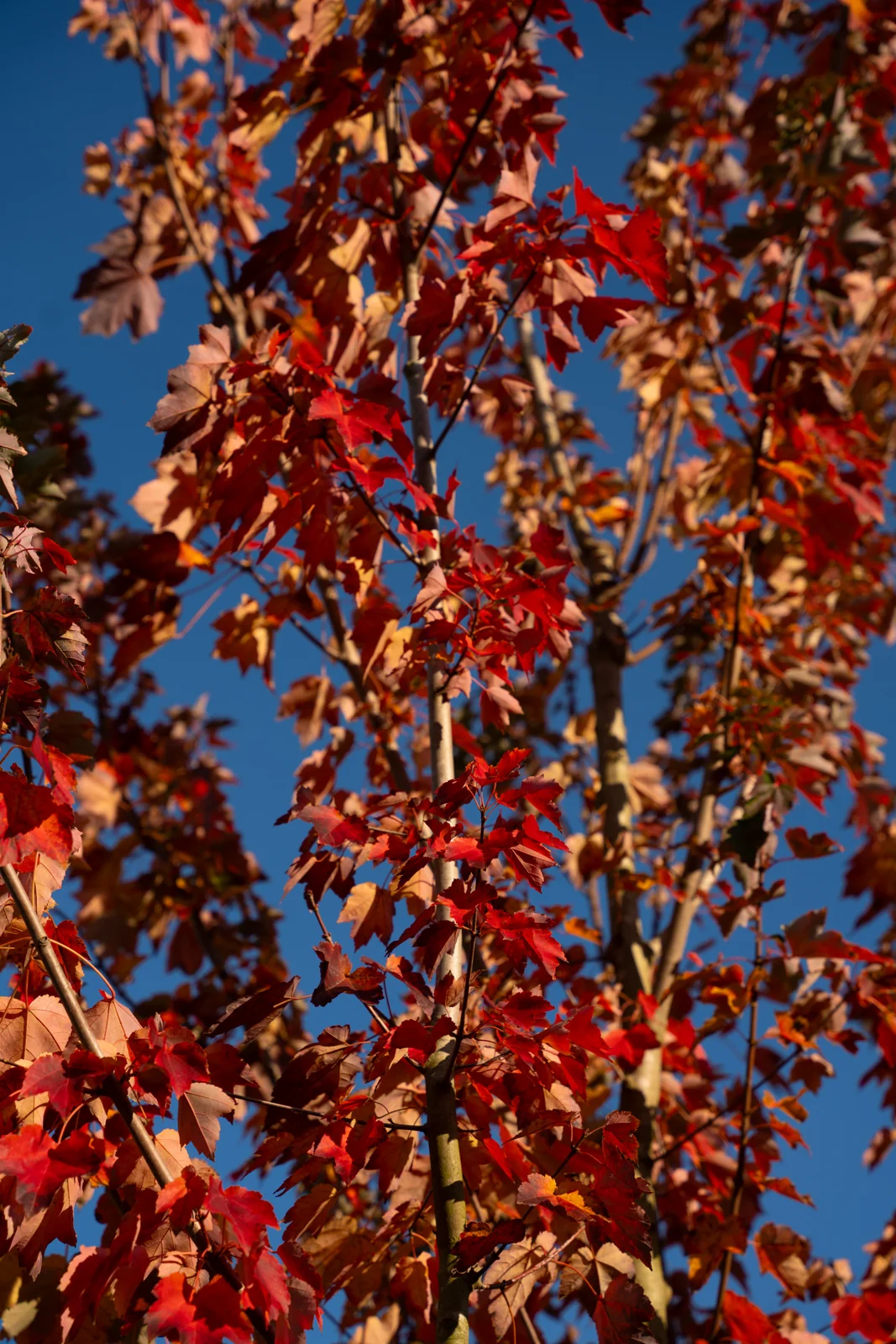
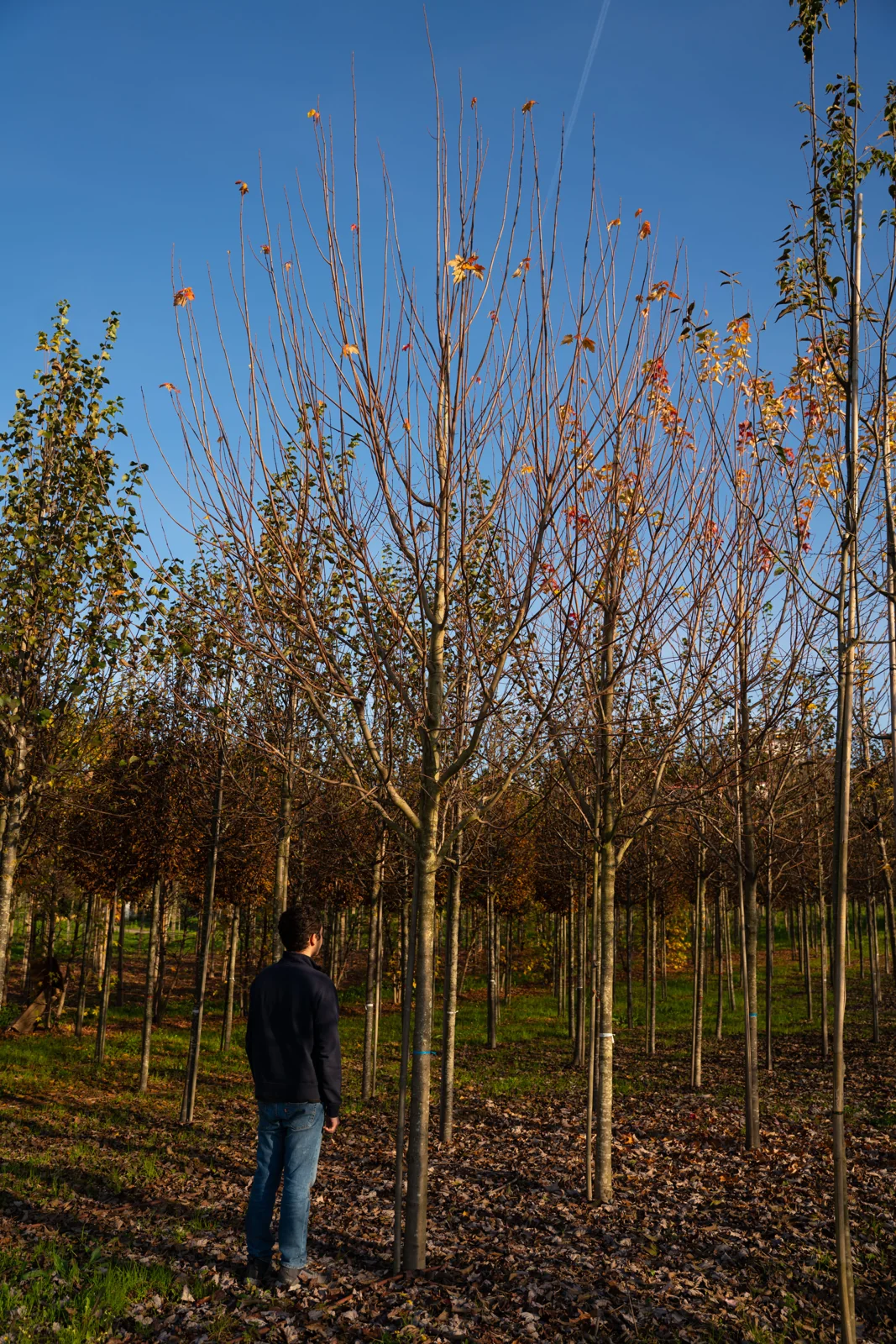
Deepest autumn scarlet for a Portuguese garden on acid soil
Red Maple · Acer rubrum
A North American maple specified across Portuguese acid-soil regions for its consistent scarlet autumn colour and tolerance of seasonally wet ground. Calcifuge by nature: at home on the acidic soils of Minho, Douro Verde, and Beira Alta.
- The most reliable deep scarlet autumn of any large maple grown in Europe
- Thrives on the granite and schist soils of the Minho and Douro
- Tolerates wet, periodically waterlogged ground unusual for a maple
About this Species
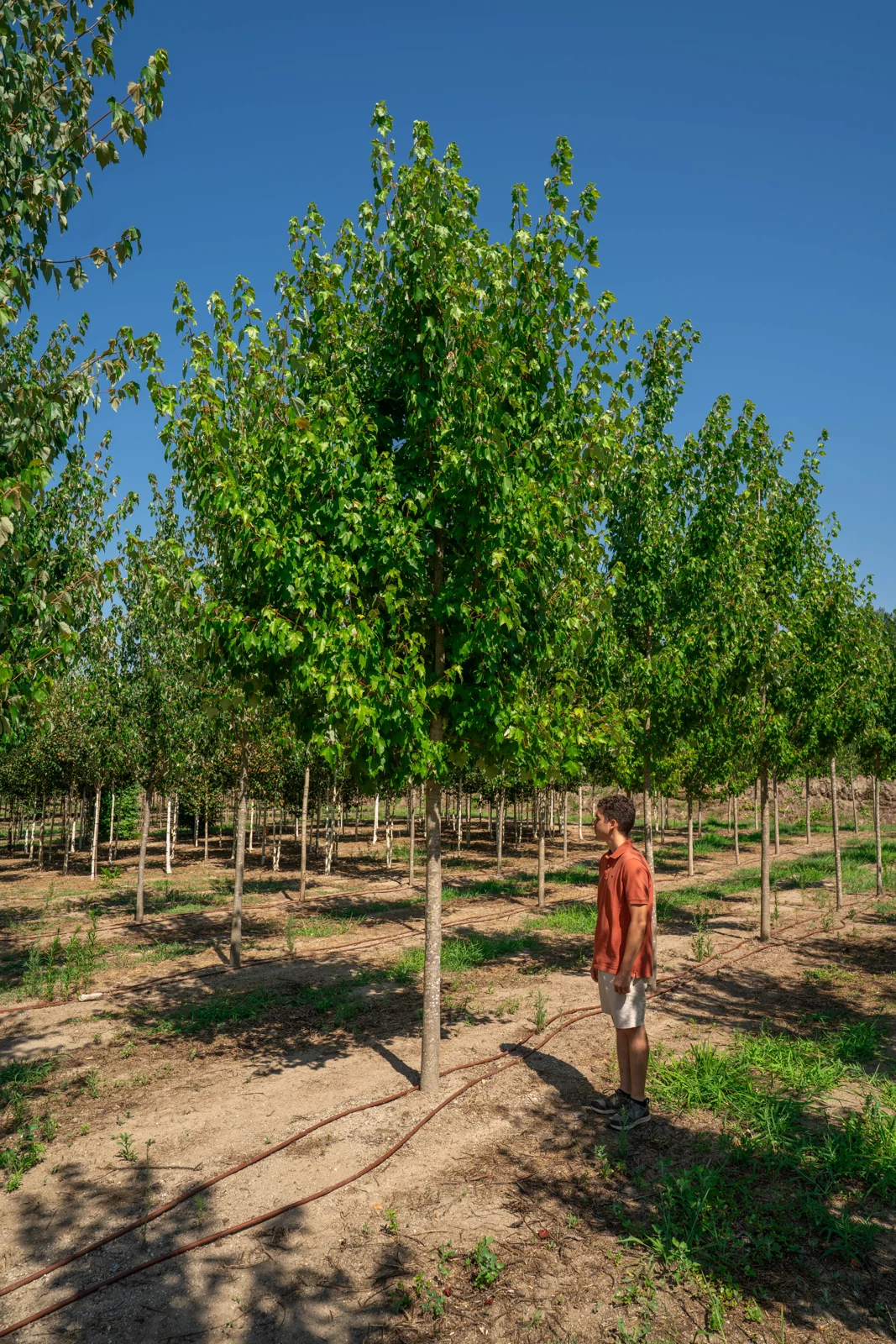
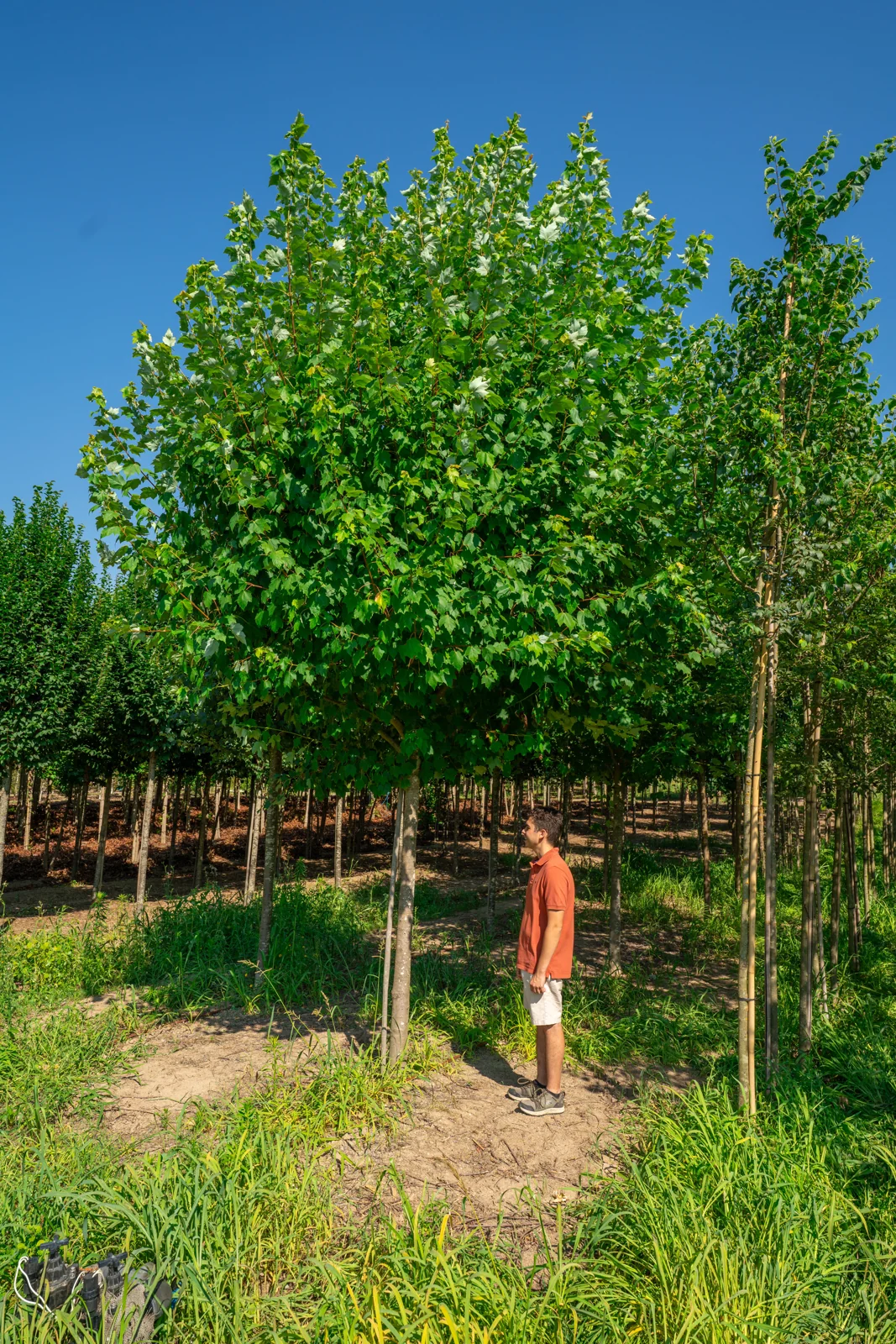
Acer rubrum (ácer-vermelho) reaches 18 to 25 m in Portuguese cultivation, forming an upright-oval to rounded crown on a single straight stem. Growth is medium to fast in youth, slowing as the tree builds structure, with canopy closure on a typical avenue planting after eight to ten seasons. The small red flowers open in March before leaf-out, followed by…
Read more
Show less
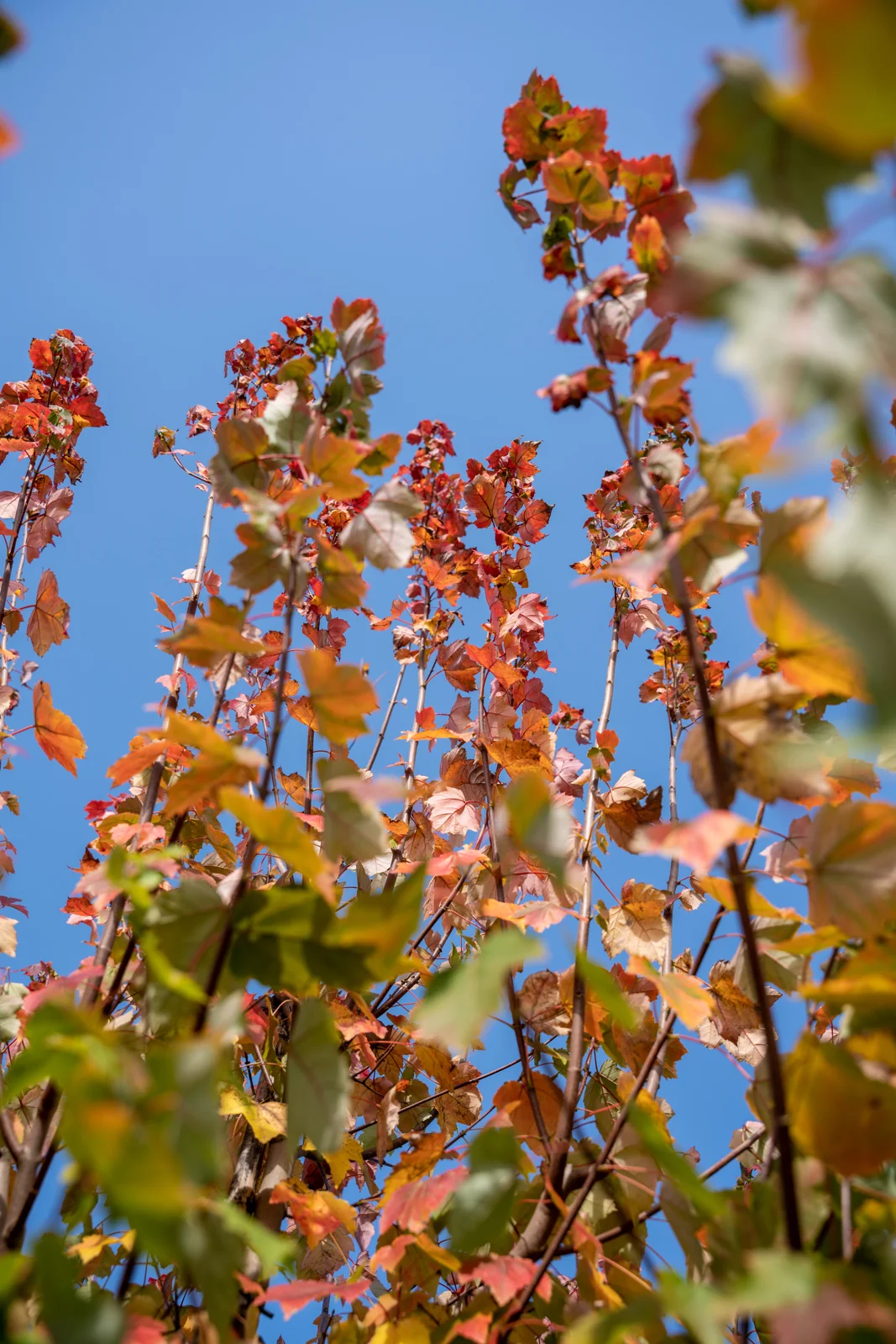
Acer rubrum (ácer-vermelho) reaches 18 to 25 m in Portuguese cultivation, forming an upright-oval to rounded crown on a single straight stem. Growth is medium to fast in youth, slowing as the tree builds structure, with canopy closure on a typical avenue planting after eight to ten seasons. The small red flowers open in March before leaf-out, followed by red samaras, then a green summer canopy that turns reliably scarlet in October and November. Of the large deciduous maples available to Portuguese specifiers, this is the benchmark for consistent autumn colour.
The species is strictly calcifuge. On the calcareous soils of the Estremadura limestone belt, parts of central Algarve, and the alluvial calcareous deposits surrounding Lisbon, manganese chlorosis develops and performance is poor. It performs reliably on the acidic granite and schist soils of the north (Minho, Douro Verde, Beira Alta) and across the centre on equivalent substrates. Verify soil pH at the specification stage; below 6.0 is the safe range.
Tolerance of seasonally wet ground is unusual among large maples and a useful selection criterion for valley-floor positions, riparian-adjacent planting, and sites where winter waterlogging excludes plátano (Platanus × acerifolia) or freixo (Fraxinus angustifolia). Specify as a framework tree for parks, as a feature specimen on institutional and university campuses, and for residential street alignments (arruamentos) on confirmed acid substrate. Salt tolerance is low; coastal positions are not appropriate.
Maintenance is light. Formative pruning in the first three seasons establishes a clean stem; the species responds well to crown lifting and tolerates standard urban pruning. Surface roots can lift adjacent paving where rooting volume is constrained, so allow generous open-soil profile in arruamento specifications. Establishment irrigation through the first two summers is advisable; thereafter, on acid soils with moderate rainfall, the tree is self-sufficient in northern and central Portugal.



Advice on this species
Want to know more about Acer rubrum?
Tell us about your project and we'll advise you on this species — where it thrives, which size makes sense, and what to expect once planted.
- Produção própria
- Exemplares adultos
- Resposta em 1–2 dias
Sem compromisso · orçamento personalizado