

An autumn tree for the sheltered Portuguese garden
Japanese Maple · Acer palmatum
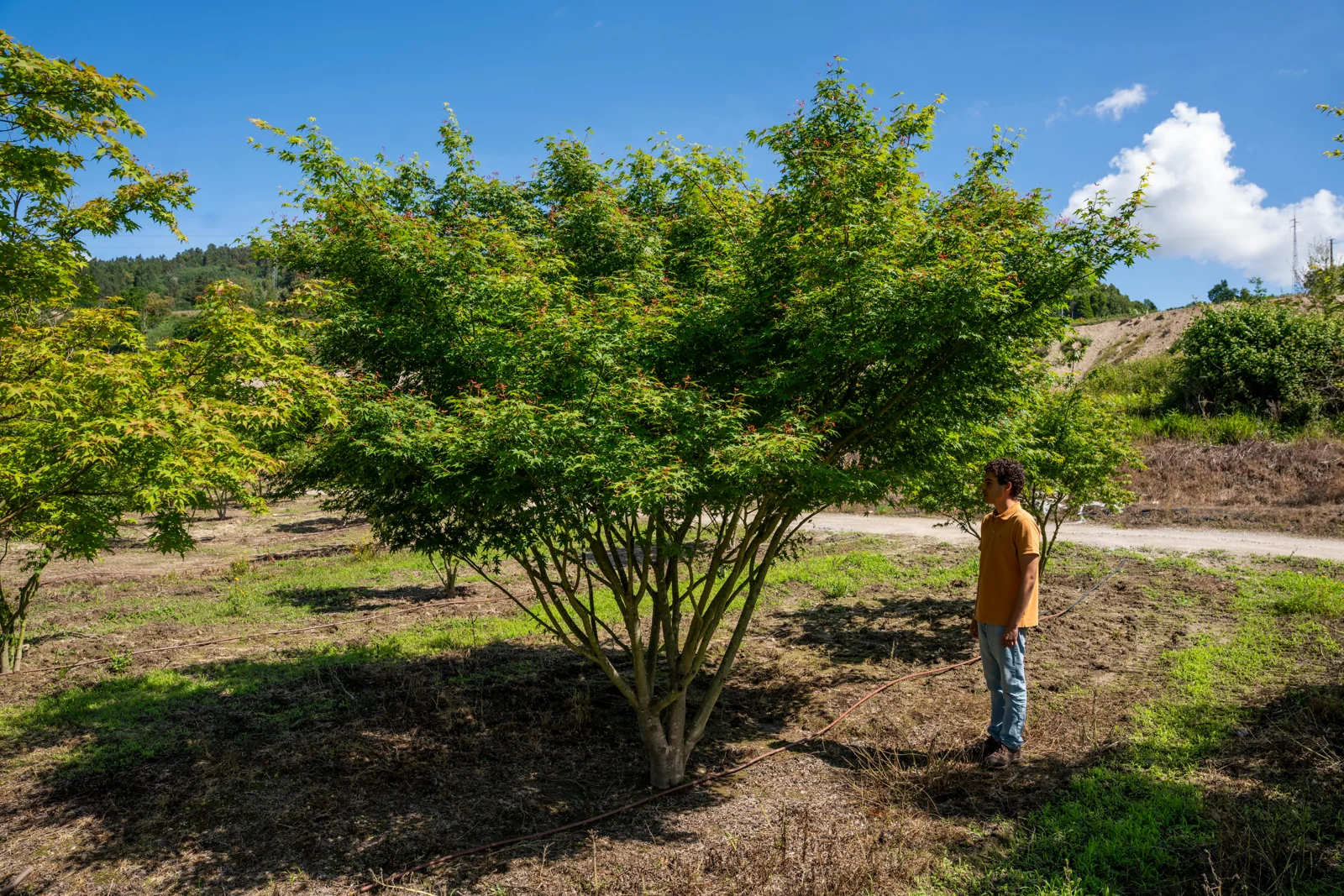
A small deciduous feature tree specified for sheltered, humid sites in Atlantic Portugal, where the layered crown and intense autumn colour of the ácer-japonés anchor courtyards, sheltered praças, and quinta entrance gardens at specimen scale.
- Slow-growing small tree, mature height between four and eight metres
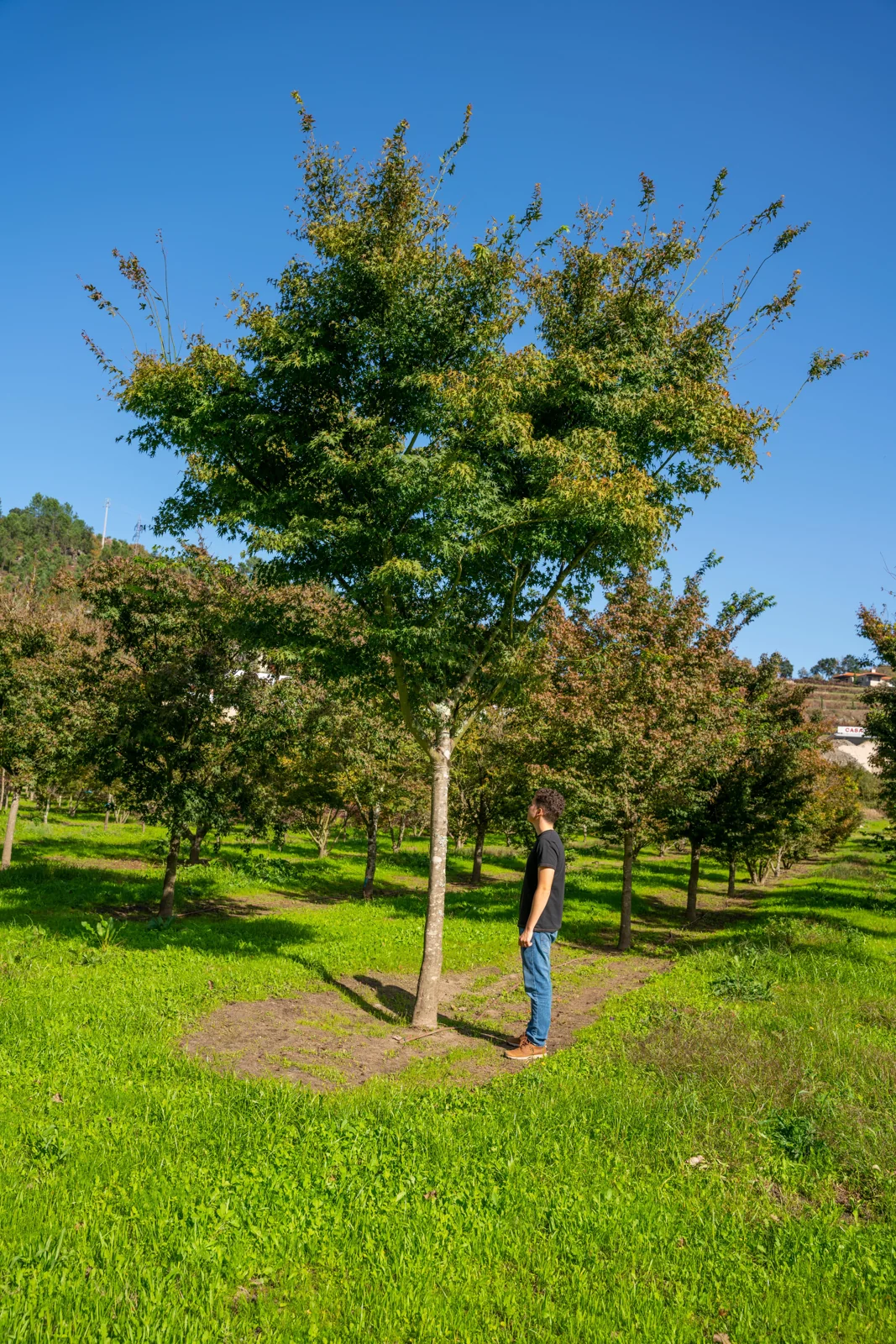
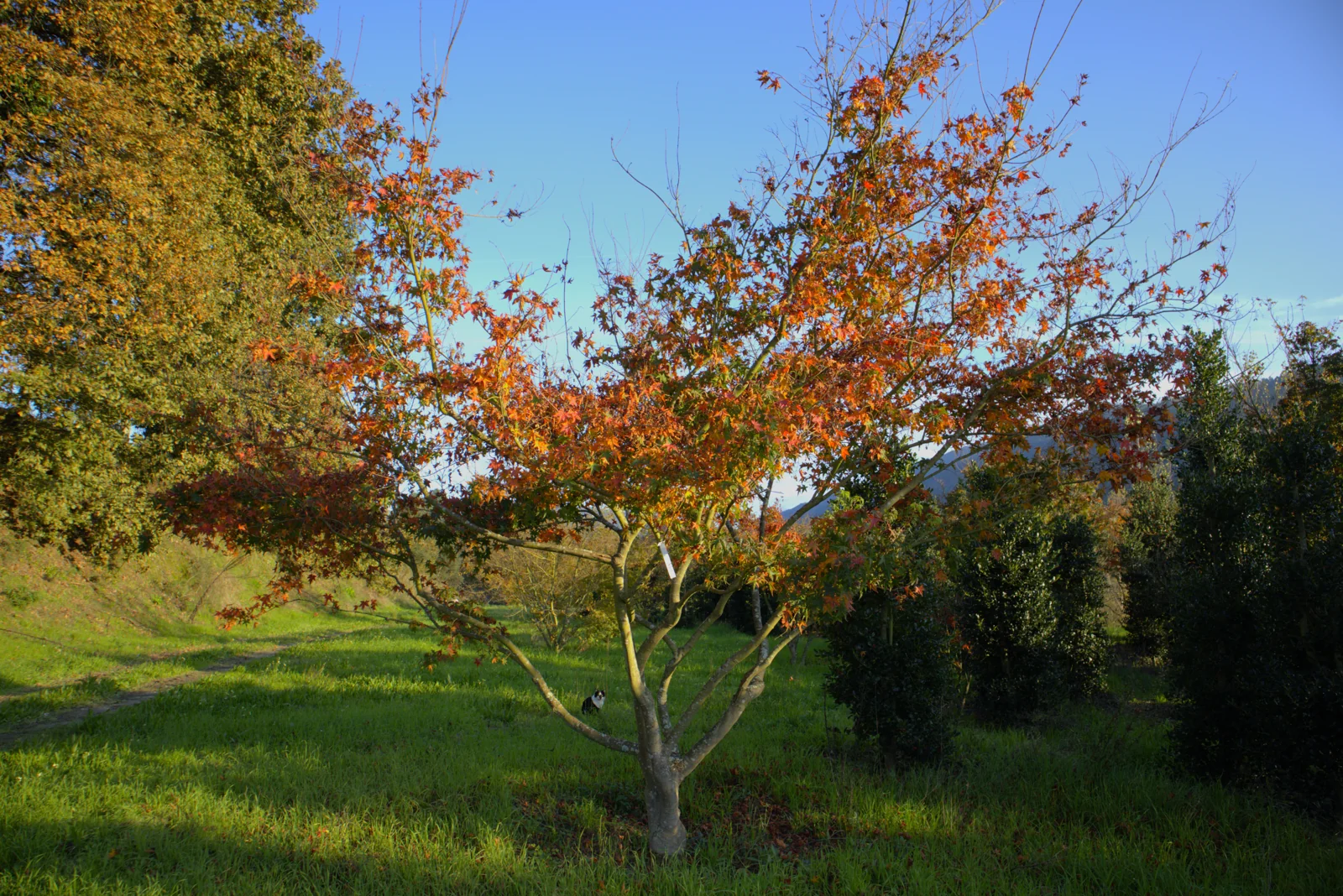
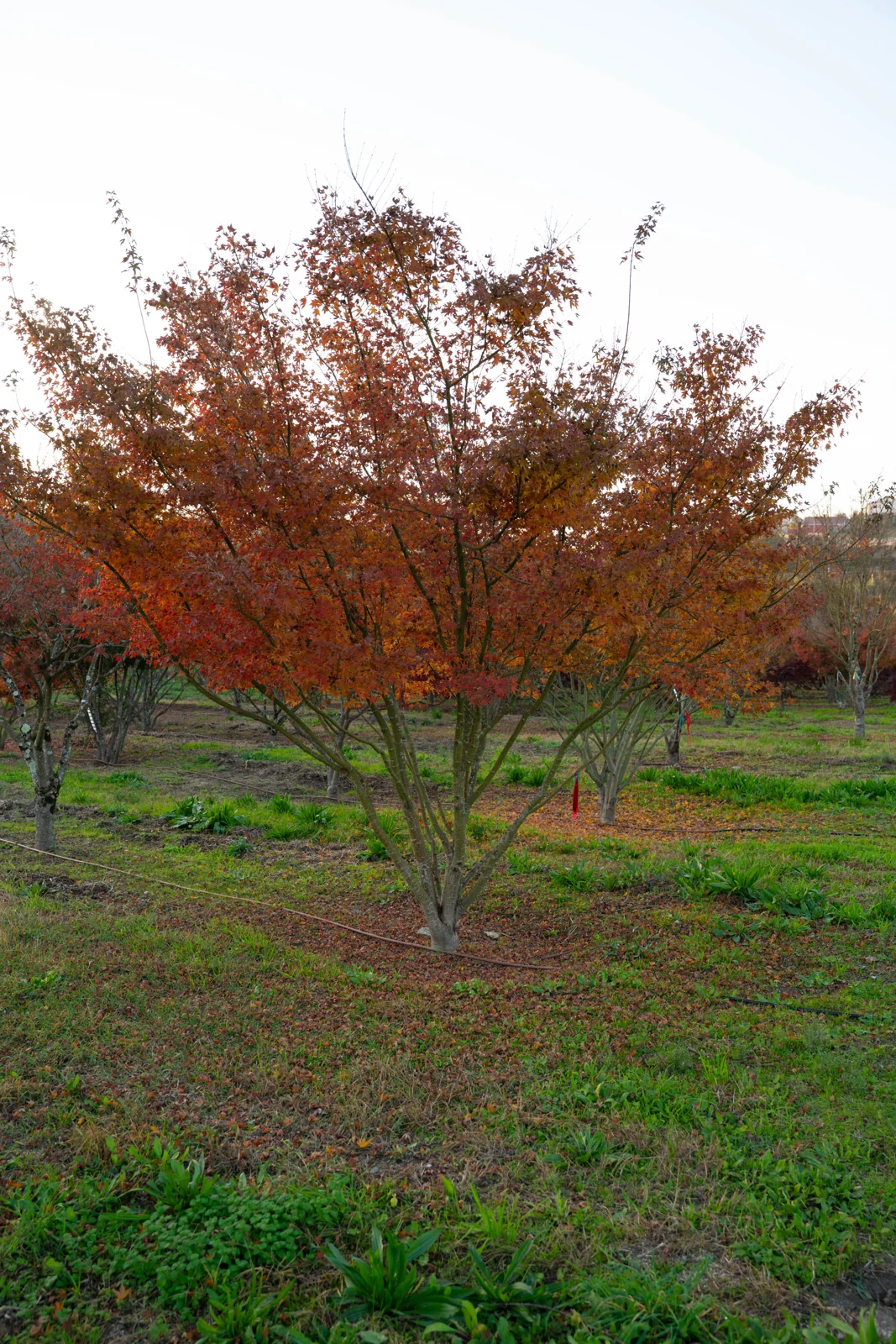
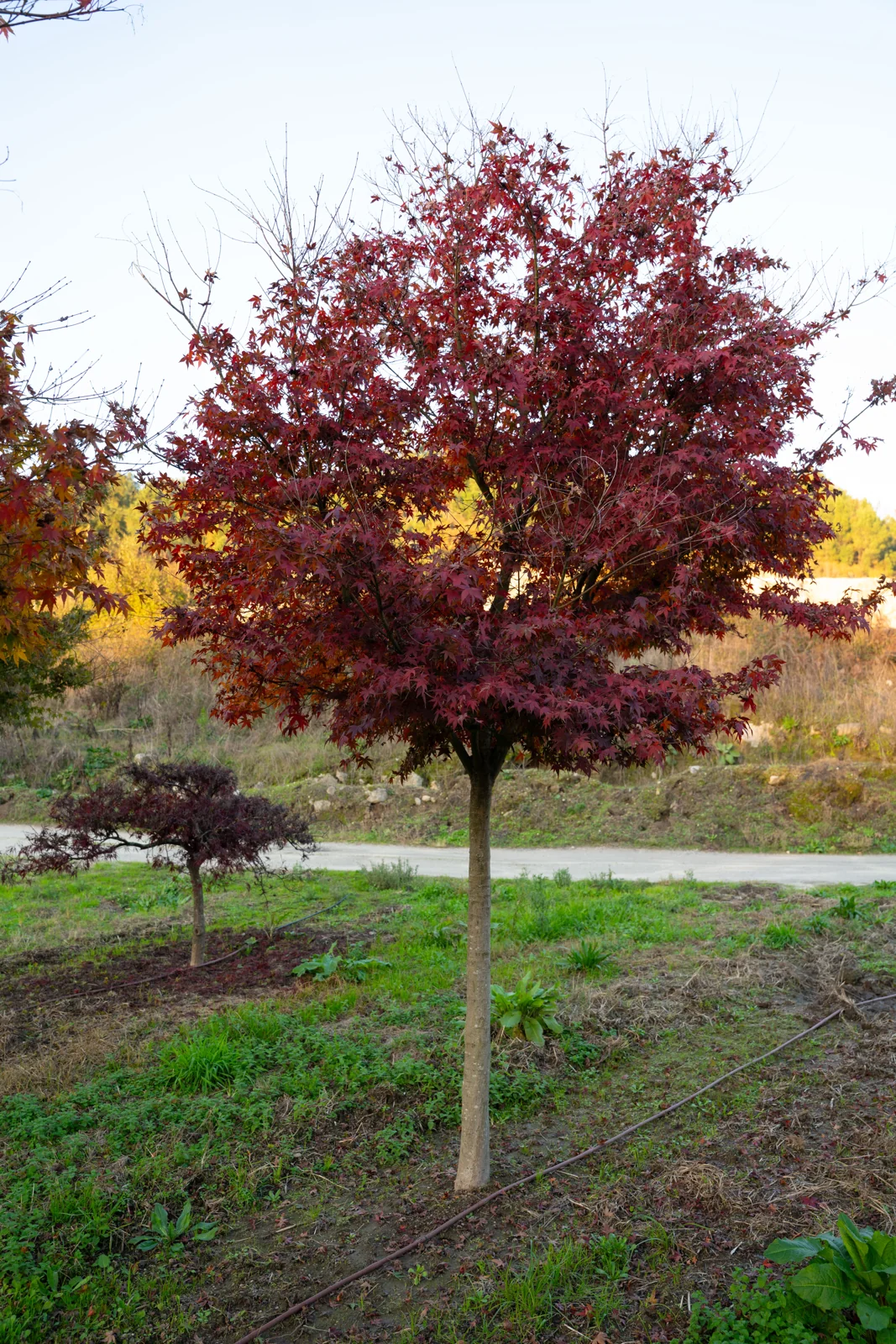
- Autumn colour through October and November, scarlet to amber by cultivar
- Best in Sintra, Greater Porto, Douro, and sheltered Silver Coast gardens
About this Species
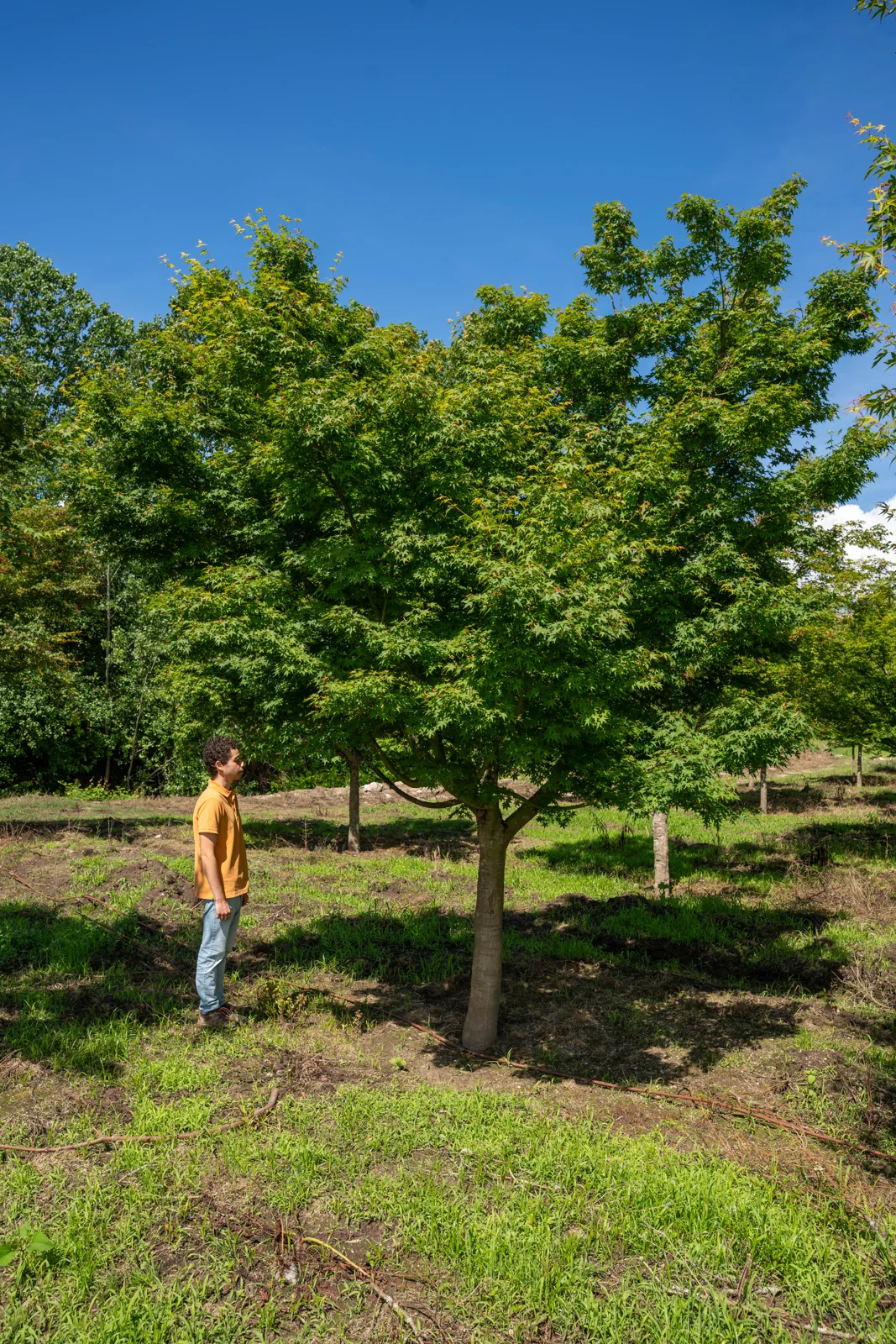
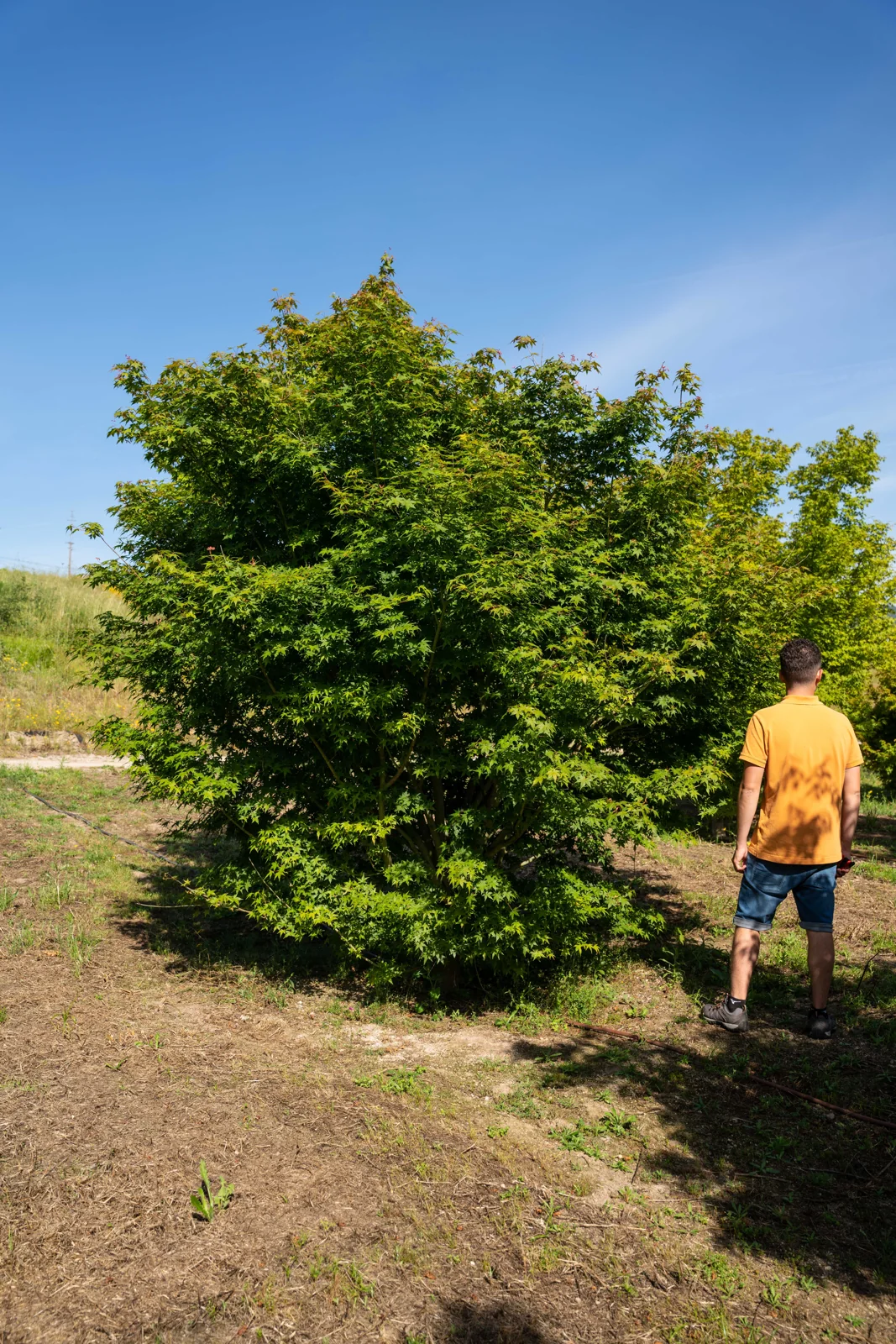
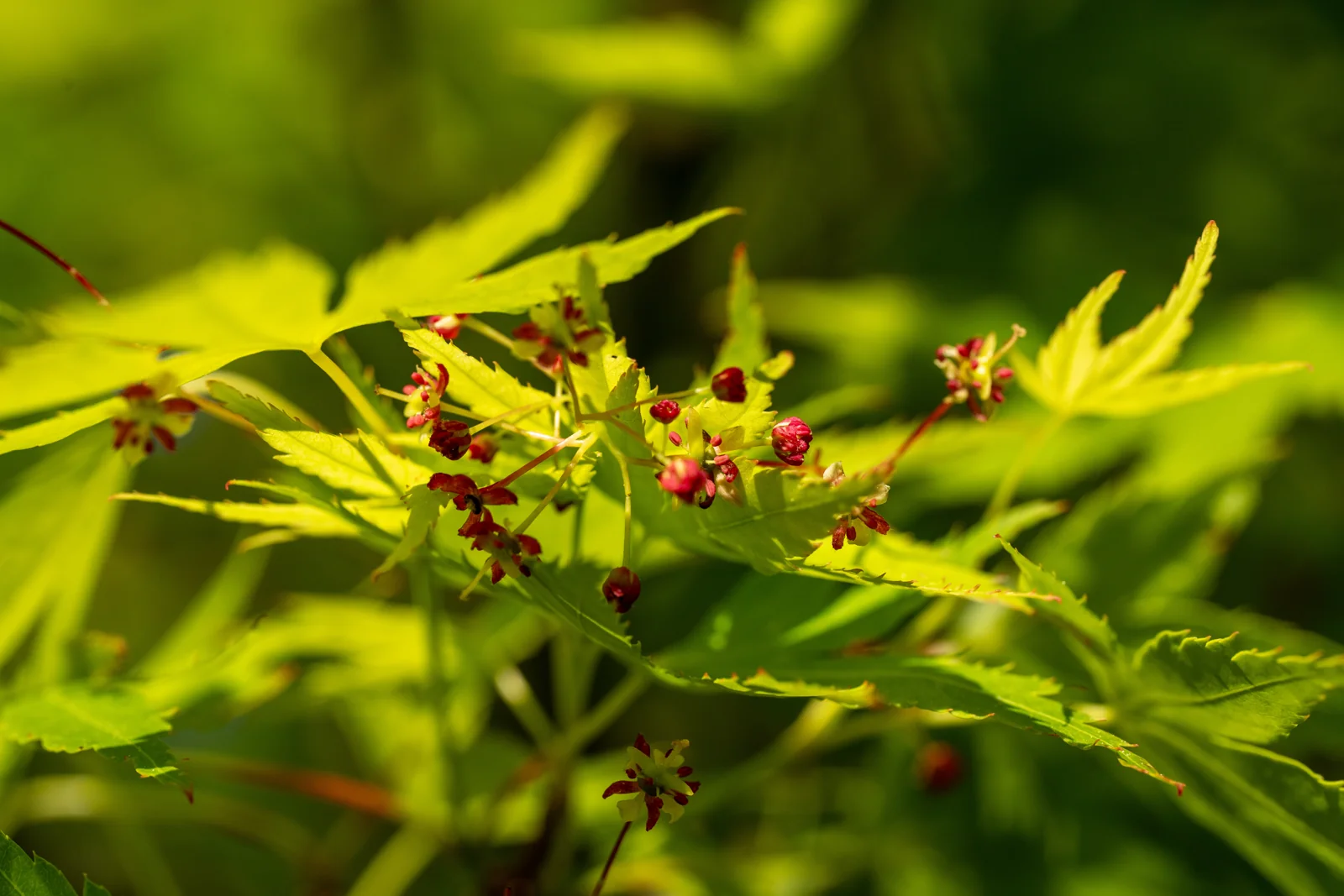
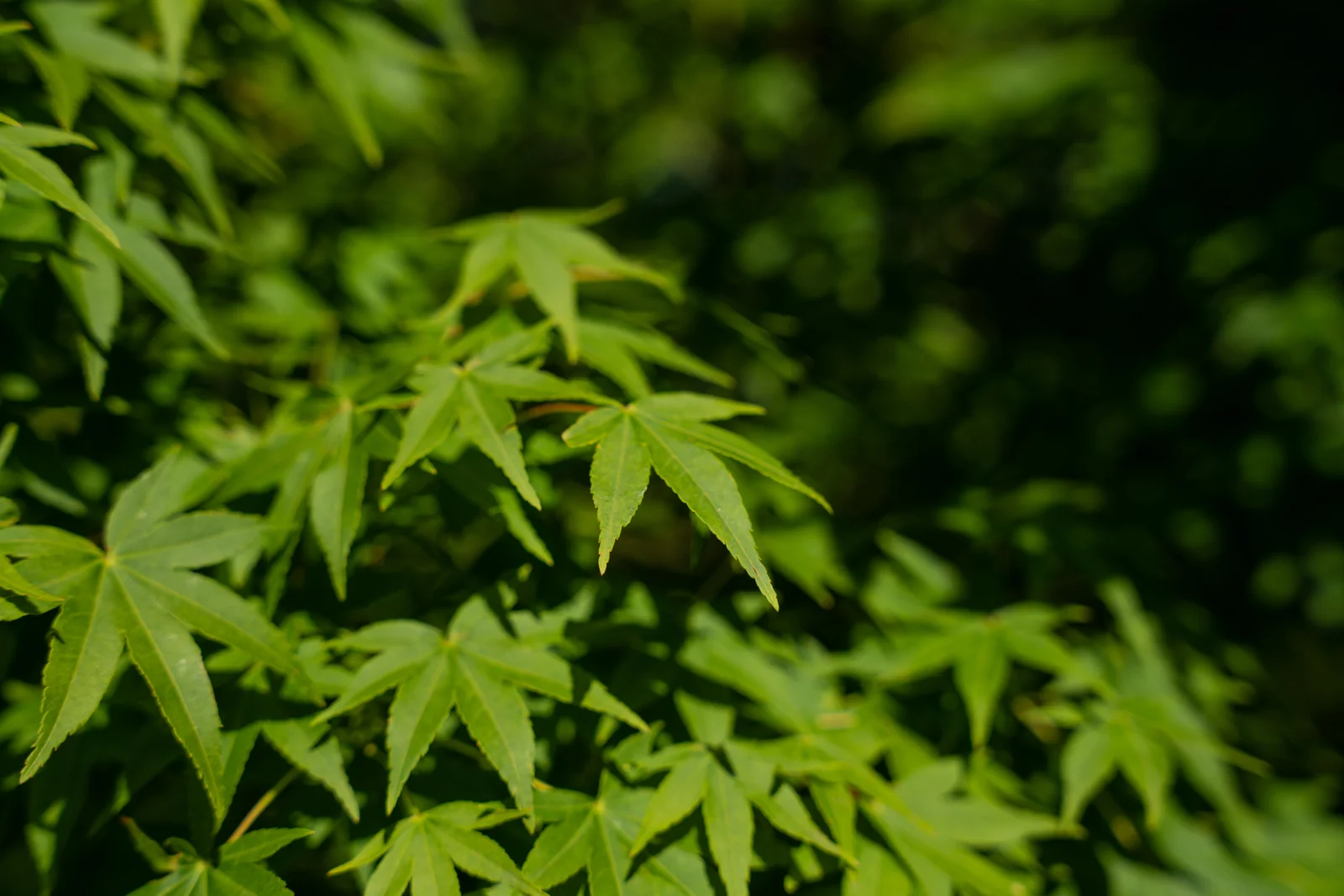
Acer palmatum forms a small, slow-growing deciduous tree, typically 4 to 8 metres in height and spread, with a rounded, layered crown often wider than tall. Leaves are palmately five to nine-lobed and 5 to 12 centimetres across, opening green or bronze depending on cultivar, then turning yellow, orange, copper, or crimson in autumn. Bark is smooth and green…
Read more
Show less
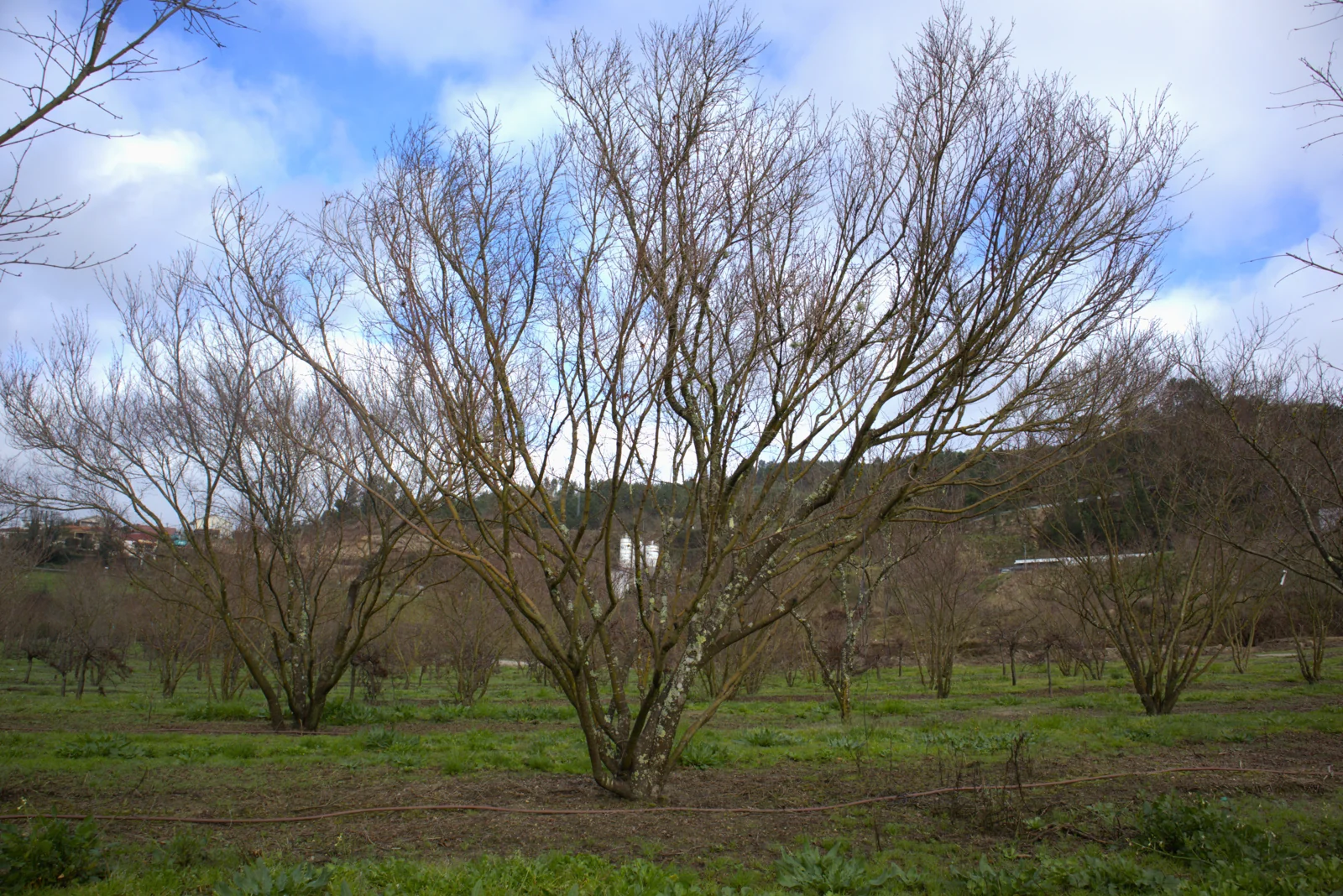
Acer palmatum forms a small, slow-growing deciduous tree, typically 4 to 8 metres in height and spread, with a rounded, layered crown often wider than tall. Leaves are palmately five to nine-lobed and 5 to 12 centimetres across, opening green or bronze depending on cultivar, then turning yellow, orange, copper, or crimson in autumn. Bark is smooth and green on young stems, deepening to grey on older branches; coral-twigged selections add winter structure. The species is most often specified as a feature specimen for courtyards, entrance gardens, and focal viewpoints.
Performance is governed by atmospheric humidity and root-zone moisture rather than by frost hardiness. The species thrives in the humid Minho and Douro (1200 to 1800 mm annual rainfall, acidic granite and schist soils) and in the sheltered Sintra microclimate (Monserrate, Pena), where mature specimens have persisted for over a century. In Greater Lisbon it suits shaded courtyards and irrigated quinta gardens; reflected heat from limestone pavement and salt-laden estuary air scorches foliage on exposed alignments. In coastal Algarve and interior Alentejo, with summer temperatures above 35 degrees C, the species reaches its limit.
For a Portuguese plant schedule, the tree functions as a small feature specimen rather than a framework or alignment tree, filling the focal role that Cercis siliquastrum (olaia) occupies in drier briefs. Soils must drain freely yet retain summer moisture; acidic to neutral loams over schist or granite suit it best, while limestones require deep organic amendment and reliable drip irrigation. Young leaves are sensitive to late spring frost and to drying winds, so a sheltered north or east aspect with high overhead shade extends colour duration and useful life.
Maintenance is light once established. Formative pruning should be undertaken in midsummer or early autumn to avoid sap bleeding; hard reduction is poorly tolerated and disfigures the layered habit. Anthracnose and leaf scorch are the main pressures in Portugal, both managed through siting rather than spray programmes.



Advice on this species
Want to know more about Acer palmatum?
Tell us about your project and we'll advise you on this species — where it thrives, which size makes sense, and what to expect once planted.
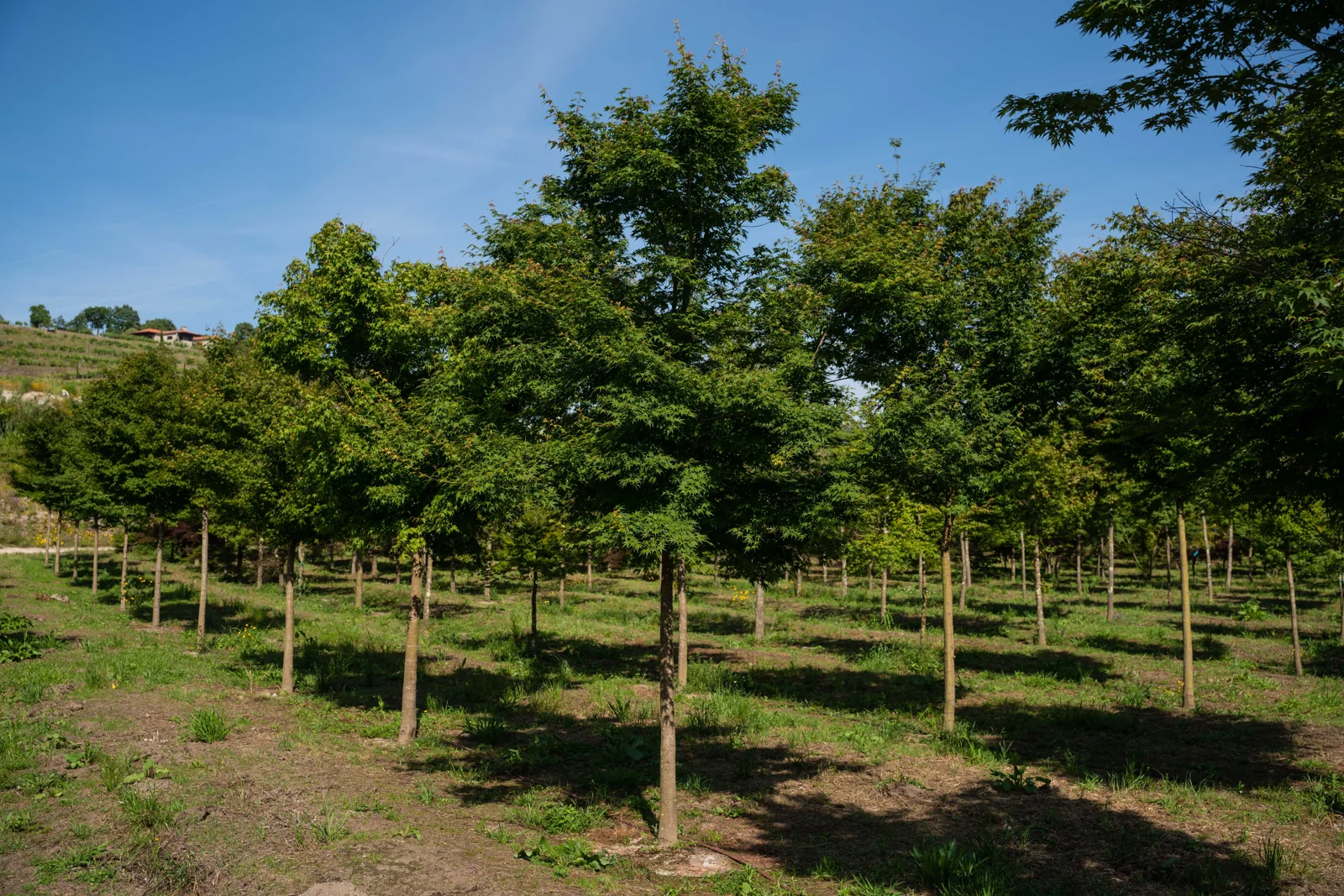
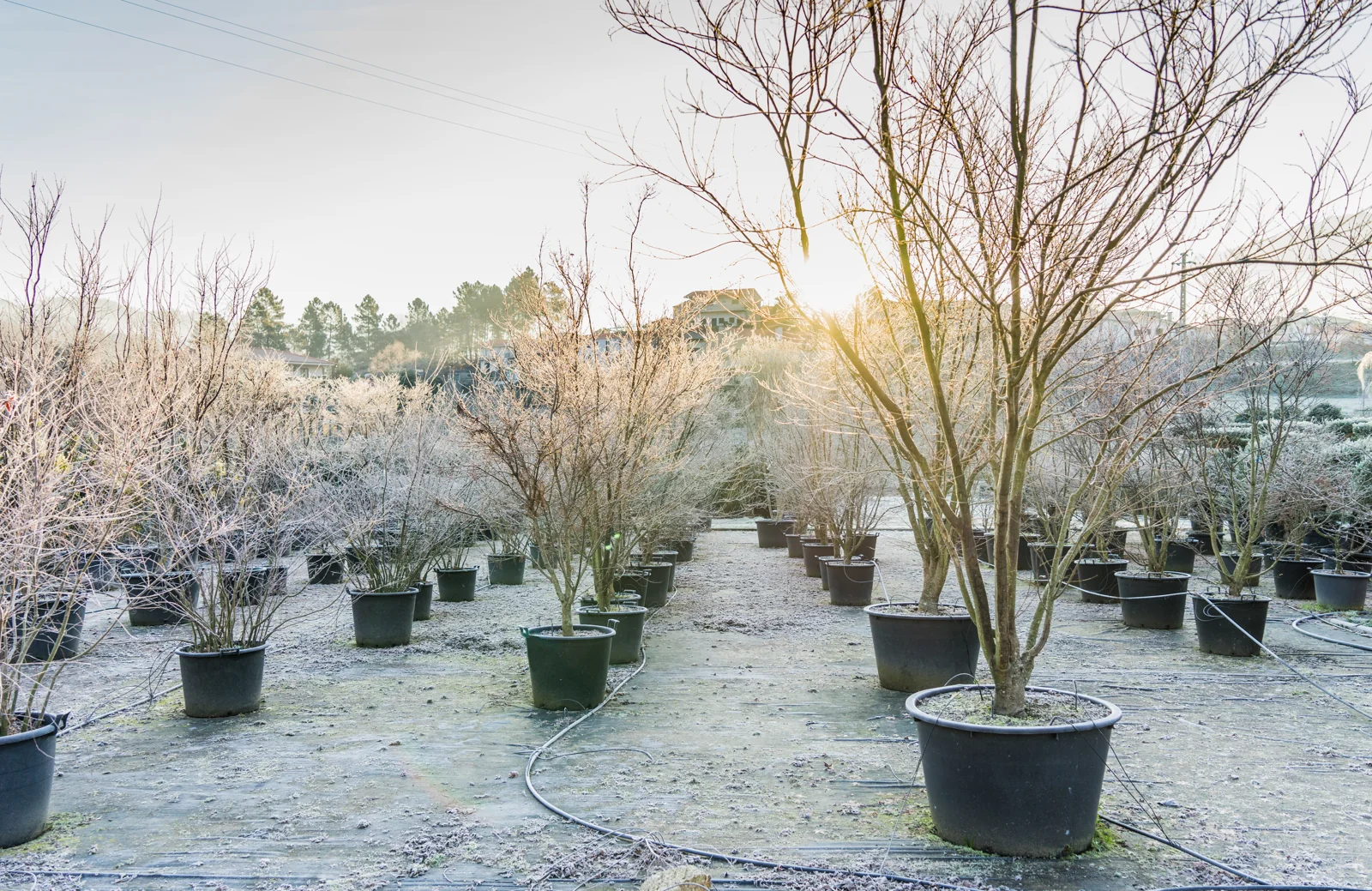
- Produção própria
- Exemplares adultos
- Resposta em 1–2 dias
Sem compromisso · orçamento personalizado