

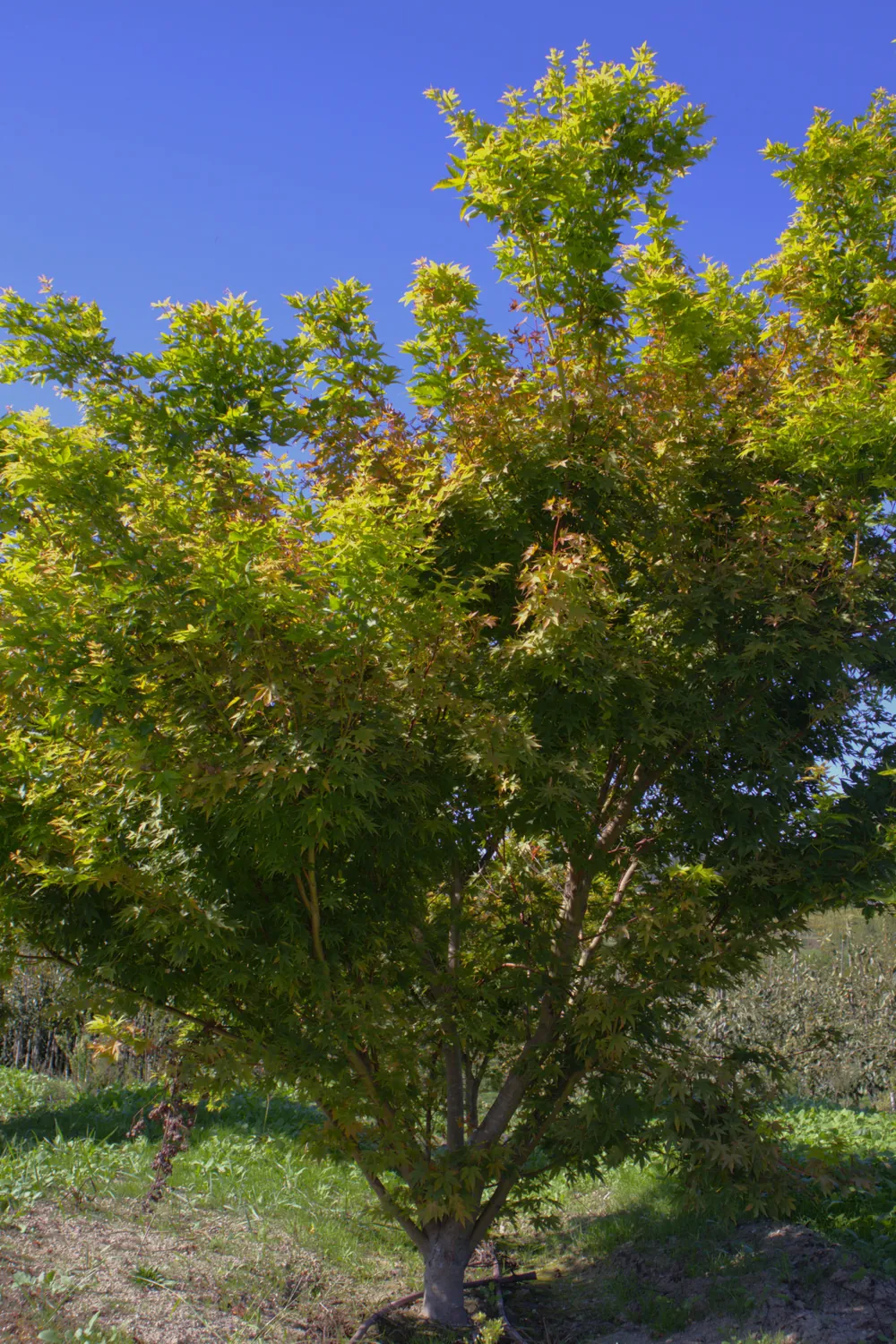
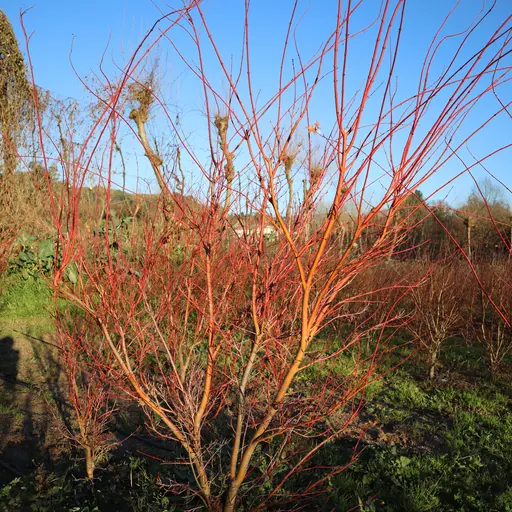
A Japanese maple with coral-red winter branches
Japanese Maple ‘Senkaki’ · Acer palmatum ‘Senkaki’
Cultivar of Acer palmatum selected for the coral-red colouring of one-year shoots, most visible in winter once the leaf has fallen. Specimen role for sheltered private gardens, walled courtyards and shaded compositions in cooler Portuguese microclimates.
- Coral-red bark on young shoots and branches, visible October to March
- Palmate leaf turning butter yellow to apricot orange in late October
- Slow upright vase to about 4 to 6 m in height at twenty years
Key Facts
About this Cultivar
'Senkaki' (synonym 'Sango-kaku', the Japanese word for coral) is distinguished from the species and from red-leaved palmatum cultivars by a feature uncommon in the genus: a coral-red to coral-pink colouration of the current year's shoots and young branches, intensified by winter cold and visible from leaf-fall to spring break. The cultivar's case rests on…
Read more
Show less
'Senkaki' (synonym 'Sango-kaku', the Japanese word for coral) is distinguished from the species and from red-leaved palmatum cultivars by a feature uncommon in the genus: a coral-red to coral-pink colouration of the current year's shoots and young branches, intensified by winter cold and visible from leaf-fall to spring break. The cultivar's case rests on this winter trait. To specify 'Senkaki' without making the winter bark the primary argument is to confuse it with any palmatum.
Foliage palmate with five to seven lobes, not dissected, pale to yellow-green in summer, turning butter yellow and apricot orange between mid-October and early November in Atlantic conditions. Vase-shaped upright habit in youth, broadening with age to about 4 to 6 m in height and 4 to 5 m in crown spread at twenty years, with finer and more regular branching than the species. Growth is slow, around 20 to 30 cm per year in favourable conditions; reckon twelve to fifteen years to full specimen presence.
Soil and site requirements are strict. Fresh, well-drained, slightly acid soil with organic matter; intolerant of compacted limestone soils and of seasonal waterlogging. Drought tolerance is low and supplementary irrigation is required through every Portuguese summer, including the established phase. Full sun in the dry interior Alentejo or the inland Algarve scorches young foliage and stresses the tree; reserve for half-shade with protection from direct afternoon sun.
The intensity of the coral bark depends on winter cold differential. Performance is fullest in the humid Atlantic microclimates of Sintra, the Minho coast and the cooler suburbs of Greater Porto, where winters supply the contrast that drives the colour. In the central and western Algarve, mild winters mute the display; the tree remains useful for habit and autumn colour, but the four-season argument loses weight. Field-grown at Diaplant in Amarante (around 950 mm annual rainfall, mild Atlantic winters) gives stock acclimatised to Portuguese seasonal rhythm. Hardiness to roughly -15 °C, with no documented stress in Portuguese conditions.
Use as a contemplative specimen against a dark evergreen backdrop or pale wall that holds the bark reading through the leaf-off months. Pruning limited to sanitary cuts after the third year; the cultivar tolerates hard late-winter pruning poorly.
Advice on this species
Want to know more about Acer palmatum 'Senkaki'?
Tell us about your project and we'll advise you on this species — where it thrives, which size makes sense, and what to expect once planted.
- Produção própria
- Exemplares adultos
- Resposta em 1–2 dias
Sem compromisso · orçamento personalizado