

A laceleaf maple for the sheltered Portuguese courtyard
Japanese Maple ‘Dissectum’ · Acer palmatum ‘Dissectum’
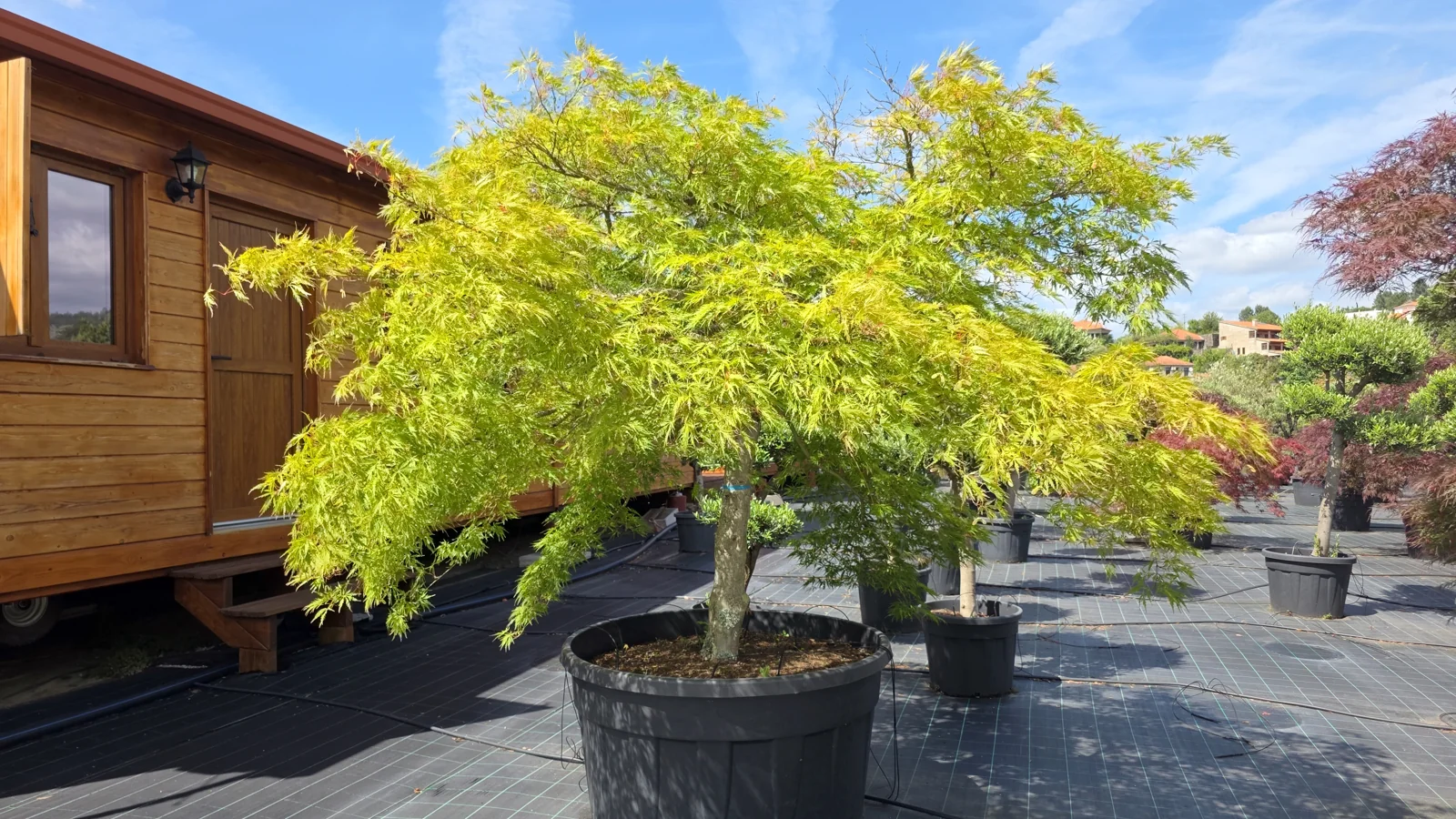
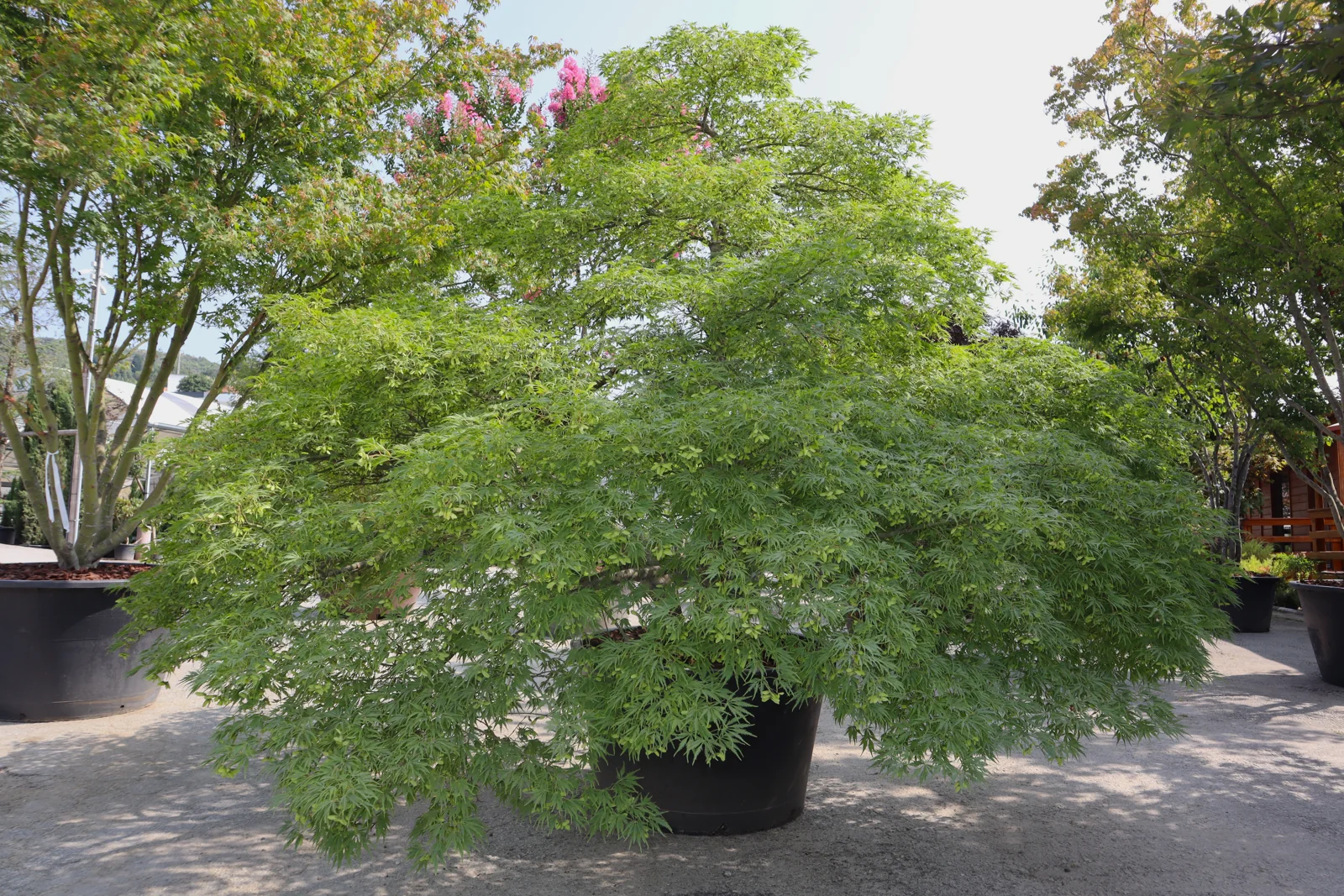
A very slow, mounded cultivar of Acer palmatum with finely dissected foliage, specified as a focal specimen in sheltered courtyards (pátios), beside water features, or in large containers across humid northern Portugal.
- Mounded laceleaf canopy reaching two to three metres at maturity
- Spring red flowers and clear autumn fire in yellow, orange and red
- Wants part shade, a sheltered patio and free-draining acidic soil
Key Facts
About this Cultivar
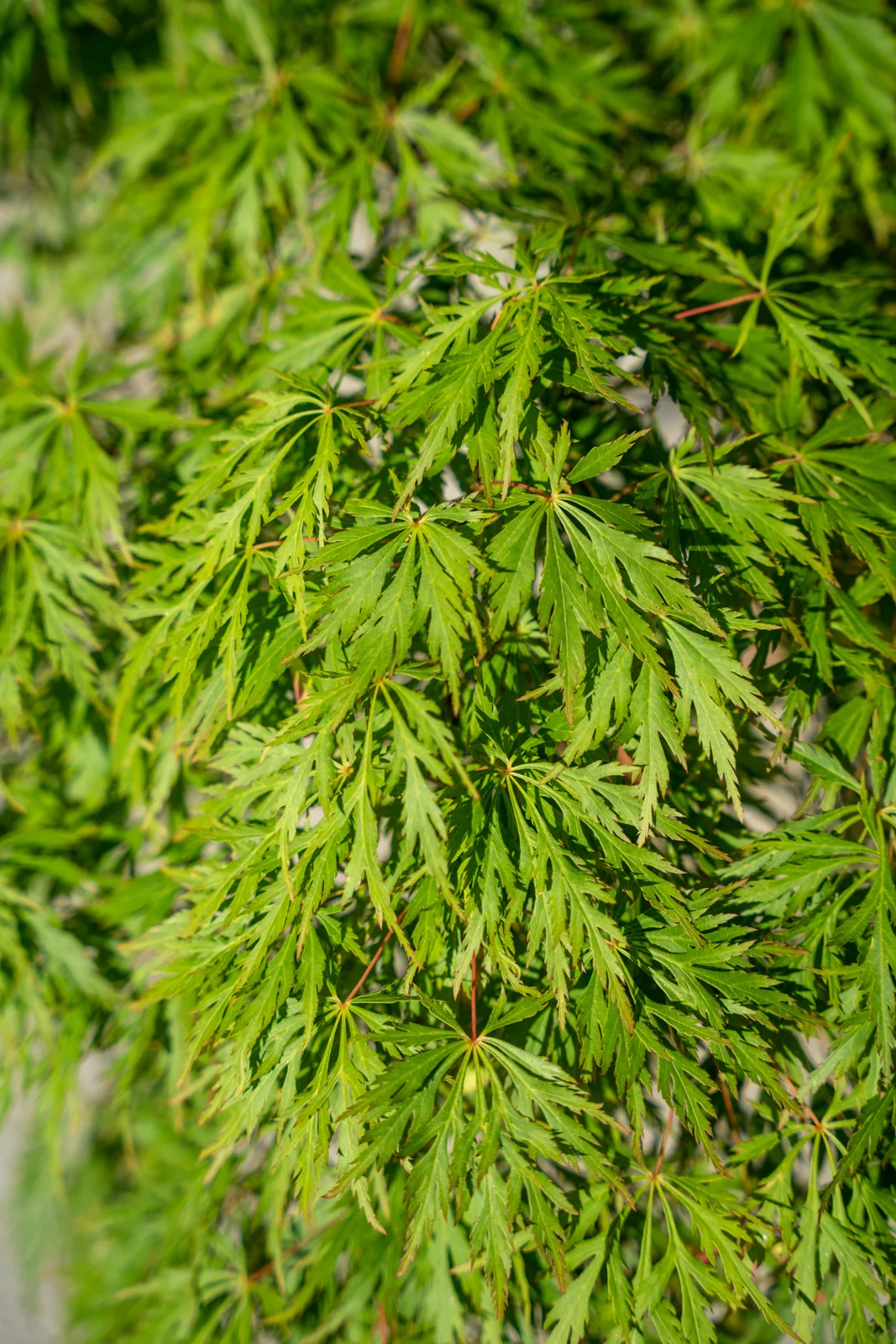
Acer palmatum 'Dissectum' is a low, mounded deciduous shrub or short feature tree reaching 2 to 3 metres in height and a similar spread at maturity. The habit is pendulous and the finely dissected foliage hangs in distinct tiers. Growth is very slow, which is an asset for the specifier: a 1.5 m plant placed in a courtyard reads as resolved planting from the…
Read more
Show less
Acer palmatum 'Dissectum' is a low, mounded deciduous shrub or short feature tree reaching 2 to 3 metres in height and a similar spread at maturity. The habit is pendulous and the finely dissected foliage hangs in distinct tiers. Growth is very slow, which is an asset for the specifier: a 1.5 m plant placed in a courtyard reads as resolved planting from the first season and changes scale only gradually across a decade. Use the cultivar as a feature specimen, not as a framework tree.
Performance in Portugal is governed by light and atmospheric humidity, not by hardiness. The cultivar suits the humid Minho and Douro, where Atlantic influence, around 950 to 1200 mm of annual rainfall, and milder summer light match its requirements. In Greater Lisbon, the coastal Algarve, and interior Alentejo, direct summer sun will scorch the dissected lamina; specify only for north-facing pátios, shaded courtyards within a quinta, or positions under the high dappled canopy of an existing sobreiro (Quercus suber) or pinheiro-manso (Pinus pinea).
Soils should be free-draining, slightly acidic, and rich in organic matter. The cultivar tolerates neither prolonged drought nor waterlogging; on the granite and schist substrates of the north this is straightforward, while limestone-derived urban soils require correction. Salt exposure is not tolerated, which removes the estuarine and Algarve coastal strip from consideration.
Maintenance is light but skilled. Formative pruning is minimal: the pendulous mound resolves itself, and any intervention should esculpir the silhouette by selective thinning, not by reduction. Irrigation is required through the first three summers and during prolonged dry spells thereafter; container specimens need year-round attention to the torrão. Disease and pest pressure are moderate, with verticillium wilt the principal concern on stressed plants.
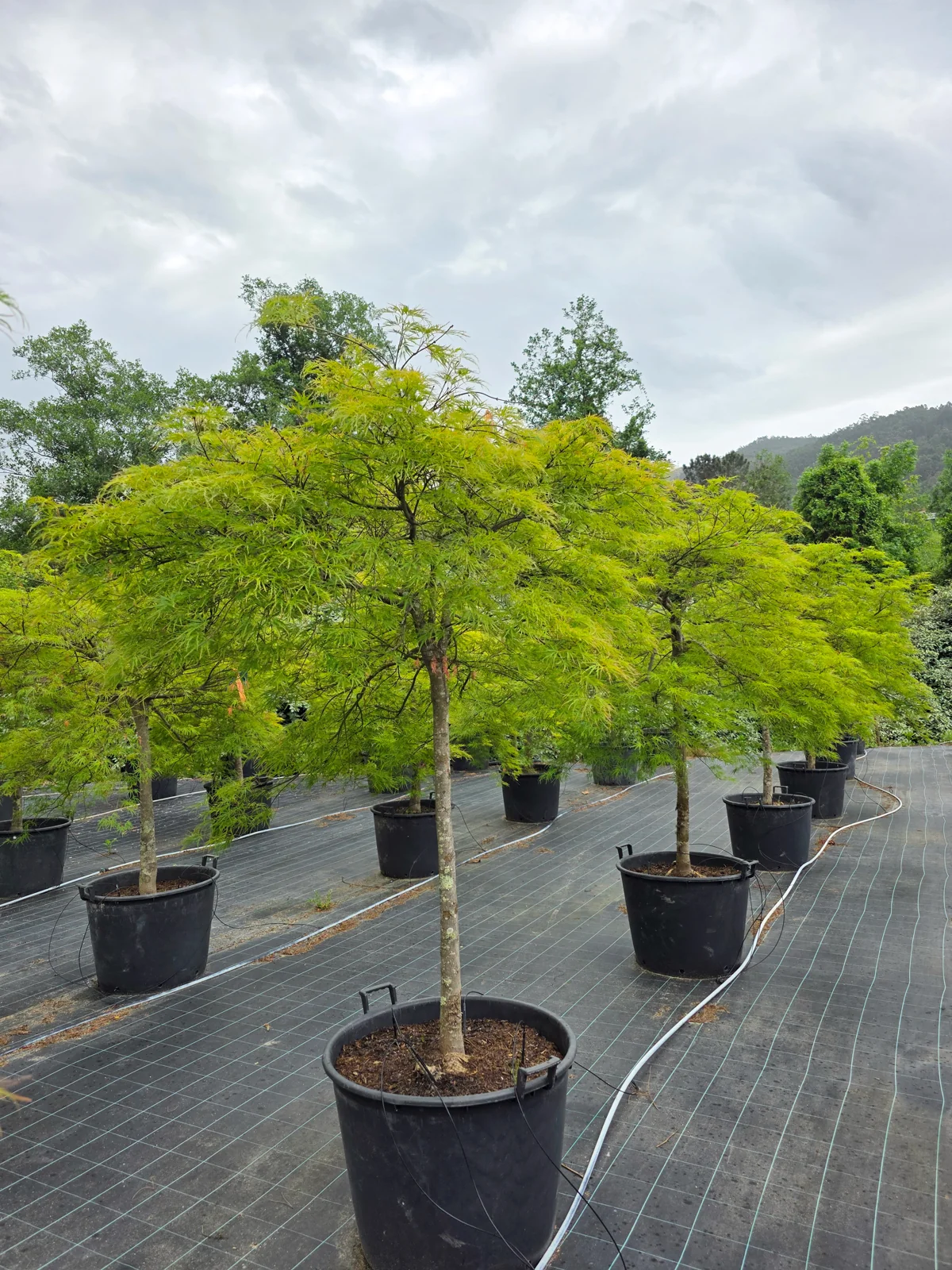
Field-grown in Amarante, the cultivar performs in conditions closely resembling its preferred Portuguese sites, supporting a track record relevant to projects across the northern half of the country.
Advice on this species
Want to know more about Acer palmatum 'Dissectum'?
Tell us about your project and we'll advise you on this species — where it thrives, which size makes sense, and what to expect once planted.
- Produção própria
- Exemplares adultos
- Resposta em 1–2 dias
Sem compromisso · orçamento personalizado