

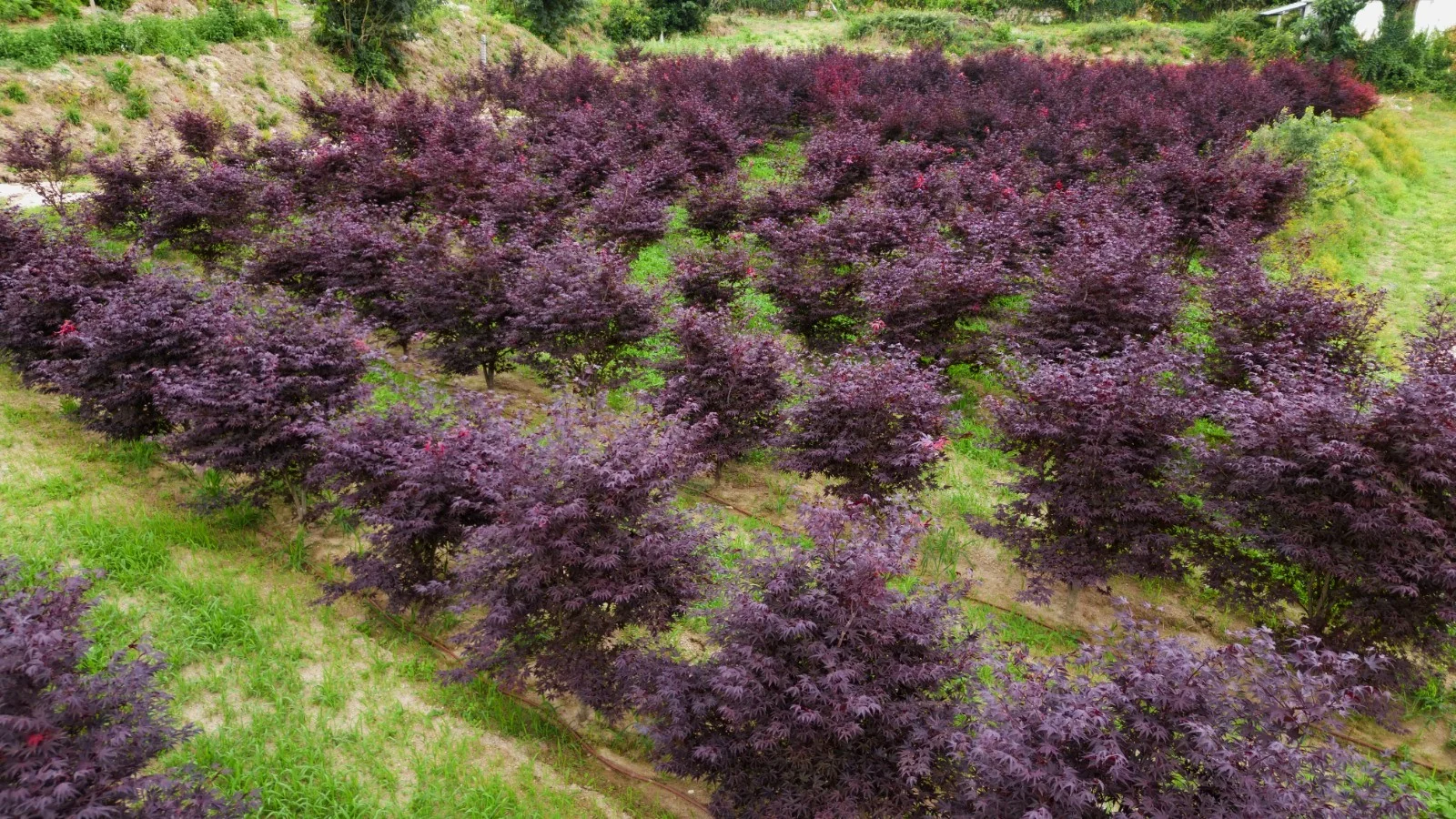
A compact purple-leaved maple for the sheltered Portuguese garden
Japanese Maple ‘Bloodgood’ · Acer palmatum ‘Bloodgood’
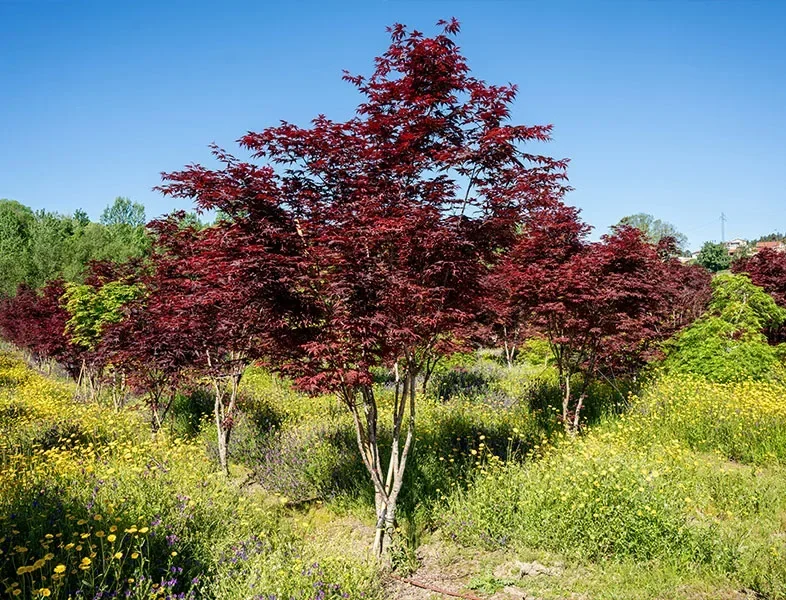
A small, multi-stem cultivar of Japanese maple specified as a feature specimen where a sheltered courtyard, north-facing garden, or shaded praça calls for sustained dark foliage and reliable autumn colour.
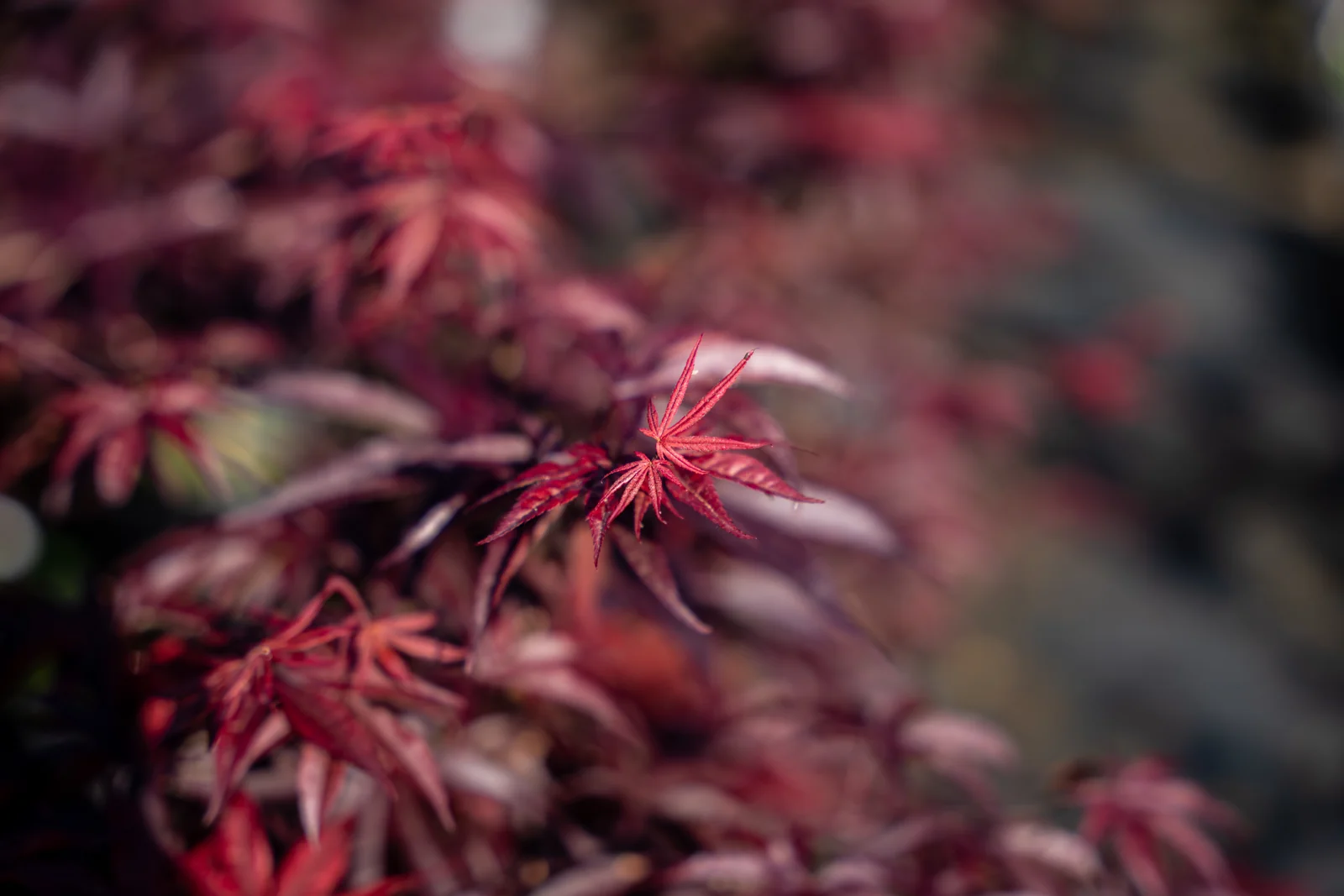
- Wine-purple foliage holds its colour through the Portuguese summer
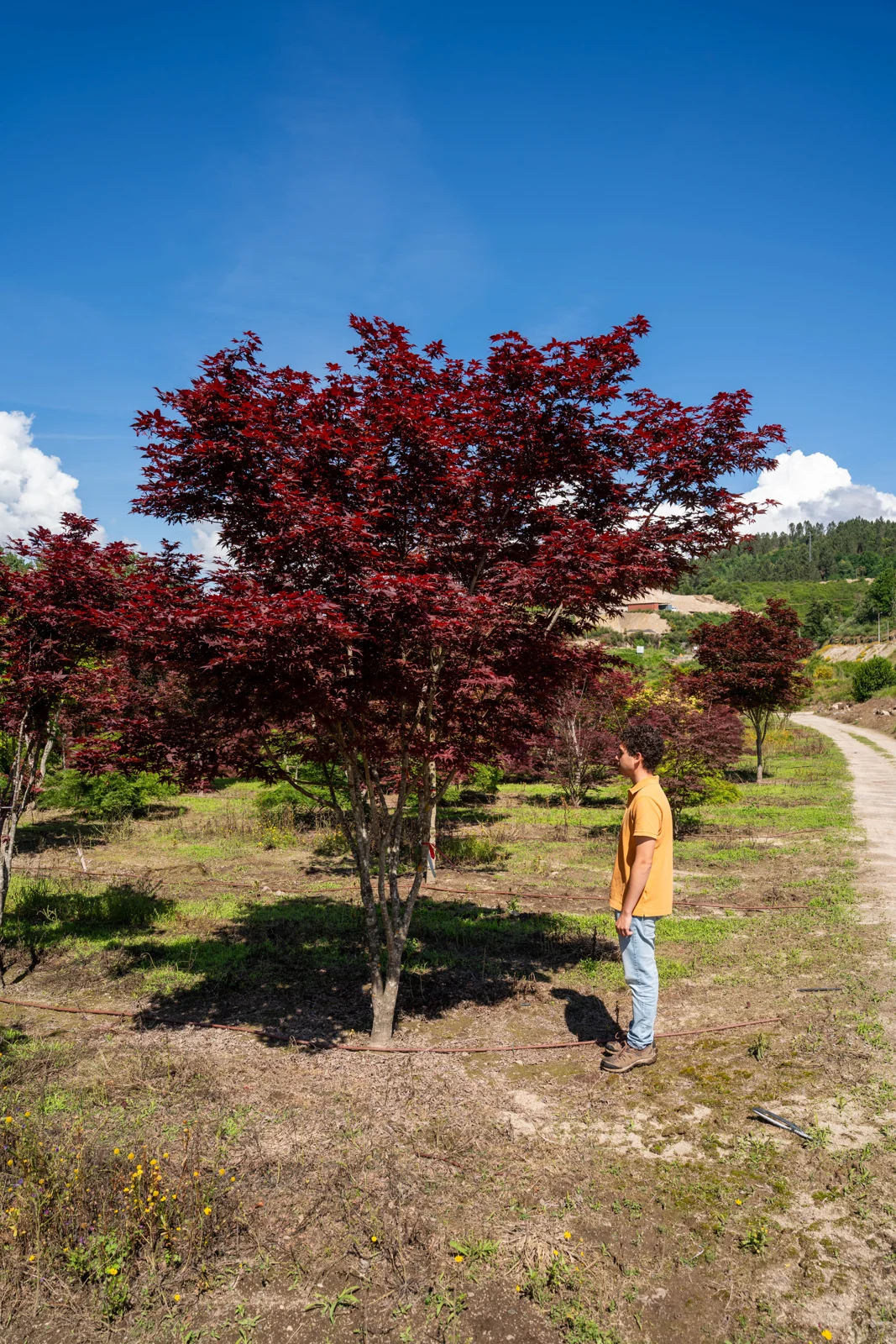
- Compact rounded crown reaching four to five metres at maturity
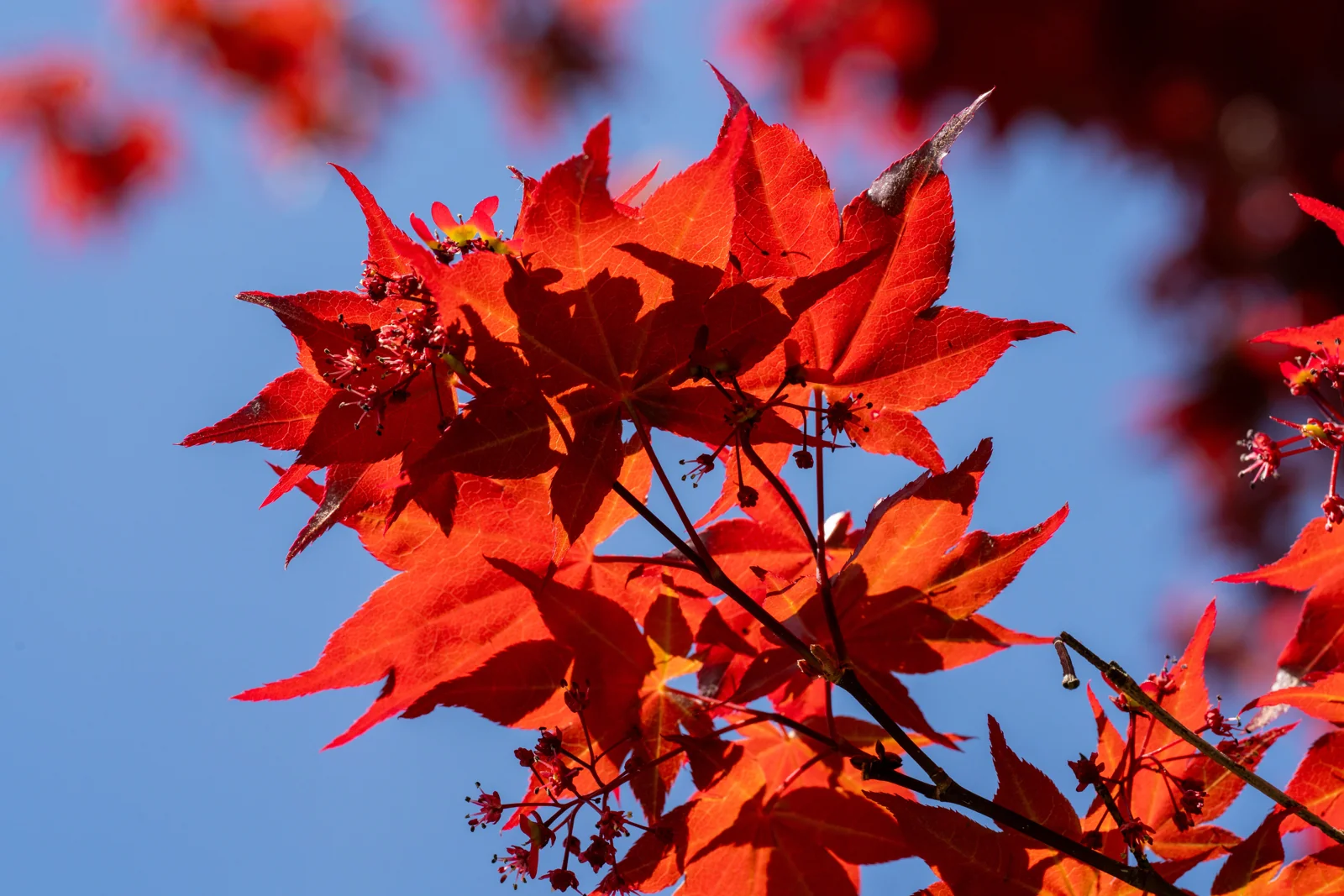
- Clear scarlet autumn turn, weeks after most local gardens have faded
Key Facts
About this Cultivar
'Bloodgood' is a compact selection of Acer palmatum, reaching four to five metres in height and a similar spread at maturity, denser and more contained than 'Atropurpureum'. The habit is multi-stem and rounded, with slender branches that layer into a low, well-formed crown. Foliage emerges and holds a deep purple-red through spring and summer, resisting the…
Read more
Show less
'Bloodgood' is a compact selection of Acer palmatum, reaching four to five metres in height and a similar spread at maturity, denser and more contained than 'Atropurpureum'. The habit is multi-stem and rounded, with slender branches that layer into a low, well-formed crown. Foliage emerges and holds a deep purple-red through spring and summer, resisting the green-out that affects weaker purple selections, then turns vivid scarlet in autumn.
In Portuguese conditions this is a sheltered-site cultivar, not a street tree. It performs reliably in the humid Minho and Douro, in well-drained acidic soils with organic matter, and in courtyard plantings across Greater Lisbon and Greater Porto where reflected heat is moderated. In the interior Alentejo and coastal Algarve, full afternoon sun and dry winds scorch the leaf margins; partial shade, irrigation through the first summers, and protection from the prevailing wind are required if the cultivar is to be specified at all in those zones.
The rooting system is fibrous and shallow rather than deep, which makes a stable torrão and careful establishment irrigation important. Drought tolerance is moderate at best, lower than the parent species in open-ground exposure, so it is not the right specification for low-input municipal arruamentos. As a feature specimen in a quinta garden, a Sintra-style shaded composition, or a contained praça with irrigation, it carries the scheme.
Maintenance is light. The cultivar is non-toxic, drops modest leaf and samara litter, and tolerates formative pruning in late winter; hard pruning is not recommended. Disease and pest pressure is moderate in Portuguese conditions, with leaf scorch from wind or excess sun the most common field complaint rather than any named pathogen. Specify it for visual weight in a sheltered, irrigated setting and brief the maintenance team accordingly.
Advice on this species
Want to know more about Acer palmatum 'Bloodgood'?
Tell us about your project and we'll advise you on this species — where it thrives, which size makes sense, and what to expect once planted.
- Produção própria
- Exemplares adultos
- Resposta em 1–2 dias
Sem compromisso · orçamento personalizado