

A small purple-leaved maple for shaded Portuguese gardens
Japanese Maple ‘Atropurpureum’ · Acer palmatum ‘Atropurpureum’
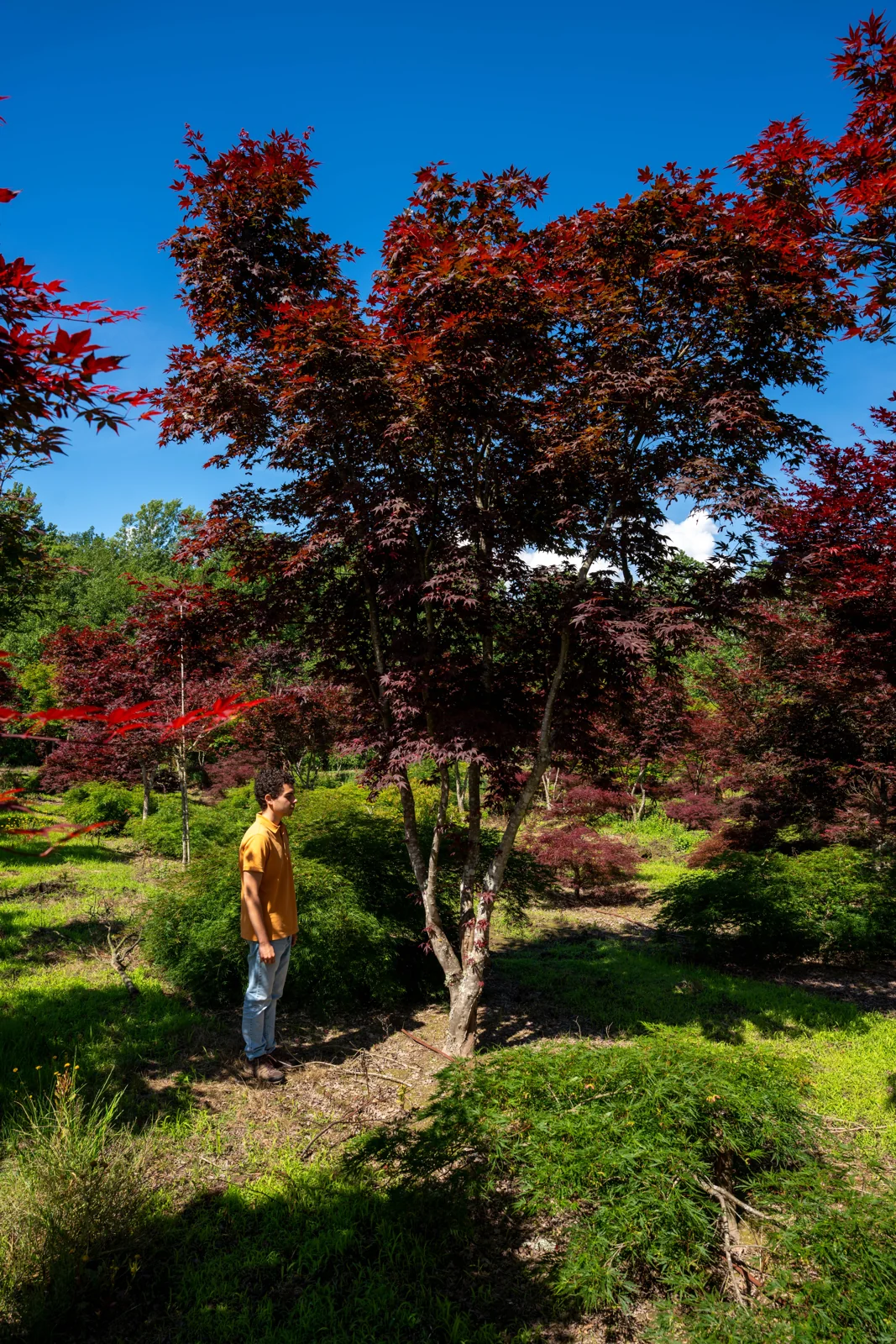
A small ornamental tree or large multi-stem shrub holding deep purple foliage through summer and turning luminous red in autumn. Specified as a focal specimen in courtyards, sheltered patios, and Japanese-inflected garden schemes across Portugal.
- Compact purple-leaved maple reaching four to six metres at maturity
- Deep purple spring and summer foliage, clear red in autumn
- Suited to shaded gardens in Greater Porto, Sintra, Silver Coast
Key Facts
About this Cultivar
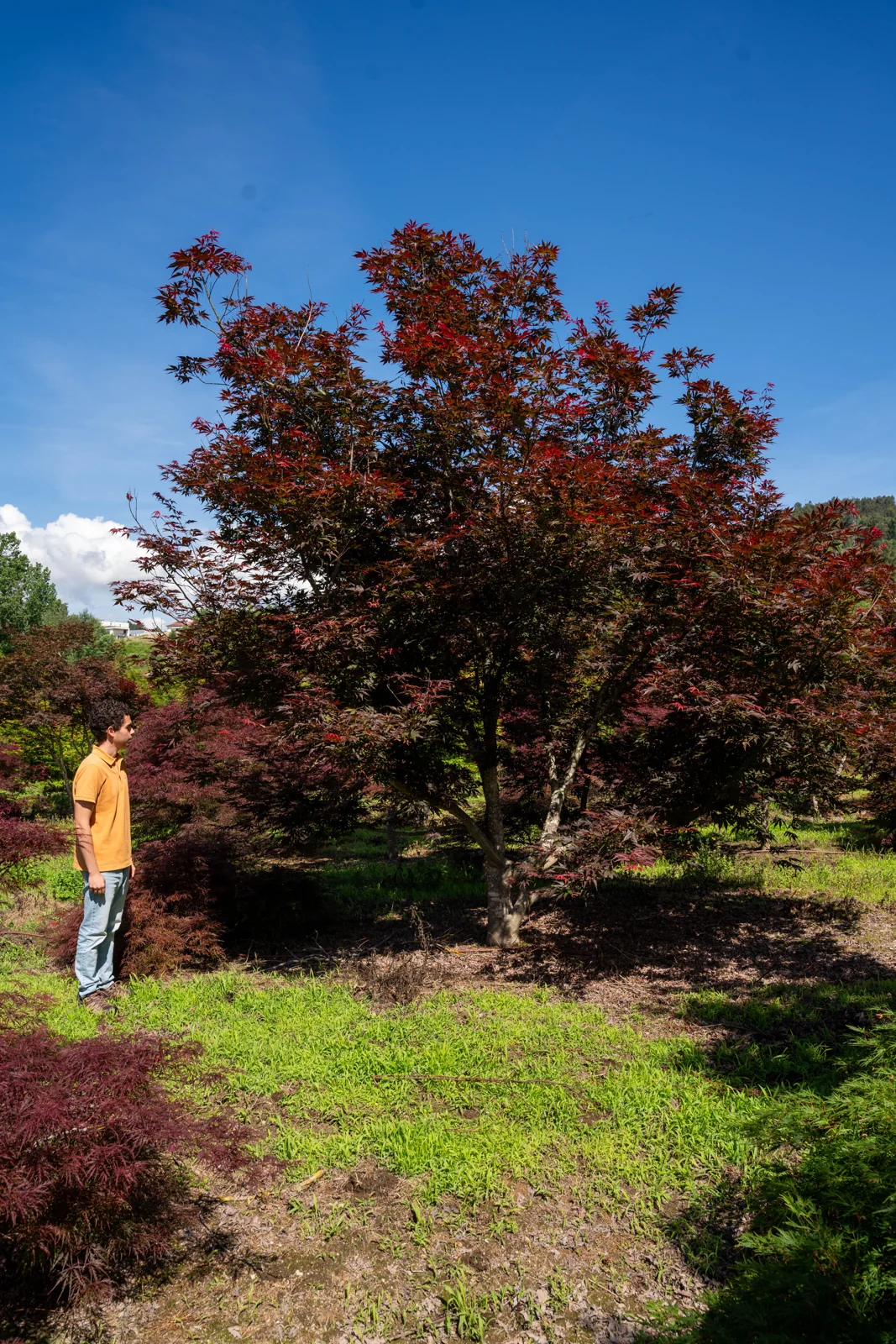
Acer palmatum 'Atropurpureum' (ácer-japonês) is a slow-growing deciduous cultivar that develops as a multi-stem shrub or low-branched small tree, reaching 4 to 6 m in height and 3 to 4 m in spread at maturity. The crown is obovoid to narrow, more compact than the green-leaved type species, which makes it a defensible specification for restricted footprints:…
Read more
Show less
Acer palmatum 'Atropurpureum' (ácer-japonês) is a slow-growing deciduous cultivar that develops as a multi-stem shrub or low-branched small tree, reaching 4 to 6 m in height and 3 to 4 m in spread at maturity. The crown is obovoid to narrow, more compact than the green-leaved type species, which makes it a defensible specification for restricted footprints: a courtyard, a sheltered patio, a praca with a tight planting pocket, or a quinta entrance where a feature specimen is needed without the scale of a framework tree.
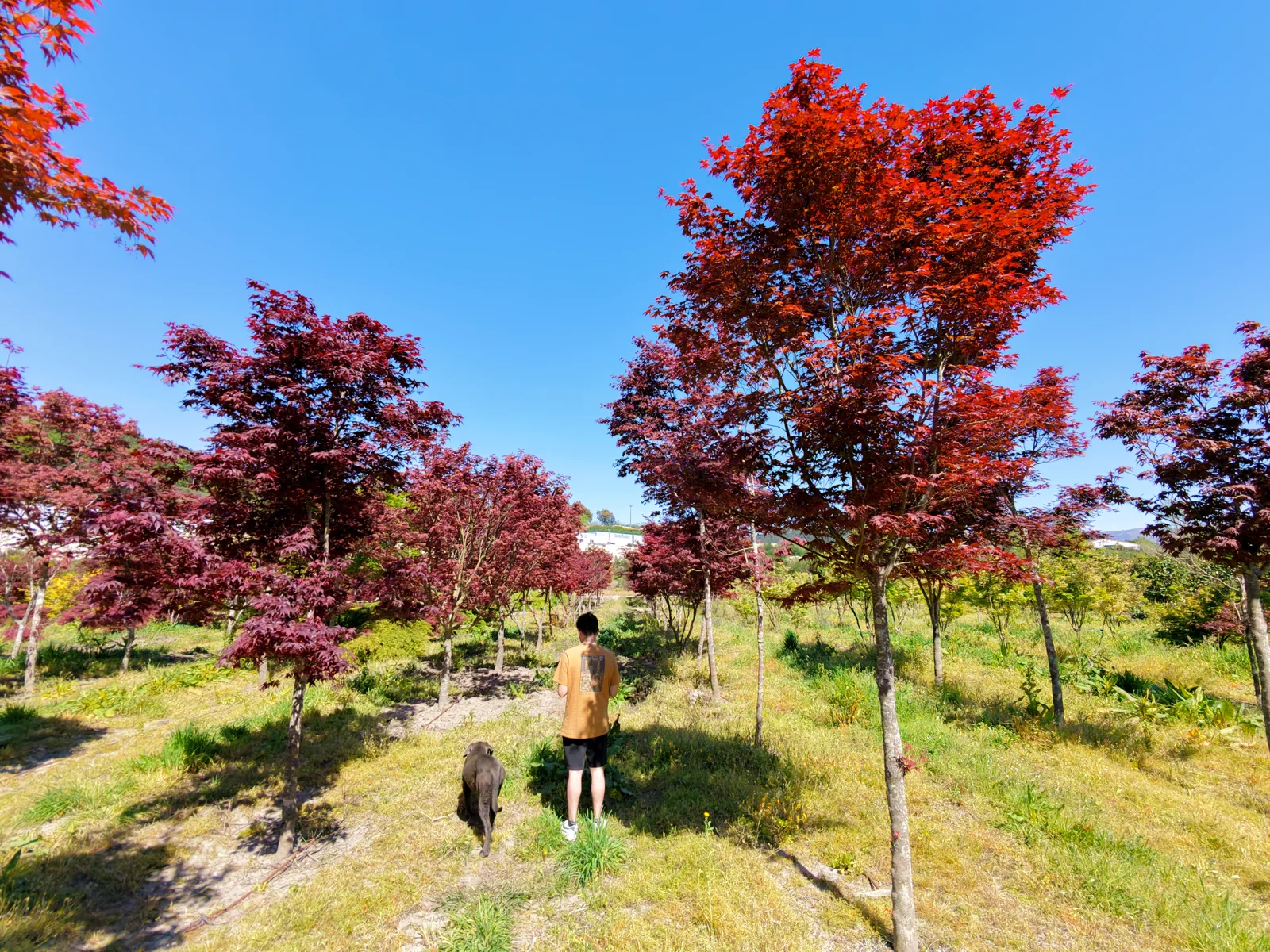
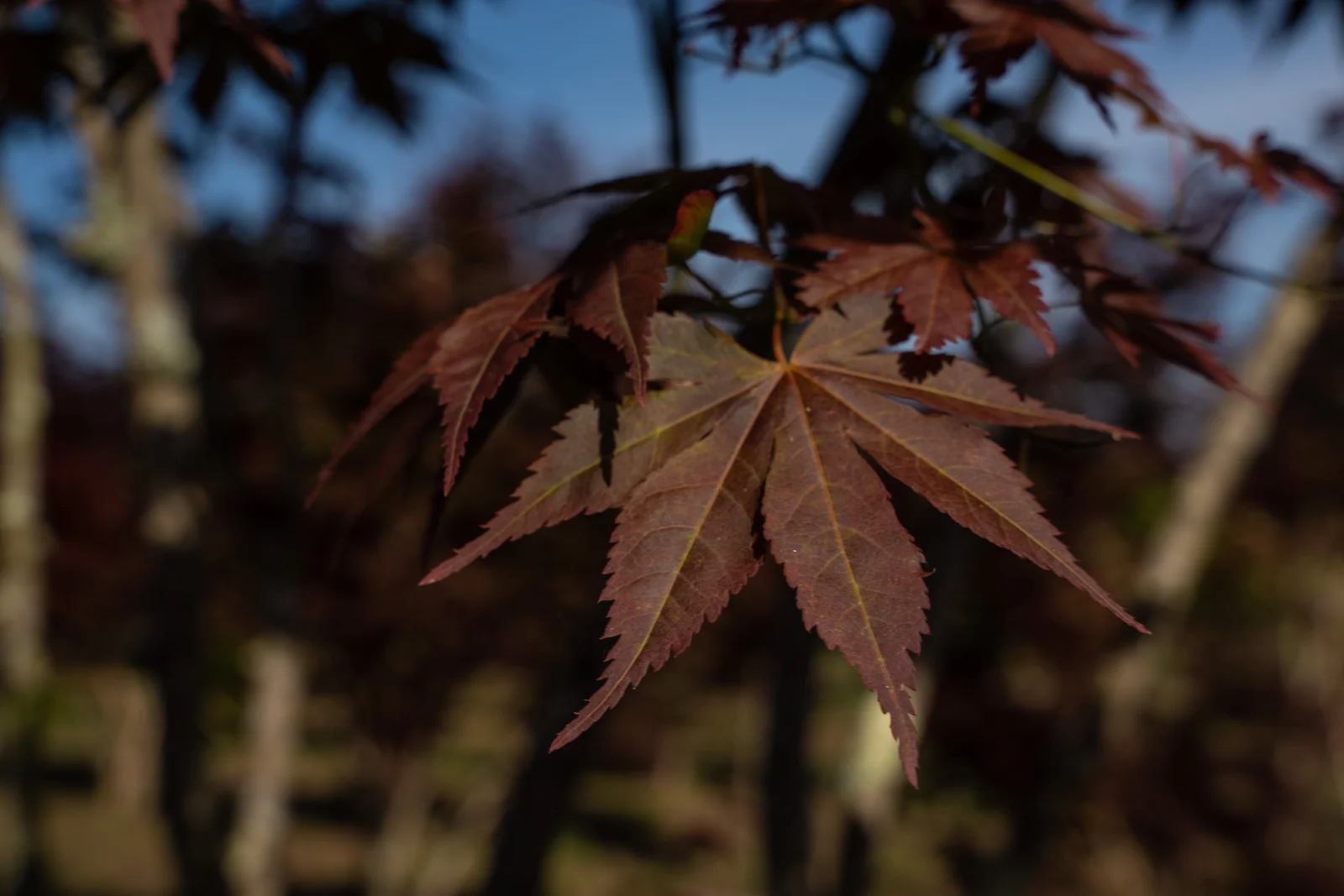
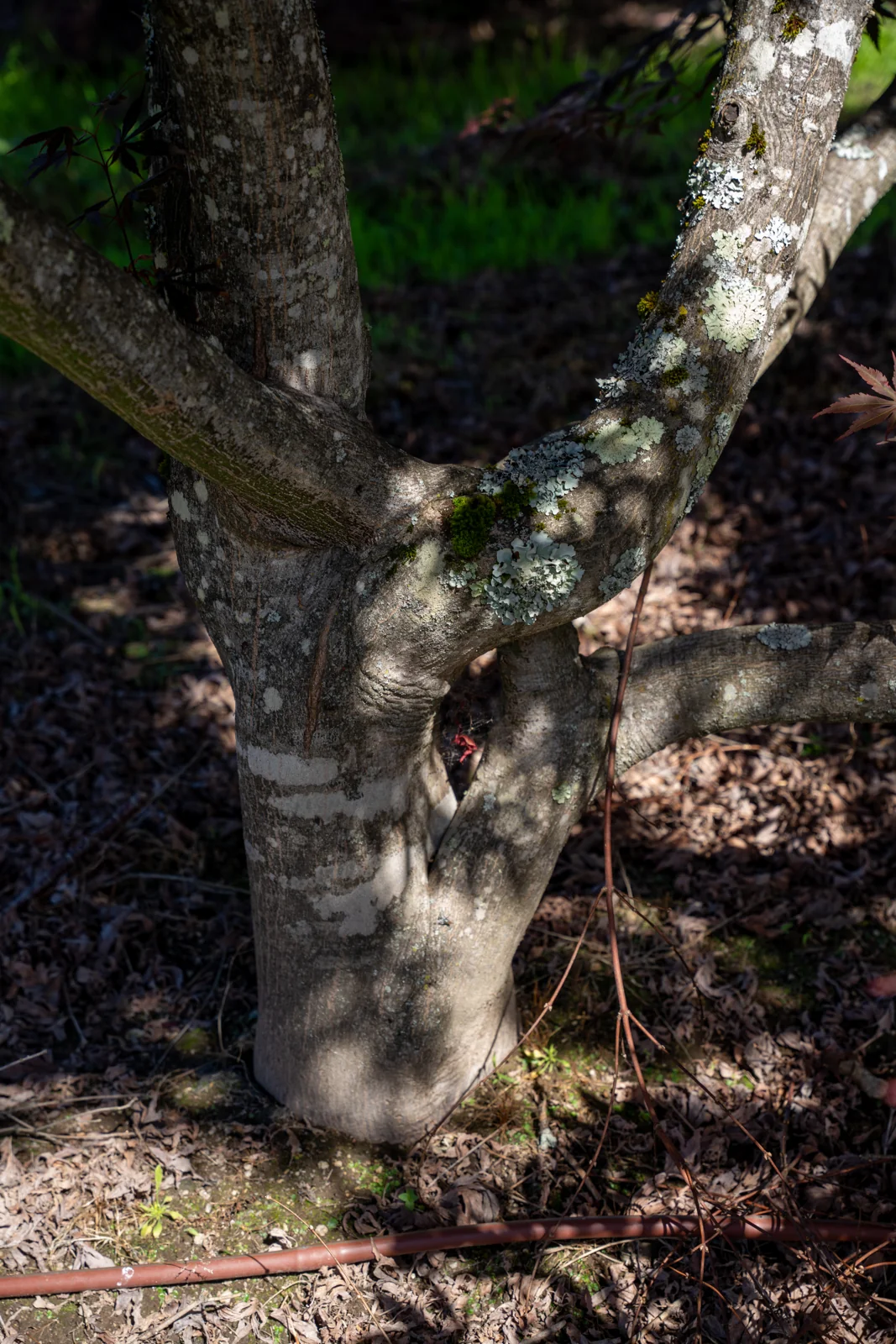
Foliage is the cultivar's structural argument. Leaves emerge in spring with five to seven pointed lobes in an intense purple, deepen through summer rather than fading, and shift to a bright, luminous red in autumn. Discreet red corymbs appear in May, followed by small winged samaras in late summer. Bark on older stems develops a quiet grey-green character that holds visual interest in the deciduous months, so the specimen carries the scheme through winter as well as the colour seasons.
In Portuguese cultivation the species sits firmly in the partial-shade band. Light shade through the hottest part of the day, an acidic to neutral free-draining soil with reasonable organic content, and protection from desiccating wind are the conditions in which the cultivar performs reliably. It is moderately tolerant of summer heat but has limited drought tolerance, so it suits irrigated schemes rather than dryland planting: the humid Minho and Douro, sheltered gardens in Greater Lisbon and Greater Porto, and irrigated jardins in the Algarve and Alentejo where mid-afternoon shade is available. Full sun in interior Alentejo conditions, calcareous soils, and salt-laden coastal exposure all push the cultivar beyond its useful range.
Maintenance is low once the specimen is established. Formative pruning is best done in late winter and limited to removing dead or crossing branches; the tree heals readily and rejects hedge-style cutting. Litter is light (small samaras and leaves), root behaviour is non-aggressive and compatible with paved surrounds, and pest and disease pressure in Portuguese conditions is moderate, mainly leaf-scorch on over-exposed specimens and aphid presence in soft spring growth.
Advice on this species
Want to know more about Acer palmatum 'Atropurpureum'?
Tell us about your project and we'll advise you on this species — where it thrives, which size makes sense, and what to expect once planted.
- Produção própria
- Exemplares adultos
- Resposta em 1–2 dias
Sem compromisso · orçamento personalizado