

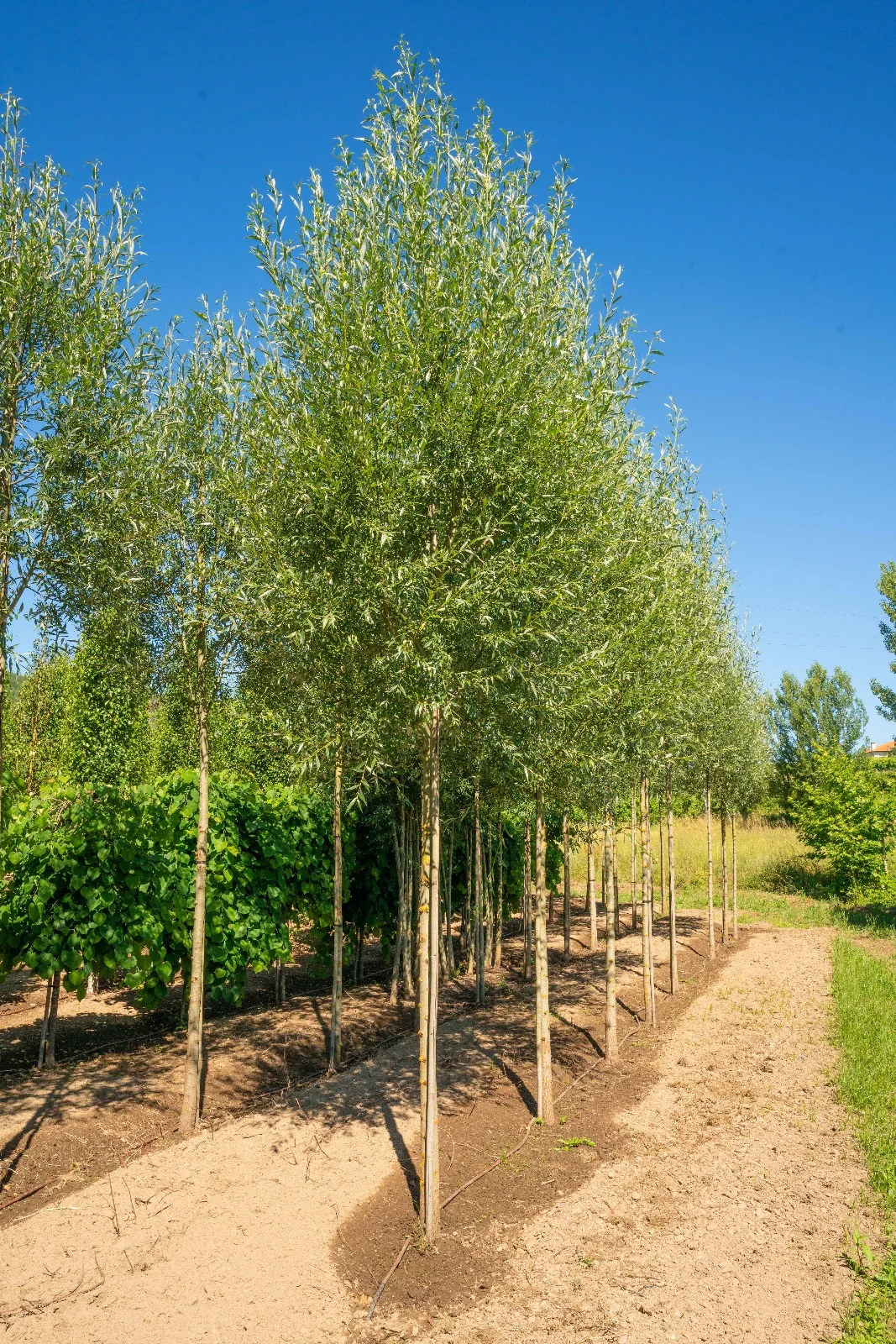
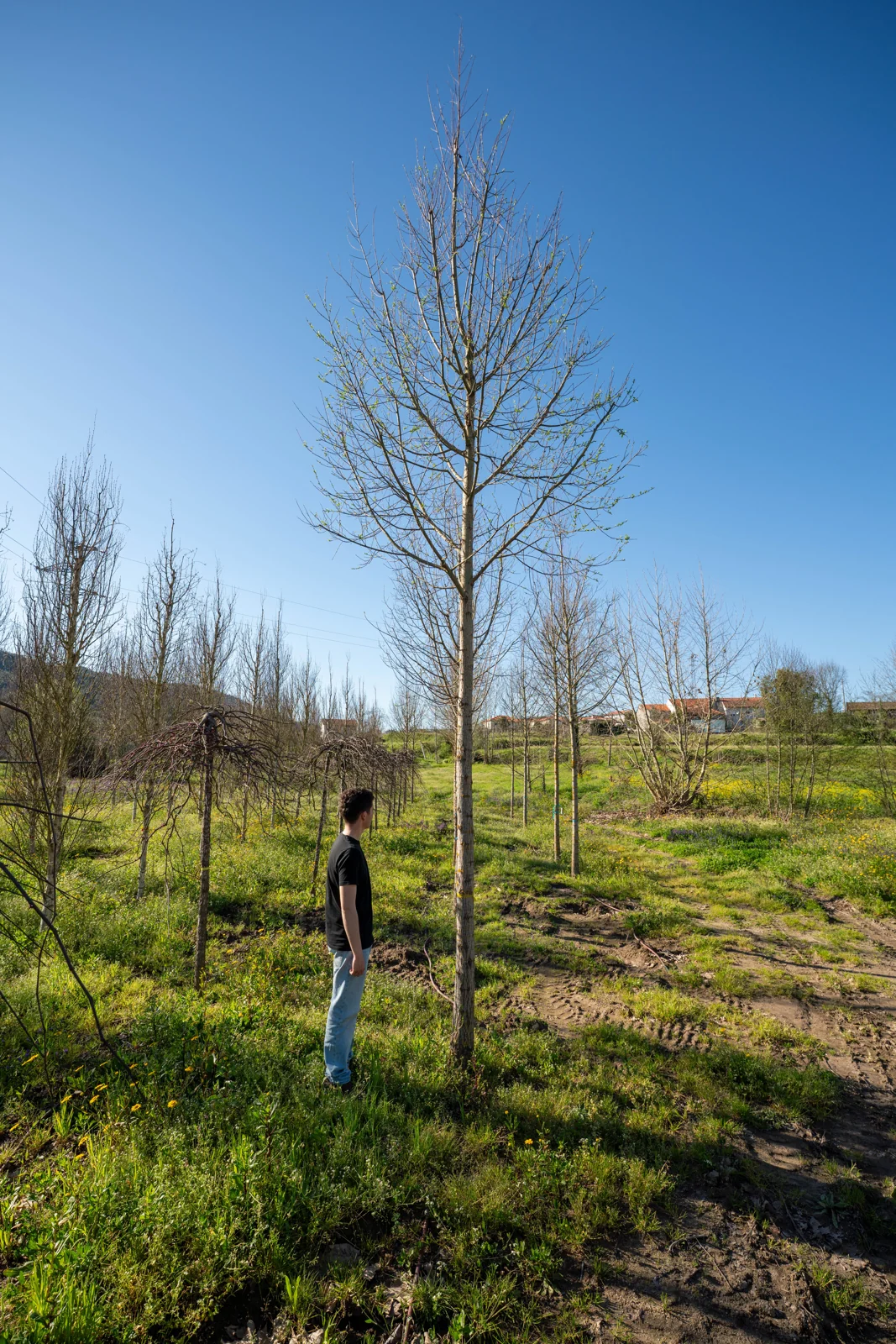
Fast riparian shade tree with silvered foliage
White Willow · Salix alba
Where a scheme has reliable soil moisture and needs height quickly, this fast-growing deciduous willow reaches 15 to 25 metres, its silver-backed leaves catching wind and light along watercourses, lake margins, and damp parkland.
About this Species
Among the most cold-hardy broadleaves in the European canon, the white willow is reliably winter-hardy across the full continental range, from the Atlantic seaboard to the boreal margins of Scandinavia and the Baltic, withstanding well below minus 30 degrees C. It tolerates dry continental summers and humid maritime ones alike, provided the root zone stays…
Read more
Show less
Among the most cold-hardy broadleaves in the European canon, the white willow is reliably winter-hardy across the full continental range, from the Atlantic seaboard to the boreal margins of Scandinavia and the Baltic, withstanding well below minus 30 degrees C. It tolerates dry continental summers and humid maritime ones alike, provided the root zone stays moist. This is a tree of the floodplain and the riverbank, and its specification follows from that.
The defining requirement is water at the roots. Wide-spreading surface roots draw moisture from a large area, so the tree performs where the water table is high or irrigation is assured: stream and lake margins, retention basins, sustainable-drainage features, and damp low-lying parkland. On freely draining sites it needs supplementary irrigation through establishment and beyond, and it is not a candidate for dry, restricted urban tree pits, where its moisture demand and vigorous roots are better served by other species.
Growth is rapid, the habit rounded to broadly spreading, often with a leaning leader and an irregular crown that reads as character at maturity. The grey-brown bark deepens into bold fissures with age, giving winter structure, while the lanceolate leaves, dark green above and silky white beneath, lift and silver in the lightest breeze. Yellow catkins open in early spring before the leaves; autumn foliage turns a clear pale yellow.
The wood is light and flexible rather than strong, so give establishing specimens shelter from the most exposed, wind-driven positions and accept that occasional limb shedding suits an informal naturalistic setting better than a formal one. Watermark disease and willow anthracnose are the diseases to watch on stressed trees; vigour and an open, moist site keep both in check. Specified to its element, it delivers fast, generous, silver-lit canopy where few trees establish as quickly.



Advice on this species
Want to know more about Salix alba?
Tell us about your project and we'll advise you on this species — where it thrives, which size makes sense, and what to expect once planted.
- Produção própria
- Exemplares adultos
- Resposta em 1–2 dias
Sem compromisso · orçamento personalizado