

Broad-crowned framework oak for parks and avenues
English Oak · Quercus robur
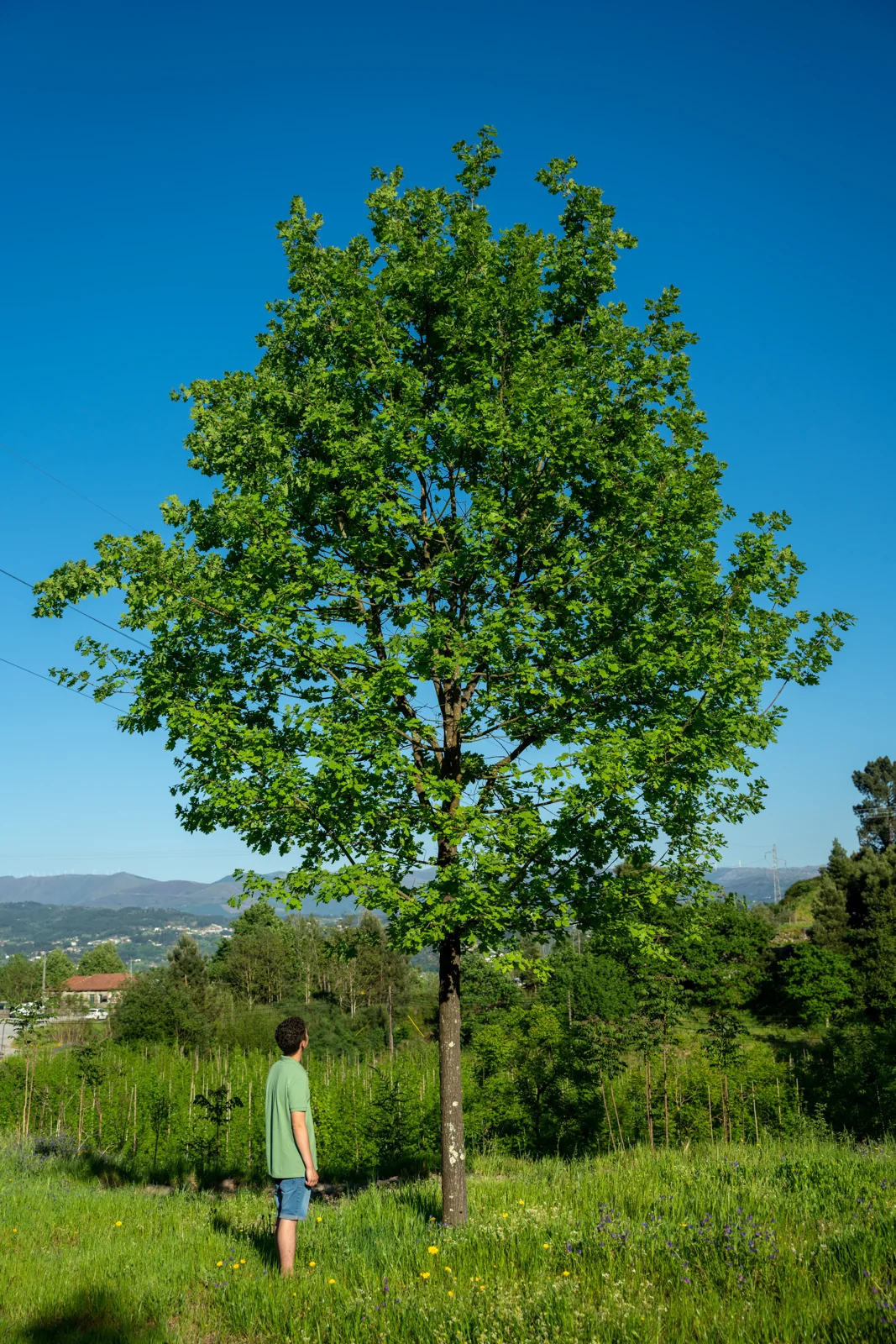
Few native species carry the structural weight of a mature standard oak, and for parkland, estate, and avenue schemes this is the deciduous framework specimen against which others are measured: broad-crowned, deep-rooted, and built to outlast the planting.
About this Species
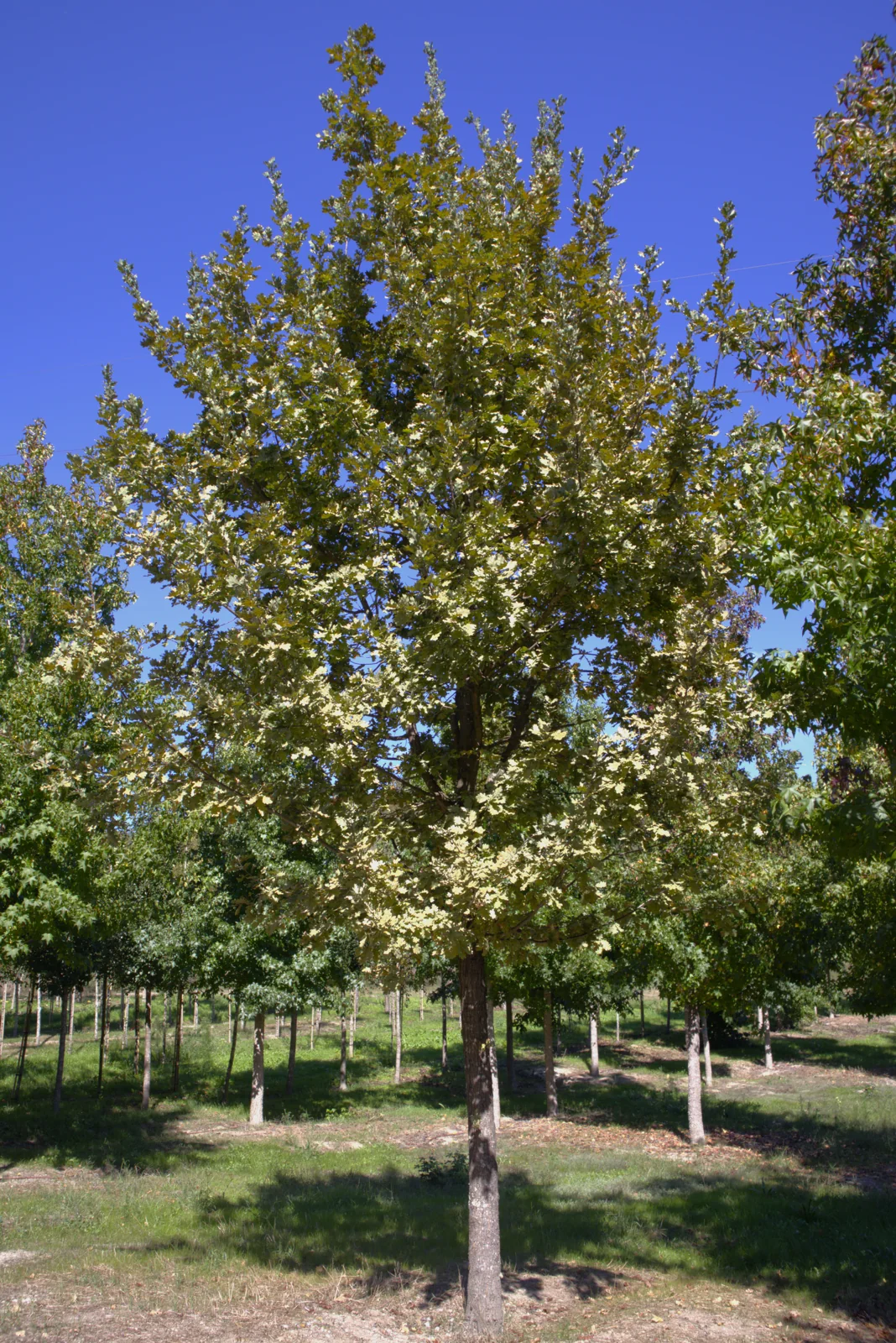
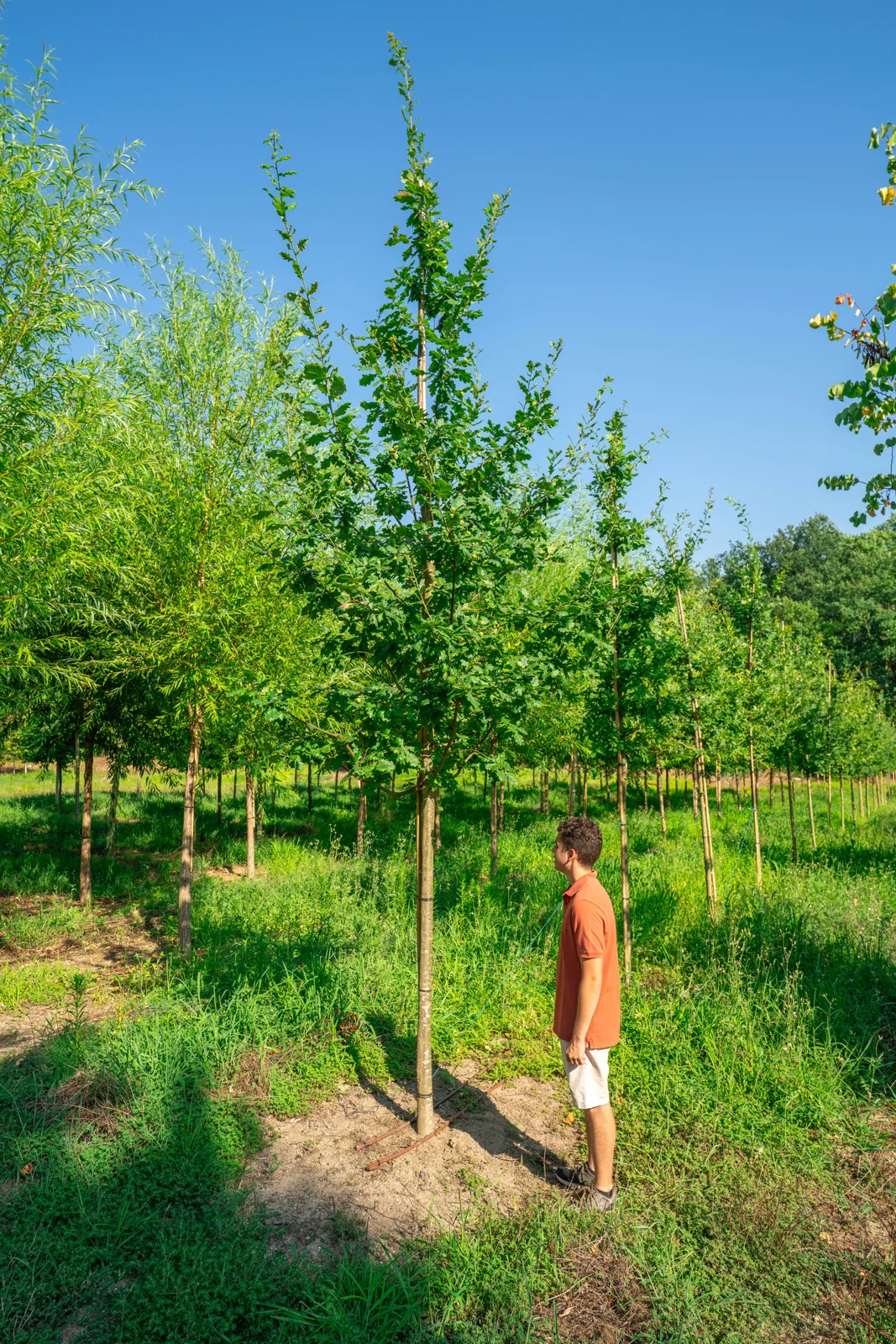
The crown opens to a broad, rounded, spreading form on a short sturdy trunk, reaching roughly 20 to 35 metres in height and 15 to 25 metres across at maturity, which makes it a tree for open ground rather than constrained pits. Growth is medium-paced, and the grey-brown to near-black bark deepens into heavy fissures with age, giving real winter structure in…
Read more
Show less
The crown opens to a broad, rounded, spreading form on a short sturdy trunk, reaching roughly 20 to 35 metres in height and 15 to 25 metres across at maturity, which makes it a tree for open ground rather than constrained pits. Growth is medium-paced, and the grey-brown to near-black bark deepens into heavy fissures with age, giving real winter structure in a deciduous scheme. The small dark green leaves, lobed and short-stalked, turn yellow to brown in autumn and are held late, so the canopy reads as a long seasonal mass rather than a single colour event.
Hardiness is the species' defining selection advantage: it is reliably winter-hardy across essentially the whole of temperate Europe, well into USDA zone 3 (roughly minus 35 °C and below), which places no practical northern or eastern continental limit on its use, from the Atlantic seaboard through the Pannonian basin to southern Scandinavia and the Baltic. This is the framework oak a specifier can place from Helsinki to Athens without qualifying the winter minimum.
The deep, strongly anchoring root system gives steadiness on exposed open sites and reliable drought tolerance once established, though that tolerance is moderate rather than absolute: in prolonged summer maxima above 35 °C and on thin soils, assured root depth and irrigation through the first summers carry it through. Salt tolerance is low, so coastal positions want shelter from salt-laden wind while the tree establishes.
Site tolerance is broad. It prefers a moist, well-drained loam in full sun but adapts to a wide range of soils including heavy clay, which is much of its value on difficult ground. The chief climatic caveat is foliar powdery mildew, which is favoured by warm humid conditions; in mild maritime summers, open spacing and good air movement reduce its incidence, while drier continental sites see little of it. Avoid prolonged waterlogging, to which the species is sensitive.
Maintenance is low once the tree is away. As a host to a large associated invertebrate and bird fauna, it carries strong biodiversity value, which increasingly supports its specification in public and infrastructure planting across Europe.



Advice on this species
Want to know more about Quercus robur?
Tell us about your project and we'll advise you on this species — where it thrives, which size makes sense, and what to expect once planted.
- Produção própria
- Exemplares adultos
- Resposta em 1–2 dias
Sem compromisso · orçamento personalizado