

Narrow upright oak for streets and tight alignments
English Oak ‘Fastigiata Koster’ · Quercus robur ‘Fastigiata Koster’
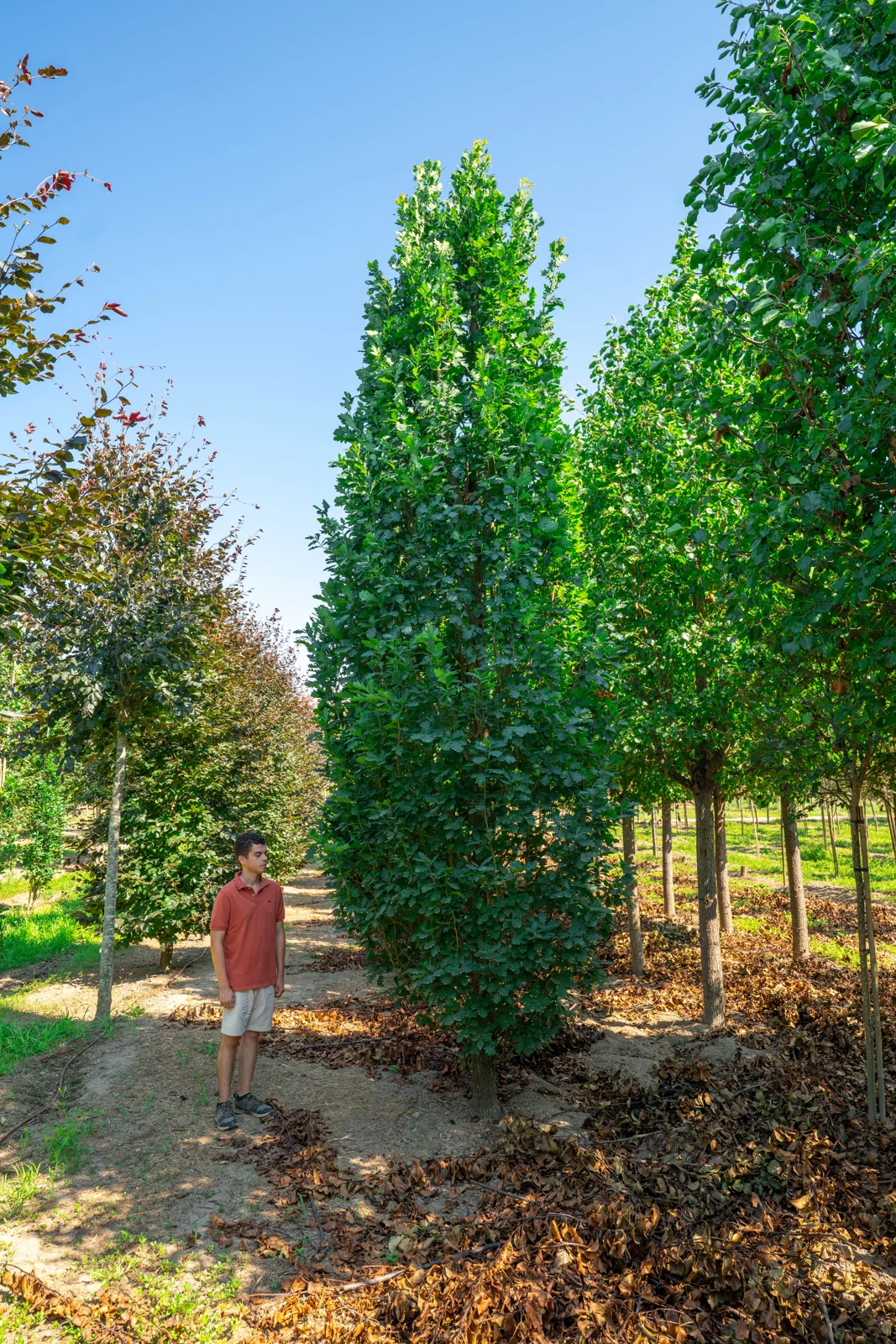
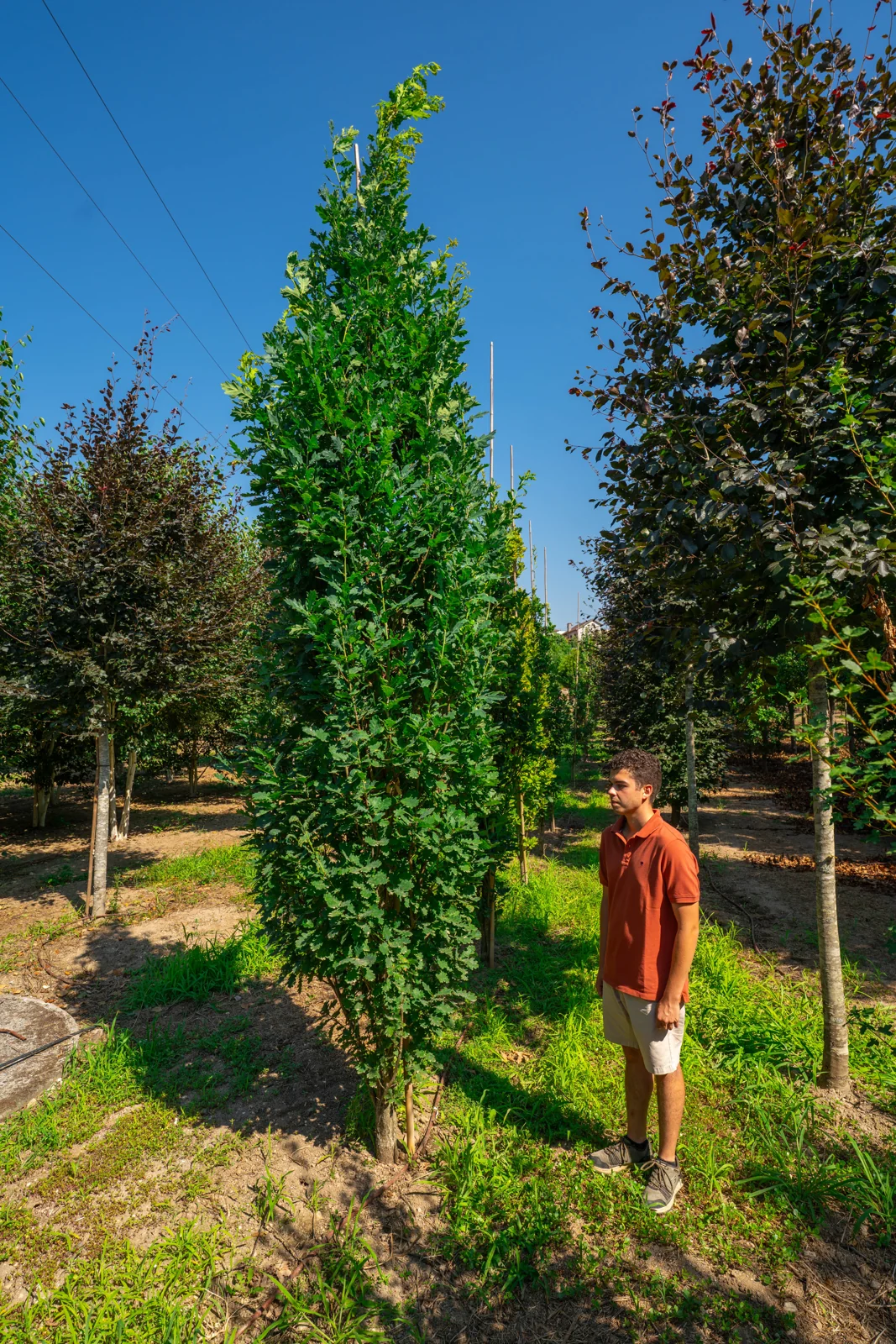
Where an avenue or confined planting pit calls for the structure of an oak without its spreading reach, this narrow fastigiate form holds a tight, columnar crown, carrying the cold-hardiness and longevity of the species into restricted urban space.
Key Facts
About this Cultivar
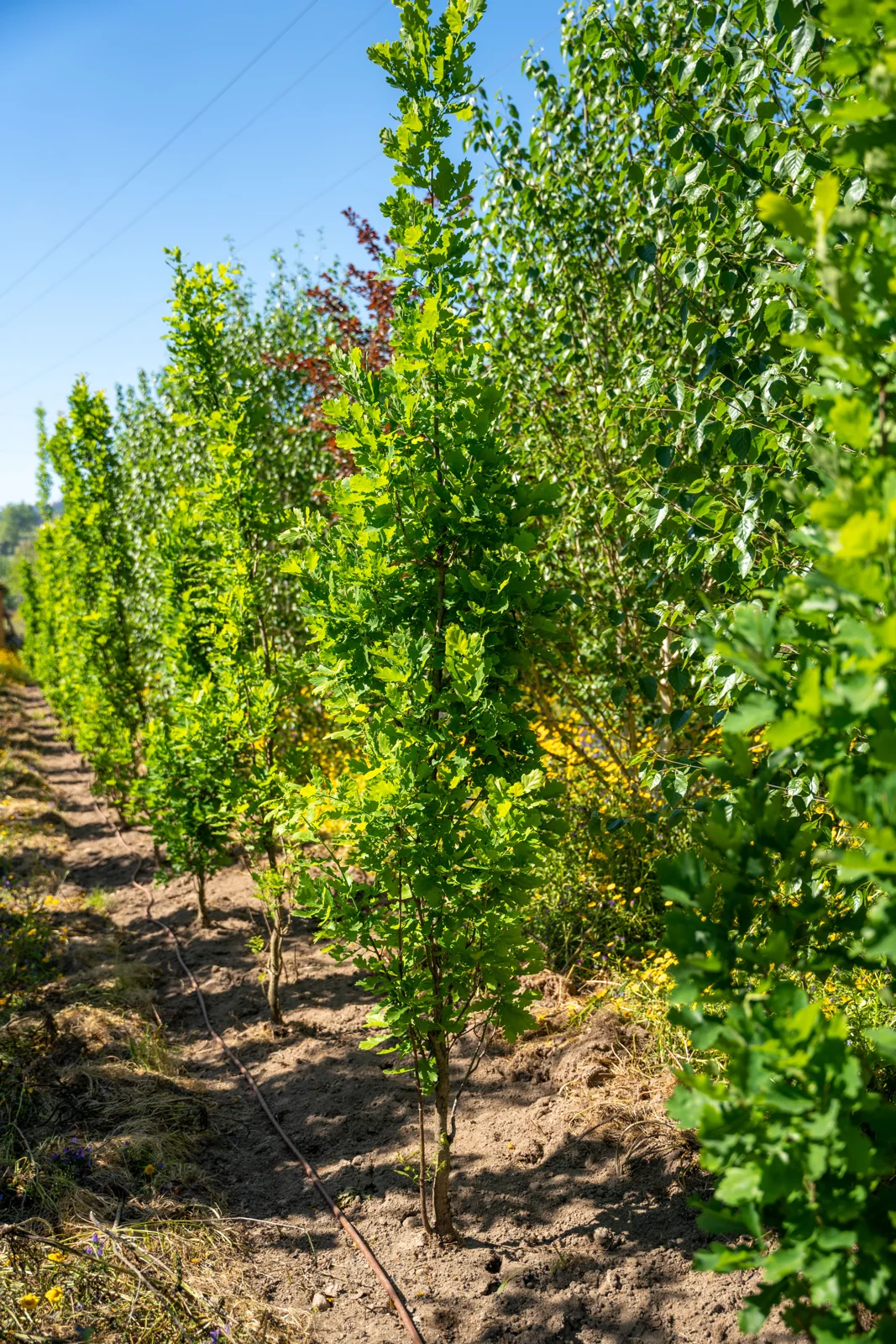
The crown is densely branched and strongly upright, the branches held close around the trunk to form a narrow column reaching roughly 20 m in height by around 4 m in width at maturity. This habit is the cultivar's defining quality: it delivers the presence and permanence of English oak in alignments, narrow streets, and squares where a broad-crowned…
Read more
Show less
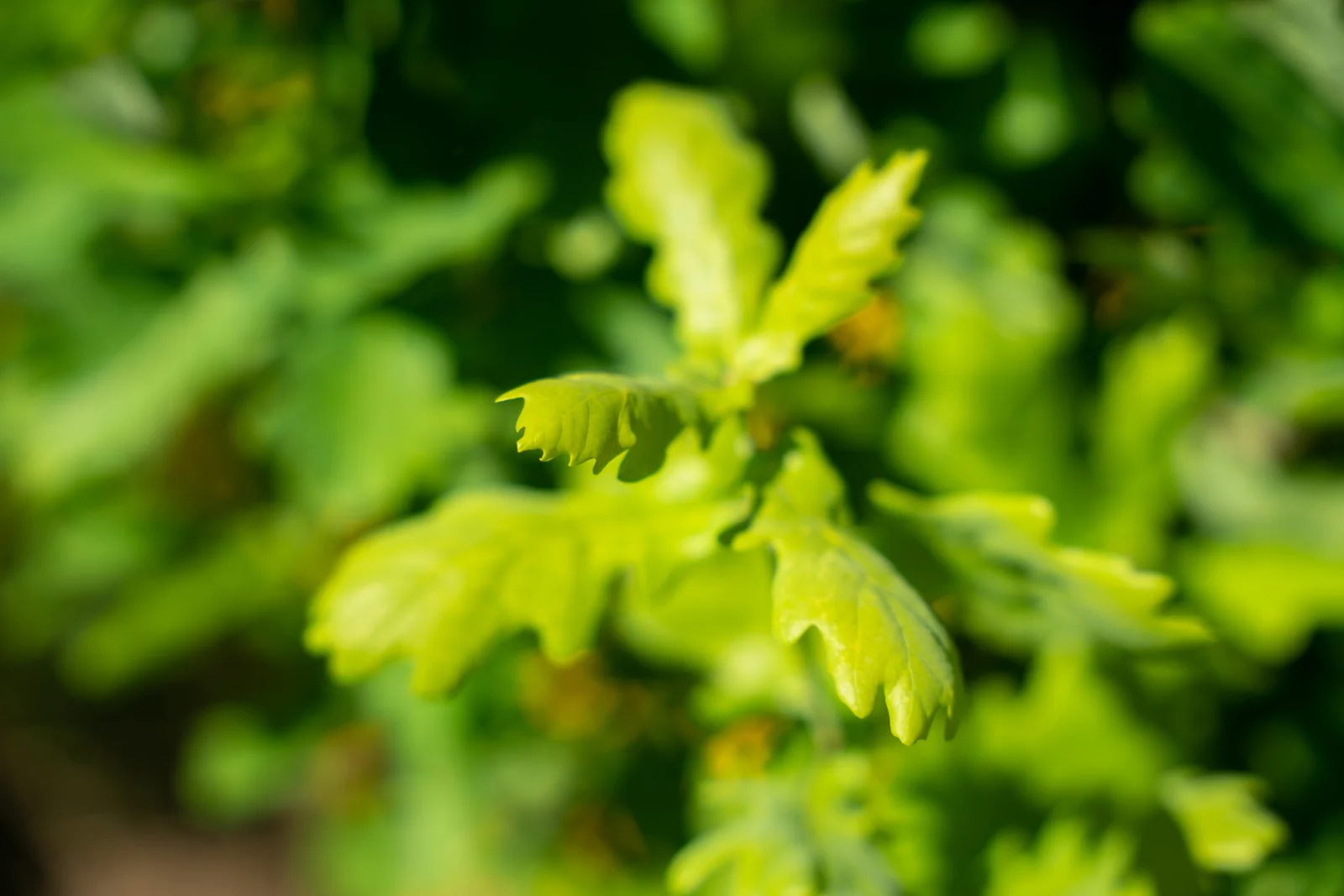
The crown is densely branched and strongly upright, the branches held close around the trunk to form a narrow column reaching roughly 20 m in height by around 4 m in width at maturity. This habit is the cultivar's defining quality: it delivers the presence and permanence of English oak in alignments, narrow streets, and squares where a broad-crowned standard would never fit. The dark green, rounded-lobed foliage turns yellow-brown before leaf fall, and small acorns follow on mature trees, retaining the wildlife value, particularly for birds, that the species is valued for.
Hardiness is the species' great asset for a pan-European specifier. Quercus robur is reliable across USDA zones 3 to 8 (winter minima well below minus 30 °C), so this form is dependable from the Mediterranean basin through the Atlantic seaboard and deep into continental and Boreal Europe, from the Po valley to southern Scandinavia and the Pannonian basin. There is effectively no northern or eastern European limit of concern; the species' deep root system also gives it moderate drought tolerance once established, broadening its use into drier continental sites.
The tree accepts most soils, including heavy clay, and performs in full sun or light shade. It tolerates compacted urban ground, paved surfaces, and airborne pollution, which suits it to tree pits and hard-landscaped public realm where rooting volume is limited. Growth is medium-paced, and the species is low-maintenance once established, with a deep anchoring habit that gives it good stability in exposed positions.
One selection caveat warrants attention: fastigiate oaks of this group can be prone to powdery mildew on the foliage in warm, humid summers, more so in still maritime air than in open continental sites. The condition is cosmetic rather than structural and is managed with adequate spacing and air movement, but it is worth weighing where summer humidity is persistent.
Advice on this species
Want to know more about Quercus robur 'Fastigiata Koster'?
Tell us about your project and we'll advise you on this species — where it thrives, which size makes sense, and what to expect once planted.
- Produção própria
- Exemplares adultos
- Resposta em 1–2 dias
Sem compromisso · orçamento personalizado