

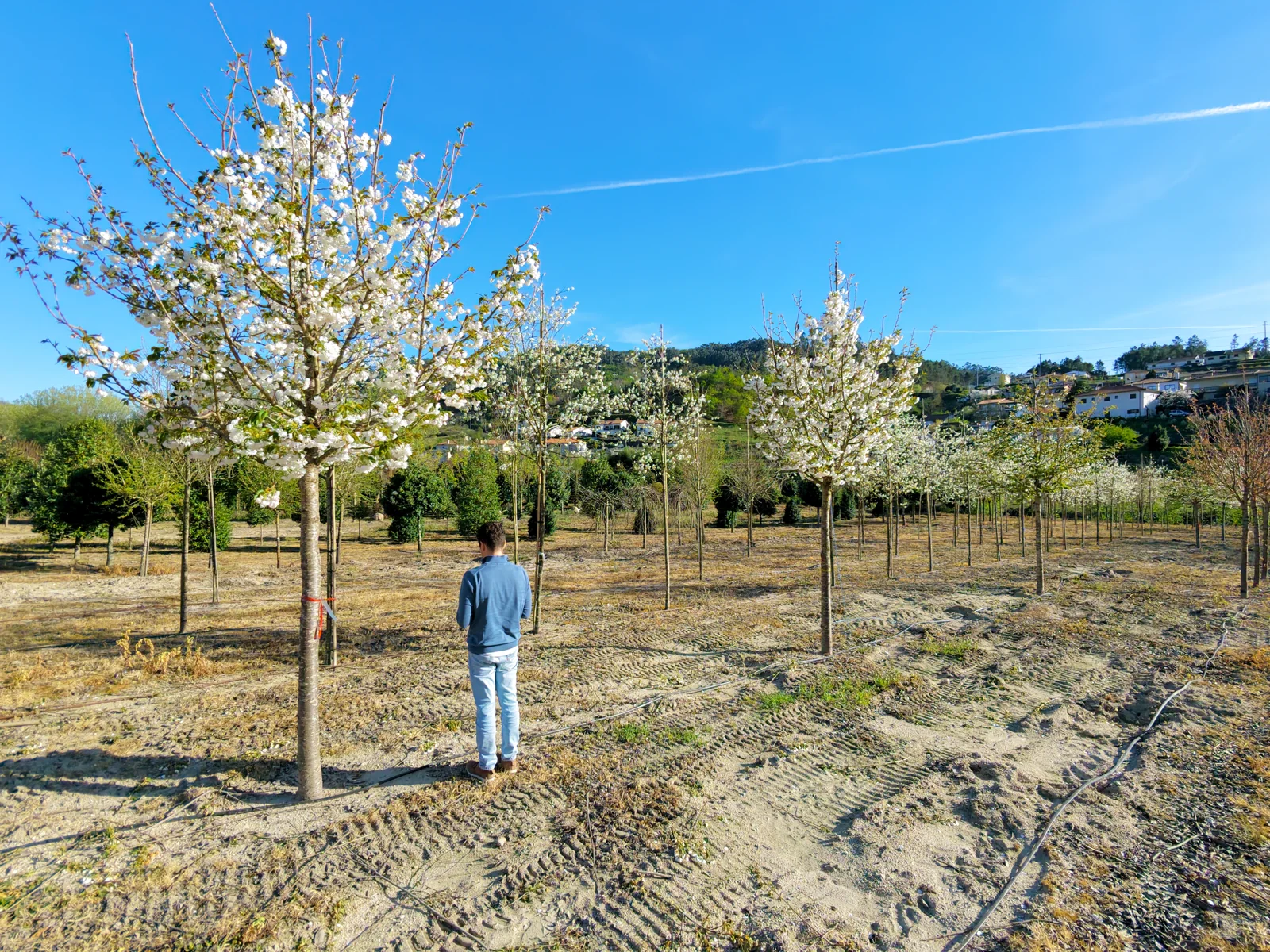
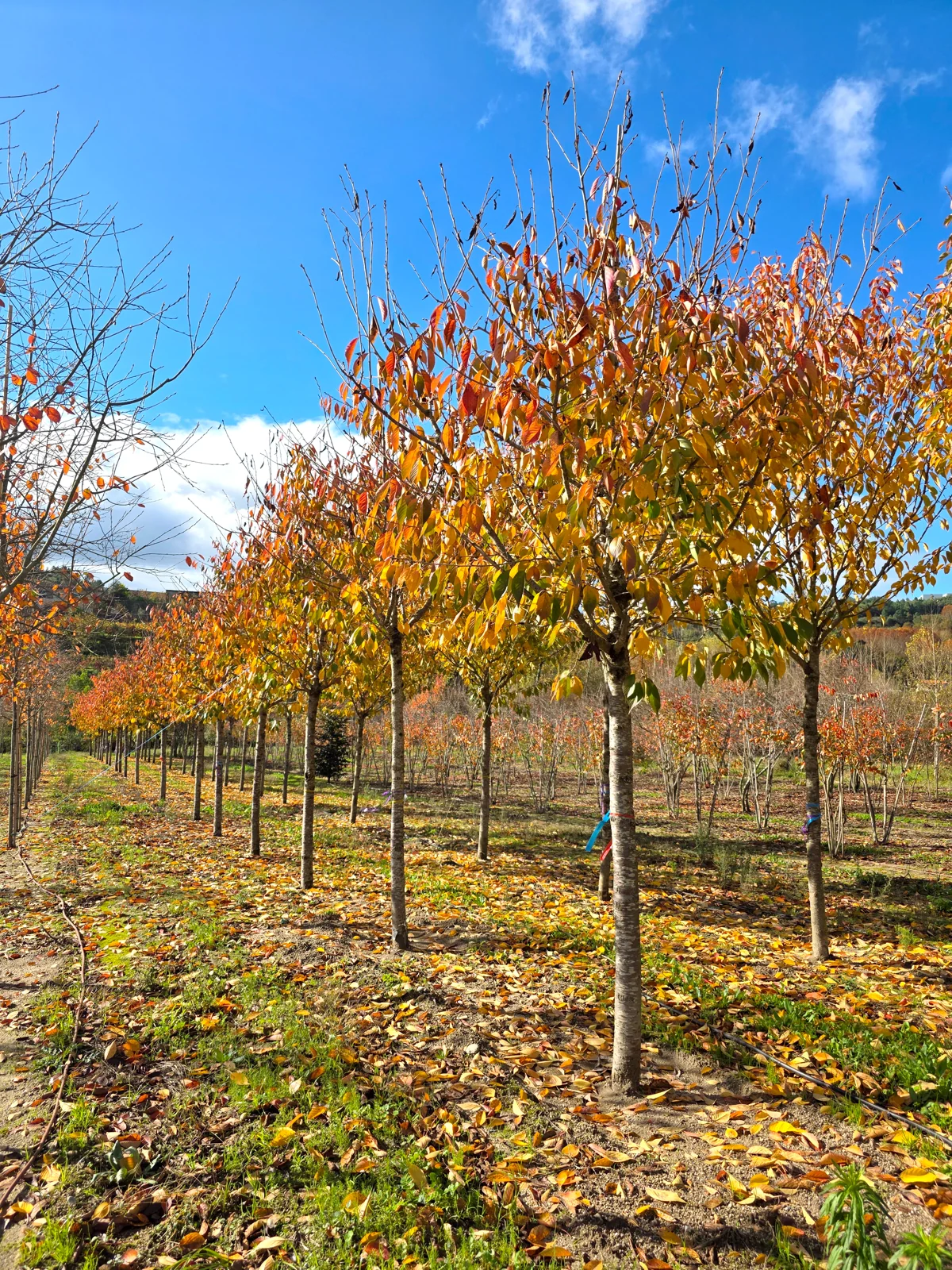
Flat-crowned white-flowered specimen for spring schemes
Japanese Cherry ‘Shirotae’ · Prunus serrulata ‘Shirotae’
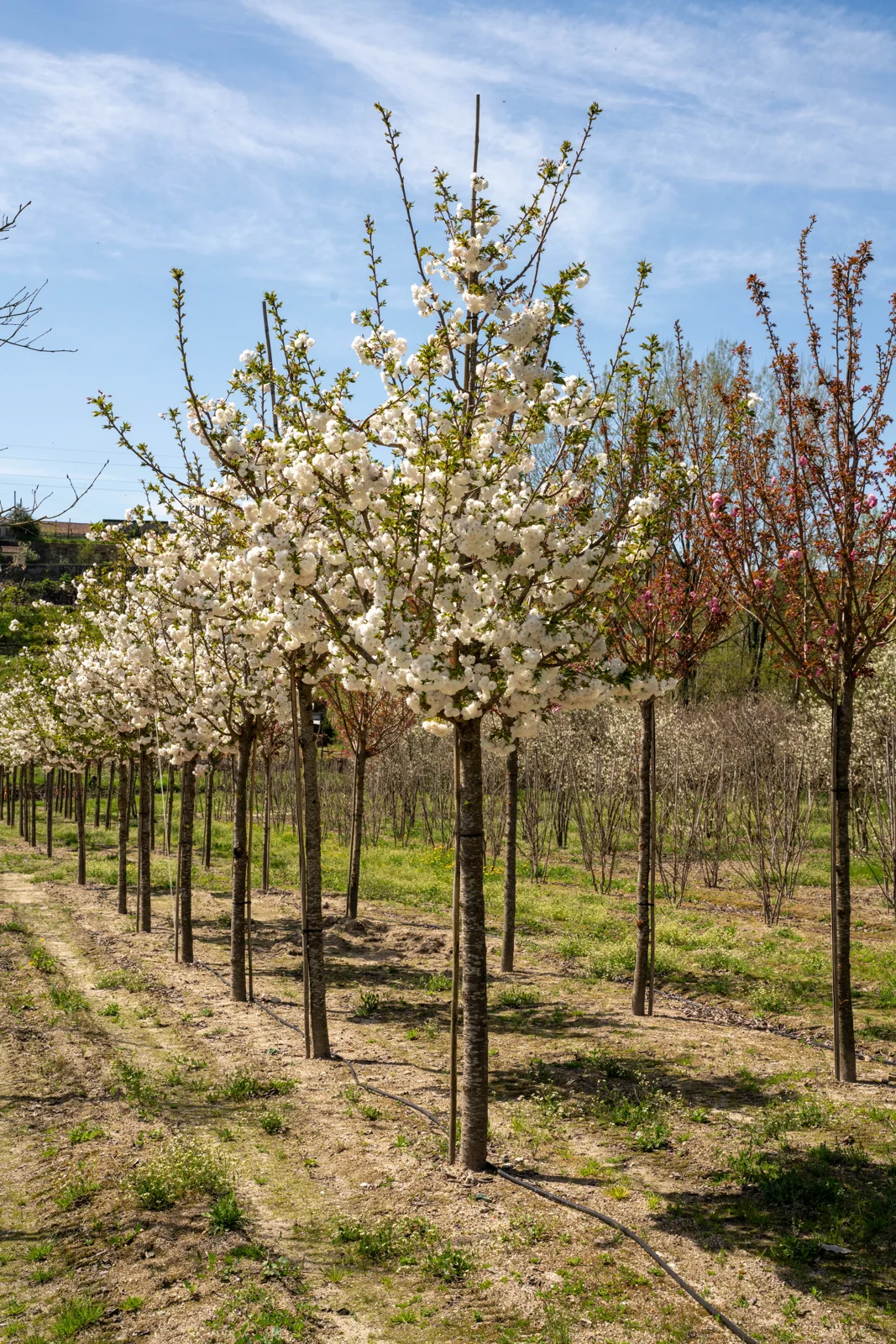
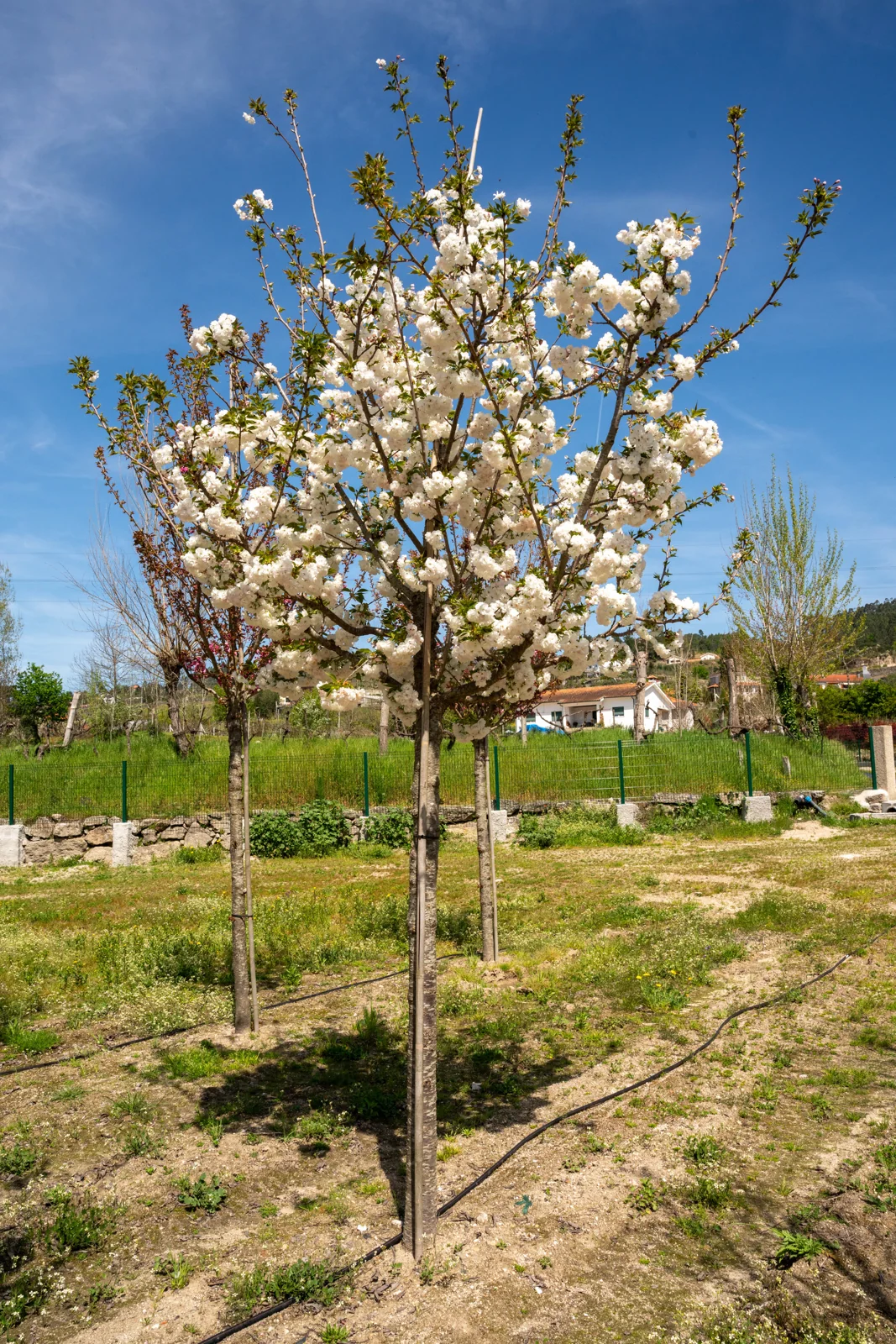
Broad and tiered in habit, this Sato Zakura cherry carries a low, horizontally spreading crown that opens into pure white semi-double blossom in spring, suiting it to specimen and avenue work where overhead spread is available.
Key Facts
About this Cultivar
Among the Japanese flowering cherries, 'Shirotae' (long traded as 'Mount Fuji') reads as one of the most architectural. The crown is flat-topped and strongly horizontal, the lateral branches reaching well beyond the trunk, so a mature tree settles to roughly 4 to 6 m in height with a spread that equals or exceeds it. This wide, layered form is the…
Read more
Show less
Among the Japanese flowering cherries, 'Shirotae' (long traded as 'Mount Fuji') reads as one of the most architectural. The crown is flat-topped and strongly horizontal, the lateral branches reaching well beyond the trunk, so a mature tree settles to roughly 4 to 6 m in height with a spread that equals or exceeds it. This wide, layered form is the selection's defining character and the reason it works as a solitary specimen or in spaced groupings rather than in confined pits.
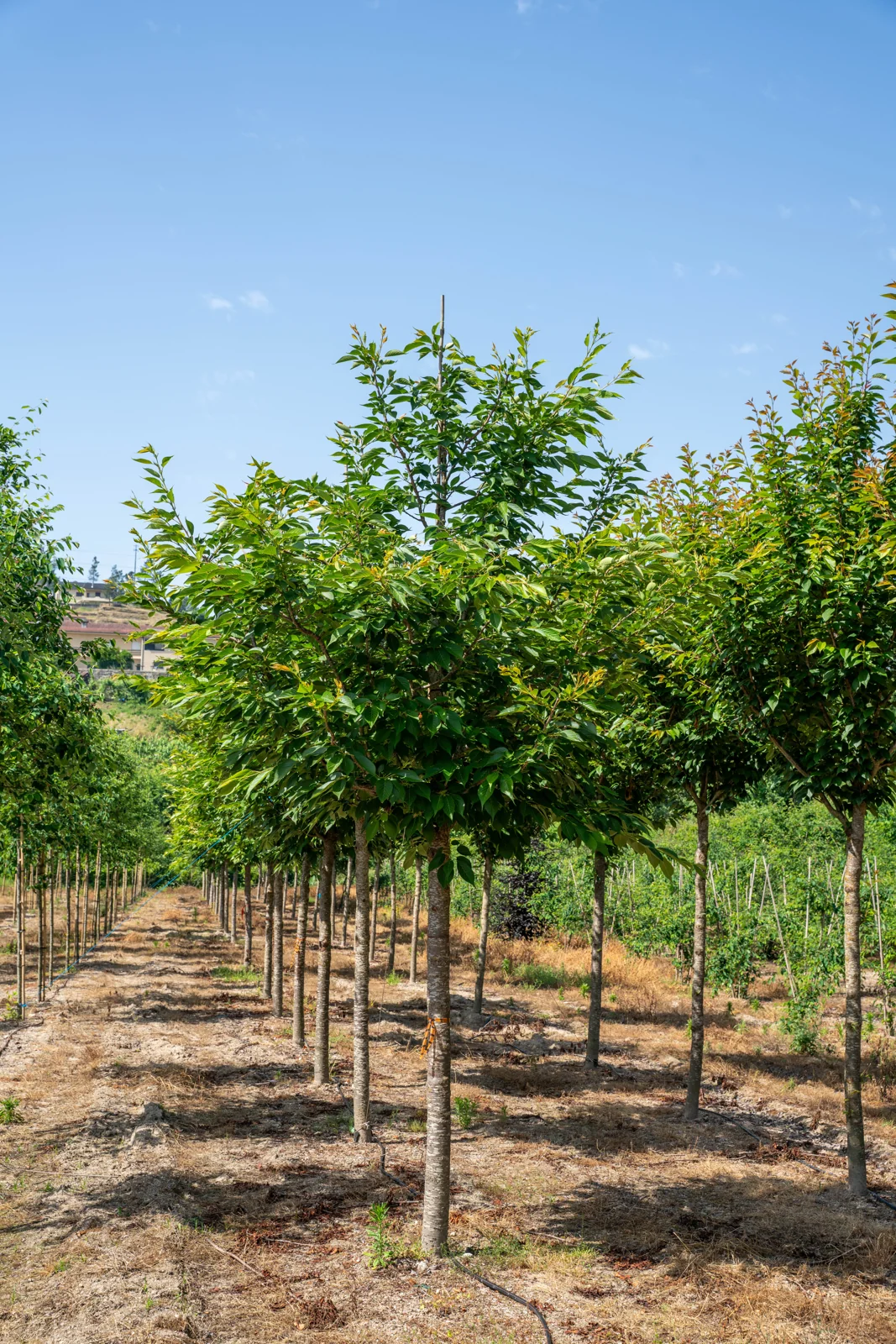
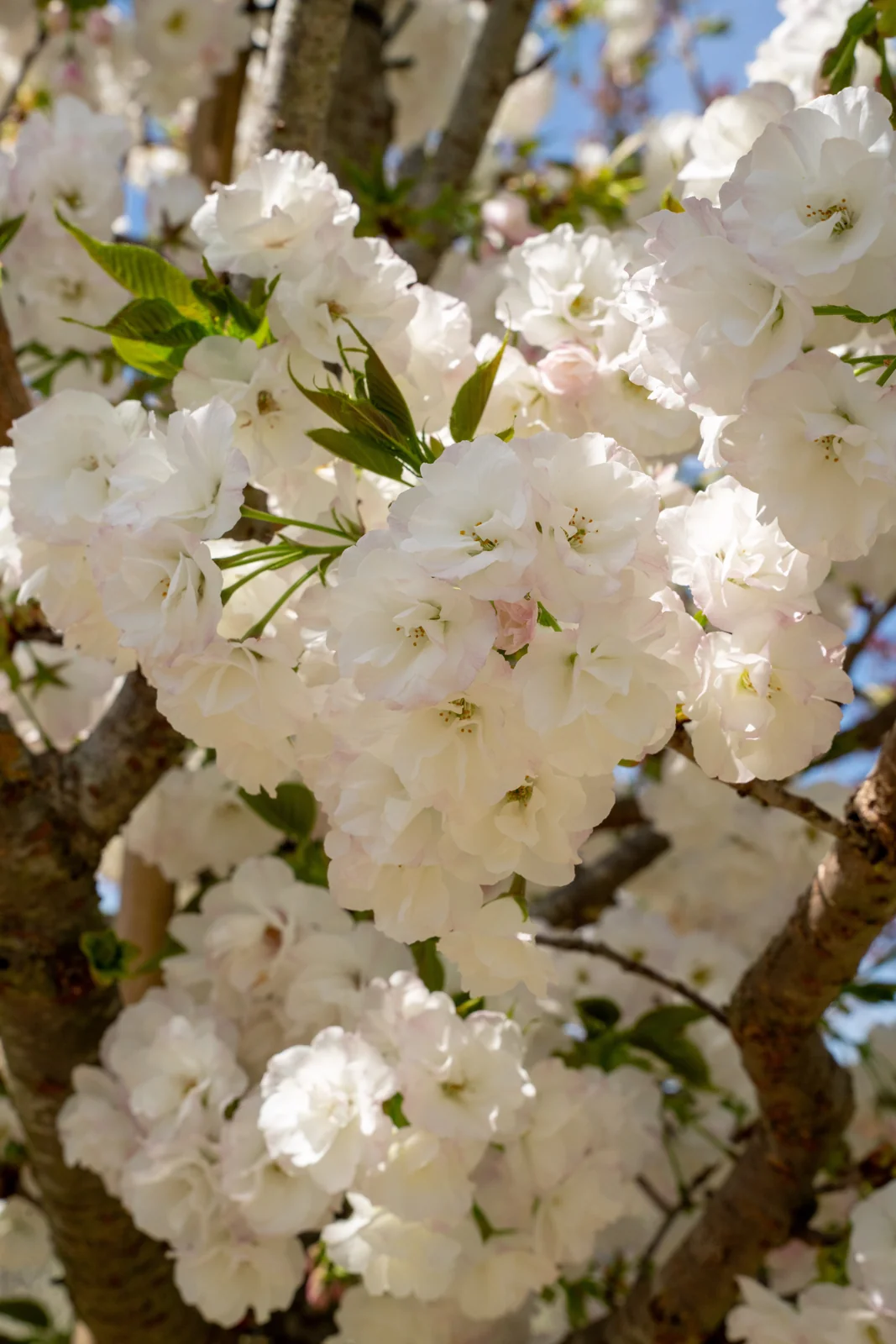
In April the bare branches carry dense, pendent clusters of large semi-double flowers, pure white and faintly fragrant, opening alongside bronze-tinted young foliage. Summer leaves are dark green and serrate, turning orange to copper-brown in autumn, so the tree holds ornamental value across three seasons. The early blossom draws pollinators, which gives it some role in planting for biodiversity in public and amenity settings.
Reliably winter-hardy to roughly minus 26 to minus 29 °C (USDA zone 5), the selection performs across cool-temperate and Atlantic Europe and through the warmer continental zones, and is established successfully from southern Scandinavia to the Po valley and the Atlantic seaboard. Drought tolerance is low and salt tolerance limited, so on dry continental or exposed coastal sites it wants assured soil moisture through summer and shelter from drying or salt-laden wind. Heat is tolerated moderately where root run is adequate.
It asks for full sun and a fertile, free-draining, slightly acidic soil; like the species, it resists waterlogging poorly, so drainage should be confirmed before specifying. The bark is thin and the wood somewhat brittle, and the species carries the usual Prunus susceptibility to aphids, canker, and silver leaf, so good air circulation, clean pruning in dry summer weather, and protection of the trunk from mechanical damage all repay attention. Given an open, sunlit position with room to spread, it establishes into a long-flowering framework tree of clear seasonal structure.
Advice on this species
Want to know more about Prunus serrulata 'Shirotae'?
Tell us about your project and we'll advise you on this species — where it thrives, which size makes sense, and what to expect once planted.
- Produção própria
- Exemplares adultos
- Resposta em 1–2 dias
Sem compromisso · orçamento personalizado