

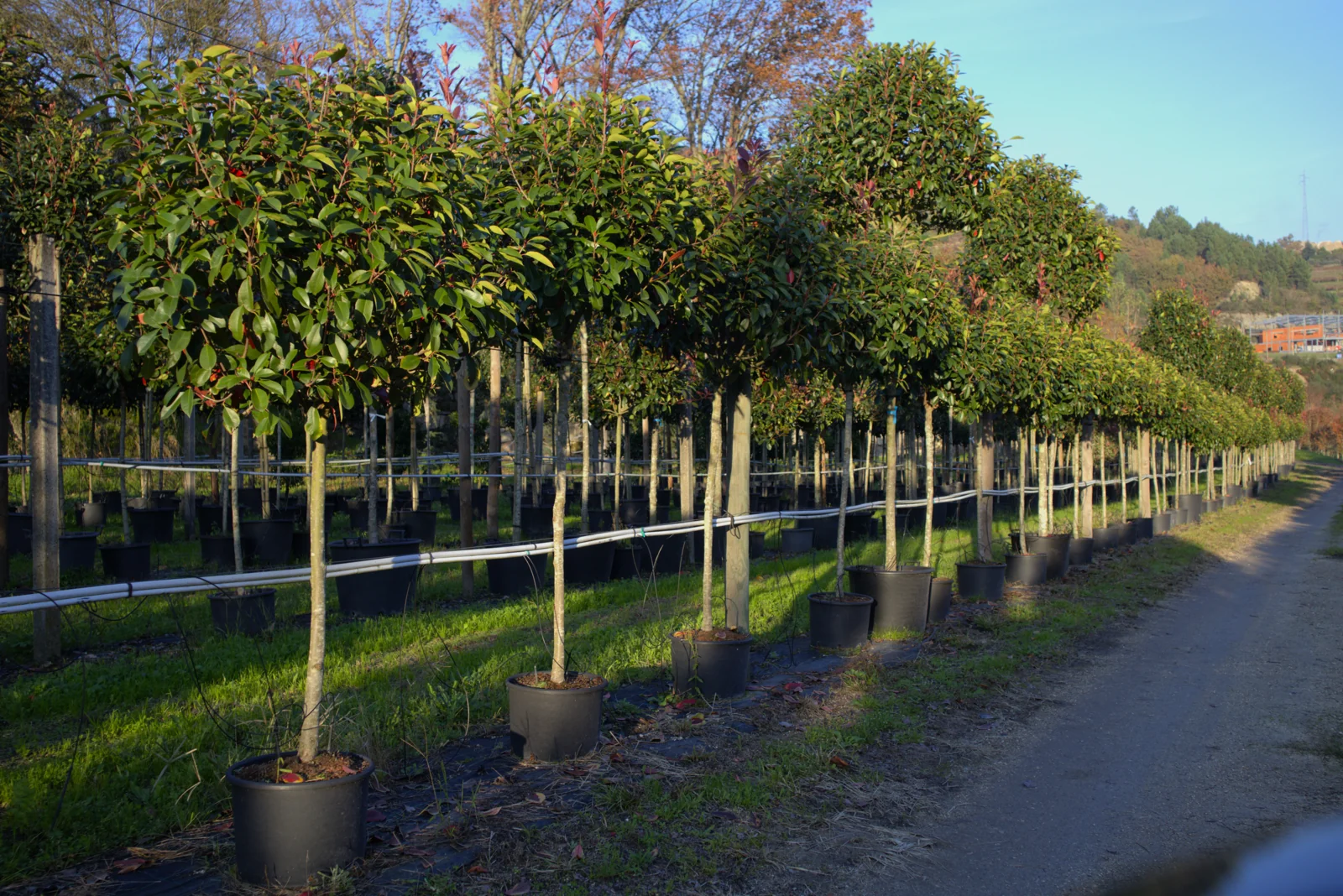
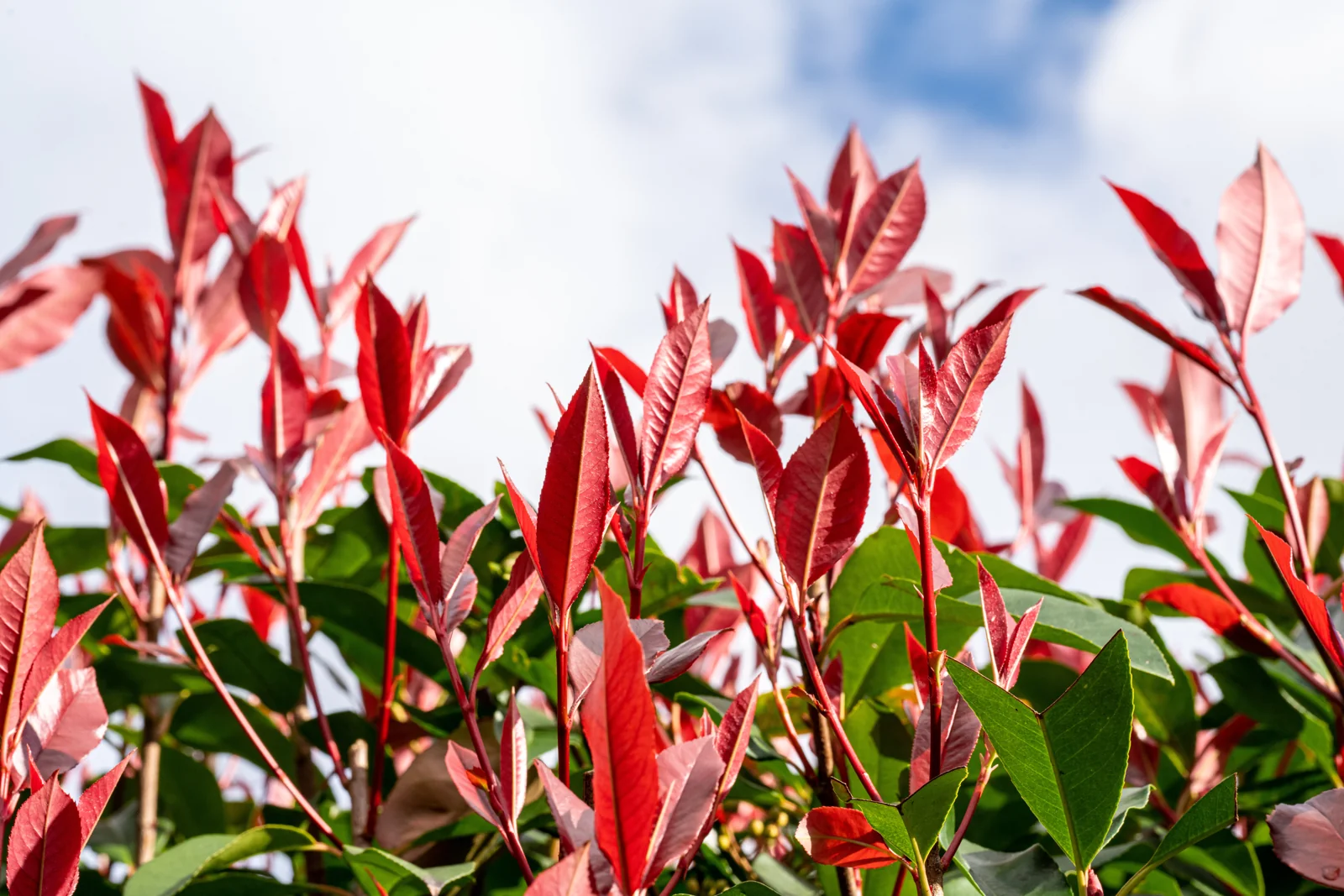
Evergreen screen and hedge specimen with cherry-red flush
Photinia x fraseri ‘Red Robin’
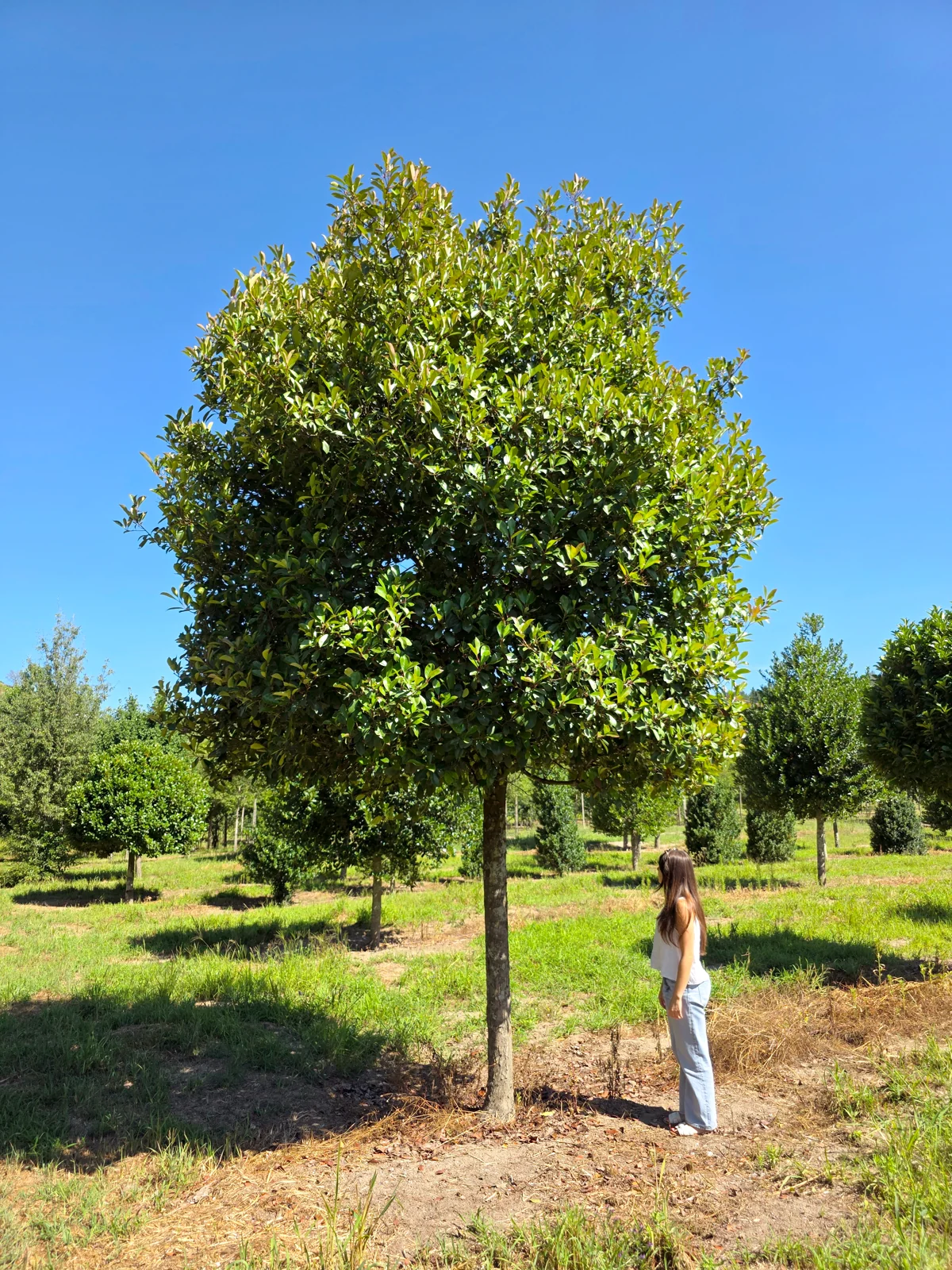
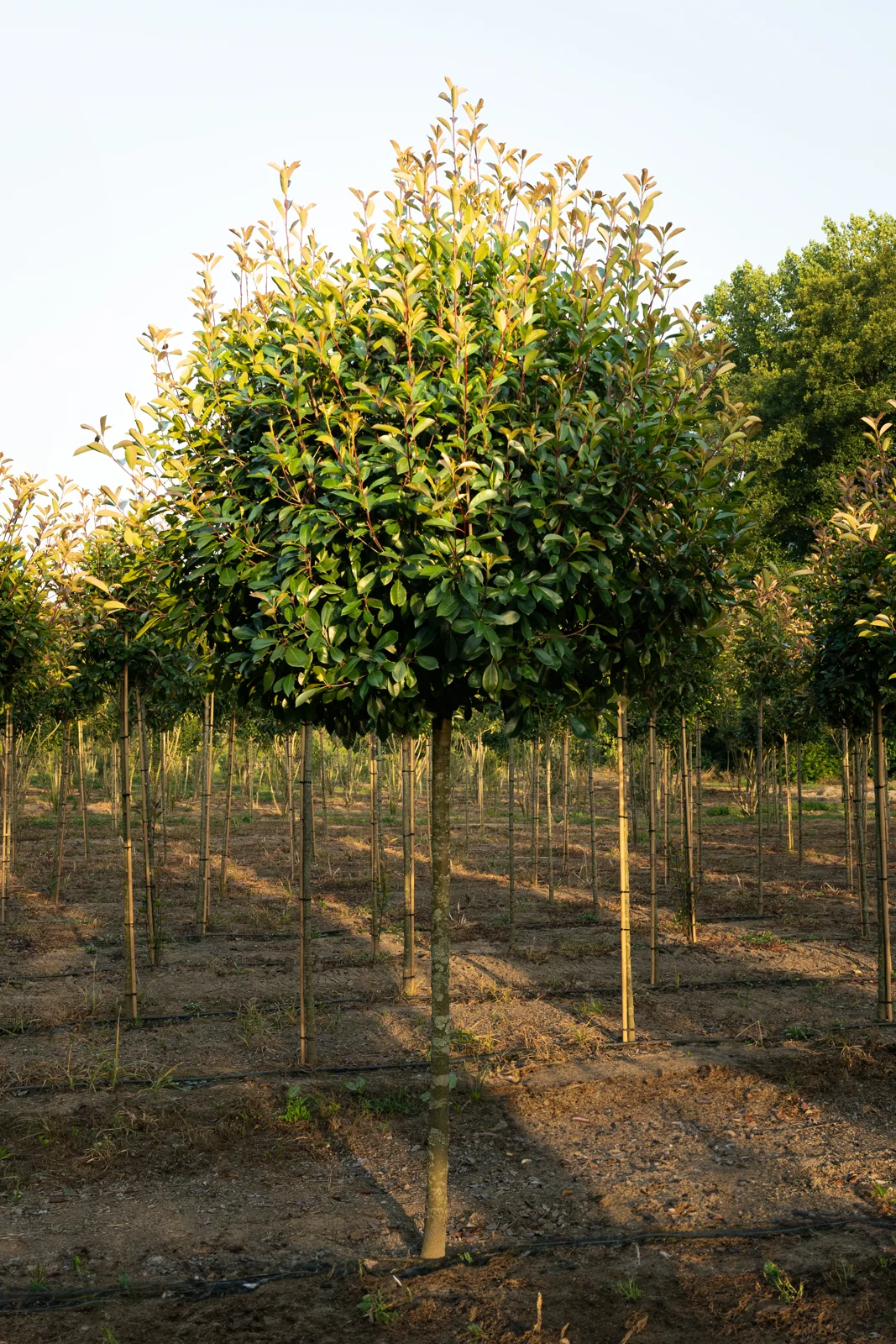
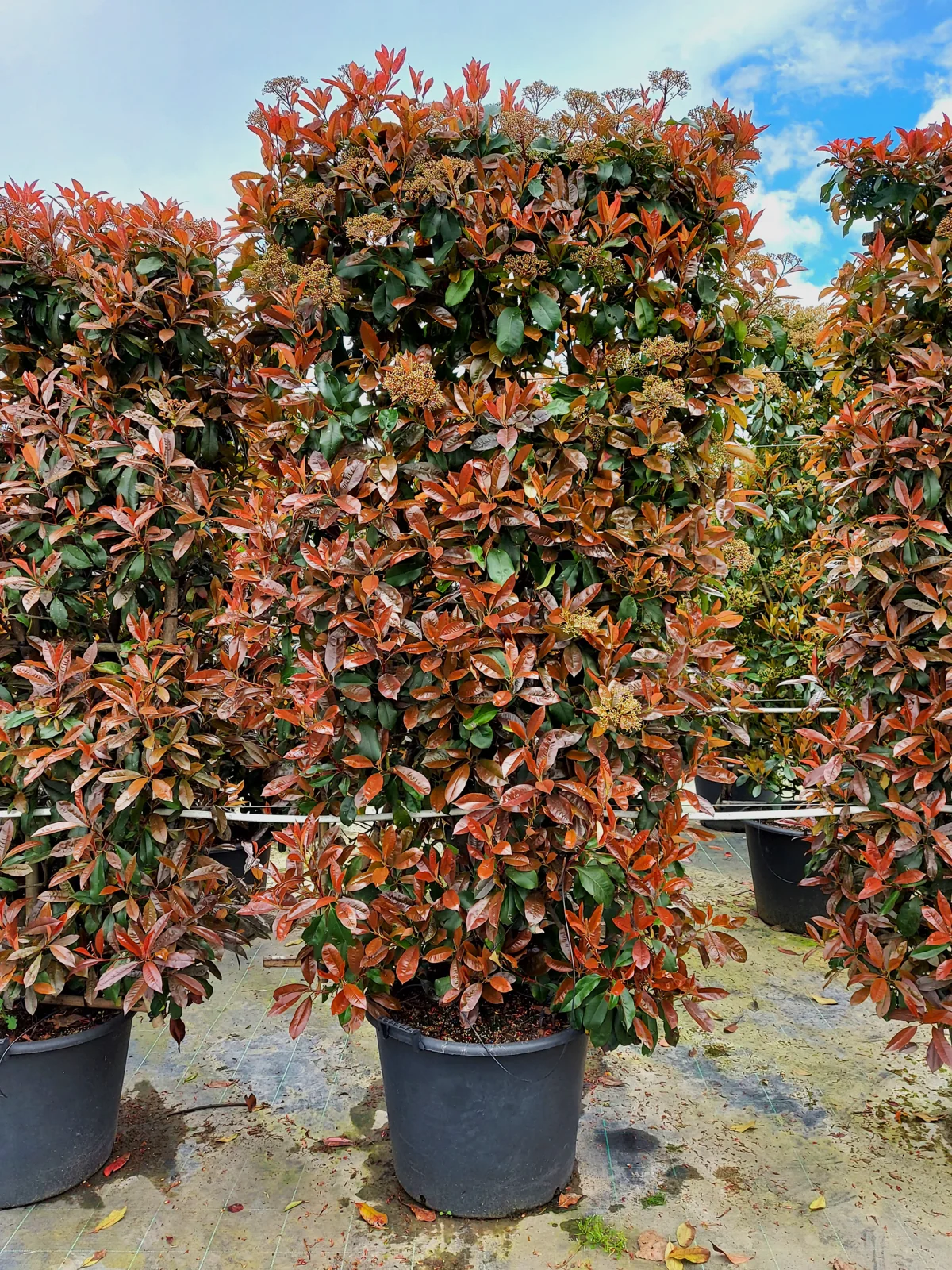
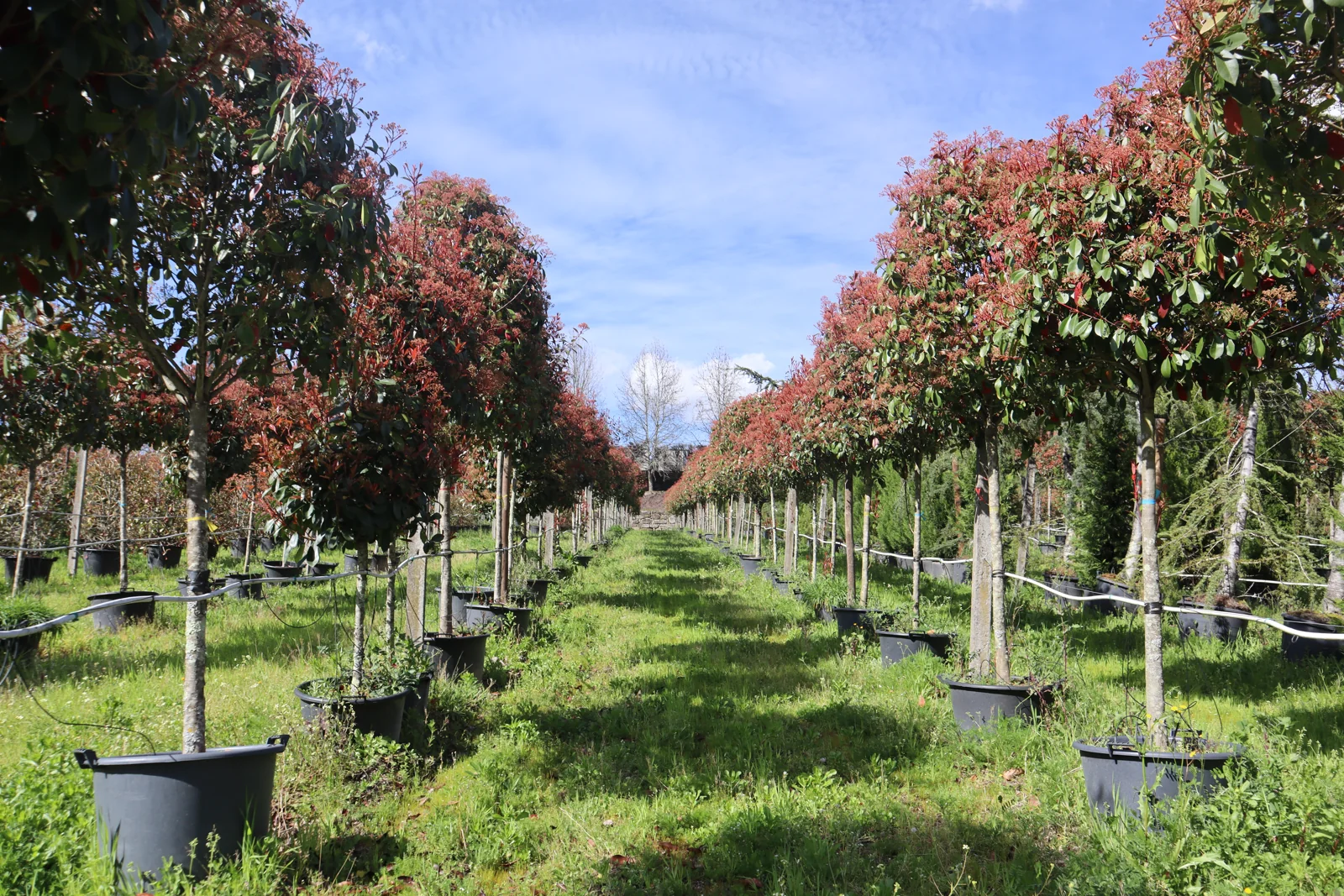
An evergreen broadleaf grown as a tall hedge, formal screen, or clipped topiary, valued for the brilliant cherry-red flush that each new growth wave carries against glossy dark green foliage. Responds reliably to clipping.
Key Facts
About this Cultivar
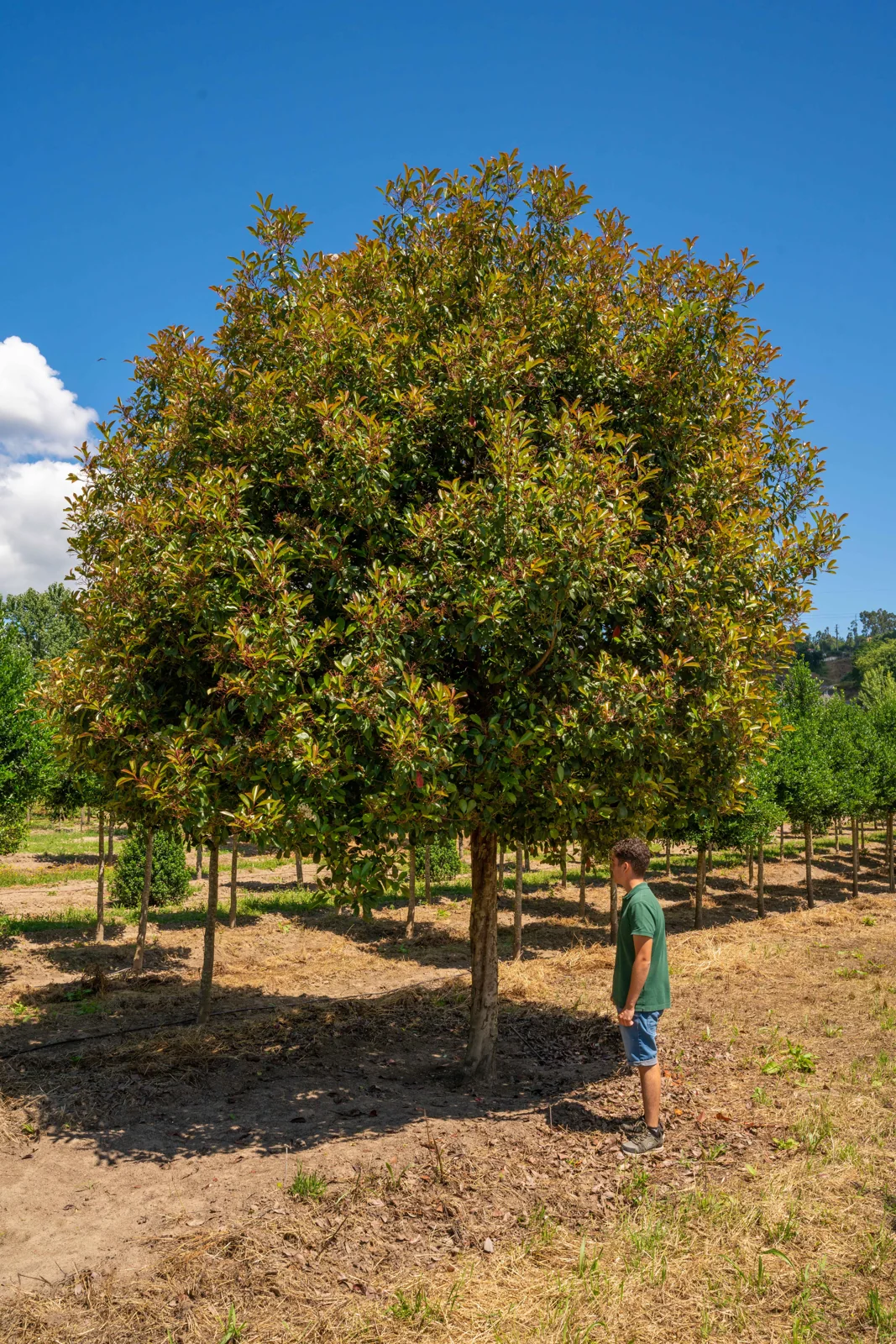
More compact than the parent hybrid and bred in New Zealand for stronger new-leaf colour, 'Red Robin' typically reaches 3 to 4 m in height with a 2 to 3 m spread under regular trimming, and 4 to 8 m over 10 to 20 years if grown on as a small multi-stem tree. The crown is bushy and densely furnished from the base, which makes it useful both as a clipped…
Read more
Show less
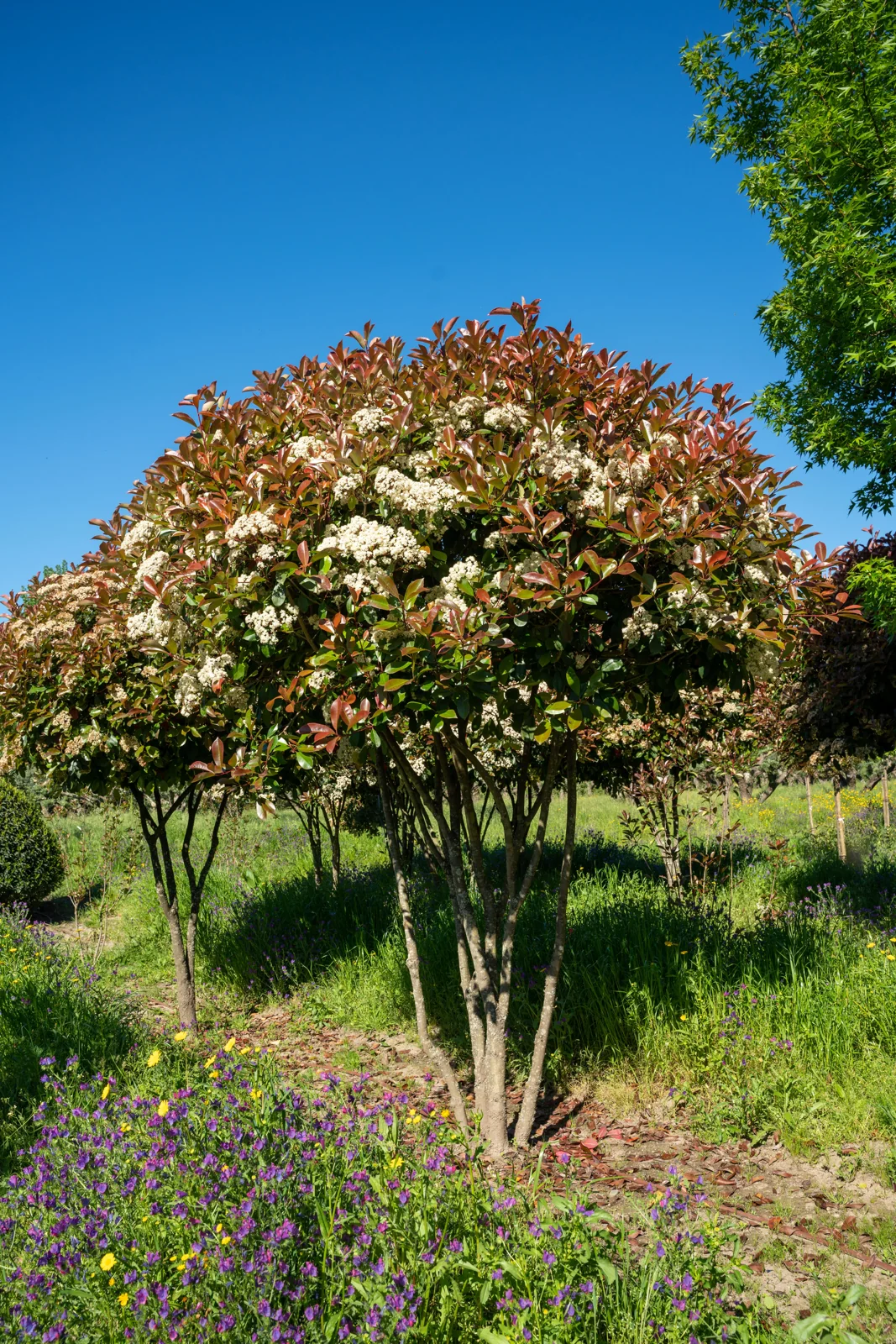
More compact than the parent hybrid and bred in New Zealand for stronger new-leaf colour, 'Red Robin' typically reaches 3 to 4 m in height with a 2 to 3 m spread under regular trimming, and 4 to 8 m over 10 to 20 years if grown on as a small multi-stem tree. The crown is bushy and densely furnished from the base, which makes it useful both as a clipped formal hedge and as a free-growing screen.
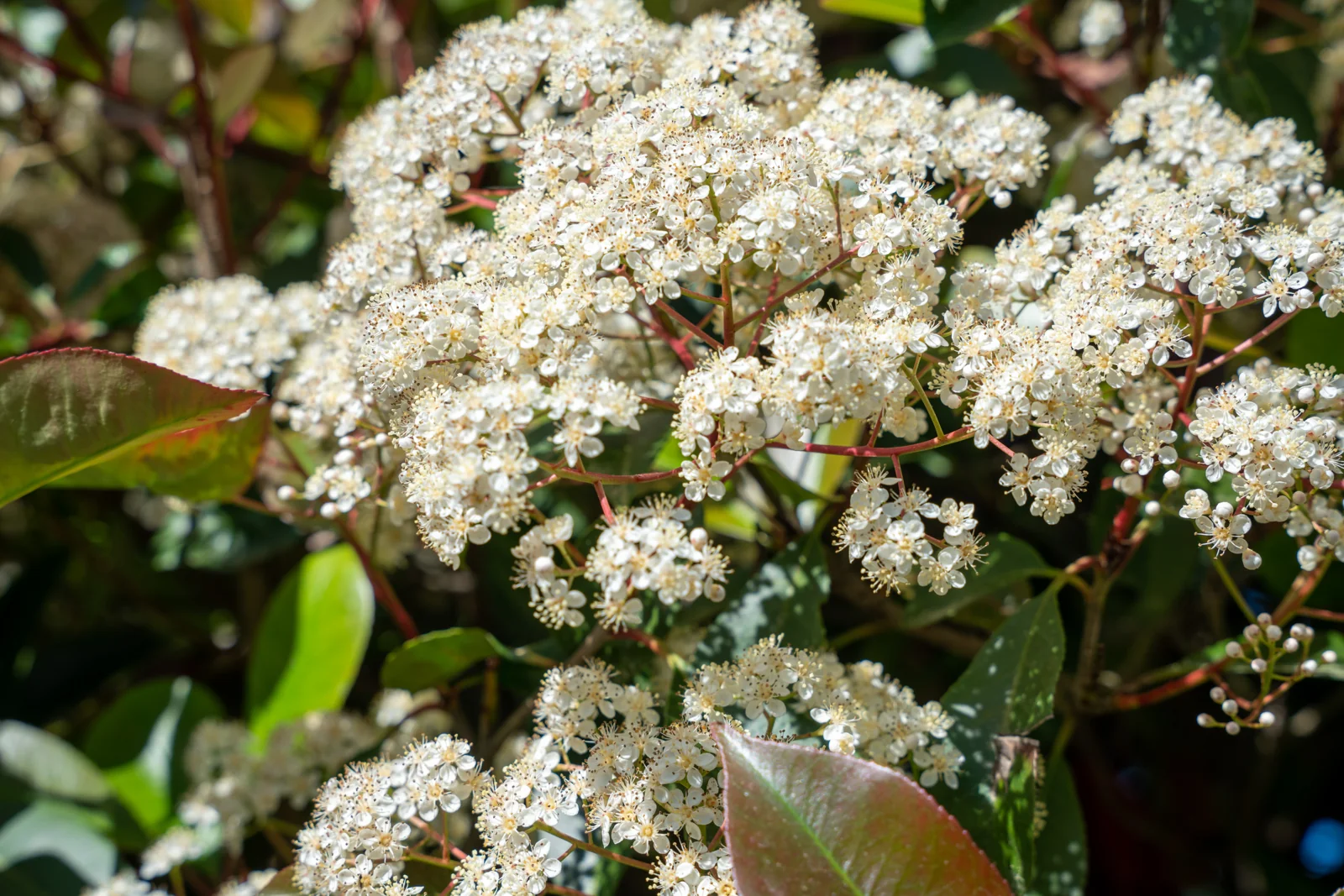
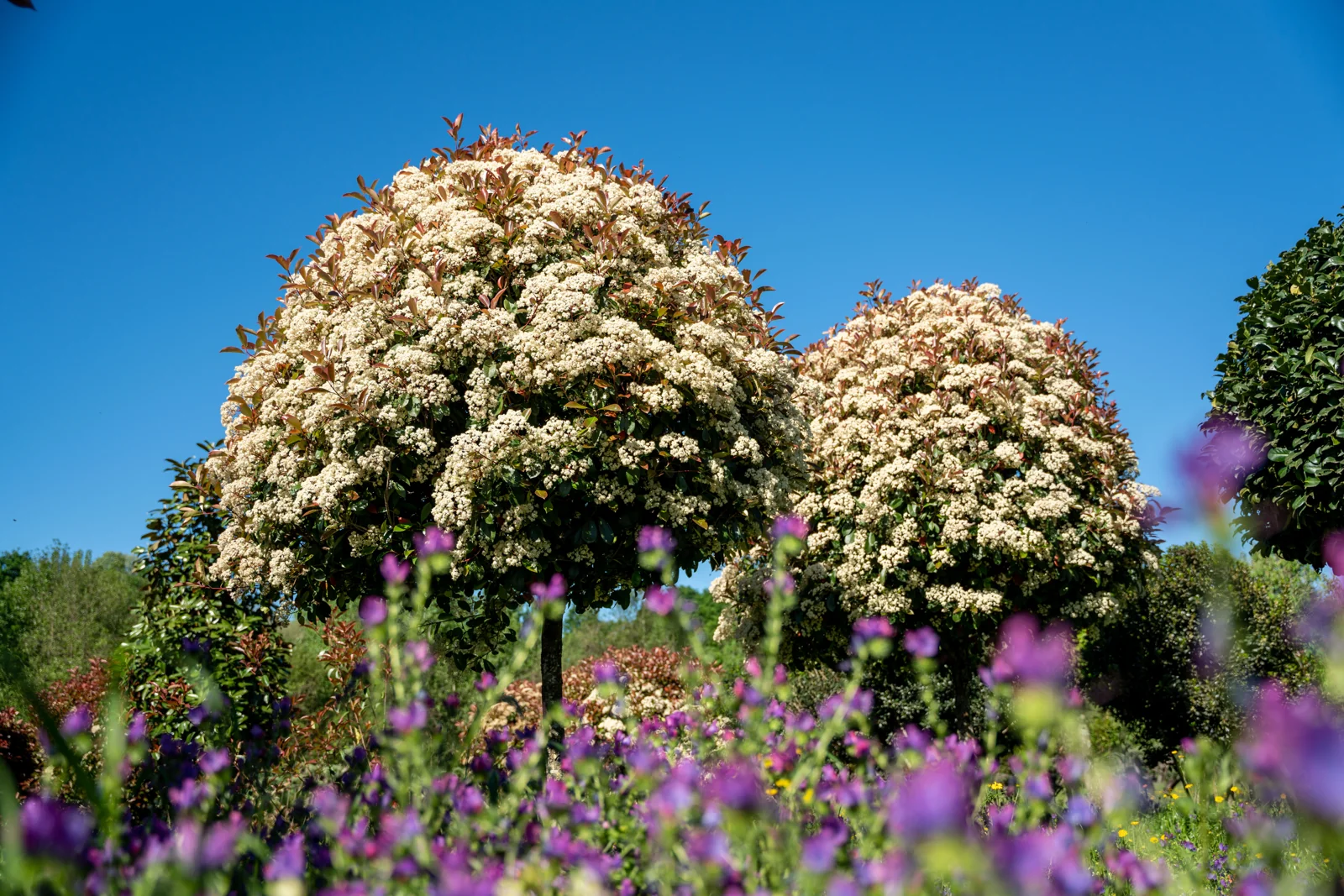
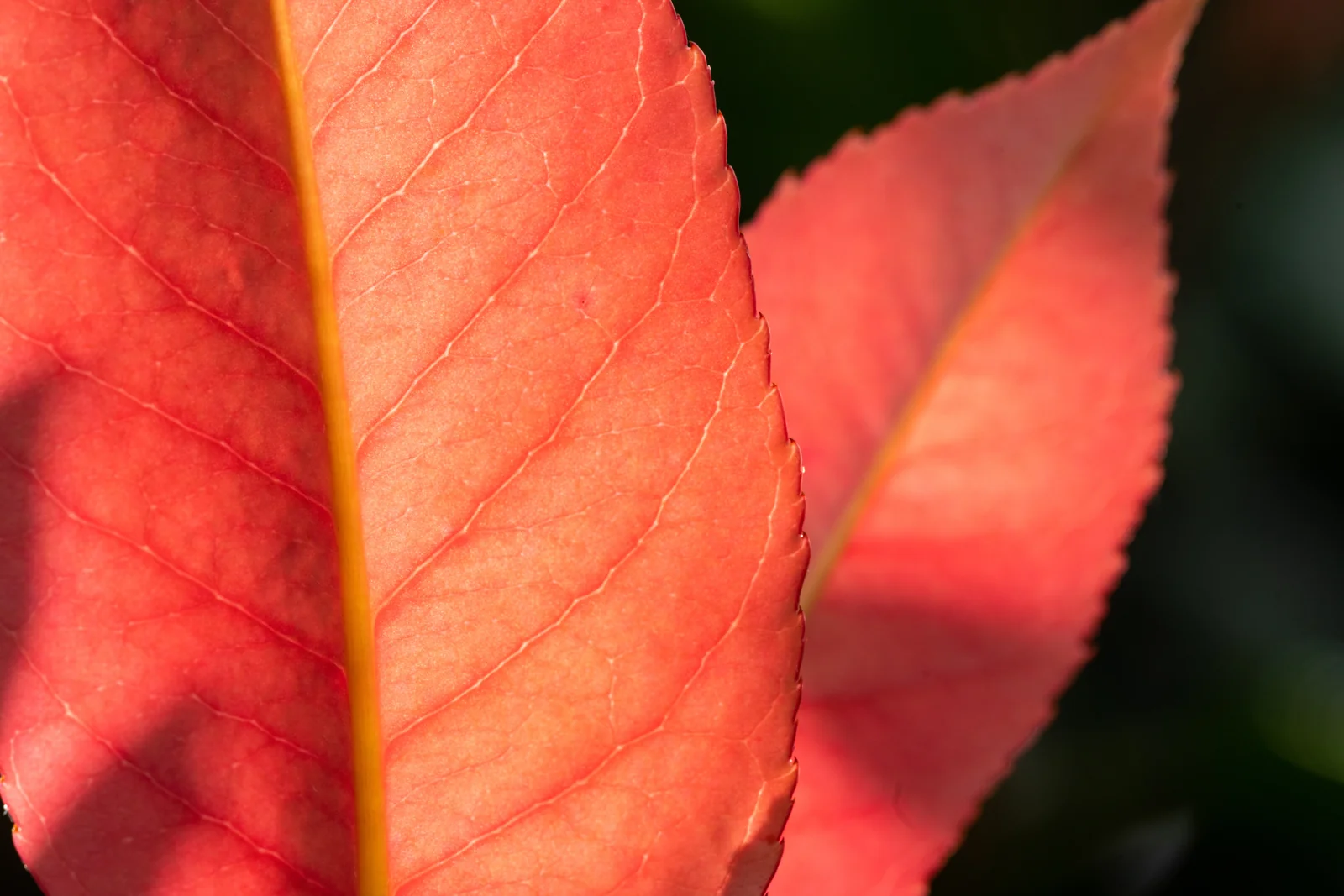
The ornamental cycle is foliage-led rather than flower-led. Each flush of new growth emerges bronze-red to bright cherry-red and holds that colour for two to three weeks before maturing to glossy dark green; a spring trim after the first flush fades reliably triggers a second, and often a third, wave through the season. Small white five-petalled flowers appear in corymbose panicles in late April and May where the plant is grown unclipped, followed by small red pomes that persist into winter; in trimmed hedges, flowering is normally suppressed.
Reliably winter-hardy to about minus 15 °C, with foliage scorch possible in colder spells and in dry winter wind. The taxon is at home through Atlantic and Mediterranean Europe and across most of temperate Central Europe; in continental and northern margins, site it in a sheltered position with a south, west, or east aspect and assured drainage. Tolerates full sun to partial shade, with the red flush strongest in full sun.
Grows on loam, sand, or chalk across acid, neutral, and alkaline pH, on moist but well-drained or freely drained soils; avoid waterlogged ground and standing irrigation, which exacerbate root and foliar disease pressure. The species is susceptible to Entomosporium leaf spot in warm, humid conditions, and 'Red Robin' is reported to carry better resistance than the parent; siting in open air movement and watering at the root rather than over the canopy further reduces pressure. Fireblight and powdery mildew may occur but are not common limiting factors in European cultivation. The fruit is ornamental and is not to be eaten.
Advice on this species
Want to know more about Photinia x fraseri 'Red Robin'?
Tell us about your project and we'll advise you on this species — where it thrives, which size makes sense, and what to expect once planted.
- Produção própria
- Exemplares adultos
- Resposta em 1–2 dias
Sem compromisso · orçamento personalizado