

Three-season ornamental with broad European hardiness
Persian Ironwood · Parrotia persica
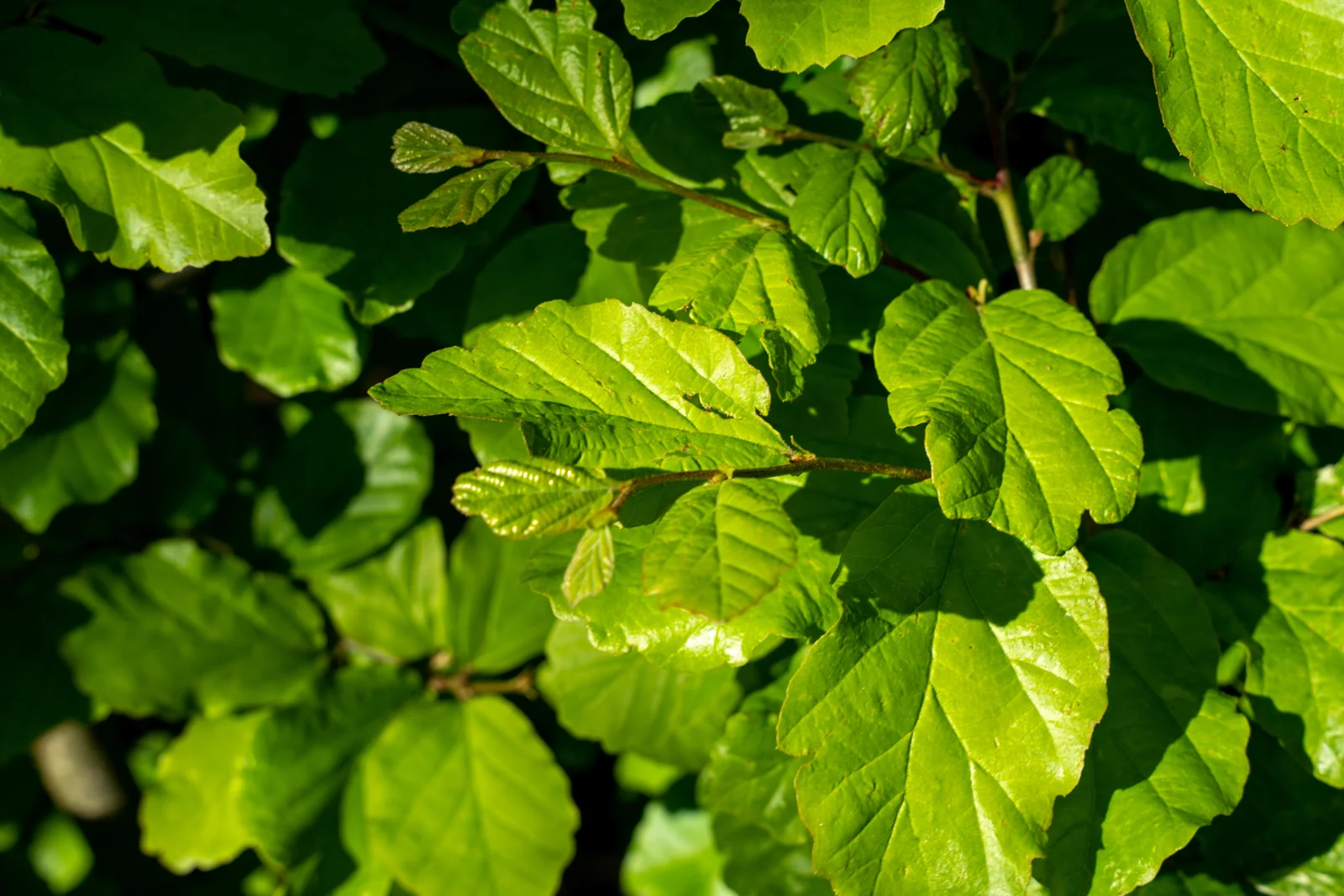
A slow-growing deciduous tree valued for exfoliating mosaic bark, reliable autumn colour, and a late-winter flower display. Native to northern Iran and the Caucasus, it tolerates a wide European climate envelope with no significant pest or disease liabilities.
About this Species
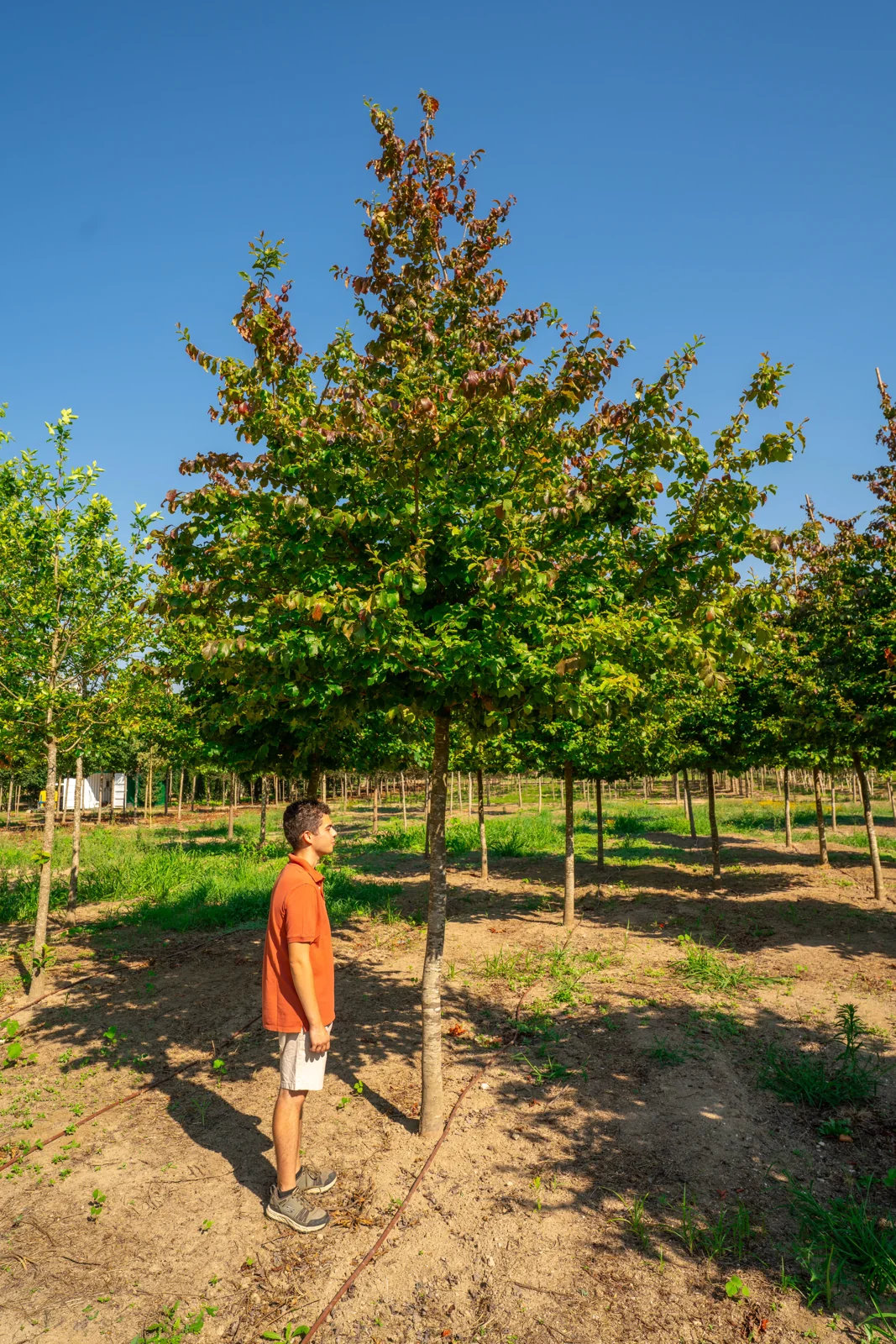
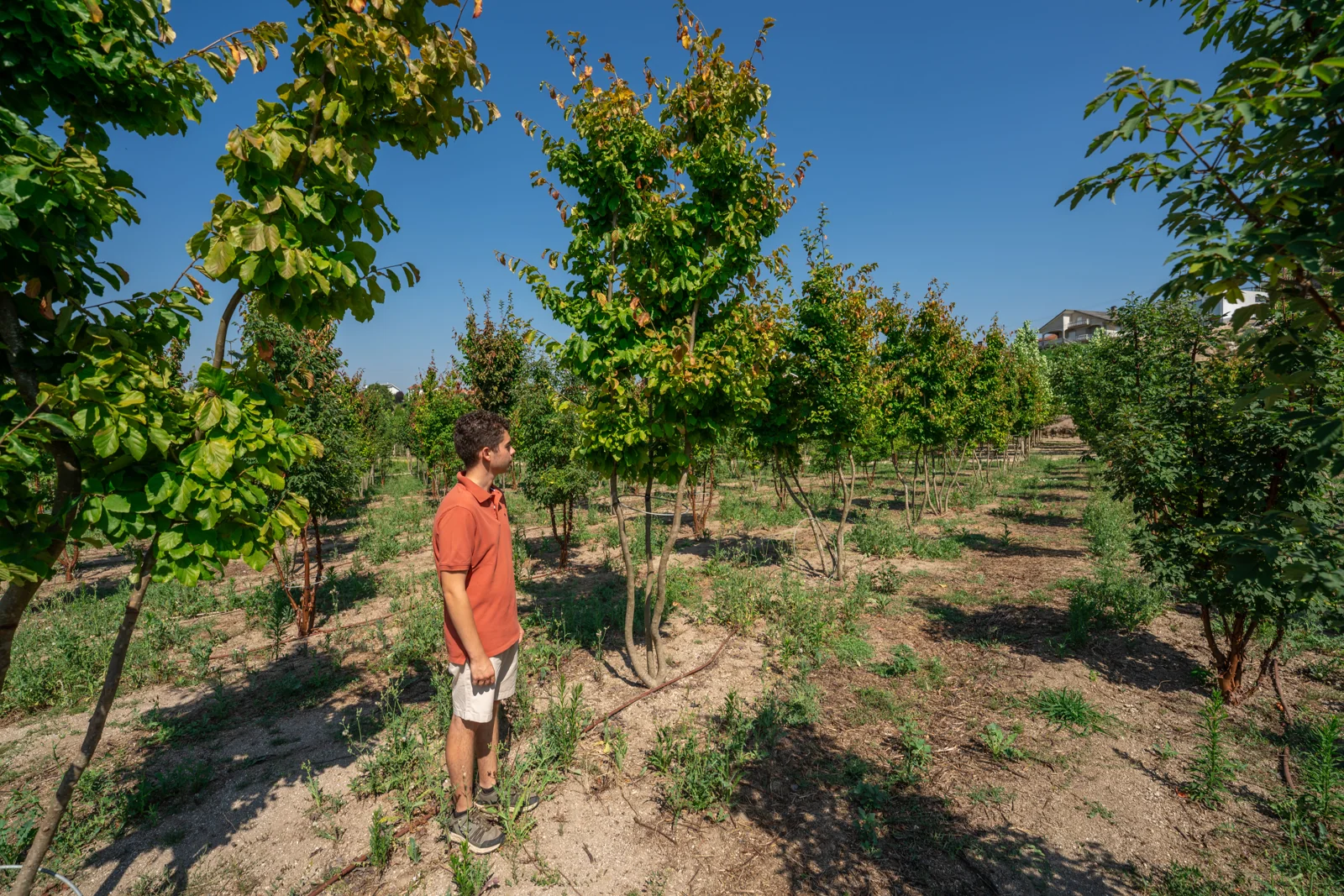
The species matures at 6 to 12 metres in cultivation, typically forming a broad, spreading crown from a short bole or multiple stems. Formative pruning in the early years produces a clean single trunk that displays the bark character to full effect: smooth plates flaking to reveal a patchwork of green, cream, and cinnamon, comparable in visual interest to…
Read more
Show less
The species matures at 6 to 12 metres in cultivation, typically forming a broad, spreading crown from a short bole or multiple stems. Formative pruning in the early years produces a clean single trunk that displays the bark character to full effect: smooth plates flaking to reveal a patchwork of green, cream, and cinnamon, comparable in visual interest to Platanus but on a smaller and more manageable frame. Lower branches have a tendency to inosculate and layer, creating a robust, storm-proof structure that requires little corrective work once established.
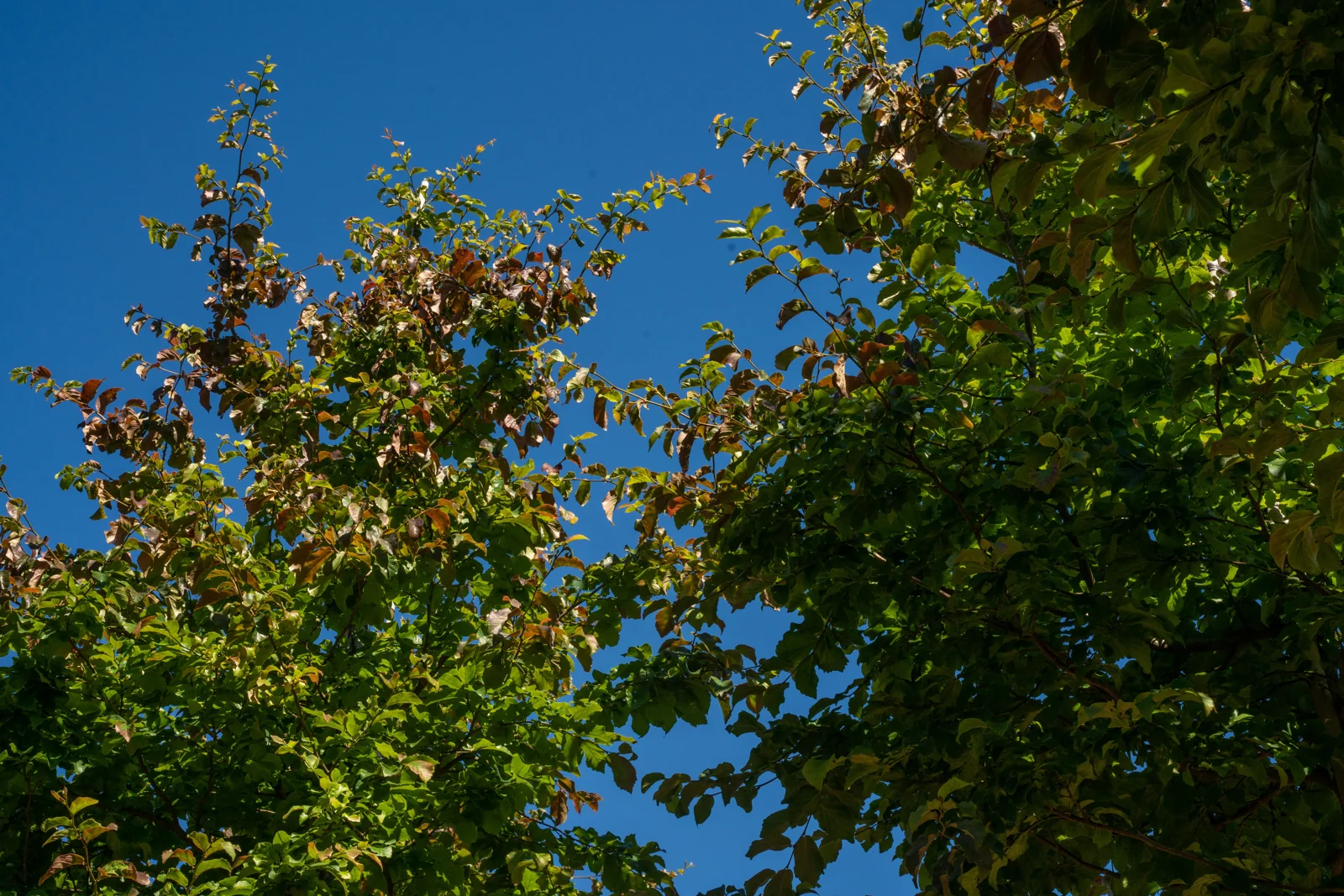
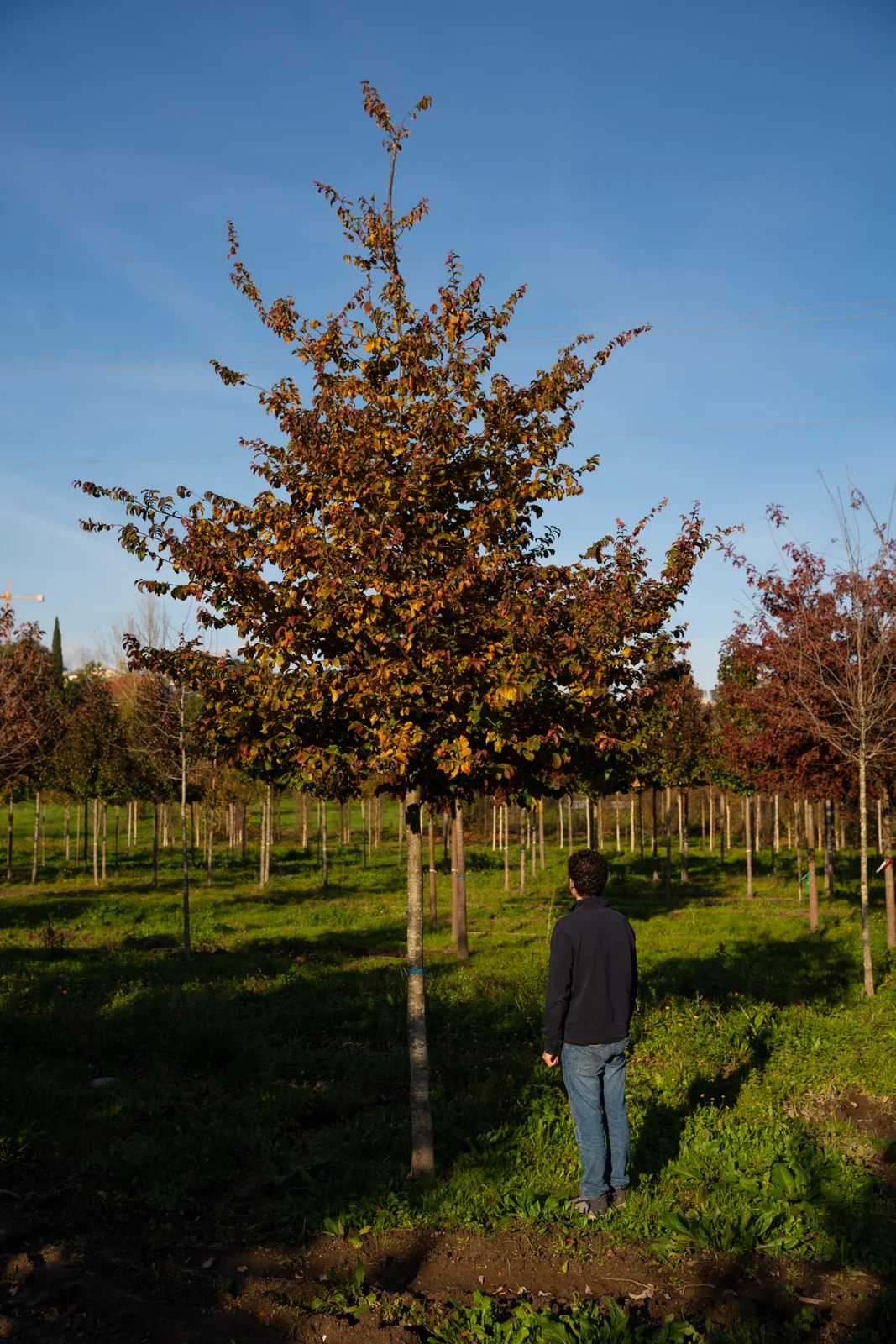
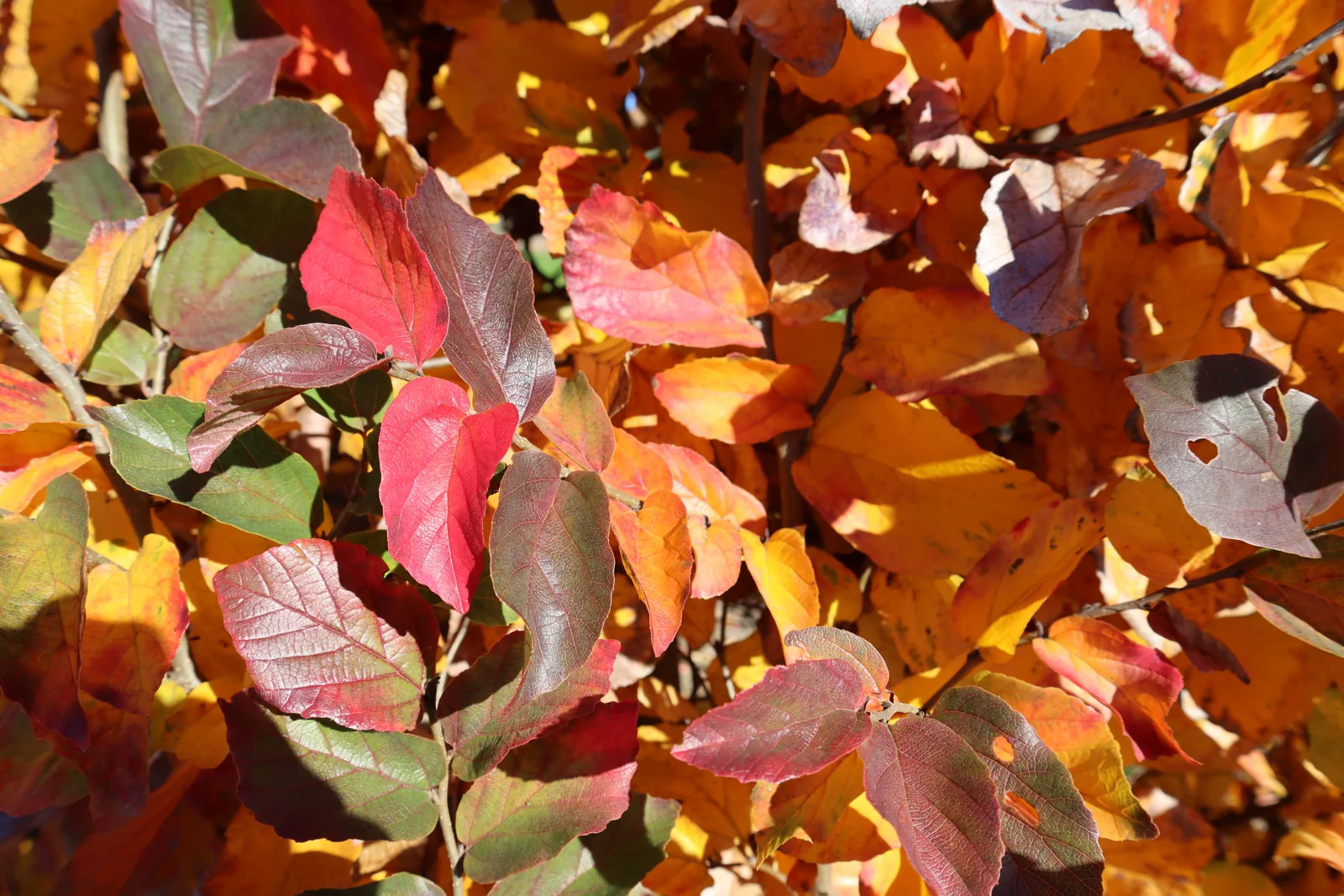
Autumn colour is the primary ornamental event. Individual trees carry a range from lemon yellow through orange to deep crimson and plum purple, with colour intensity increasing in continental climates where day-night temperature differentials are sharper. Full sun produces the strongest display; in partial shade the colour is muted but the tree remains healthy. Late-winter flowers, small clusters of red stamens without petals, appear on bare wood in February to March and provide early-season interest where mild winters allow them to open cleanly.
The climate envelope is unusually broad for a tree of this ornamental calibre. Winter hardiness extends to approximately minus 31 degrees Celsius (USDA zone 4b); documented specimens in Belgium have survived minus 19 degrees Celsius without damage, and plantings at the Morton Arboretum in Illinois (zone 5b) confirm reliable performance across cool-continental conditions. At the warm end of the range, a Belgian collection recorded survival at 41 degrees Celsius in summer 2022. The practical northern limit for good autumn colour lies around southern Scotland and comparable latitudes, though the tree itself survives well beyond this line.
Drought tolerance is moderate: once established, the deep root system sustains the tree through extended dry periods without supplementary irrigation in most European climates, though performance in prolonged arid heat below 500 mm annual rainfall is not documented. The species is adaptable to a wide range of soils, including clay, sand, and lime-rich substrates, and tolerates urban air pollution and compacted ground. Salt tolerance is low, limiting its use in exposed coastal positions.
As a specification choice, Parrotia persica fills the role of a medium-stature specimen or parkland tree where Acer platanoides or Tilia cordata would be conventional but where disease pressure, drought adaptation, or a requirement for exfoliating bark character favours an alternative. It carries virtually no pest or disease burden across European conditions, and its modest ultimate size suits confined urban sites and residential streetscapes where larger canopy species would outgrow the space.



Advice on this species
Want to know more about Parrotia persica?
Tell us about your project and we'll advise you on this species — where it thrives, which size makes sense, and what to expect once planted.
- Produção própria
- Exemplares adultos
- Resposta em 1–2 dias
Sem compromisso · orçamento personalizado