

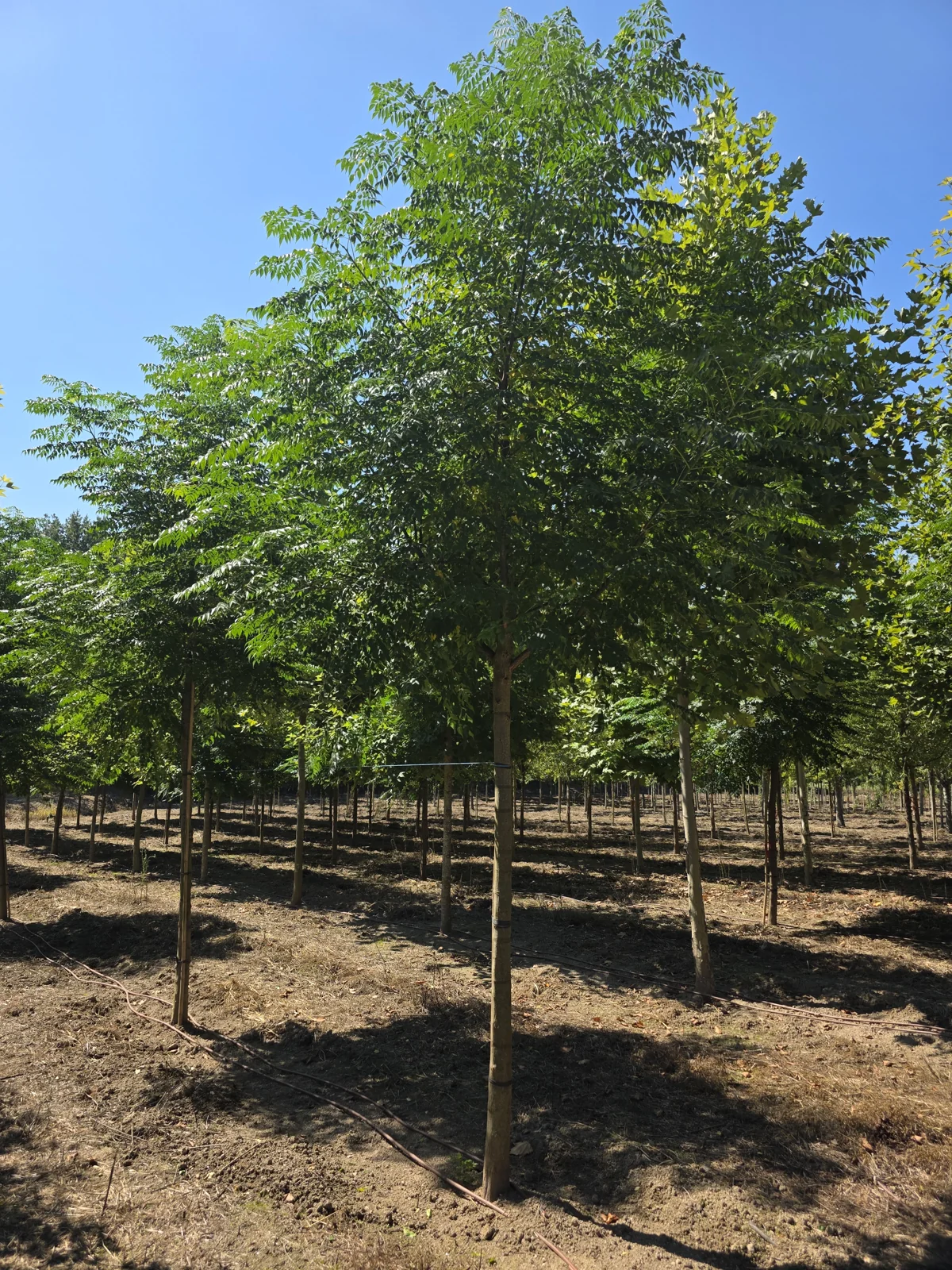
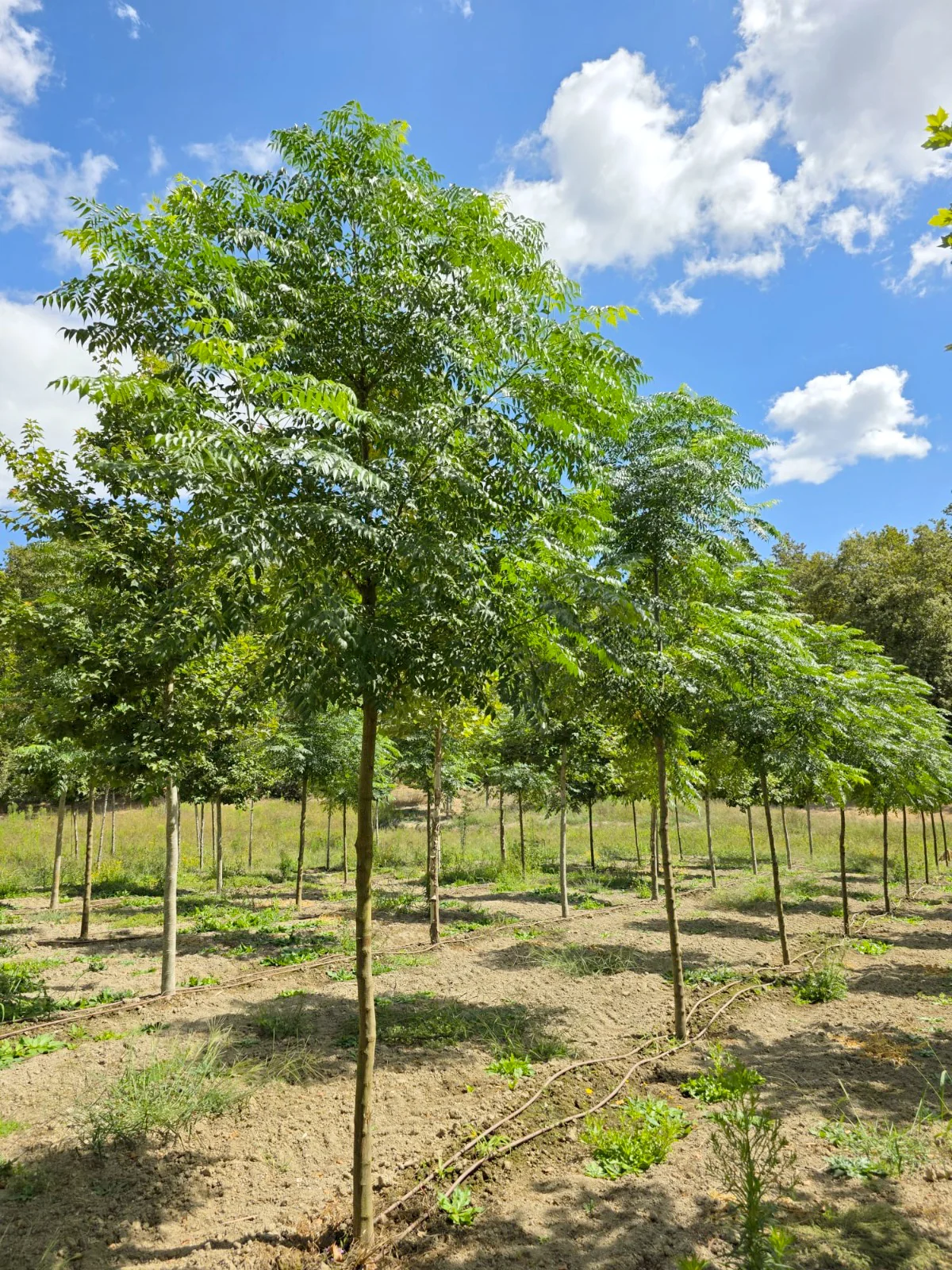
Fast-growing deciduous shade tree for warm urban sites
Chinaberry Tree · Melia azedarach
Specified for urban heat mitigation and avenue planting through warm-temperate to subtropical, mild-winter zones across southern and western Europe. Its rapid establishment and broad, rounded canopy suit projects that need canopy closure within a short timeframe.
About this Species
The crown is rounded to spreading, typically reaching 8 to 12 metres in height with a spread of 6 to 10 metres at maturity, developing a broad canopy of bipinnate foliage that casts moderate to dense shade. Branch architecture is open enough to permit dappled light to the understorey during the growing season, and the fine-textured compound leaves give the…
Read more
Show less
The crown is rounded to spreading, typically reaching 8 to 12 metres in height with a spread of 6 to 10 metres at maturity, developing a broad canopy of bipinnate foliage that casts moderate to dense shade. Branch architecture is open enough to permit dappled light to the understorey during the growing season, and the fine-textured compound leaves give the canopy a lighter visual mass than similarly sized Platanus or Tilia. Autumn colour is a clean golden yellow before leaf drop, and the open winter silhouette exposes furrowed dark brown bark with reasonable structural interest.
Flowering occurs from April through June in loose axillary panicles of 20 to 40 cm, with small, five-petalled lavender to lilac flowers that carry a notable fragrance detectable at some distance. The flowers are followed by yellow drupes of approximately 1 cm diameter that persist on the tree well into winter, contributing to off-season visual presence. Fruit toxicity is a material specification consideration: the drupes and seeds contain tetranortriterpenoid neurotoxins and are poisonous to humans and most mammals, including dogs and cats. In public-realm and school-adjacent schemes, this must be weighed against the tree's other merits.
Winter hardiness is reliably documented to about minus 15 °C (USDA zone 7b). Successful establishment is reported in sheltered positions in coastal southern England, the Netherlands below the Rhine, the Po valley, and the northern Adriatic coast. East of a line through Vienna or north of a line through southern Belgium, winter damage becomes a significant risk and specification is not advisable without robust microclimate data. The species performs best in zones 8a and warmer, where it tolerates prolonged summer maxima above 35 °C, sustained drought below 400 mm annual rainfall once established, and a range of soil types provided drainage is adequate. Waterlogged or heavy clay soils are not tolerated.
Growth rate is fast, with young trees capable of adding 1 metre or more of height per year in favourable conditions. This rapid establishment makes M. azedarach useful where canopy closure is required within five to eight years. However, the species has a comparatively short functional lifespan, typically around 20 years, which should be factored into long-term planting plans. Disease and pest resistance across European growing conditions is generally high, and maintenance requirements are low beyond routine pruning of the somewhat brittle wood.
Specifiers should note that M. azedarach is listed as invasive in several warm-climate jurisdictions globally and has naturalisation potential in frost-free Mediterranean coastal zones. Where local regulations or site-management protocols require assessment of invasive risk, verify regional status before specifying.



Advice on this species
Want to know more about Melia azedarach?
Tell us about your project and we'll advise you on this species — where it thrives, which size makes sense, and what to expect once planted.
- Produção própria
- Exemplares adultos
- Resposta em 1–2 dias
Sem compromisso · orçamento personalizado