

Evergreen canopy tree with large fragrant summer flowers
Southern Magnolia ‘Gallisoniensis’ · Magnolia grandiflora ‘Gallisoniensis’
A broadly pyramidal evergreen selected for reliable flowering and dense crown structure, Magnolia grandiflora 'Gallisoniensis' suits avenue, parkland, and large-scale specimen use in zones where winter minima remain above approximately minus 15 °C.
Key Facts
About this Cultivar
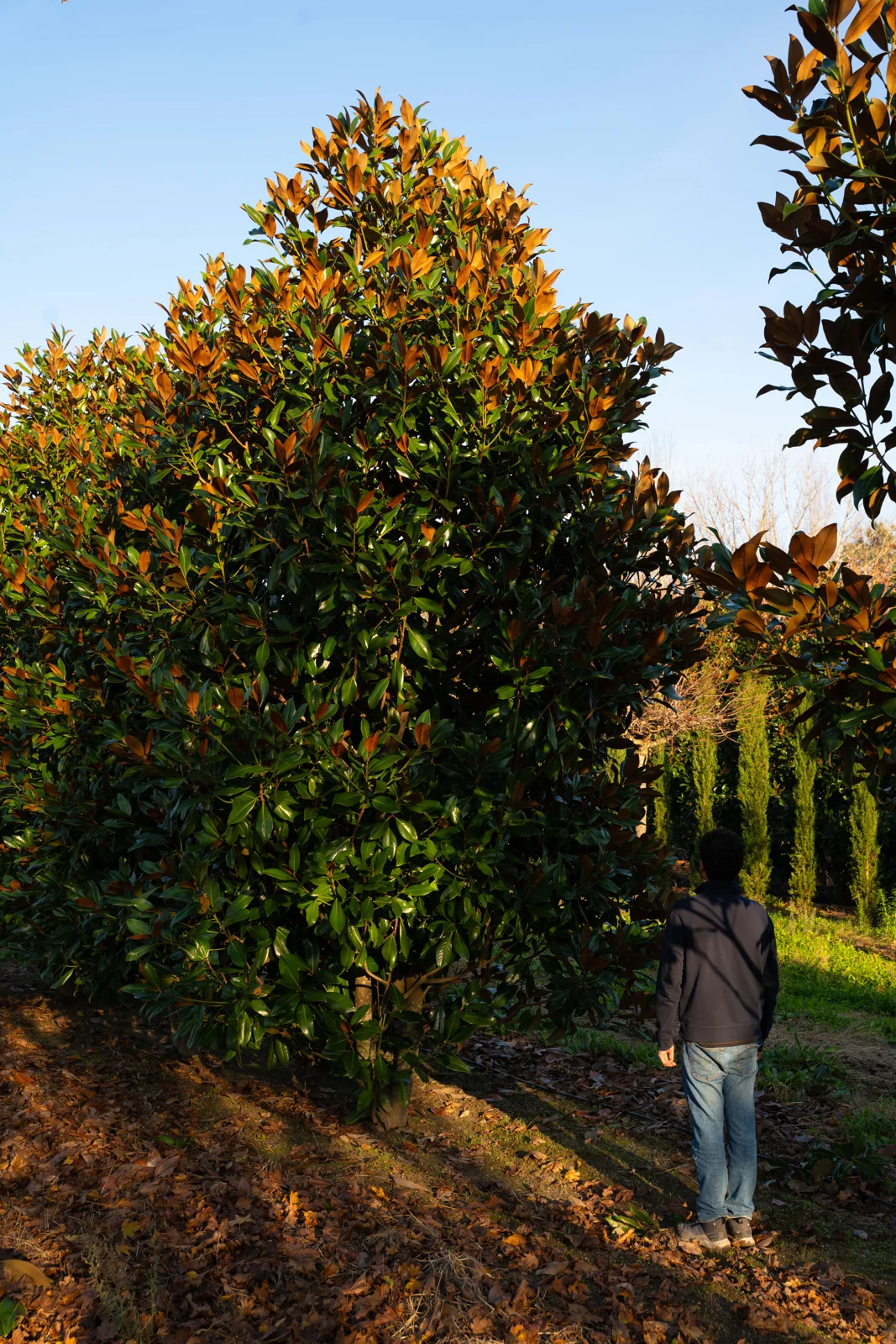
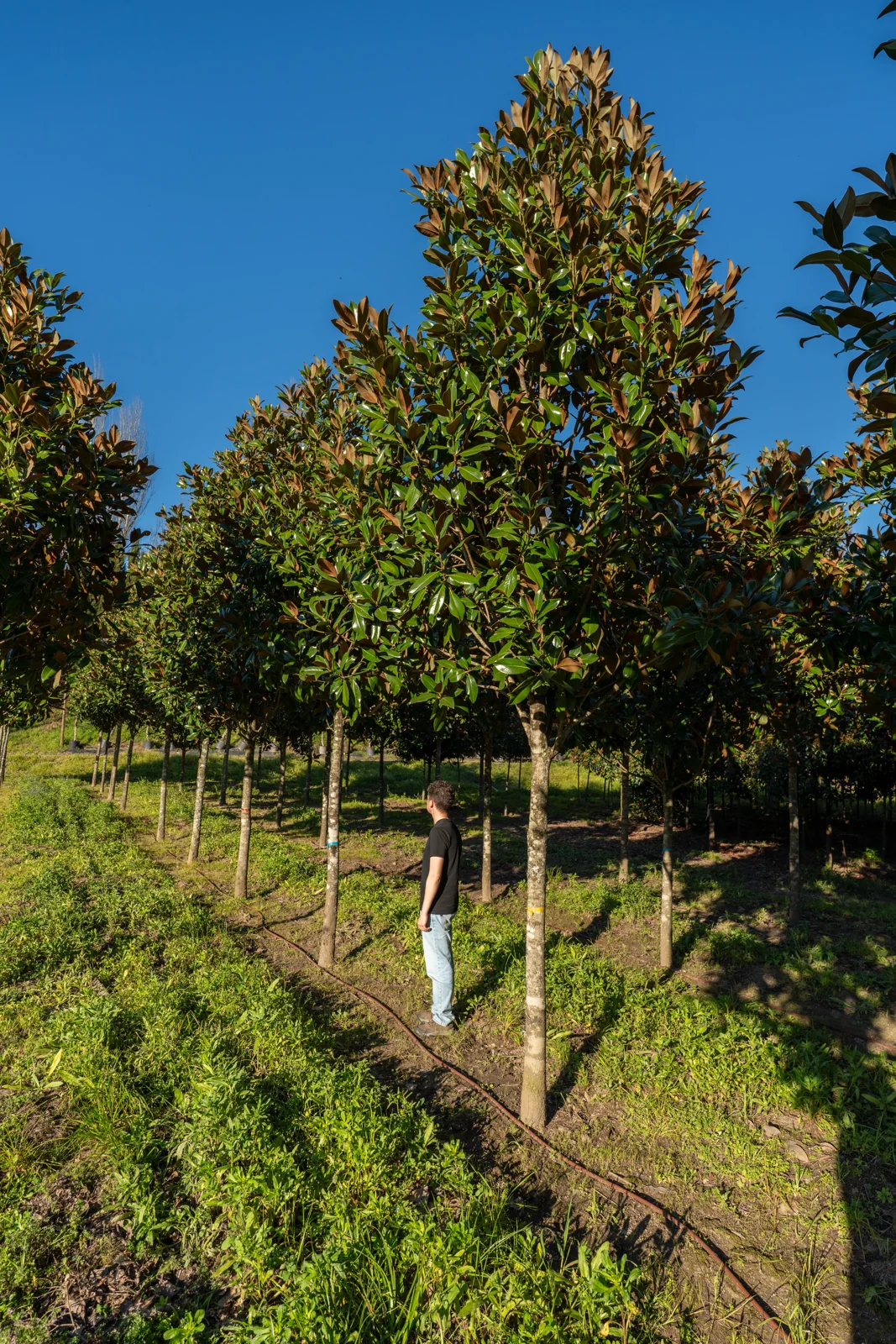
This French-origin cultivar develops a dense, broadly pyramidal crown reaching 15 to 20 metres in height with a spread of 8 to 12 metres at maturity. Growth rate is slow to moderate. The persistent foliage is large, leathery, and glossy dark green on the upper surface, with a distinctive rusty-brown indumentum beneath. Crown density is sufficient for…
Read more
Show less
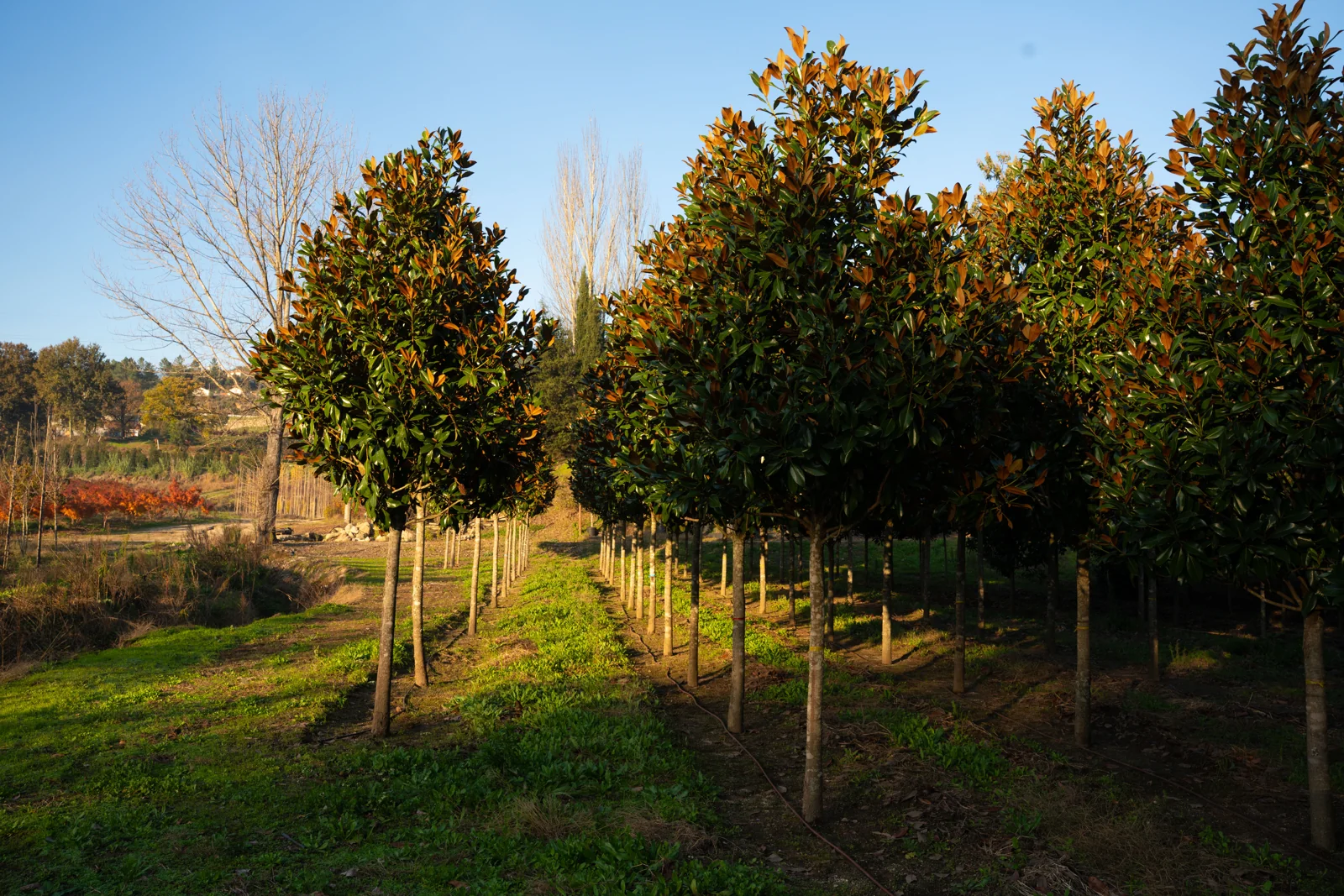
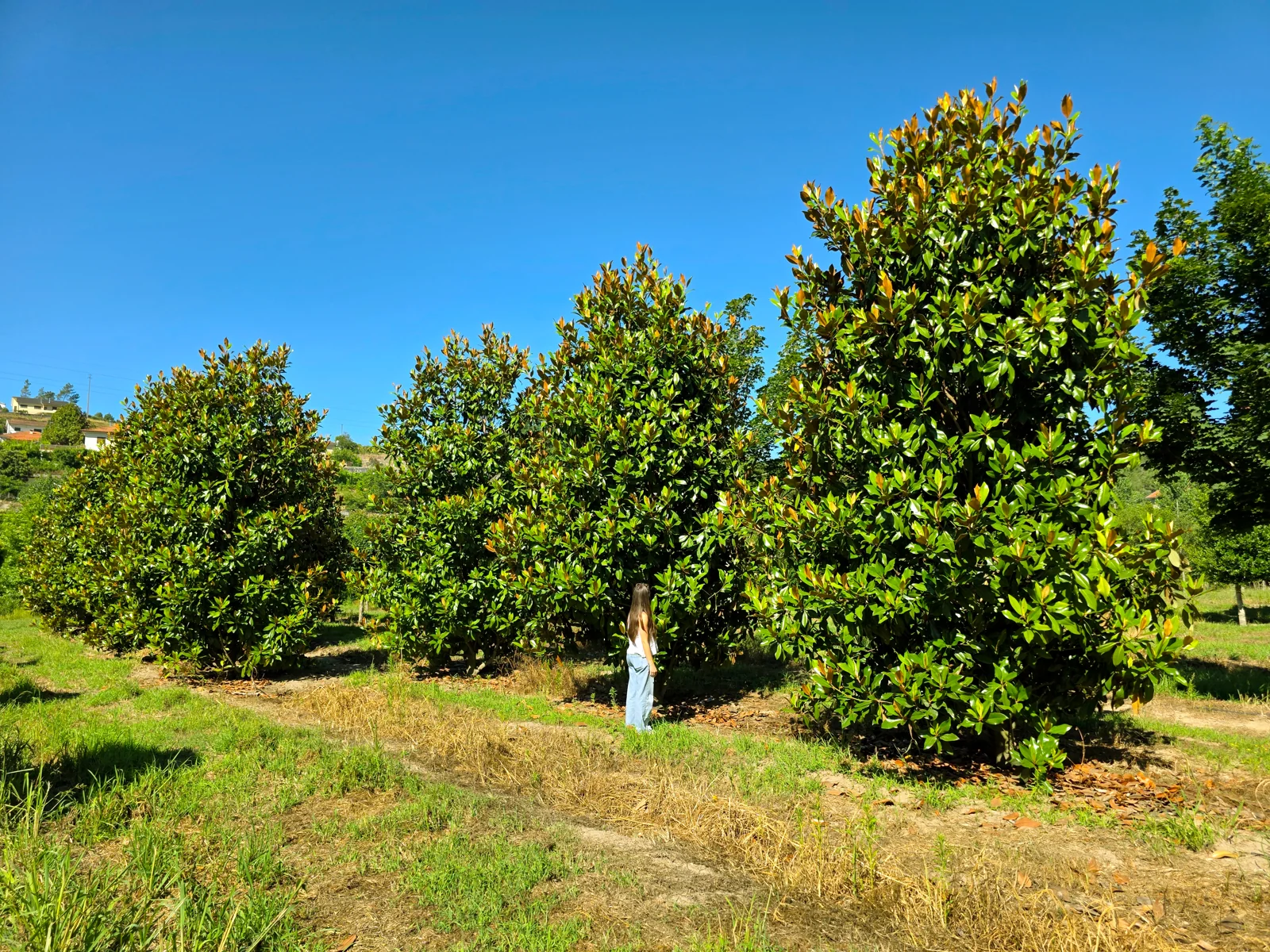
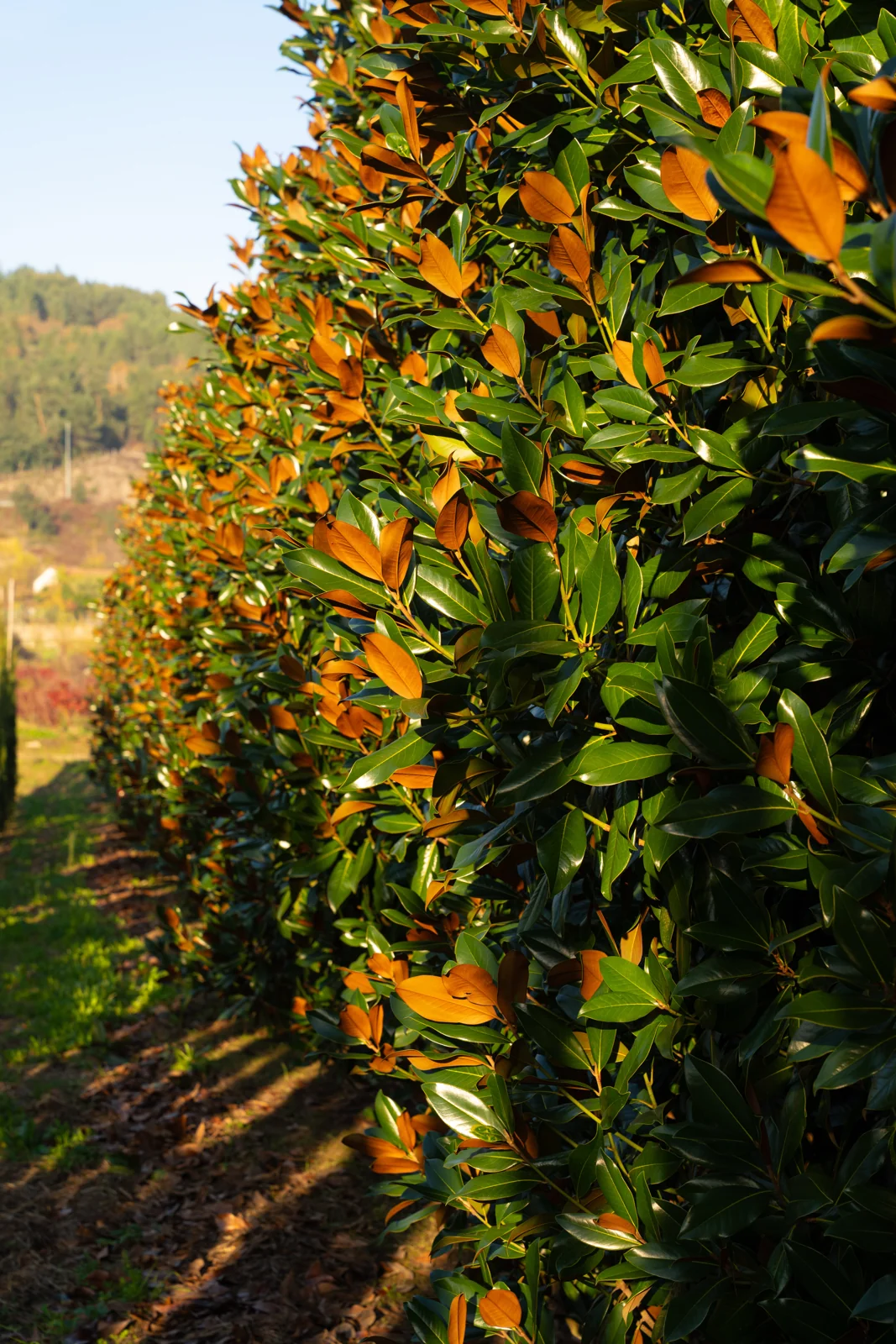
This French-origin cultivar develops a dense, broadly pyramidal crown reaching 15 to 20 metres in height with a spread of 8 to 12 metres at maturity. Growth rate is slow to moderate. The persistent foliage is large, leathery, and glossy dark green on the upper surface, with a distinctive rusty-brown indumentum beneath. Crown density is sufficient for screening and year-round visual mass, and the tree retains branches to near ground level unless pruned for clearance.
Flowering occurs from June through August, occasionally into early September. Individual flowers are solitary, white, cup-shaped, fragrant, and reach up to 25 cm in diameter. In cooler maritime climates, flowering tends to concentrate in late summer. Fruit set is limited outside warm-summer regions and should not be relied upon as an ornamental feature north of the Loire valley or the Po plain.
Hardiness is to approximately minus 15 °C (USDA zone 7b). In sheltered positions with good drainage and protection from drying winter wind, the cultivar has performed in zone 7a sites across the Atlantic seaboard of France, coastal Netherlands, southern England, and the northern Po valley. East of a line through Berlin or north of a line through Edinburgh, open planting is not recommended without significant winter protection. In continental climates with reliable snow cover but sharp winter minima below minus 18 °C, leaf damage and dieback become likely. Wall-trained specimens extend the viable range by one zone in practice.
Soil requirements are acidic to neutral, deep, and well drained. The cultivar tolerates clay and sandy substrates but does not tolerate waterlogging or thin alkaline soils. Moderate drought tolerance develops once the root system is established, though performance under prolonged summer drought above 35 °C is better with adequate soil depth and supplementary irrigation in the first seasons. Urban pollution tolerance is documented.
Specify where the project requires a large-calibre broadleaf evergreen with summer flowering and where winter conditions remain within the stated envelope. In climates too cold for open planting, wall training against a south or west facing structure remains a well-proven technique across Northern Europe.
Advice on this species
Want to know more about Magnolia grandiflora 'Gallisoniensis'?
Tell us about your project and we'll advise you on this species — where it thrives, which size makes sense, and what to expect once planted.
- Produção própria
- Exemplares adultos
- Resposta em 1–2 dias
Sem compromisso · orçamento personalizado