

Deciduous avenue tree with reliable autumn colour
Sweet Gum · Liquidambar styraciflua
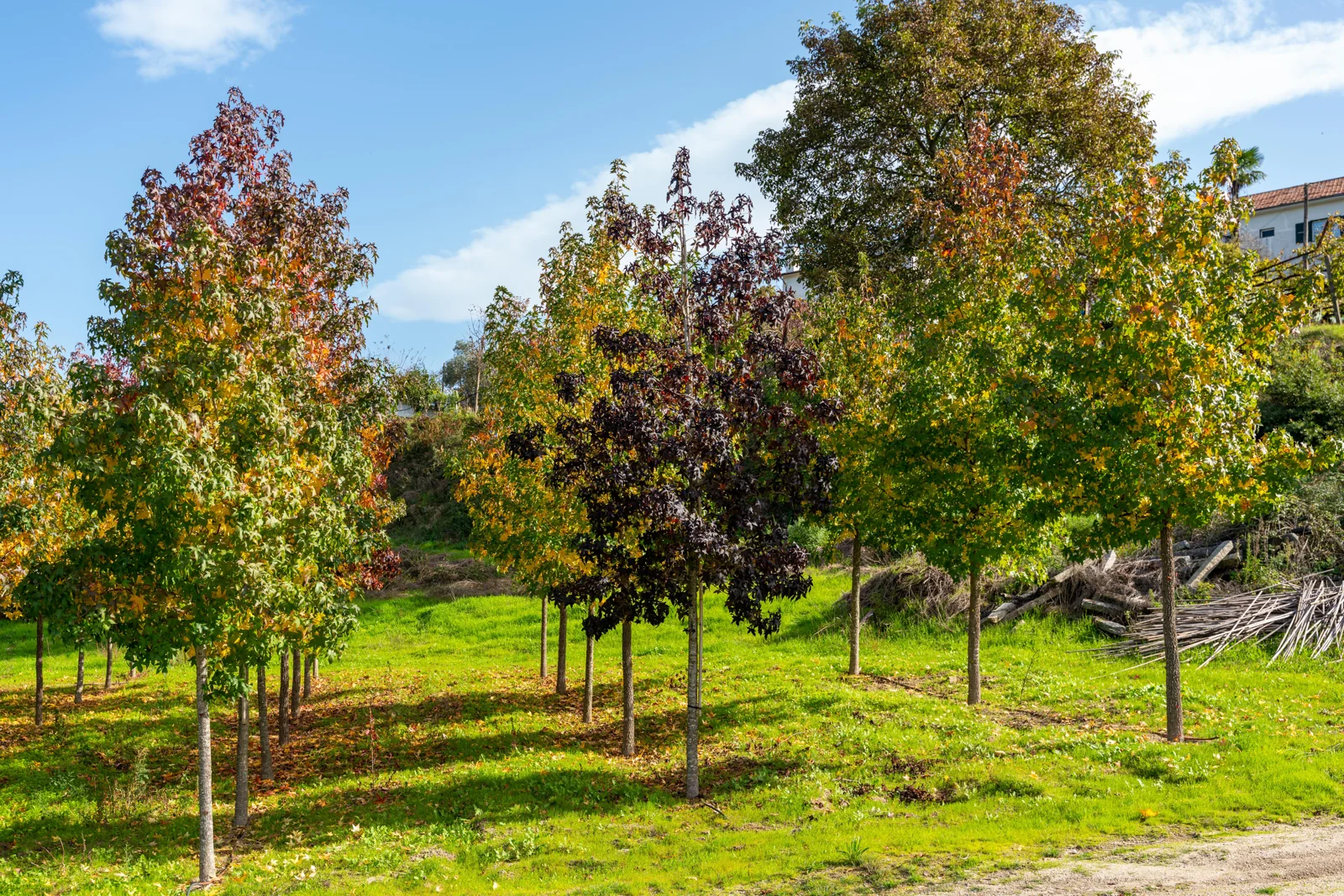
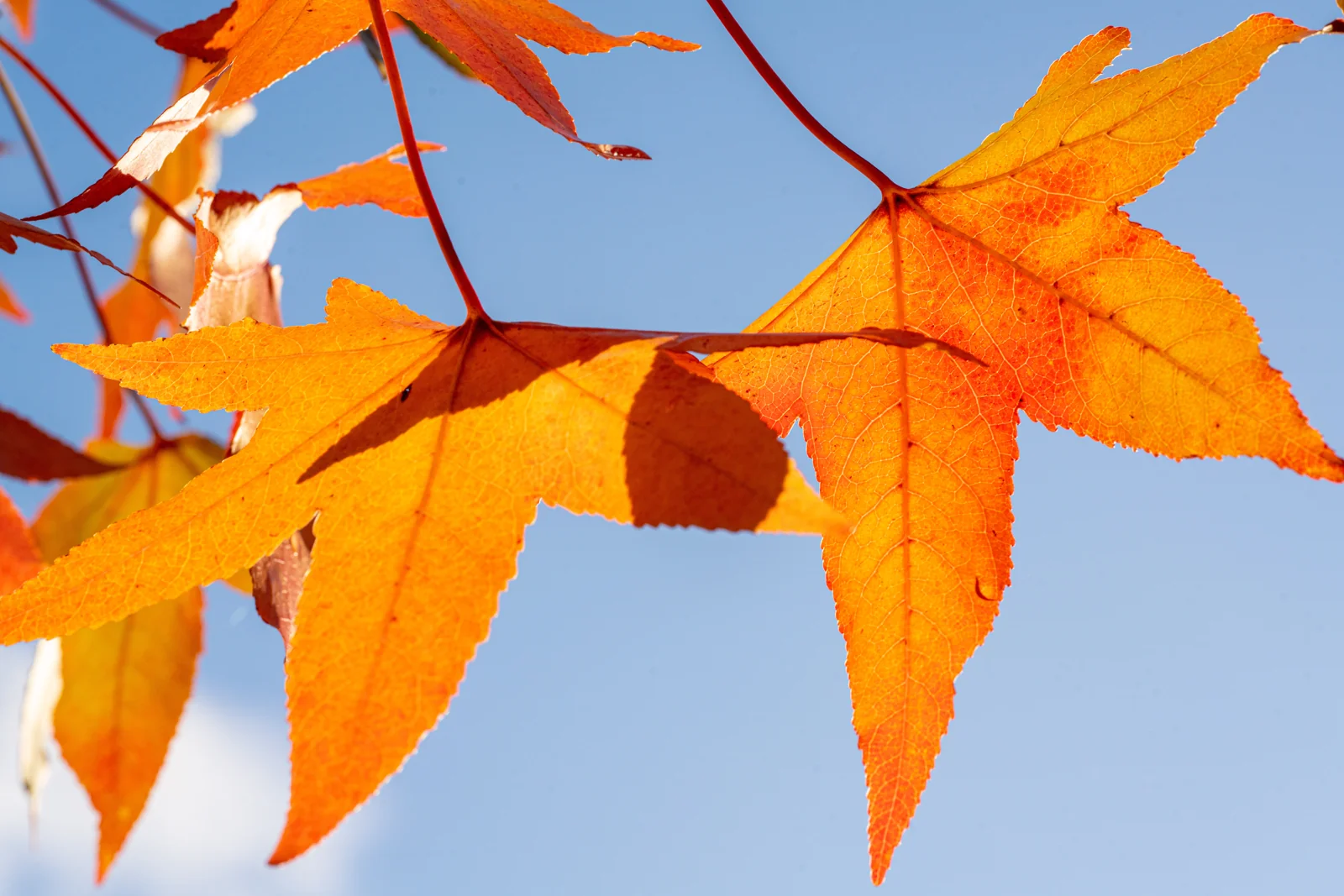
A medium-to-large deciduous canopy tree specified for streets, avenues, and parkland across temperate Europe, valued for its star-shaped foliage and a long, multi-coloured autumn display where summer heat is adequate.
About this Species
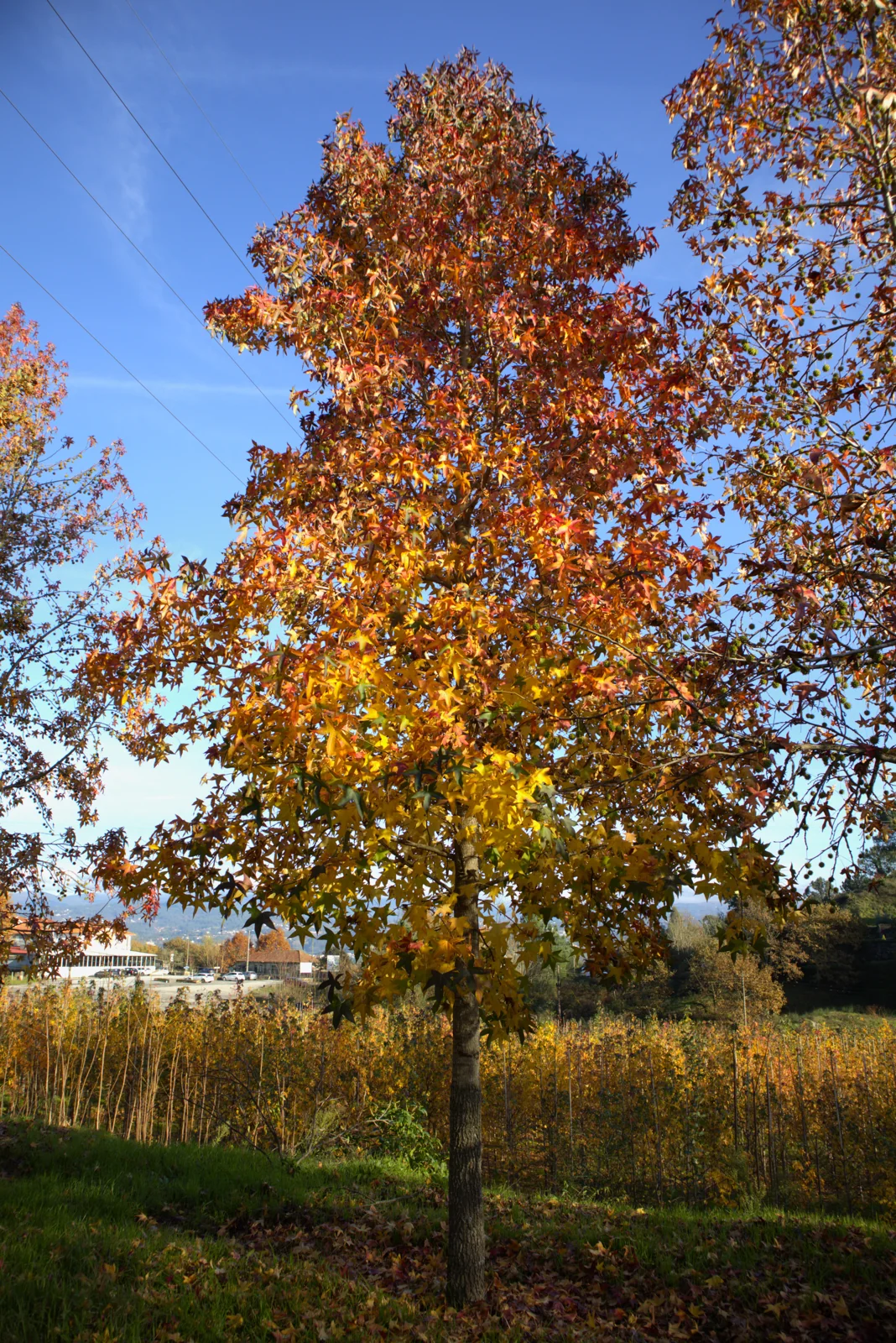
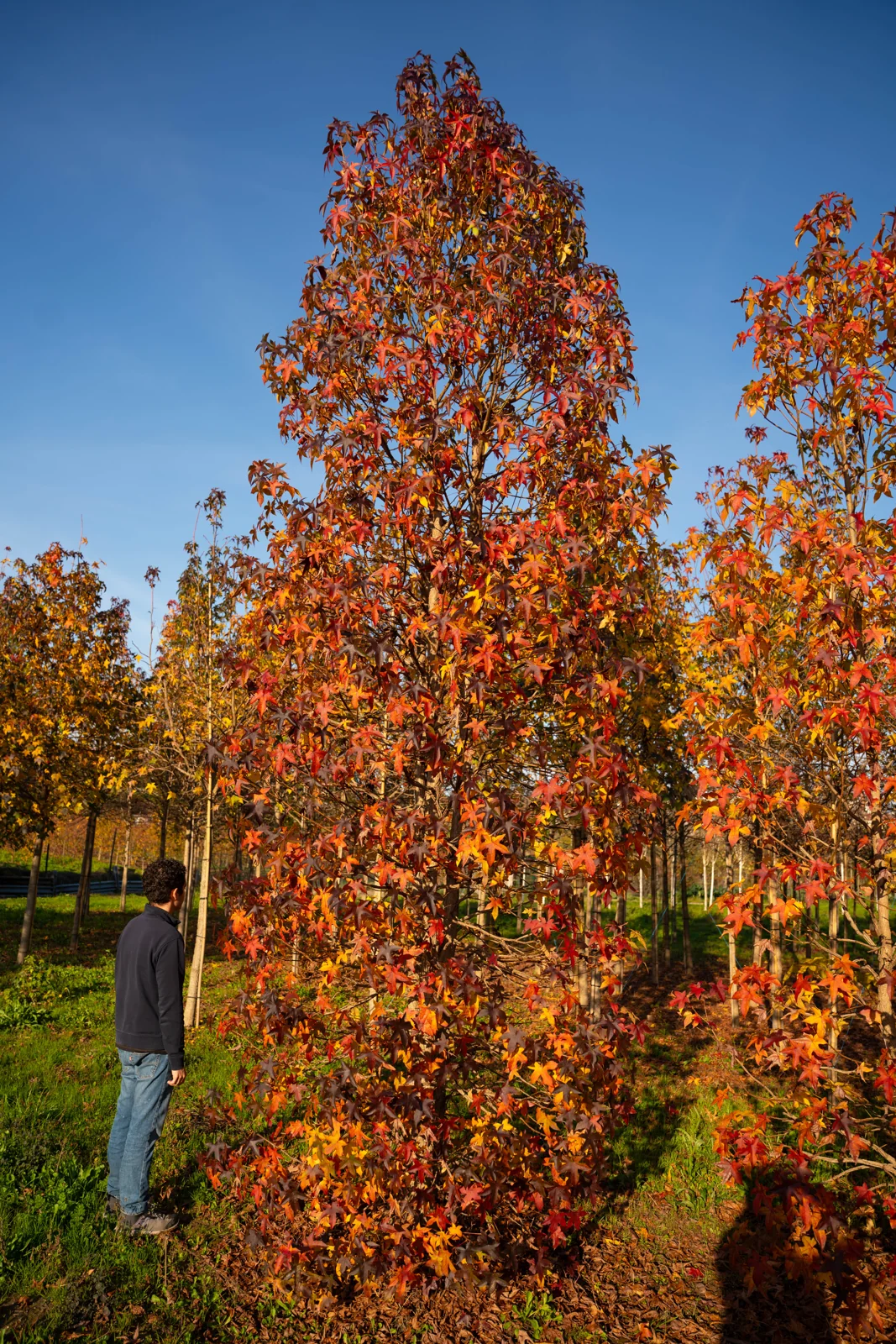
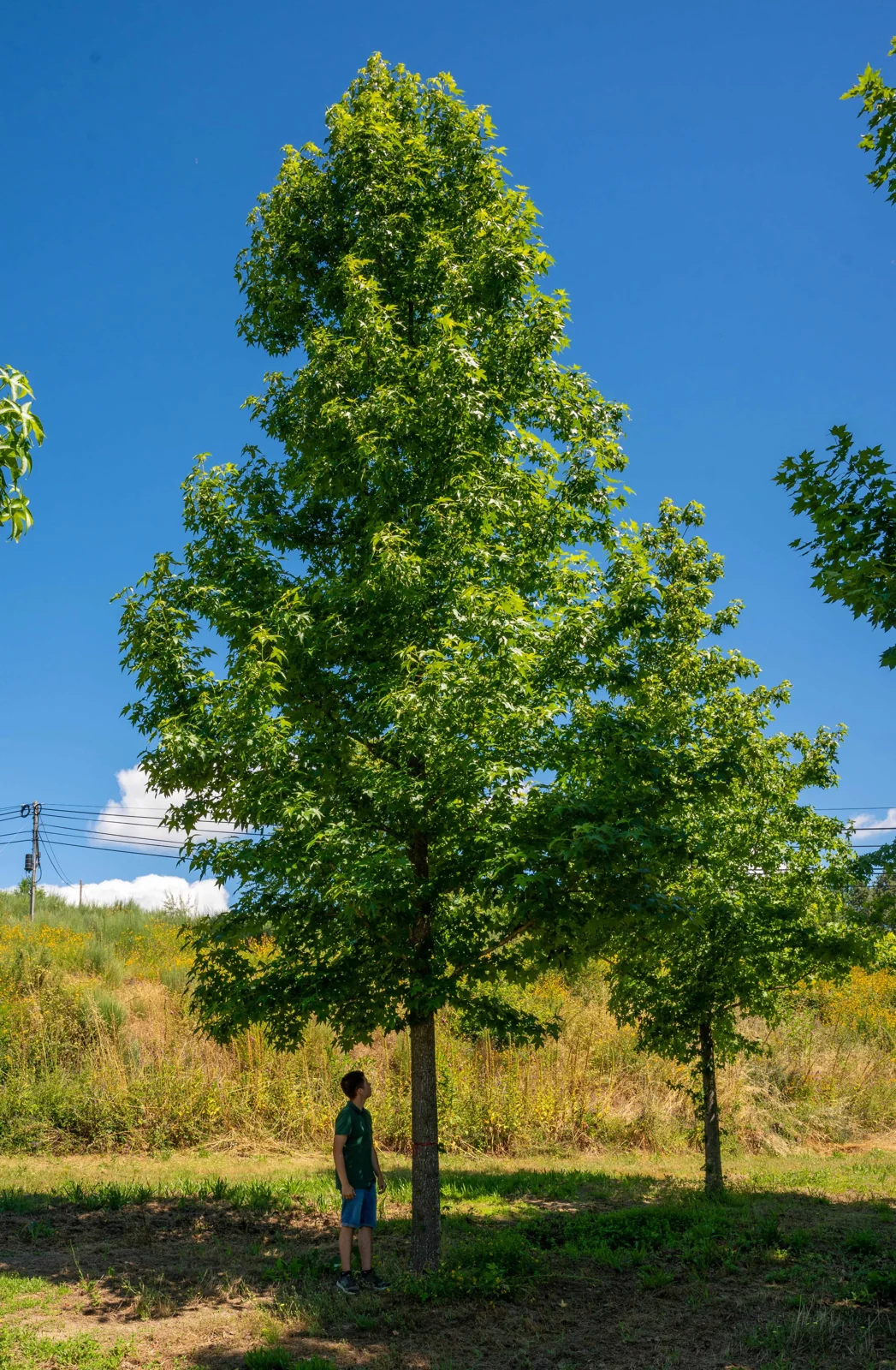
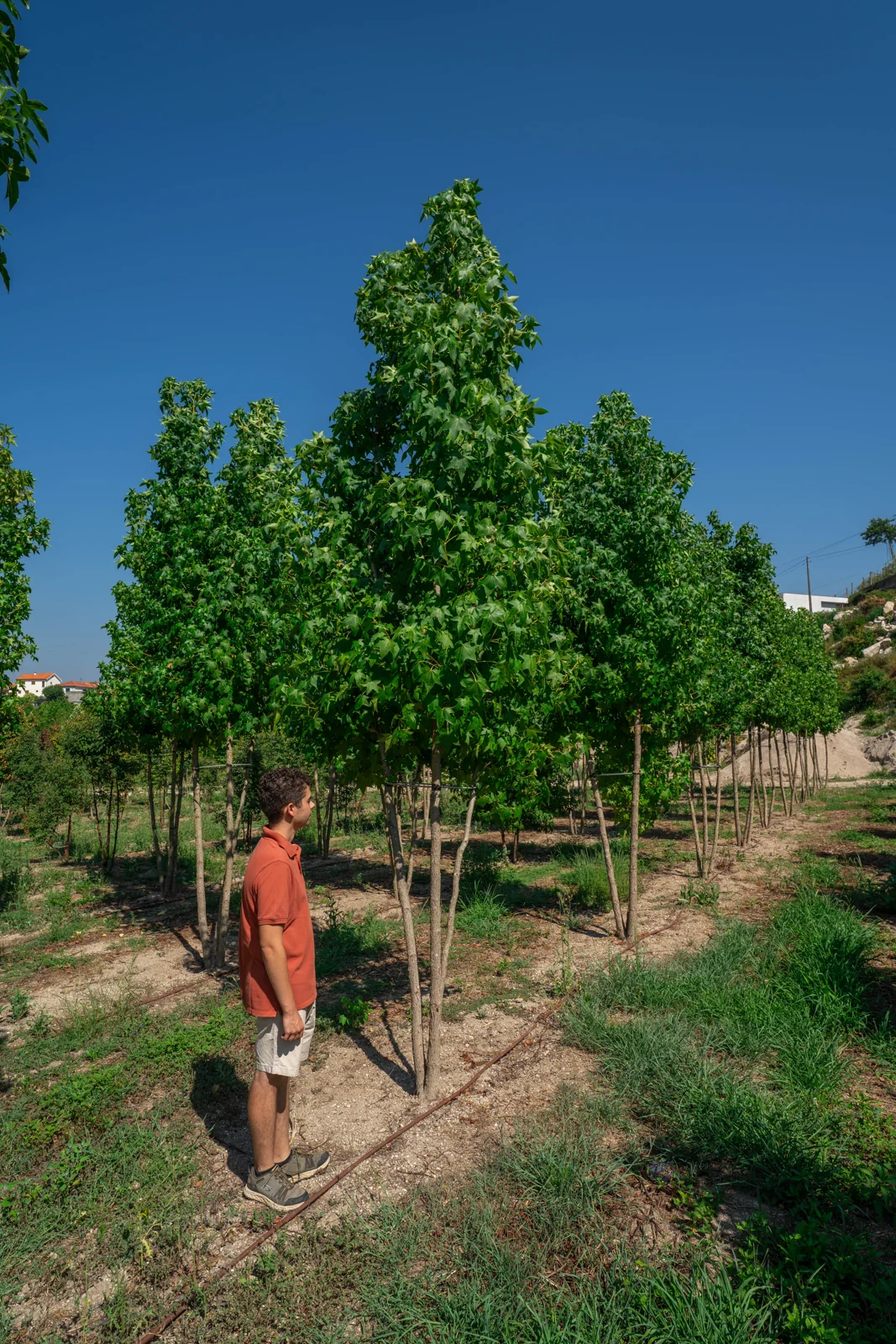
A native of warm-temperate eastern North America and the cloud forests of Mexico and Central America, Liquidambar styraciflua develops a symmetrical, pyramidal habit in youth, broadening to a domed crown of 15 to 25 m in cultivation, with a spread of 8 to 12 m. The glossy, palmately five-lobed leaves resemble those of Acer but are alternate, leathery, and…
Read more
Show less
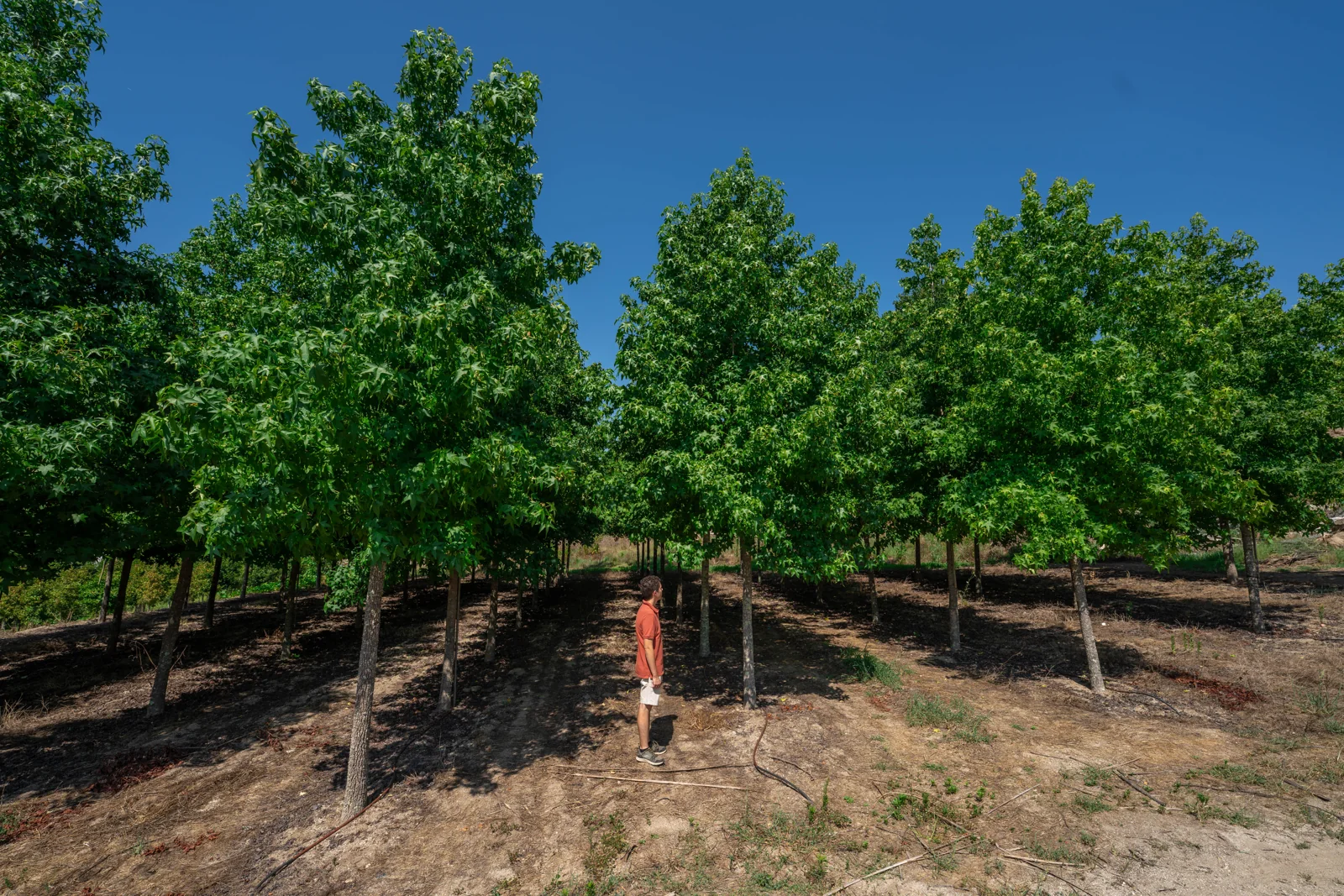
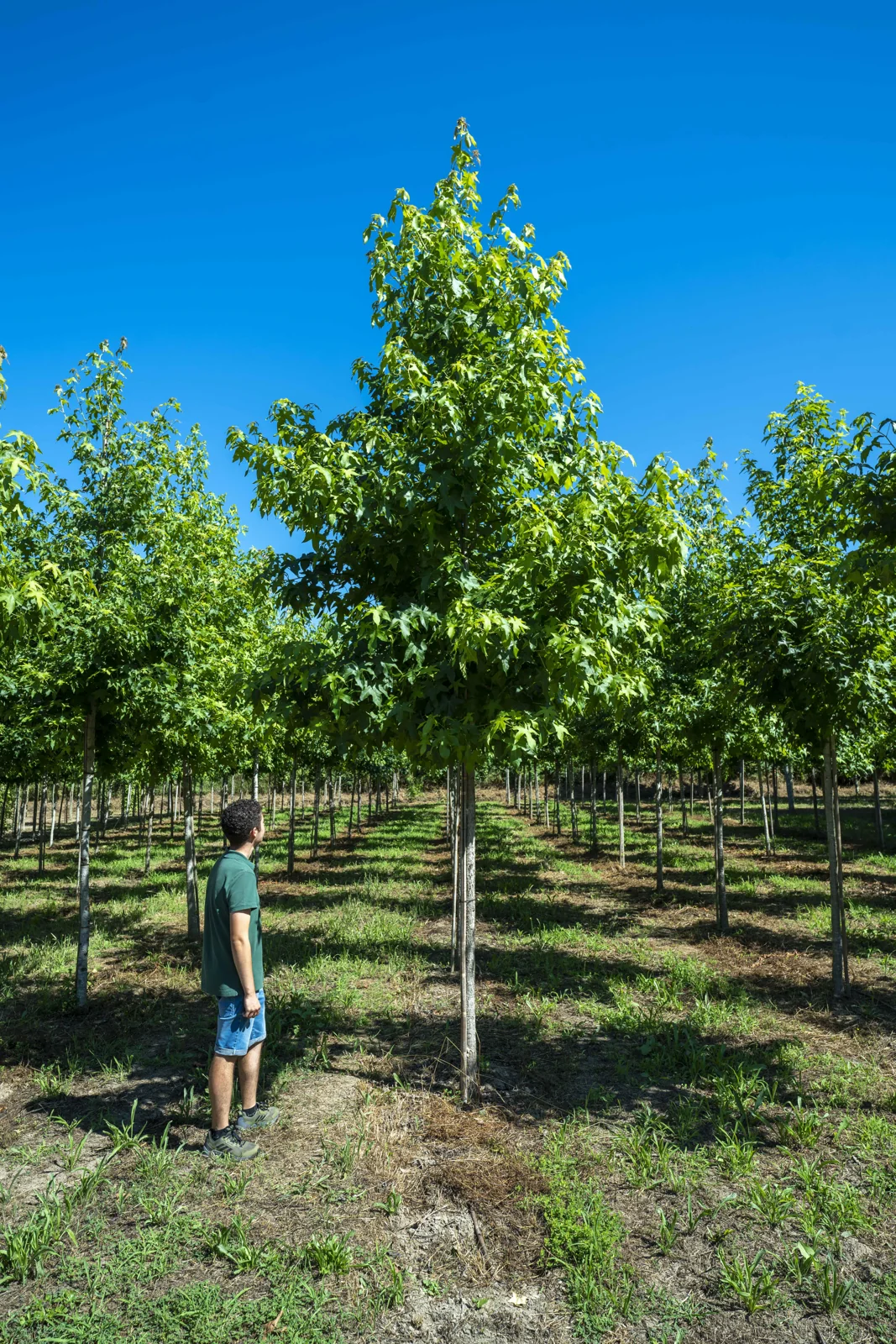
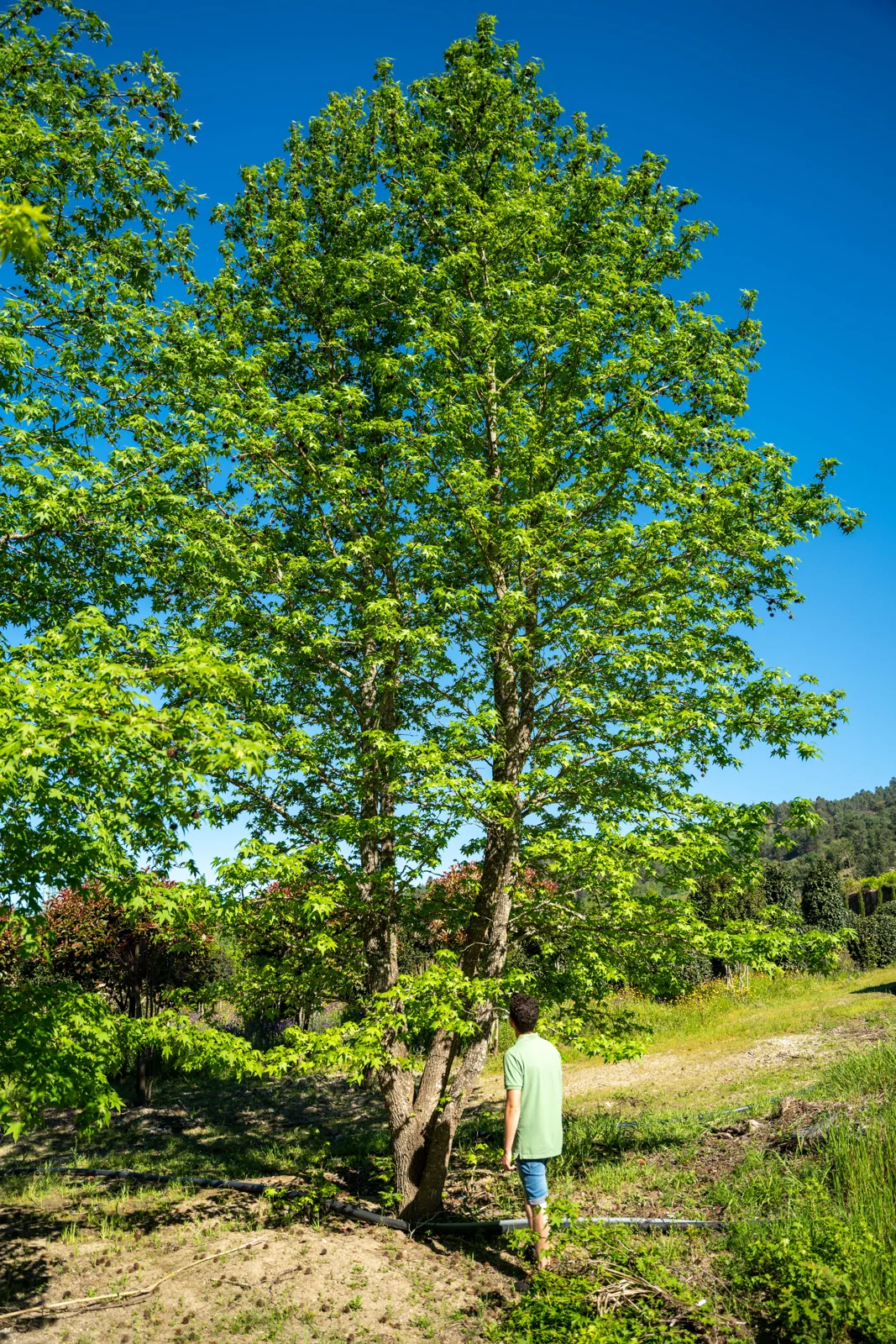
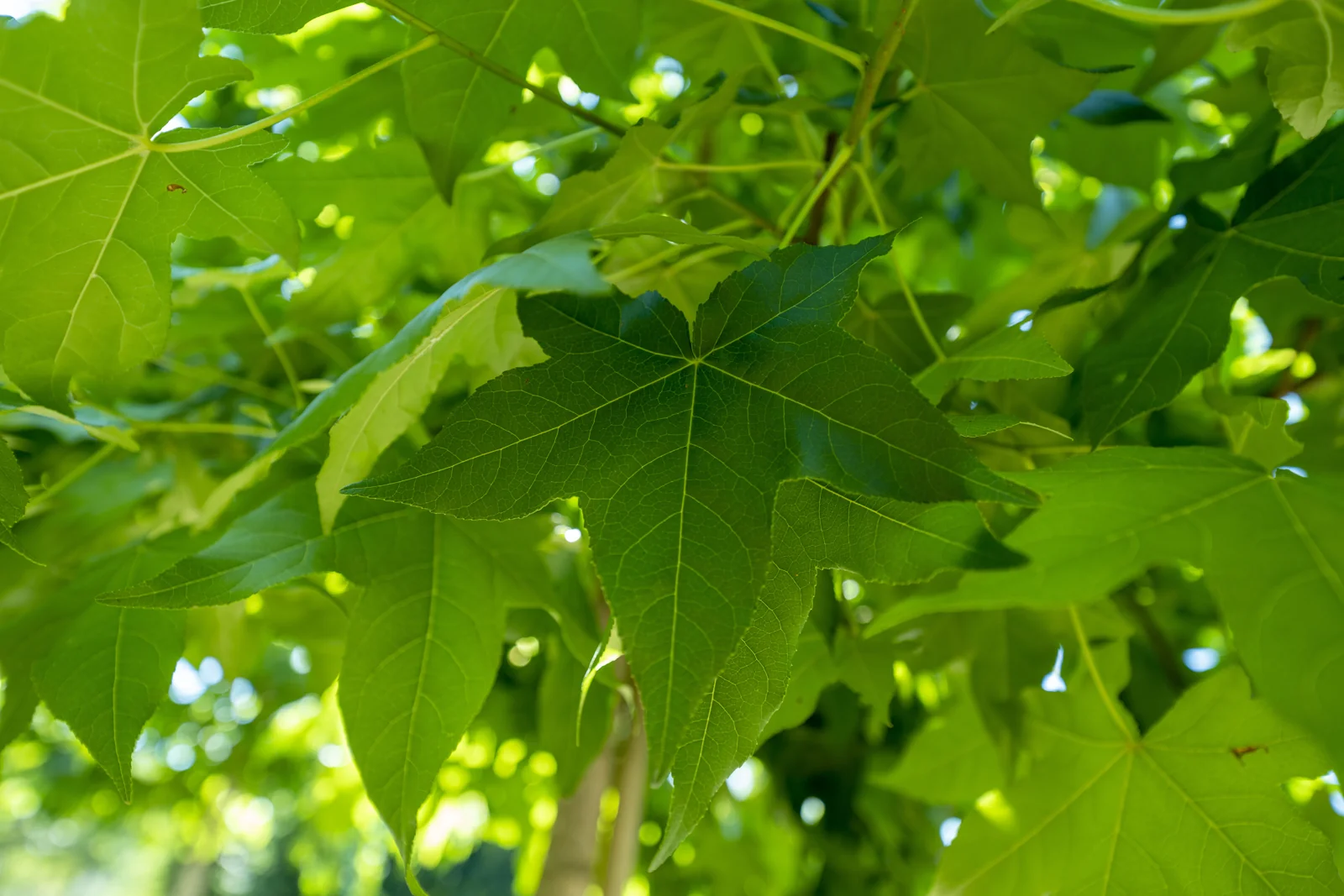
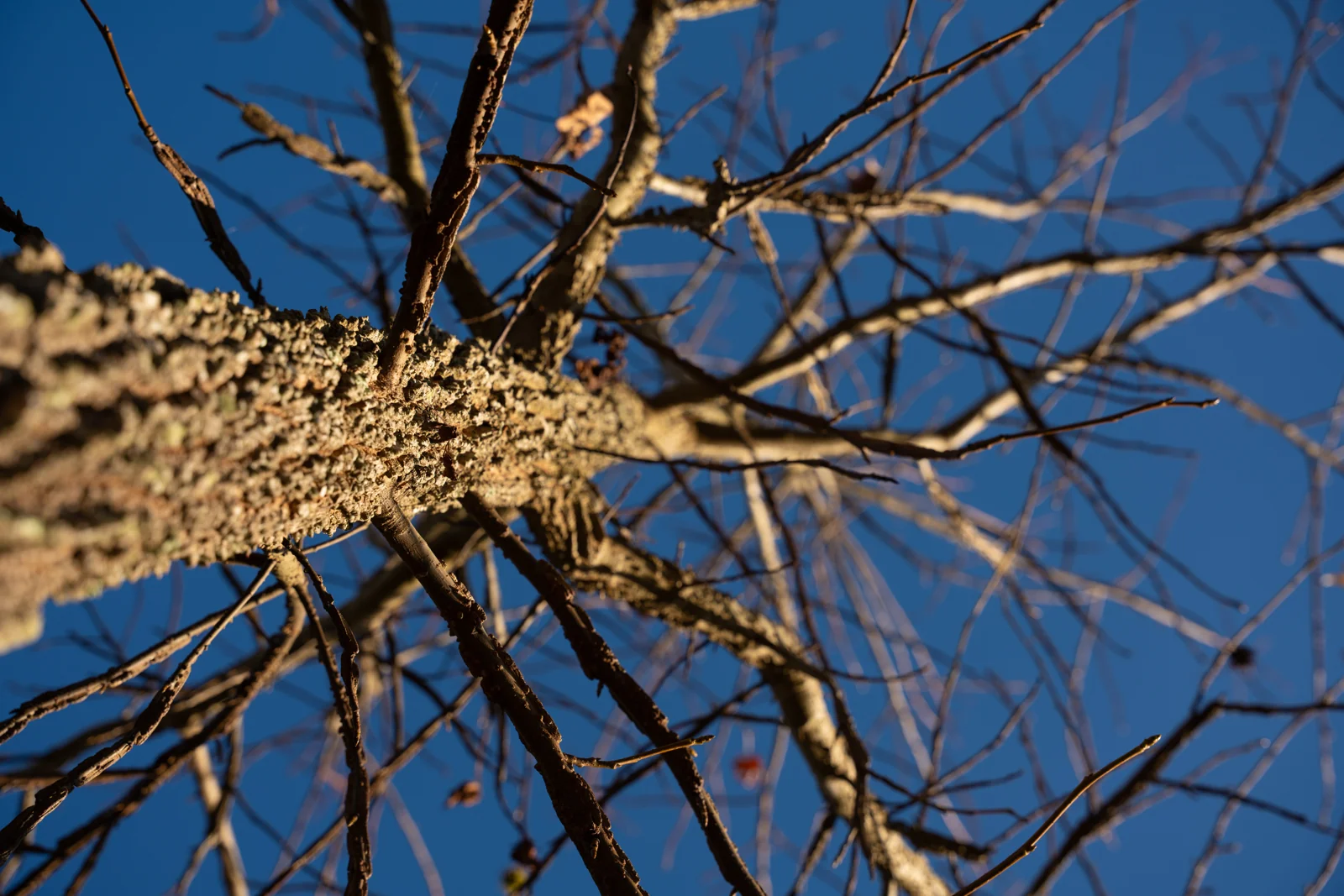
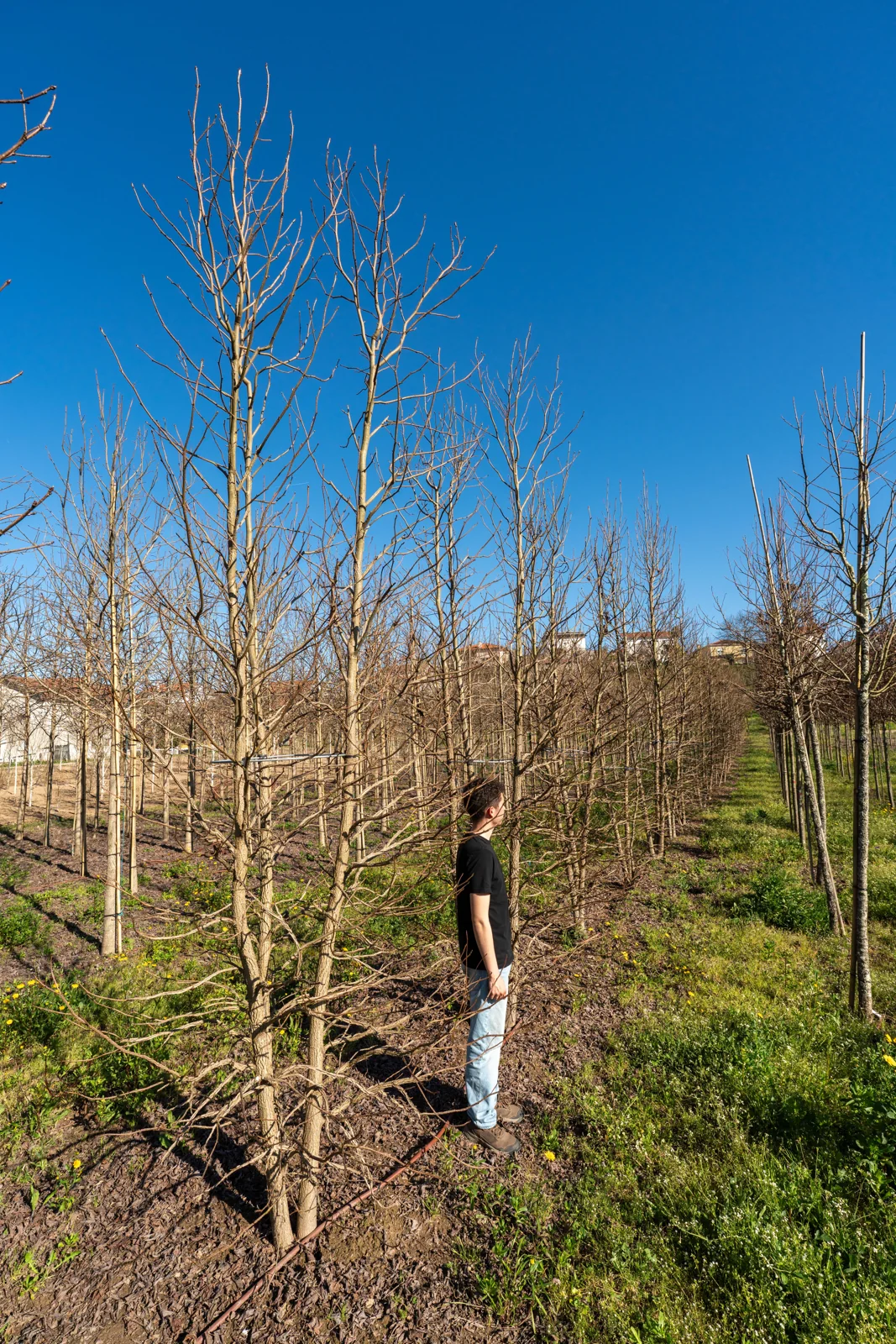
A native of warm-temperate eastern North America and the cloud forests of Mexico and Central America, Liquidambar styraciflua develops a symmetrical, pyramidal habit in youth, broadening to a domed crown of 15 to 25 m in cultivation, with a spread of 8 to 12 m. The glossy, palmately five-lobed leaves resemble those of Acer but are alternate, leathery, and aromatic when bruised. Bark is light grey-brown and deeply fissured at maturity; second-year twigs often develop corky wings that read clearly against the winter silhouette.
Reliably winter-hardy to about minus 23 C (USDA zone 6a), with selected hardy clones tolerating colder; below minus 25 C, expect significant dieback unless siting is sheltered. Heat tolerance is high, with the tree performing strongly above 35 C provided rooting volume and moisture are adequate. Performance for autumn colour is dependable across the Po valley, the Pannonian basin, central and southern France, the Benelux, and southern Britain, weakening in the cool maritime summers of western Scotland and Ireland. East of a line through Warsaw, the species becomes marginal without sheltered siting and a hardy clone.
It prefers moist, well-drained acidic to neutral loam or clay, and tolerates seasonal waterlogging in bottomland conditions. On alkaline or thin chalk soils, iron-deficiency chlorosis is the predictable failure mode, and autumn colour weakens. Salt tolerance is low, which restricts use in immediate coastal alignments and de-iced urban corridors. Drought tolerance is moderate once established, supported by a deep root system, though a thin dry summer will check growth.
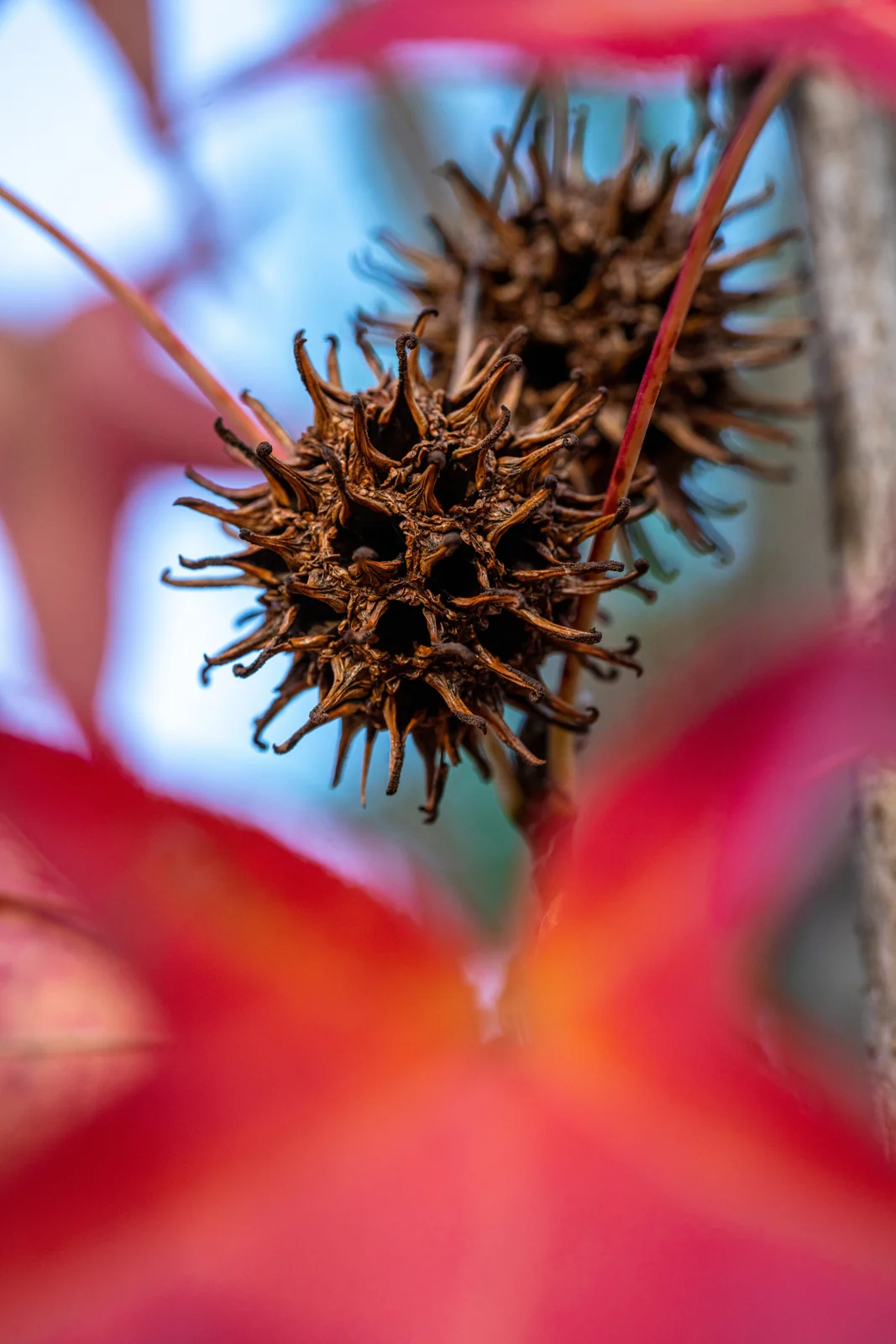
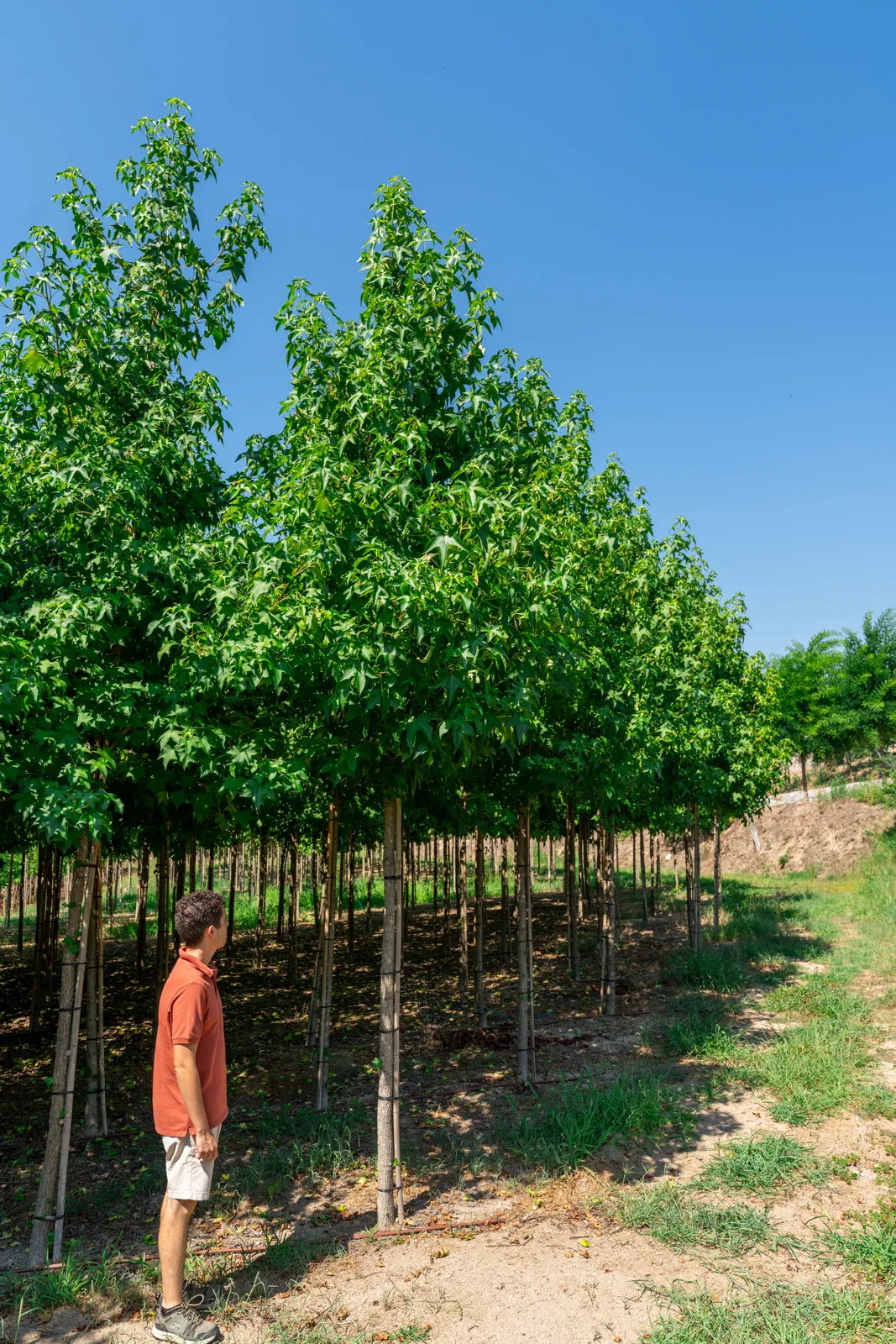
For street and avenue use, the species reads as a slower, more architectural alternative to Platanus or Acer platanoides, with a longer and more variable autumn show. Two limits warrant honest mention: surface roots can lift paving and slabs at maturity, so plant well clear of structures and hard surfaces. The spiny capsular fruit known as gum balls persist into spring and create a real litter problem on lawns and paved areas. Where fruit is unwelcome, specify sterile or sparse-fruiting selections such as 'Rotundiloba' or 'Slender Silhouette'.



Advice on this species
Want to know more about Liquidambar styraciflua?
Tell us about your project and we'll advise you on this species — where it thrives, which size makes sense, and what to expect once planted.
- Produção própria
- Exemplares adultos
- Resposta em 1–2 dias
Sem compromisso · orçamento personalizado