

Compact summer-flowering canopy tree for urban specification
Golden Rain Tree · Koelreuteria paniculata
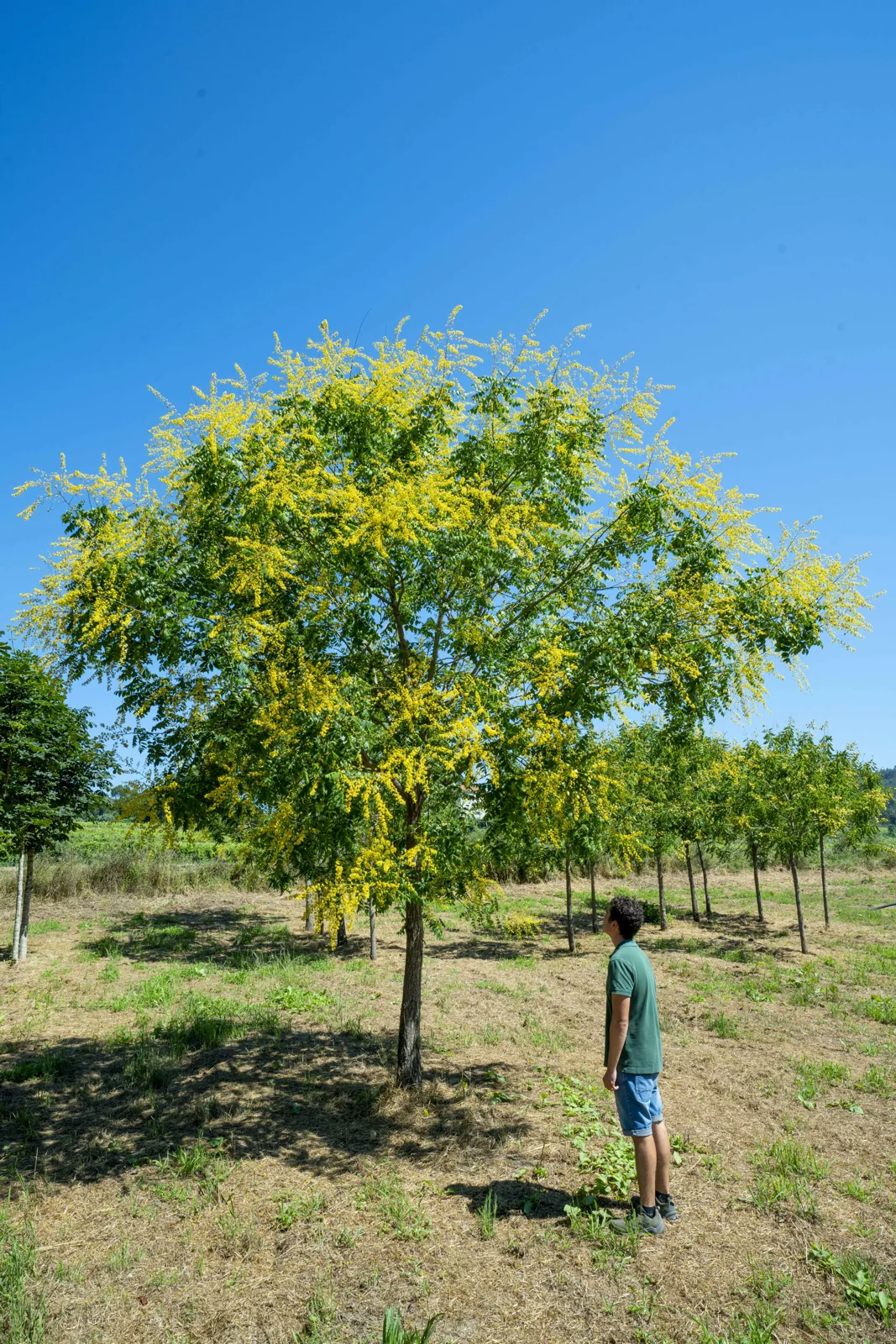
A small to medium deciduous canopy tree specified across temperate and warm-temperate Europe for tree pits, car parks and avenue plantings where mature height stays under twelve metres.
About this Species
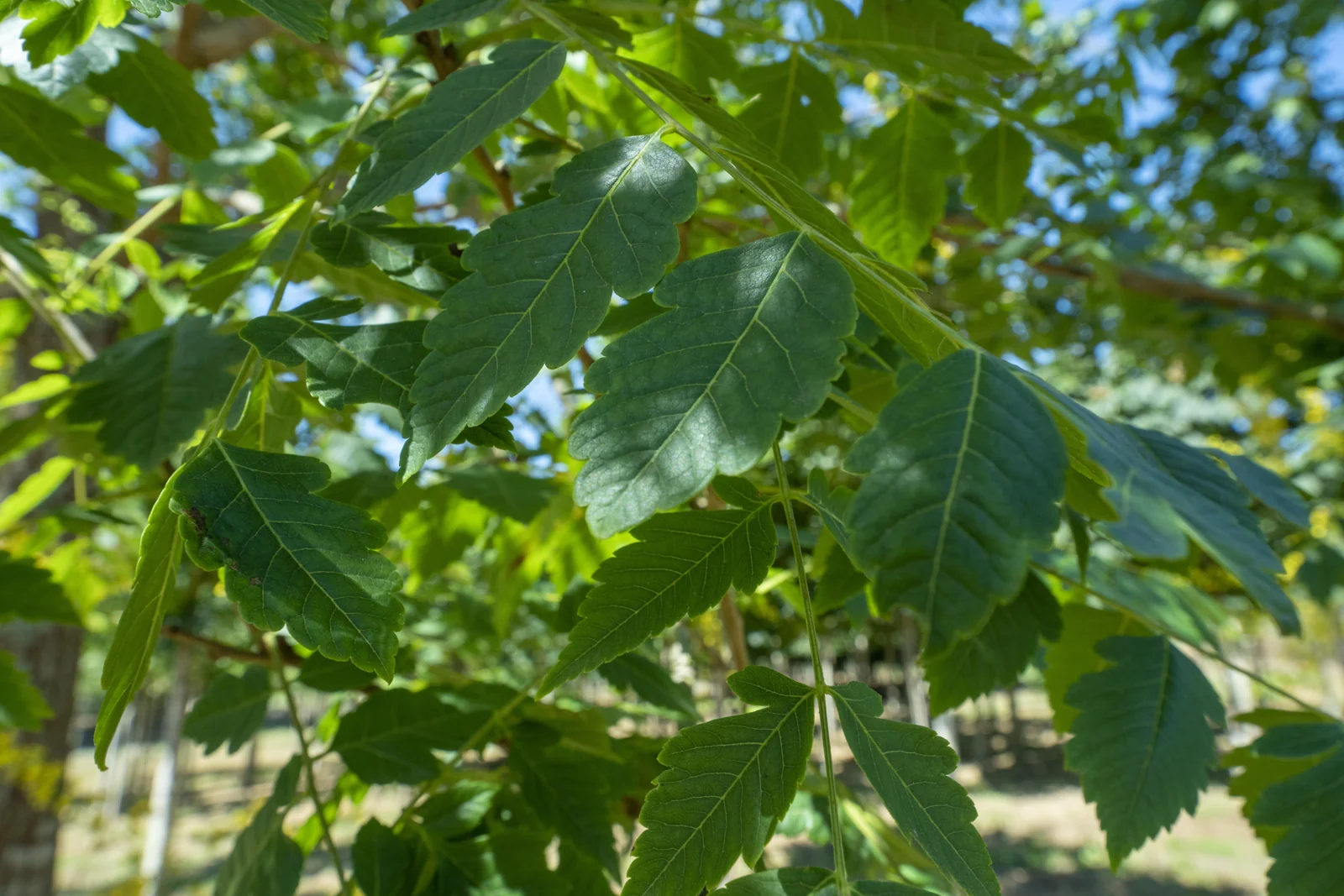
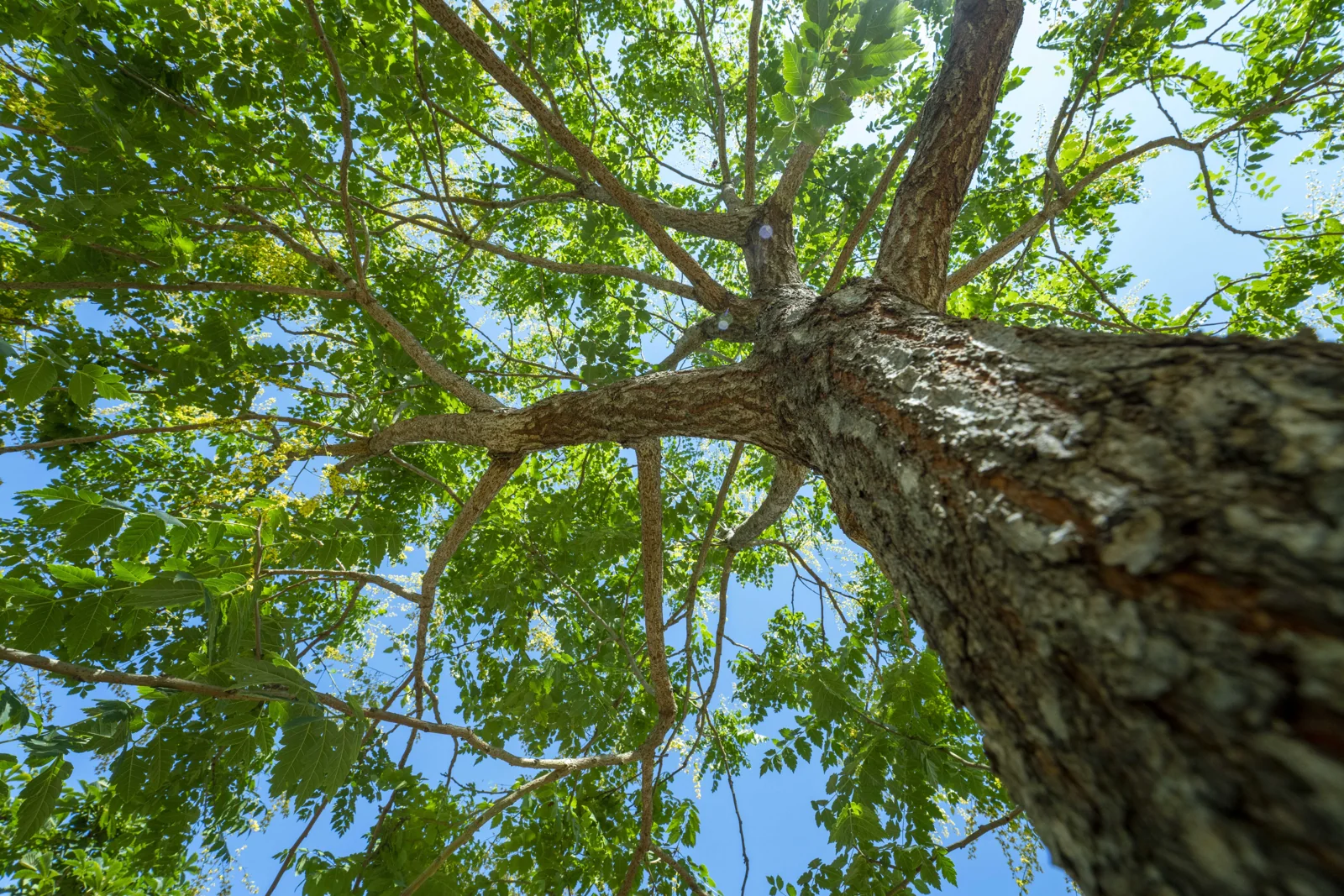
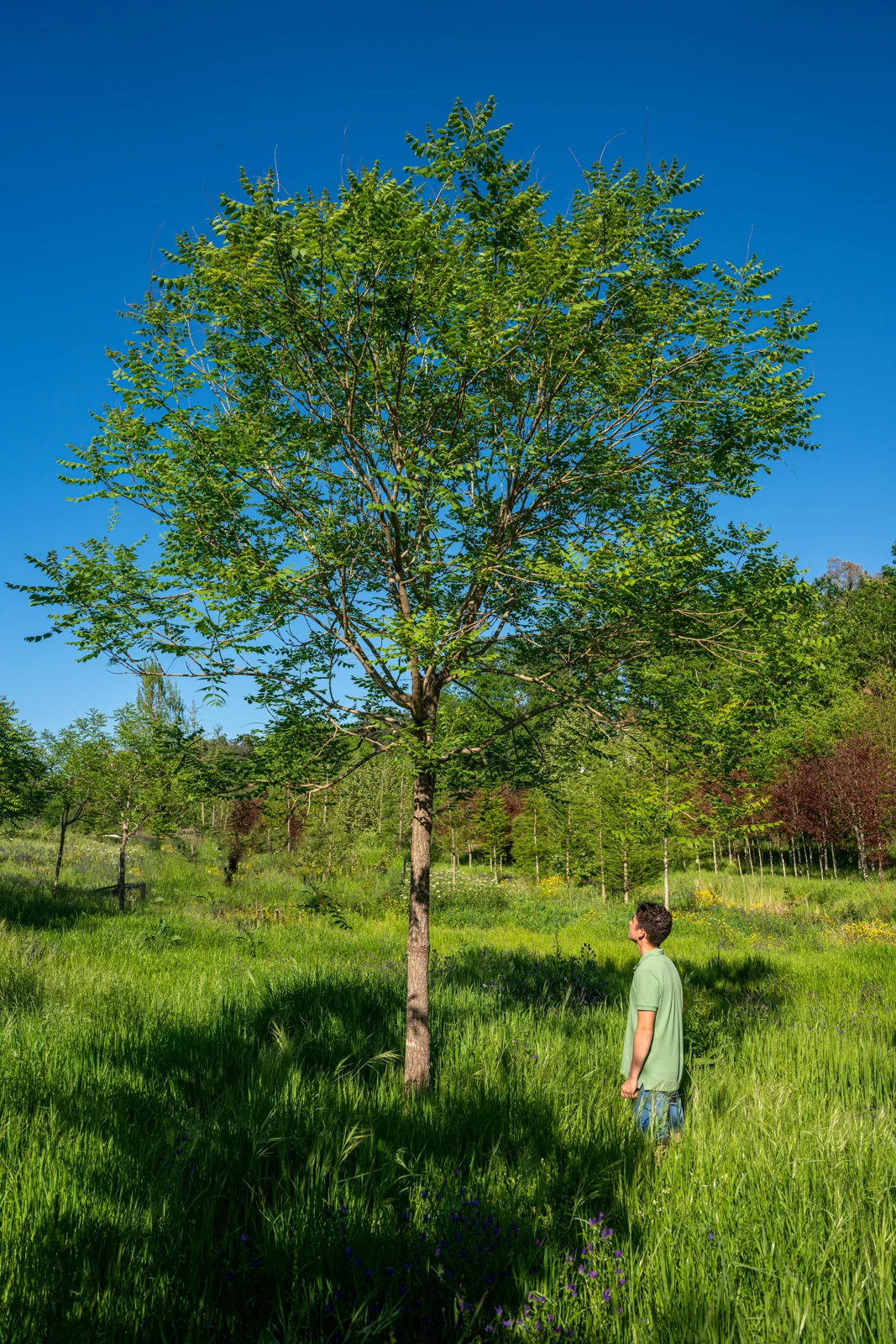
The species is a member of Sapindaceae native to north-central China and Korea, reaching eight to twelve metres in height and spread at maturity with a rounded, lightly spreading crown. Pinnately compound leaves of seven to fifteen leaflets give a feathery texture across the growing season, emerging bronze, maturing vivid green and turning a variable golden…
Read more
Show less
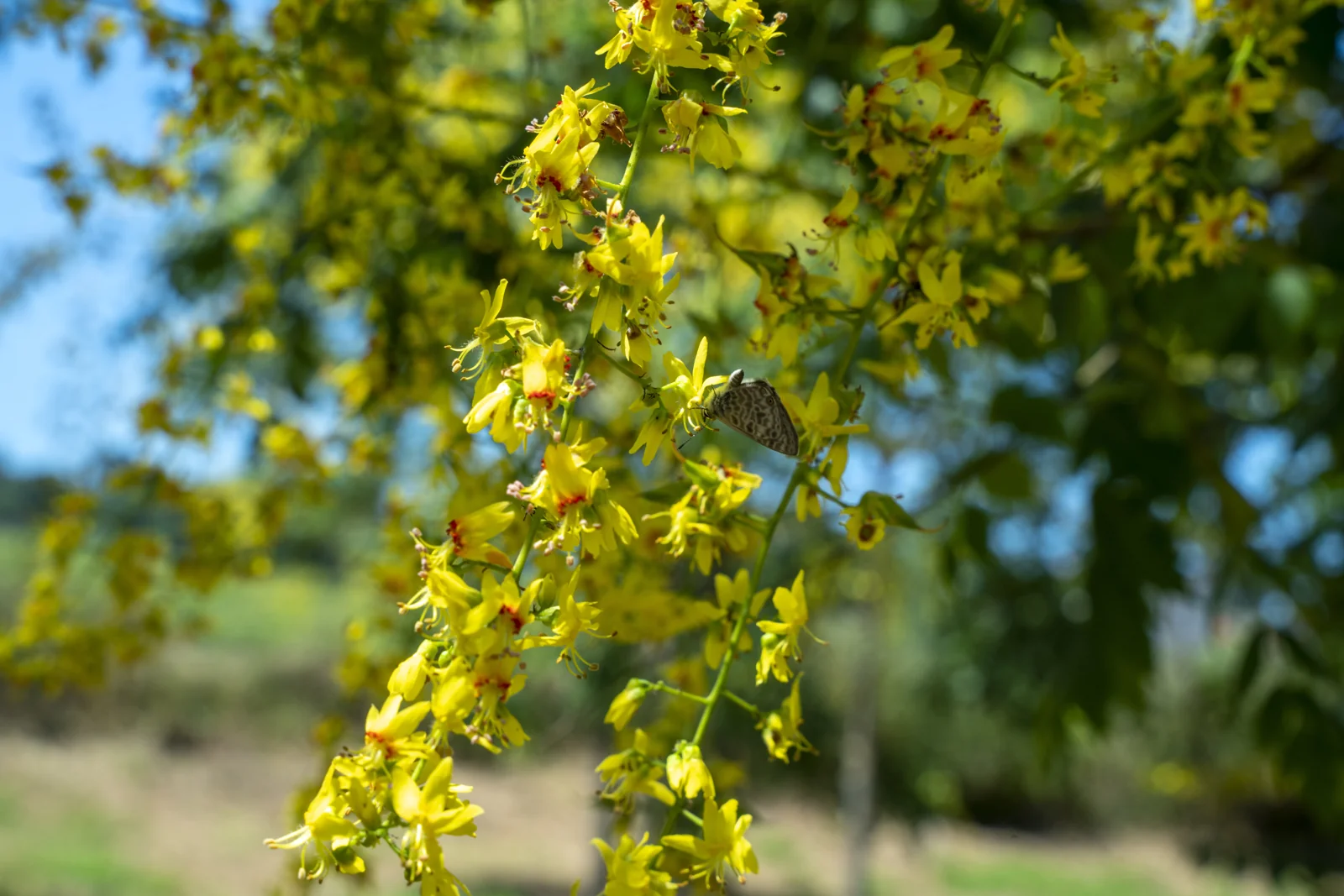
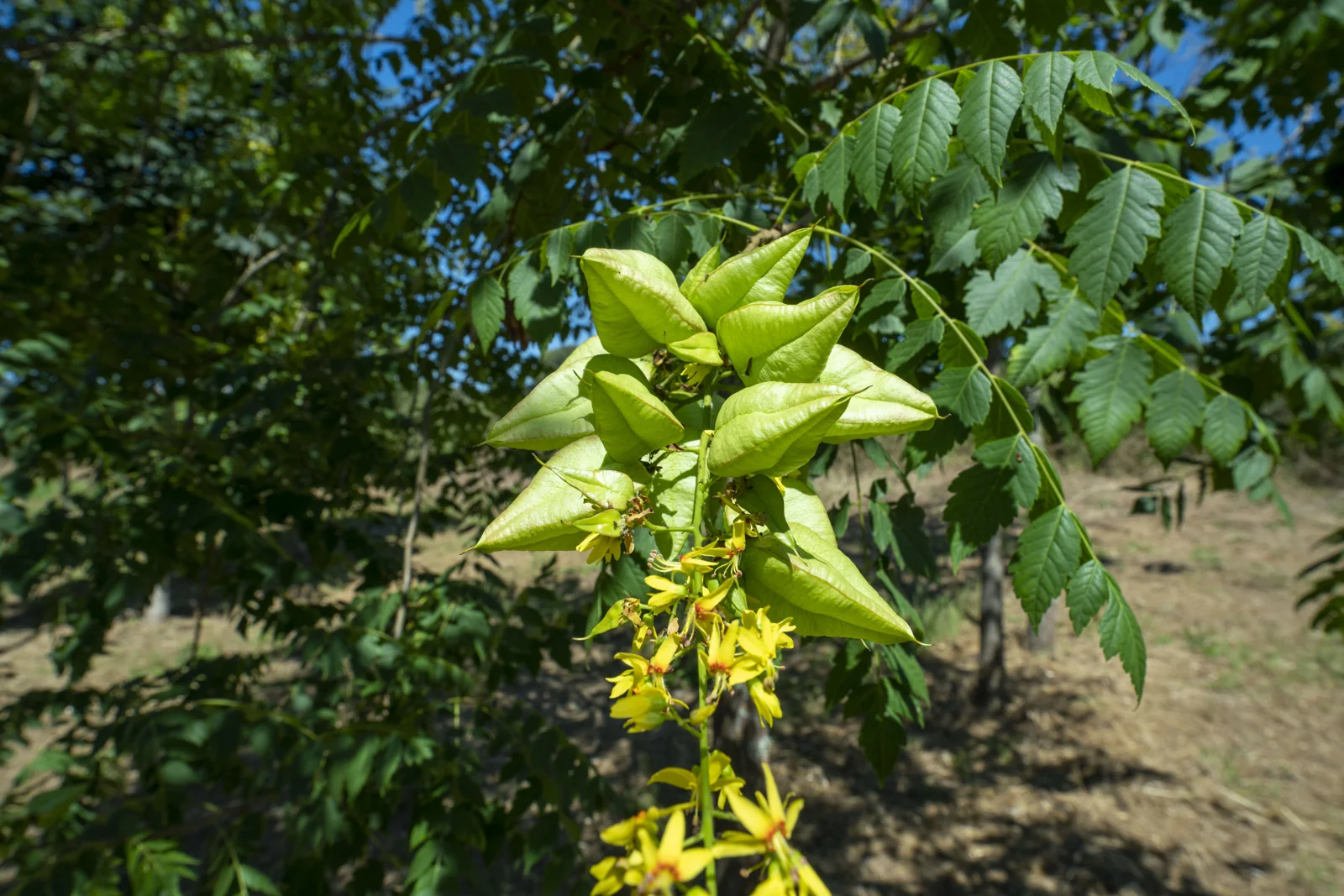
The species is a member of Sapindaceae native to north-central China and Korea, reaching eight to twelve metres in height and spread at maturity with a rounded, lightly spreading crown. Pinnately compound leaves of seven to fifteen leaflets give a feathery texture across the growing season, emerging bronze, maturing vivid green and turning a variable golden yellow in autumn. Erect panicles of small yellow flowers appear in July and August on young and mature trees alike, followed by inflated three-valved papery capsules that hold colour from green through yellow to light brown well into winter.
Climate range is broad. The species is reliably hardy to around minus 23 °C (USDA zone 5b) across central and parts of northern Europe, with the northern and eastern limit set more often by wood brittleness in late-season storms than by absolute cold. Heat tolerance is high: it carries summer maxima above 35 °C without scorch given adequate root depth, and accepts the dry continental and Mediterranean rainfall regimes that constrain other small-stature flowering trees.
Soil tolerance is correspondingly wide, covering loams, clays and well-drained alkaline to mildly acidic substrates, with a useful capacity for compacted urban profiles, road-salt residues at moderate dose and elevated summer air temperatures. Drought tolerance is high once the root system is established, supported by a deep central root, which makes the species a defensible choice for parking islands, central reservations and unirrigated public squares across the urban heat island gradient.
Within the European urban canon it occupies the small-tree register alongside Sophora japonica and Gleditsia triacanthos rather than the heavier Platanus or Tilia category, suited to streets and courtyards where a final canopy under twelve metres is the specification. Two limits should be carried forward. Wood is structurally brittle, so site selection in storm-exposed positions and pedestrian-heavy zones merits attention. The species also self-seeds freely on warm sites and is recorded as locally naturalising in parts of southern and central Europe, a consideration where adjacent semi-natural habitat is sensitive.



Advice on this species
Want to know more about Koelreuteria paniculata?
Tell us about your project and we'll advise you on this species — where it thrives, which size makes sense, and what to expect once planted.
- Produção própria
- Exemplares adultos
- Resposta em 1–2 dias
Sem compromisso · orçamento personalizado