

Fast evergreen screen and windbreak for privacy plantings
Leyland Cypress · ×Cupressocyparis leylandii
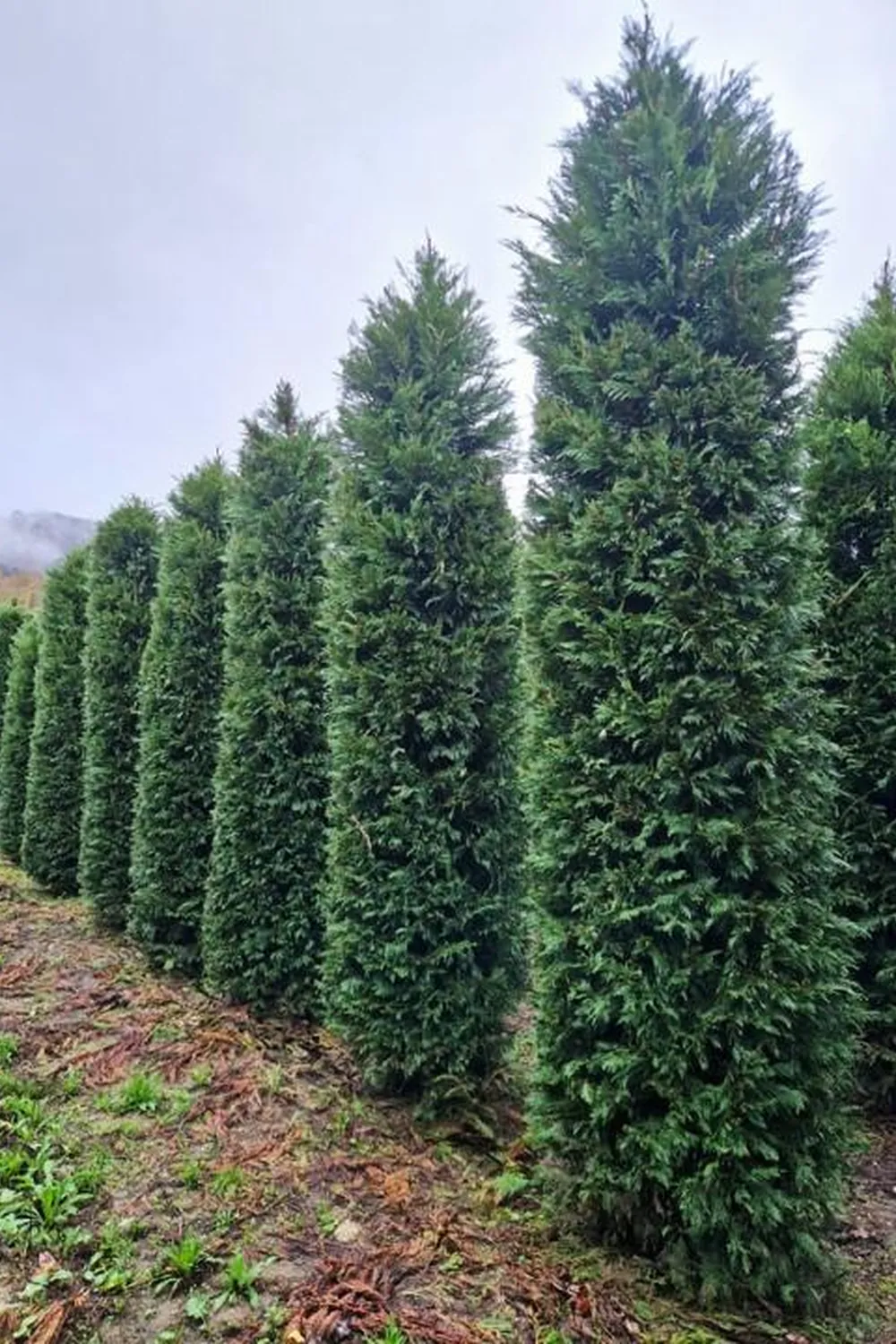
Where a project needs height and dense cover in the shortest possible time, this vigorous evergreen conifer closes a boundary, screens a sightline, or shelters a planting within a few seasons, holding a narrow, formal column under regular trimming.
About this Species
A hybrid of Cupressus macrocarpa and Callitropsis nootkatensis (trade name ×Cupressocyparis leylandii, accepted name ×Hesperotropsis leylandii), this is among the fastest evergreen conifers in cultivation, extending more than a metre a year on favourable sites. Mature specimens reach roughly 15 to 25 m tall and 4 to 6 m wide, carrying a dense, narrow,…
Read more
Show less
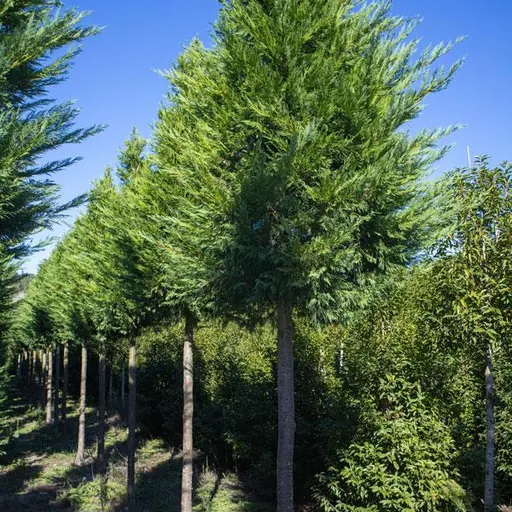
A hybrid of Cupressus macrocarpa and Callitropsis nootkatensis (trade name ×Cupressocyparis leylandii, accepted name ×Hesperotropsis leylandii), this is among the fastest evergreen conifers in cultivation, extending more than a metre a year on favourable sites. Mature specimens reach roughly 15 to 25 m tall and 4 to 6 m wide, carrying a dense, narrow, conical crown of dark blue-green scale foliage held to the ground. The upright, non-drooping branch structure resists breakage and recovers well from hard cutting, which makes it the standard specification where a tall screen, windbreak, or privacy barrier is wanted quickly.
It is reliably winter-hardy to about minus 15 °C (USDA zone 7a) and survives colder still in sheltered positions, placing dependable performance across the Atlantic seaboard, the Mediterranean basin, lowland Central Europe, and the warmer Continental zones; in the cold continental interior, east of the Pannonian basin or at altitude, plant it in a wind-sheltered position with assured drainage. It accepts most soils, acid through alkaline, including heavy clay and poor ground, provided drainage is free, and tolerates urban pollution, exposed wind, and moderate salt-laden coastal air.
The limiting factor in cultivation is health, not hardiness, and it should be specified with that understood. The shallow, spreading root system anchors poorly once the crown is tall, so large specimens benefit from a sheltered aspect and firm, well-drained soil. Drought stress predisposes the foliage to Seiridium and Botryosphaeria canker, so supplementary irrigation through dry summers is a protective measure rather than a luxury; bagworm and Phytophthora and Armillaria root rots are the other recurring pressures, the latter two favoured by waterlogged ground.
Used as a clipped formal hedge, an informal boundary, or an alignment, it gives year-round structure, dense winter cover for birds, and reliable screening at a calibre and finish that single-season nursery stock cannot match. Regular trimming, once or twice a season, keeps the column tight and the base furnished.
Advice on this species
Want to know more about ×Cupressocyparis leylandii?
Tell us about your project and we'll advise you on this species — where it thrives, which size makes sense, and what to expect once planted.
- Produção própria
- Exemplares adultos
- Resposta em 1–2 dias
Sem compromisso · orçamento personalizado