

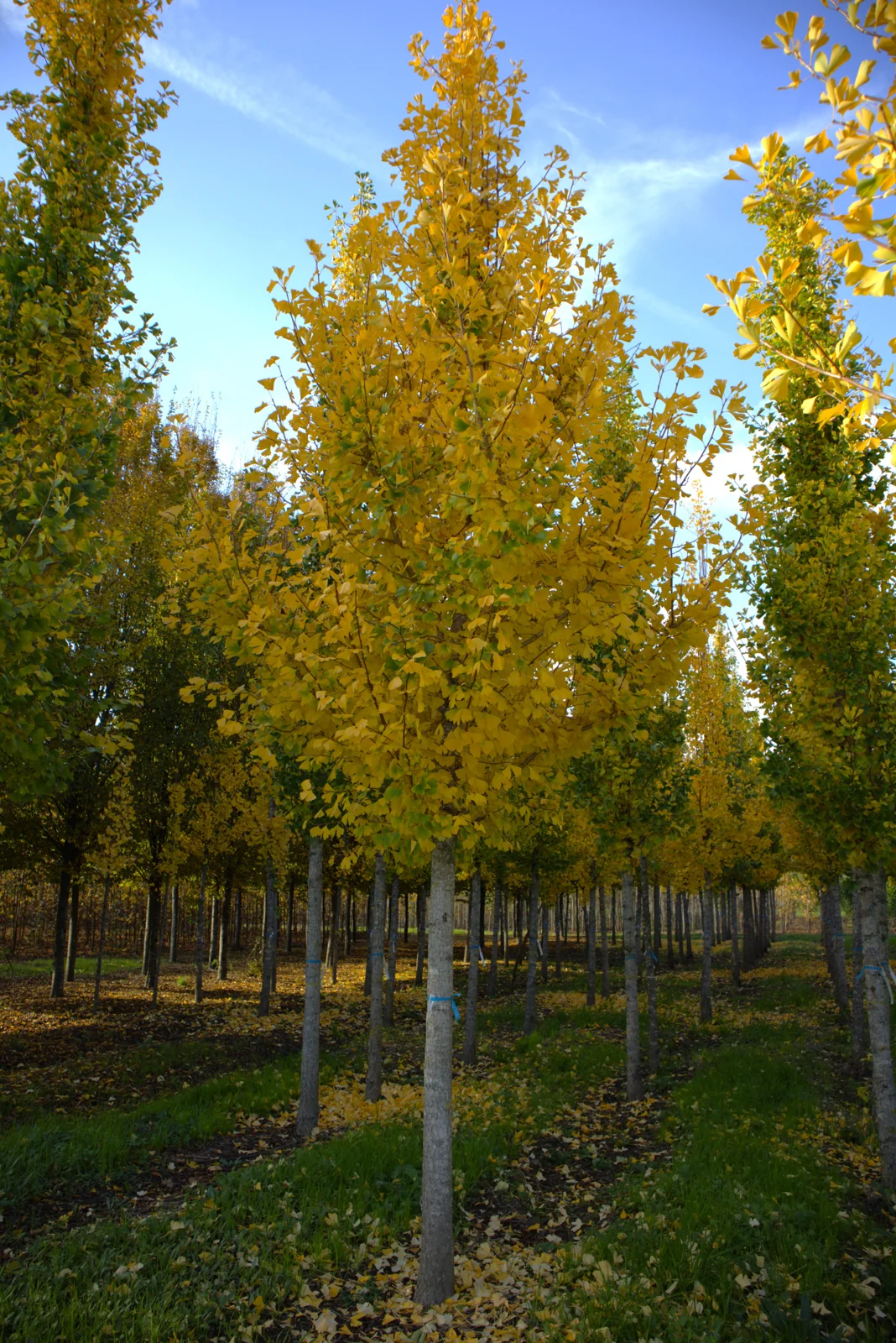
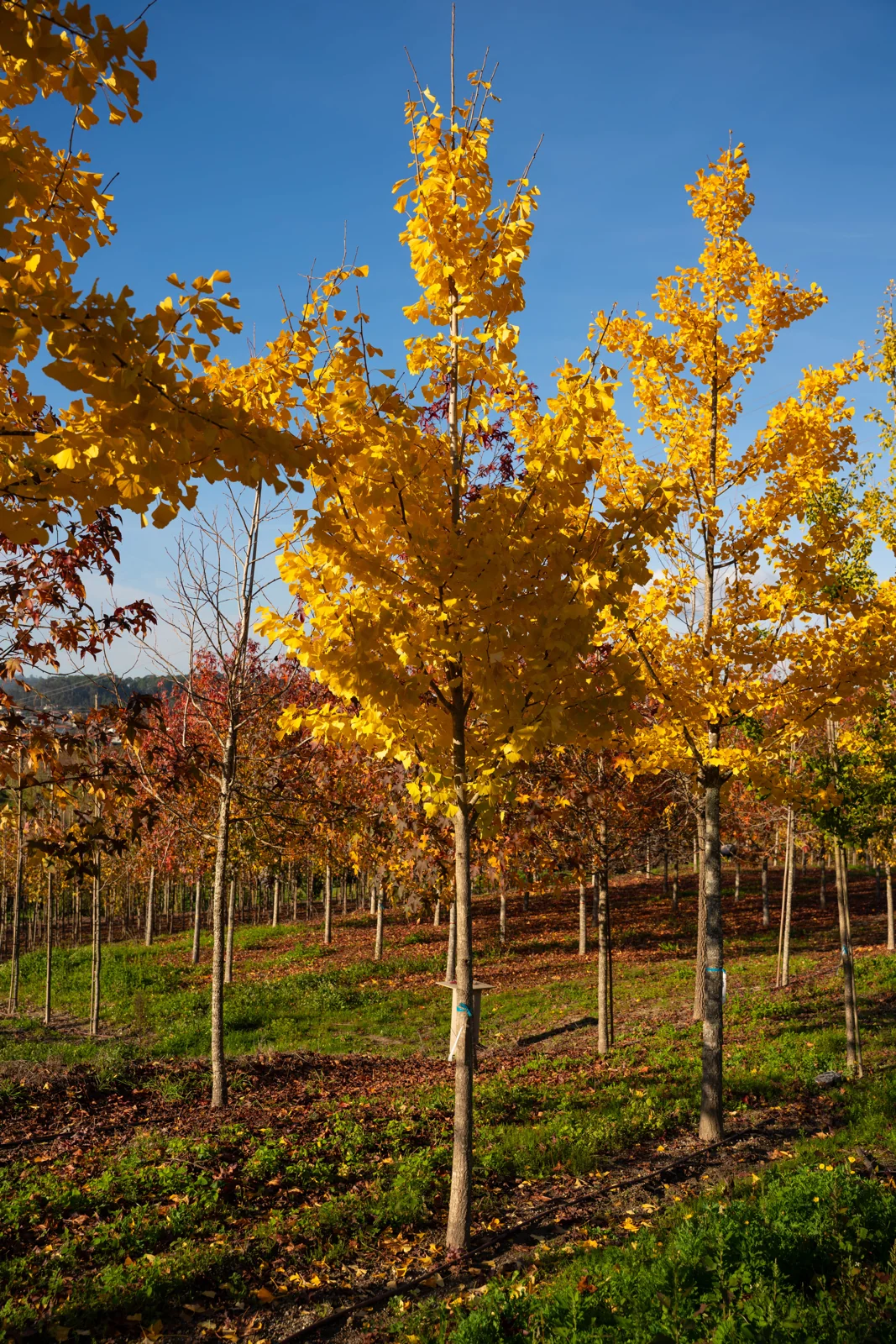
Pest-free street and specimen tree with golden autumn colour
Maidenhair Tree · Ginkgo biloba
Ginkgo biloba is a slow-growing deciduous conifer relative specified for street pits, avenues, and solitary specimens. Its tolerance of compaction, pollution, and a very wide temperature range makes it a defensible choice across most of temperate Europe.
About this Species
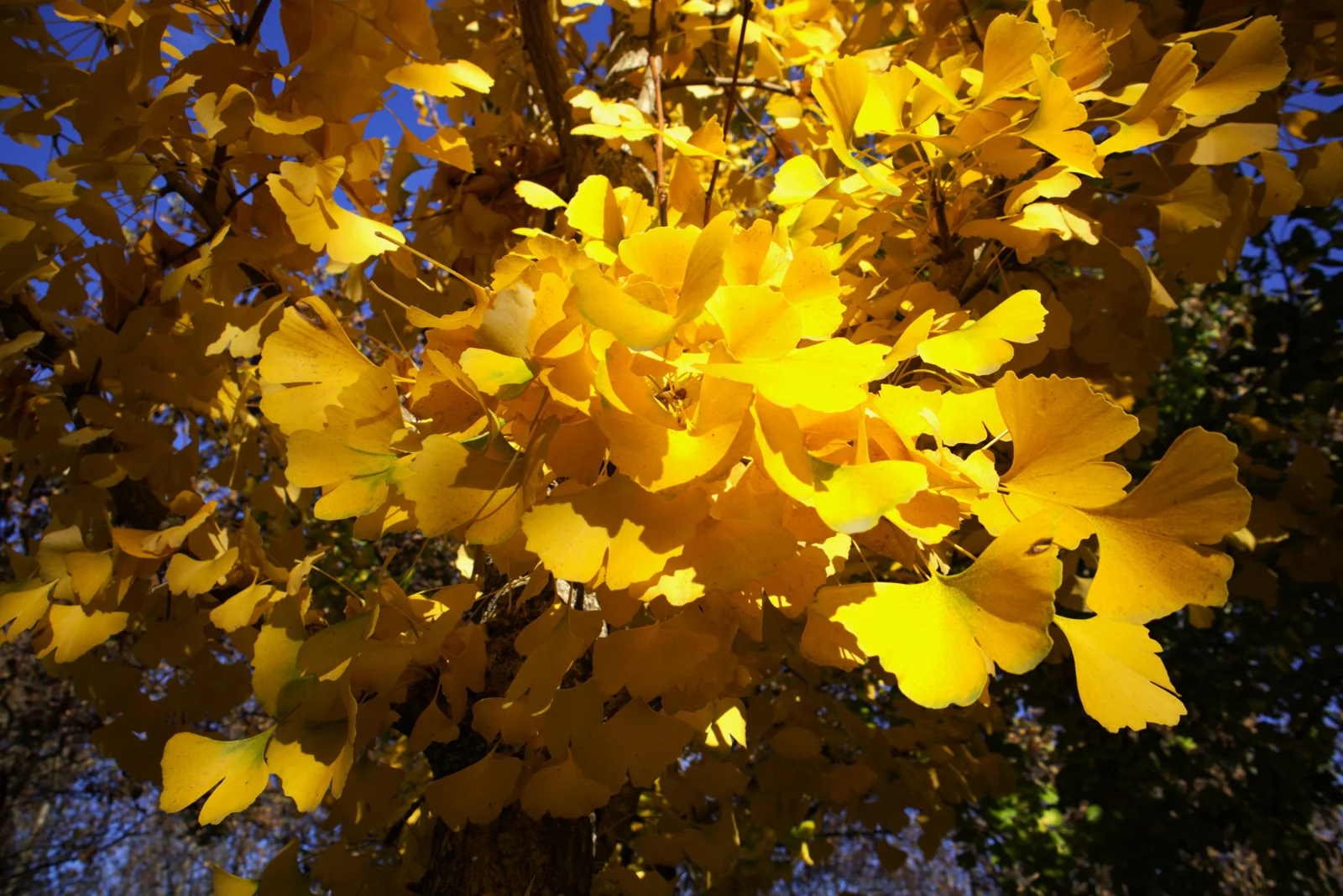
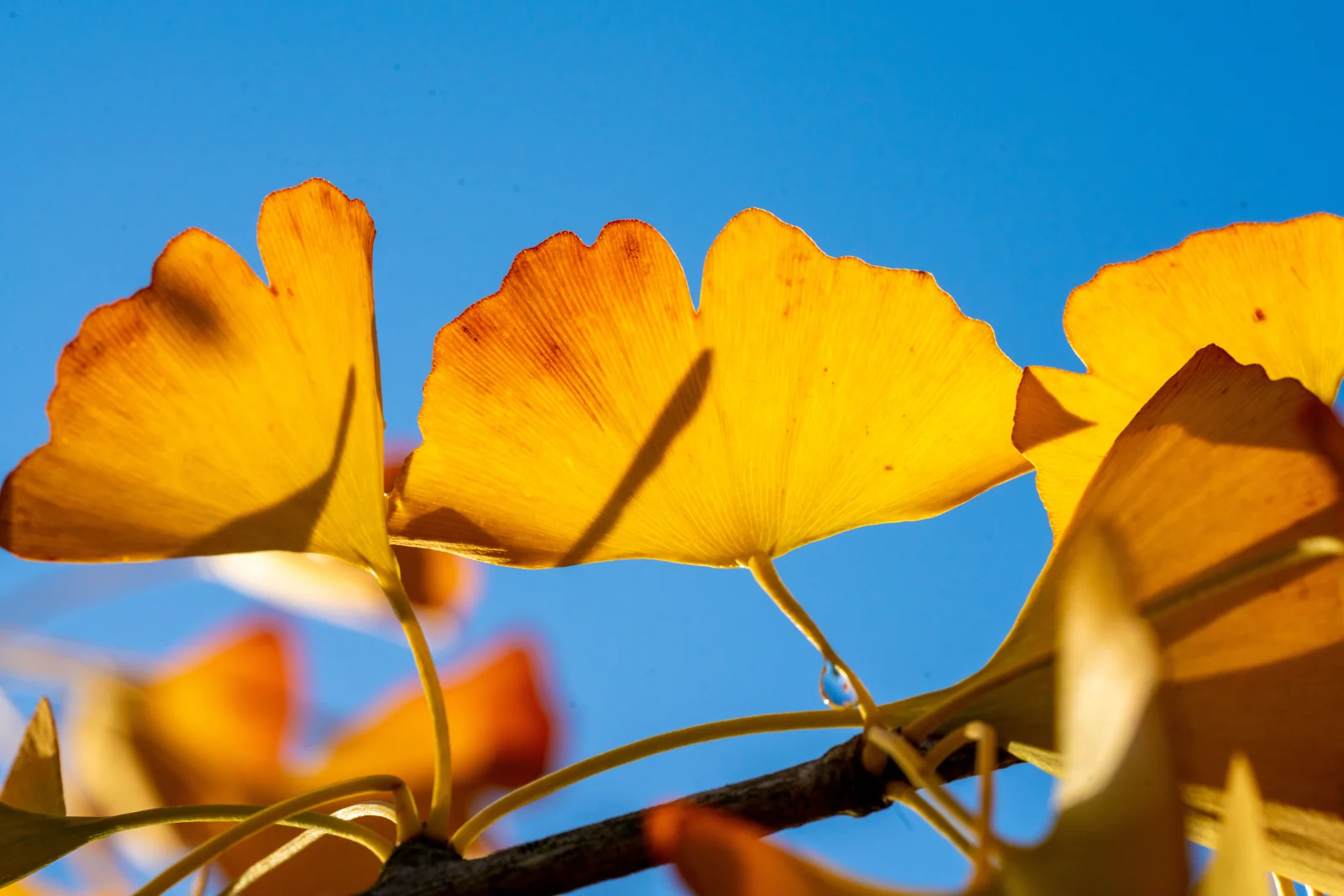
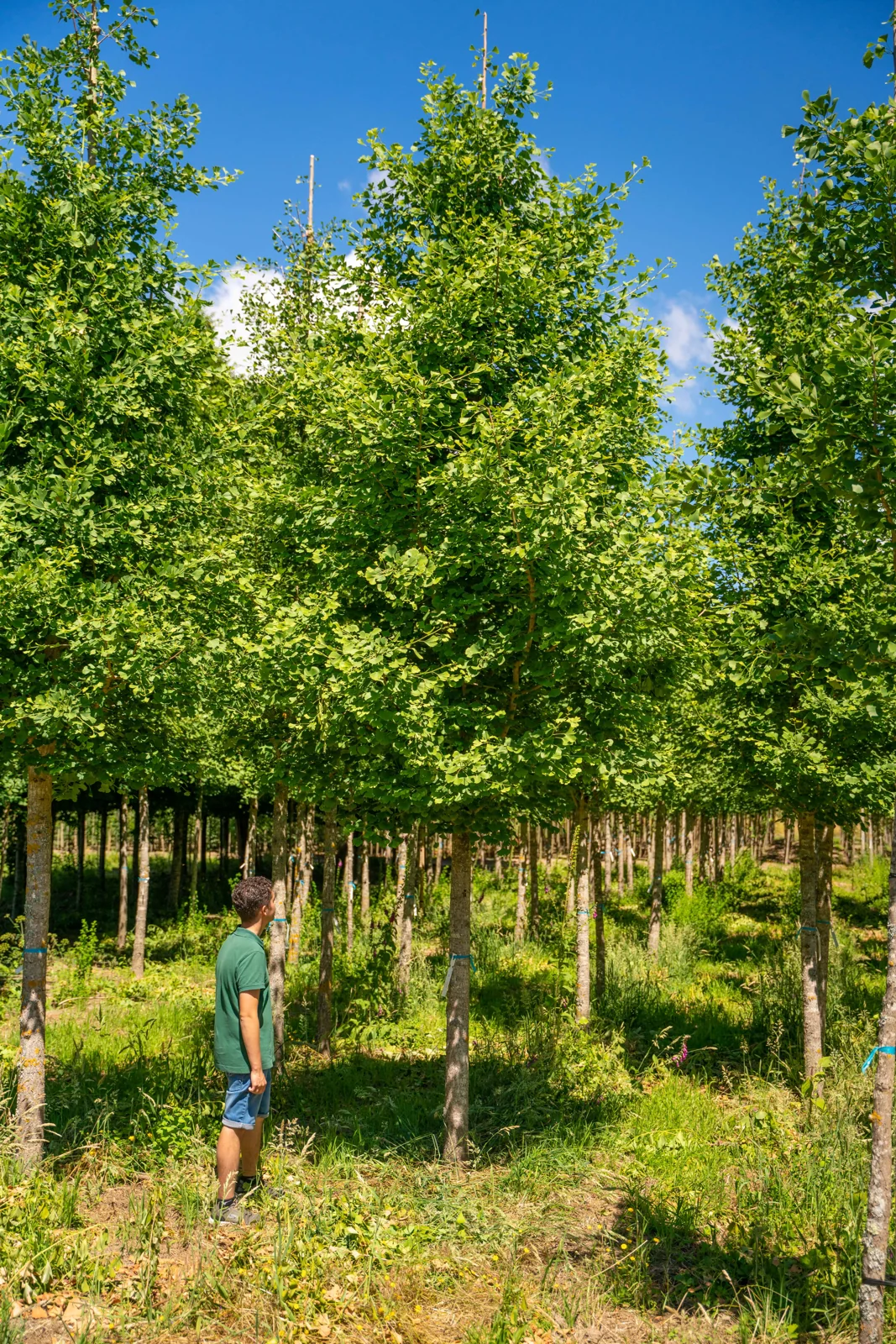
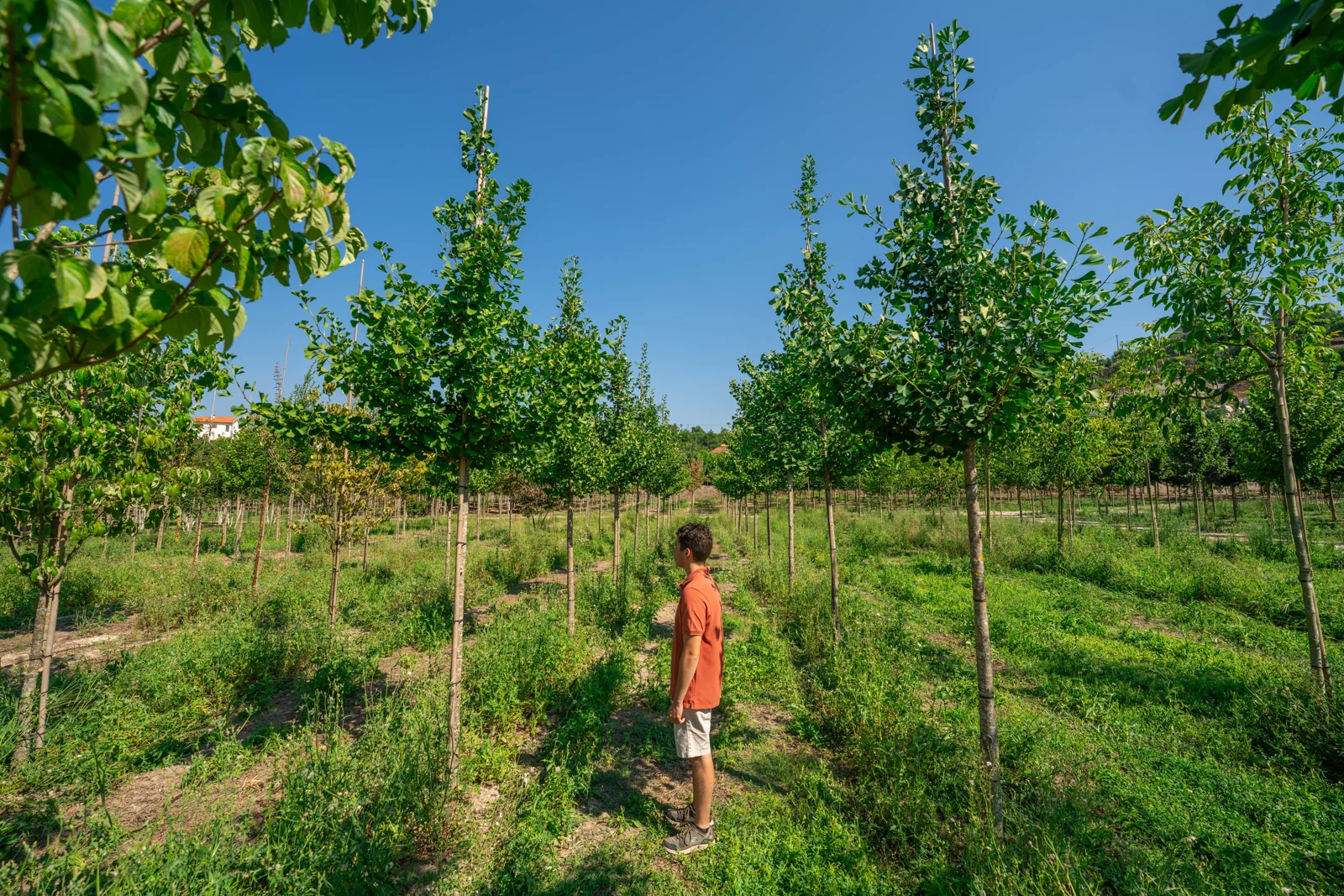
Ginkgo carries an upright, broadly conical to columnar crown in youth that broadens with age, clothed in fan-shaped, dichotomously veined leaves that turn a clean golden yellow in autumn before dropping over a short window. Growth is slow, which suits constrained urban pits and keeps long-term crown management modest, though it also means calibre is the…
Read more
Show less
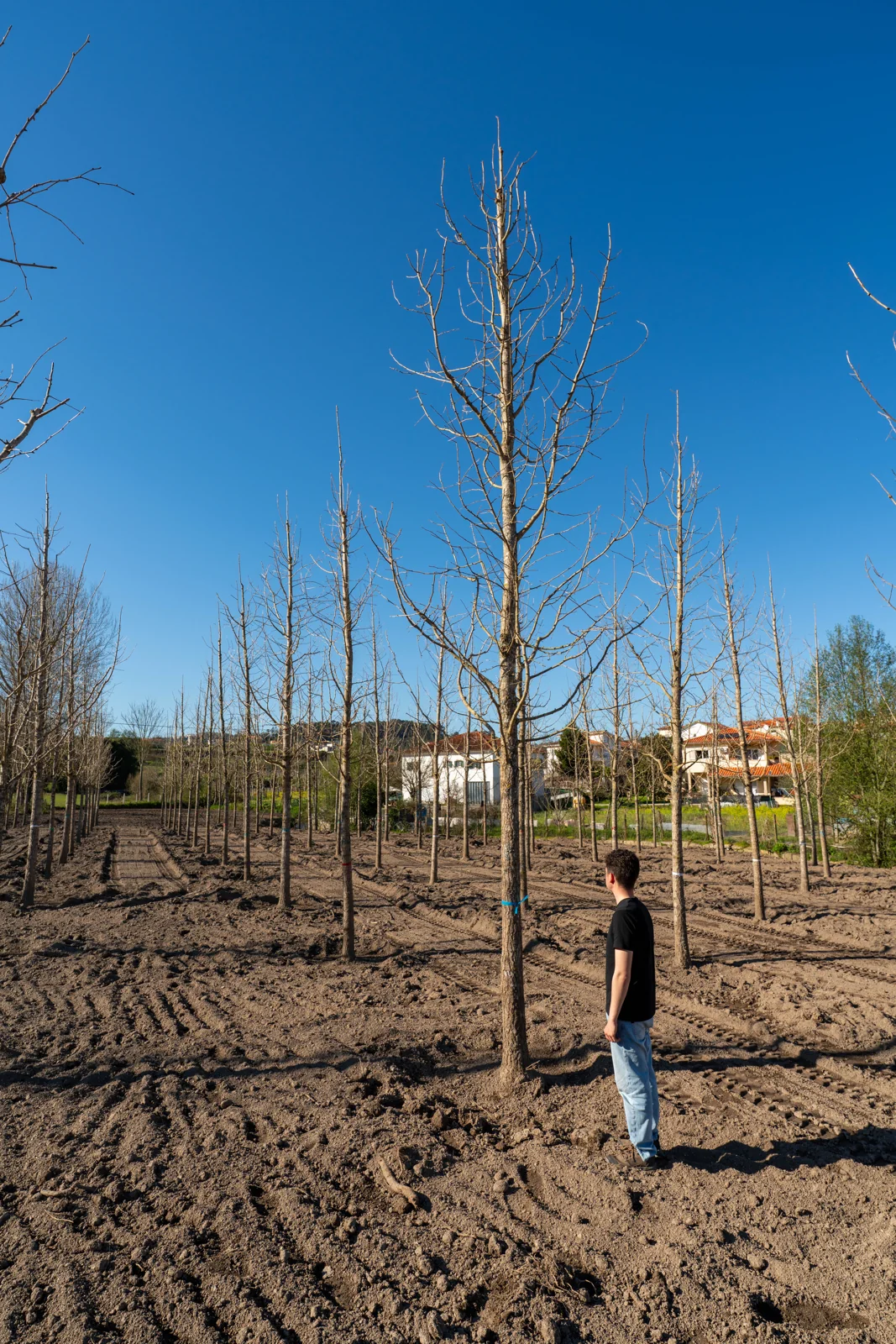
Ginkgo carries an upright, broadly conical to columnar crown in youth that broadens with age, clothed in fan-shaped, dichotomously veined leaves that turn a clean golden yellow in autumn before dropping over a short window. Growth is slow, which suits constrained urban pits and keeps long-term crown management modest, though it also means calibre is the product of many years in the ground. The structural value is twofold: an architectural winter silhouette of ascending branches and grey-brown ridged bark, and a brief, uniform leaf-drop that simplifies maintenance in paved public spaces.
The species is exceptionally wide in its climate envelope. It is reliably winter-hardy well below minus 20 degrees Celsius (USDA zone 4 and colder, to zone 3a in the literature), so cold is not a limiting factor anywhere in temperate or boreal Europe, from the Aegean coast to southern Scandinavia and across the continental interior of Poland and the Pannonian basin. At the warm end it tolerates sustained summer maxima above 35 degrees Celsius and urban heat-island conditions, with moderate drought tolerance once the root system is established and moderate tolerance of salt-laden roadside and coastal exposure.
The real selection constraint is not cold but site drainage and light. Ginkgo requires full sun and free-draining soil; it tolerates a range of textures and pH, including loamy and sandy ground, but performs poorly on waterlogged sites, which is the relevant caution for high-rainfall maritime regions such as the Atlantic seaboard and the wetter parts of Ireland and western Britain. On heavy ground, assured drainage at the pit is the precondition for the drought and heat tolerance to express.
For street and amenity use, specify grafted male clones. Female trees set plumlike seeds whose fleshy outer coat is foul-smelling and slippery underfoot when it falls, an avoidable nuisance in public plantings. The species is notably free of significant pests and diseases and is deer-resistant, which lowers the long-term risk attached to a slow-maturing specimen and supports its long record as a durable urban tree across the European canon.



Advice on this species
Want to know more about Ginkgo biloba?
Tell us about your project and we'll advise you on this species — where it thrives, which size makes sense, and what to expect once planted.
- Produção própria
- Exemplares adultos
- Resposta em 1–2 dias
Sem compromisso · orçamento personalizado