

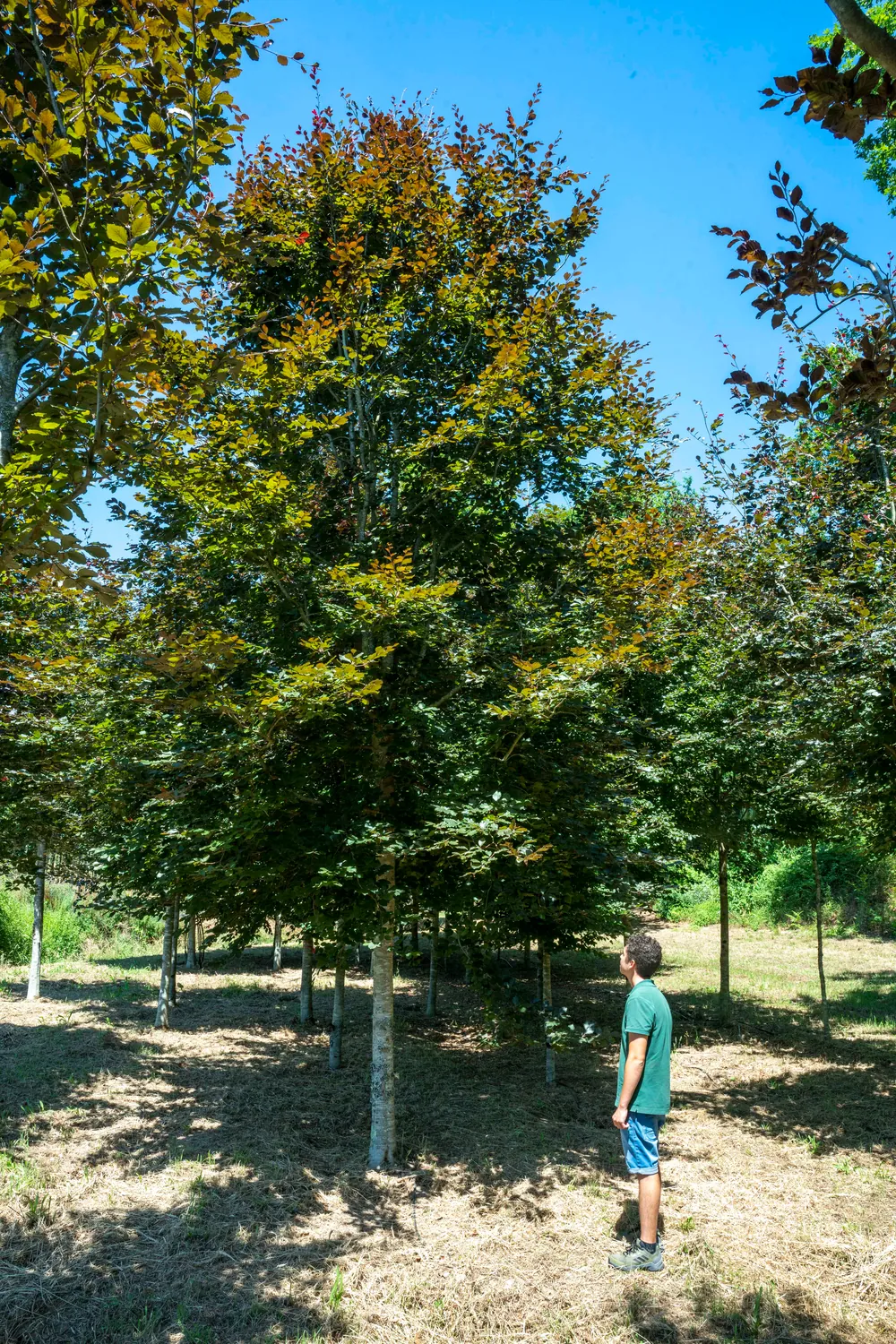
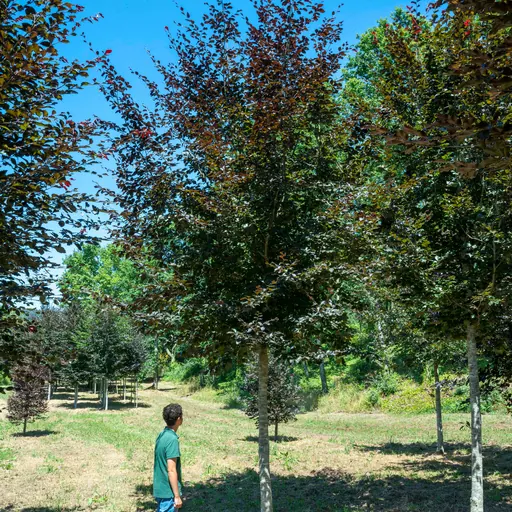
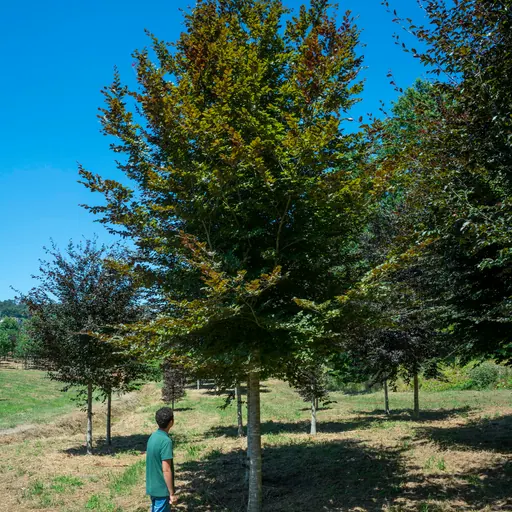
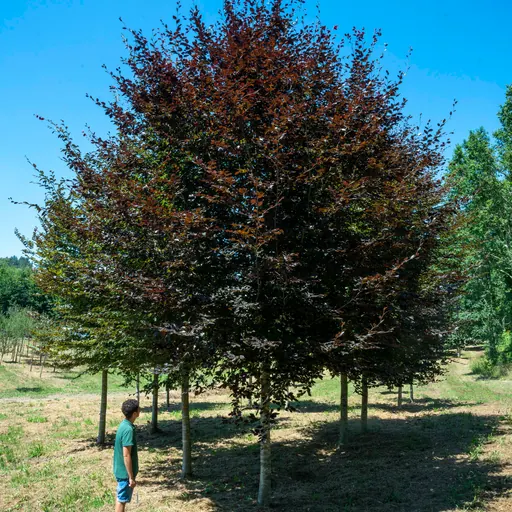
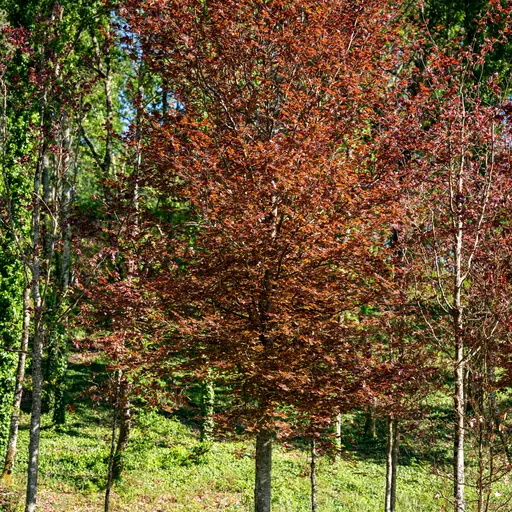
Field-grown purple-leaved specimen for cool-temperate parkland
European Beech ‘Atropurpurea’ · Fagus sylvatica ‘Atropurpurea’
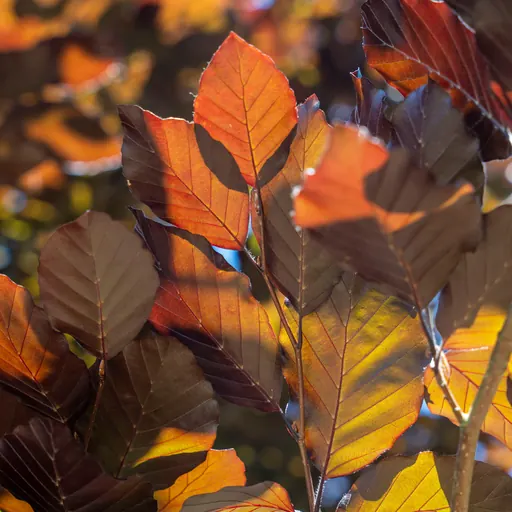
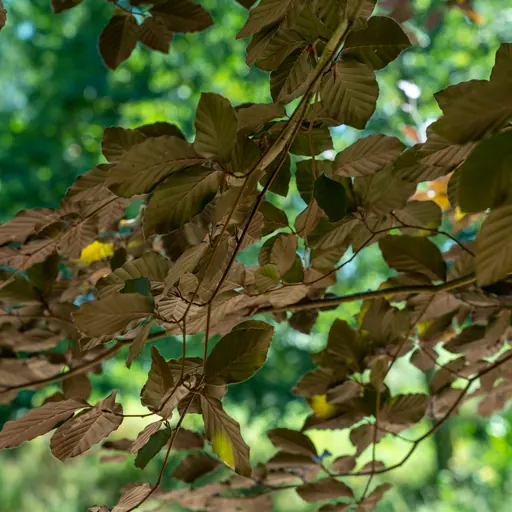
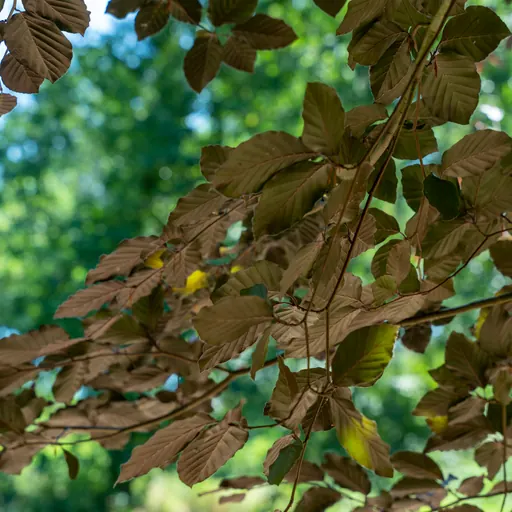
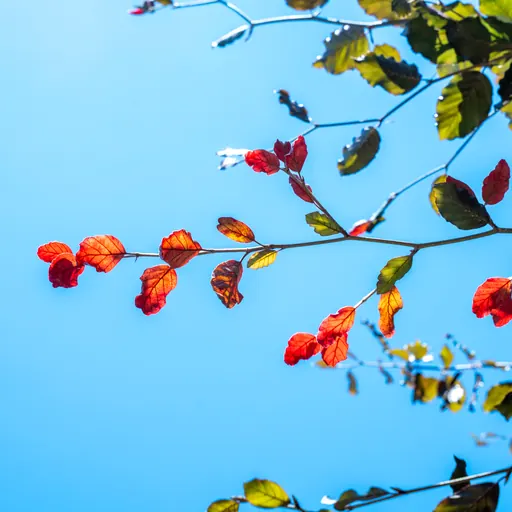
Deep purple through spring and summer, turning copper and scarlet in autumn, this purple-leaved beech holds the broad, rounded crown of the green type and reads as a single colour statement across parkland and large gardens.
Key Facts
About this Cultivar
The dark foliage is the reason to specify this cultivar: leaves emerge a deep purple-black in spring, hold that colour through summer where green-leaved beech would already be a settled mid-green, then shift to copper and deep scarlet before leaf fall. The habit is that of the species. A broad, rounded to spreading crown on a straight, smooth grey trunk,…
Read more
Show less
The dark foliage is the reason to specify this cultivar: leaves emerge a deep purple-black in spring, hold that colour through summer where green-leaved beech would already be a settled mid-green, then shift to copper and deep scarlet before leaf fall. The habit is that of the species. A broad, rounded to spreading crown on a straight, smooth grey trunk, reaching roughly 20 to 25 m tall and 12 to 18 m across at maturity, so it wants the room of a park, an estate lawn, or a wide avenue rather than a confined pit.
Winter cold is not the constraint. Like the species, it is reliably hardy across USDA zones 4 to 7b, well below minus 25 degrees Celsius, which covers essentially all of temperate and continental Europe from the Atlantic seaboard to the Baltic and the inland Balkans. The real limit sits at the warm, dry end of the range. Beech is shallow-rooted with low drought tolerance, and prolonged summer heat above the mid-thirties, combined with dry soil, stresses and can kill older specimens, an effect recorded both in cultivation and within the native range after severe droughts.
This makes it a confident specification through the cool-temperate, reliably moist parts of Europe and a conditional one further south or in dry continental interiors. It performs best on deep, fertile, free-draining soils that stay cool and moist, in full sun to partial shade. It will not tolerate waterlogging or compacted, poorly drained ground, and on hotter, drier sites it needs a cool root run, assured drainage, and irrigation through establishment and dry summers; where summers are routinely hot and dry, Fagus orientalis is the more dependable choice.
The purple foliage reads most strongly against green-leaved planting and pale stone, and the smooth grey bark and dense branch structure give winter presence once the leaves drop. Growth is slow to moderate, and the tree is otherwise low-maintenance and free of serious pests and diseases, asking mainly for space and an unhurried establishment.
Advice on this species
Want to know more about Fagus sylvatica 'Atropurpurea'?
Tell us about your project and we'll advise you on this species — where it thrives, which size makes sense, and what to expect once planted.
- Produção própria
- Exemplares adultos
- Resposta em 1–2 dias
Sem compromisso · orçamento personalizado