

Pan-European native for naturalistic and hedgerow specifications
Common Hawthorn · Crataegus monogyna
A foundational European native for mixed-species hedgerows, woodland edges, and biodiversity-led plantings, reliable across climate zones from the Atlantic seaboard to continental Europe and adaptable to most free-draining soils.
About this Species
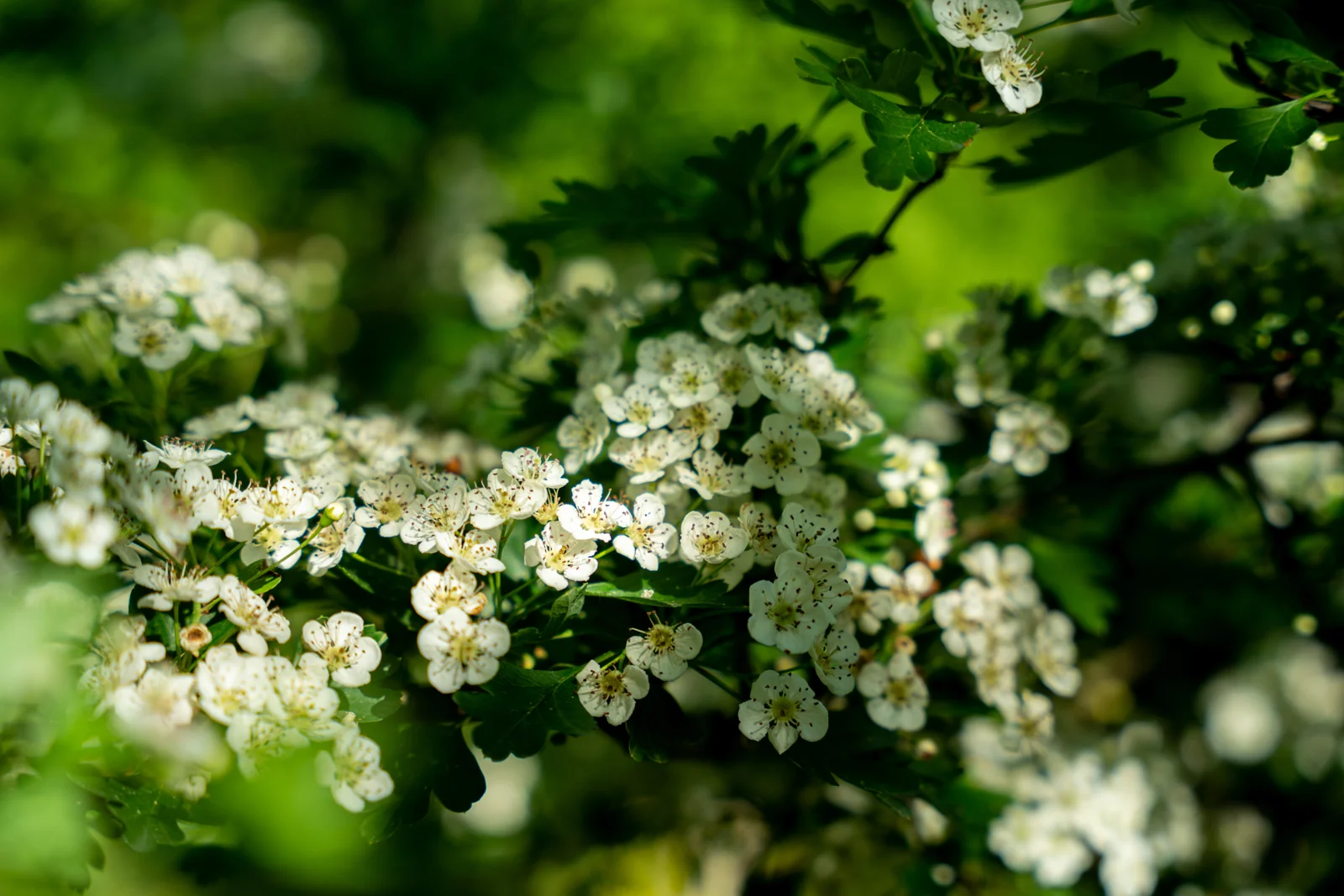
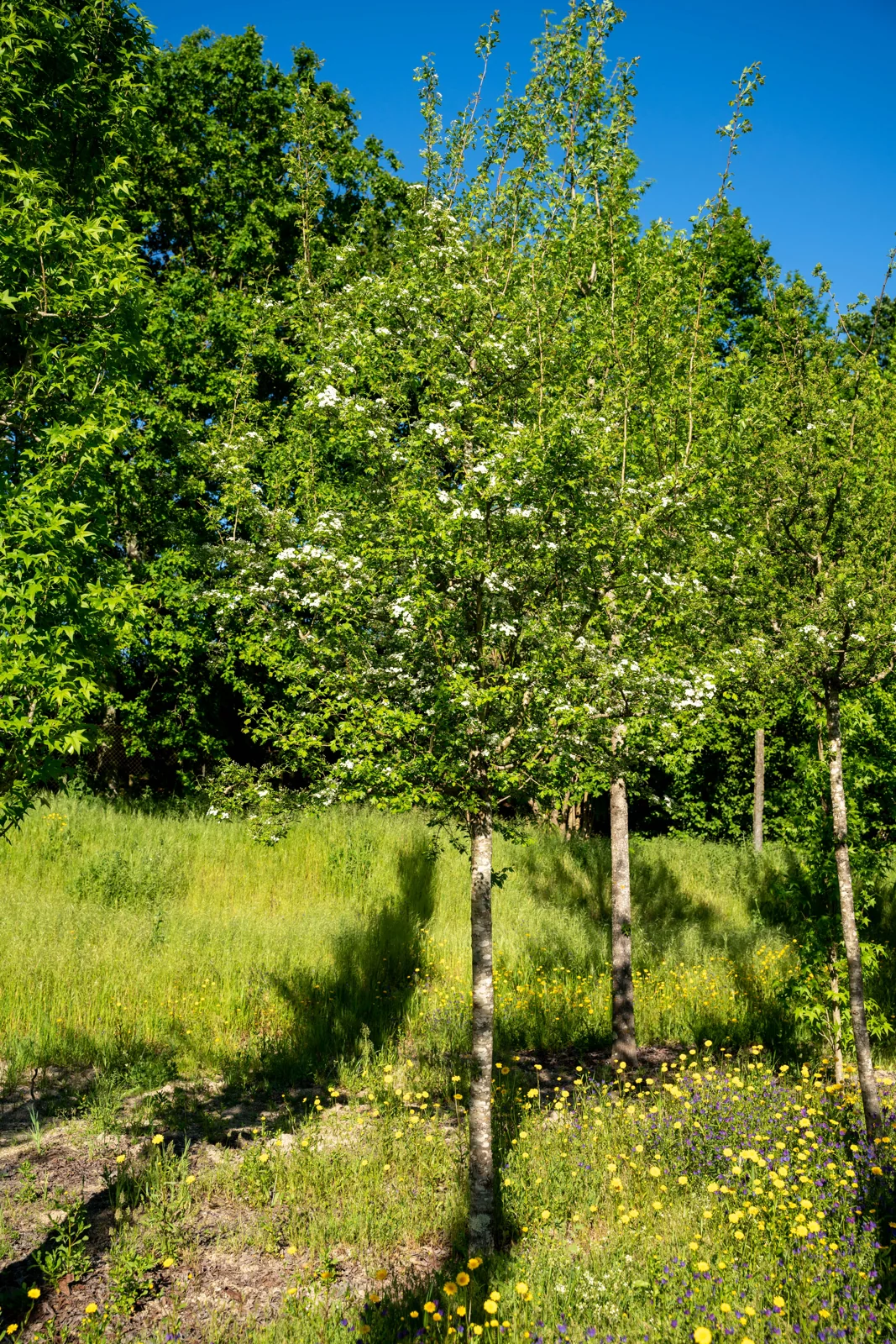
The tree forms a small, rounded specimen of 5 to 10 metres in height and 4 to 8 metres in spread, building a comparatively slender trunk that carries a dense, thorny crown with gracefully pendulous branch tips at maturity. White corymbs of moderately fragrant flowers open from mid-May into early June, followed by deep red single-seed haws that persist into…
Read more
Show less
The tree forms a small, rounded specimen of 5 to 10 metres in height and 4 to 8 metres in spread, building a comparatively slender trunk that carries a dense, thorny crown with gracefully pendulous branch tips at maturity. White corymbs of moderately fragrant flowers open from mid-May into early June, followed by deep red single-seed haws that persist into winter and remain a primary food source for thrushes, waxwings, and other passerines. Foliage is deeply lobed, dark green above and paler beneath, with limited but useful autumn yellowing.
Hardiness is the species' defining professional asset. C. monogyna is reliably winter-hardy across USDA zones 4a to 8b, withstanding minima around minus 30 °C, which places it inside the climate envelope of virtually every European specification, from Mediterranean to boreal. Heat performance to above 35 °C is solid given moderate soil depth, drought tolerance is high once established through a deep root system, and salt tolerance suits coastal and roadside positions.
For ecological role and specification logic, it sits alongside Sorbus aucuparia, Prunus padus, Corylus avellana, and Carpinus betulus as part of the shared canon of European native woody species available to landscape architects across the EU. It accepts clay, loam, sand, and chalk with equal tolerance provided drainage is reasonable, performs in full sun and partial shade, and resists most pests and diseases at population level. Wind tolerance and dense thorny structure make it a defensible specification for shelterbelts, livestock-proof boundaries, and the screening layer of naturalistic schemes.
The species' role in EU agroforestry, hedgerow restoration, and biodiversity-led planting programmes is well established, supported by its presence across most native floras from Ireland to the Carpathians and by long traditions of hedgelaying and coppicing. Maintenance is undemanding once established: the tree tolerates heavy clipping, responds well to formative pruning into multi-stem or standard form, and asks little aftercare beyond first-summer irrigation on free-draining sites.



Advice on this species
Want to know more about Crataegus monogyna?
Tell us about your project and we'll advise you on this species — where it thrives, which size makes sense, and what to expect once planted.
- Produção própria
- Exemplares adultos
- Resposta em 1–2 dias
Sem compromisso · orçamento personalizado