

Pink-bracted understorey specimen for cool-temperate amenity planting
Flowering Dogwood ‘Rubra’ · Cornus florida ‘Rubra’
The pink-flowering form of the eastern North American dogwood, a slow-growing small specimen tree selected for cool-temperate amenity schemes where a sheltered, acidic woodland-edge site can be provided.
Key Facts
About this Cultivar
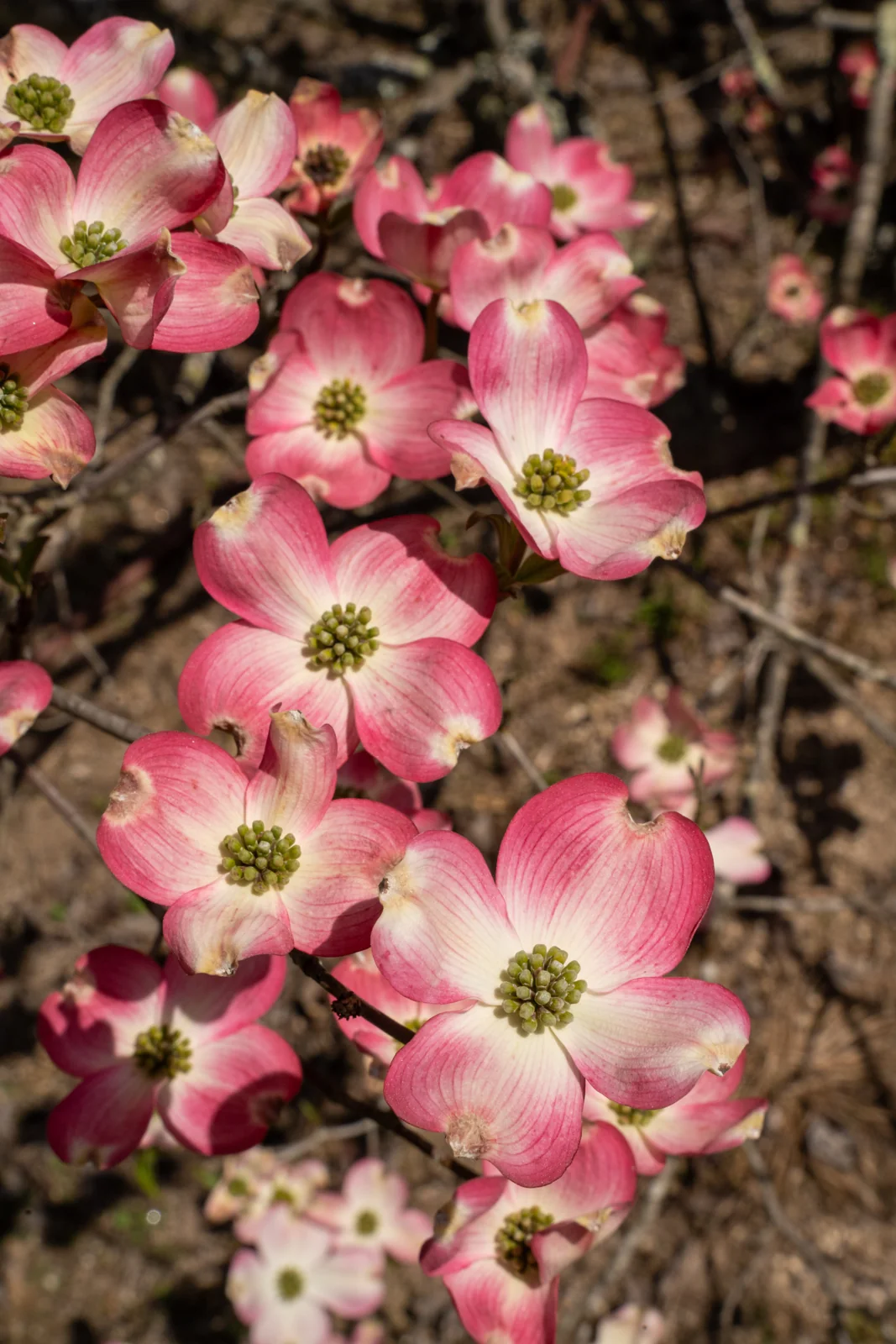
A small deciduous tree of slow to moderate growth, reaching roughly 6 to 8 m in height and 4 to 6 m in spread at maturity, with a low-branched, broadly rounded to flat-topped crown. Its defining ornamental phase opens in early to mid spring, before the leaves emerge, when the inflorescences are framed by four large petal-like bracts in rose pink to deep…
Read more
Show less
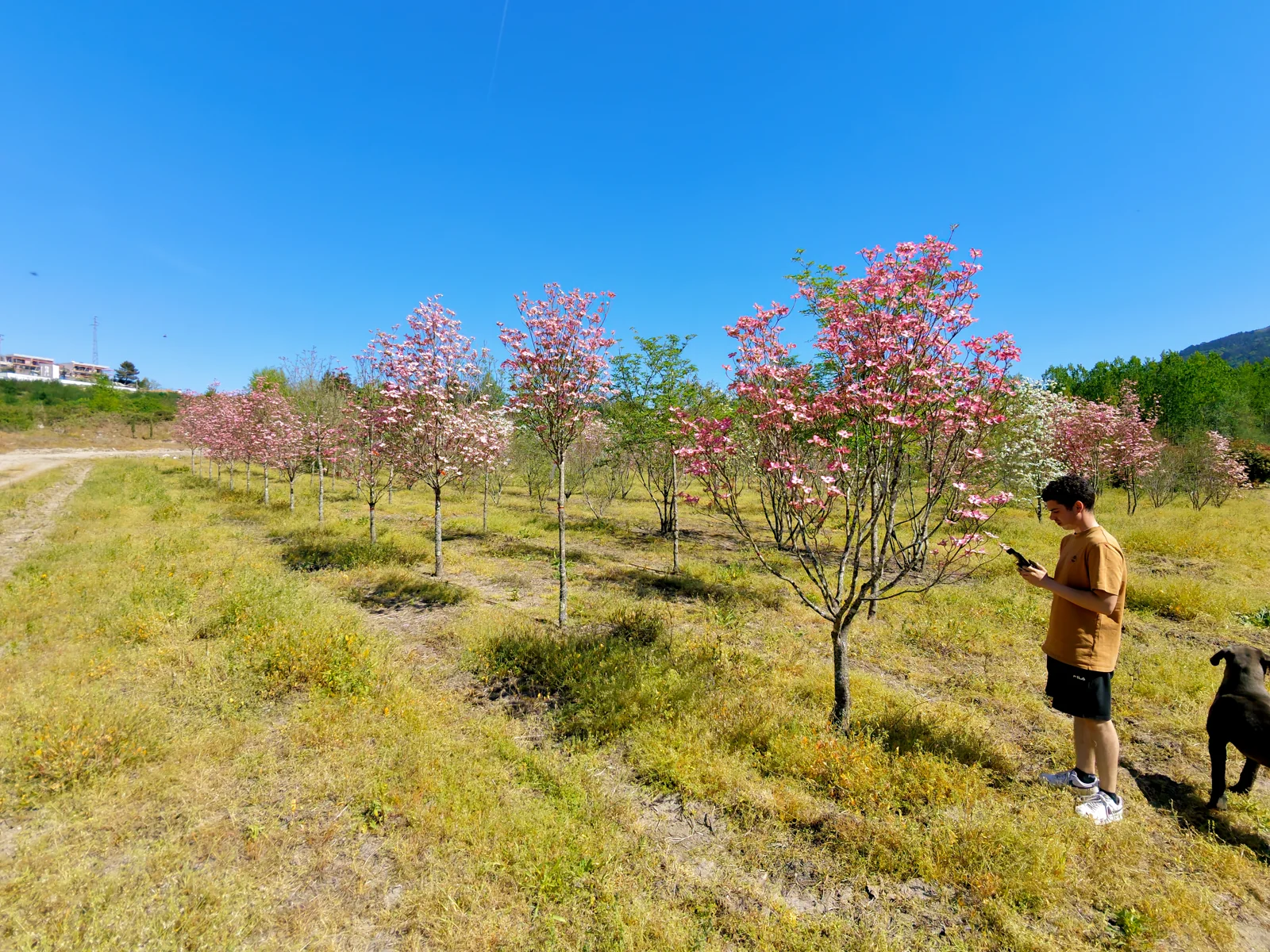
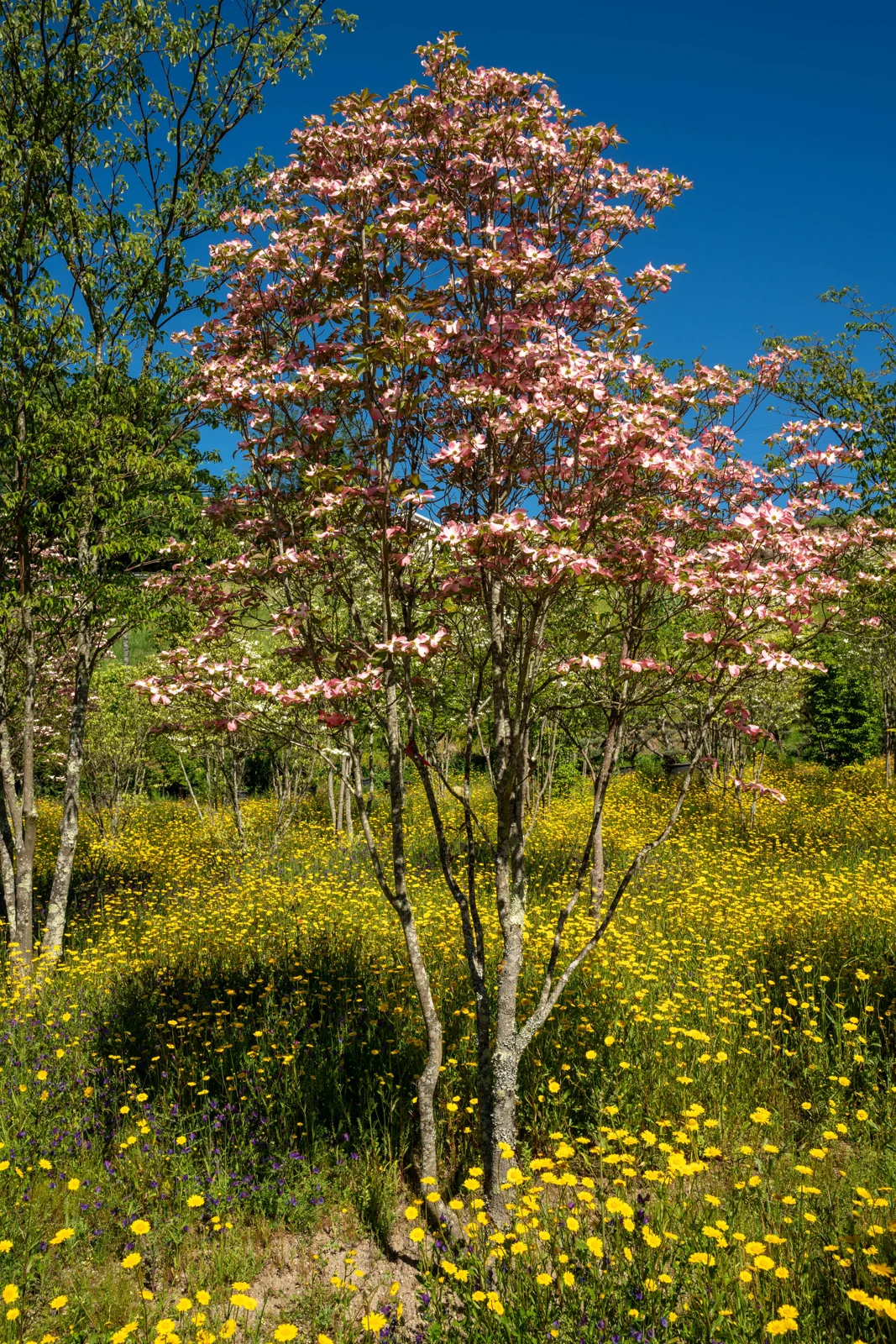
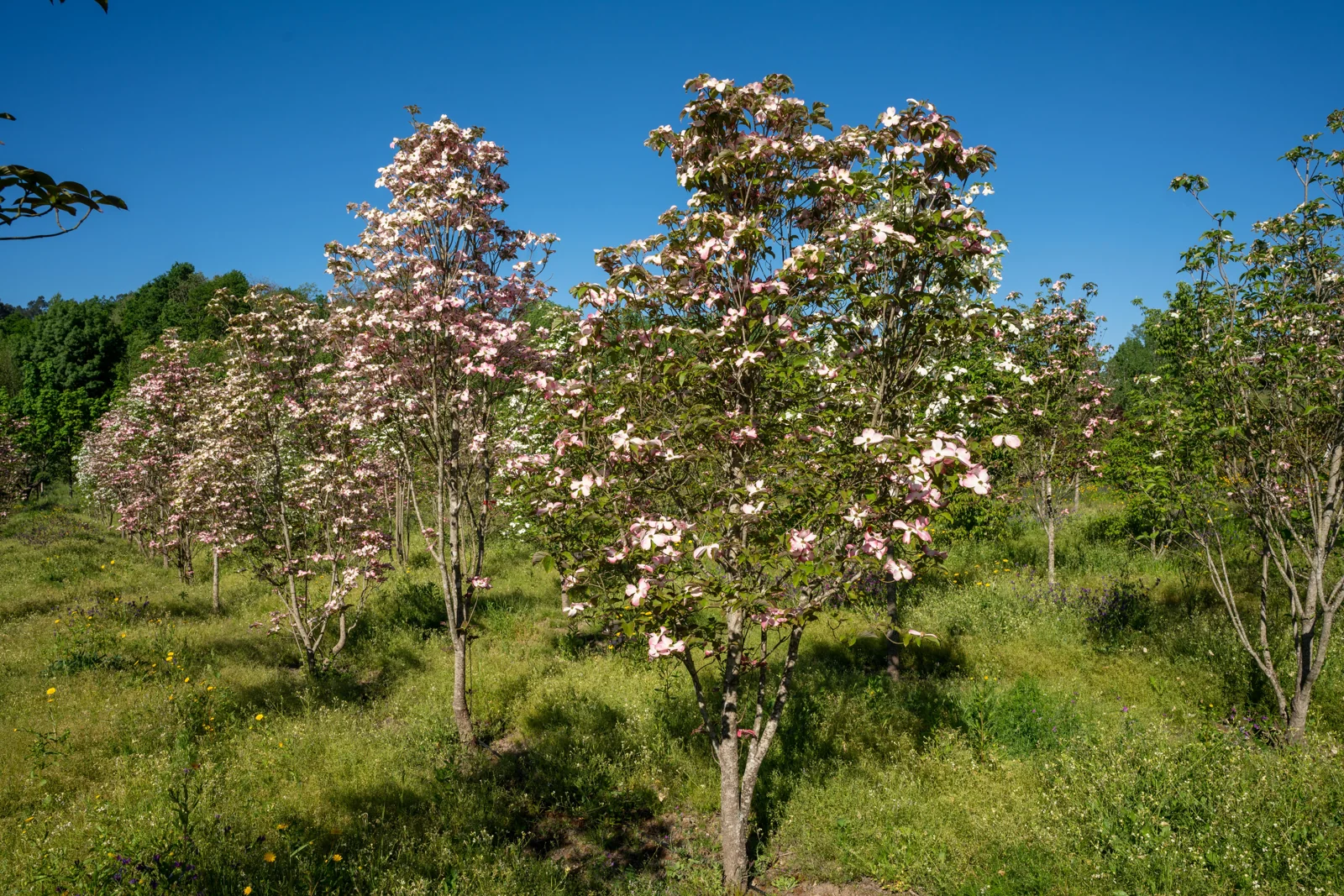
A small deciduous tree of slow to moderate growth, reaching roughly 6 to 8 m in height and 4 to 6 m in spread at maturity, with a low-branched, broadly rounded to flat-topped crown. Its defining ornamental phase opens in early to mid spring, before the leaves emerge, when the inflorescences are framed by four large petal-like bracts in rose pink to deep rose-red rather than the white of the type species. Oval, mid-green foliage follows, turning reliable shades of red to red-purple in autumn, and the small clustered red drupes persist into winter for songbird feeding.
Reliably winter-hardy across USDA zones 5a to 9a, tolerating winter minima of approximately minus 29 °C, which places it within reach of most of continental, Atlantic and northern Europe outside the coldest interior Boreal zones. Heat tolerance is moderate; in continental summers above 35 °C it requires assured root moisture and benefits from afternoon shade. Performance falls away in hot, dry, exposed Mediterranean sites and in coastal salt wind, where the foliage scorches and flowering thins.
The tree is calibrated for woodland-edge conditions: deep, fertile, organically rich soils with assured drainage, an acidic to slightly acidic pH, and partial shade in warmer regions or full sun further north. It dislikes alkaline soils, compaction, and the heat-and-drought regime of paved urban tree pits, and should not be specified as a street tree in high-stress alignments. A surface mulch of 5 to 10 cm conserves root coolth through summer and is part of any defensible specification.
Within a deciduous scheme it plays the structural role of a multi-stemmed Cercis siliquastrum or a small Magnolia, but with cooler hardiness and a redder autumn. Disease pressure is the central caveat: the species is susceptible to dogwood anthracnose (Discula destructiva), powdery mildew and leaf spot, particularly where airflow is poor or the planting is otherwise stressed. Routine sanitary pruning, generous spacing for crown ventilation, and avoidance of overhead irrigation are part of any defensible specification across cooler maritime and continental European sites.
Advice on this species
Want to know more about Cornus florida 'Rubra'?
Tell us about your project and we'll advise you on this species — where it thrives, which size makes sense, and what to expect once planted.
- Produção própria
- Exemplares adultos
- Resposta em 1–2 dias
Sem compromisso · orçamento personalizado