

Hardiest fan palm for warm-temperate to mild-continental sites
Chusan Palm · Chamaerops excelsa
The hardiest fan palm in routine European cultivation, specified where a project needs evergreen subtropical architecture without the climatic envelope a true Mediterranean palm would require to perform reliably across the season.
About this Species
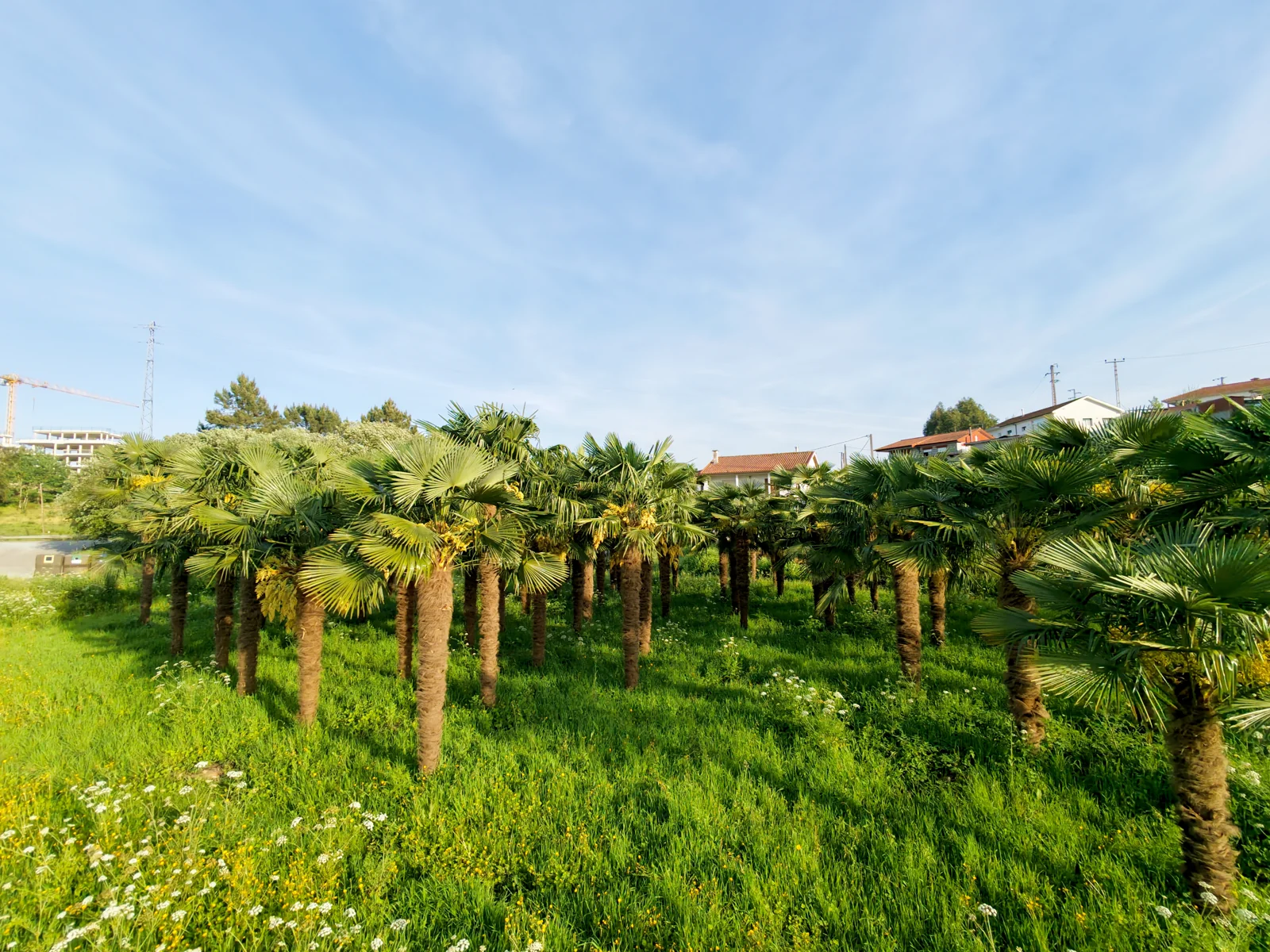
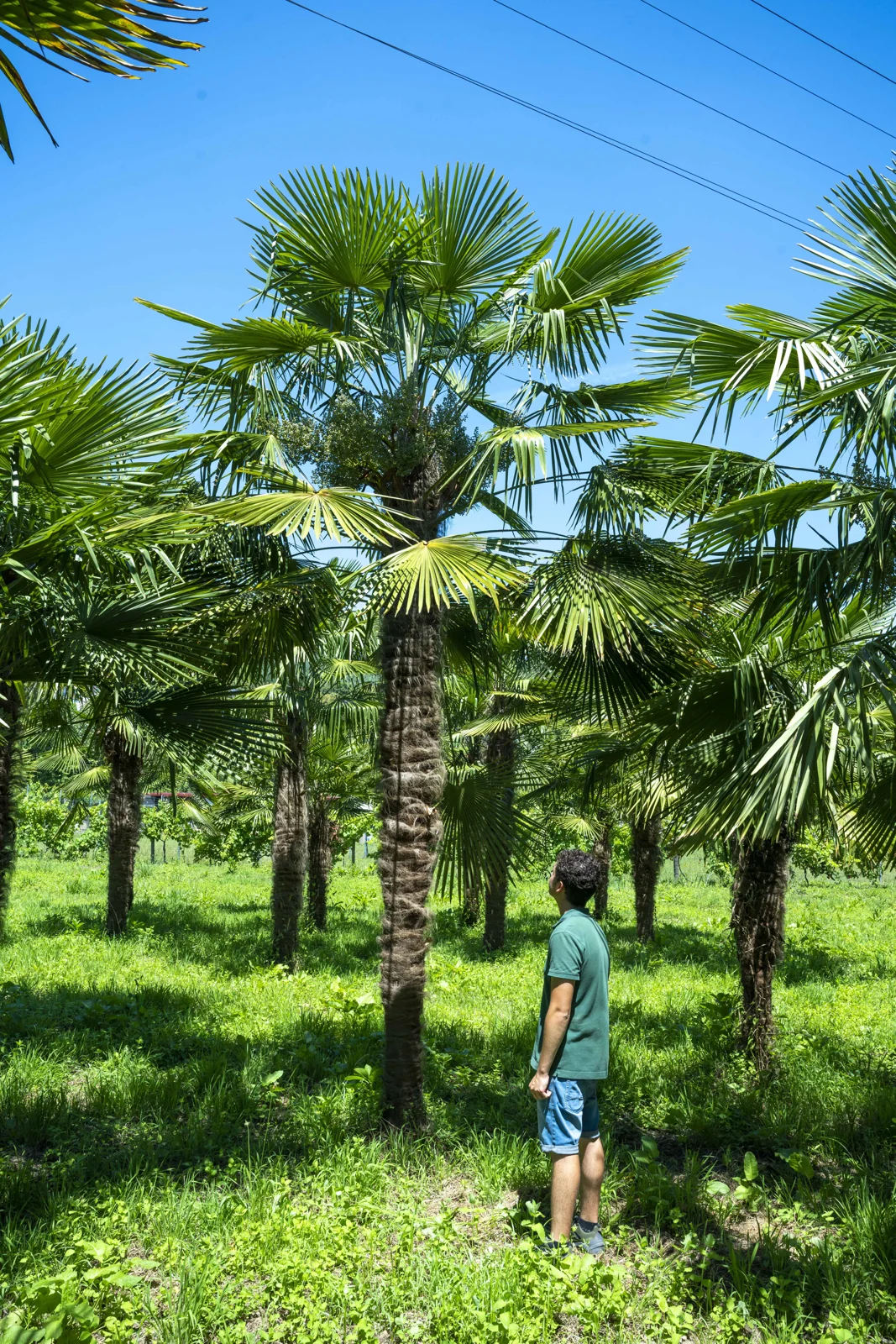
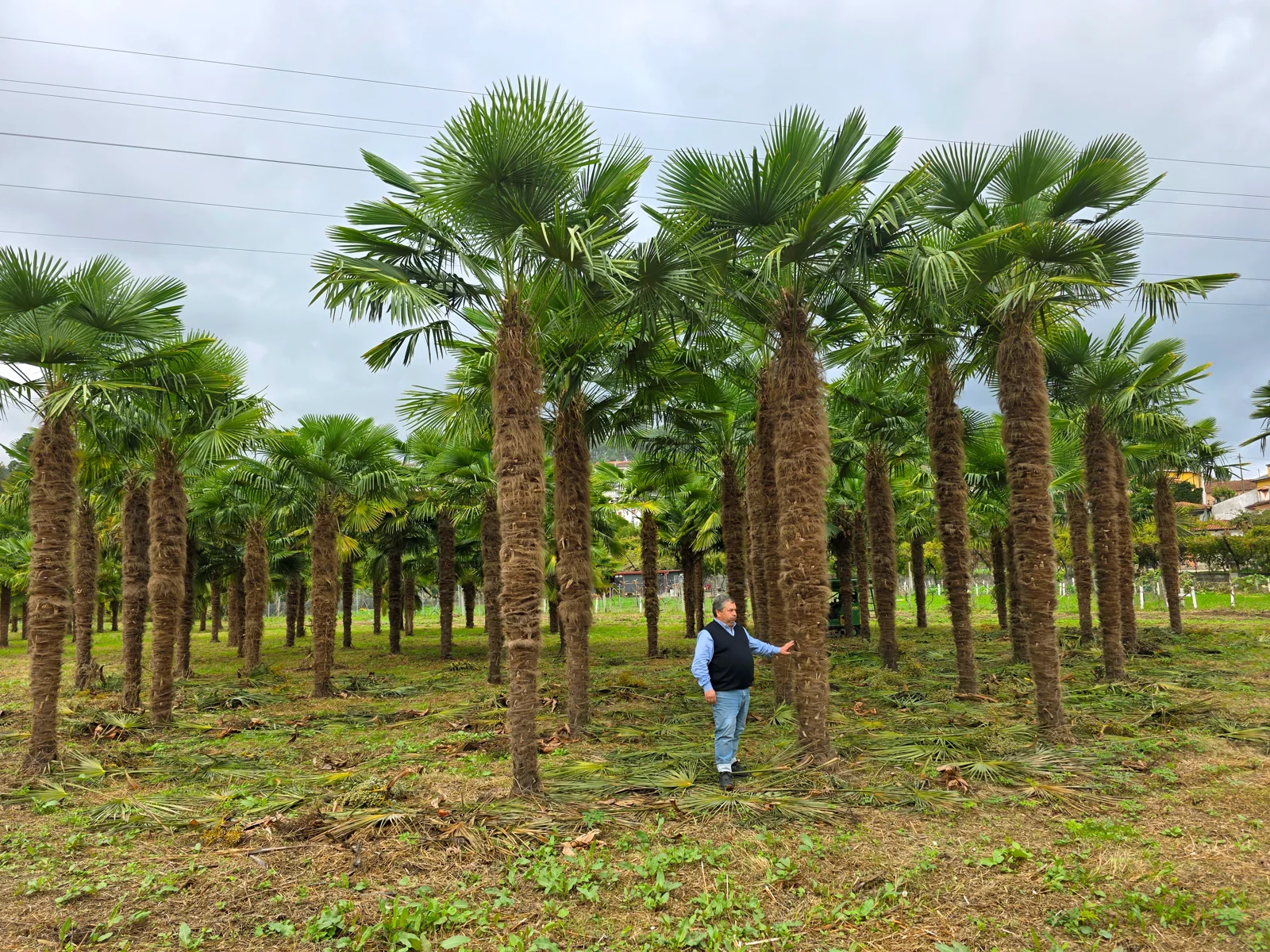
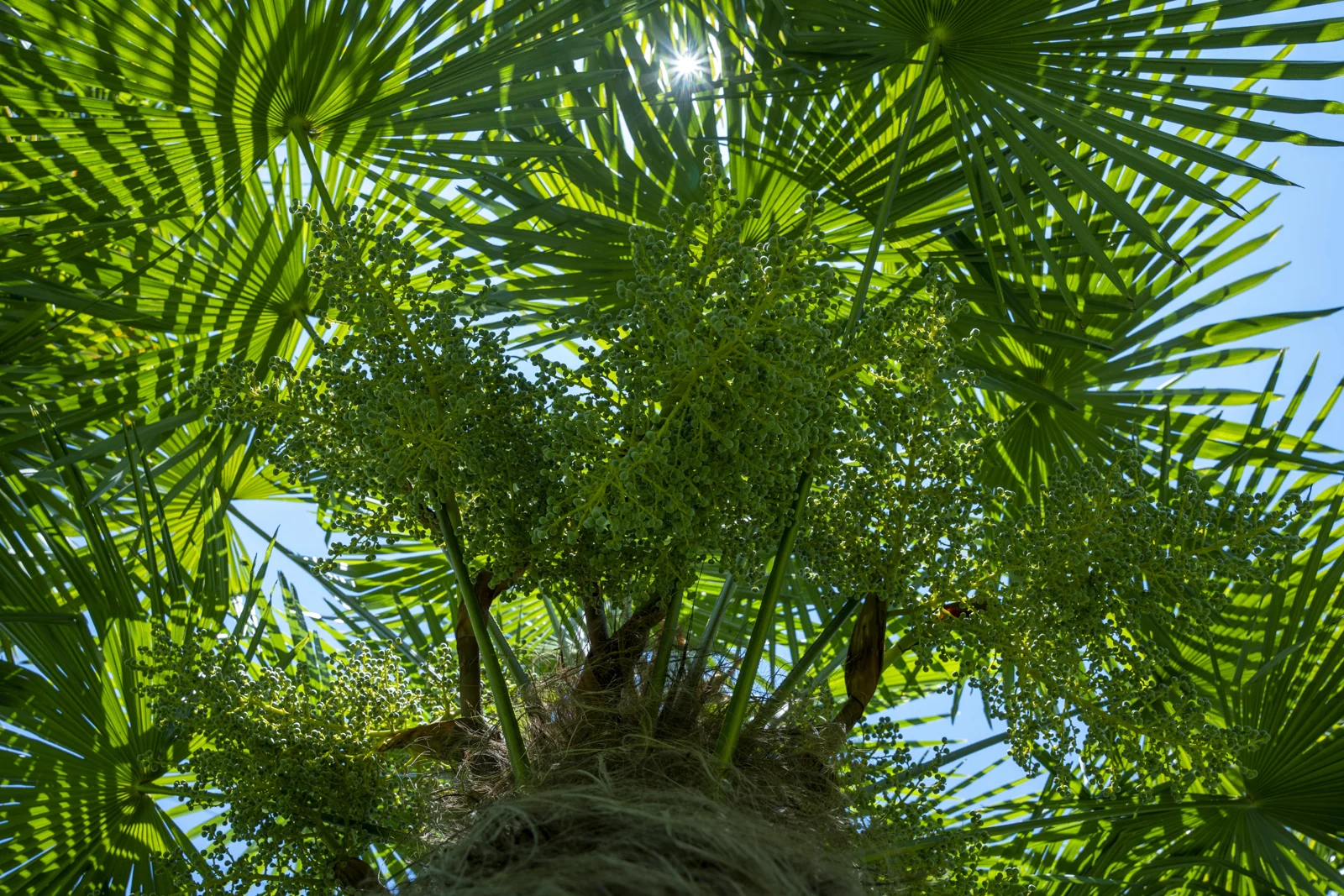
Native to central and southern China and long cultivated in Japan, Trachycarpus fortunei carries a single unbranched trunk sheathed in dark fibrous remnants of old leaf bases, topped by a dense crown of stiff palmate fronds up to roughly a metre across. Mature height in cultivation typically settles between 6 and 12 metres with a crown spread of 2 to 4…
Read more
Show less
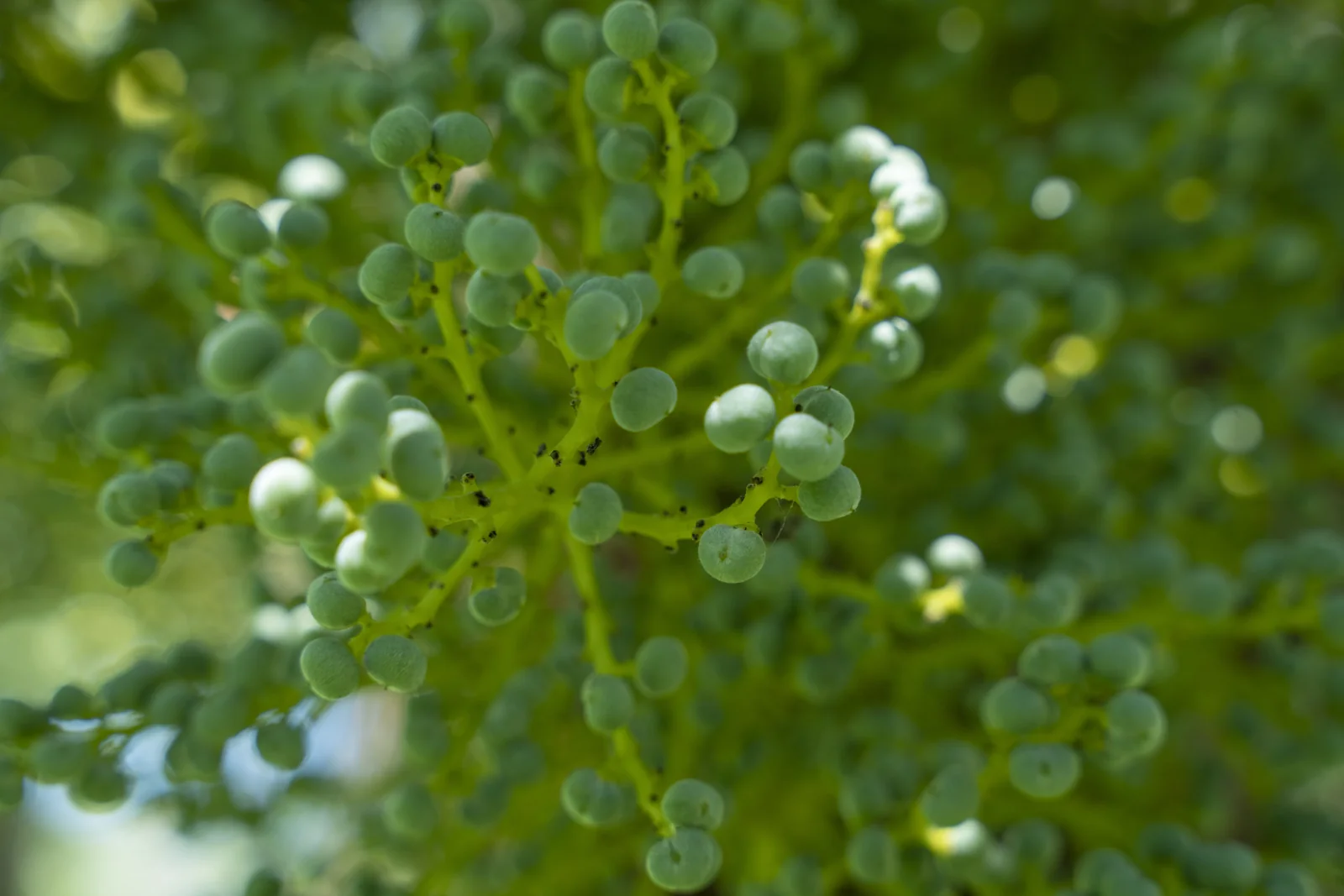
Native to central and southern China and long cultivated in Japan, Trachycarpus fortunei carries a single unbranched trunk sheathed in dark fibrous remnants of old leaf bases, topped by a dense crown of stiff palmate fronds up to roughly a metre across. Mature height in cultivation typically settles between 6 and 12 metres with a crown spread of 2 to 4 metres, reached slowly over decades. Yellow inflorescences appear in May and June on dioecious plants, ornamentally secondary to the year-round structural value of the foliage.
Reliably winter-hardy to about minus 12 °C (USDA zone 8a), with established specimens reported to withstand brief excursions toward minus 15 °C (zone 7b) in sheltered, well-drained positions; foliar damage and crown loss become likely below that threshold. Heat tolerance is high, the palm performing without distress through prolonged summer maxima above 35 °C provided root depth is adequate. Drought tolerance is moderate rather than absolute, so reliable performance assumes either annual rainfall above roughly 600 mm or supplementary irrigation through the establishment phase.
The species is dependable across USDA zone 8 and warmer, including the Atlantic seaboard, the warmer maritime fringes of the North Sea coast, the Po valley, and the Aegean and Adriatic littorals. It is not recommended for continental sites east of a line through Berlin, north of southern England, or above roughly 600 metres in alpine and pre-alpine zones, where unprotected specimens will not give the form a specifier expects. Salt tolerance is moderate, making the palm usable in second-line coastal plantings; exposure to sustained drying continental wind degrades the fronds and should be avoided.
Soil requirements are unfussy provided drainage is assured: well-drained loamy or sandy substrates suit it, while heavy waterlogged ground does not. In the European urban-tree canon it occupies a specification slot none of the broadleaf staples (Platanus, Tilia, Acer, Quercus, Gleditsia, Sophora) can fill, supplying evergreen vertical architecture at modest spread for tree pits, courtyards, hospitality landscapes, and resort frontages. Disease and pest profile is generally clean in European cultivation, and maintenance reduces to occasional removal of spent fronds once the trunk has cleared.



Advice on this species
Want to know more about Chamaerops excelsa?
Tell us about your project and we'll advise you on this species — where it thrives, which size makes sense, and what to expect once planted.
- Produção própria
- Exemplares adultos
- Resposta em 1–2 dias
Sem compromisso · orçamento personalizado