

Sculptural weeping conifer for focal specimen use in warm-temperate schemes
Deodar Cedar ‘Pendula’ · Cedrus deodara ‘Pendula’
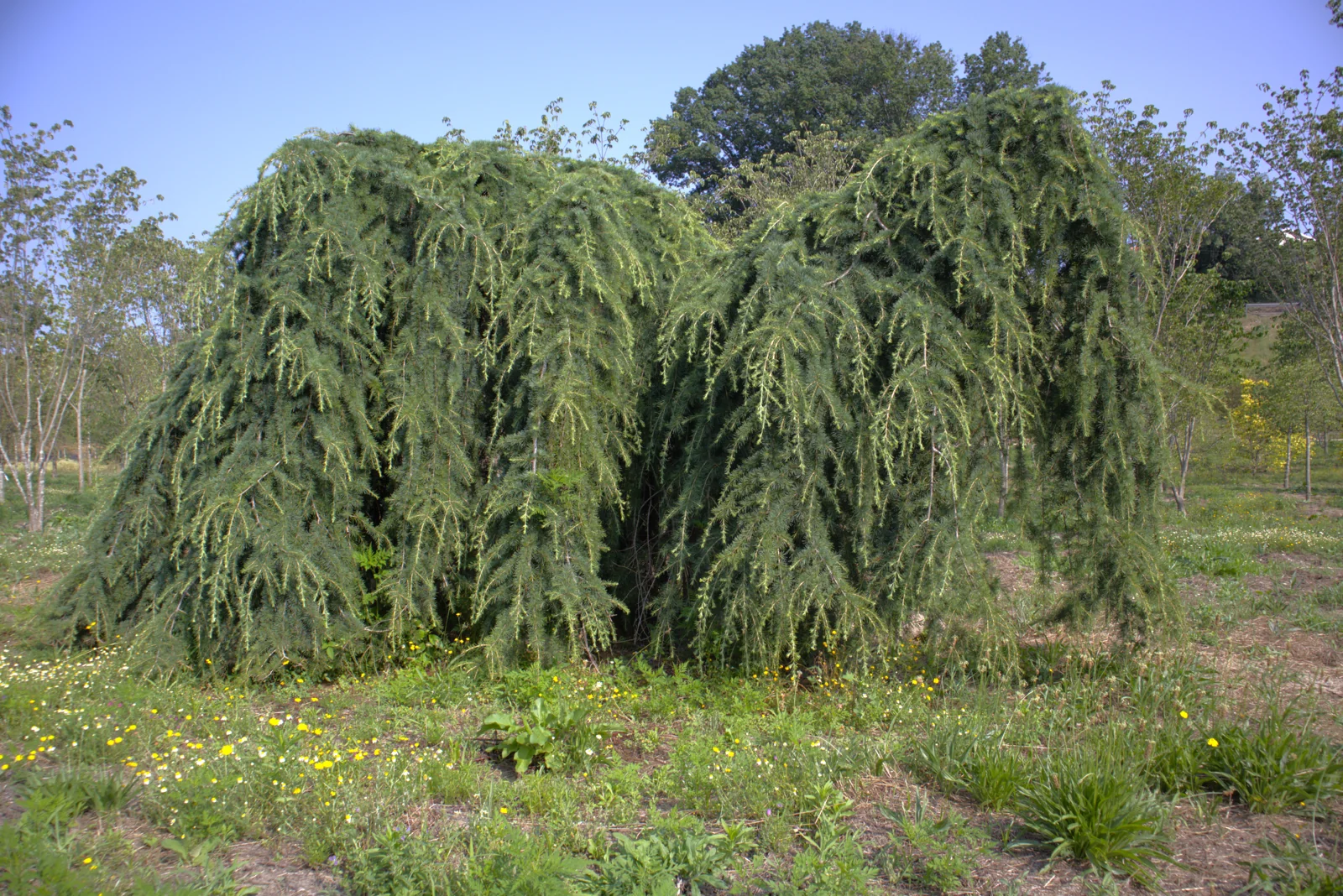
A pendulous selection of Cedrus deodara conducted as a single focal specimen in parks, estate gardens, and signature courtyards across the Atlantic and Mediterranean fringe of Europe, where evergreen structure and year-round visual weight are specification priorities.
Key Facts
About this Cultivar
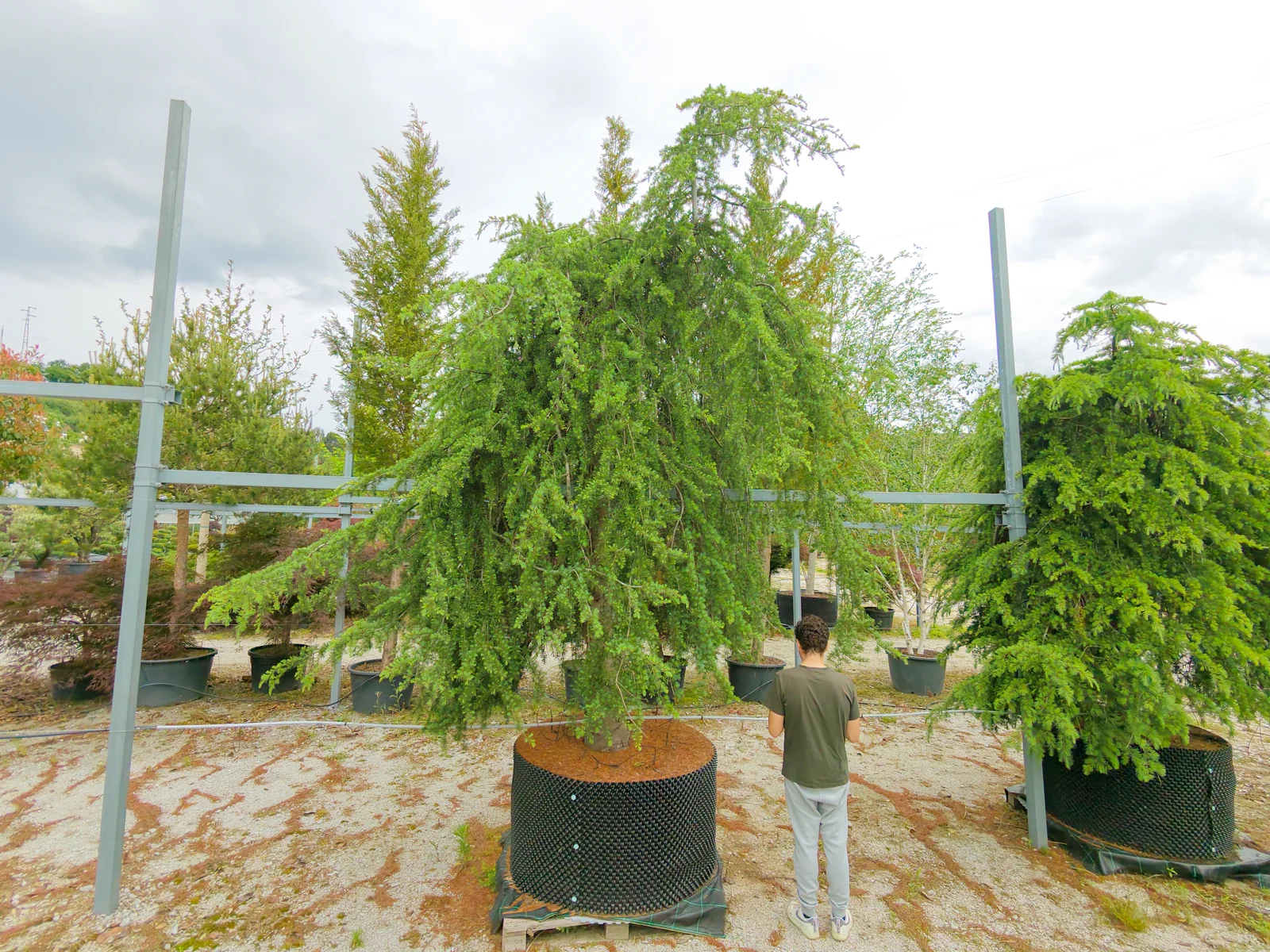
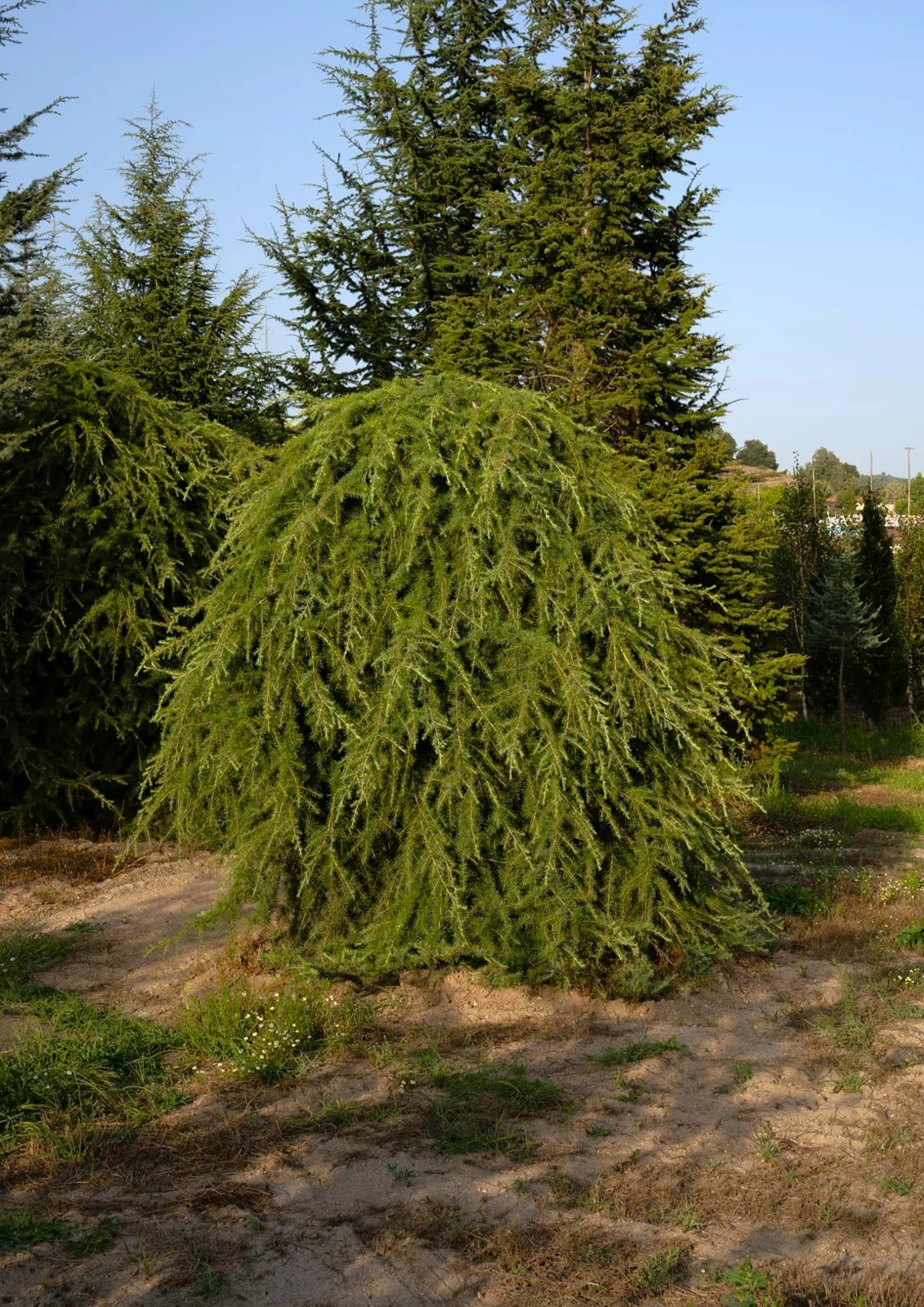
The cultivar's defining trait is its markedly pendent branching, which produces a sculptural, asymmetric silhouette unlike the broad-pyramidal habit of the parent species. Conducted as a low ground-hugging form it settles at two to three metres; trained on a stake it reaches six to ten metres, with a spread that often exceeds the height as the long branches…
Read more
Show less
The cultivar's defining trait is its markedly pendent branching, which produces a sculptural, asymmetric silhouette unlike the broad-pyramidal habit of the parent species. Conducted as a low ground-hugging form it settles at two to three metres; trained on a stake it reaches six to ten metres, with a spread that often exceeds the height as the long branches fall in slow cascades. Dense clusters of grey-green to glaucous blue needles carry the canopy through every season.
Reliably winter-hardy across USDA zone 8 and warmer, with the species tolerating short exposures down to roughly minus 20 to minus 25 °C once established. Performance is dependable through the Atlantic seaboard, the western Mediterranean basin, the Po valley, and the milder pockets of central Europe. Damage and dieback become likely below minus 25 °C, so the cultivar is not a defensible specification east of a line through Vienna or north of a line through southern England without consistent shelter and assured snow cover; it is unsuitable for the continental interior, the Baltic, and Scandinavia outside the southernmost Danish coast.
The parent species tolerates a broad pH range across acidic, alkaline, sandy, and clay loams, provided drainage is reliable; waterlogged and compacted positions are the principal cause of decline. Drought tolerance is moderate once the root system is anchored, and the deep pivoting habit characteristic of the genus carries the tree through the long dry summers of southern Europe with limited supplementary irrigation after the third season. Full sun is required for habit and needle colour; deep shade flattens the silhouette and thins the foliage.
Growth is slow to moderate, and the weeping form responds well to early formative training, allowing the specifier to shape the leader and the principal cascading branches at the nursery stage. Air-pollution tolerance suits the cultivar to large urban courtyards, civic forecourts, and resort landscapes where a single sculptural conifer carries the composition. Pest and disease pressure is low across European cultivation, with tip blight and root rot the only recurring concerns, both linked to poor drainage rather than pathogen prevalence.
Advice on this species
Want to know more about Cedrus deodara 'Pendula'?
Tell us about your project and we'll advise you on this species — where it thrives, which size makes sense, and what to expect once planted.
- Produção própria
- Exemplares adultos
- Resposta em 1–2 dias
Sem compromisso · orçamento personalizado