

Drought-tolerant evergreen conifer for parkland and estate landscapes
Atlas Cedar · Cedrus atlantica
A long-lived North African mountain conifer specified across Europe as a structural specimen for parks, estates, and large alignments. Reliable through warm-temperate and Mediterranean conditions, with proven hardiness into the colder margins of central Europe.
About this Species
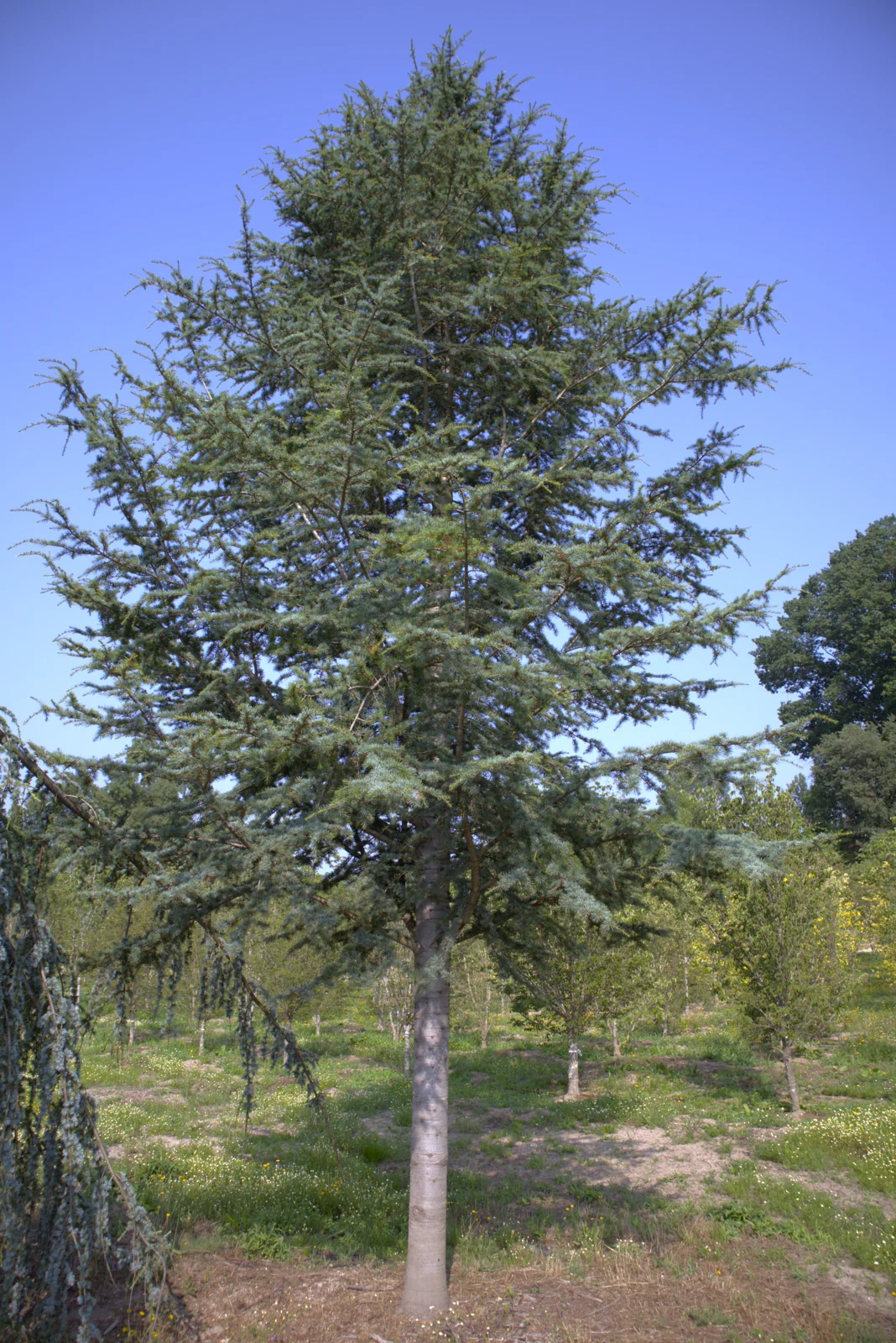
Cedrus atlantica is an evergreen conifer reaching 20 to 35 m at maturity, occasionally 40 m, with a crown spread of 10 to 15 m and trunk diameters exceeding 1.5 m on old trees. The habit is loosely pyramidal in youth, opening with age into the flat-topped, horizontally branched silhouette that distinguishes the genus from Pinus and Picea. Needles are short…
Read more
Show less
Cedrus atlantica is an evergreen conifer reaching 20 to 35 m at maturity, occasionally 40 m, with a crown spread of 10 to 15 m and trunk diameters exceeding 1.5 m on old trees. The habit is loosely pyramidal in youth, opening with age into the flat-topped, horizontally branched silhouette that distinguishes the genus from Pinus and Picea. Needles are short and rigid, held in tufted whorls on dwarf shoots, ranging from sea-green to the strong silver-blue of the Glauca Group, which remains the most widely specified form in European landscape practice.
Native to the Atlas, Rif, and Tell Atlas ranges of Morocco and Algeria at elevations of 1,200 to 2,200 m, the species is adapted to dry summers and cold montane winters. In cultivation it is reliably hardy to minus 20 °C (USDA zone 6b), with damage reported below minus 23 °C on exposed continental sites. Heat tolerance is high under summer maxima above 35 °C where rooting volume is adequate, and established specimens are markedly drought-tolerant through a deep pivoting root system. Tolerance of waterlogging is poor.
Reliable across USDA zones 7 to 9 in Atlantic, Mediterranean, Pannonian, and Po-valley conditions. Performance becomes marginal east of a line through Berlin and Warsaw, and north of southern Scandinavia and central Scotland, where prolonged frost and heavy wet snow shorten its working life. Snow loads can fracture long horizontal branches on mature trees, so strongly continental or alpine sites should anticipate periodic crown repair. The species takes deep, well-drained loams from sandy through clay, prefers a slightly acid pH, and asks for shelter from sustained drying winds during establishment.
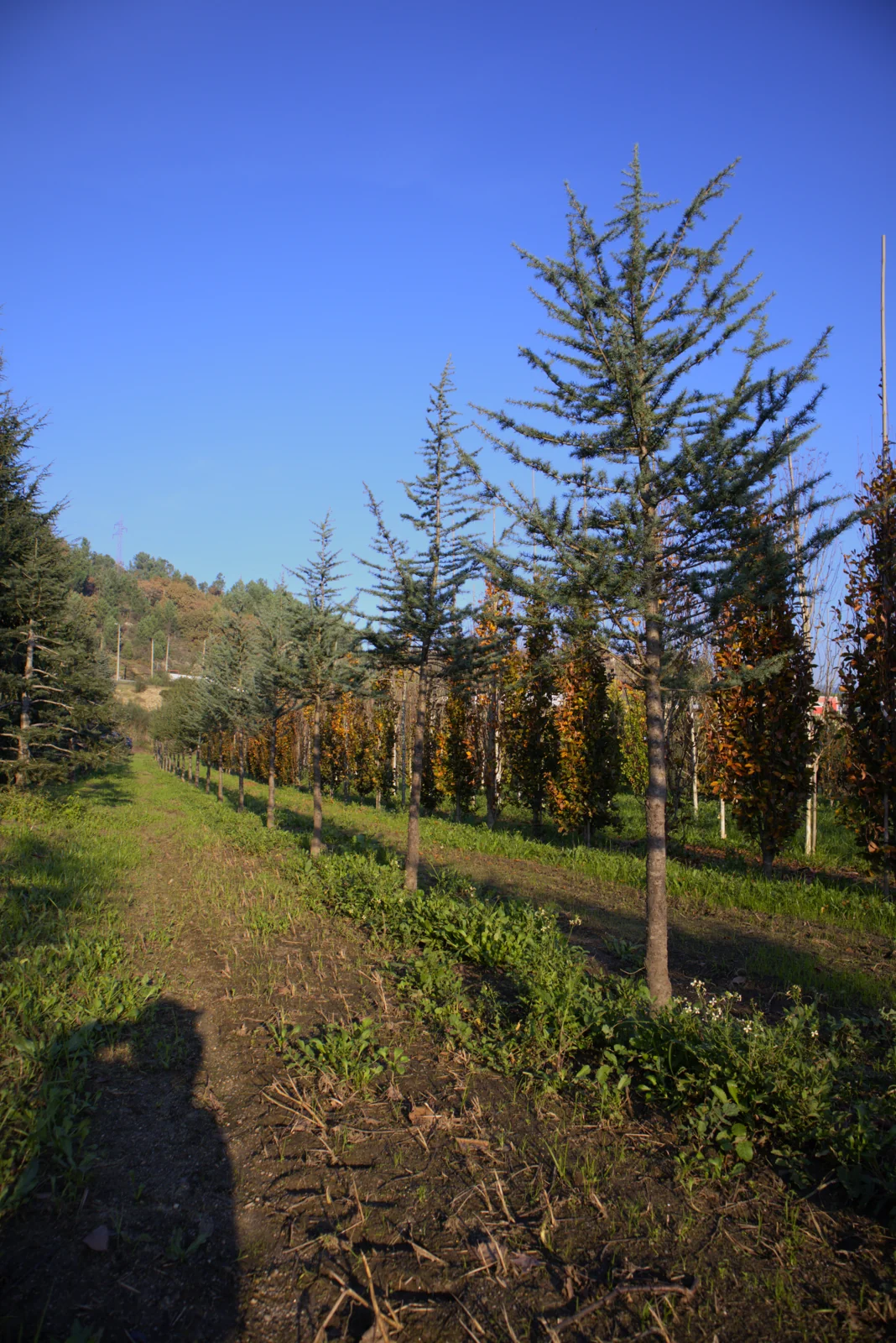
Specified as a single specimen or in well-spaced groups for full mature development; the European urban-tree canon of Platanus, Tilia, and Quercus carries no true cedar at this scale, and Cedrus atlantica fills that role where the climate permits. Disease and pest pressure is low under good drainage, with Phytophthora the main risk on compacted soils. Working life on a settled site routinely exceeds a century, and the deep taproot responsible for difficult transplantation is the same structure that delivers its drought performance.



Advice on this species
Want to know more about Cedrus atlantica?
Tell us about your project and we'll advise you on this species — where it thrives, which size makes sense, and what to expect once planted.
- Produção própria
- Exemplares adultos
- Resposta em 1–2 dias
Sem compromisso · orçamento personalizado