

Blue-needled evergreen specimen for warm-temperate and Mediterranean schemes
Atlas Cedar ‘Glauca’ · Cedrus atlantica ‘Glauca’
A glaucous selection of the Atlas cedar, specified across warm-temperate and Mediterranean Europe as a long-lived structural conifer where blue-silver foliage, drought endurance, and slow accumulation of architectural form together carry a scheme.
Key Facts
About this Cultivar
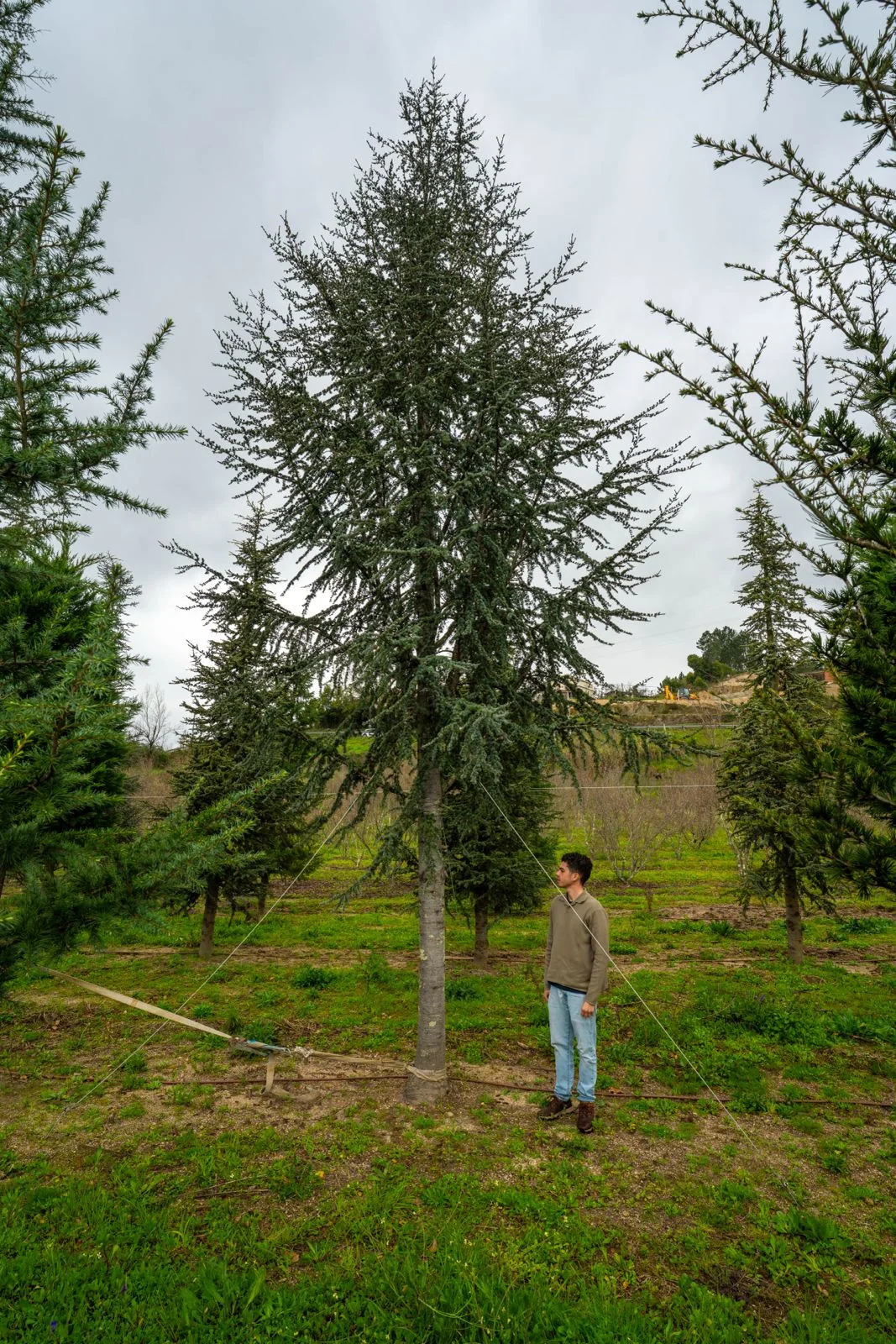
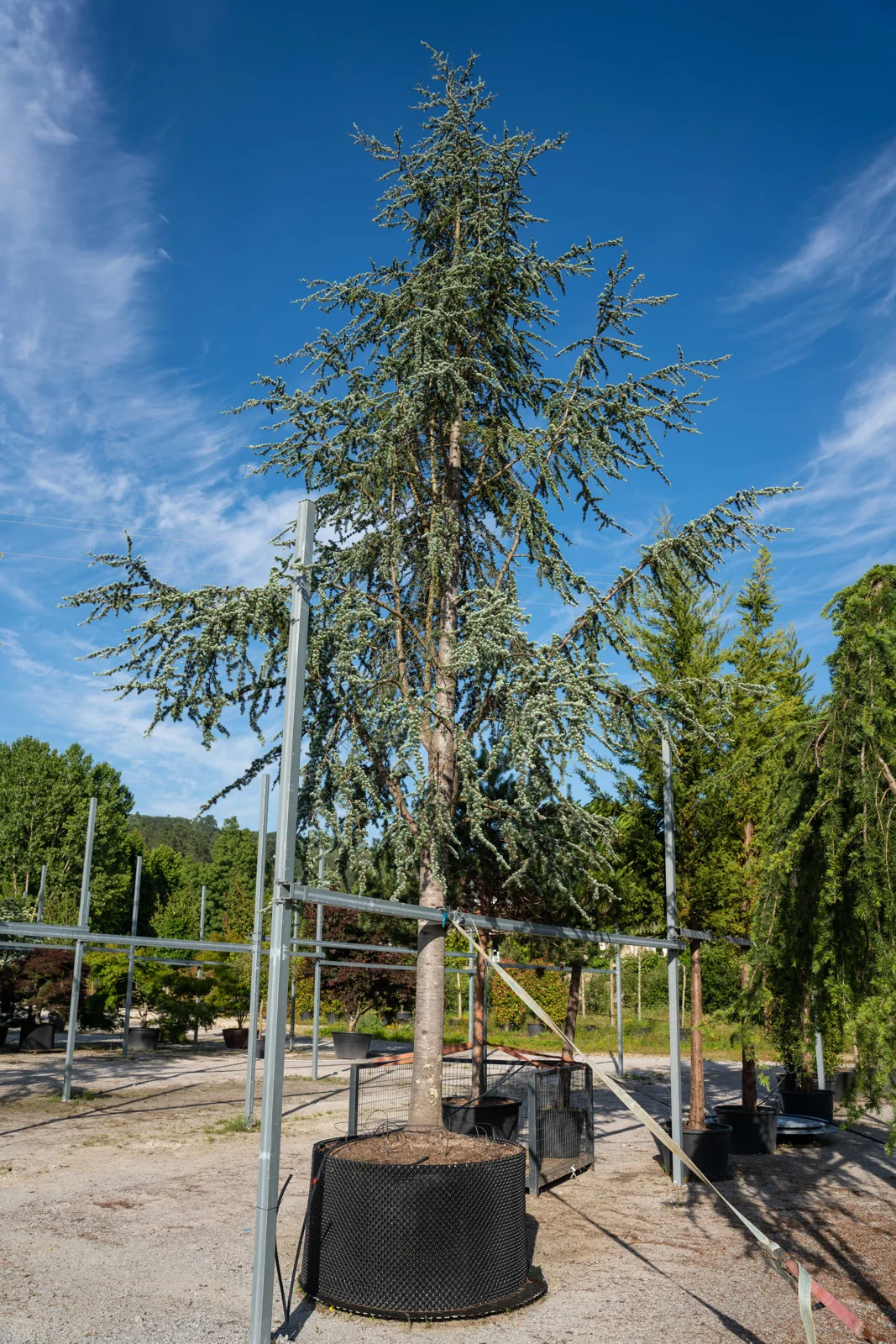
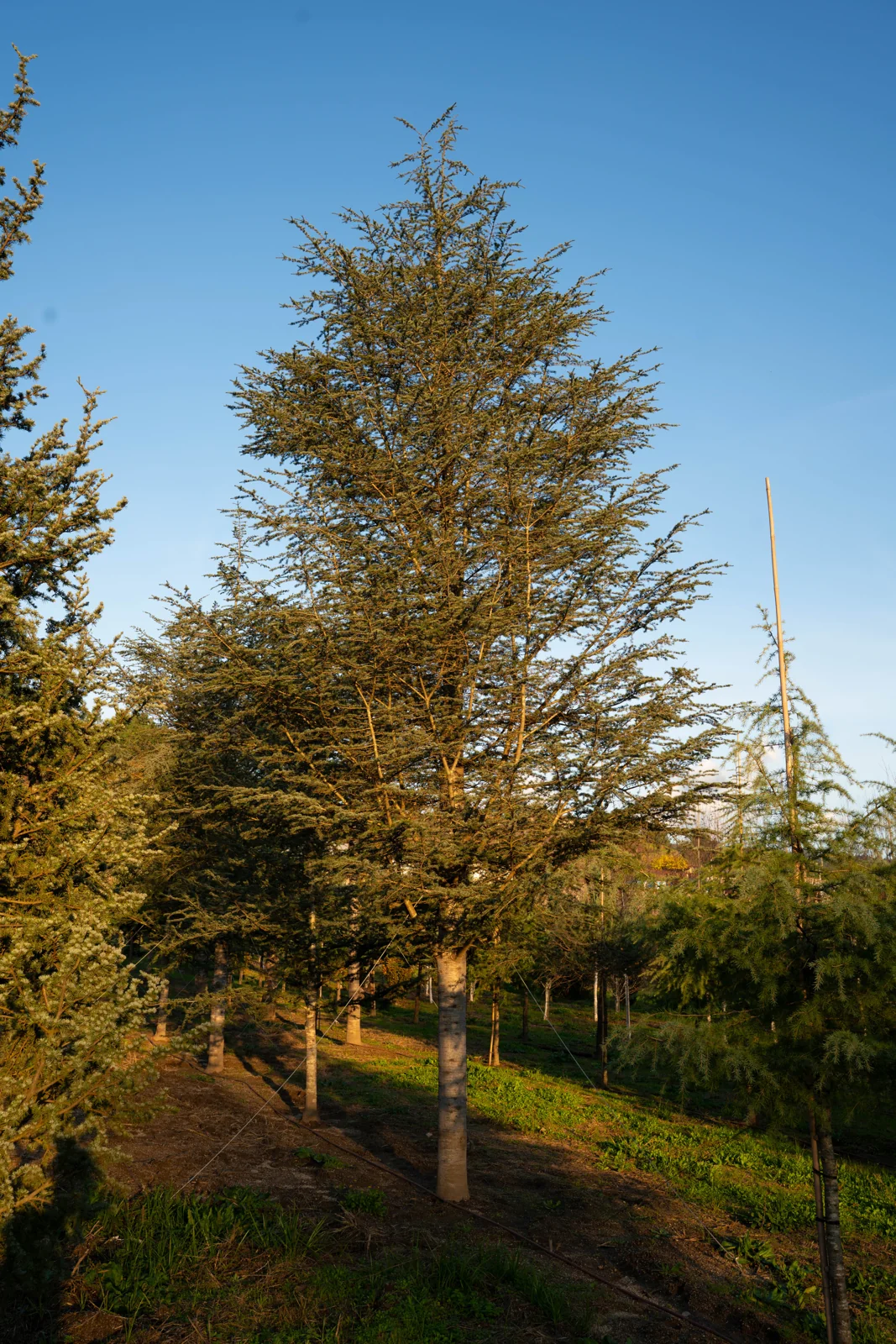
Cedrus atlantica 'Glauca' is the glaucous form of the Atlas cedar, distinguished from the green seed-raised type by dense tufts of blue-silver needles held in clusters of ten to thirty on short shoots. Juvenile growth is conical with strong leaders and stiff, well-spaced laterals; mature specimens broaden into a spreading, flat-topped silhouette with…
Read more
Show less
Cedrus atlantica 'Glauca' is the glaucous form of the Atlas cedar, distinguished from the green seed-raised type by dense tufts of blue-silver needles held in clusters of ten to thirty on short shoots. Juvenile growth is conical with strong leaders and stiff, well-spaced laterals; mature specimens broaden into a spreading, flat-topped silhouette with horizontal main branches that read as architectural even at distance. Cones are upright and barrel-shaped, appearing on upper branches once trees are well established.
The climate envelope is warm-temperate Atlantic and Mediterranean Europe extending into milder Continental sites: reliably winter-hardy to about minus 18 °C (USDA zone 7a), with damage reported below minus 20 °C and increasing exposure risk into zone 6. Heat tolerance is high, and the tree handles prolonged summer maxima above 35 °C provided rooting depth is adequate, but combinations of extreme heat with very low summer humidity will scorch foliage. Coastal salt-laden wind is poorly tolerated; continental drying wind requires shelter through establishment.
Specify on deep, well-drained, acidic to neutral loams in open positions with full sun and no overhead competition. Sandy and clay textures are tolerated provided drainage is reliable; waterlogging and compacted urban soils raise Phytophthora pressure and should be avoided. Performance is reported across coastal southern England and Ireland, the Atlantic seaboard of France and the Low Countries, the Po valley, the Pannonian basin, and the warmer Aegean. The northern and eastern Baltic, upland Scandinavia, and the deep Continental interior sit outside its working range.
Growth is slow to moderate, with a long juvenile phase before the canopy opens; the reward is a specimen that holds its scale for generations, with cultivated examples across Europe recorded above 35 m in height where conditions allow. Heavy wet snow can break horizontal limbs, and tip blight may appear in stressed stands, but disease and pest pressure are otherwise low. Reserve the position: this is a focal tree, not a candidate for tight tree pits or constrained alignments.
Advice on this species
Want to know more about Cedrus atlantica 'Glauca'?
Tell us about your project and we'll advise you on this species — where it thrives, which size makes sense, and what to expect once planted.
- Produção própria
- Exemplares adultos
- Resposta em 1–2 dias
Sem compromisso · orçamento personalizado