

Hardy deciduous canopy tree for urban and parkland schemes
European Hornbeam · Carpinus betulus
A medium-stature deciduous canopy tree with one of the broadest hardiness envelopes in the European urban canon, performing reliably from the Mediterranean basin north to southern Scandinavia and east into the Pannonian basin.
About this Species
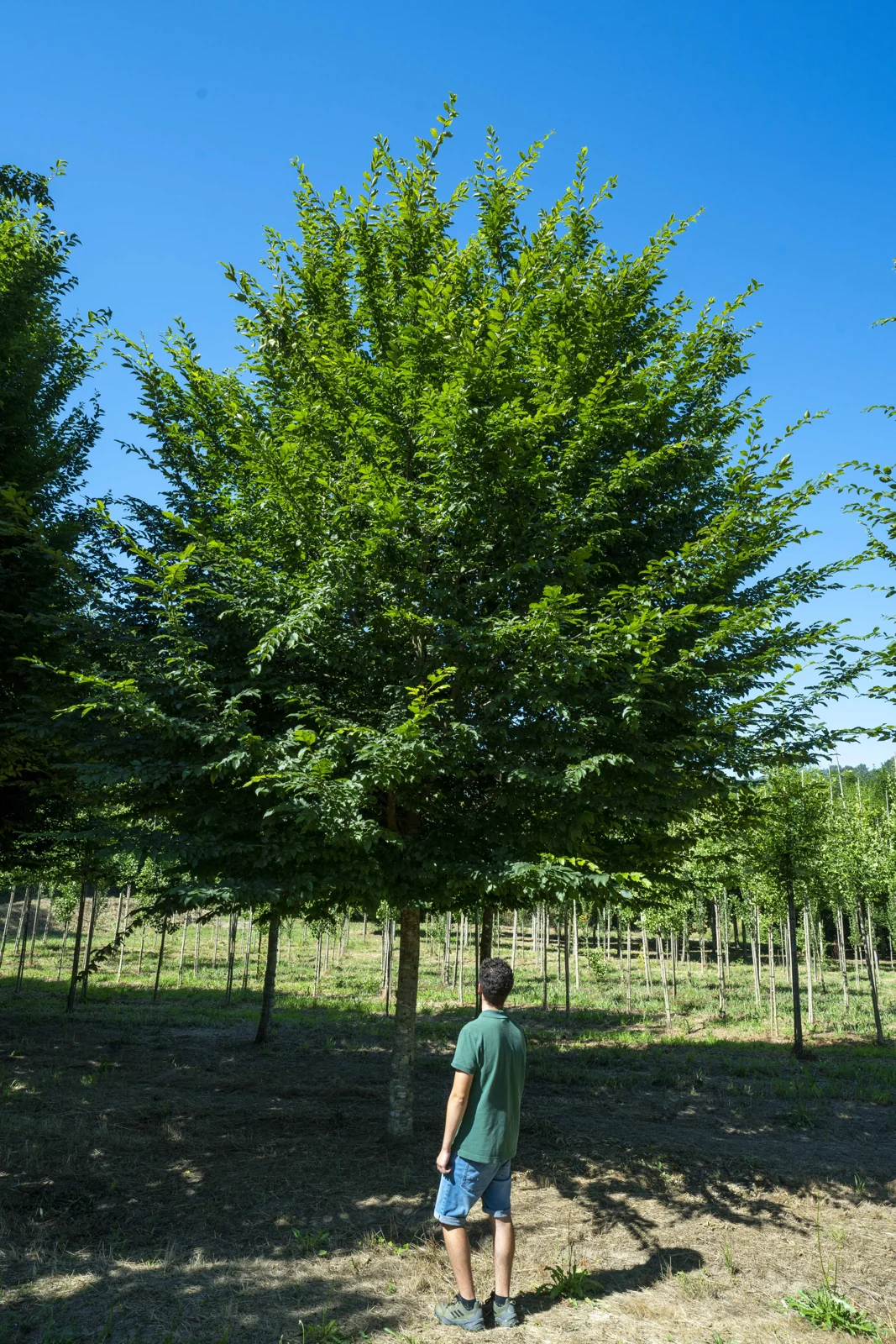
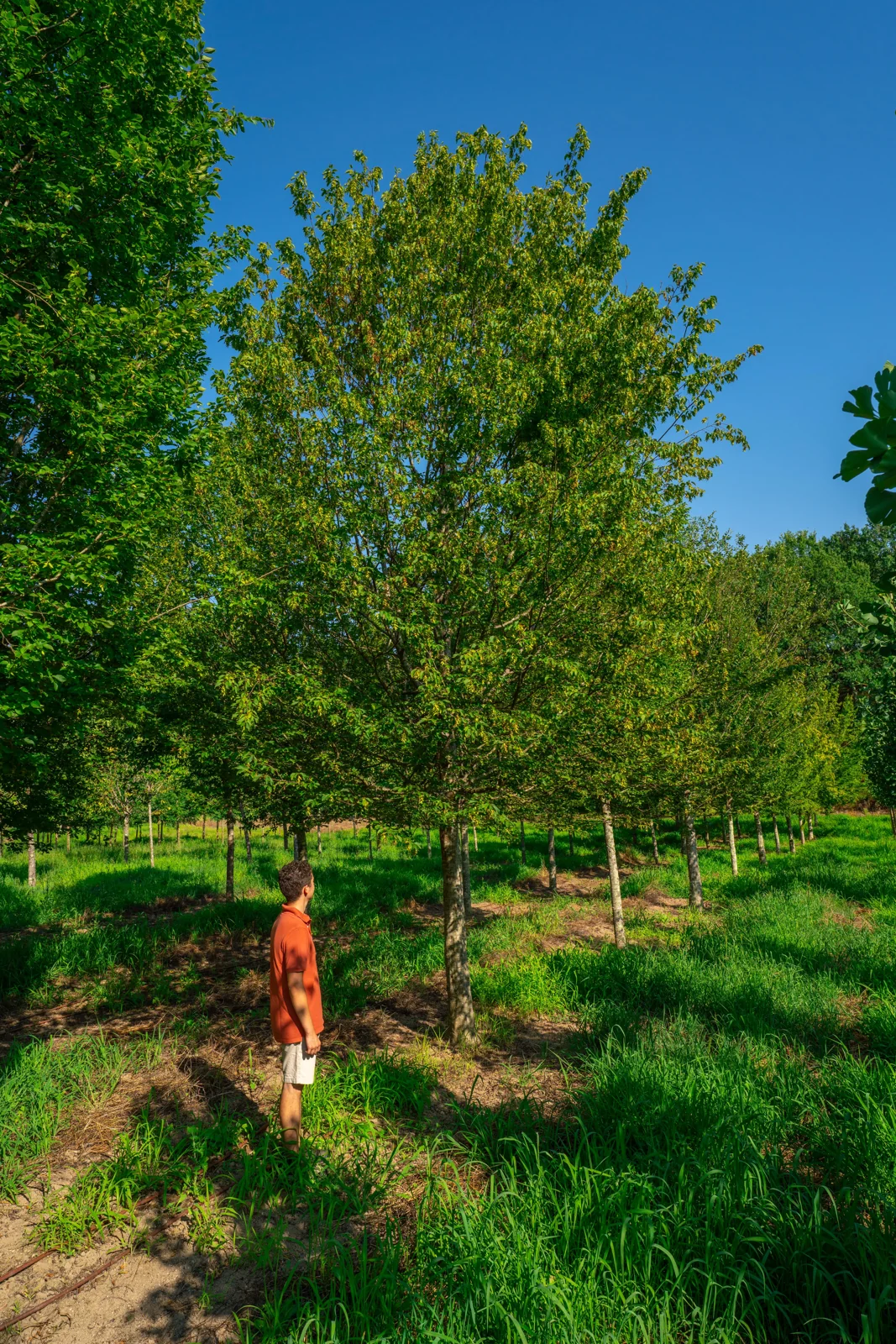
Hornbeam reaches 15 to 25 metres at maturity with a pyramidal crown in youth that broadens to oval-rounded with age and spreads 10 to 15 metres. The dark green, doubly serrated leaves carry a quilted veining that reads cleanly through the growing season with little foliar disease pressure, then turn a clear yellow in autumn. The bark is smooth and grey with…
Read more
Show less
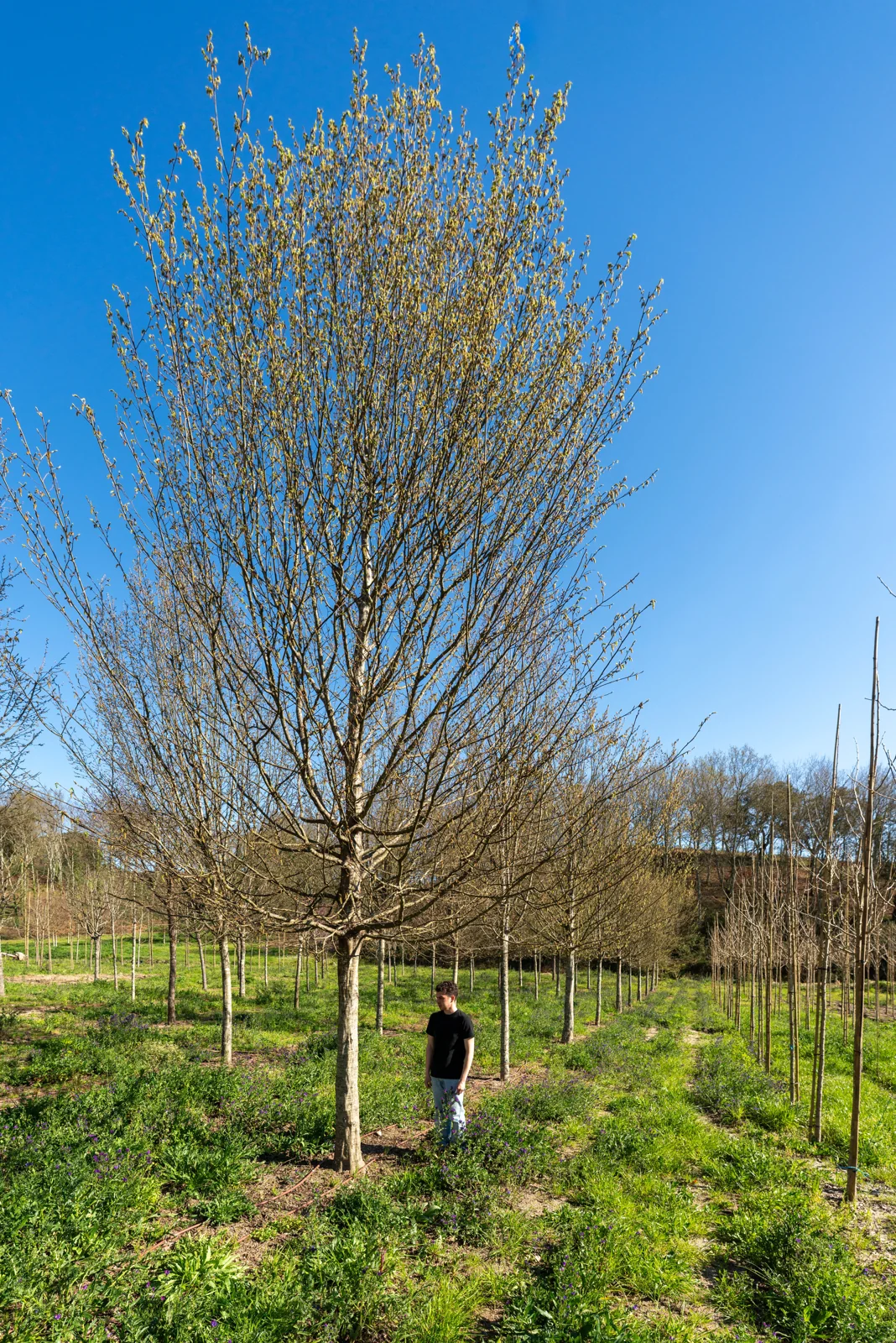
Hornbeam reaches 15 to 25 metres at maturity with a pyramidal crown in youth that broadens to oval-rounded with age and spreads 10 to 15 metres. The dark green, doubly serrated leaves carry a quilted veining that reads cleanly through the growing season with little foliar disease pressure, then turn a clear yellow in autumn. The bark is smooth and grey with a distinctive muscular fluting along the trunk, sufficient on its own to carry winter structure in deciduous schemes.
Winter hardiness extends reliably to about minus 25 °C (USDA zone 5b), with provenance variation carrying eastern stock into zone 4 (below minus 30 °C). Summer behaviour is competent rather than exceptional: the species tolerates prolonged maxima above 35 °C provided root run is adequate, but it is not a drought specialist and underperforms below roughly 500 mm annual rainfall without irrigation. The species performs through the Atlantic, Continental, and warm-temperate zones, with the practical northern limit for unsheltered planting running through southern Scandinavia and the southern Baltic.
Hornbeam's distinctive value sits in its soil tolerance: it performs on heavy clay and accepts seasonally waterlogged ground that excludes Fagus sylvatica, and also handles loam and chalk from moderately acid to alkaline pH. Full sun produces the densest canopy and best autumn colour; partial shade is accepted without loss of structure, making the species viable as understorey to taller canopy. Pollution tolerance and resilience to compacted urban soils support specification in tree pits and avenue alignments where Tilia or Acer platanoides would otherwise be the default.
Growth is medium-paced and the wood is exceptionally hard and dense, which translates in service into slender, long-lived branching and freedom from the limb failures that afflict faster, softer-wooded canopy species. Maintenance demand is low: no serious pest or disease pressure, no significant pruning need when grown as a standard, and tolerance of hard formative cutting where the tree is taken into hedge, pleached avenue, or topiary form. The marcescent leaves retained on clipped specimens through winter make it a structural alternative to Fagus sylvatica wherever soil or moisture conditions exclude beech.



Advice on this species
Want to know more about Carpinus betulus?
Tell us about your project and we'll advise you on this species — where it thrives, which size makes sense, and what to expect once planted.
- Produção própria
- Exemplares adultos
- Resposta em 1–2 dias
Sem compromisso · orçamento personalizado