

Evergreen flowering specimen for sheltered acidic-soil sites
Japanese Camellia · Camellia japonica
A slow-growing evergreen with winter and early-spring flowering, Camellia japonica suits sheltered, semi-shaded positions on acidic, moisture-retentive soils across Atlantic and warm-temperate Europe where prolonged hard frosts are unlikely.
About this Species
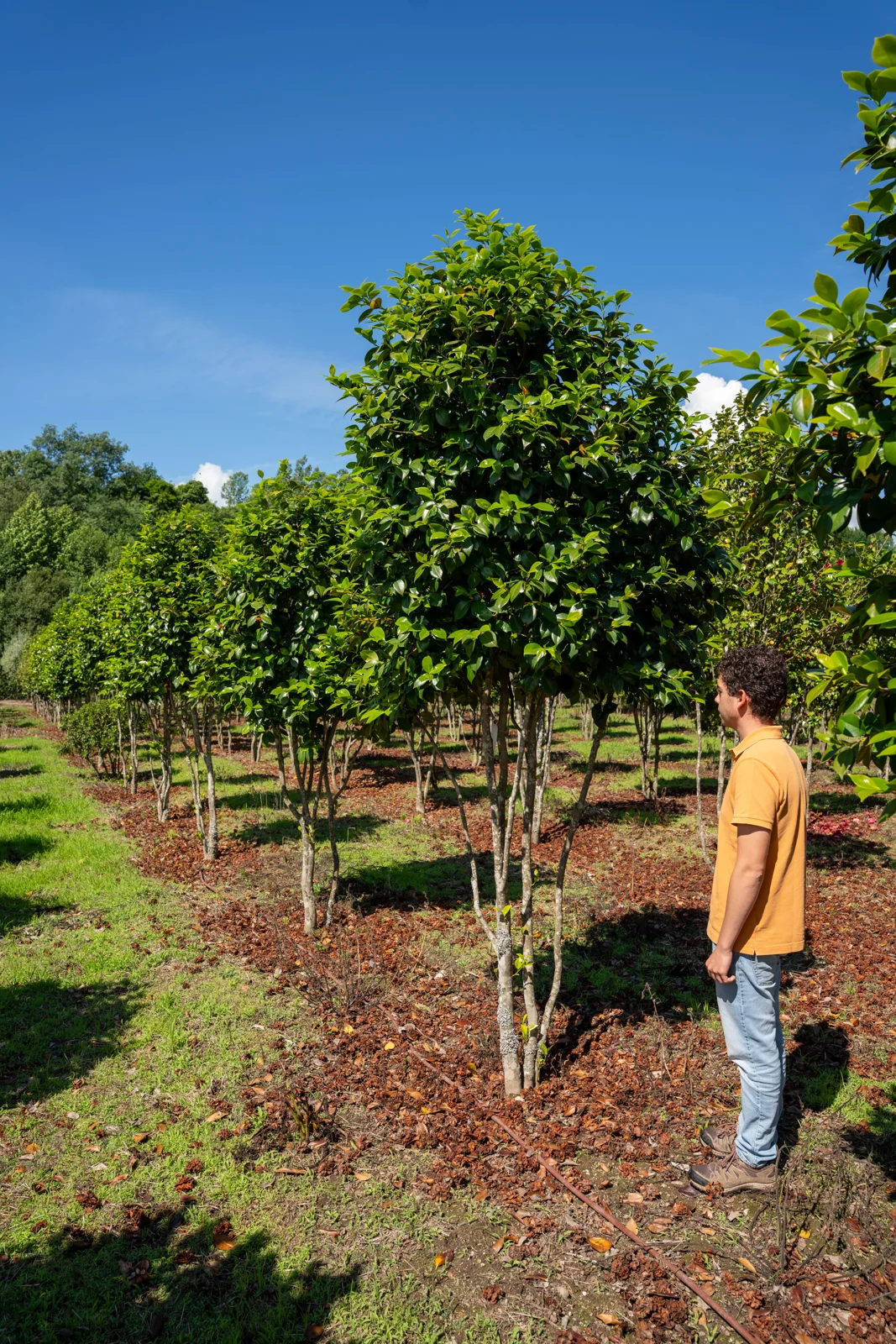
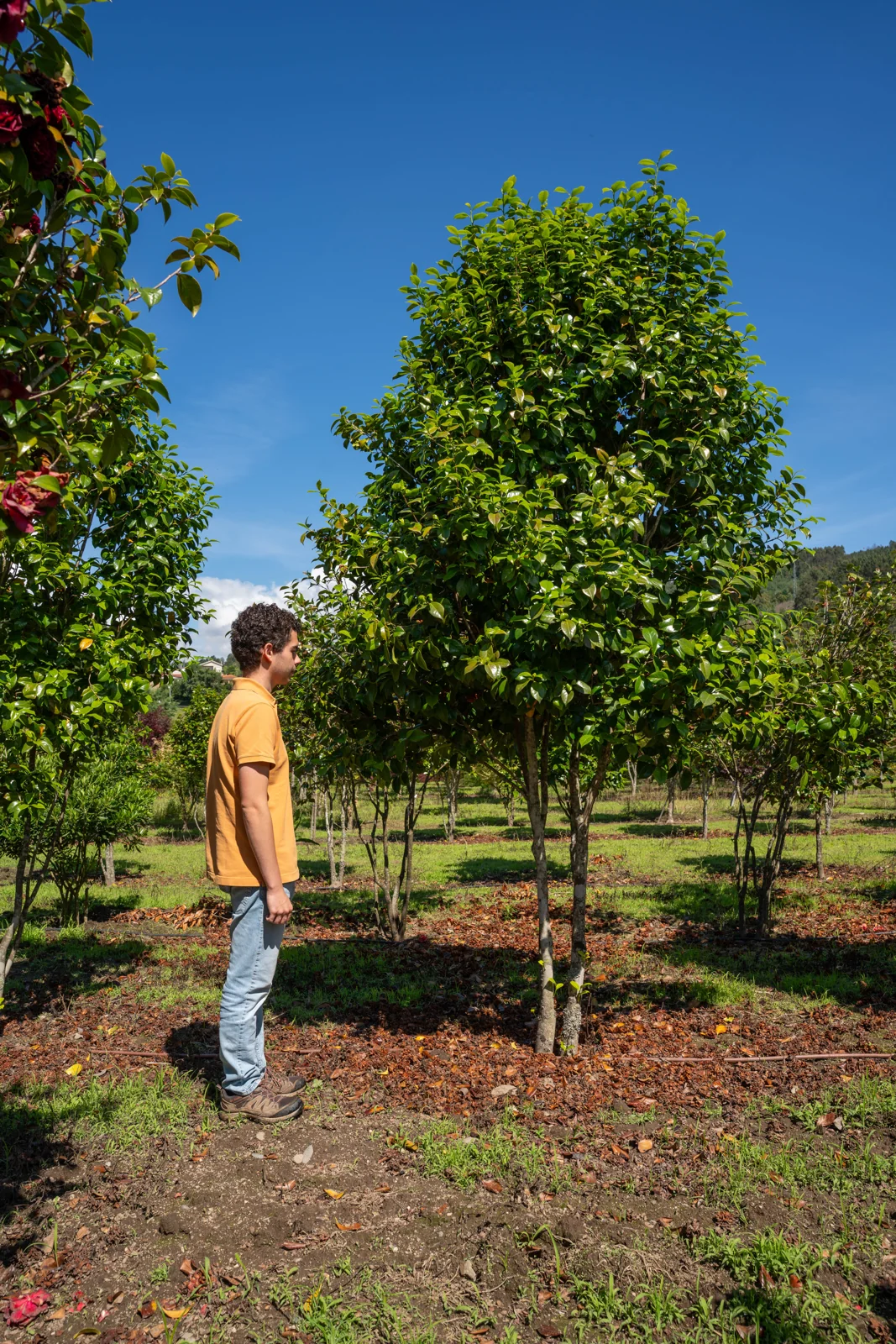
Camellia japonica is an evergreen flowering tree or large shrub from the temperate forests of China, Japan, Korea, and Taiwan, where it grows at 300 to 1,100 m as a mid-storey species under deciduous canopy. Mature specimens reach 3 to 6 m in cultivation and exceptionally 8 to 11 m, with a rounded to upright habit and dense, leathery dark-green foliage.…
Read more
Show less
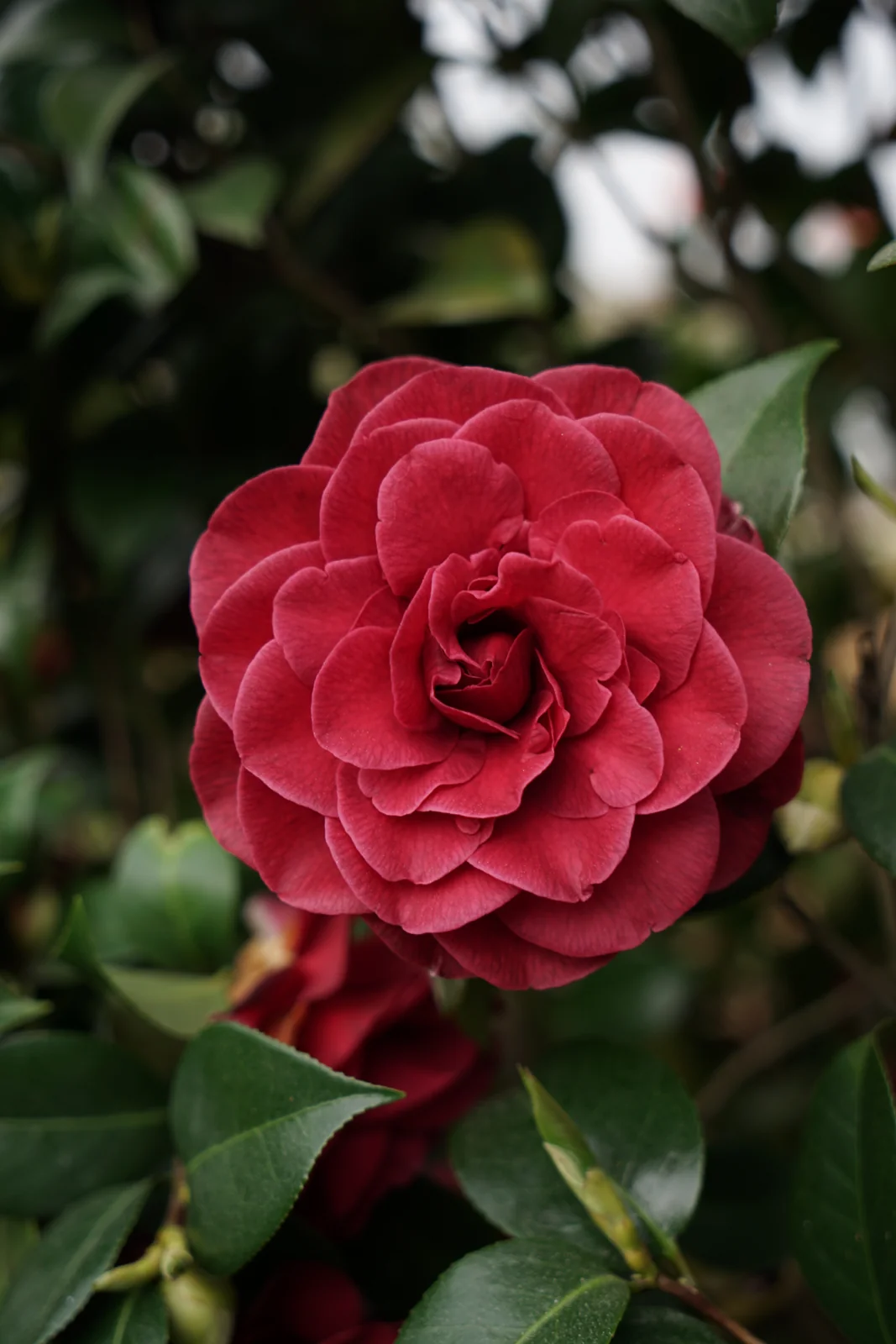
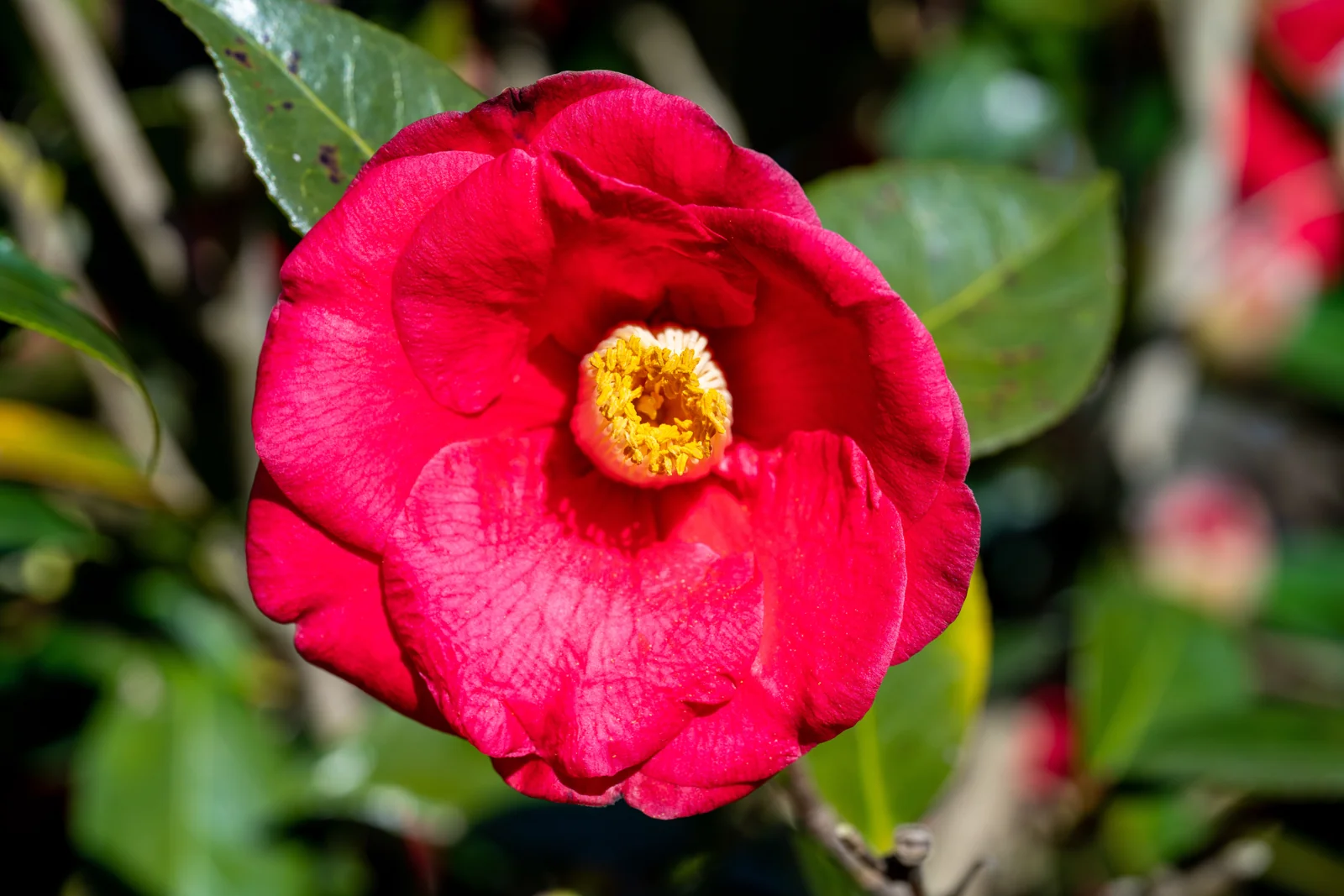
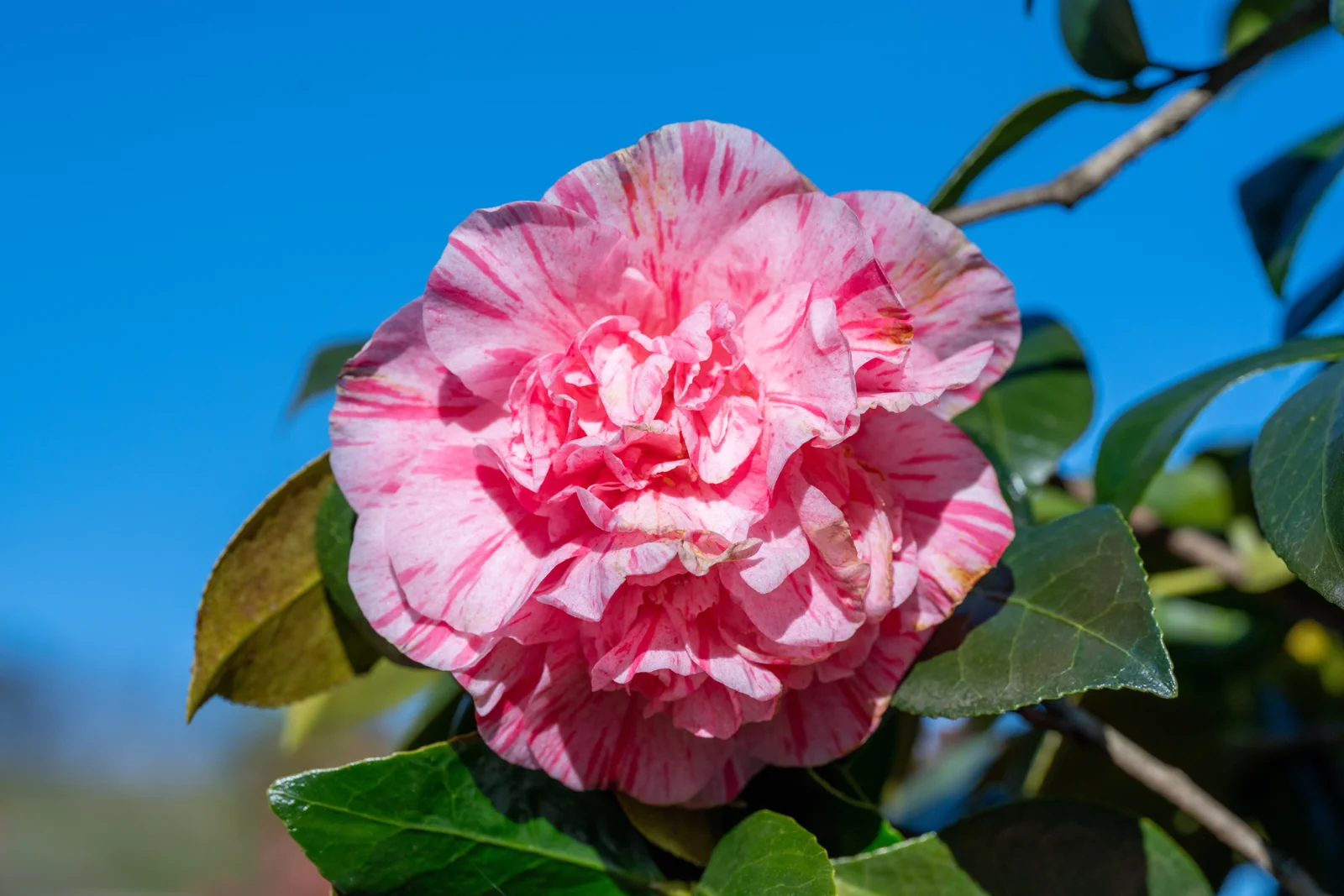
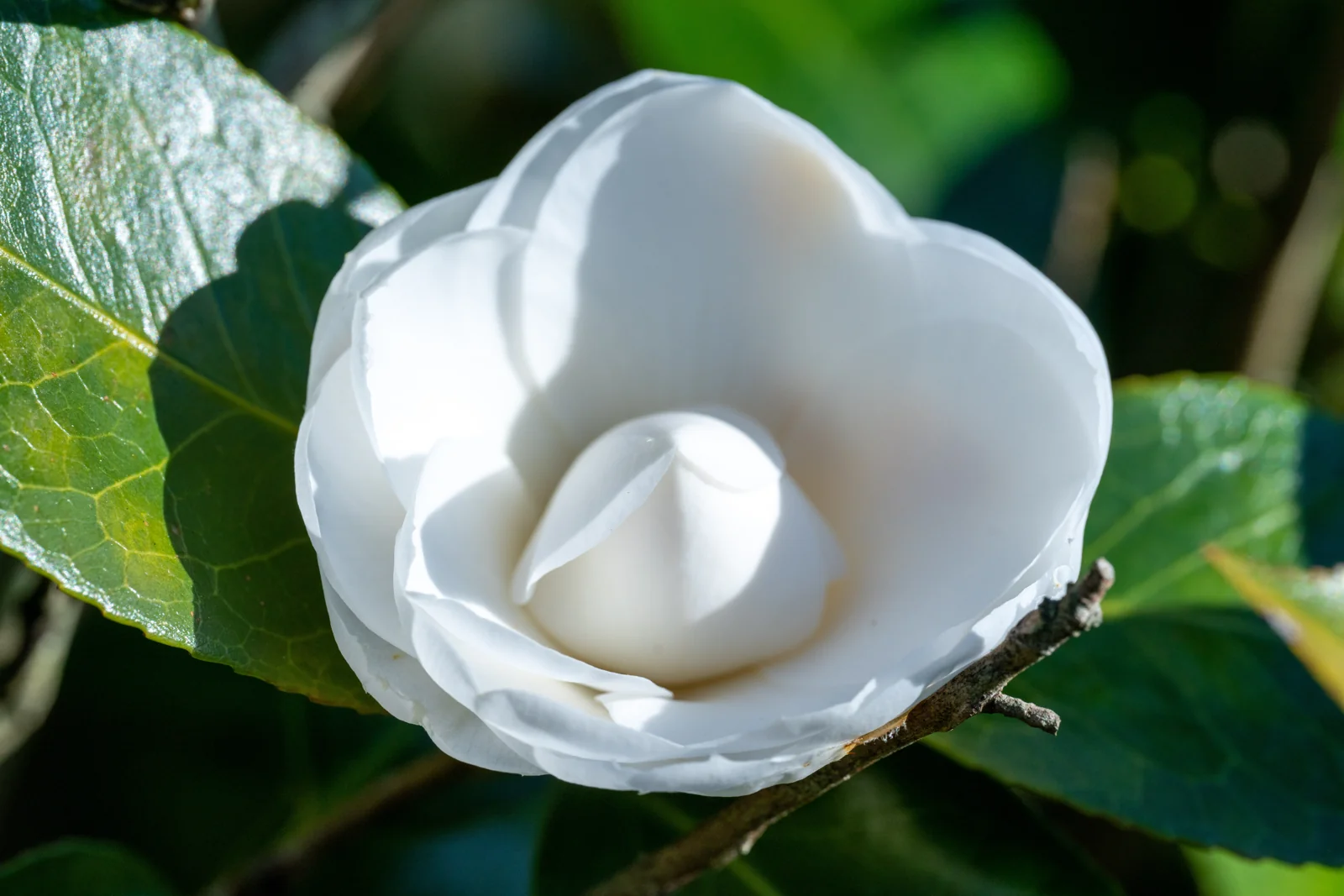
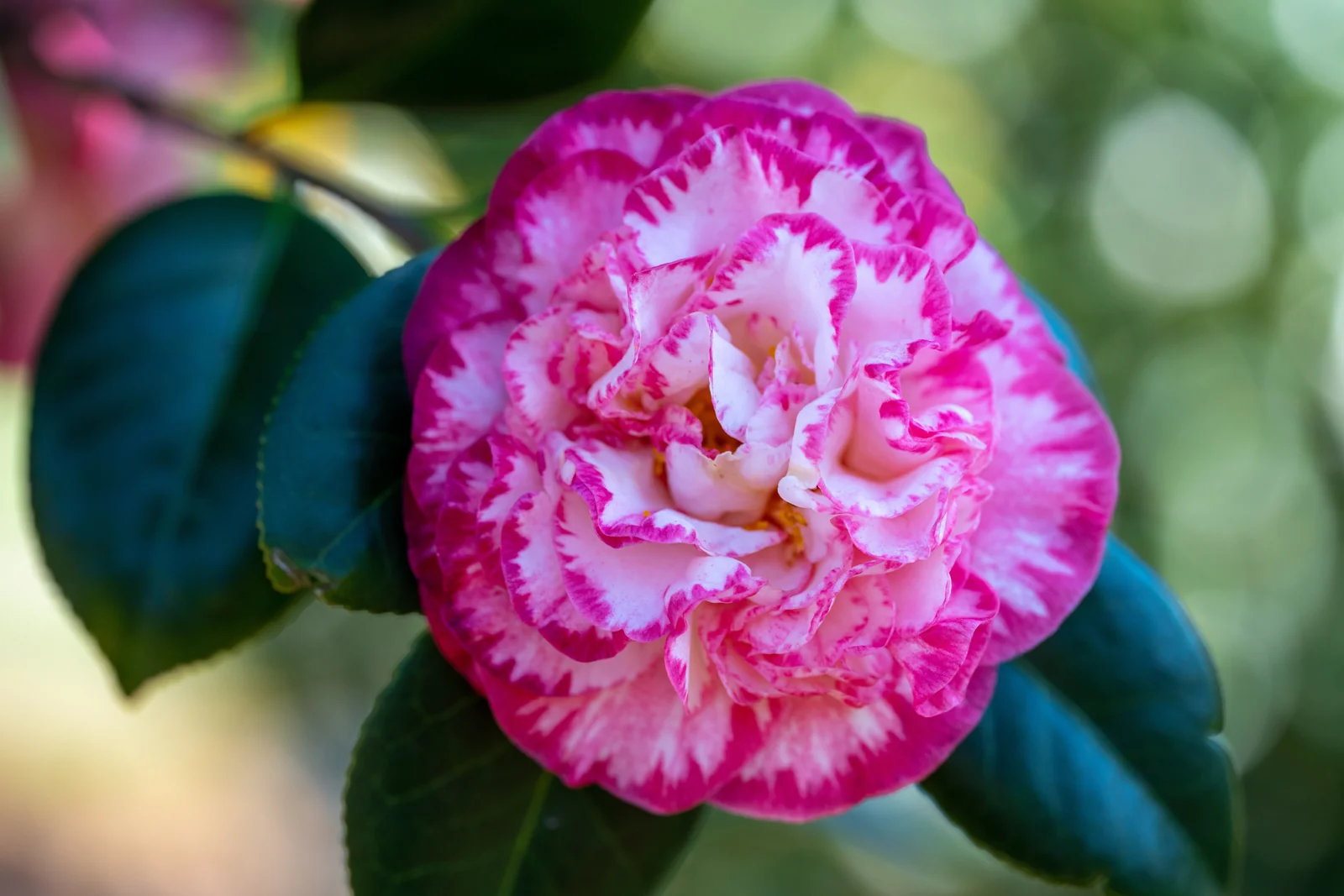
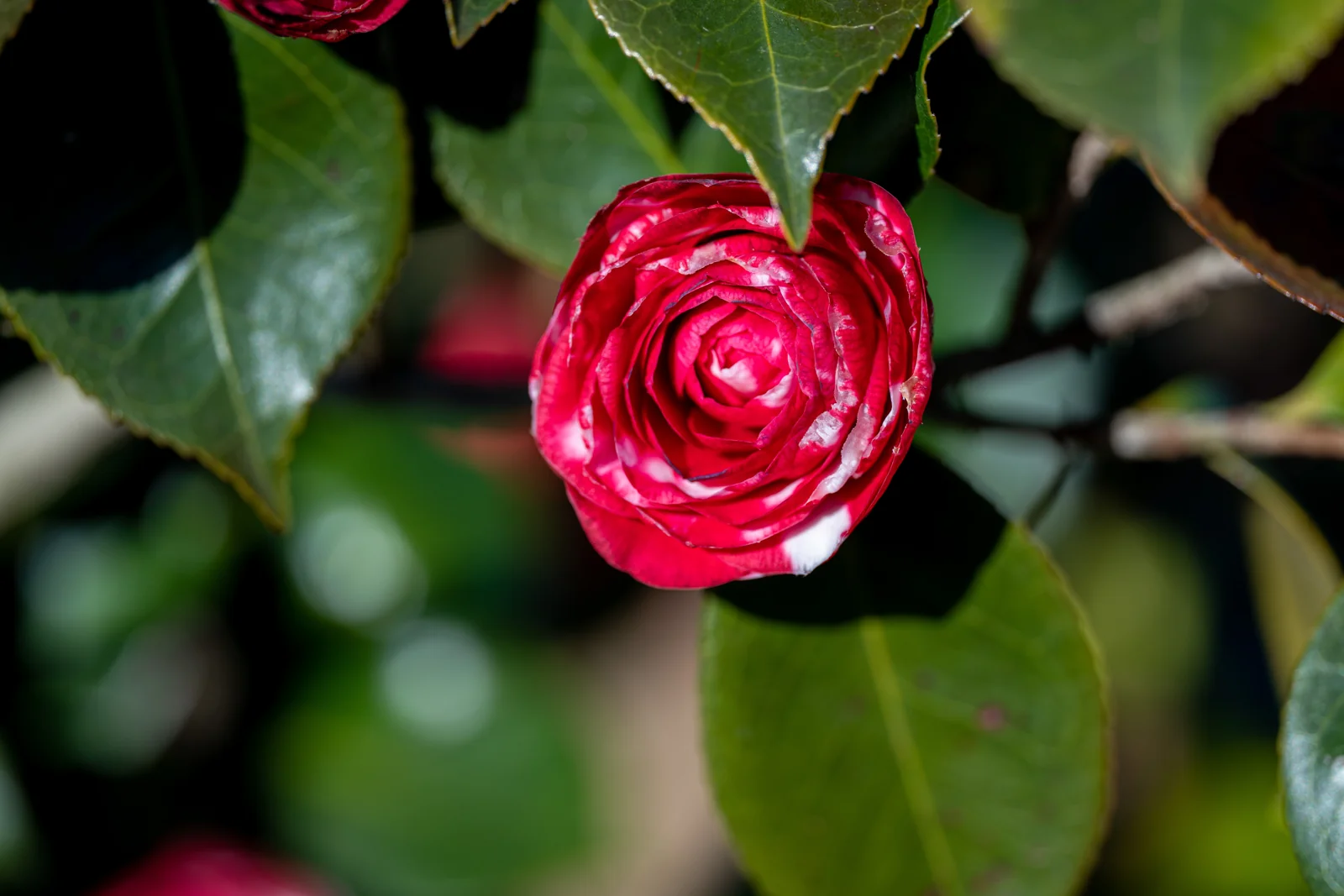
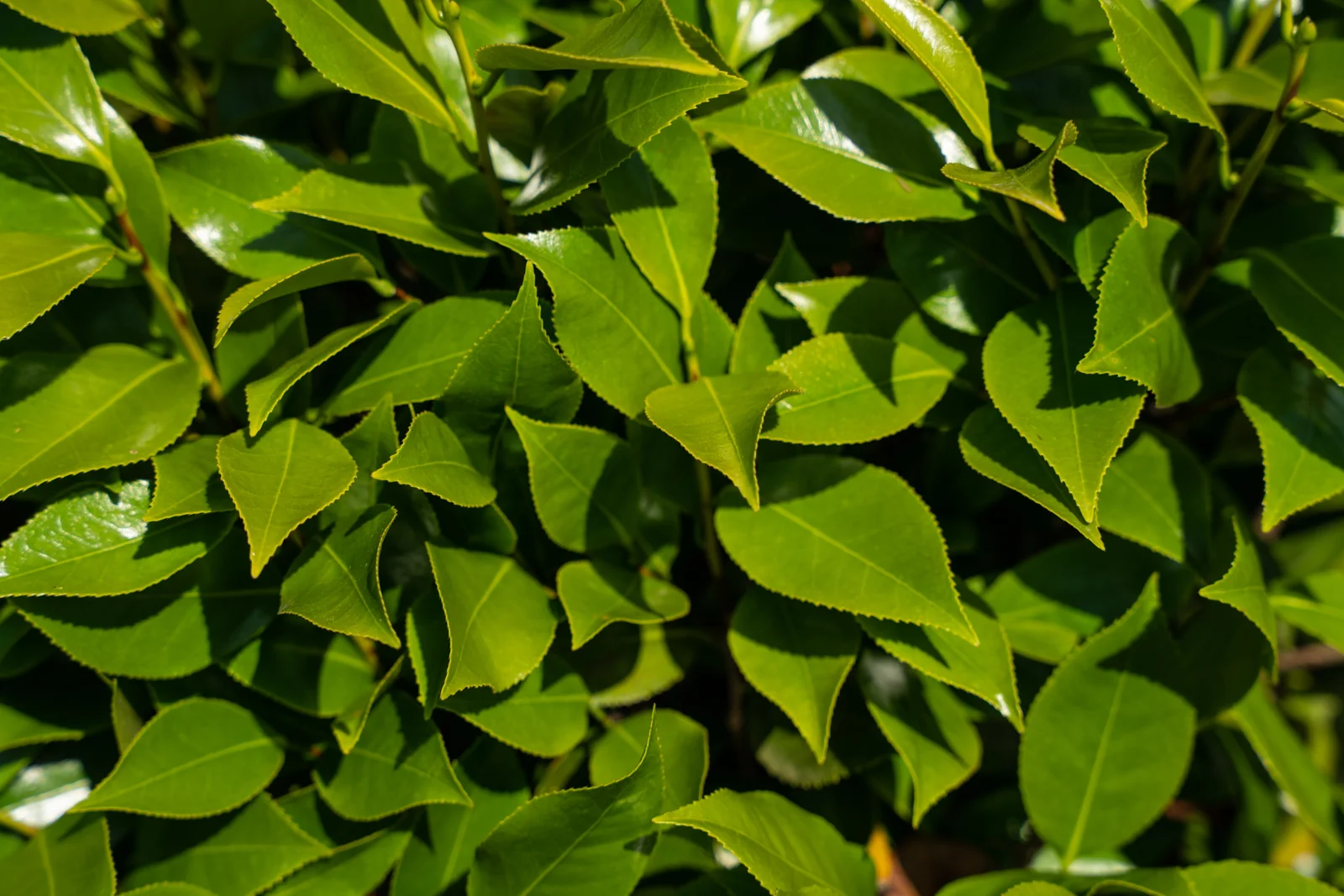
Camellia japonica is an evergreen flowering tree or large shrub from the temperate forests of China, Japan, Korea, and Taiwan, where it grows at 300 to 1,100 m as a mid-storey species under deciduous canopy. Mature specimens reach 3 to 6 m in cultivation and exceptionally 8 to 11 m, with a rounded to upright habit and dense, leathery dark-green foliage. Flowering runs from late winter into early spring, with solitary 6 to 10 cm blooms in red, pink, white, or bicoloured forms.
The climate envelope is Atlantic and warm-temperate: reliably hardy to about minus 15 °C (USDA zone 7b to 8a), with established plants surviving brief excursions toward minus 18 °C where wood is mature. The species is hardier than its flowers, which are easily browned by late-spring frost or rapid thawing in early-morning sun, so the practical northern and eastern limit sits where sharp April frosts are routine. Reliable in coastal and lowland zones of Ireland, western Britain, the Atlantic seaboard of France, the Low Countries, north-western Iberia, and the milder pockets of the Italian lakes; marginal east of a line through Berlin and north of central Scotland without wall protection.
Specify acidic to neutral, moisture-retentive but free-draining soil; the species is intolerant of waterlogging, lime, and salt. Light is the key site decision: partial to full shade is preferred, ideally under high deciduous canopy that reduces summer evaporative load and softens spring frost events. Avoid east-facing positions, where blooms damaged overnight cannot recover, and avoid open exposure to cold drying winds.
Growth is slow and predictable, which makes the species a defensible specification where evergreen structure is required without the long-term scale of Quercus or Tilia. Disease pressure is moderate: leaf gall, flower blight, and root rot follow poor drainage rather than intrinsic susceptibility. For a sheltered entrance, a shaded courtyard, a screening element on a north or west aspect, or a container subject for hospitality and estate projects, no other broadleaf evergreen of comparable flowering season occupies the same niche at this latitude.



Advice on this species
Want to know more about Camellia japonica?
Tell us about your project and we'll advise you on this species — where it thrives, which size makes sense, and what to expect once planted.
- Produção própria
- Exemplares adultos
- Resposta em 1–2 dias
Sem compromisso · orçamento personalizado