

White-barked cool-climate specimen for cool-summer European schemes
Himalayan Birch ‘Jacquemontii’ · Betula utilis ‘Jacquemontii’
A white-barked selection of the Himalayan birch chosen for the brilliance of its peeling chalk-white trunk, specified across cool-summer European climates as a structural light-canopy specimen for parks, courtyards, and architectural plantings.
Key Facts
About this Cultivar
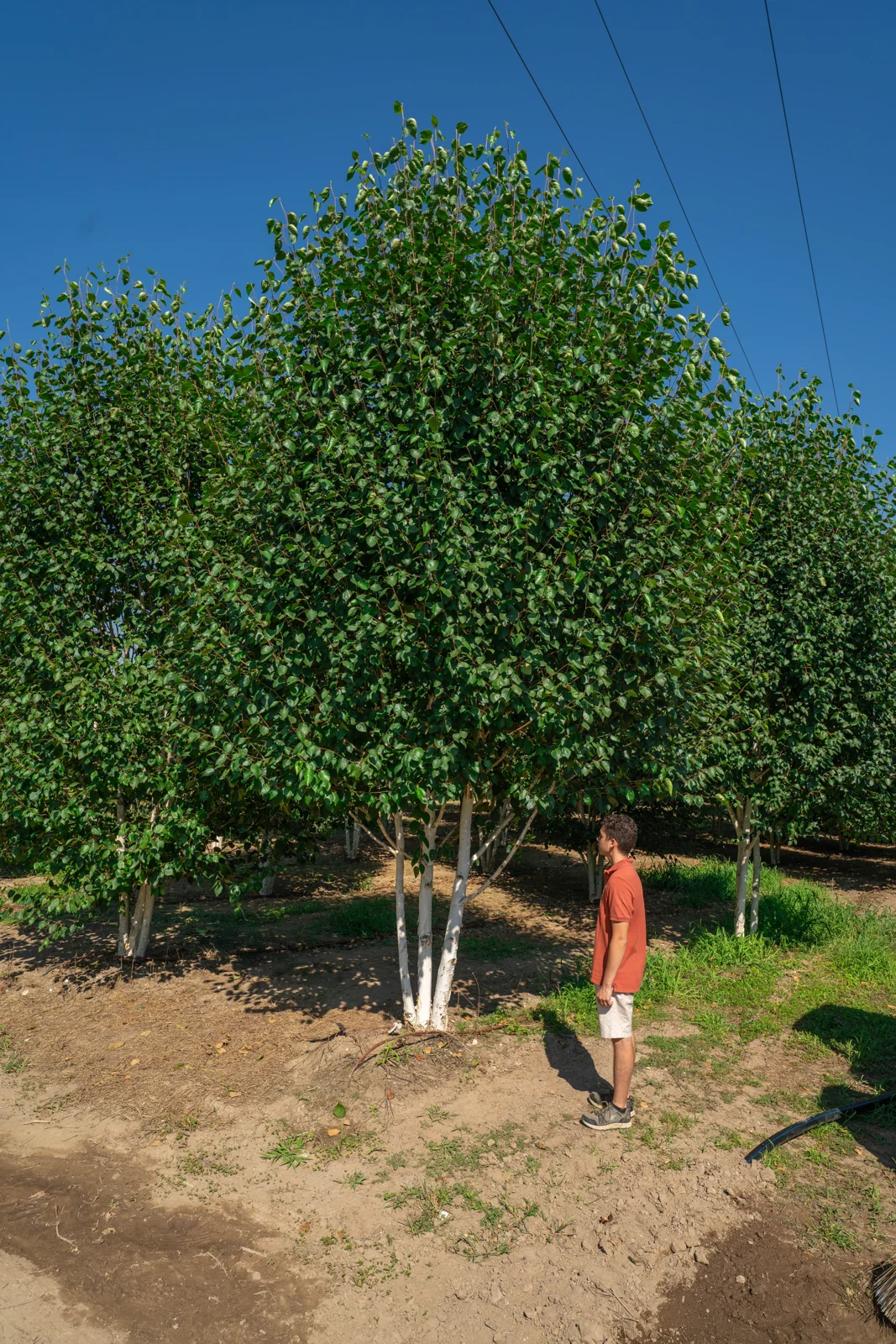
The cultivar carries the white-barked western Himalayan form of Betula utilis, with a smooth, chalk-white trunk that peels in fine horizontal lamellae and reads cleanly against built backdrops in every season. Crown habit is an open, light pyramid maturing to a softer oval; ovate, doubly serrate leaves run yellow-green through summer and turn clean…
Read more
Show less
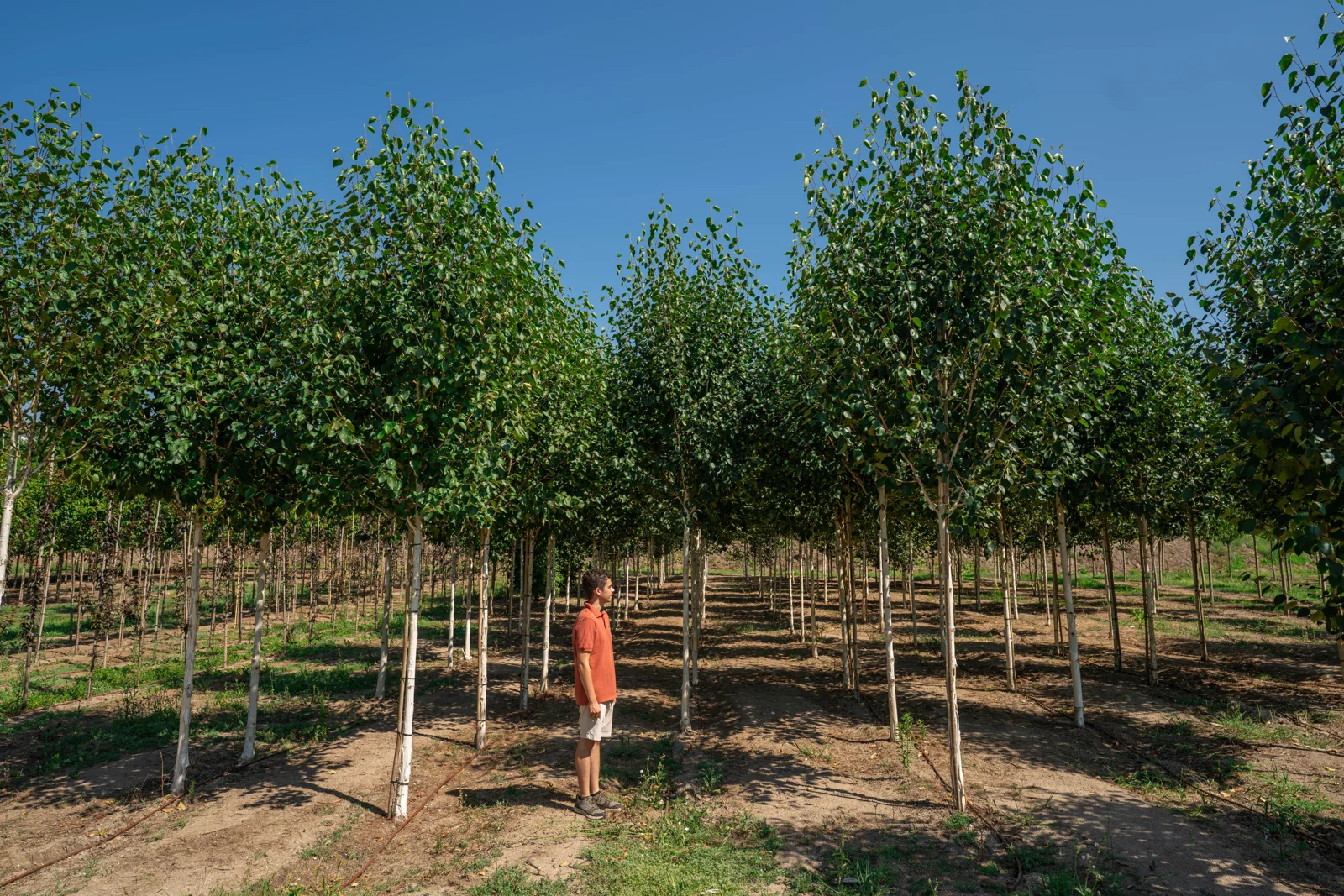
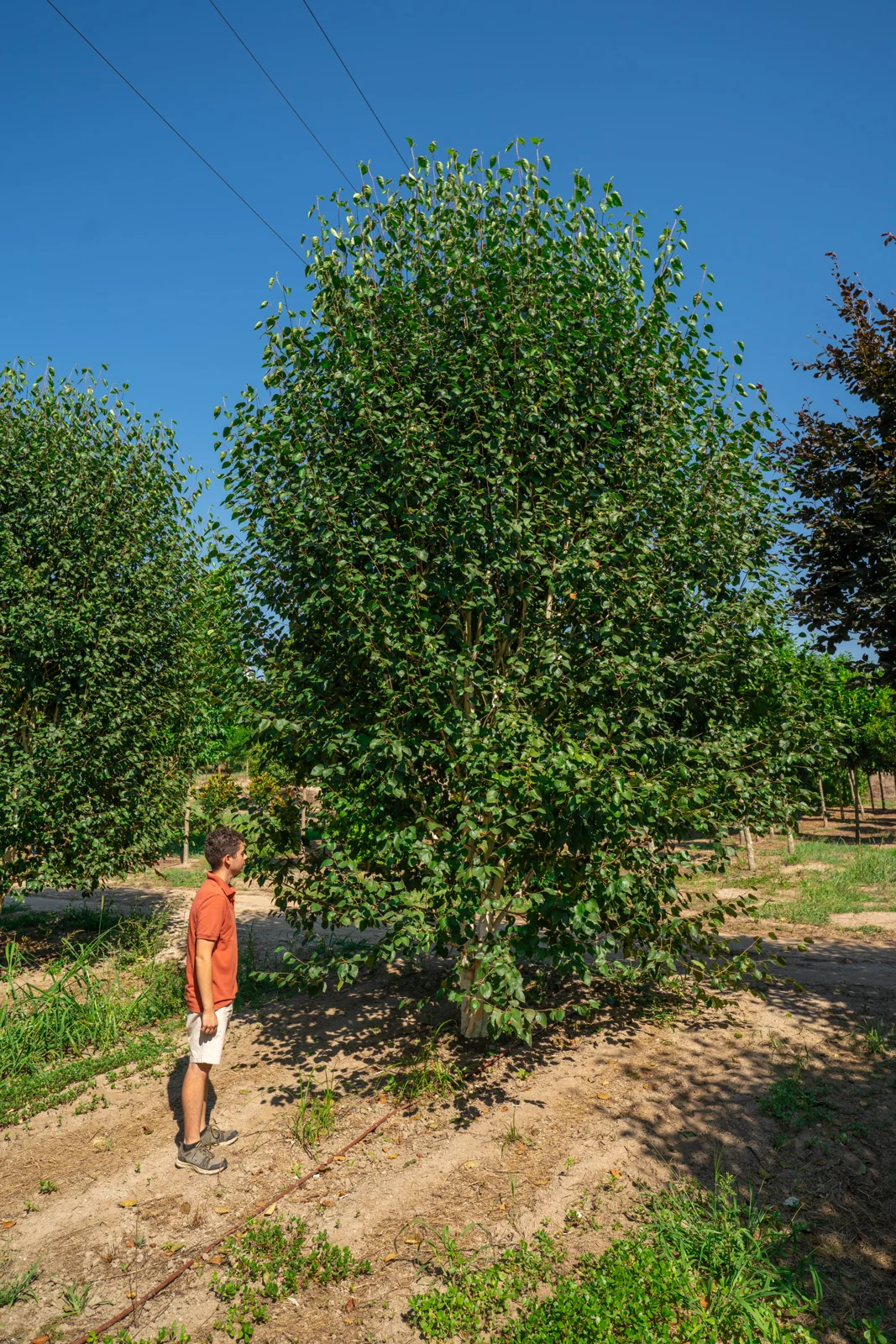
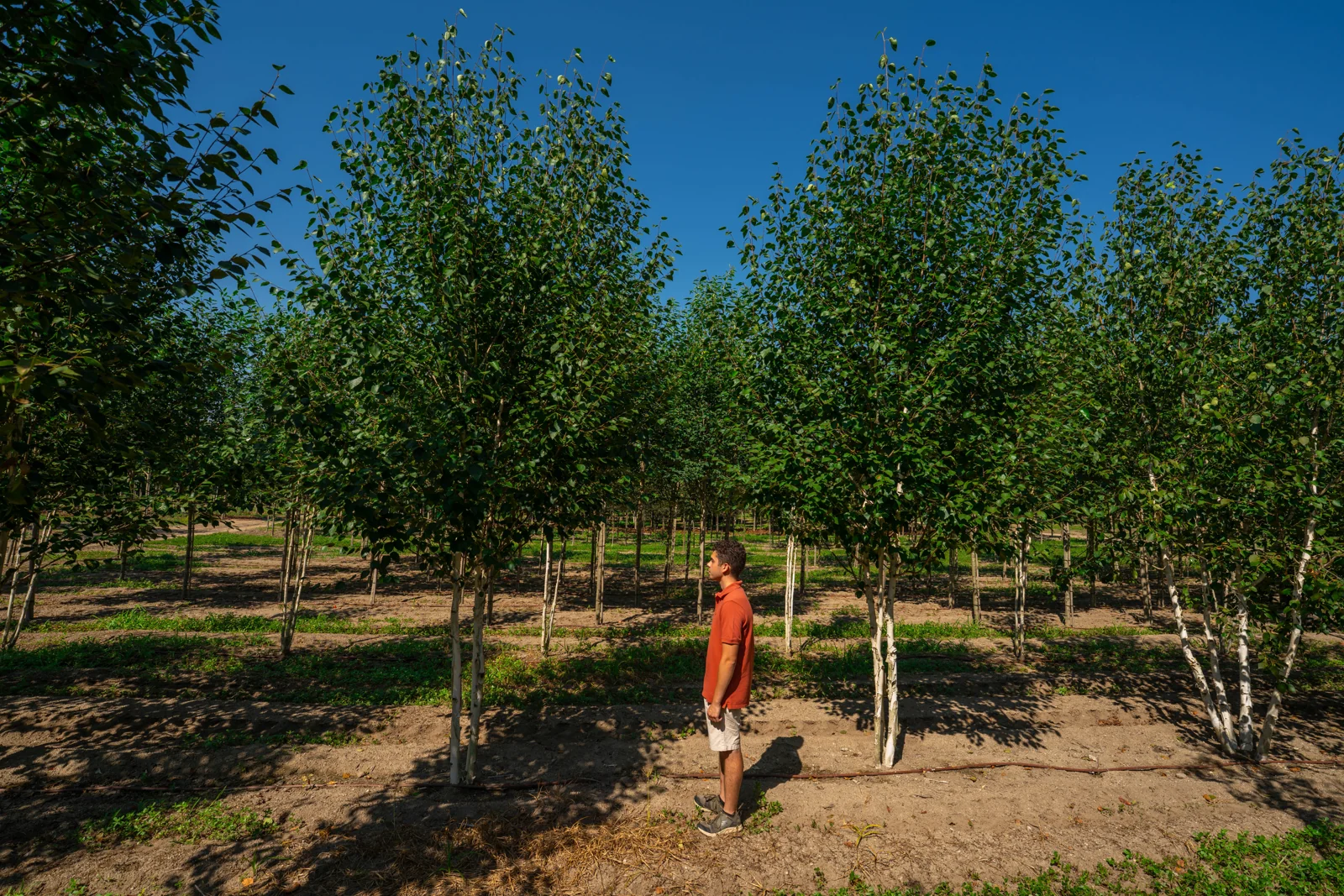
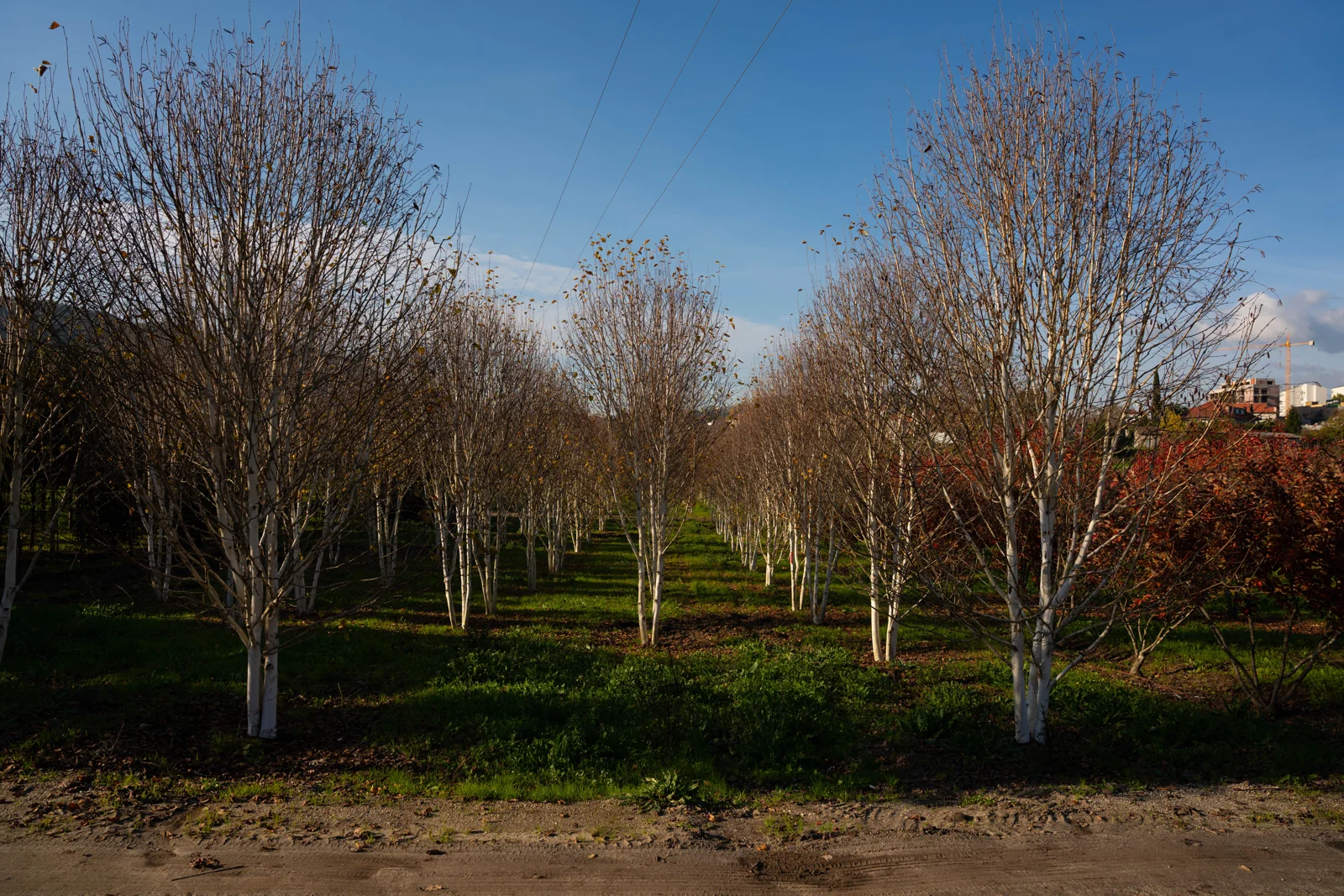
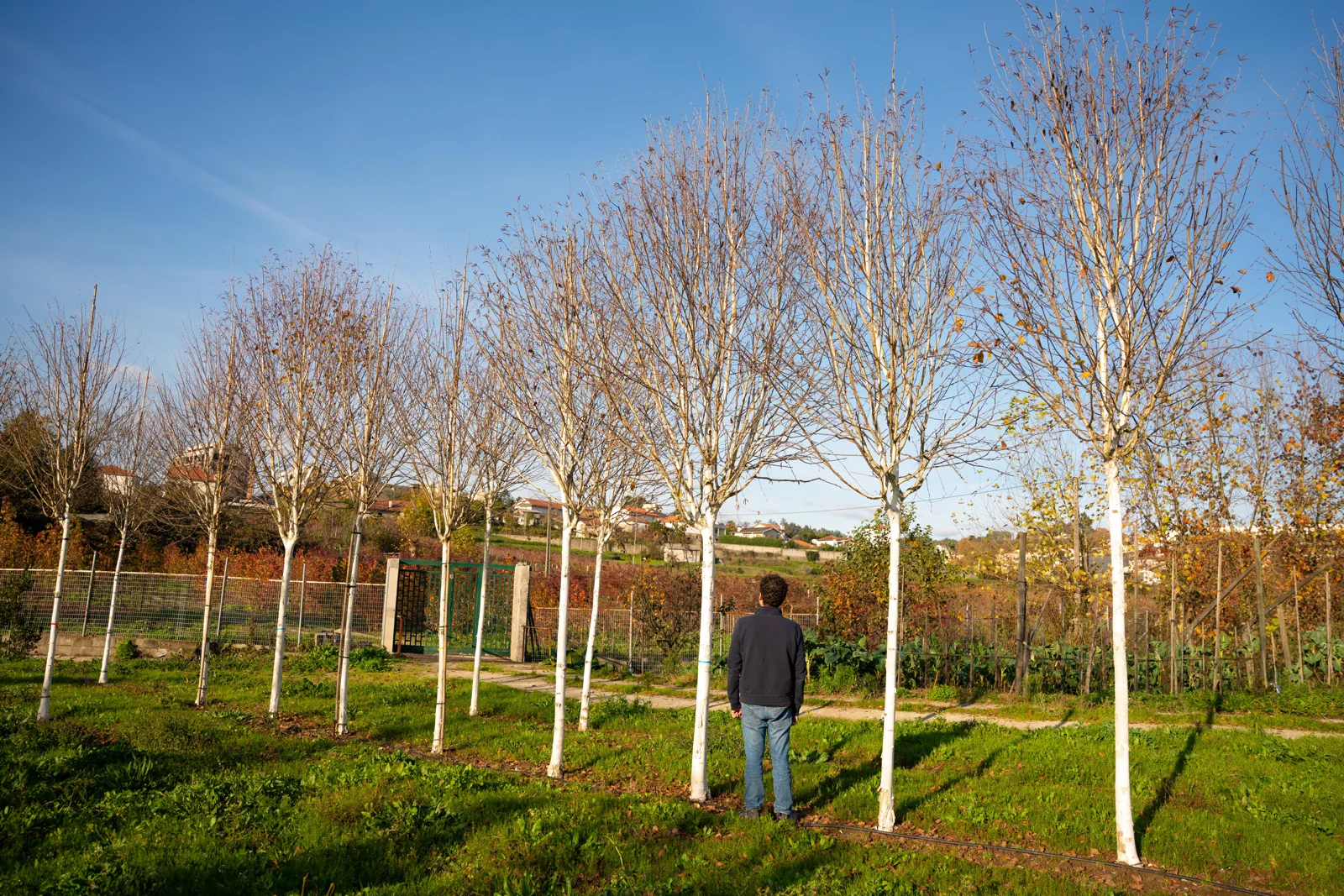
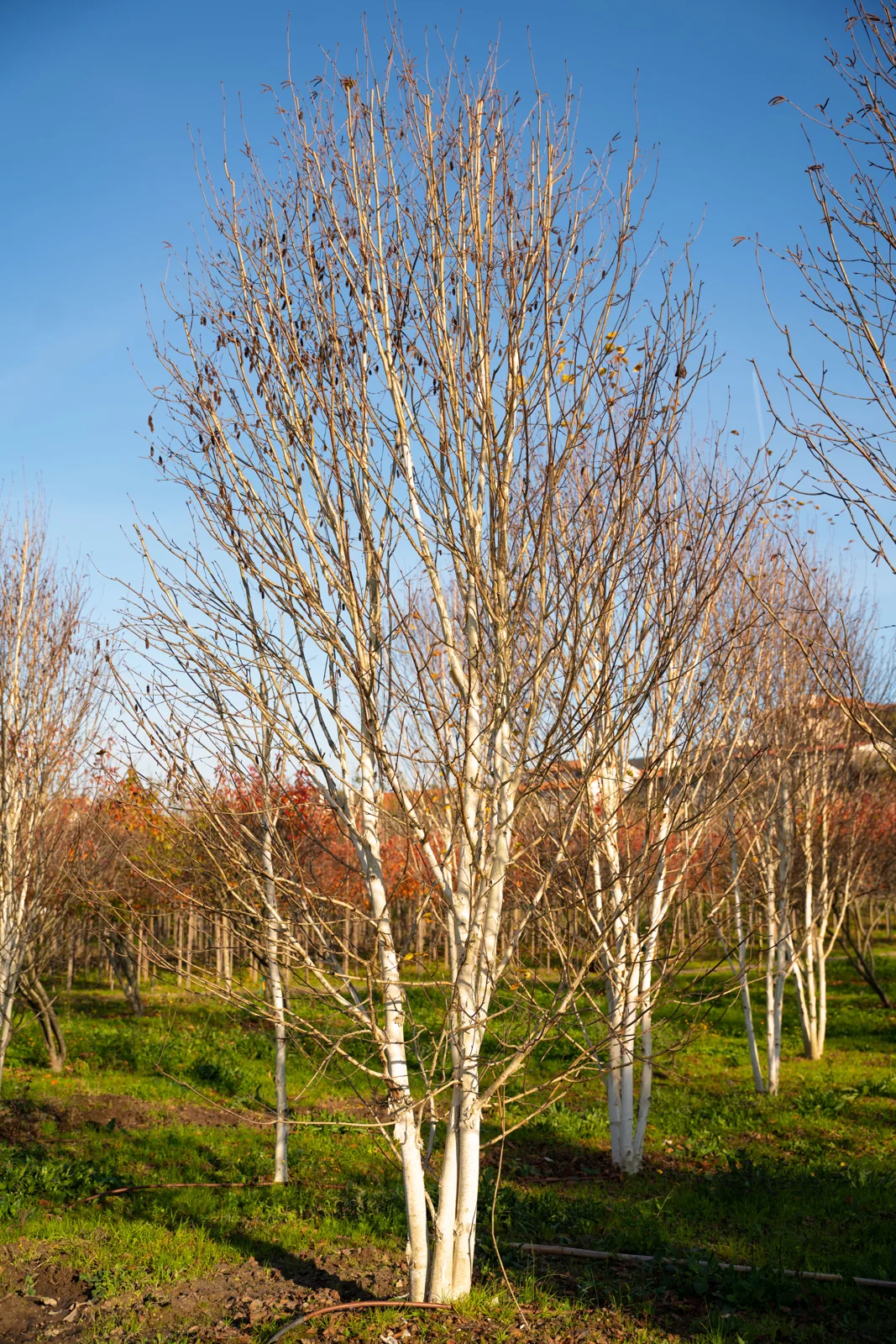
The cultivar carries the white-barked western Himalayan form of Betula utilis, with a smooth, chalk-white trunk that peels in fine horizontal lamellae and reads cleanly against built backdrops in every season. Crown habit is an open, light pyramid maturing to a softer oval; ovate, doubly serrate leaves run yellow-green through summer and turn clean butter-yellow in autumn. Mature dimensions in cultivation sit around 10 to 15 m in height with a 6 to 8 m spread, and multi-stem framings are routine.
Climate envelope is the determining specification variable. The species descends from the high Himalaya, where it depends on snowmelt rather than warm-season rainfall, and it performs best where summers stay cool and roots remain consistently moist. It is reliably winter-hardy to approximately minus 25 °C (USDA zone 5), with the parent species cited as hardy into zone 4; heat performance, by contrast, is weak. Prolonged summer maxima above 32 to 35 °C combined with low atmospheric moisture stress the tree and predispose it to bronze birch borer, the principal failure pathway in hot continental and Mediterranean settings.
This makes it a confident specification across Atlantic and Boreal Europe, through the cool-summer continental belt, and into alpine and pre-alpine valleys: coastal Netherlands, Belgium, the British Isles and Ireland, the Nordic and Baltic coasts, the Po valley fringes, and central European uplands. South of a line through the central Po valley or the Pannonian basin, and in any Mediterranean lowland, plant only on sheltered north or east aspects with assured irrigation; in continental zones with summer maxima regularly above 35 °C, specify an alternative birch.
Site preferences are clear: full sun, deep moist soil with reliable drainage, and root zones kept cool by underplanting or mulch. The species accepts acidic, sandy, or clay substrates provided water-holding capacity is adequate, and tolerates moderate urban exposure. Pruning is minimal and confined to the dormant period, never spring sap rise. Specified within its climate envelope, it functions as a year-round structural piece: golden in October, ghost-white through winter, and an animated light canopy across the growing season.
Advice on this species
Want to know more about Betula utilis 'Jacquemontii'?
Tell us about your project and we'll advise you on this species — where it thrives, which size makes sense, and what to expect once planted.
- Produção própria
- Exemplares adultos
- Resposta em 1–2 dias
Sem compromisso · orçamento personalizado