

Japanese maple cultivar for intense scarlet autumn colour
Japanese Maple ‘Osakazuki’ · Acer palmatum ‘Osakazuki’
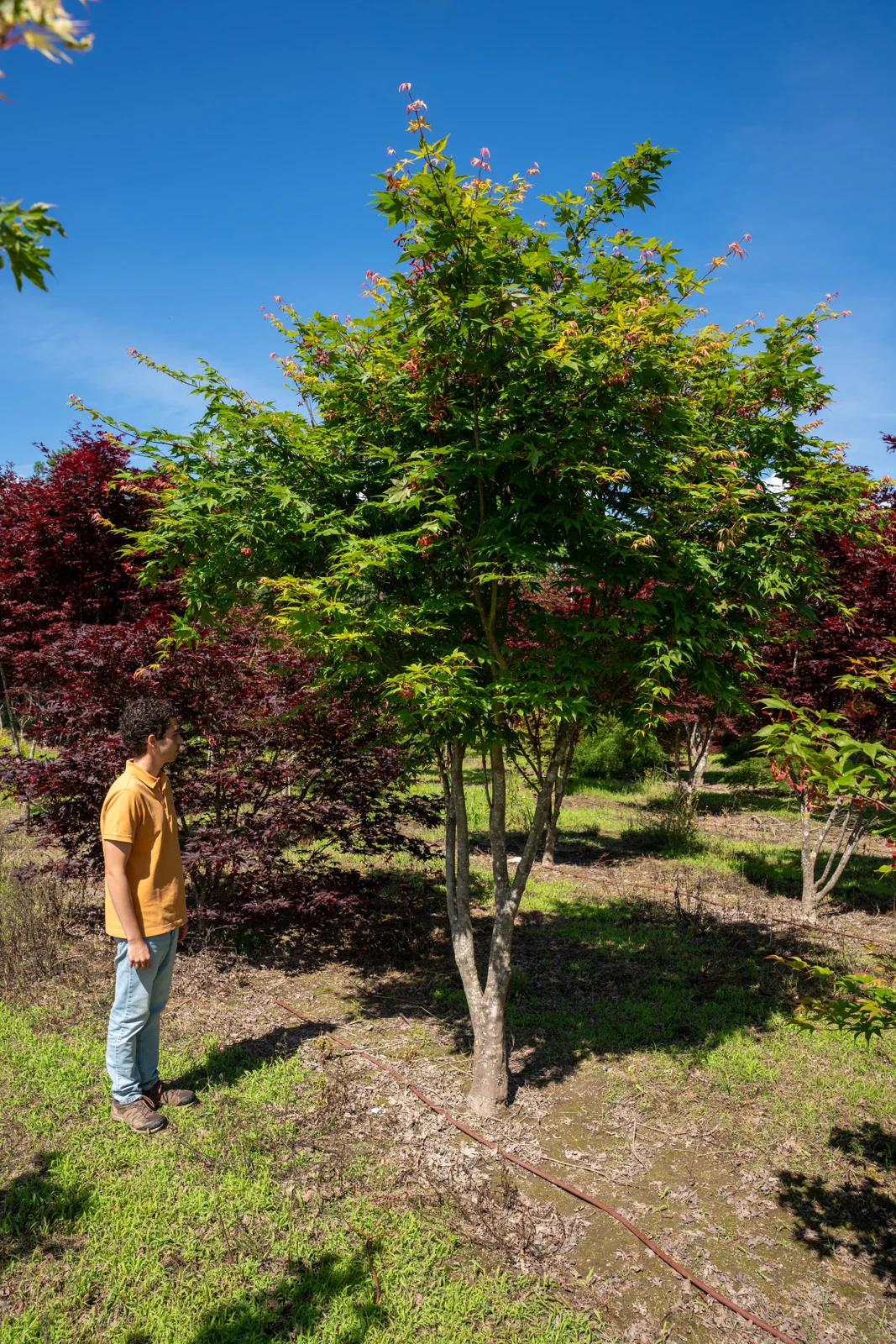
A cultivar specifiable where autumn colour drives the brief: palmate, undissected leaves, vase to rounded habit, scarlet to crimson autumn colour among the most intense within the species, hardy to approximately minus 18 degrees Celsius (USDA zone 7a).
Key Facts
About this Cultivar
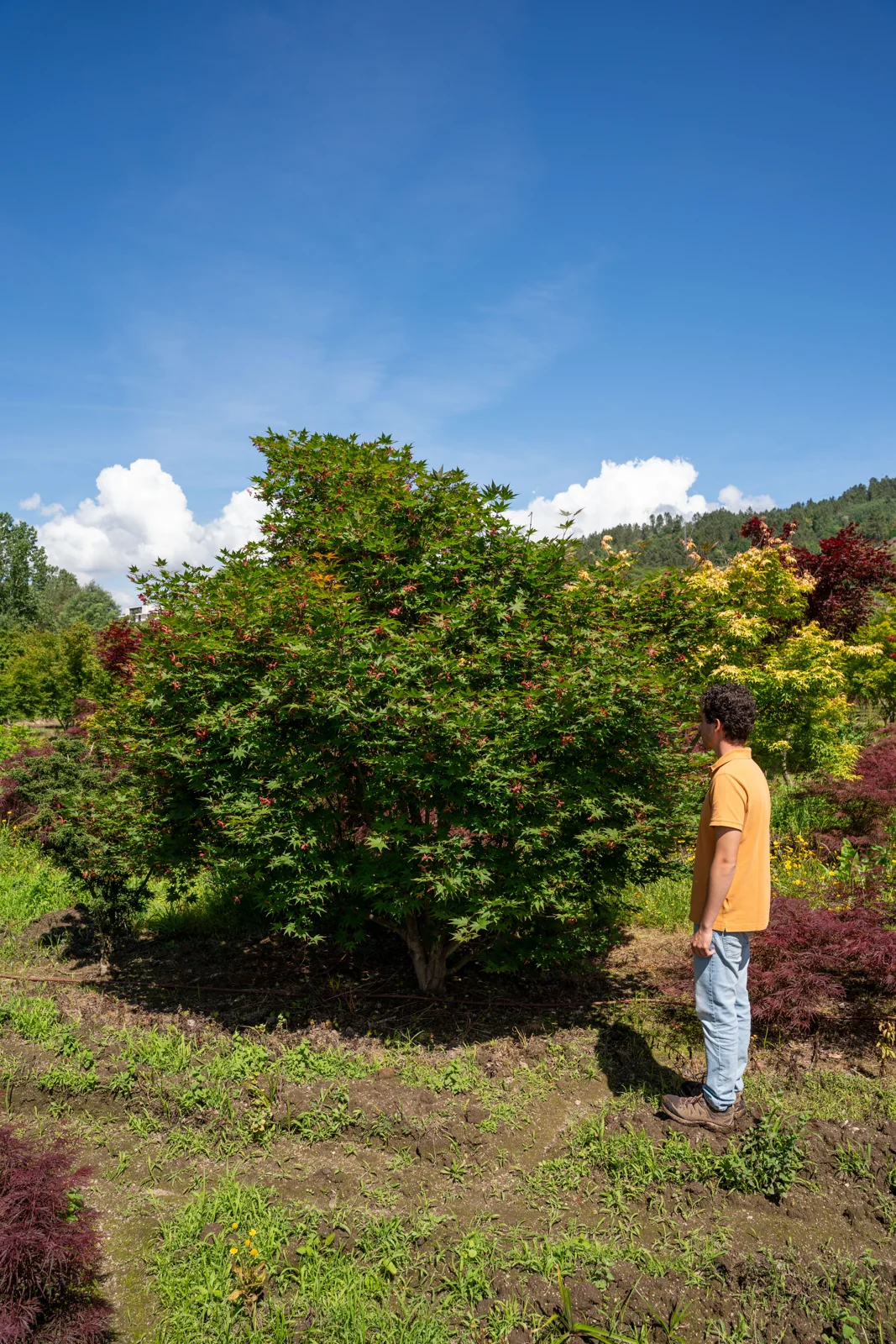
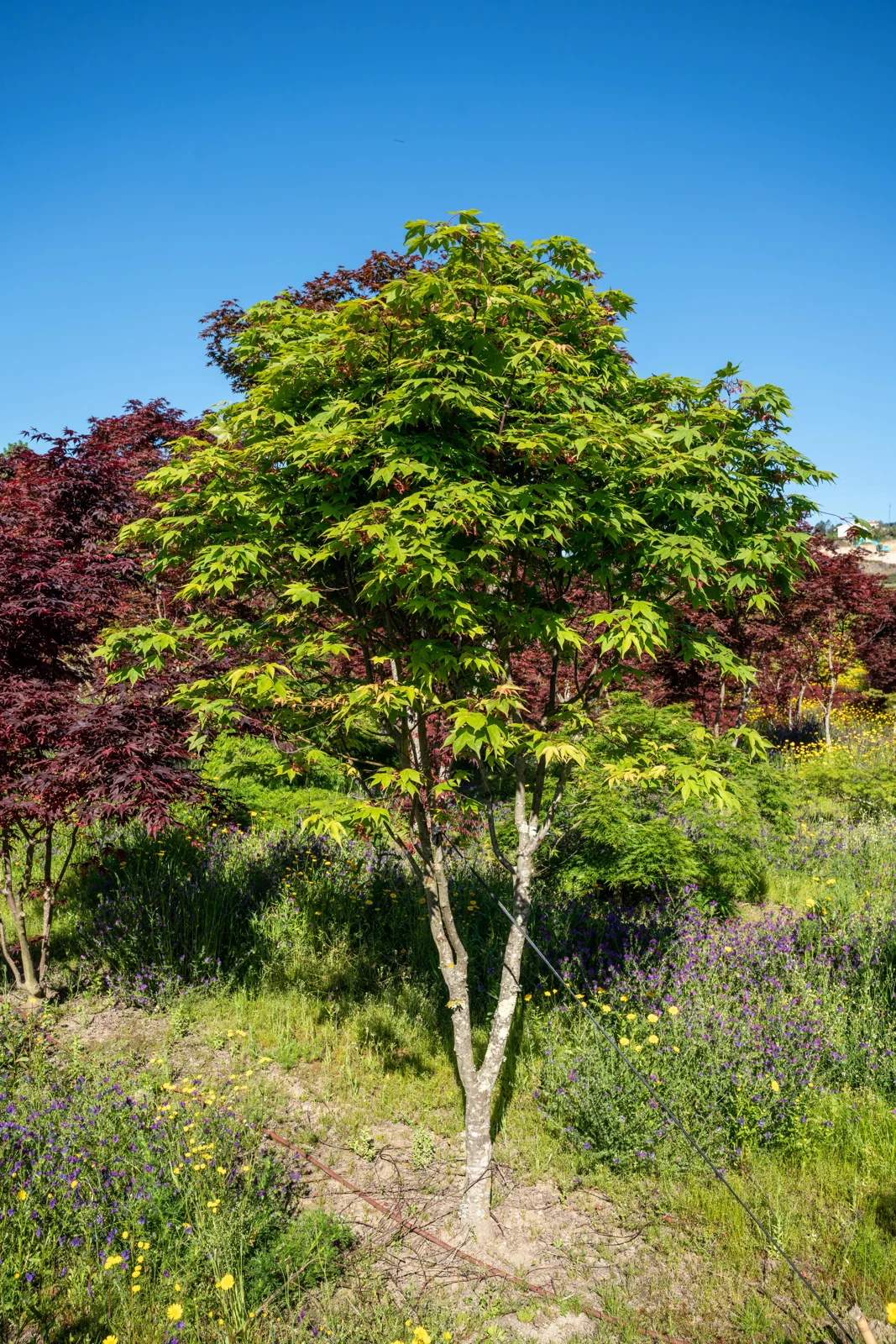
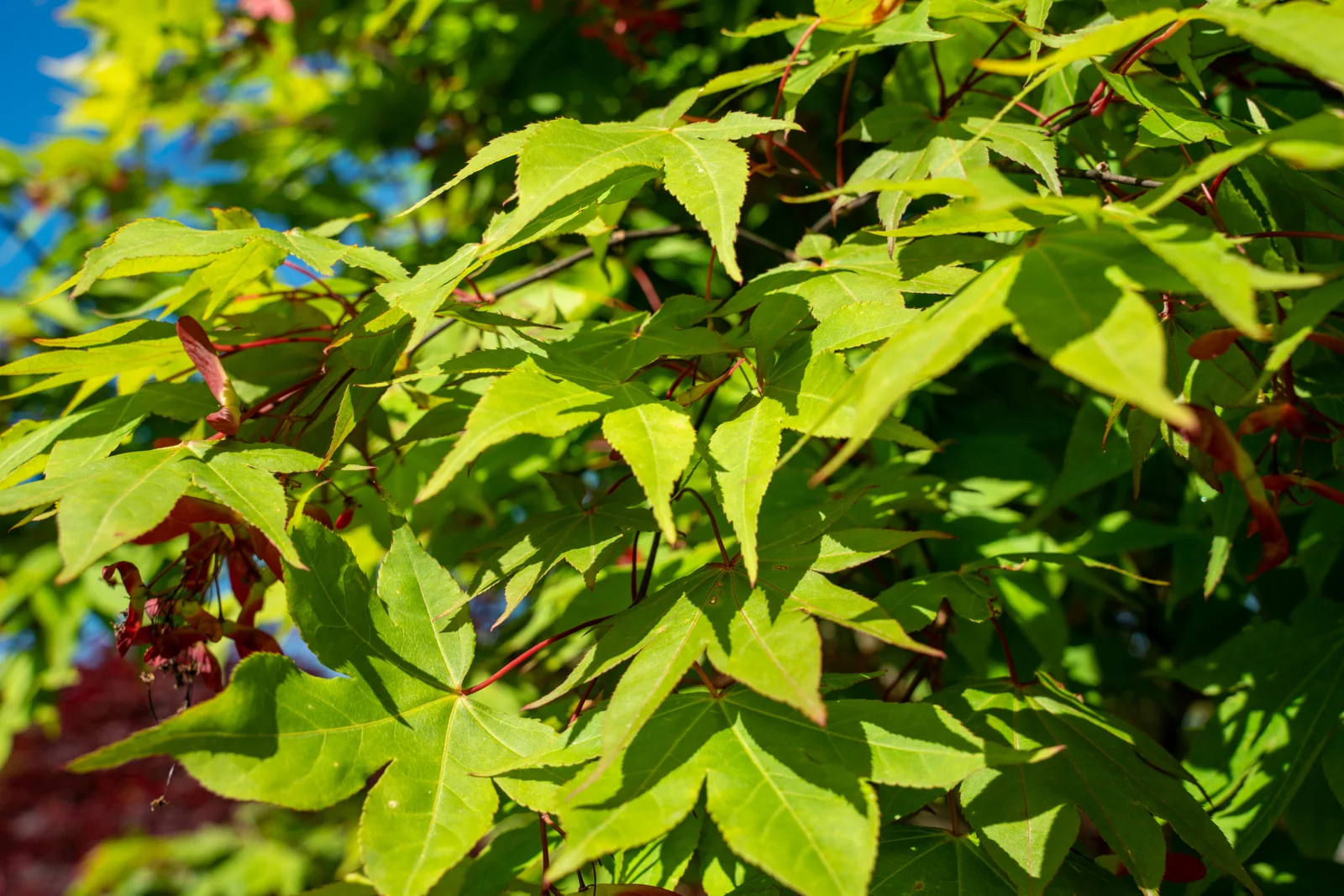
The cultivar distinguishes itself operationally from the dissectum forms and purple-leaved selections on three points: a robust seven-lobed palmate leaf without thread-like cutting; a vase-shaped habit in youth that broadens with age to 4 to 6 m in height by 4 to 5 m in spread; and improved sun tolerance compared with the laceleaf forms, which reduces the…
Read more
Show less
The cultivar distinguishes itself operationally from the dissectum forms and purple-leaved selections on three points: a robust seven-lobed palmate leaf without thread-like cutting; a vase-shaped habit in youth that broadens with age to 4 to 6 m in height by 4 to 5 m in spread; and improved sun tolerance compared with the laceleaf forms, which reduces the strict half-shade requirement that conditions specification of most Japanese maples. The role in a European plant schedule is the standard Acer palmatum feature position in domestic and intimate-park settings, with autumn colour as the specification driver.
Climate envelope: hardy to approximately minus 18 degrees Celsius (USDA zone 7a), reliable across zone 8 and warmer; reported successful in sheltered zone 7b sites across the Atlantic seaboard, the Po valley, central France, the cool-temperate uplands of the Balkans and Carpathians, southern England and Ireland, and milder parts of the Baltic Sea littoral. Not recommended for prolonged continental bare-ground frost below minus 20 degrees Celsius in open sites east of central Germany or in the inland Pannonian basin without shelter; heat tolerance is moderate, with leaf scorch a real risk above sustained 35 degrees Celsius without adequate root moisture and half shade. Annual rainfall above 700 mm distributed through the season is preferred; below 500 mm with summer drought, reliable establishment requires irrigation.
Site requirements: humic, slightly acidic to neutral, evenly moist, well drained substrate; tolerates moderate clay where structure prevents prolonged waterlogging; sensitive to compacted urban substrates and de-icing salt, which excludes the cultivar from street alignments (Platanus, Tilia, Gleditsia remain the canon for that role). Wind exposure on the Atlantic coast is tolerated when sheltered from salt-laden gusts. Genus-typical moderate disease and pest profile; no exposure to the major European-wide phytosanitary alerts under EPPO surveillance relevant to Acer (Russrindenkrankheit of Acer pseudoplatanus is genus-specific and does not transfer to A. palmatum); the standard caveat is Verticillium-wilt risk on burdened soils.
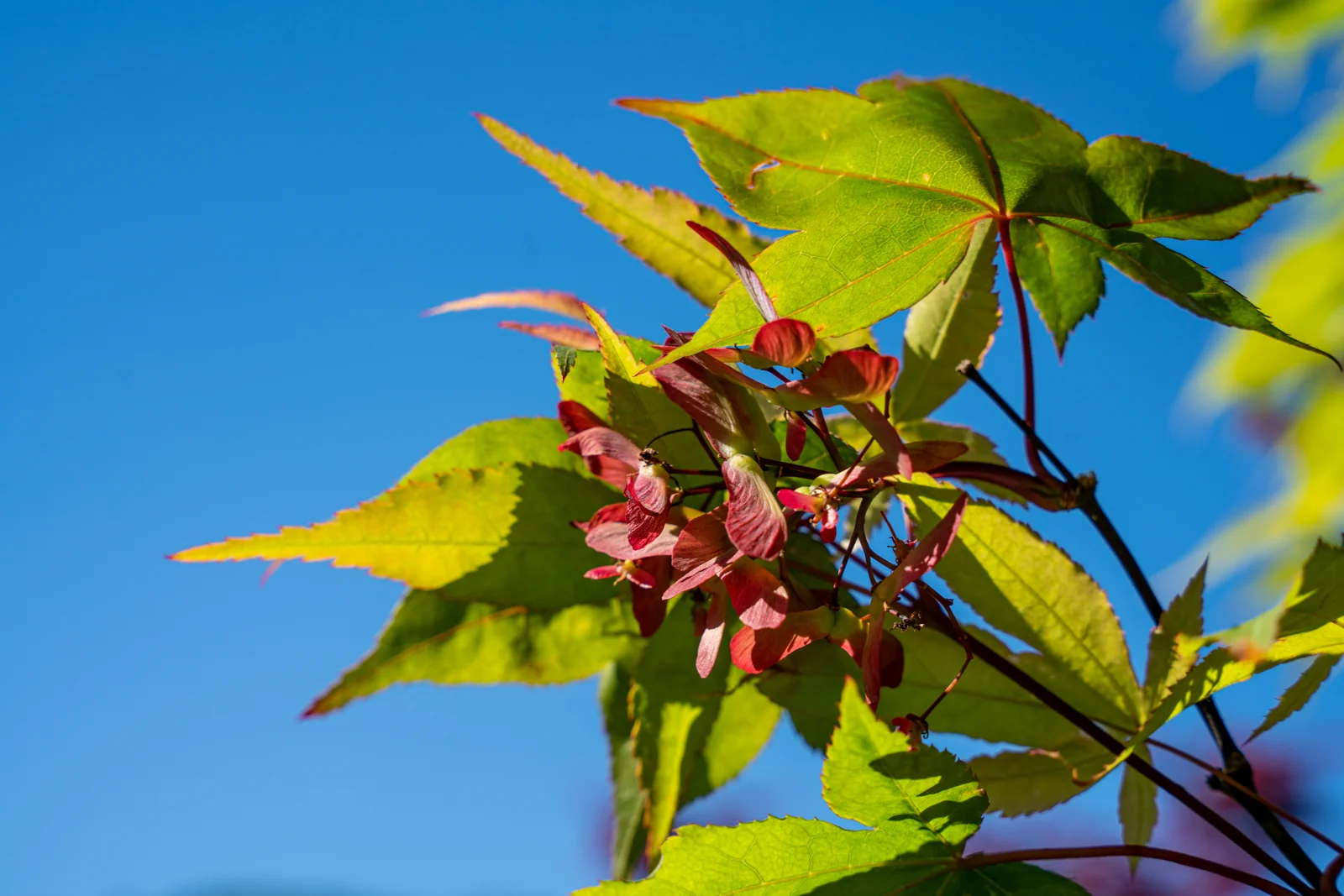
Foliage holds a clear bright green through spring and summer, deepening into mid-green in high summer, with fine texture and a discreet sheen. Autumn colour develops between mid-October and mid-November, turning to a luminous scarlet to crimson rated among the most intense within Acer palmatum, and holding two to three weeks before leaf fall. Specified as a feature specimen in domestic gardens, intimate park clearings, courtyard schemes, and Japanese-inspired plantings, where the cultivar's scale (larger than the dissectum forms) gives it the presence to structure a composition without reaching canopy dimensions.
Advice on this species
Want to know more about Acer palmatum 'Osakazuki'?
Tell us about your project and we'll advise you on this species — where it thrives, which size makes sense, and what to expect once planted.
- Produção própria
- Exemplares adultos
- Resposta em 1–2 dias
Sem compromisso · orçamento personalizado