

Laceleaf focal cultivar for sheltered half-shade positions
Japanese Maple ‘Dissectum’ · Acer palmatum ‘Dissectum’
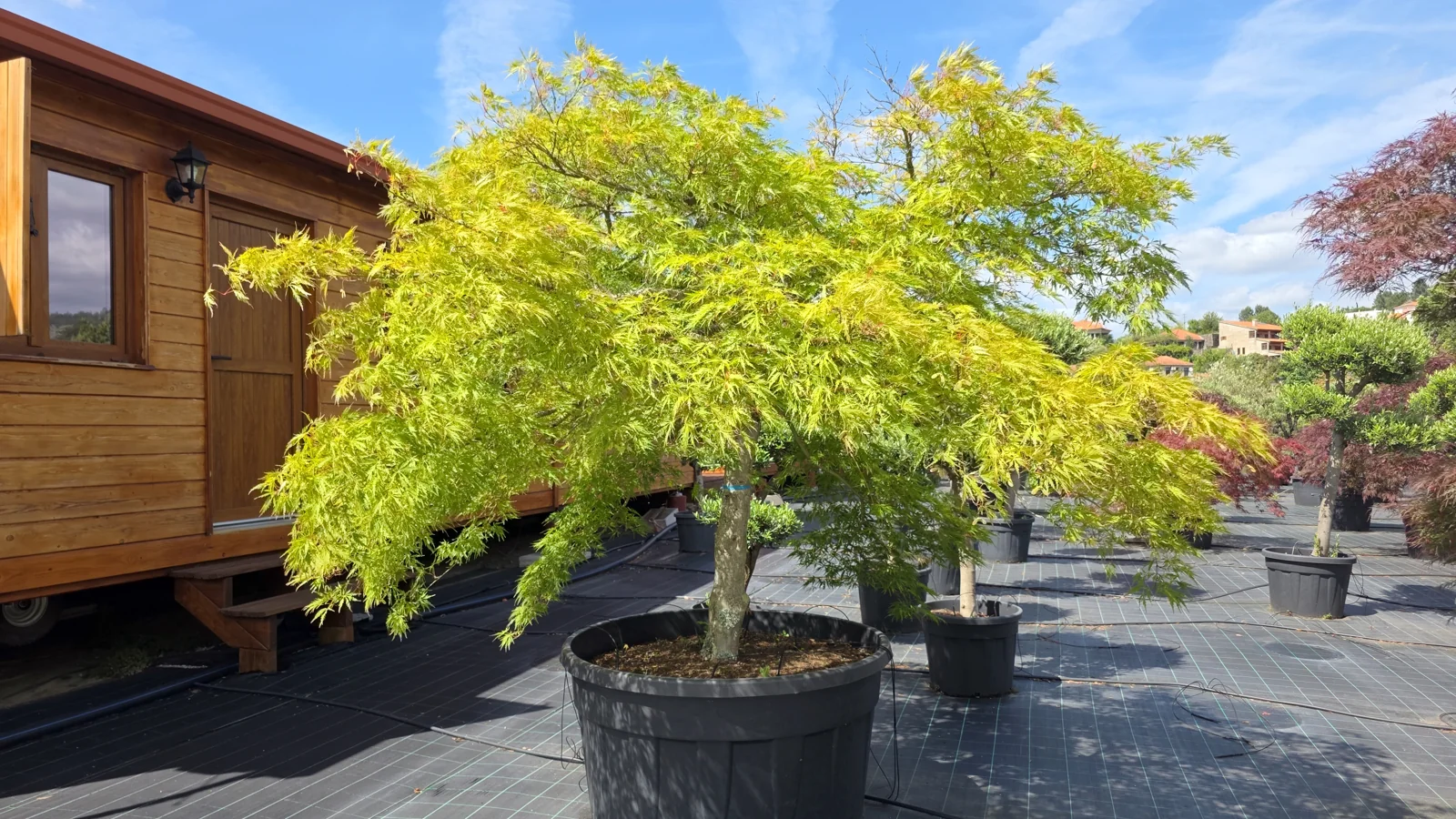
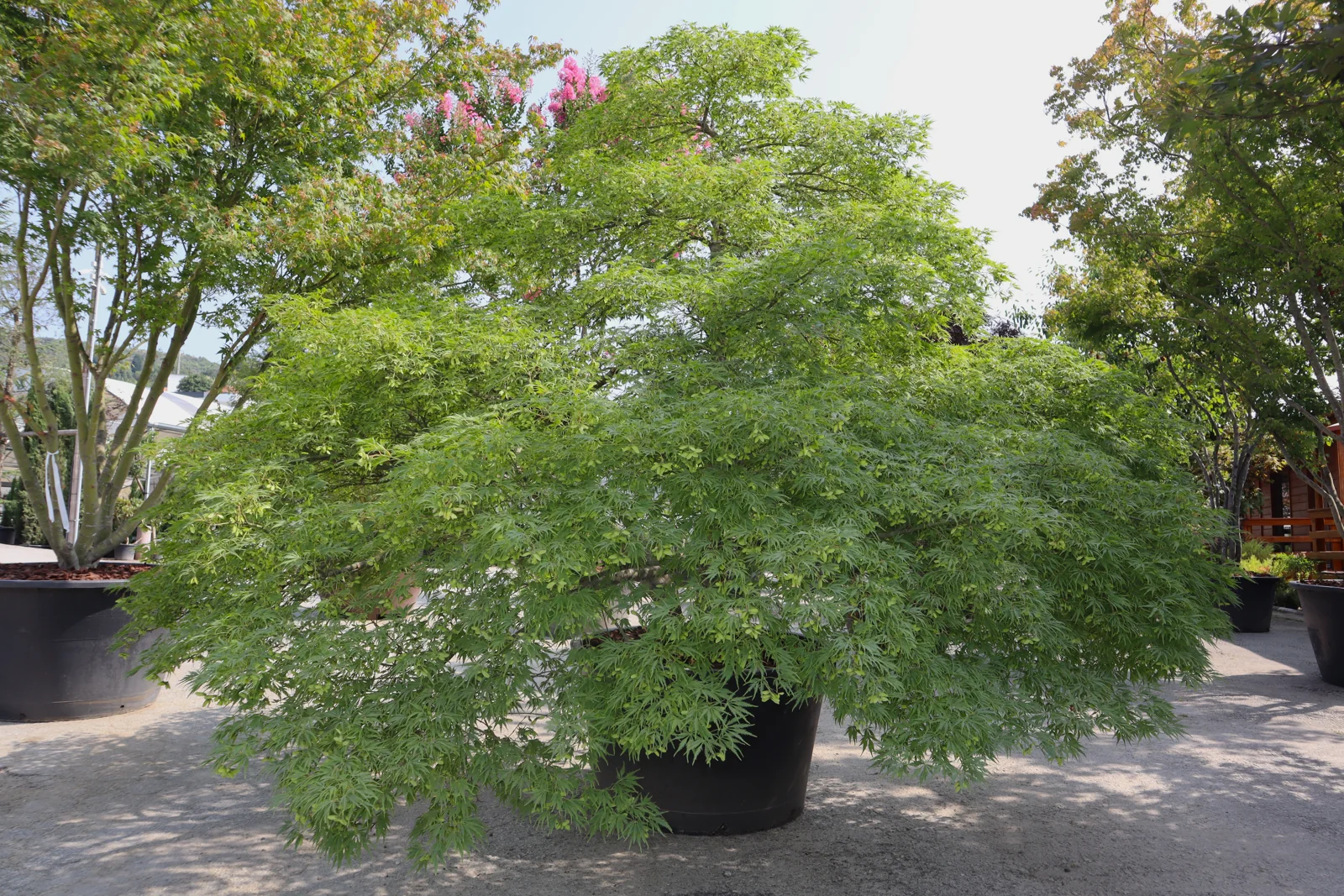
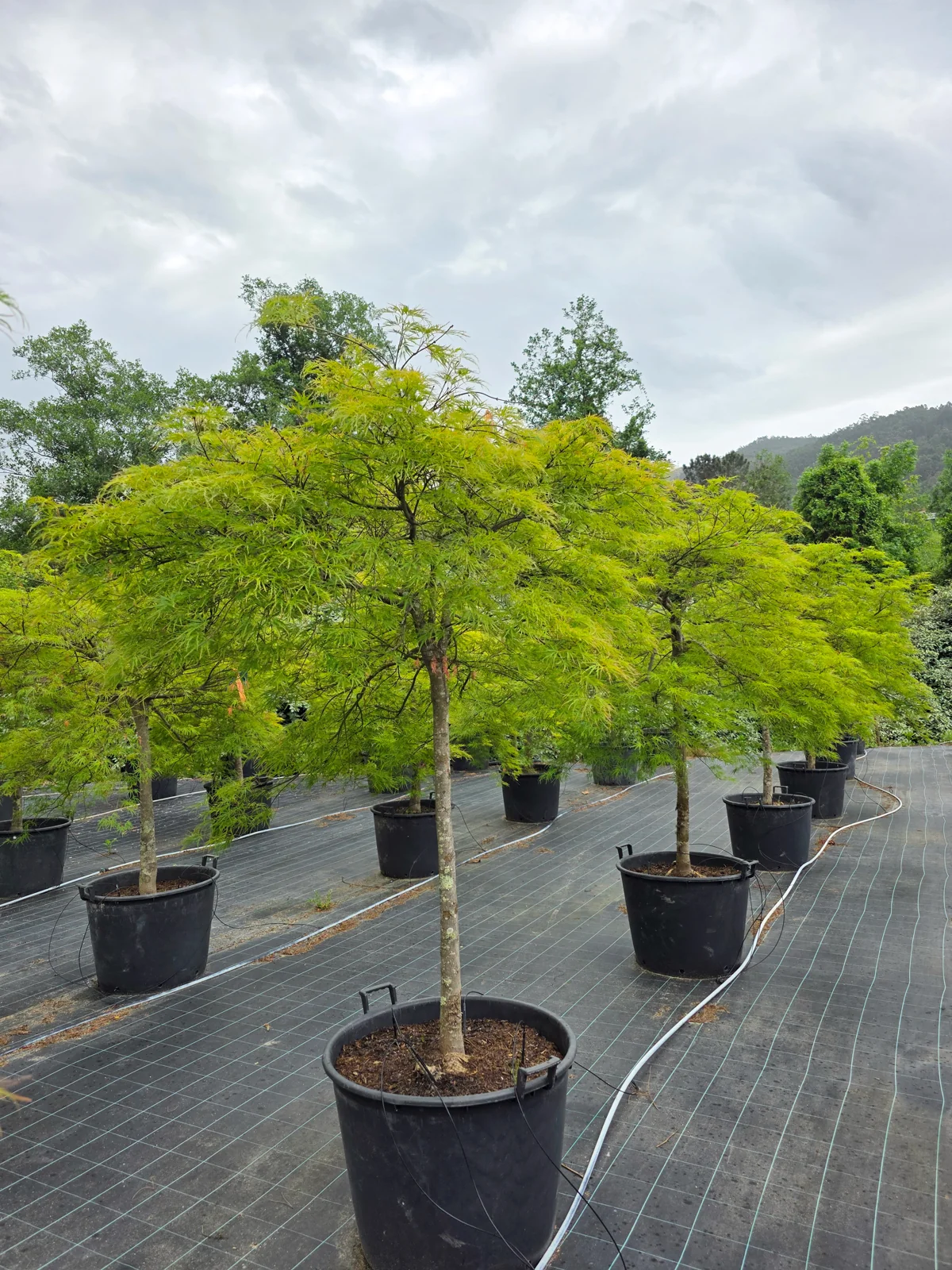
A slow-growing laceleaf form of the Japanese maple, specified as a focal specimen for half-shaded courtyards, waterside compositions, and large containers, where its pendulous mound and finely dissected foliage carry the design.
Key Facts
About this Cultivar
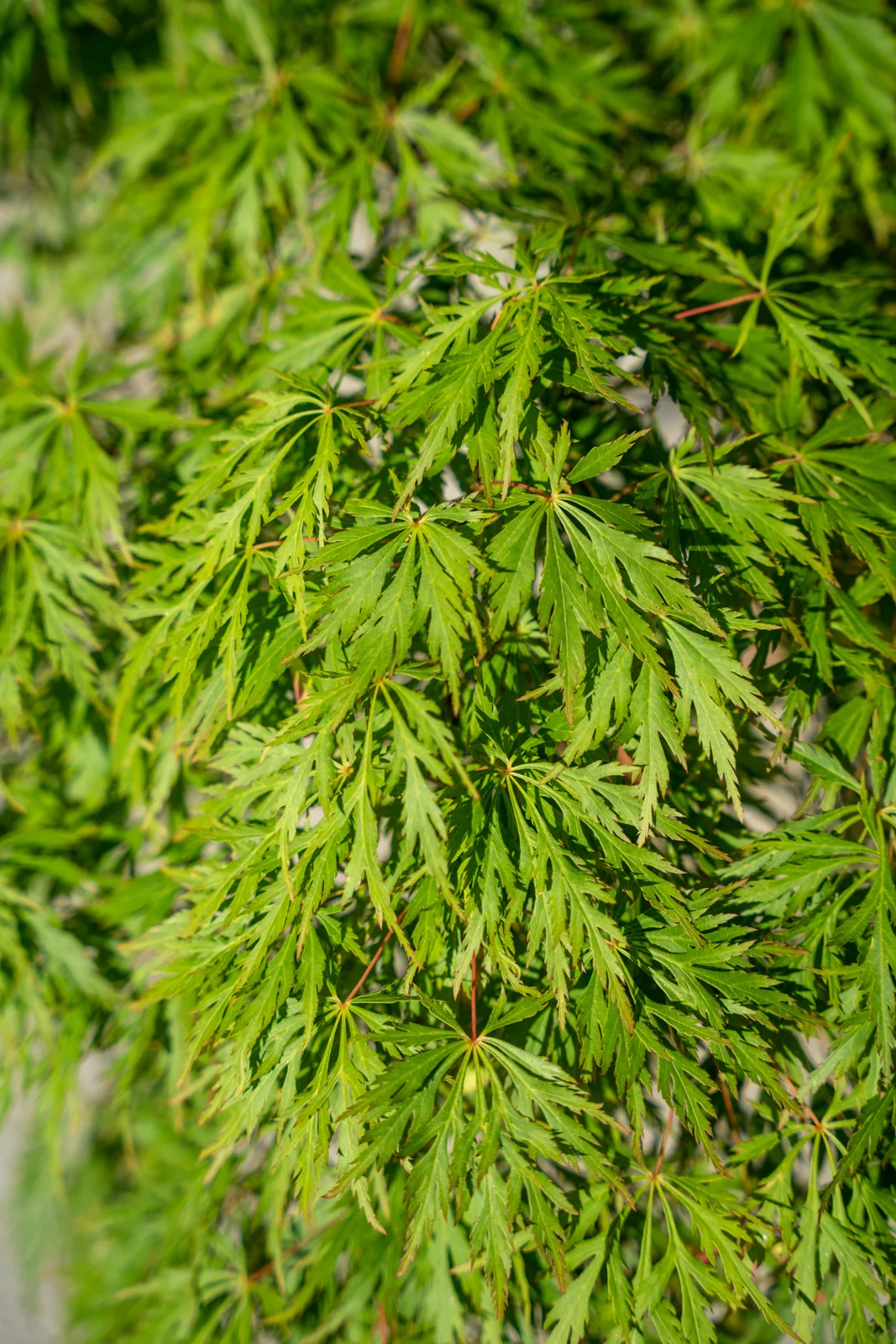
Acer palmatum 'Dissectum' is a slow-growing laceleaf cultivar of the Japanese maple, distinguished from the species by its deeply incised, almost filamentous leaflets and its low, mounded, distinctly pendulous habit. Mature dimensions settle at around 2 to 3 metres in height with a comparable or slightly greater spread, reached over decades rather than…
Read more
Show less
Acer palmatum 'Dissectum' is a slow-growing laceleaf cultivar of the Japanese maple, distinguished from the species by its deeply incised, almost filamentous leaflets and its low, mounded, distinctly pendulous habit. Mature dimensions settle at around 2 to 3 metres in height with a comparable or slightly greater spread, reached over decades rather than seasons. Spring foliage emerges fresh green, deepens through summer, and turns through yellow, orange, and red in autumn; small reddish flowers appear in April and May, followed by winged samaras.
The cultivar is reliably winter-hardy across USDA zones 5b to 9a, tolerating minima of approximately minus 23 to minus 26 °C without structural damage on established plants. Heat tolerance is moderate: above 35 °C, and particularly under dry continental wind, the finely dissected leaflets are prone to marginal scorch. Reliable across the Atlantic seaboard, the Po valley, southern Scandinavia, and lowland Central Europe; in Mediterranean and Pannonian summers, half-shade and assured root moisture are non-negotiable.
Specify on fresh, well-drained, acid to neutral soil with adequate organic matter; performance falters on chalky, compacted, or seasonally waterlogged ground. Half-shade is the default exposure, with shelter from late spring frost and from hot afternoon sun. The pendulous, mounded silhouette anchors sheltered courtyards, water-edge plantings, and Japanese-influenced schemes, and the compact mature footprint suits large containers and elevated planters where root volume can be controlled.
Structural pruning is light by necessity: the cultivar's identity is the natural cascading form, and corrective cuts in late summer are limited to crossing or dead wood. Growth is slow enough that a specimen delivered at significant calibre will read as a finished feature for the lifetime of the scheme, which is the central argument for sourcing field-grown stock at maturity rather than container-grown nursery sizes.
Advice on this species
Want to know more about Acer palmatum 'Dissectum'?
Tell us about your project and we'll advise you on this species — where it thrives, which size makes sense, and what to expect once planted.
- Produção própria
- Exemplares adultos
- Resposta em 1–2 dias
Sem compromisso · orçamento personalizado