

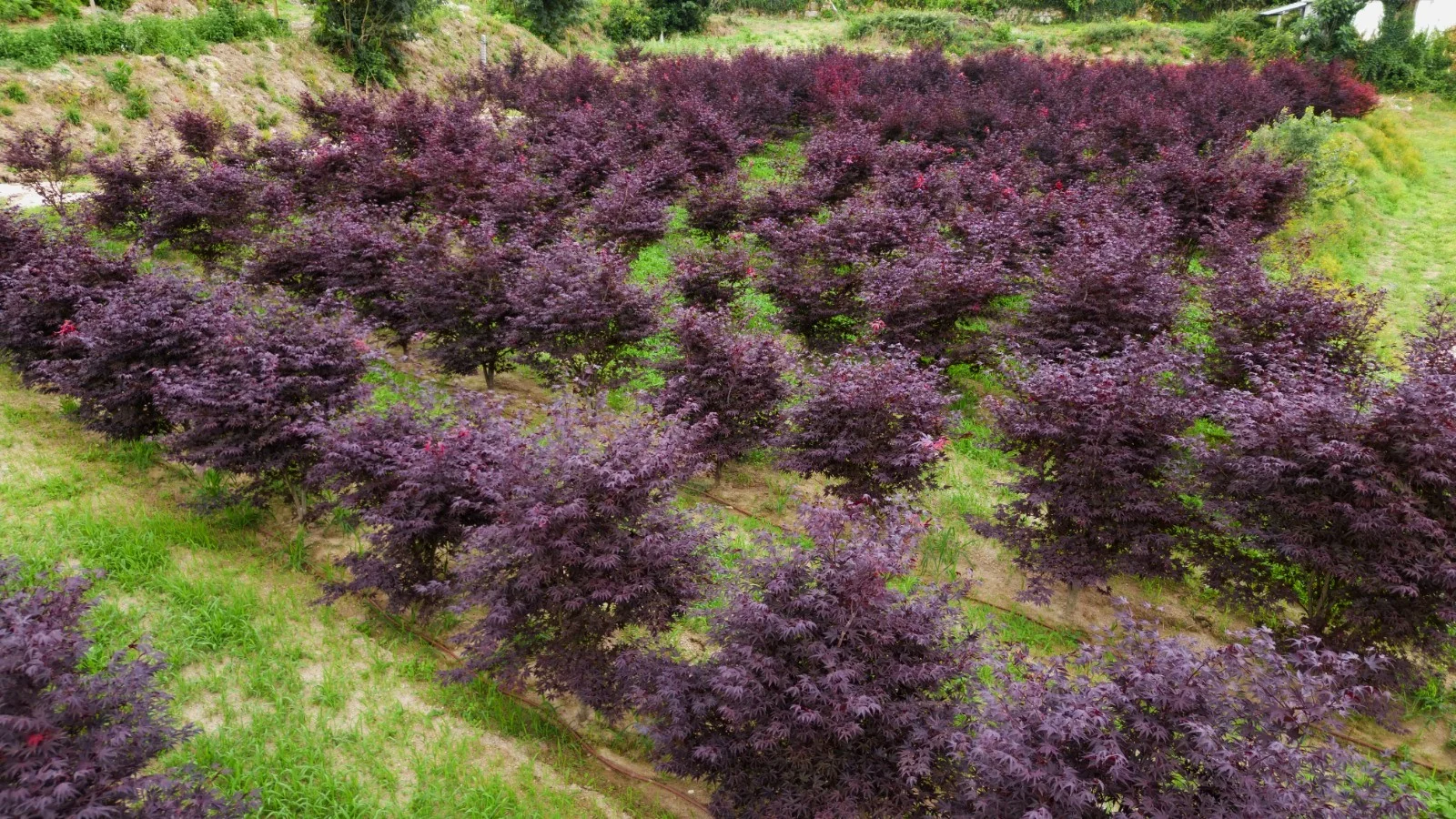
Compact red-leaved Japanese maple for sheltered focal positions
Japanese Maple ‘Bloodgood’ · Acer palmatum ‘Bloodgood’
A small specimen maple selected for deep wine-red foliage that holds its colour through summer and turns scarlet in autumn. Reliable across most of temperate Europe given partial shade and assured drainage.
Key Facts
About this Cultivar
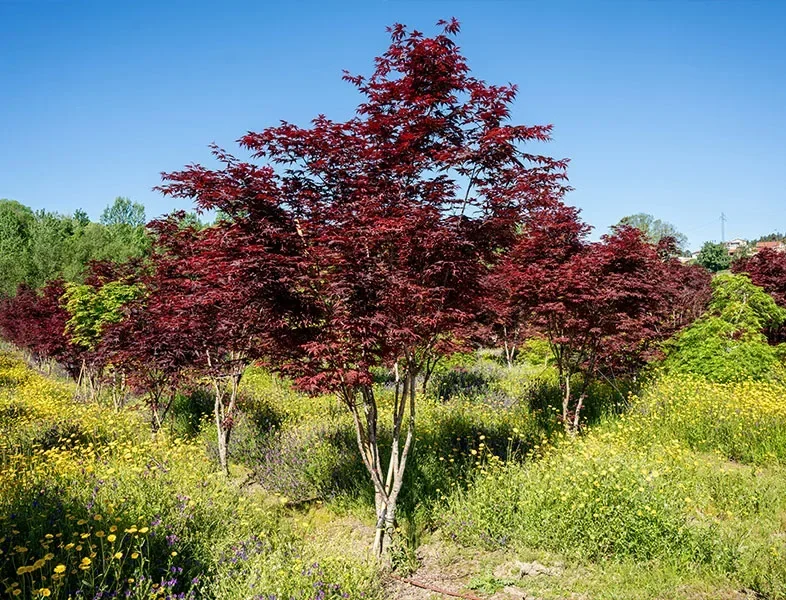
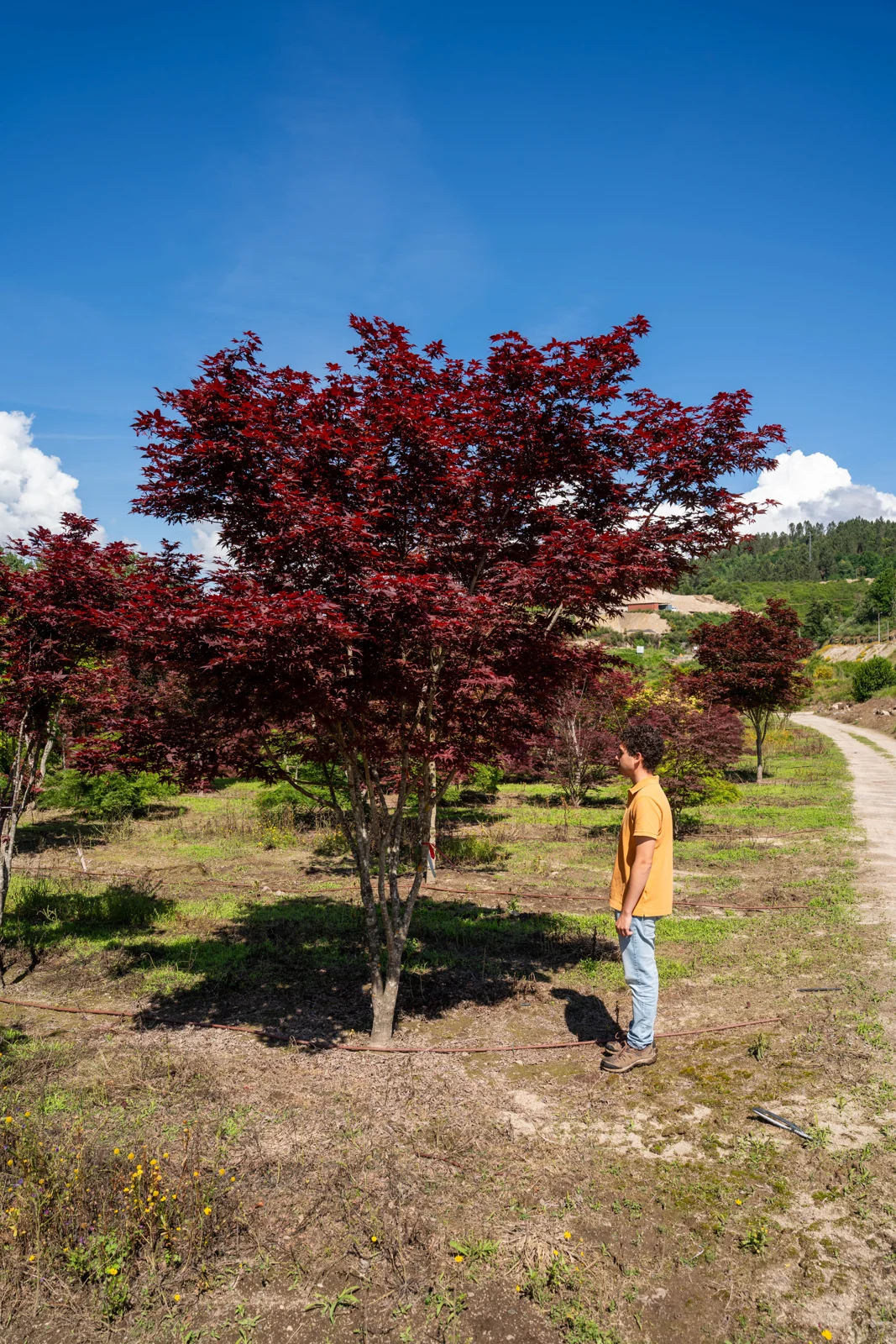
Acer palmatum 'Bloodgood' is a slow-growing deciduous specimen reaching about 4 to 5 m in height and spread, with a rounded, often multi-stemmed habit denser than the seedling 'Atropurpureum' it largely replaced in the trade. Leaves are palmately five to seven lobed and emerge a dark wine-red that holds through summer better than most purple-leaved…
Read more
Show less
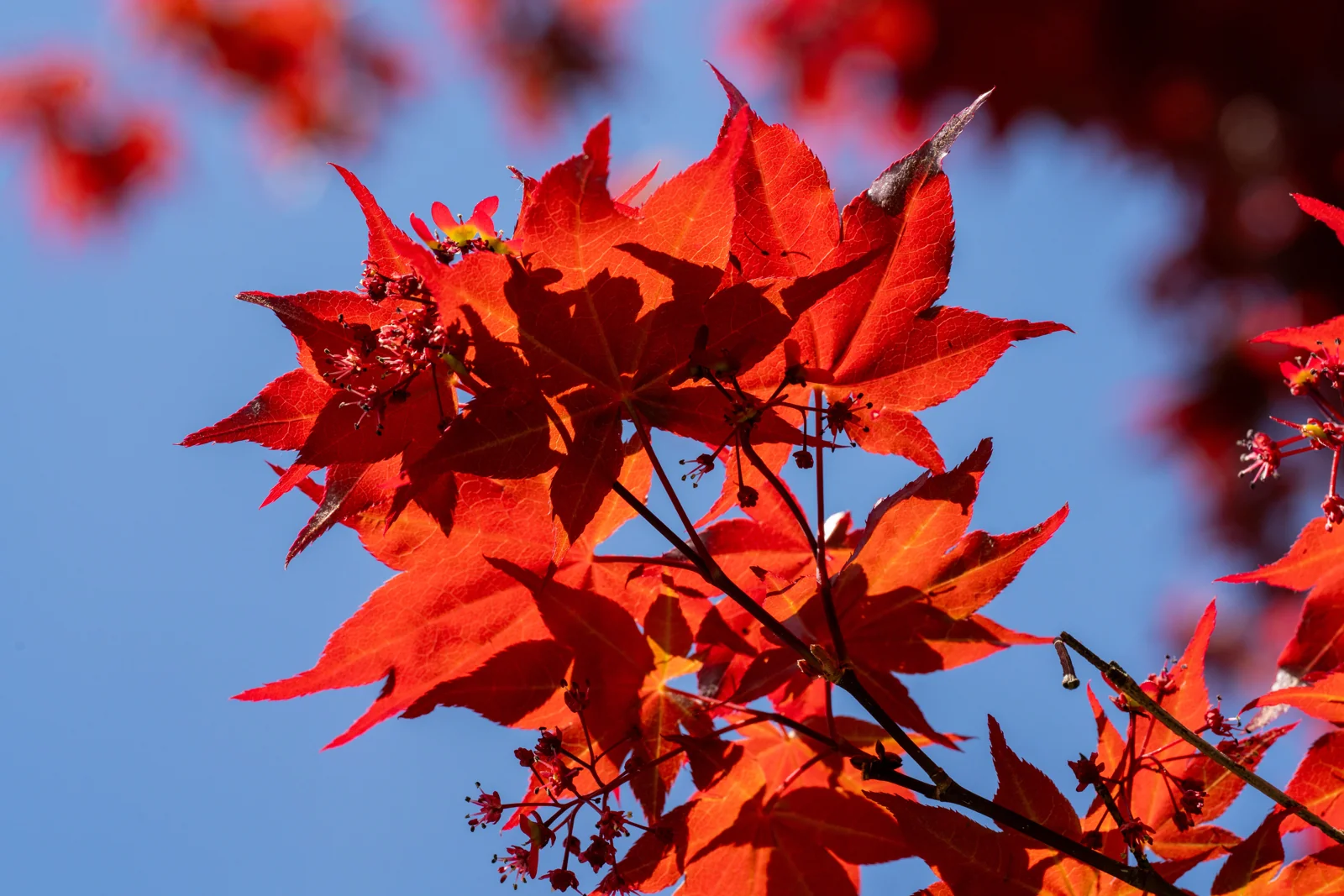
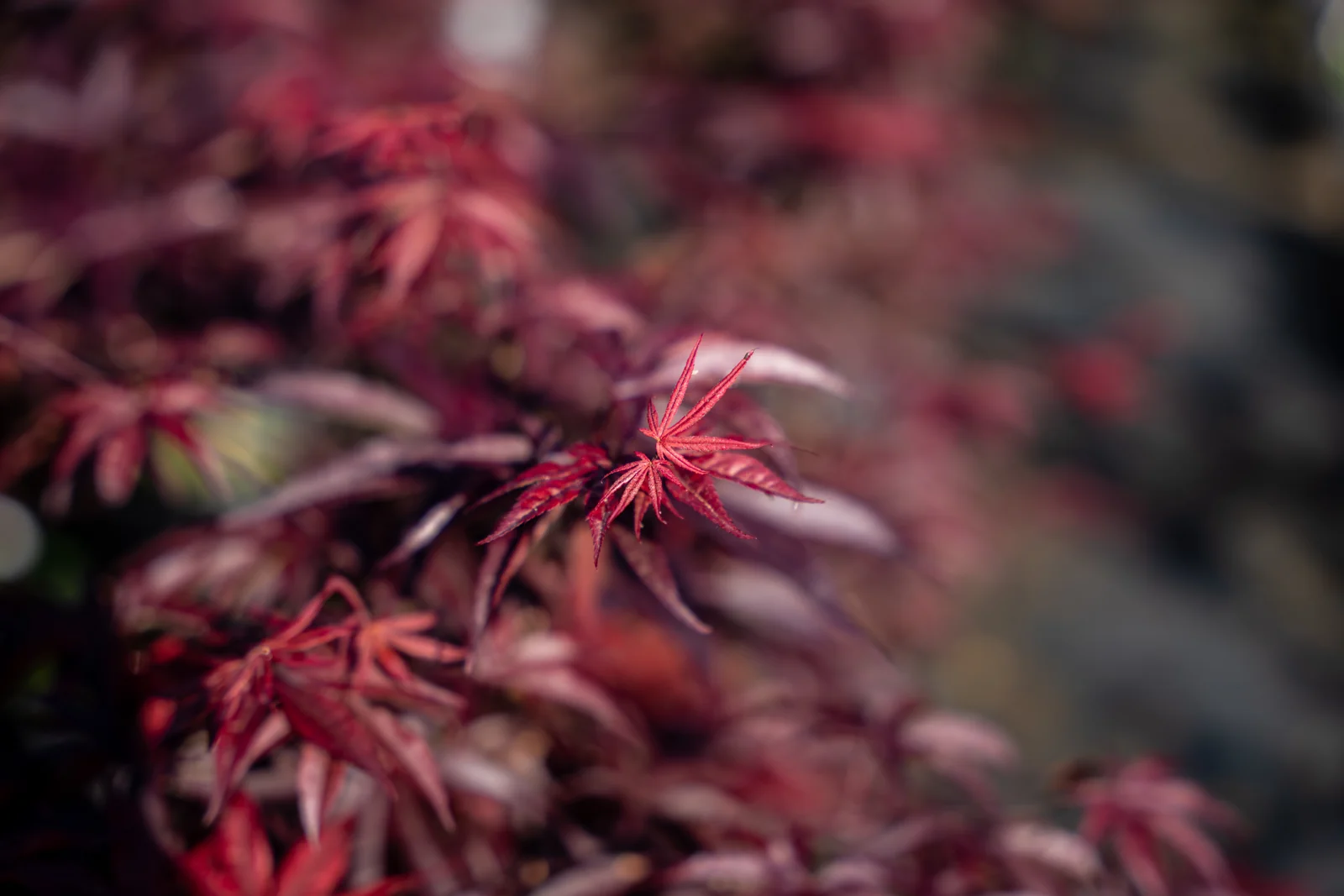
Acer palmatum 'Bloodgood' is a slow-growing deciduous specimen reaching about 4 to 5 m in height and spread, with a rounded, often multi-stemmed habit denser than the seedling 'Atropurpureum' it largely replaced in the trade. Leaves are palmately five to seven lobed and emerge a dark wine-red that holds through summer better than most purple-leaved selections in this species. Autumn brings a clean transition to bright red before leaf fall.
Hardiness reaches roughly minus 23 °C once established; the wood is hardy further still, but late spring frosts scorch the young foliage and should be planned for. The cultivar is reliable across the Atlantic seaboard, the Low Countries, the Po valley, southern Scandinavia and inland Central Europe to the Pannonian basin. East of that line, and in exposed continental positions, plant in a sheltered courtyard or against a north or east wall to avoid winter desiccation.
Drought tolerance is low and salt tolerance is low, which sets the climate envelope on the other side: dry continental summers above 35 °C, and Mediterranean coastal sites with onshore wind, both require either dappled overhead canopy or assured root moisture. Direct afternoon sun in hot, dry summers leaches the purple pigment and causes marginal leaf scorch. Partial shade preserves the colour and the leaf edge in the long Mediterranean summer.
Soil preference is acidic to neutral, organic, free-draining loam. The cultivar will not perform on chalky, compacted, or waterlogged ground. Wind exposure must be moderate; the leaves are thin and tear under sustained gusts. Allow a clear visual setting, since the form and colour read at distance and a cluttered backdrop neutralises both. Maintenance is light once established, beyond formative crown lifting to expose the trunk lines and an occasional thin to keep the layered structure legible.
Use cases run from the domestic courtyard to the contained urban tree pit and the resort entrance where year-on-year reliability of leaf colour matters more than canopy volume. As a focal specimen in a parkland setting it does the work that a small-leaved Cercis or a young Cornus controversa might otherwise occupy in the design vocabulary.
Advice on this species
Want to know more about Acer palmatum 'Bloodgood'?
Tell us about your project and we'll advise you on this species — where it thrives, which size makes sense, and what to expect once planted.
- Produção própria
- Exemplares adultos
- Resposta em 1–2 dias
Sem compromisso · orçamento personalizado