

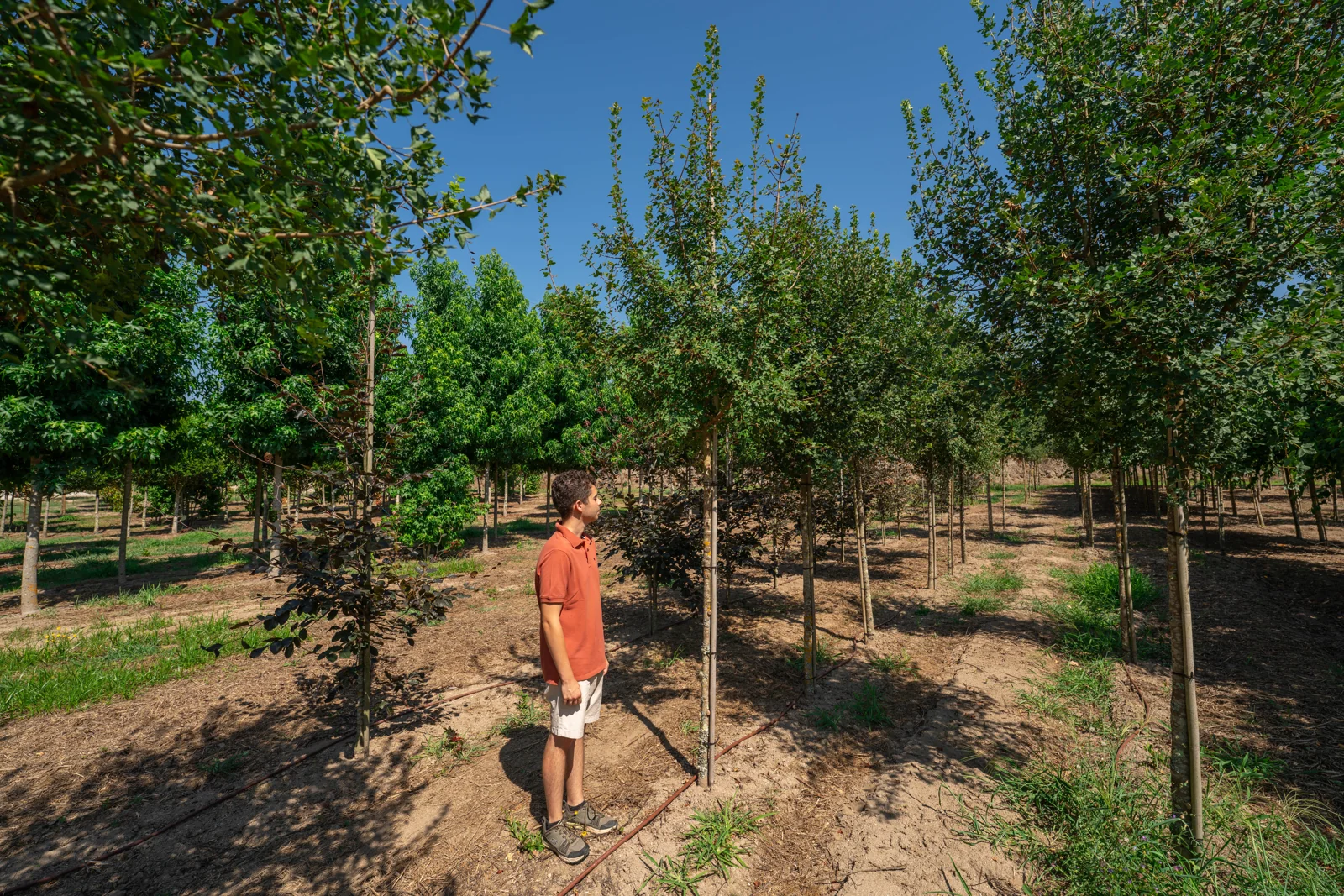
Compact drought-tolerant maple with broad European hardiness
Montpellier Maple · Acer monspessulanum
A small-stature deciduous maple native from the Maghreb and Iberia across to the Caucasus, reaching naturally into the Jura and Eifel. Suited to drought-exposed alignments, urban tree pits, and parkland on dry, well-drained substrates.
About this Species
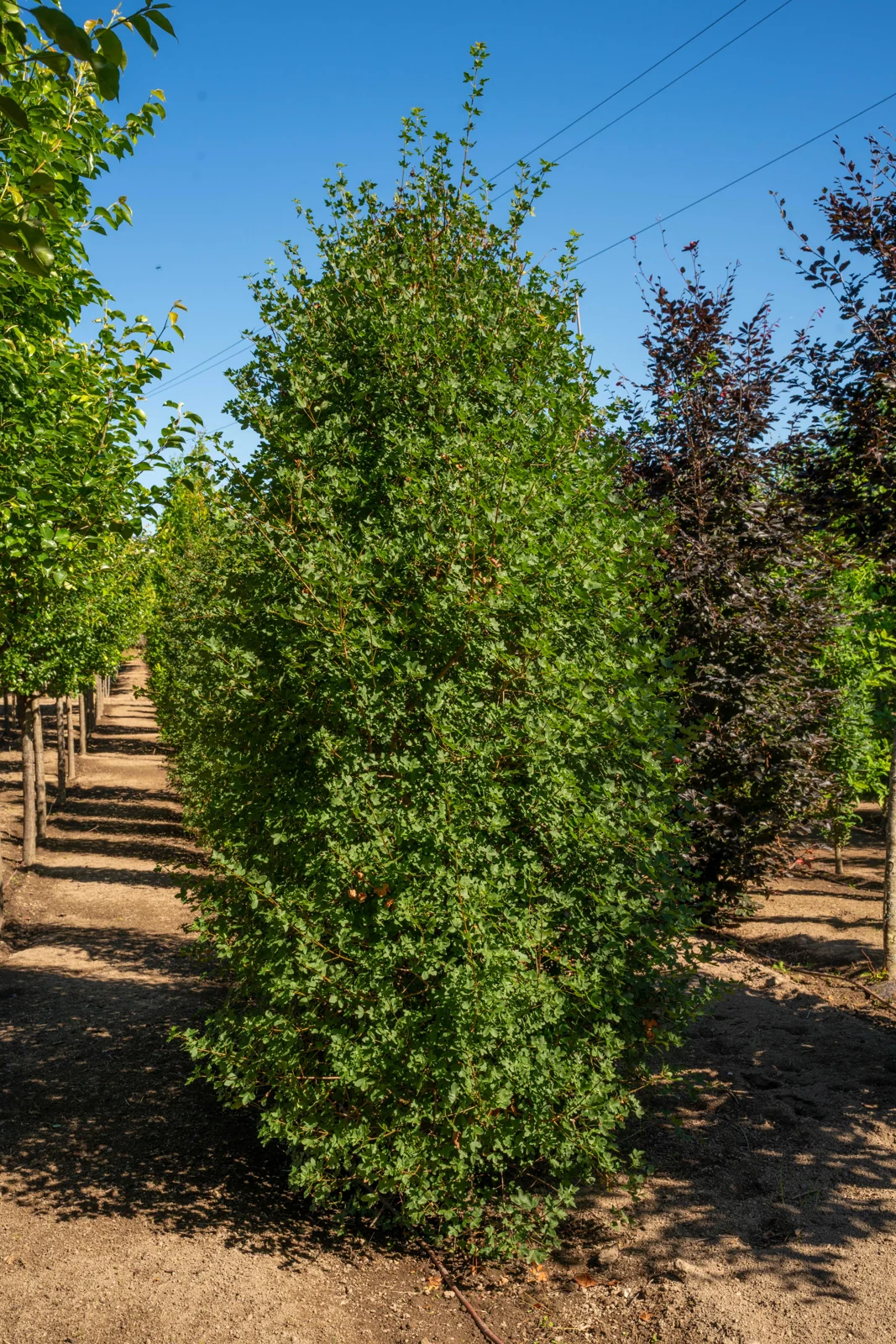
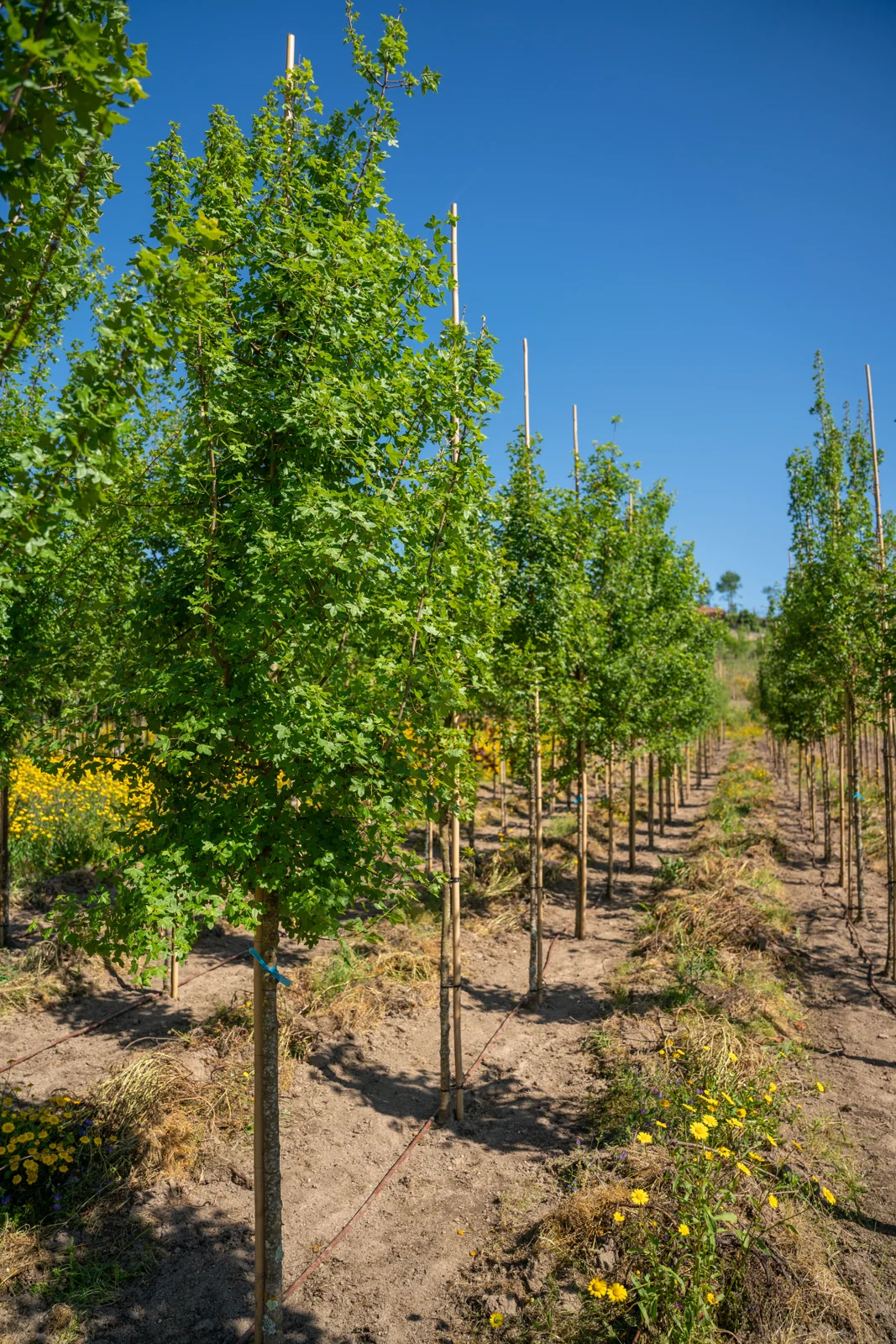
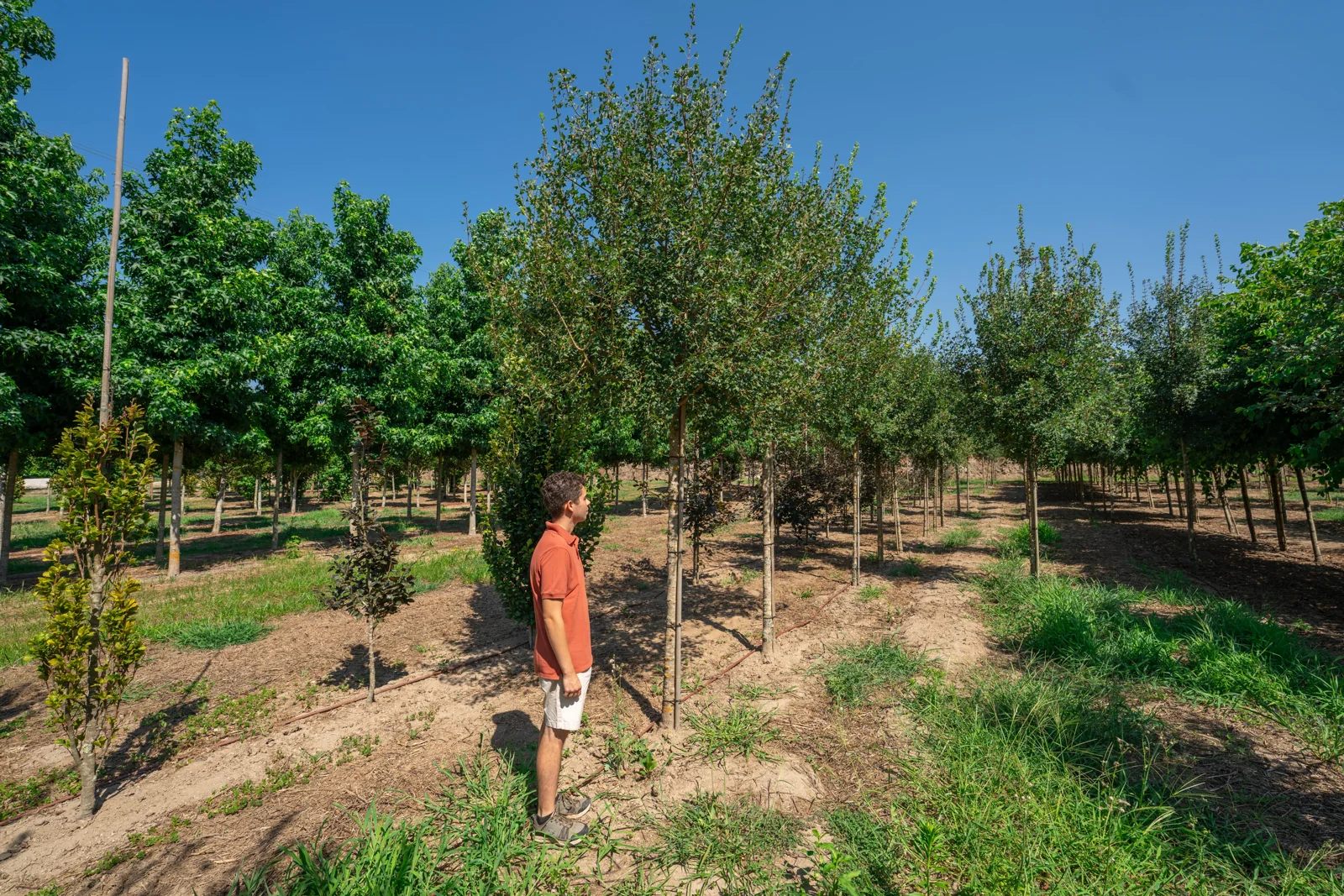
Acer monspessulanum is a small to medium deciduous tree, typically reaching 10 to 15 m in cultivation with a comparable spread and a densely branched, rounded crown. The trunk reaches about 75 cm in diameter at maturity, carrying smooth dark grey bark that becomes finely fissured with age. Growth is slow, which makes the species useful where a Norway maple…
Read more
Show less
Acer monspessulanum is a small to medium deciduous tree, typically reaching 10 to 15 m in cultivation with a comparable spread and a densely branched, rounded crown. The trunk reaches about 75 cm in diameter at maturity, carrying smooth dark grey bark that becomes finely fissured with age.
Growth is slow, which makes the species useful where a Norway maple or plane would outgrow its allotted volume within a decade.
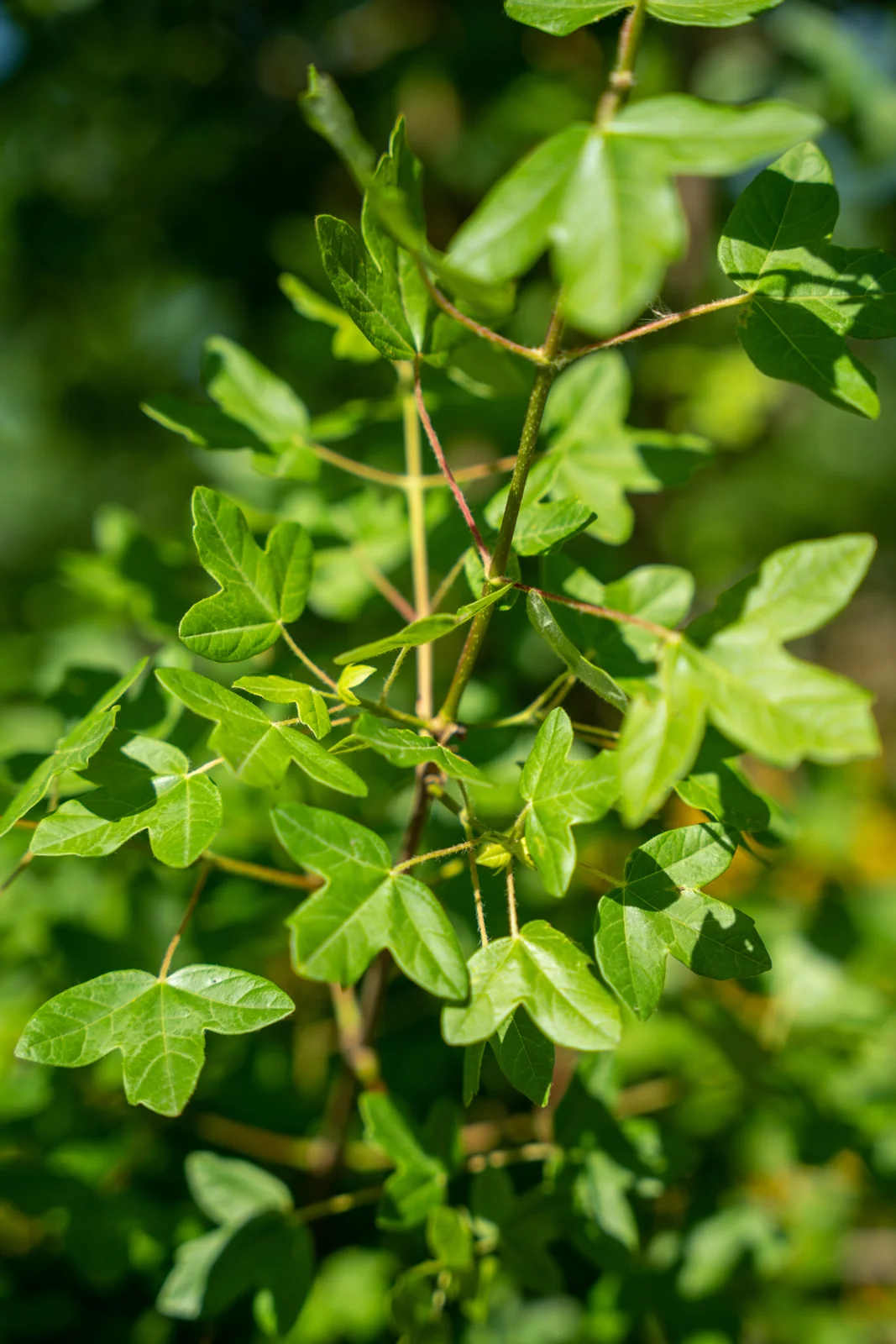
The three-lobed leaves are small for the genus at 3 to 6 cm across, glossy dark green and slightly leathery, and they remain on the tree well into November and behave as semi-evergreen at the southern end of its range. Spring brings pendulous corymbs of greenish-yellow flowers in April and May, followed by samaras whose wings flush a distinct reddish tone before drying.
Autumn colour is a clean orange where the season is long enough to develop it, and the dense ramification gives a defined winter silhouette.
The native range runs across the Mediterranean basin and reaches naturally into the southern Jura, the Eifel, and the inland Balkans, so this is not a strictly Mediterranean tree. It is reliably winter-hardy across USDA zones 6 to 9, tolerating minima of roughly minus 18 °C in continental settings with assured drainage, and it carries heat above 35 °C and prolonged summer drought once established.
Performance is dependable across the warm-temperate band of Europe from the Atlantic coast to the Pannonian basin; in the Boreal and cooler continental zones north of southern Scandinavia or east of the Carpathian foothills, plant only on warm, sheltered sites.
It prefers fertile, well-drained ground and accepts loamy, chalky, and dry substrates readily, with a clear preference for free drainage over richness. Pest and disease pressure is light.
The professional case rests on scale and resilience: where Acer campestre is the conventional small-canopy maple for hedgerow and street use, A. monspessulanum offers a smaller, darker leaf, a tighter crown, and better tolerance of summer drought and reflected urban heat, making it a defensible choice for tree pits, restricted alignments, and dry parkland on poor soils.



Advice on this species
Want to know more about Acer monspessulanum?
Tell us about your project and we'll advise you on this species — where it thrives, which size makes sense, and what to expect once planted.
- Produção própria
- Exemplares adultos
- Resposta em 1–2 dias
Sem compromisso · orçamento personalizado