

Solutions

Shopping Centres

The Dwell Factor: How Mature Trees Multiply Profitability in Retail and Hospitality

Customer dwell time is the metric that dictates profitability. Mature trees deliver the microclimate, the scale and the comfort that turn a visit into an experience — and a space into a destination.

Physical space competes every day with the zero friction of online retail. When a developer opens a retail park, an open-air shopping centre or a hospitality complex, the goal goes beyond the immediate transaction. The place has to become a destination. And in a destination, the fundamental metric that dictates profitability is dwell time.

The outdoor component of many developments is often delivered on the wrong timeline. We commonly see schemes where tens of millions of euros have gone into architecture and engineering, yet whose squares and circulation areas receive young, fragile specimens, trapped in paving and held up by stakes. A customer will not sit on a terrace under the relentless August sun waiting for a tree to grow. They cut the visit short, spend less and, more often than not, do not return.

The Mathematics of Spending and the Convenience Margin

Research led by Dr. Kathleen Wolf (University of Washington) has rigorously quantified what is defined as the Amenity Margin. The data prove that consumers are willing to accept higher prices in retail areas with a mature, well-maintained tree canopy.

The average uplift in willingness-to-pay for identical goods and services is around 8.8%. This figure rises markedly depending on the category: an increase of up to +34% in convenience categories and up to +40% in general shopping contexts. The presence of mature trees widens the geography of spending — customers become willing to travel further to reach a microclimate of comfort. In a hospitality area or a pedestrian corridor, extending dwell time invariably raises table turnover and grows the average ticket.

The Design Conflict: Visibility vs. Vegetation

In architecture practices and among developer boards, a tactical objection often surfaces: the fear that foliage will hide shopfronts or block sightlines to signage. This problem stems from technical planning shortcomings, not from any botanical inevitability.

Through a rigorous process of strategic canopy raising, carried out during the maturing period at our nursery in Amarante, we shape the architecture of the specimen with continuous selective pruning. The result is trees with a vertical, clean, sculptural trunk, where the structural branching only begins well above the human line of sight. The mature tree, when well managed, does not hide retail architecture; it frames it. The trunks act as organic columns that guide the customer's eye towards the shops.

Biological Certainty: The Anatomy of Risk

When trees are bought as mere wholesale commercial inventory, the plants fail. A tree that is wounded or of inferior phytosanitary quality tries to seal off the damage in a cellular process of compartmentalization of decay (CODIT). If the root system is poorly structured, the plant exhausts its reserves, goes into terminal decline in full public view and becomes a financial and reputational liability that demands heavy logistics to remove.

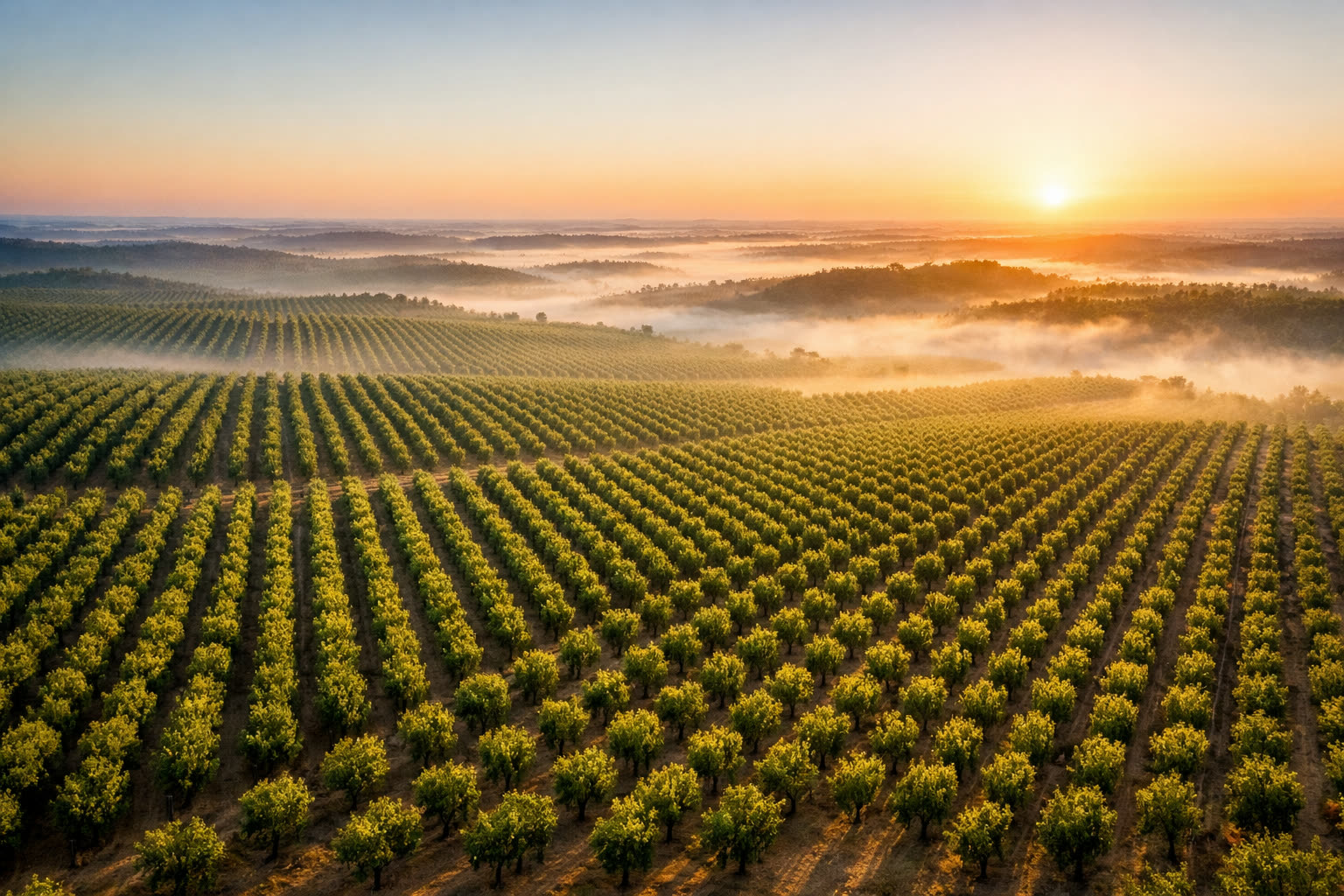
At Diaplant, the biology of survival is assured. Across our 33 hectares of open ground in Amarante, we work to the scientific discipline of northern Europe. At rigorous intervals of three to five years, we put each tree through a mechanical root-pruning process that forces the development of a contained, extremely dense root ball. When we lift the tree for your commercial complex, it carries with it a compact, fully self-sufficient vital system — biologically armoured against transplant shock.

From Our Field to Your Garden, by the Hands That Planted It

The chain of custody never breaks. From our field to your garden, by the very hands that planted it. The same technical team that pruned, measured and grew that biography over fifteen years is the team that handles lifting and installation on your site. We are the ones who enforce the rules of the Tree Protection Zone (TPZ), manage the preparation of the pit and carry out the definitive technical installation. And we are candid: if site conditions will not allow us to guarantee the vitality of that specimen, we would rather not make the sale.

We invite developers, investors and architecture practices to arrange a technical visit to Amarante. Come and walk through our nursery, feel the rigorous density of our roots, and choose in person the living capital that will secure the success and the margins of your next commercial destination.