

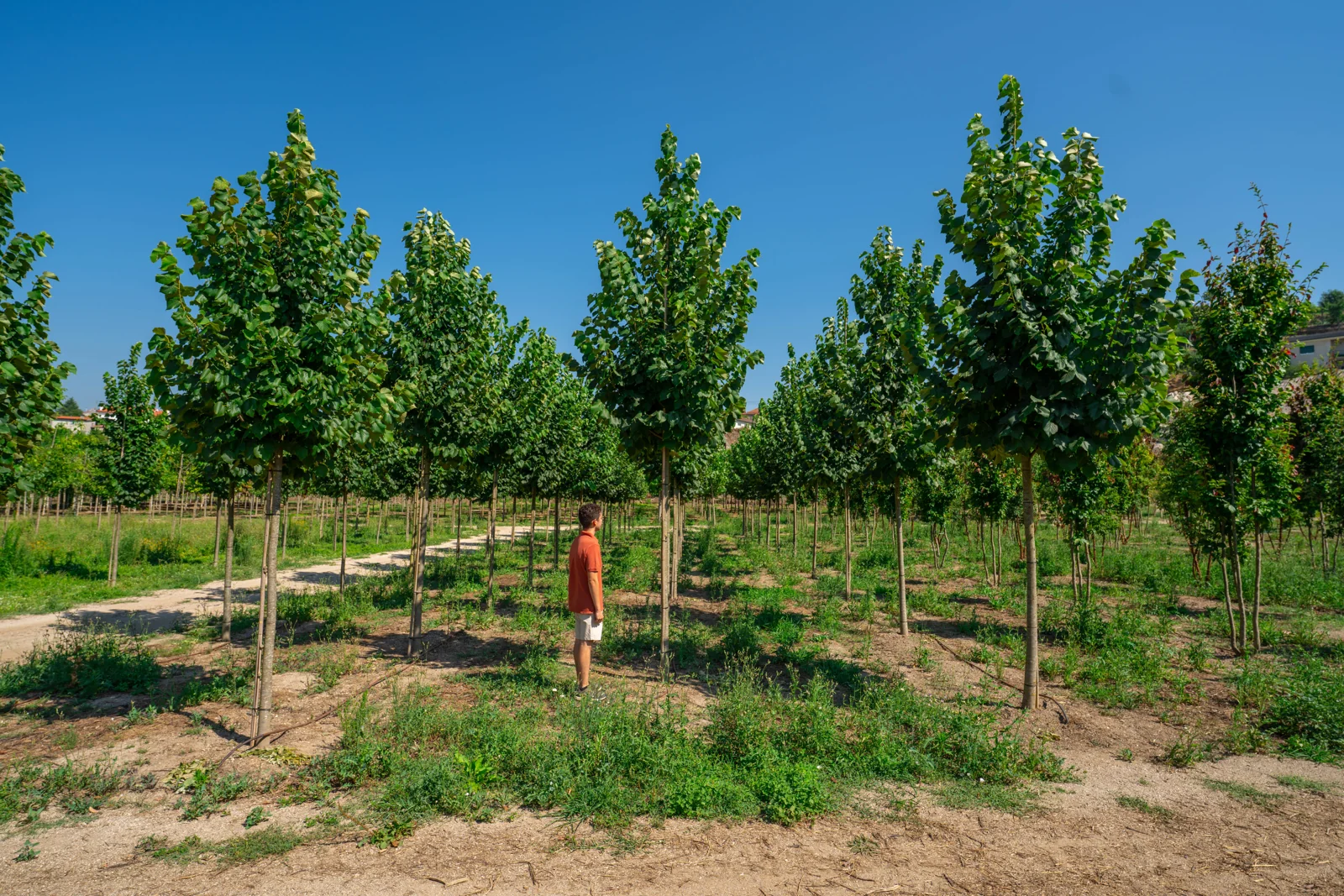
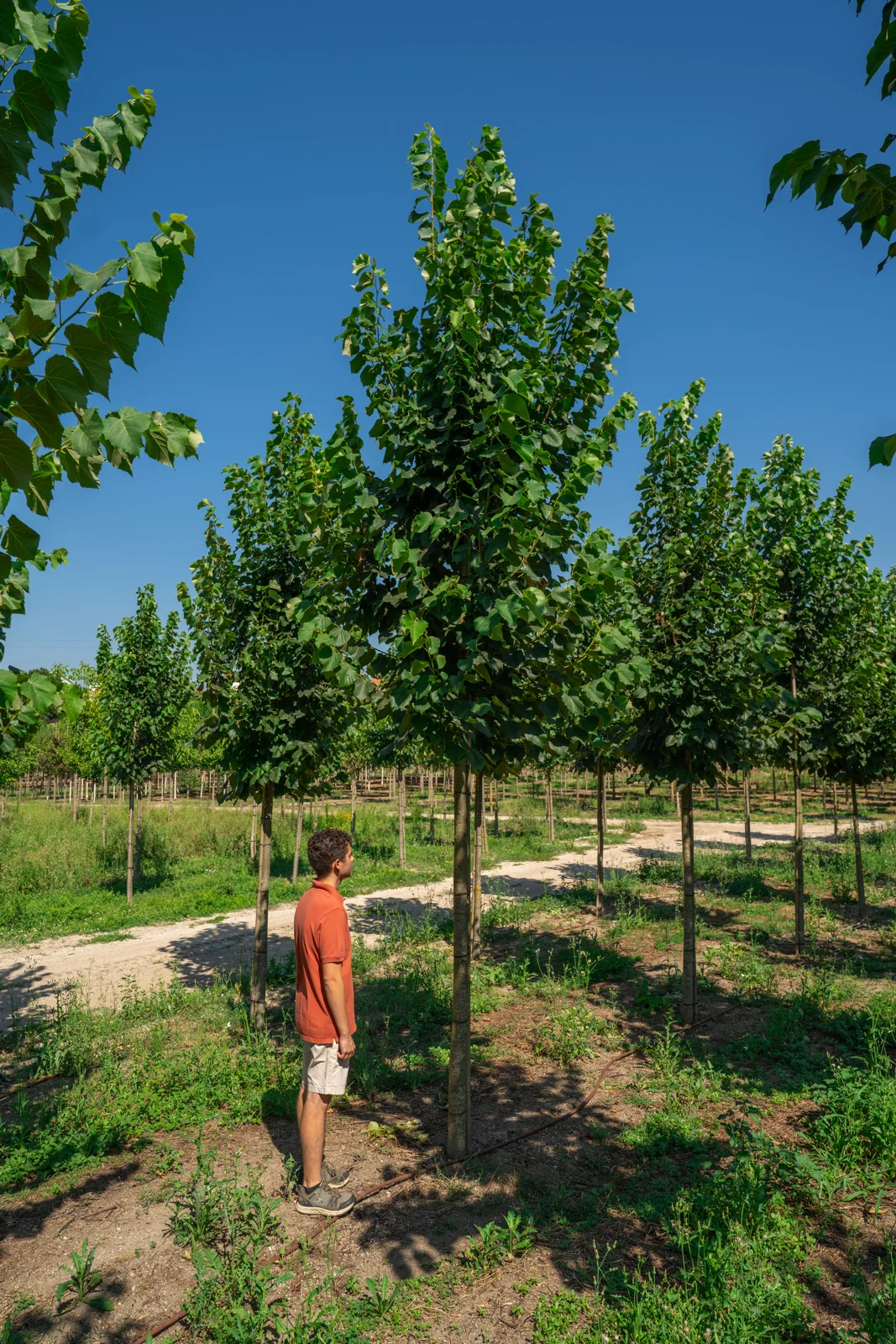
Generous summer shade with silver-backed, fragrant foliage
Silver Lime · Tilia tomentosa
Where a deciduous avenue or shade tree must carry hot dry summers on alkaline urban ground, this silver linden offers a dense pyramidal-to-rounded crown, fragrant midsummer flower, and foliage that flashes silver as it moves.
- Broad dense crown casts deep, even summer shade
- Silvery leaf undersides flash and shimmer in any breeze
- Fragrant late-summer flowers draw bees and butterflies
About this Species
Specifiers reaching for a large deciduous frame tree across much of Spain will recognise the role: the part that plátano de sombra (Platanus x acerifolia) plays in shade and alignment, but without the Ceratocystis platani exposure now constraining plane planting, and with a cleaner, more contained crown. The glossy green leaves carry dense silvery-white…
Read more
Show less
Specifiers reaching for a large deciduous frame tree across much of Spain will recognise the role: the part that plátano de sombra (Platanus x acerifolia) plays in shade and alignment, but without the Ceratocystis platani exposure now constraining plane planting, and with a cleaner, more contained crown. The glossy green leaves carry dense silvery-white tomentose undersides, so the canopy turns and glints in any breeze, and fragrant cream flowers open in July and August, late among the limes and rich in nectar for bees.
Climatically the tree is broad. It is hardy well below any Spanish winter minimum, so the cold of the continental interior (meseta) holds no risk, while a high heat tolerance carries it through hot dry summers on the Mediterranean coastal littoral and across the central plateau. Drought tolerance is moderate rather than absolute: deep, well-developed roots let an established specimen ride out a summer irrigation cut-off, but the semi-arid southeast and the harshest saline ground ask for supplementary water through dry spells and for the first two to three summers while it roots out.
Site tolerance is wide. The species takes alkaline and calcareous soils that defeat more acid-loving frame trees, accepts loam and heavier clay provided drainage is sound, and tolerates urban pollution and compacted pits, which suits it to street alignment and parkland alike. Moderate salt tolerance allows coastal projects with reasonable shelter while it establishes.
Growth is steady rather than fast, building a broad pyramidal crown that rounds with age and casts dense, even shade for underplanting. It sits outside the Xylella fastidiosa host range that shadows olivo and oleander specification, and reported susceptibility to aphids and their sooty residue is lower than in other limes, an asset over paving and parked cars. Prune in the early years to set a single clear leader and a strong branch framework.



Advice on this species
Want to know more about Tilia tomentosa?
Tell us about your project and we'll advise you on this species — where it thrives, which size makes sense, and what to expect once planted.
- Produção própria
- Exemplares adultos
- Resposta em 1–2 dias
Sem compromisso · orçamento personalizado