

Fast silvery shade for the waterside garden
White Willow · Salix alba
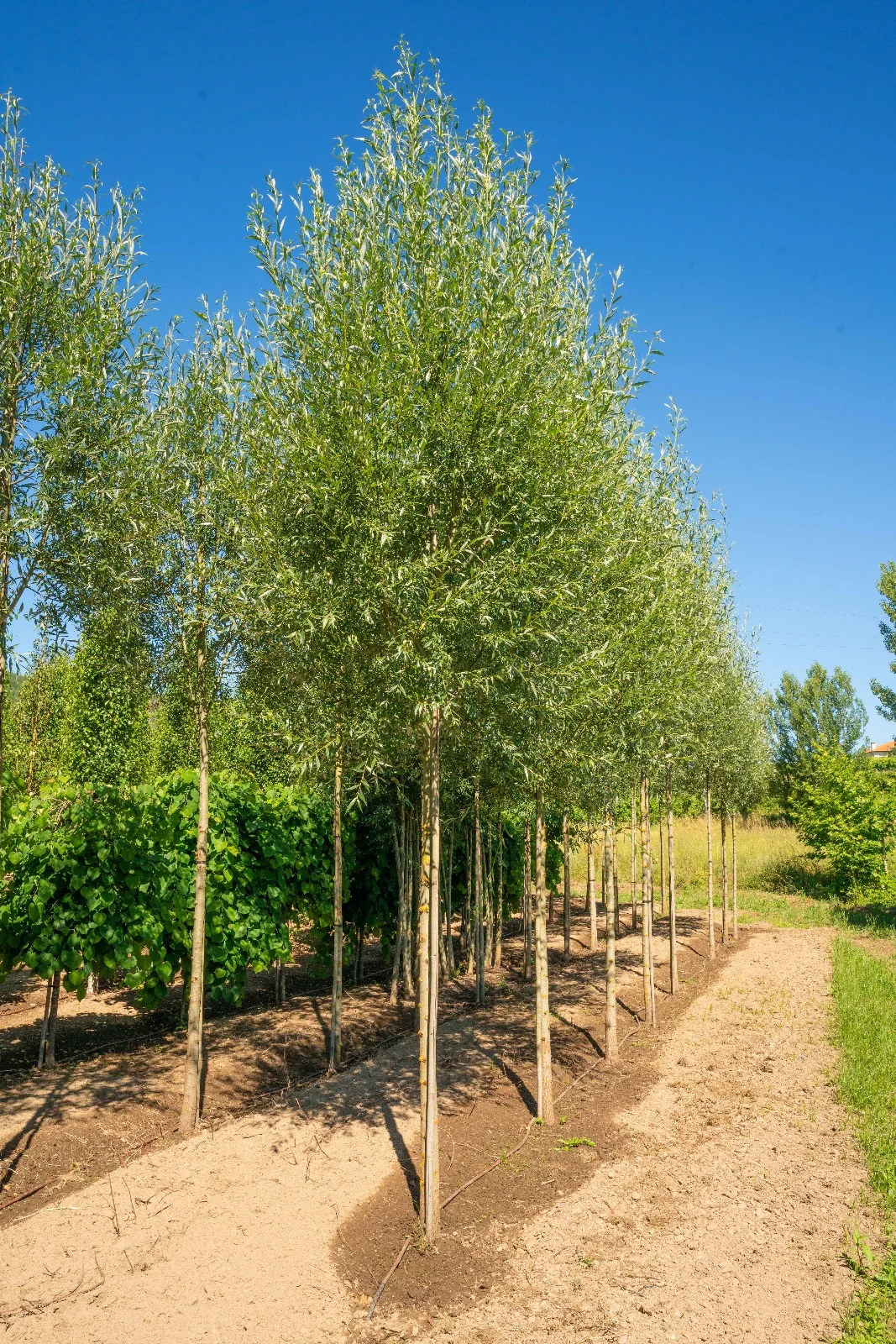
Where a project carries a watercourse or a high water table, this fast-growing deciduous willow is the obvious structural choice: silvery foliage, a broad rounded crown, and reliable performance on the wet, heavy soils that defeat most specimen trees.
- Native to Spain, at home beside ponds, streams, and low-lying damp ground
- Fast-growing, casting generous shade within a few seasons of planting
- Silvery leaf undersides shimmer with every breeze across the garden
About this Species
A broad, rounded to spreading crown carried on ascending branches that arch at the tips gives the white willow (sauce blanco) its soft, mobile presence. The lanceolate leaves are mid-green above and silky white beneath, so the whole canopy flickers silver in any breeze, and early spring brings dense yellow catkins before the foliage hardens. Autumn closes…
Read more
Show less
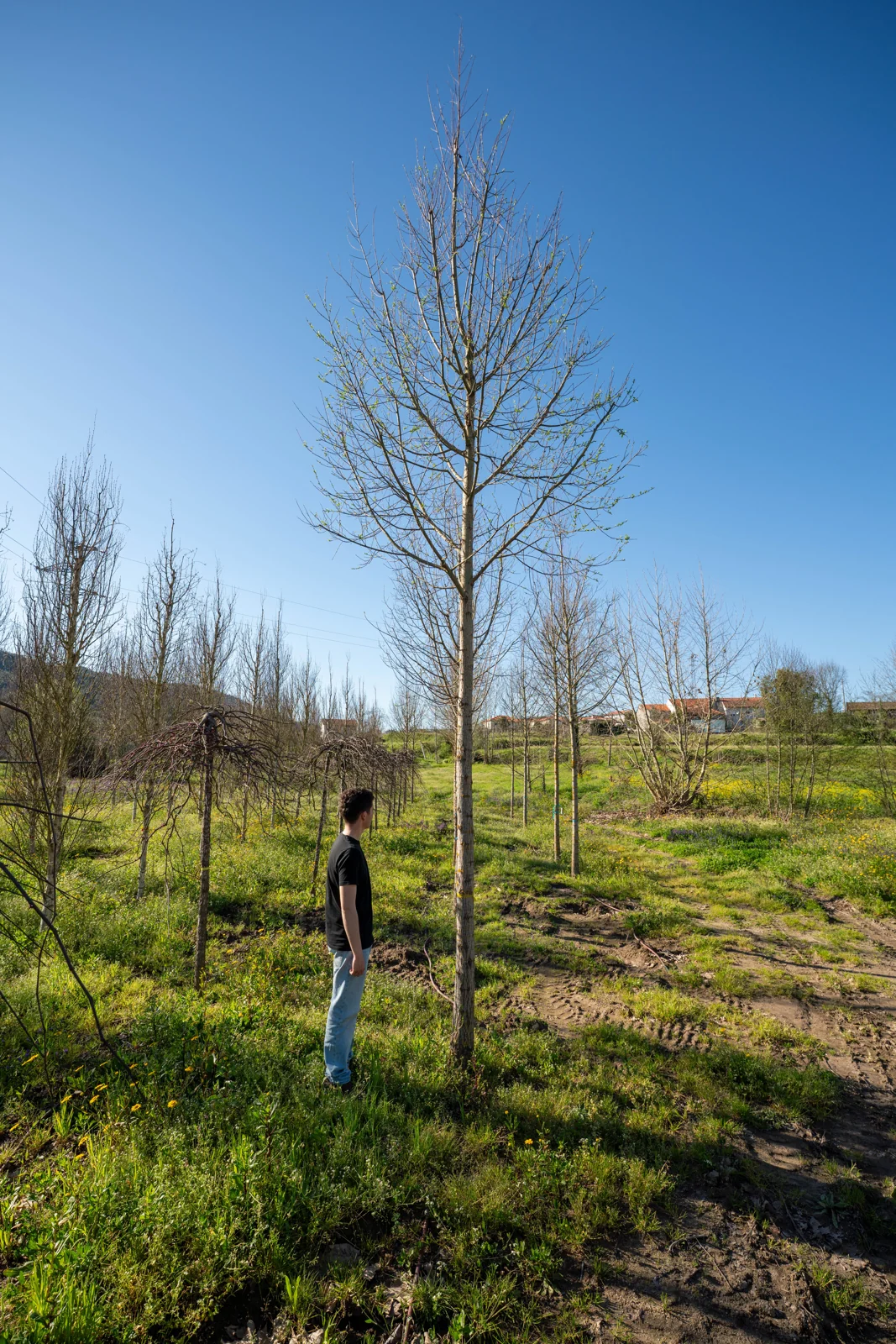
A broad, rounded to spreading crown carried on ascending branches that arch at the tips gives the white willow (sauce blanco) its soft, mobile presence. The lanceolate leaves are mid-green above and silky white beneath, so the whole canopy flickers silver in any breeze, and early spring brings dense yellow catkins before the foliage hardens. Autumn closes on a clear pale yellow. Among the fastest of the large deciduous specimens, it reaches 15 to 25 m with a 10 to 15 m spread, closing canopy and screening a view far quicker than the slower framework trees a designer would otherwise reach for.
The defining specification variable is water. This is a riparian species whose value lies precisely where free water sits: stream and river banks, pond and lake margins, floodplains, and the wet, compacted clays common across the humid Atlantic northwest (cornisa cantábrica). It carries genuine cold hardiness well below any Spanish minimum, so winter temperature is never the constraint. Soil moisture is. On moist, well-drained, clay or loamy ground in full sun it establishes and grows without check; on genuinely dry sites it struggles, and across the Mediterranean littoral and the semi-arid southeast it depends on a reliably high water table or sustained supplementary irrigation rather than on rainfall alone.
Water this accordingly. Through its first two or three summers it asks for steady moisture at the roots; thereafter, on a naturally wet site, it carries itself with little intervention, which is why it earns its place in riparian restoration and naturalistic water-edge schemes (proyecto de ajardinamiento) over a tree that needs irrigating in perpetuity.
Site it for its strengths rather than against them. As a member of Salicaceae it sits outside the Xylella fastidiosa host range, a useful point of reassurance where Olea and Nerium are under pressure. The wood is light and the roots run shallow and vigorous, so it belongs in open, moist ground and beside water, not in narrow urban pits or over paving and drains. Given room and moisture, few trees deliver structure and screening as quickly.



Advice on this species
Want to know more about Salix alba?
Tell us about your project and we'll advise you on this species — where it thrives, which size makes sense, and what to expect once planted.
- Produção própria
- Exemplares adultos
- Resposta em 1–2 dias
Sem compromisso · orçamento personalizado