

A slim, upright oak for narrow spaces
English Oak ‘Fastigiata Koster’ · Quercus robur ‘Fastigiata Koster’
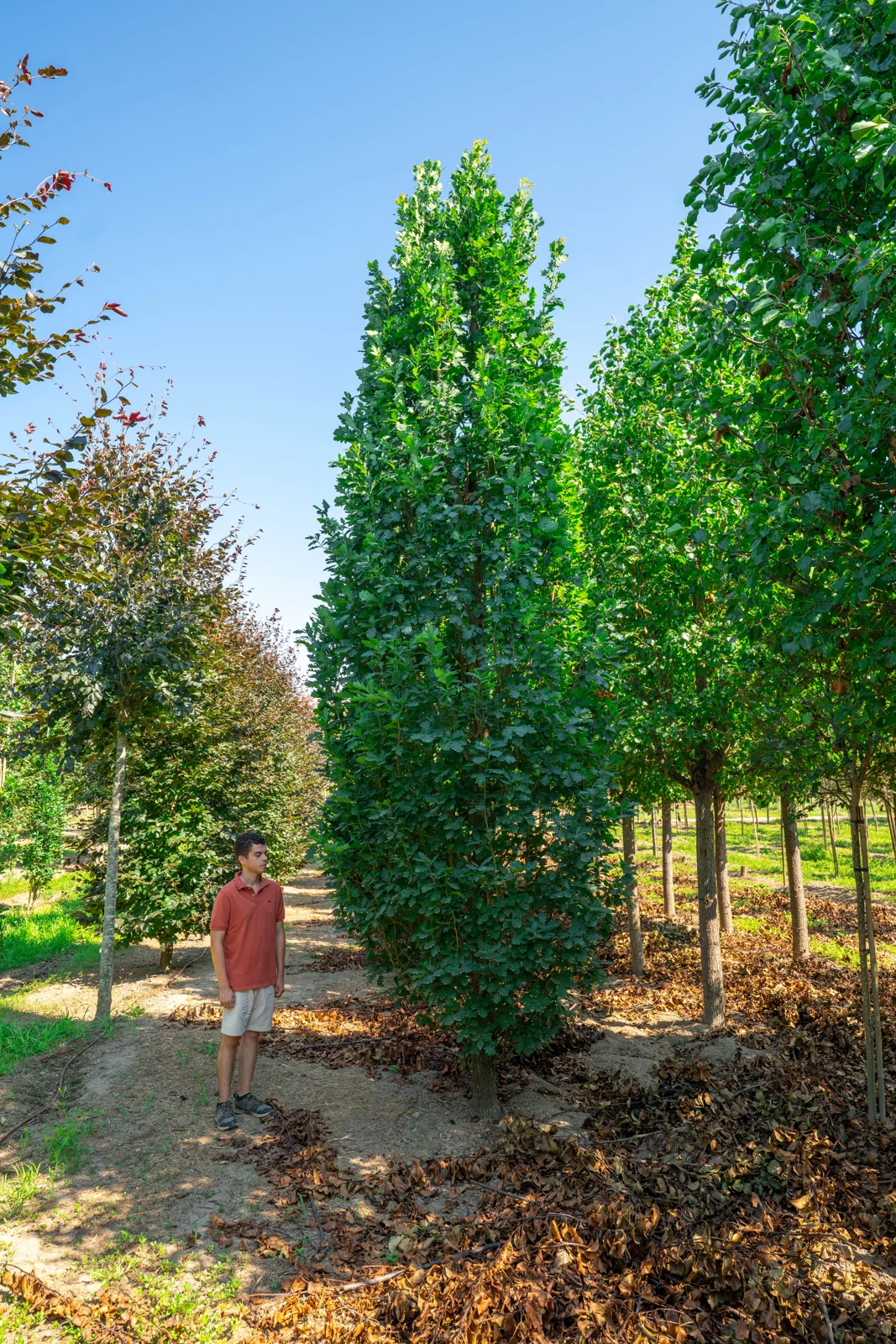
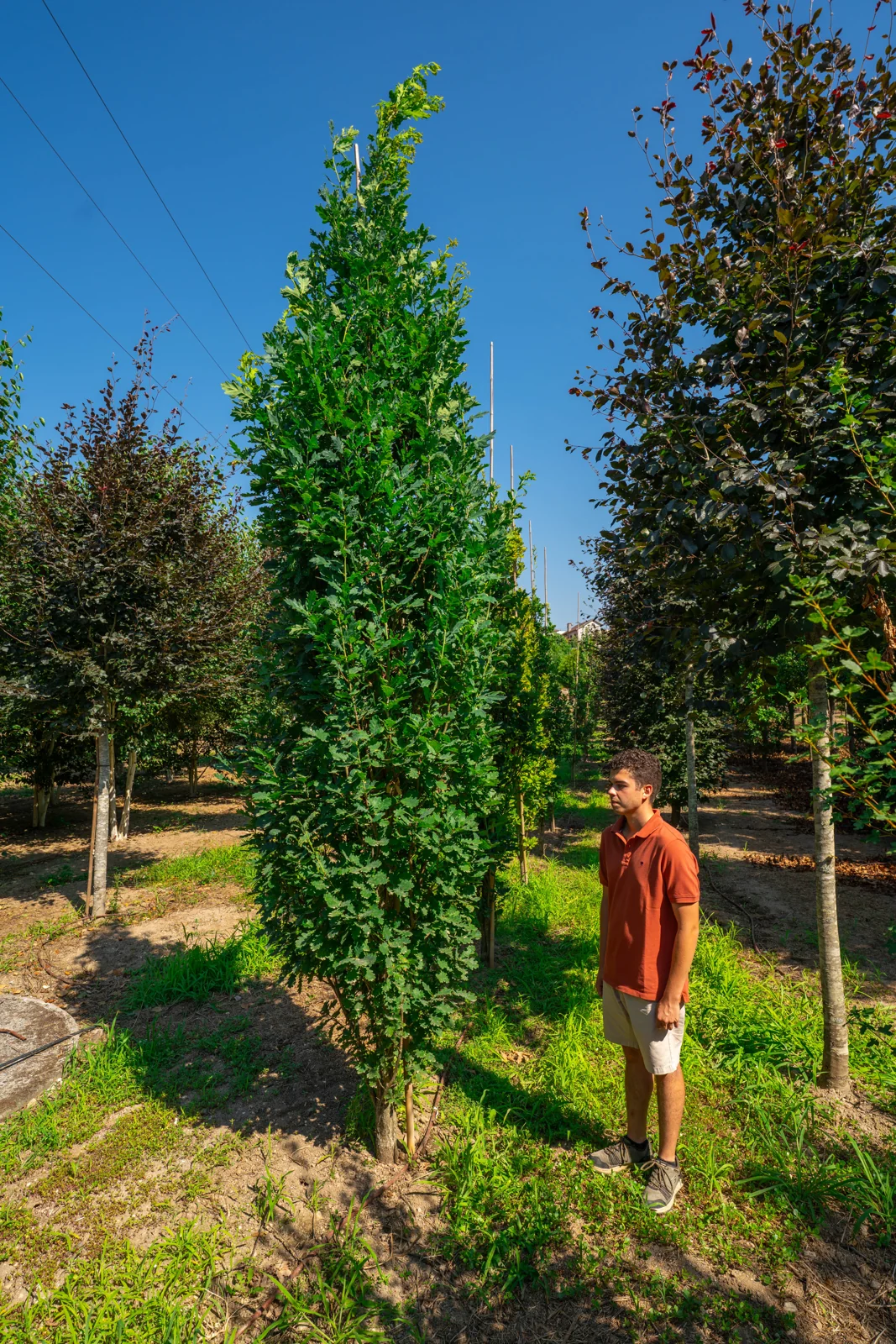
For confined streets and squares where a vertical accent is needed without a wide canopy, this fastigiate selection of the English oak holds a tight, erect column of dense branching close to the trunk.
- Narrow, upright column suits courtyards, drives, and tight spaces
- Reaches roughly 20 m tall but only about 4 m wide
- Fully frost-hardy through Greater Madrid and the Sierra de Guadarrama
Key Facts
About this Cultivar
Unlike the broad, rounded crown of the straight species, this clone keeps a narrow columnar habit: branches rise steeply and pack densely around a single stem, so the canopy stays compact even as the tree matures toward roughly 20 m in height with a spread of about 4 m. That geometry suits narrow alignments, planted squares, and pits where lateral room is…
Read more
Show less
Unlike the broad, rounded crown of the straight species, this clone keeps a narrow columnar habit: branches rise steeply and pack densely around a single stem, so the canopy stays compact even as the tree matures toward roughly 20 m in height with a spread of about 4 m. That geometry suits narrow alignments, planted squares, and pits where lateral room is the limiting factor, and it gives the deciduous, vertical counterpart to the evergreen cipres mediterraneo (Cupressus sempervirens) where a denser seasonal canopy is wanted.
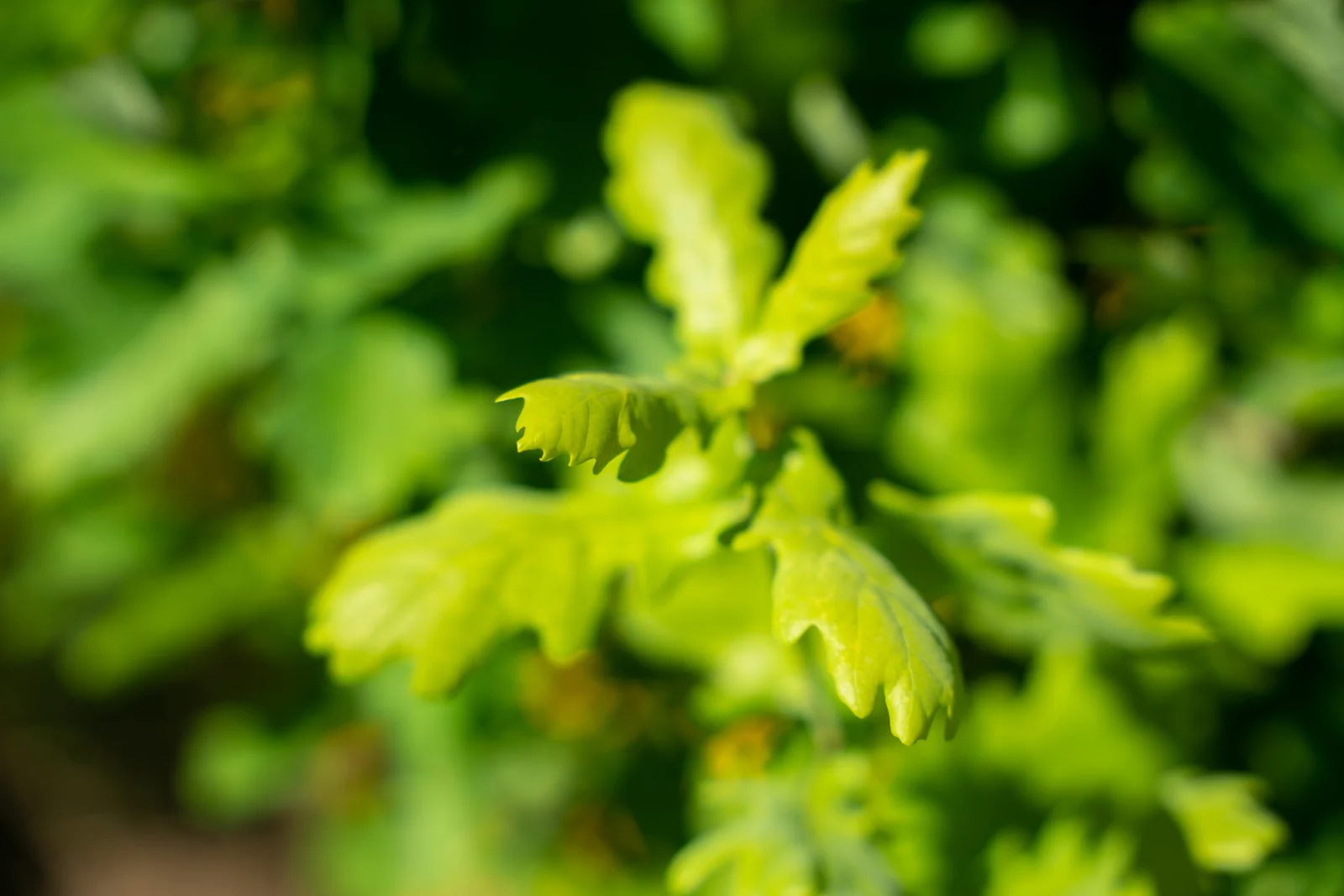
The leaves are the familiar lobed English oak foliage, dark green through summer and turning to yellow-brown tones before falling; the small obovoid acorns match those of the parent species. Across Spain the tree is most at home in the humid Atlantic northwest (the cornisa cantabrica) and on cooler interior sites, and it carries the cold tolerance of its provenance, taking the late-spring frosts and hard winters of the continental meseta without injury.
Water is its principal constraint for southern and southeastern projects. Drought tolerance is moderate rather than absolute: established trees withstand the summer dry season, but on the semi-arid southeast and the hotter Mediterranean coast they hold form best with supplementary irrigation through the first two or three summers and a deep, moisture-retentive soil thereafter. The tree is undemanding on soil type, taking heavy clays as readily as lighter ground, which makes it workable in the compacted substrates of urban pits.
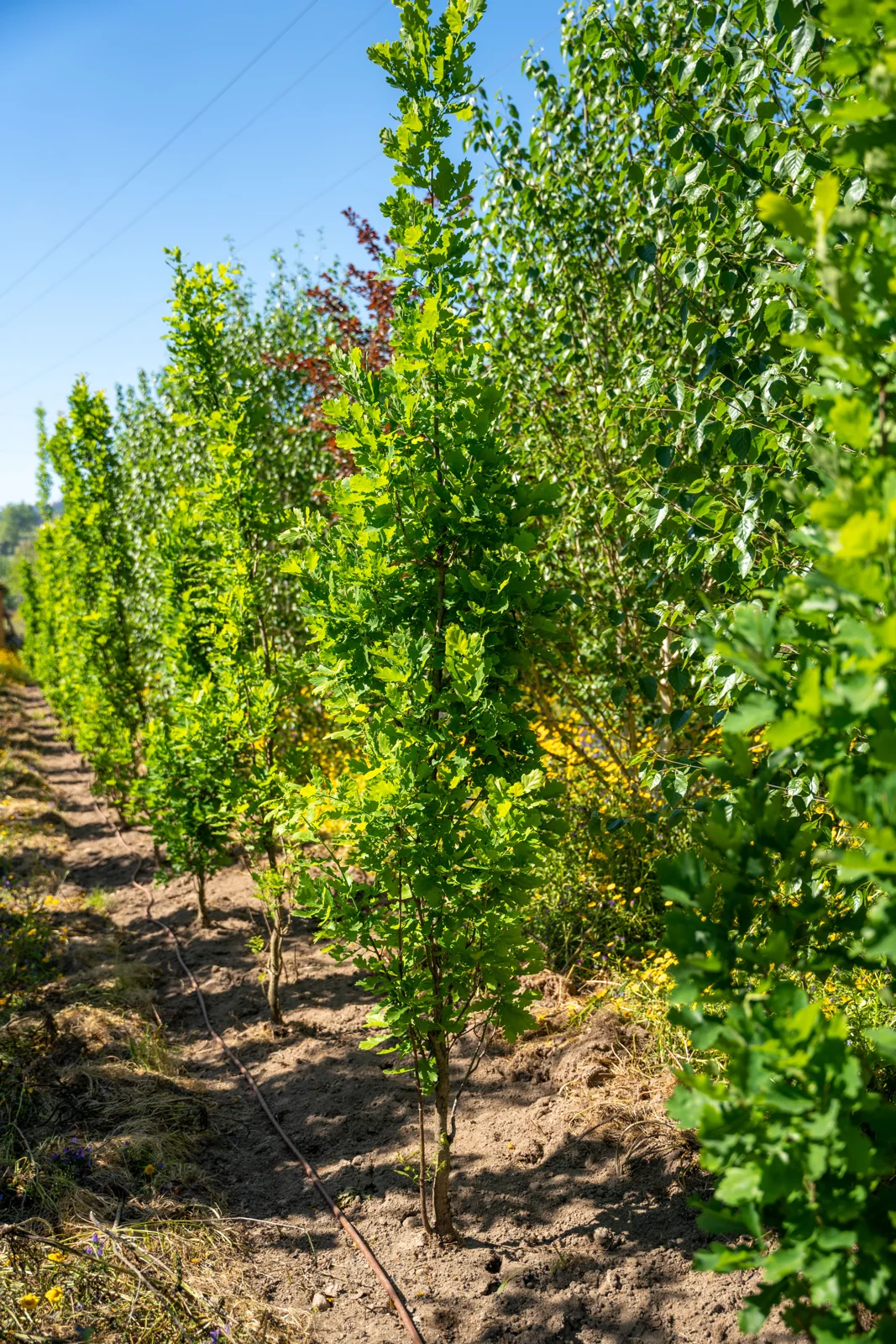
It is a sound choice for street and avenue use because it tolerates urban air pollution and root confinement beside paving, and it accepts full sun or light shade. As a white-oak relative it sits outside the acute Xylella fastidiosa host concern that shapes Mediterranean specification around Olea and Nerium, though oaks remain subject to the usual powdery mildew in humid summers, an aesthetic rather than structural problem. Growth is at a medium pace, so a field-grown specimen reaches usable scale years sooner than a young nursery whip.
Advice on this species
Want to know more about Quercus robur 'Fastigiata Koster'?
Tell us about your project and we'll advise you on this species — where it thrives, which size makes sense, and what to expect once planted.
- Produção própria
- Exemplares adultos
- Resposta em 1–2 dias
Sem compromisso · orçamento personalizado