

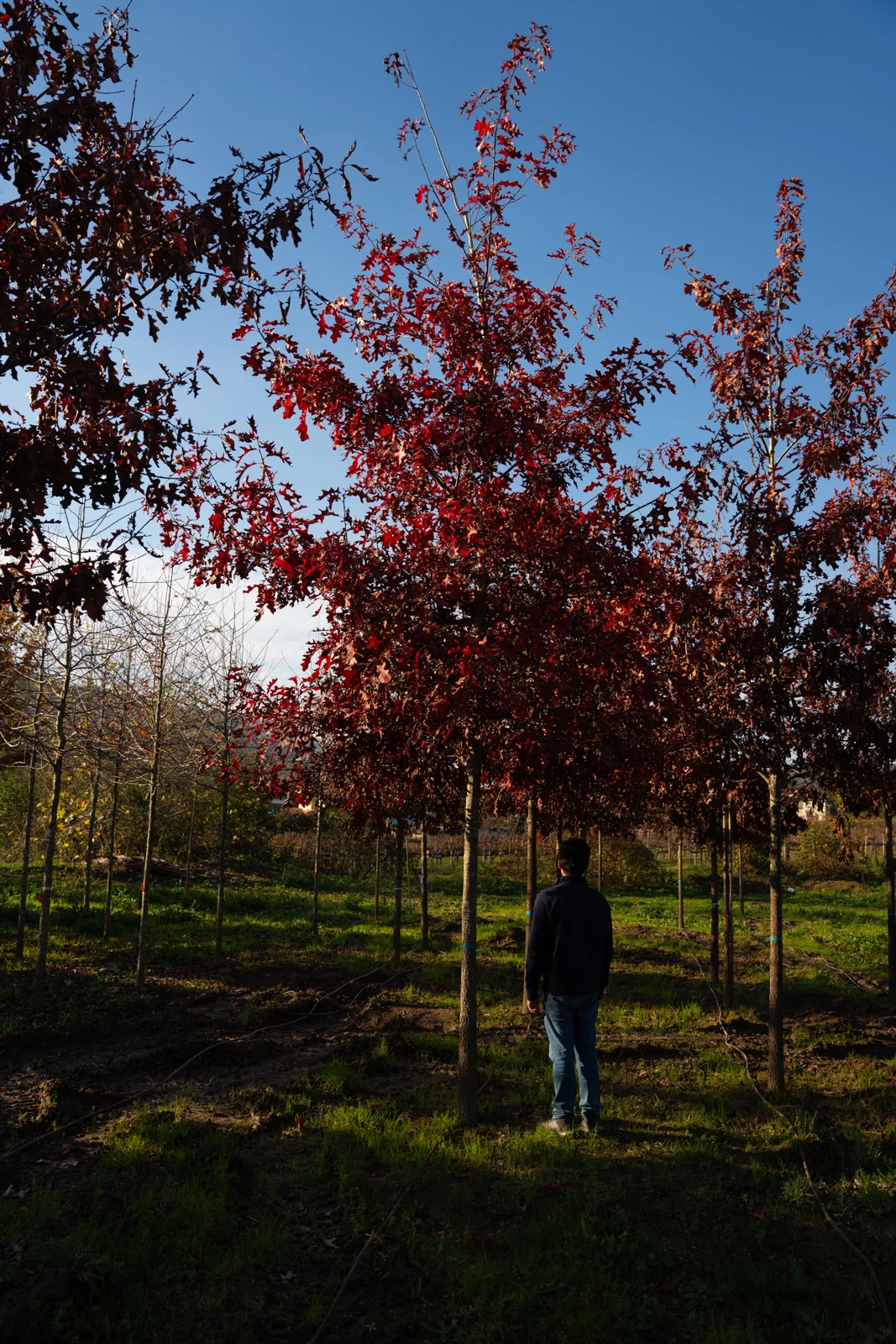
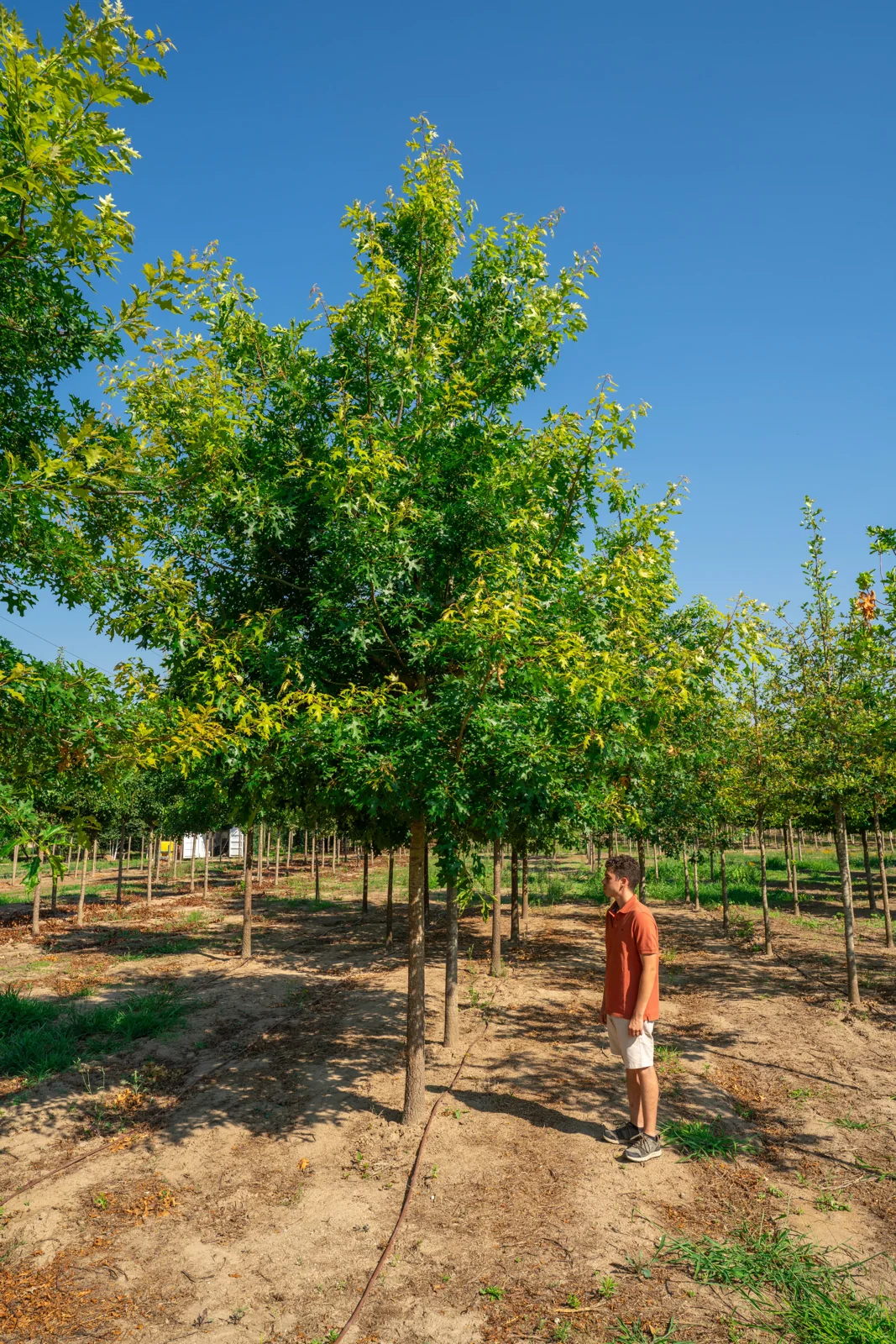
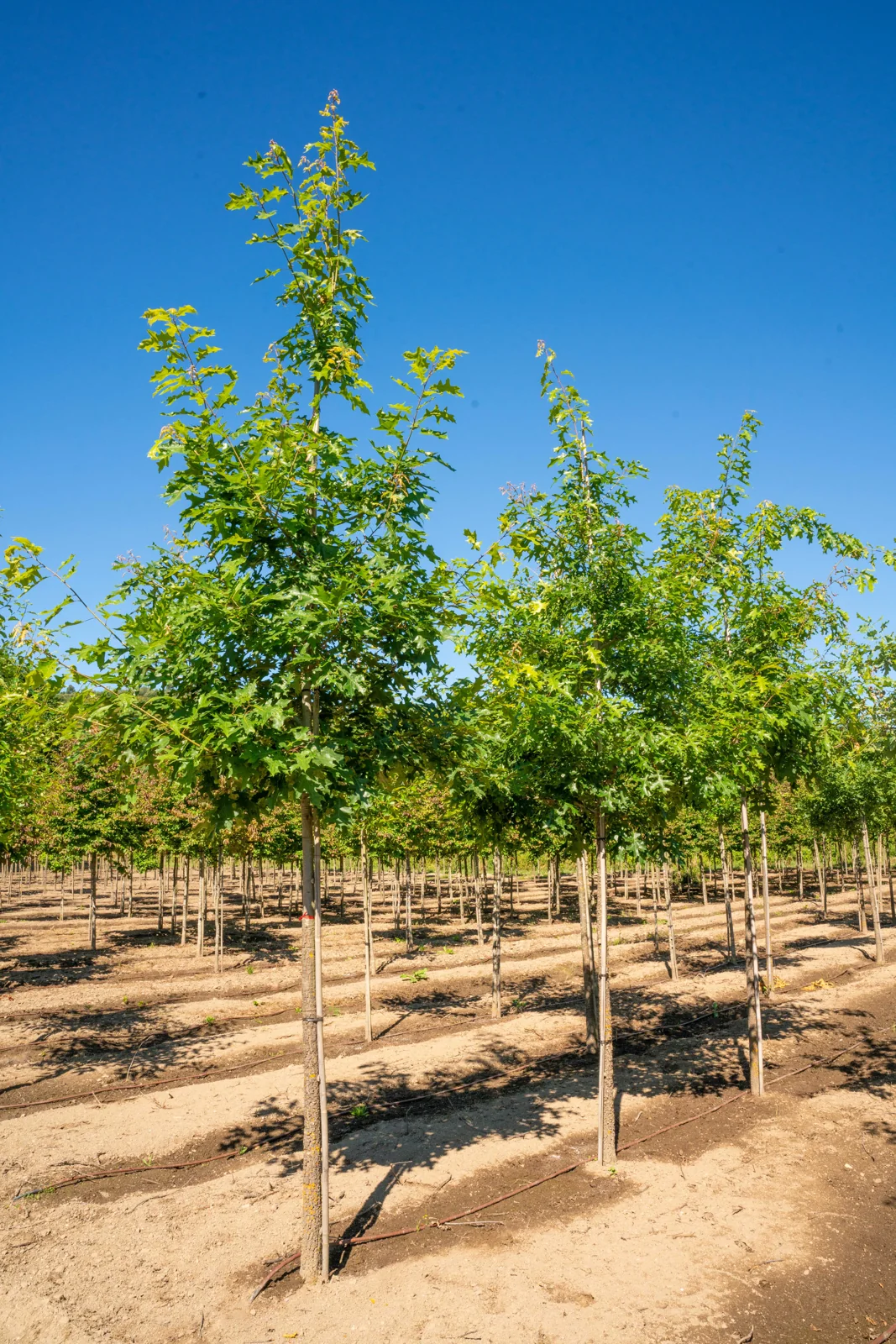
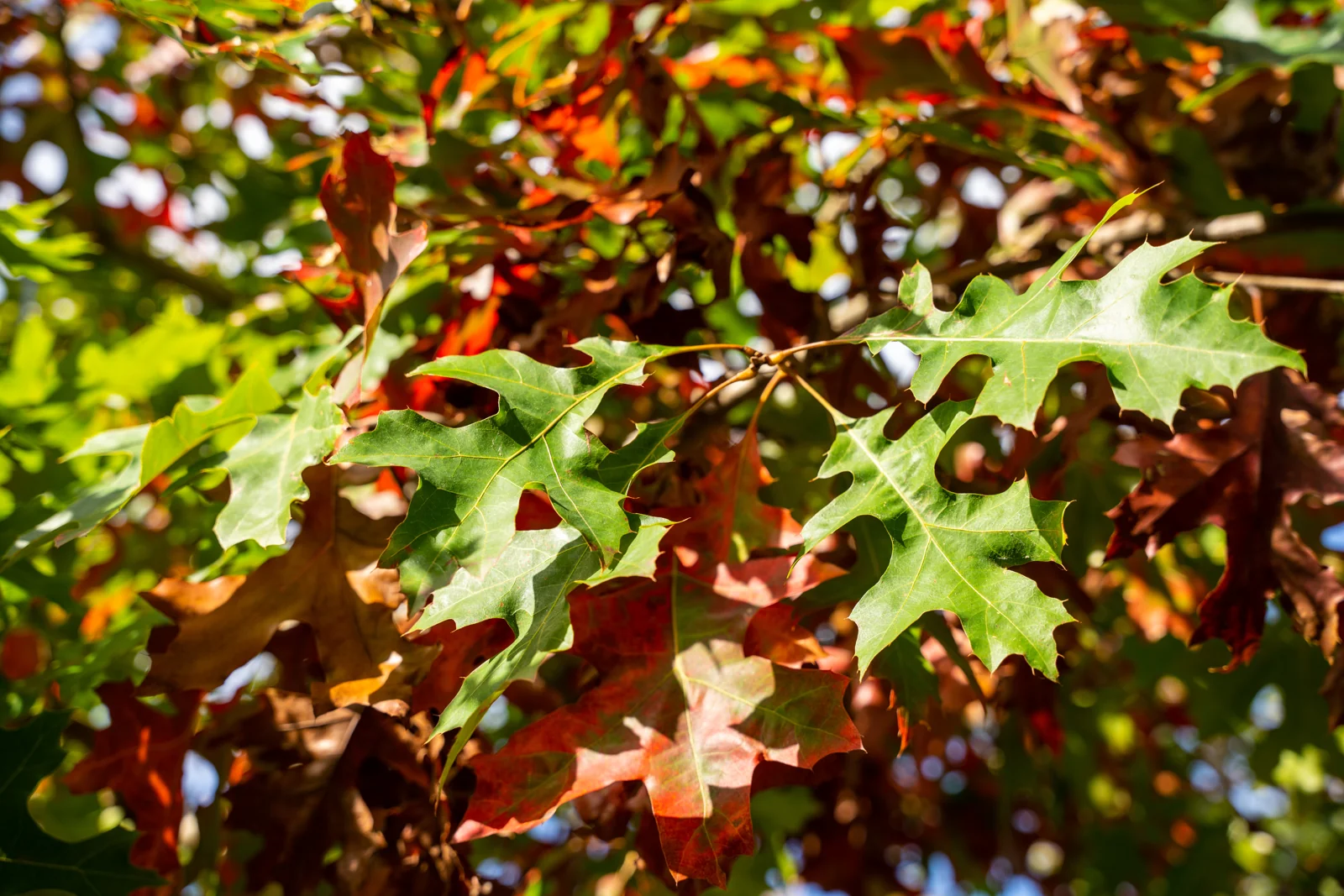
A wide-crowned shade tree for late scarlet autumn
Scarlet Oak · Quercus coccinea
Where a scheme needs a deciduous canopy that closes the year with vivid scarlet foliage, this North American oak offers a broad, dappled crown, a medium-to-fast growth rate, and tolerance of soils from acidic sands to alkaline ground.
- Deep scarlet autumn foliage that holds for six to eight weeks
- Broad, rounded crown casting light dappled shade you can garden beneath
- Tolerates alkaline clay and chalk without the yellowing of pin oak
About this Species
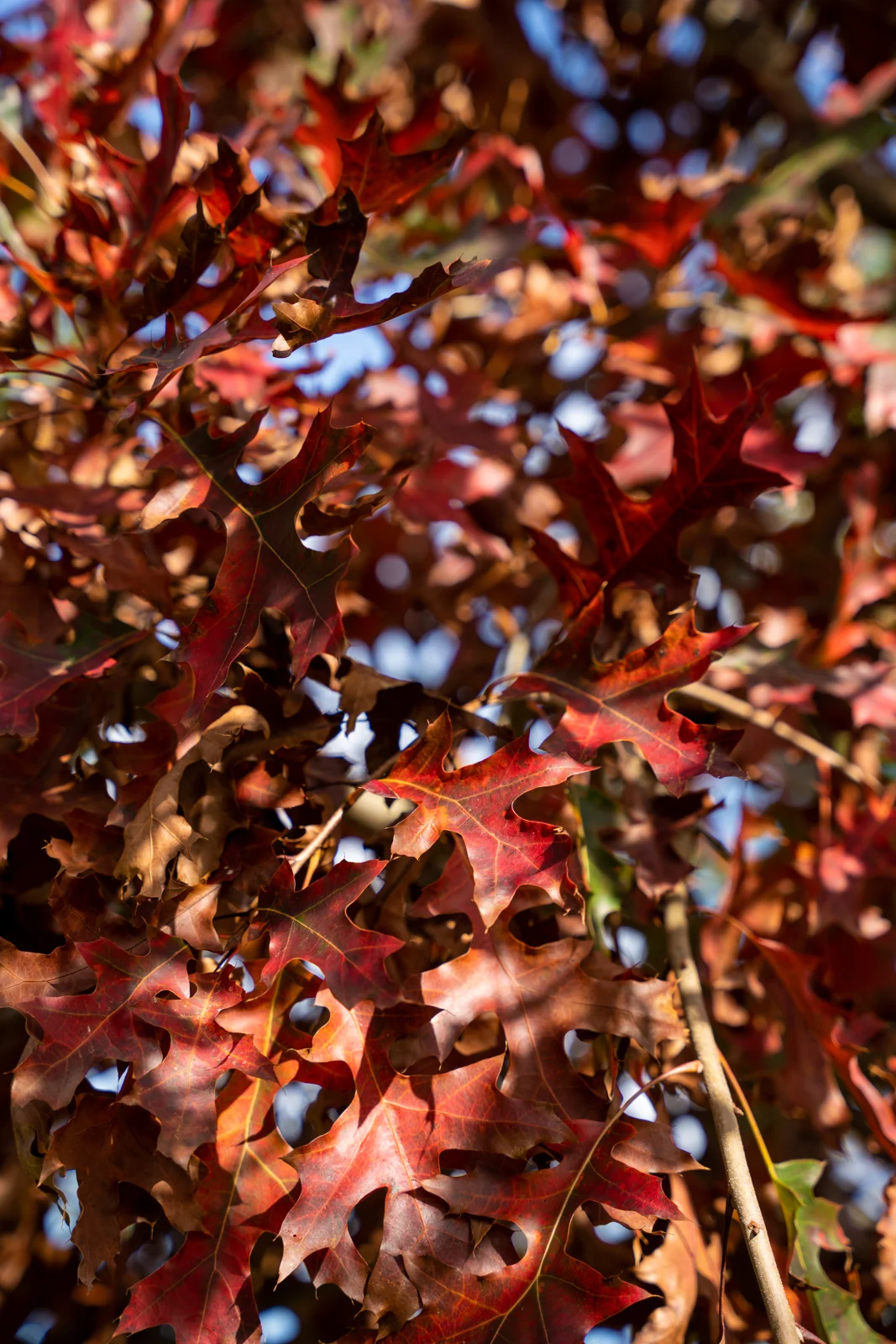
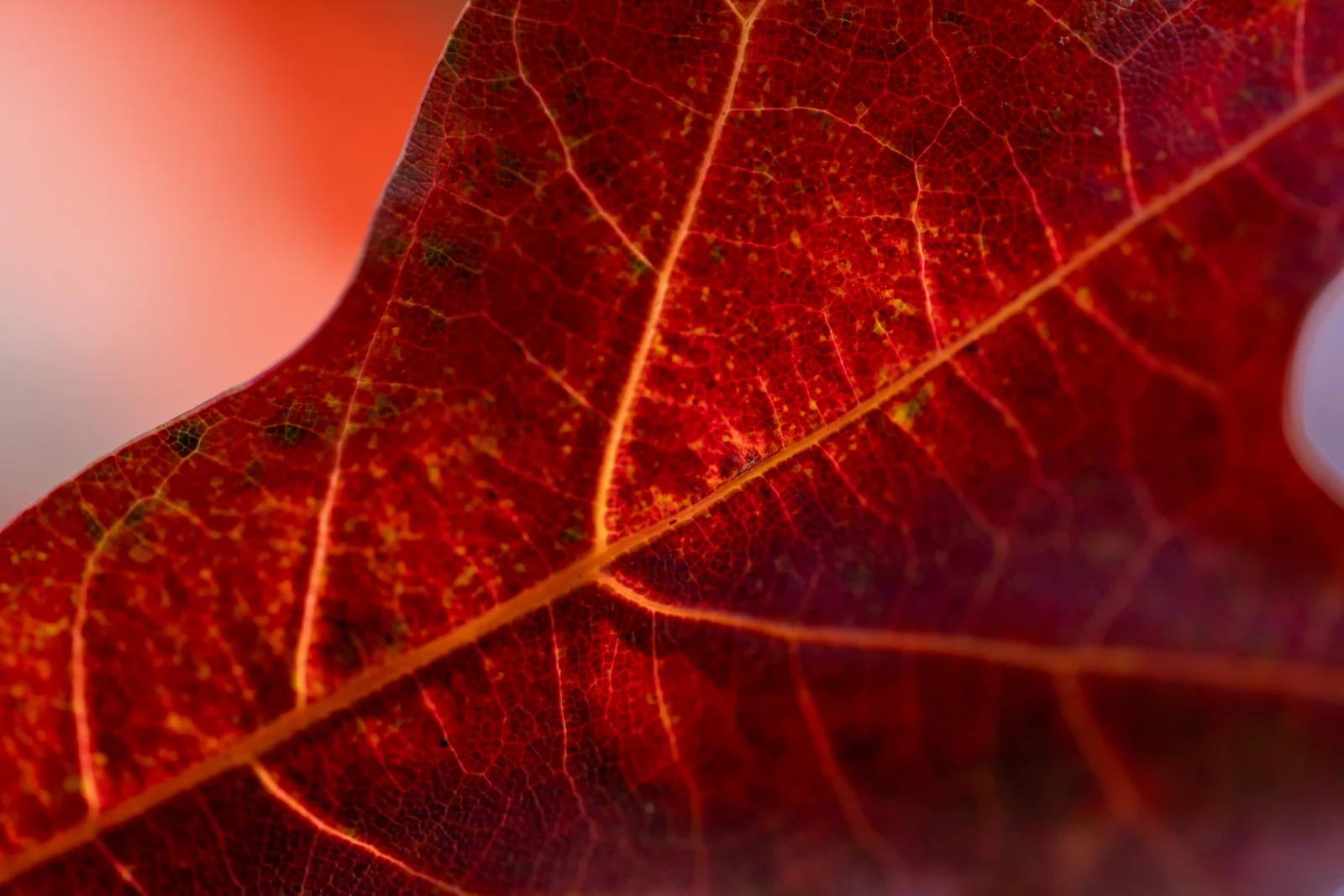
Specified mainly for its autumn display, the scarlet oak (roble escarlata) turns a deep vermilion late in the season and holds the colour for six to eight weeks, well after most deciduous trees have dropped. The turn is genuinely scarlet rather than the muddier russet of Quercus rubra, which makes it a clear choice where autumn colour is a programme…
Read more
Show less
Specified mainly for its autumn display, the scarlet oak (roble escarlata) turns a deep vermilion late in the season and holds the colour for six to eight weeks, well after most deciduous trees have dropped. The turn is genuinely scarlet rather than the muddier russet of Quercus rubra, which makes it a clear choice where autumn colour is a programme requirement: chiefly the humid Atlantic northwest (cornisa cantábrica) and the continental interior (meseta), where cool nights sharpen the pigment. Colour intensity does vary between individual trees, so on a feature planting it is worth selecting from observed stock.
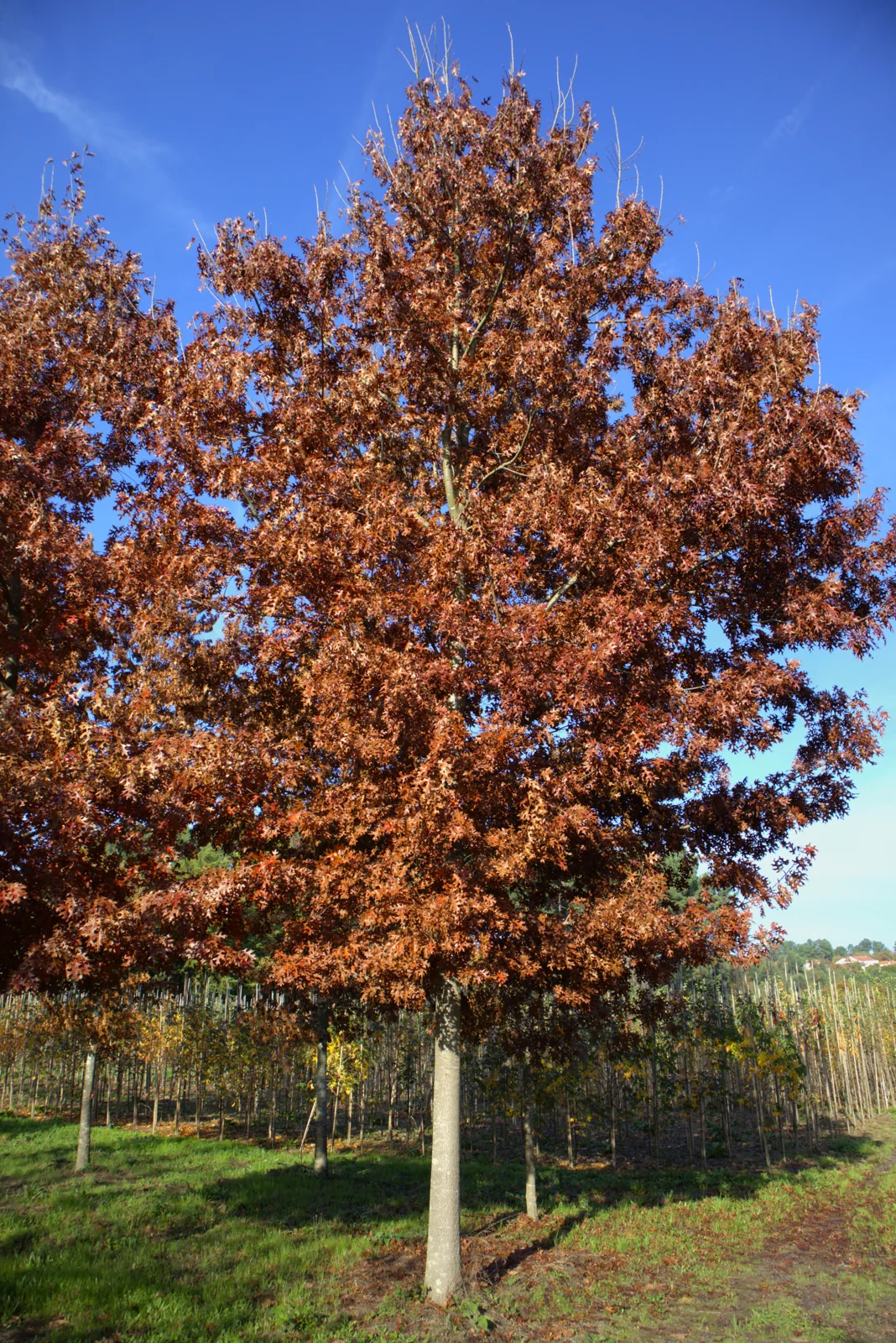
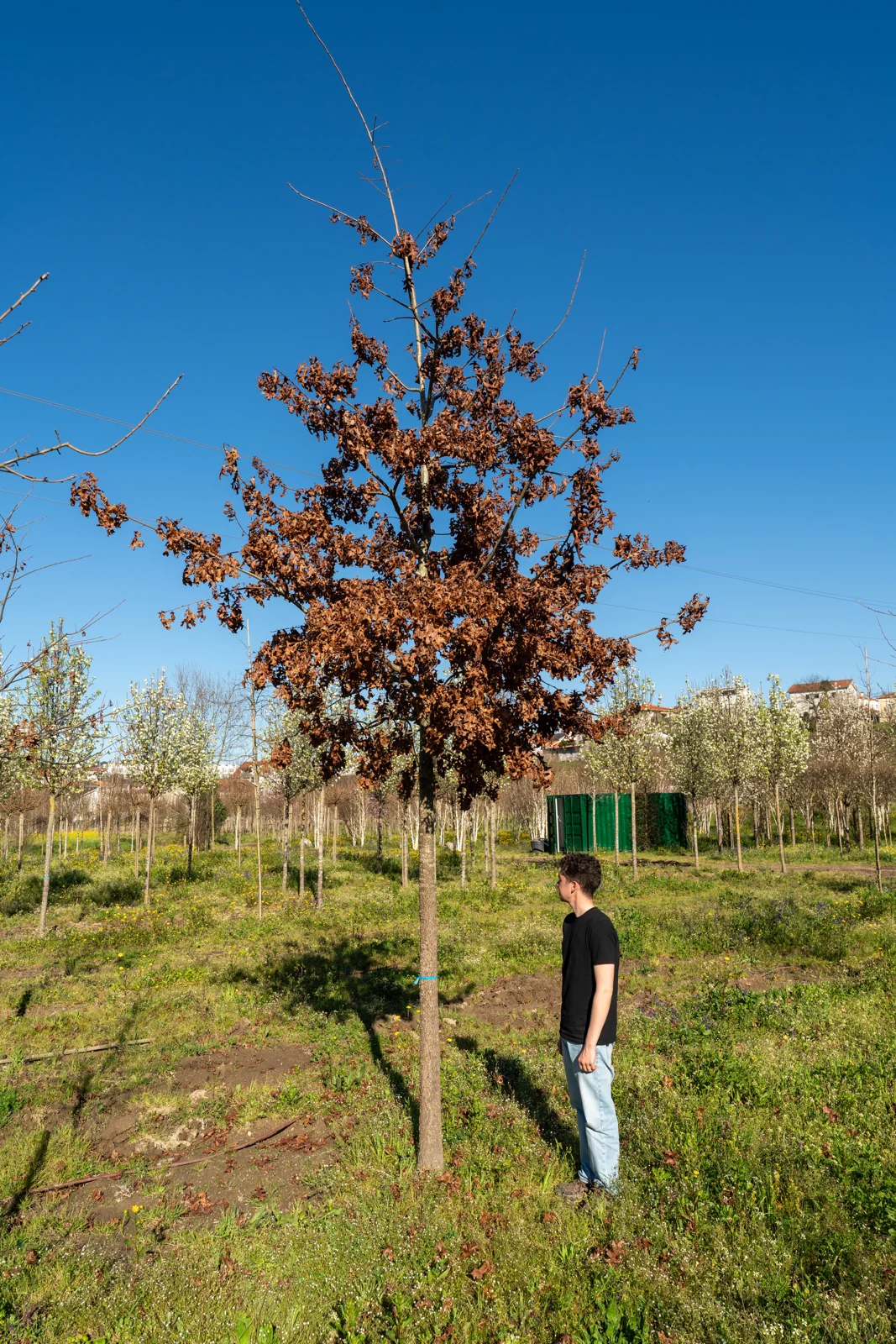
At maturity it reaches roughly 15 to 25 m tall with a 12 to 18 m spread, forming a rounded, open, wide-spreading crown. The canopy casts dappled rather than dense shade, so groundcover and shade-tolerant underplanting persist beneath it. This habit, combined with a rapid early growth rate for an oak, suits it to parkland, estate lawns, and large urban green space (servicio de parques y jardines) rather than confined pits, where its eventual breadth would crowd the kerb.
The species prefers acidic, free-draining sandy or loamy soils and performs best on the drier upland ground of its native eastern North American range. Unlike the closely related Quercus palustris, it does not readily develop chlorosis on alkaline soils, so it tolerates the calcareous ground common across much of Spain provided drainage is good. It will not accept waterlogging or compacted, poorly drained substrates.
Winter cold is no constraint: the species is hardy well below any Spanish minimum. Drought tolerance is moderate once the deep taproot is established, but in the semi-arid southeast and on hot interior sites it needs supplementary irrigation through its first two to three summers and through prolonged restriction thereafter. It is not a primary Xylella fastidiosa host, and carries low foliage flammability, though its thin bark is sensitive to fire at the stem.



Advice on this species
Want to know more about Quercus coccinea?
Tell us about your project and we'll advise you on this species — where it thrives, which size makes sense, and what to expect once planted.
- Produção própria
- Exemplares adultos
- Resposta em 1–2 dias
Sem compromisso · orçamento personalizado