

A narrow flowering tree for tight, paved spaces
Callery Pear ‘Chanticleer’ · Pyrus calleryana ‘Chanticleer’
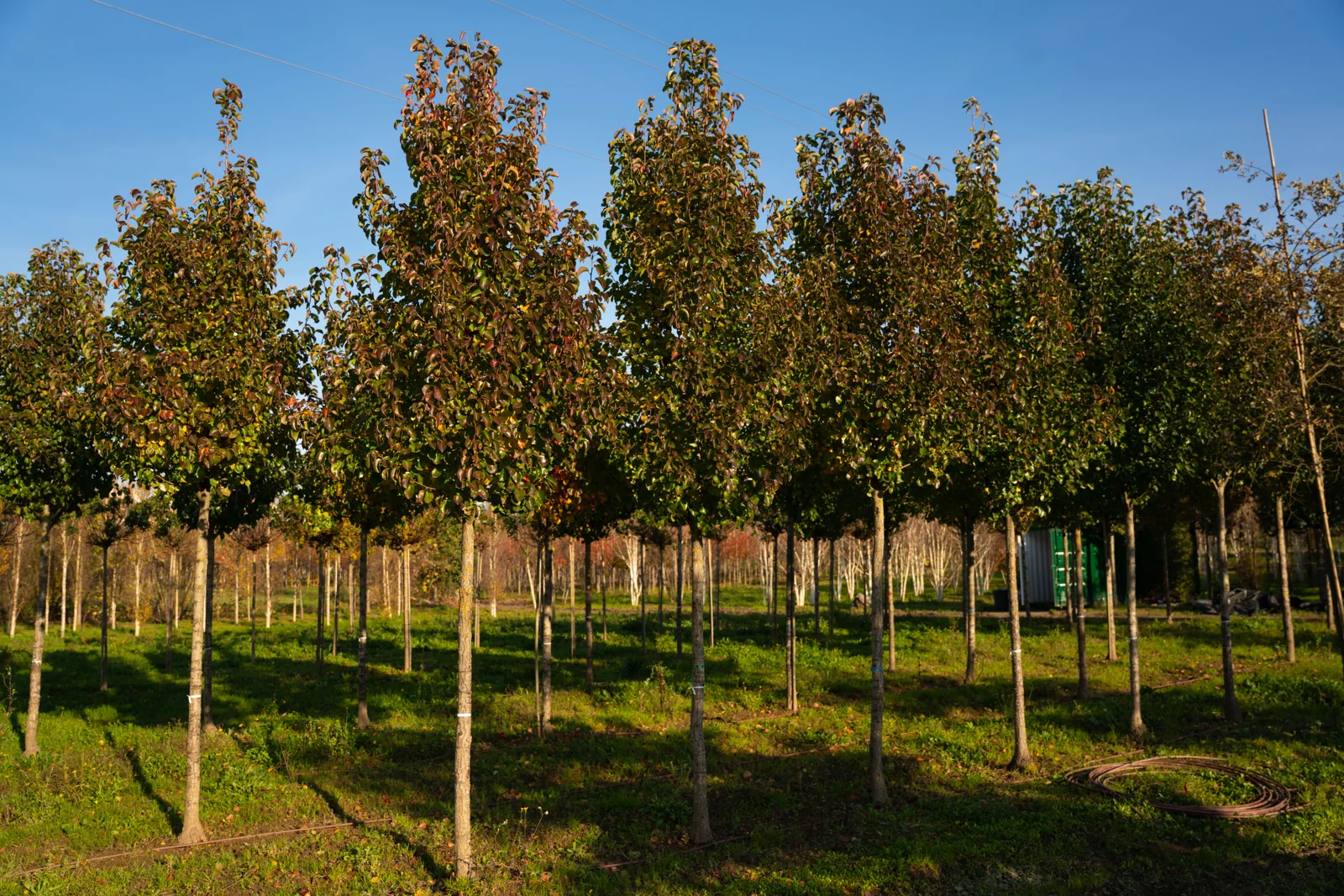
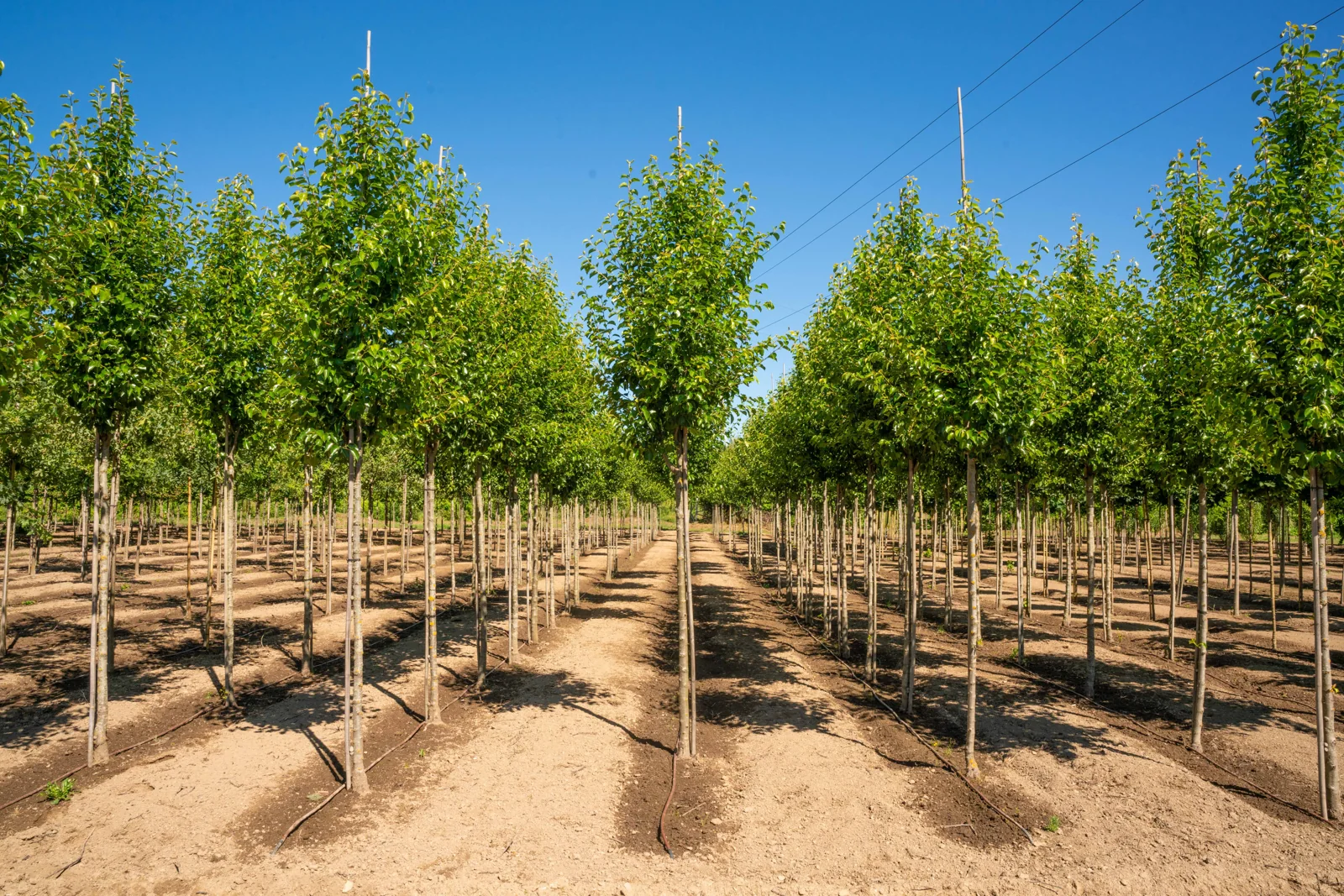
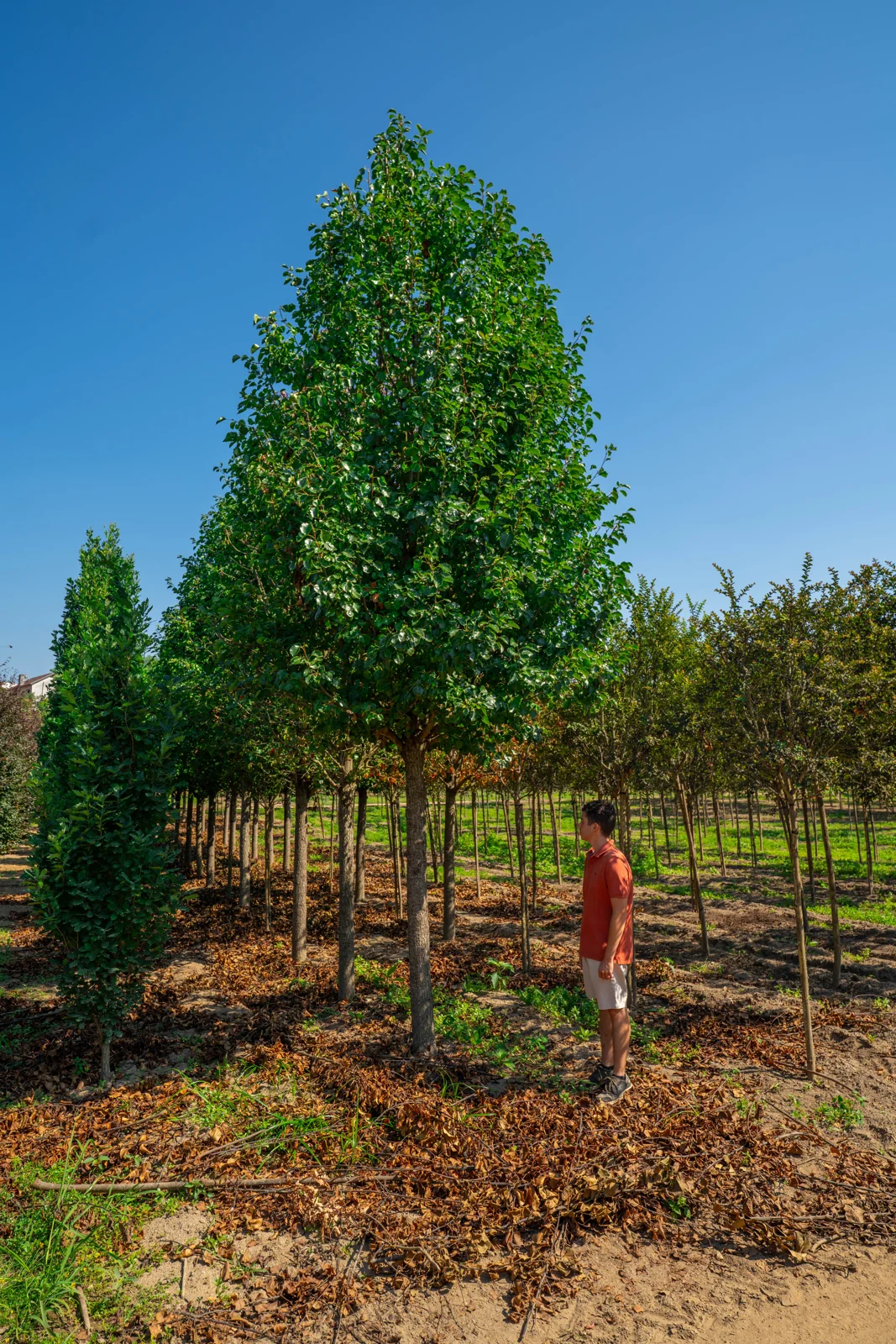
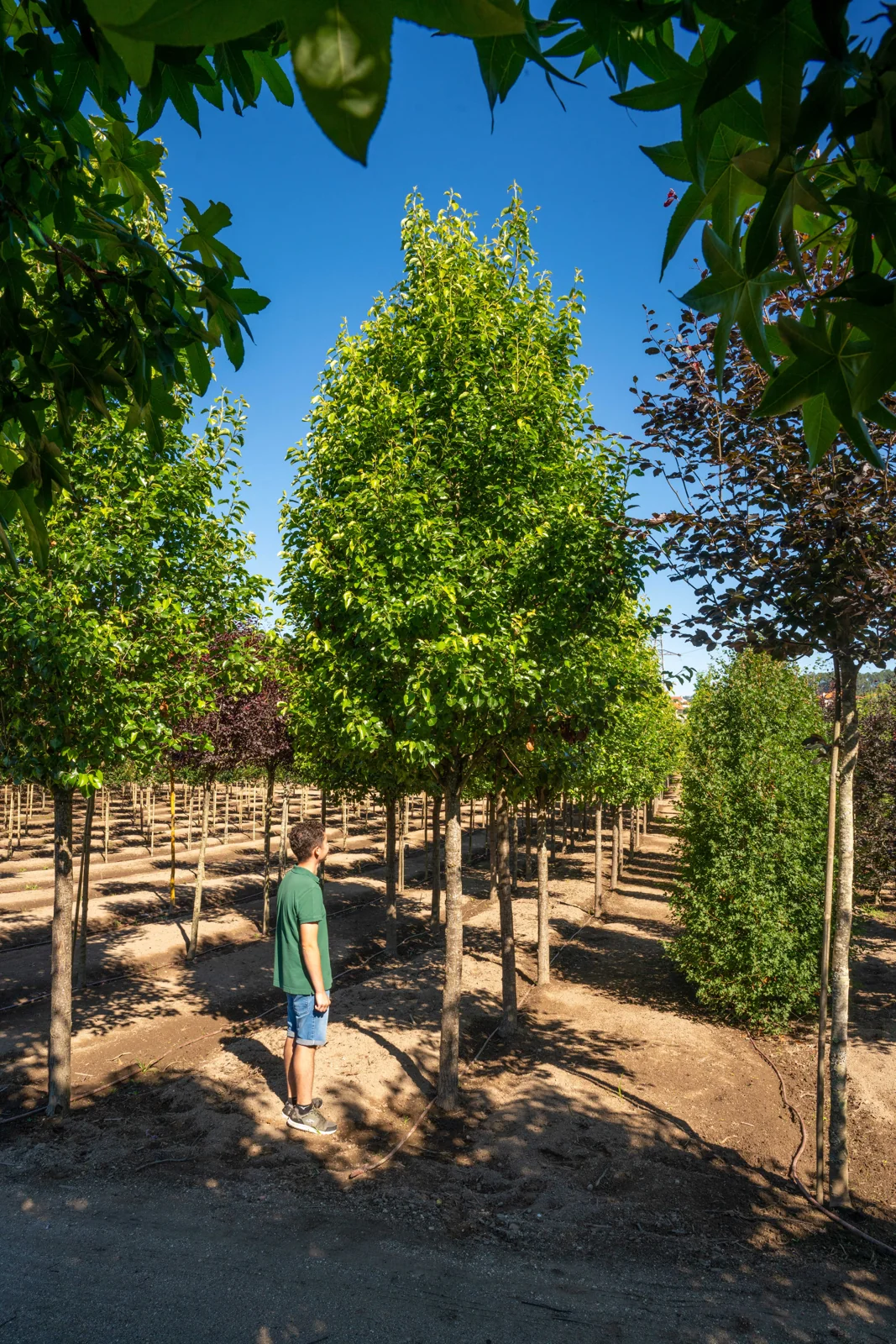
Where a street or plaza needs a slim, upright canopy in a tight pit, this Callery pear cultivar holds a narrowly conical crown of roughly 4 to 6 metres, casting vertical shade without crowding the carriageway.
- Slim, upright crown gives vertical structure where lateral space is tight
- White spring blossom that draws bees and other pollinators
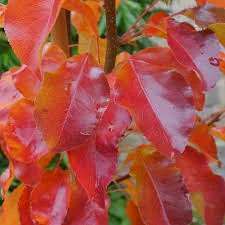
- Reddish-purple to orange autumn colour, clearest where nights cool early
Key Facts
About this Cultivar
Selected for a tighter, more even habit than the straight species and the older 'Bradford', 'Chanticleer' carries a narrowly conical to columnar crown reaching around 10 to 12 metres in height with a spread of only 4 to 6 metres. That slim outline makes it a working alternative to plátano de sombra (Platanus × acerifolia) where the canopy volume of a plane…
Read more
Show less
Selected for a tighter, more even habit than the straight species and the older 'Bradford', 'Chanticleer' carries a narrowly conical to columnar crown reaching around 10 to 12 metres in height with a spread of only 4 to 6 metres. That slim outline makes it a working alternative to plátano de sombra (Platanus × acerifolia) where the canopy volume of a plane is unwanted, and a cleaner choice than wider Pyrus selections for alignment (alineación) along narrow streets.
The cultivar is deciduous and broadly adaptable across Spanish climates. Strong cold tolerance carries it through the continental winters and late frosts of the central plateau (meseta), while high heat tolerance suits the Mediterranean coast and the warm interior. Drought tolerance is moderate rather than absolute: it needs regular water through its first two or three summers to establish, after which it holds well on a reduced regime, though in the semi-arid southeast supplementary irrigation through the dry months keeps the crown dense.
Root behaviour and soil range support its urban role. It grows on acidic, alkaline, sandy, and clay soils provided drainage is adequate, covering both the calcareous substrates of the east and south and the acidic Atlantic soils of the cornisa cantábrica. The crown tolerates urban air pollution well, and the root system is compatible with paving and confined pits. As a member of the Rosaceae, it can be affected by fire blight (Erwinia amylovora) under warm humid conditions, a point to coordinate where pome fruit features in the surrounding scheme.
In spring the bare branches carry abundant small white flowers that draw pollinators, followed by glossy dark-green foliage that turns red, purple, and orange before leaf fall. The fruit is small and inconspicuous, leaving little litter on paving. Growth is moderate, reaching specifiable calibre within a workable establishment period.
Advice on this species
Want to know more about Pyrus calleryana 'Chanticleer'?
Tell us about your project and we'll advise you on this species — where it thrives, which size makes sense, and what to expect once planted.
- Produção própria
- Exemplares adultos
- Resposta em 1–2 dias
Sem compromisso · orçamento personalizado