

A spreading white cherry for the spring garden
Japanese Cherry ‘Shirotae’ · Prunus serrulata ‘Shirotae’
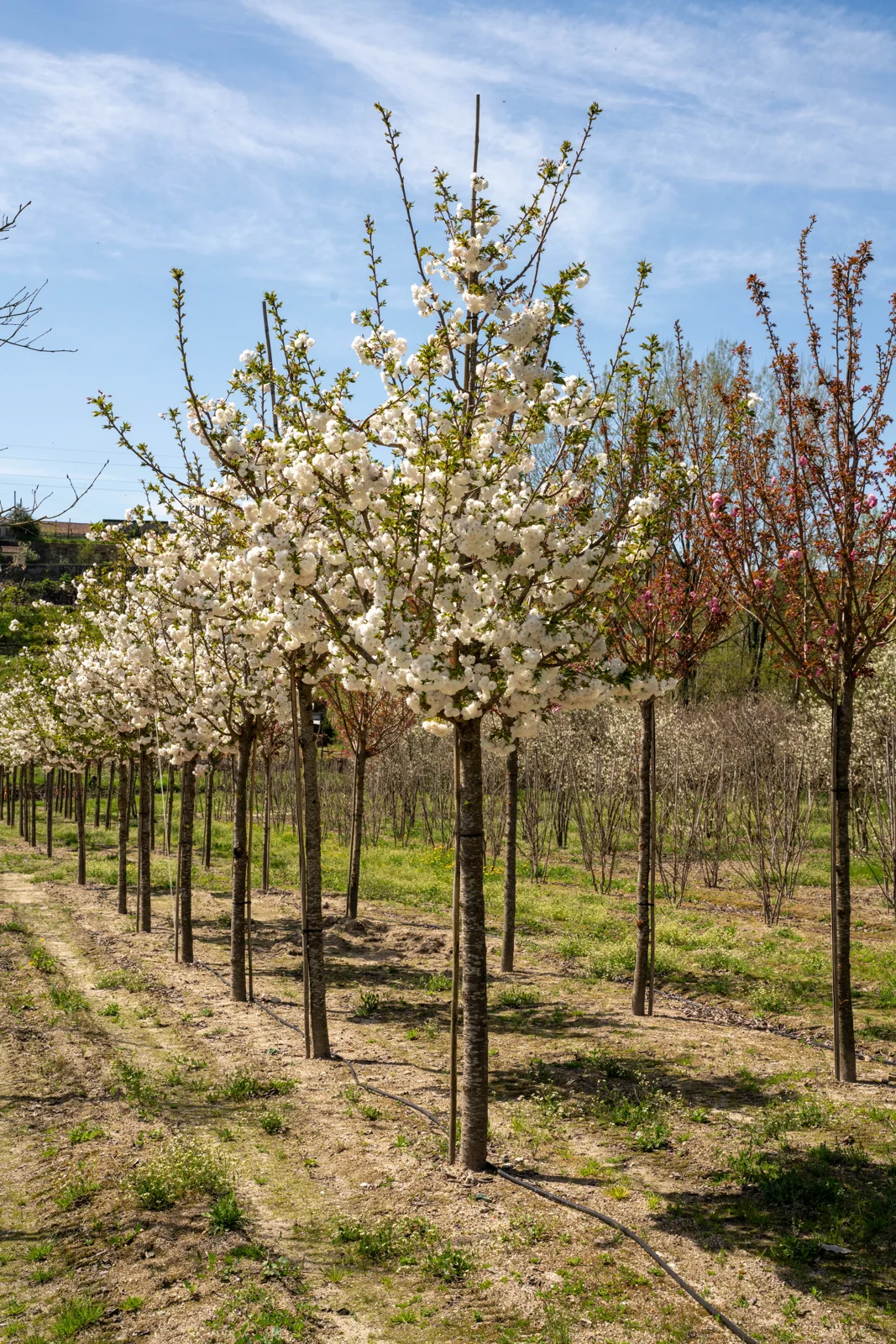
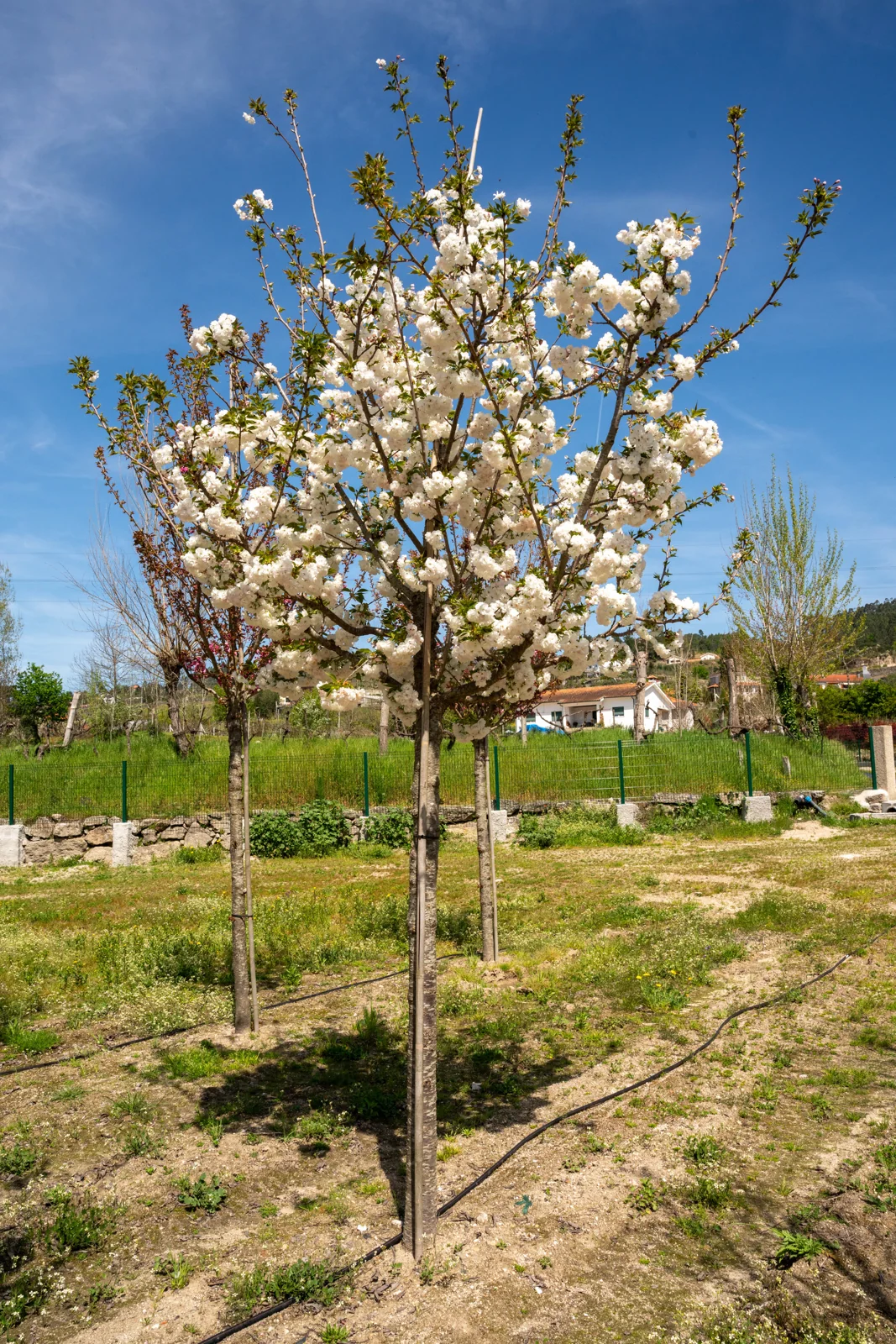
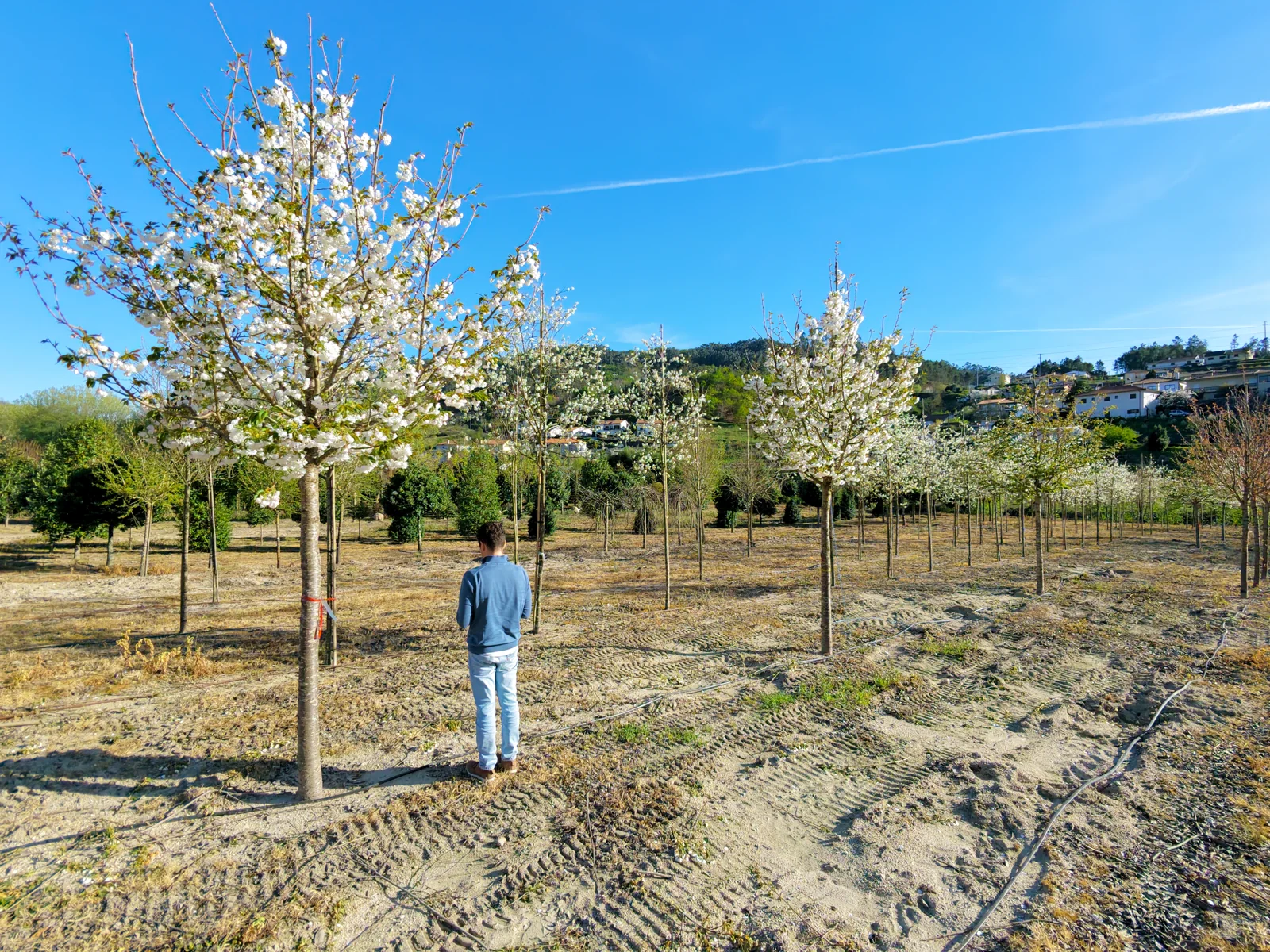
A flowering cherry selection for projects that need a low, horizontally tiered crown and a strong spring display. The differentiator is its open, almost flat-topped habit and pure-white semi-double bloom, set against a controlled mature scale.
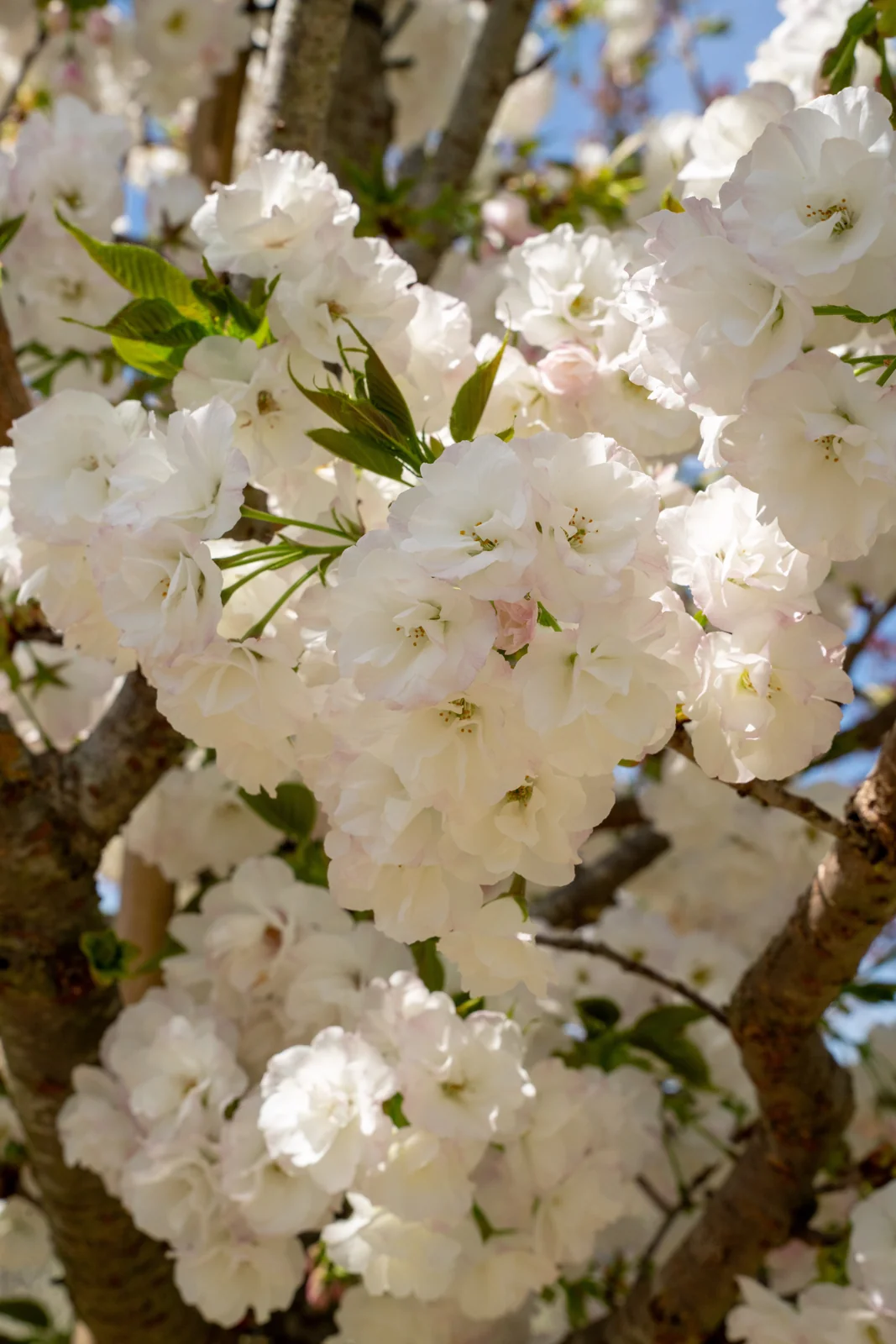
- Large, semi-double white flowers in dense scented clusters each April
- Low, wide-spreading crown of tiered horizontal branches, around 4 to 6 metres
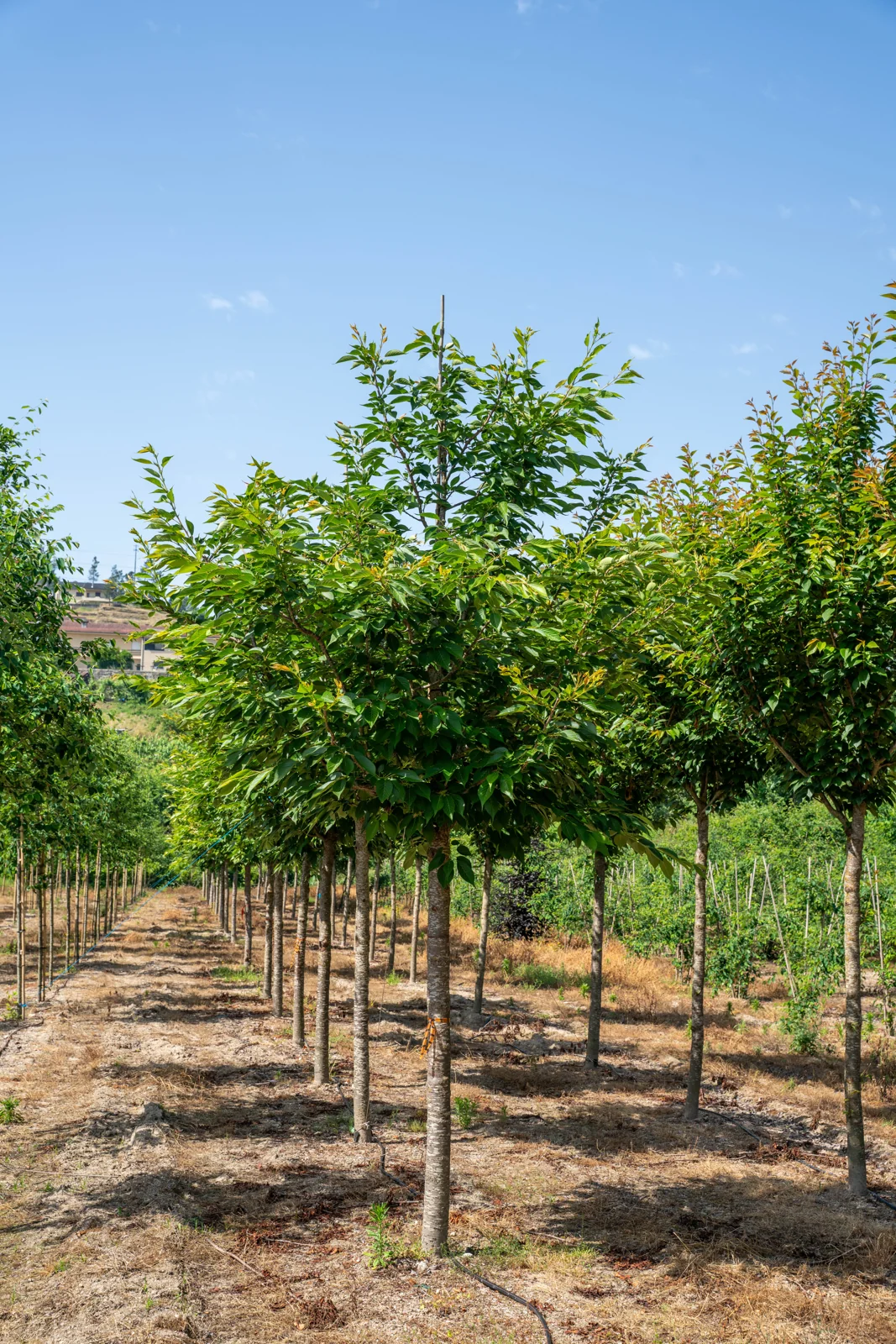
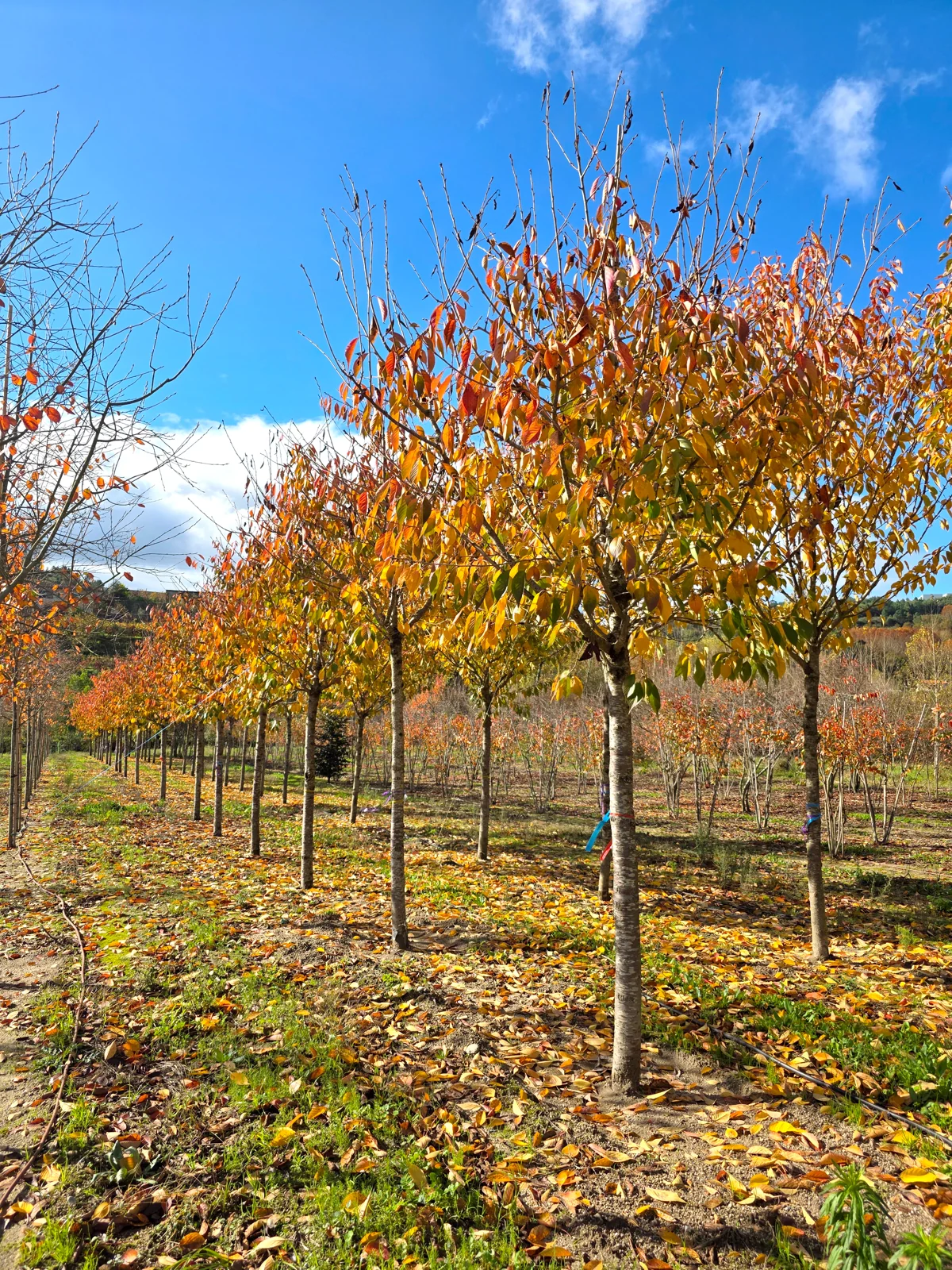
- Bronze young foliage in spring, warm orange and brown tones in autumn
Key Facts
About this Cultivar
This is one of the most architecturally distinct of the Japanese flowering cherries. Where the familiar 'Kanzan' specified across Spanish parks and streets is upright and vase-shaped with pink double flowers, this selection takes the opposite form: a low, wide, horizontally tiered crown reaching roughly 4 to 6 m in height and a comparable spread, carrying…
Read more
Show less
This is one of the most architecturally distinct of the Japanese flowering cherries. Where the familiar 'Kanzan' specified across Spanish parks and streets is upright and vase-shaped with pink double flowers, this selection takes the opposite form: a low, wide, horizontally tiered crown reaching roughly 4 to 6 m in height and a comparable spread, carrying large semi-double flowers of pure white in dense pendent clusters during April. Young foliage emerges in bronze tones, and the autumn turn runs through orange and copper, giving two secondary seasons either side of the spring display.
The water envelope is the first variable to weigh on a Spanish project. Drought tolerance is low: the tree wants consistent moisture in a fertile, well-drained, slightly acidic soil, and it does not tolerate waterlogging, which raises root rot risk. It performs most easily under the cool, moist conditions of the humid Atlantic northwest (the cornisa cantábrica) and in irrigated schemes elsewhere. On Mediterranean coastal and continental interior (meseta) sites it needs reliable supplementary irrigation through establishment and into maturity, and it is not a candidate for the semi-arid southeast or for unirrigated low-water planting.
Winter cold is not the constraint: hardy to roughly -12 C, it withstands meseta winters without difficulty. Salt tolerance is low, so coastal exposure asks for shelter, and the crown benefits from protection from strong wind given its spreading frame and the genus's characteristically thin, easily damaged bark. As a member of Prunus, it sits within the recognised host range of Xylella fastidiosa, which warrants coordination with Spanish counterparts on demarcated-zone status during specification.
Growth is moderate, and the mature scale stays modest, which makes it a single-specimen or small-grouping tree for residential and public schemes (and decorative alignments where the horizontal habit reads well) rather than a heavy shade or framework tree. Full sun gives the best flowering. Give it room to extend sideways and a sheltered position, and it earns its place on pollinator value and the length of its ornamental season.
Advice on this species
Want to know more about Prunus serrulata 'Shirotae'?
Tell us about your project and we'll advise you on this species — where it thrives, which size makes sense, and what to expect once planted.
- Produção própria
- Exemplares adultos
- Resposta em 1–2 dias
Sem compromisso · orçamento personalizado