

Double pink spring blossom for the formal garden
Japanese Cherry ‘Kanzan’ · Prunus serrulata ‘Kanzan’
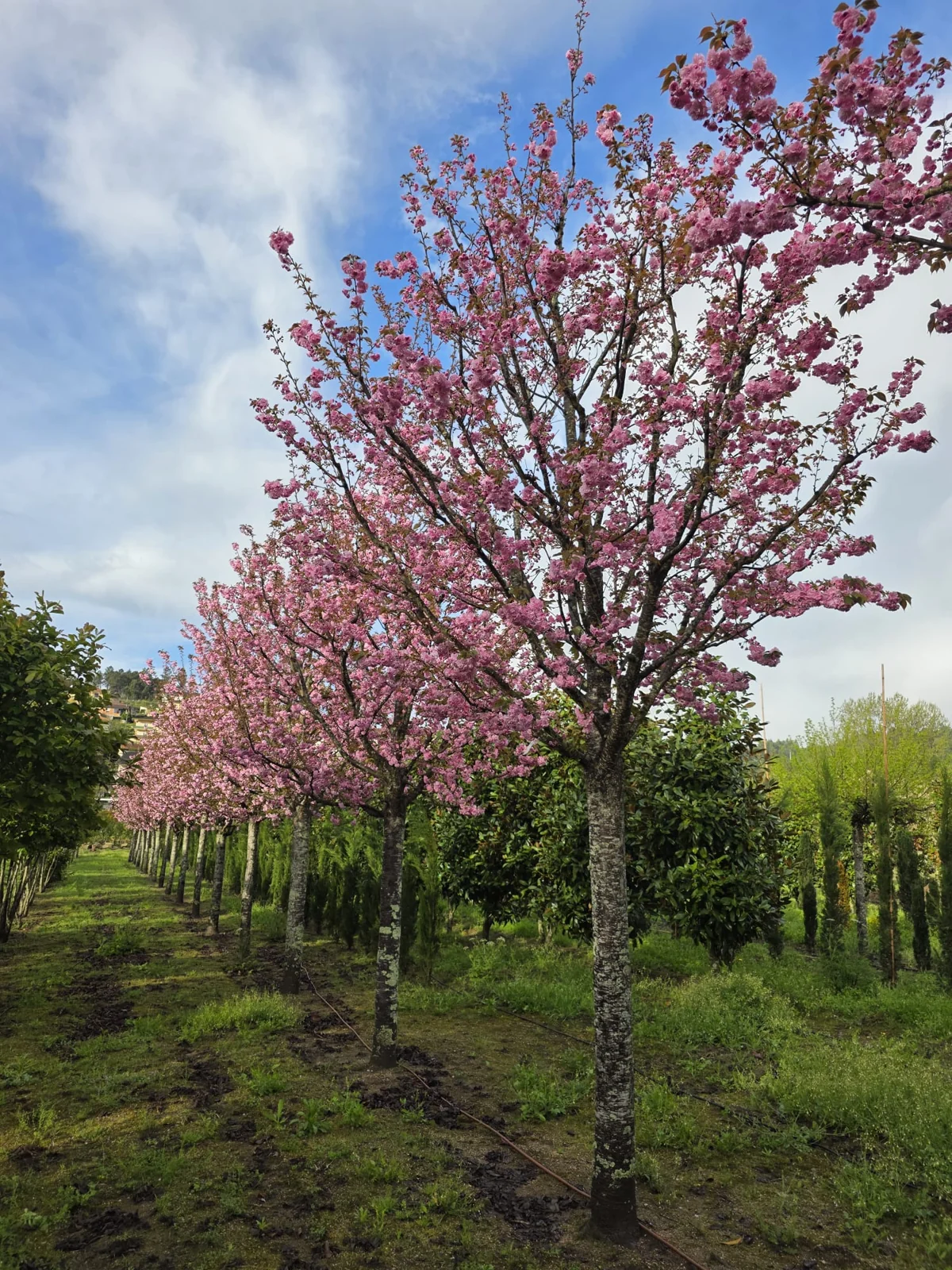
Where a spring scheme needs a single deciduous tree carrying mass flower, this double-pink ornamental cherry delivers a dense, vase-shaped crown and a short, emphatic bloom that defines the planting for two weeks each April.
- Dense double pink blossom in April and May, before the leaves
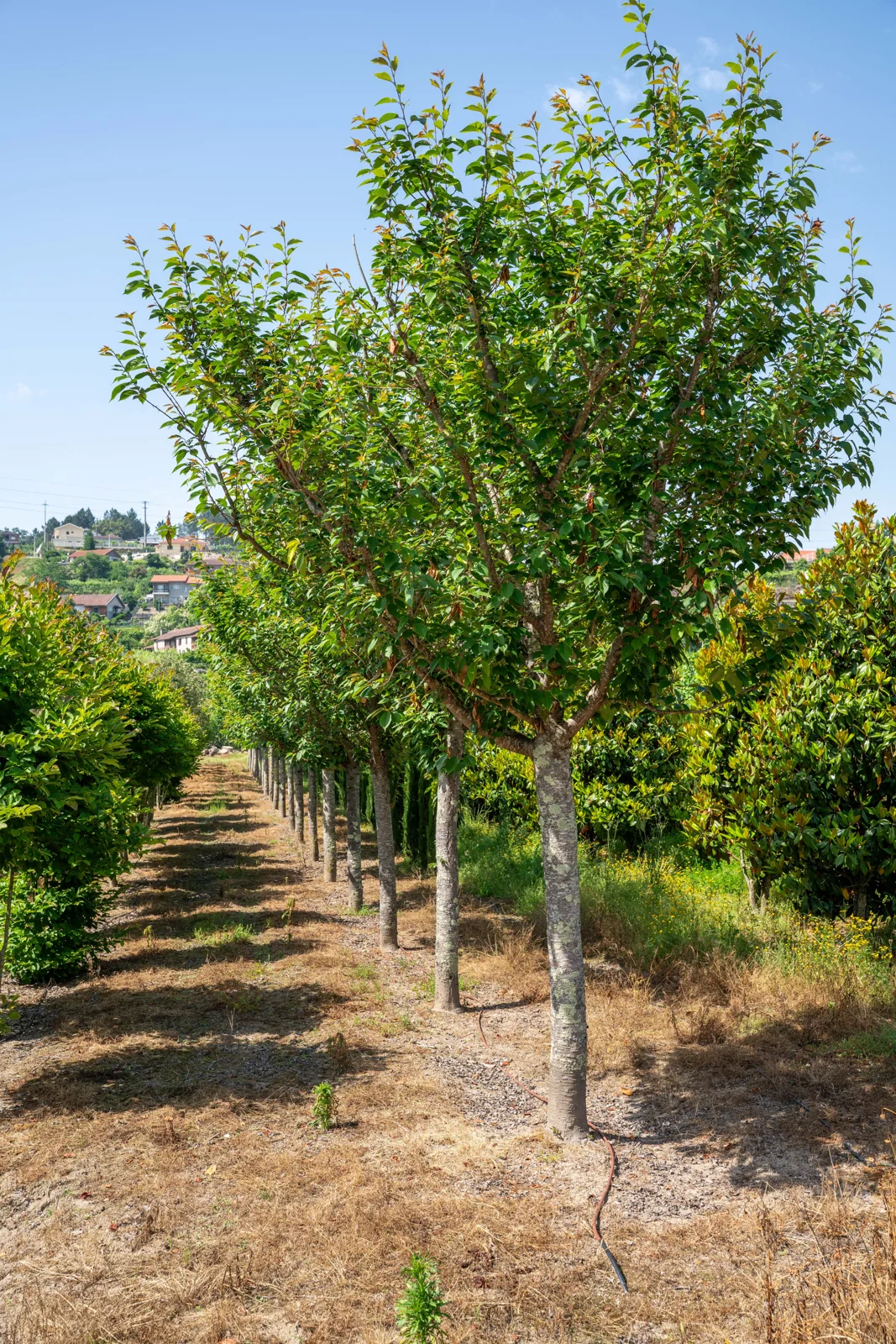
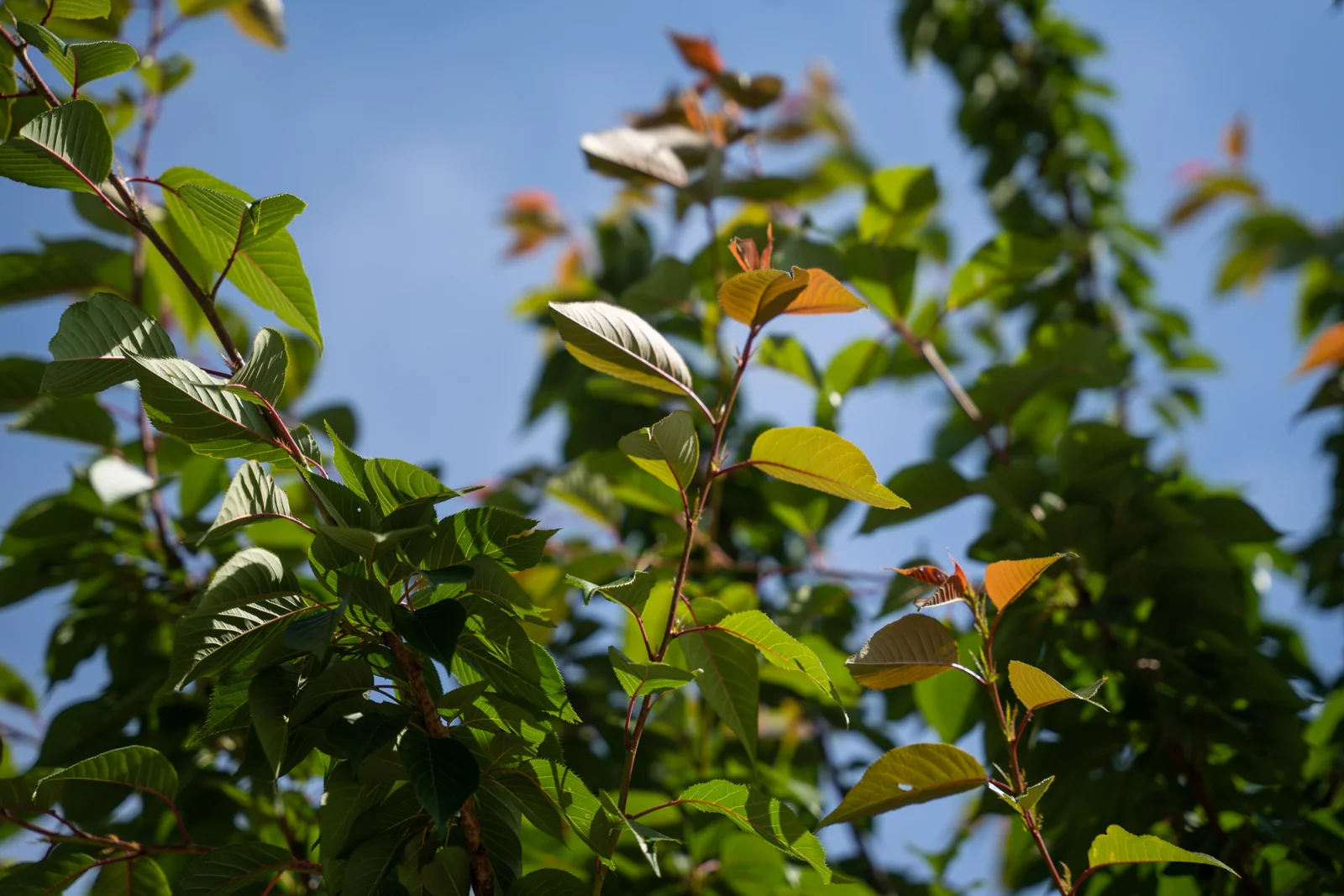
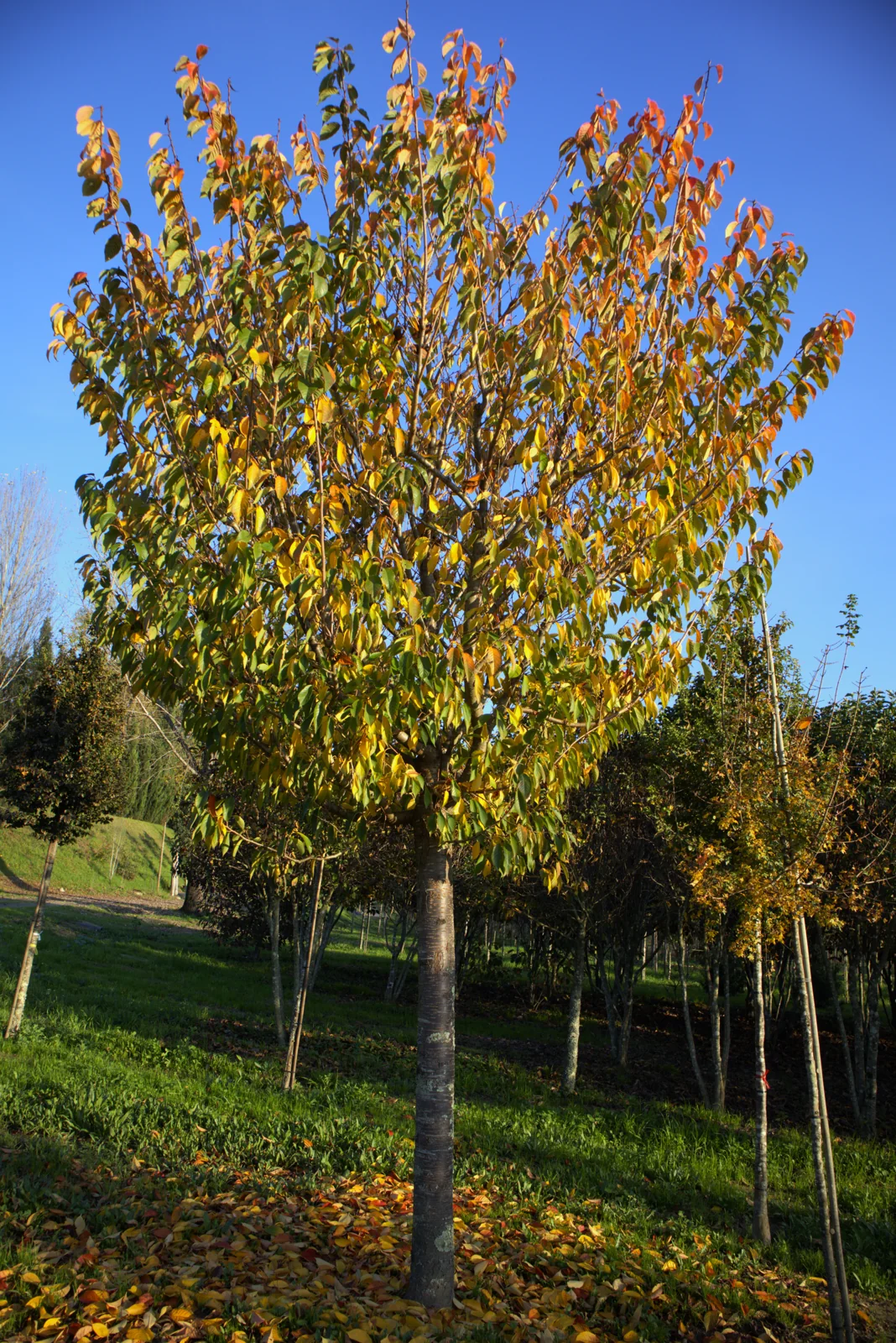
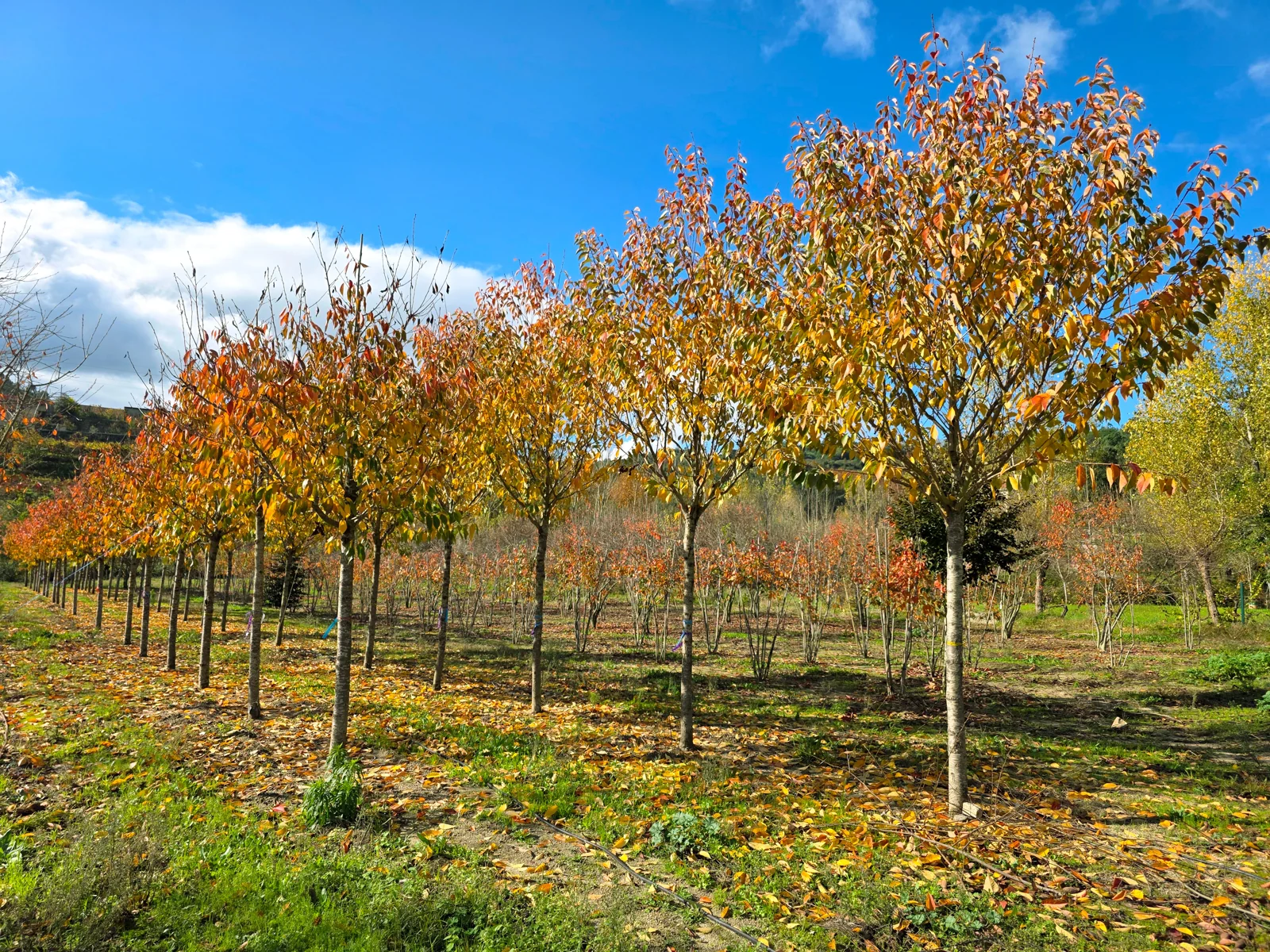
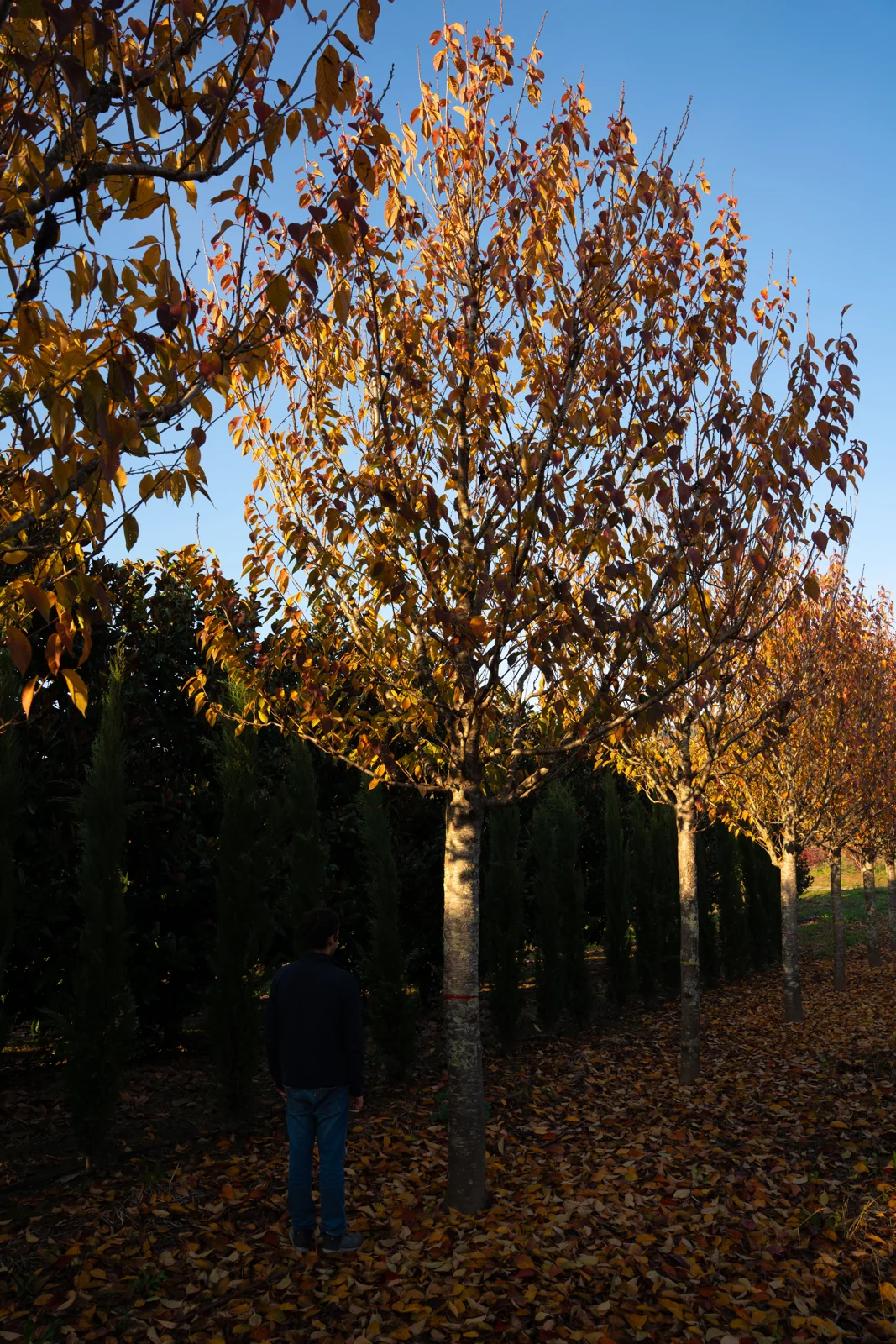
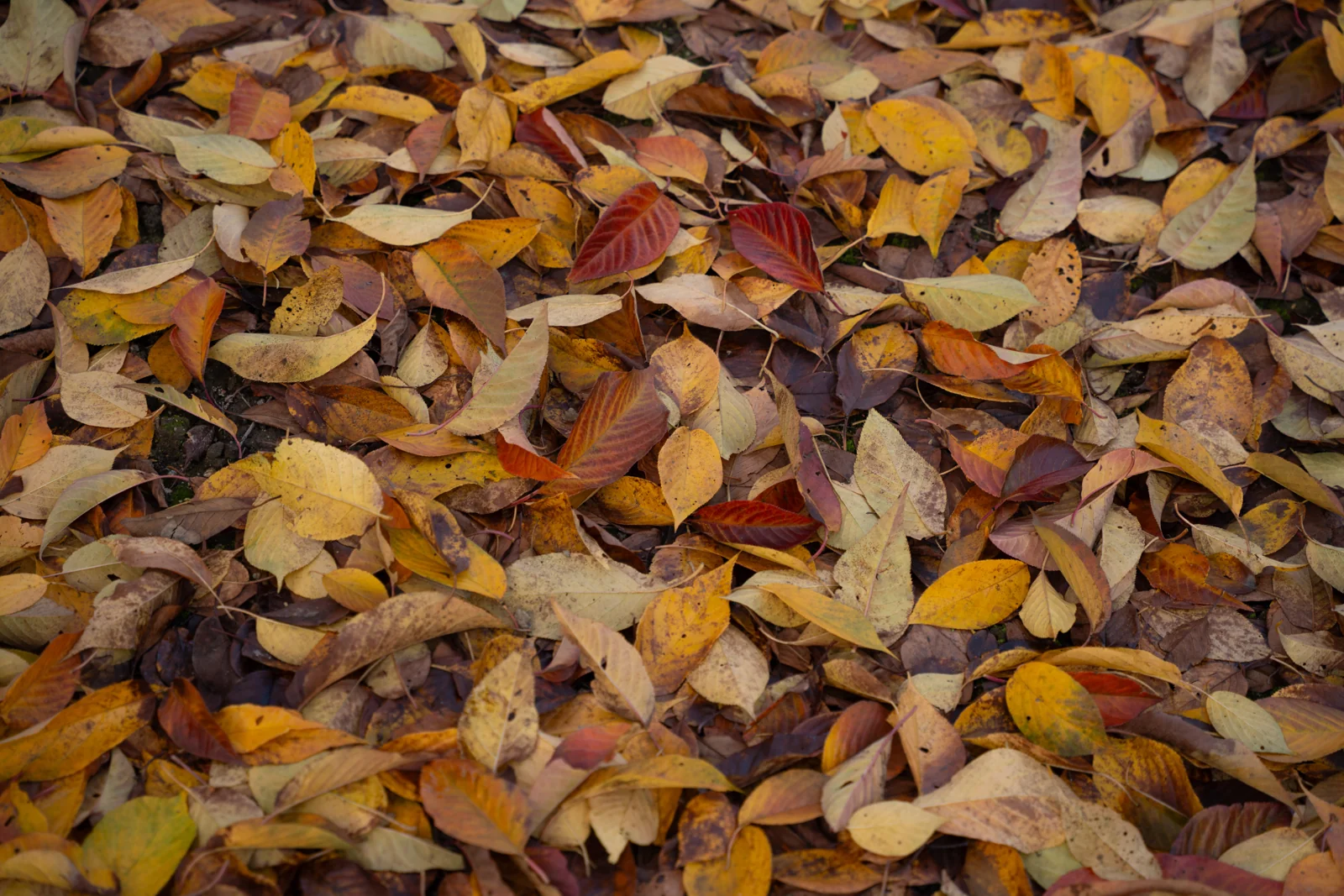
- Bronze new foliage maturing to green, then orange and copper in autumn
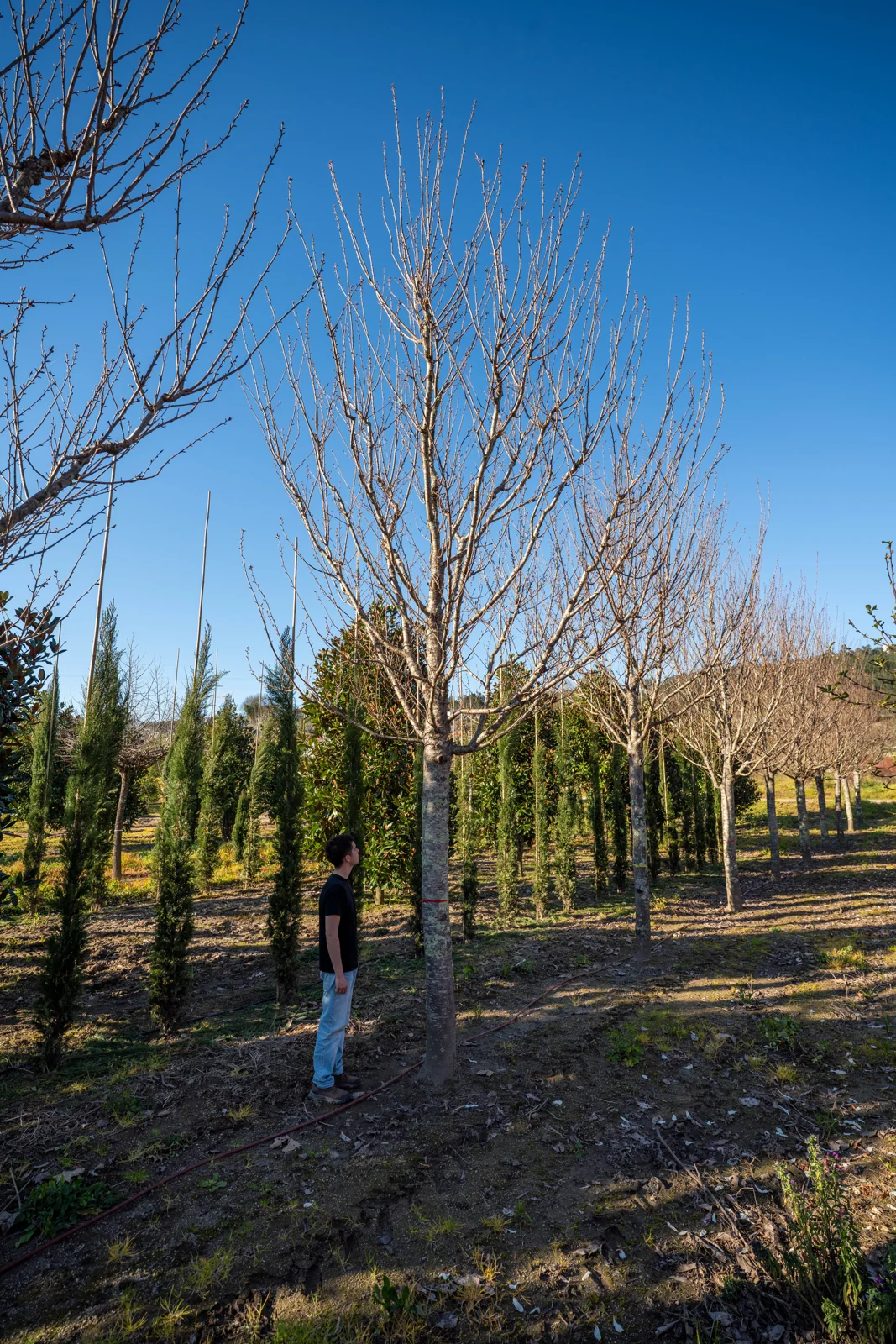
- Upright, vase-shaped crown that broadens gracefully with age
Key Facts
About this Cultivar
Among the ornamental cherries specified across European planting schemes, 'Kanzan' is the most widely planted double-flowered selection, and its appeal is precise: tight clusters of deep-pink flowers, each packed with twenty to thirty petals, smother the bare branches before the leaves expand. The crown is upright and vase-shaped when young, broadening to a…
Read more
Show less
Among the ornamental cherries specified across European planting schemes, 'Kanzan' is the most widely planted double-flowered selection, and its appeal is precise: tight clusters of deep-pink flowers, each packed with twenty to thirty petals, smother the bare branches before the leaves expand. The crown is upright and vase-shaped when young, broadening to a rounded, spreading head of six to ten metres in height and five to eight at maturity. Bronze young foliage turns dark green through summer and assumes orange and copper tones in autumn.
Climate fit in Spain turns on water rather than cold. Hardy to roughly minus twenty degrees Celsius, it tolerates winters well below those of any Spanish project site, but its drought tolerance is low, so summer moisture governs where it succeeds without difficulty. In the humid Atlantic northwest (the cornisa cantabrica), cool summers and reliable rainfall suit it directly; on the Mediterranean coast and the continental interior (the meseta), it performs where irrigation is available through the dry season.
Through the first two to three summers it needs consistent water to establish; once rooted it still expects supplementary irrigation across the hot, dry months in all but the wettest regions, and the semi-arid southeast asks for a managed water supply throughout. It prefers deep, fertile, well-drained soils, slightly acidic to neutral, in full sun, and resents both waterlogging and prolonged drought stress.
As a Prunus, the species sits within the known host range of Xylella fastidiosa, which warrants coordination with Spanish counterparts on demarcated-zone status (comunidad autonoma requirements vary). It carries no meaningful fruit, so it drops no staining crop over paving, and its moderate growth and rounded habit make it a clean specimen or avenue tree where the spring display is the programme.
Advice on this species
Want to know more about Prunus serrulata 'Kanzan'?
Tell us about your project and we'll advise you on this species — where it thrives, which size makes sense, and what to expect once planted.
- Produção própria
- Exemplares adultos
- Resposta em 1–2 dias
Sem compromisso · orçamento personalizado