

Three seasons of colour from bark, leaf, and flower
Persian Ironwood · Parrotia persica
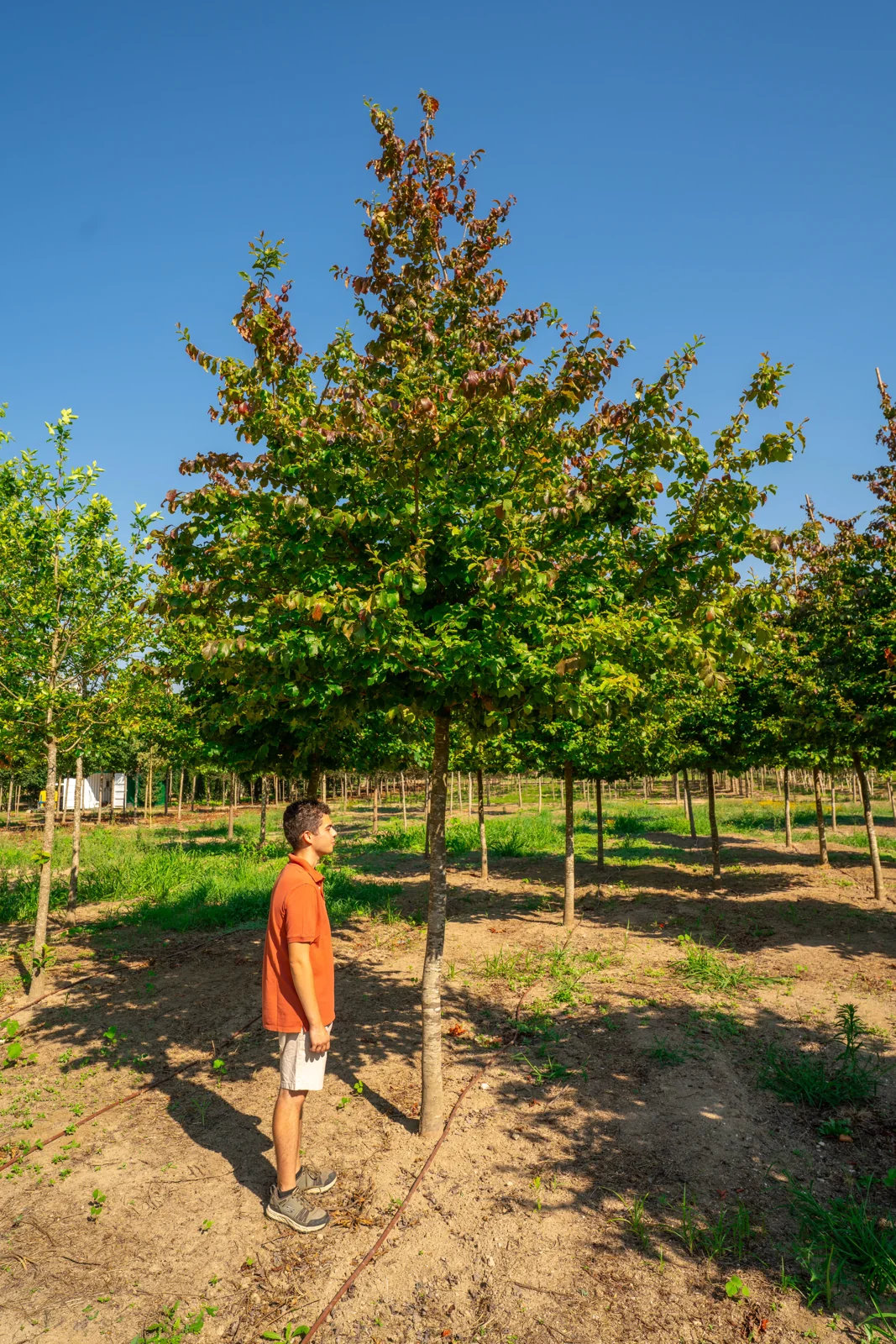
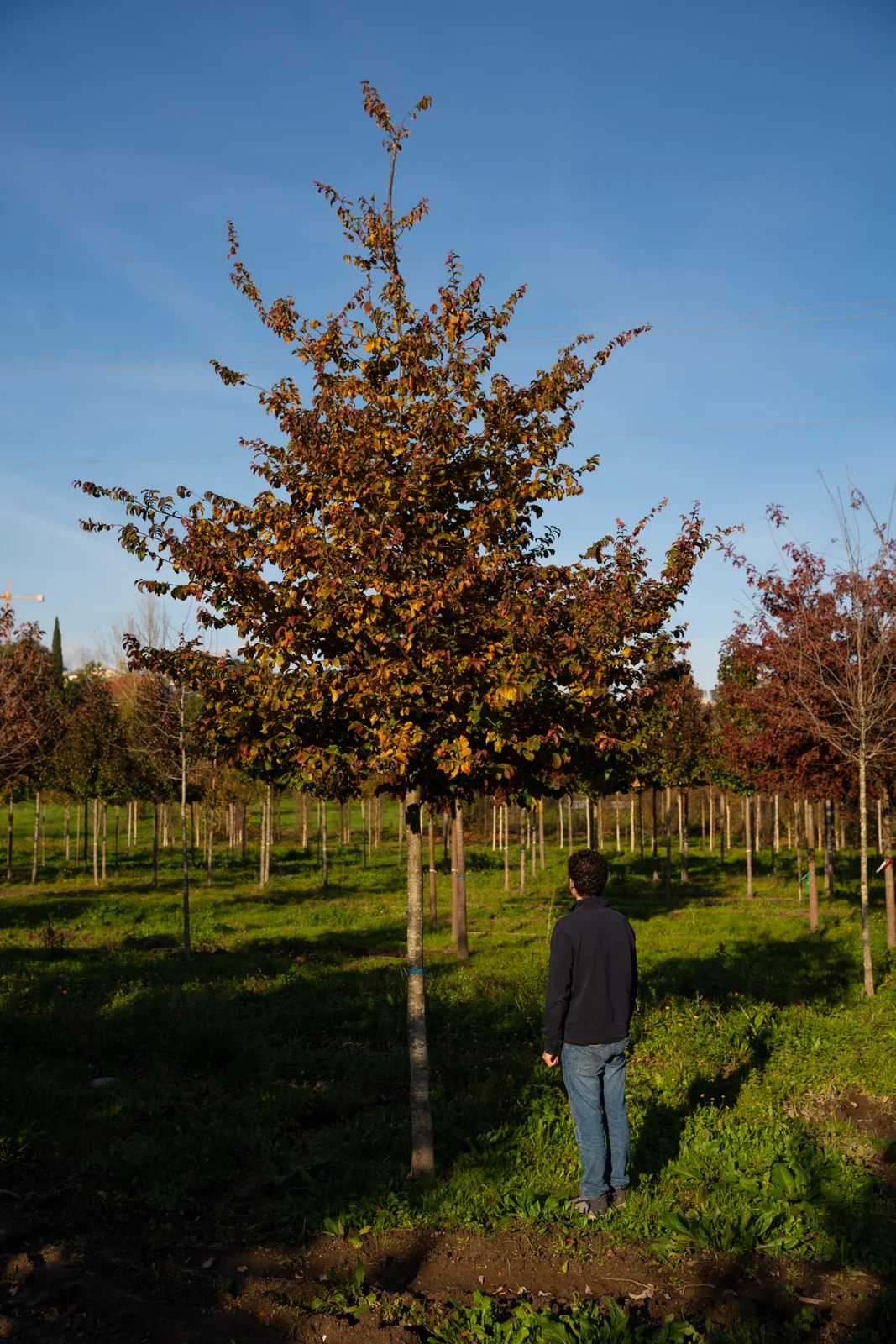
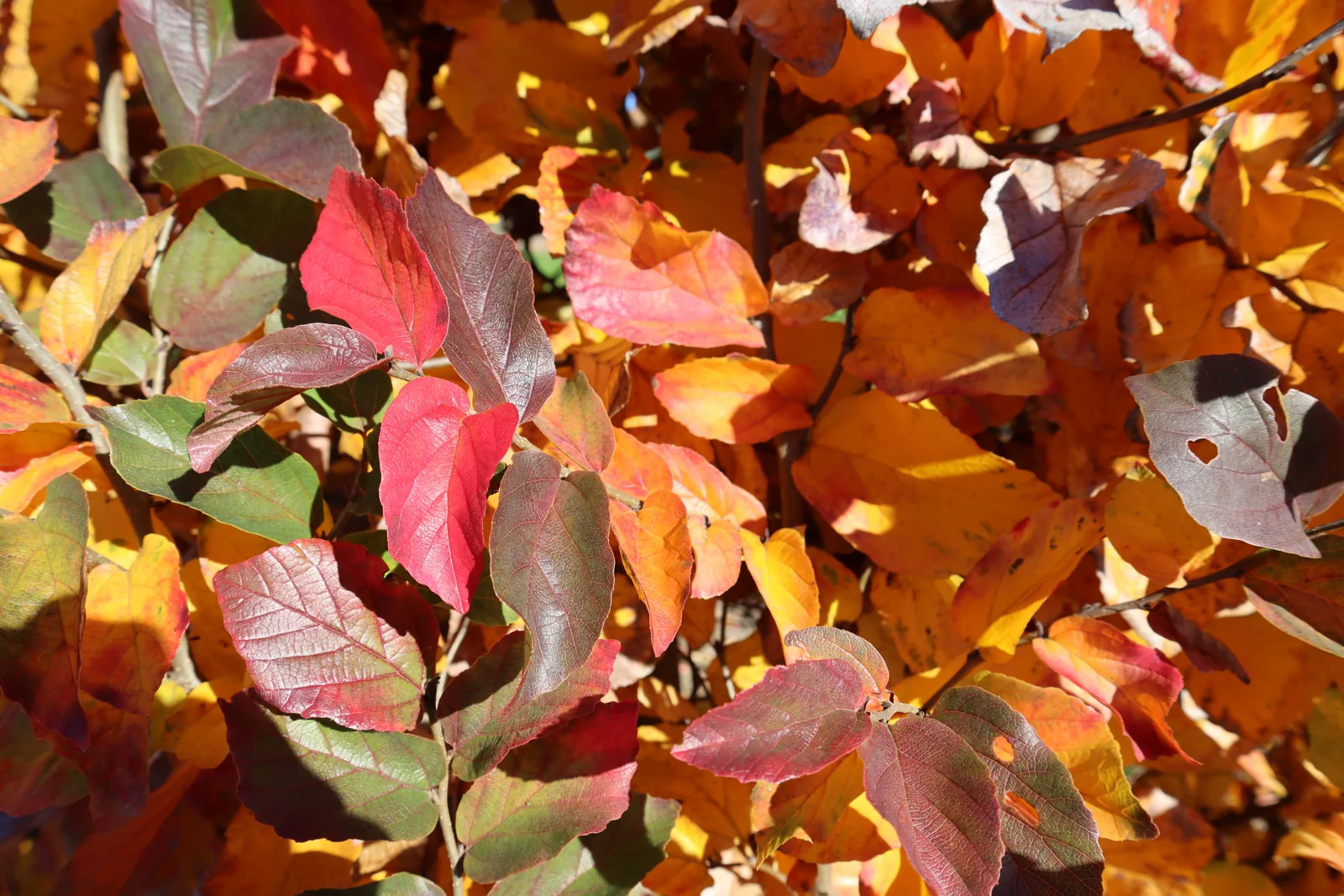
A deciduous specimen of restrained stature offering Spanish landscape architects three-season ornamental interest: exfoliating mosaic bark, late-winter flower, and an autumn colour range that intensifies in continental climates with wide diurnal temperature swings.
- Hardy through all Spanish planting zones, from the Sierra de Guadarrama to the Balearic coast
- Moderate drought tolerance once established; two to three seasons of irrigation at planting
- Exfoliating bark develops a mosaic of cinnamon, green, and cream with age
About this Species
The Persian ironwood (árbol de hierro) belongs to the Hamamelidaceae and is native to the montane forests of northern Iran and the Caucasus. It is not widely specified in Spain, but it fills a role that few trees of comparable size occupy: a slow-growing, spreading specimen between 6 and 12 m at maturity that delivers genuine multi-season interest without…
Read more
Show less
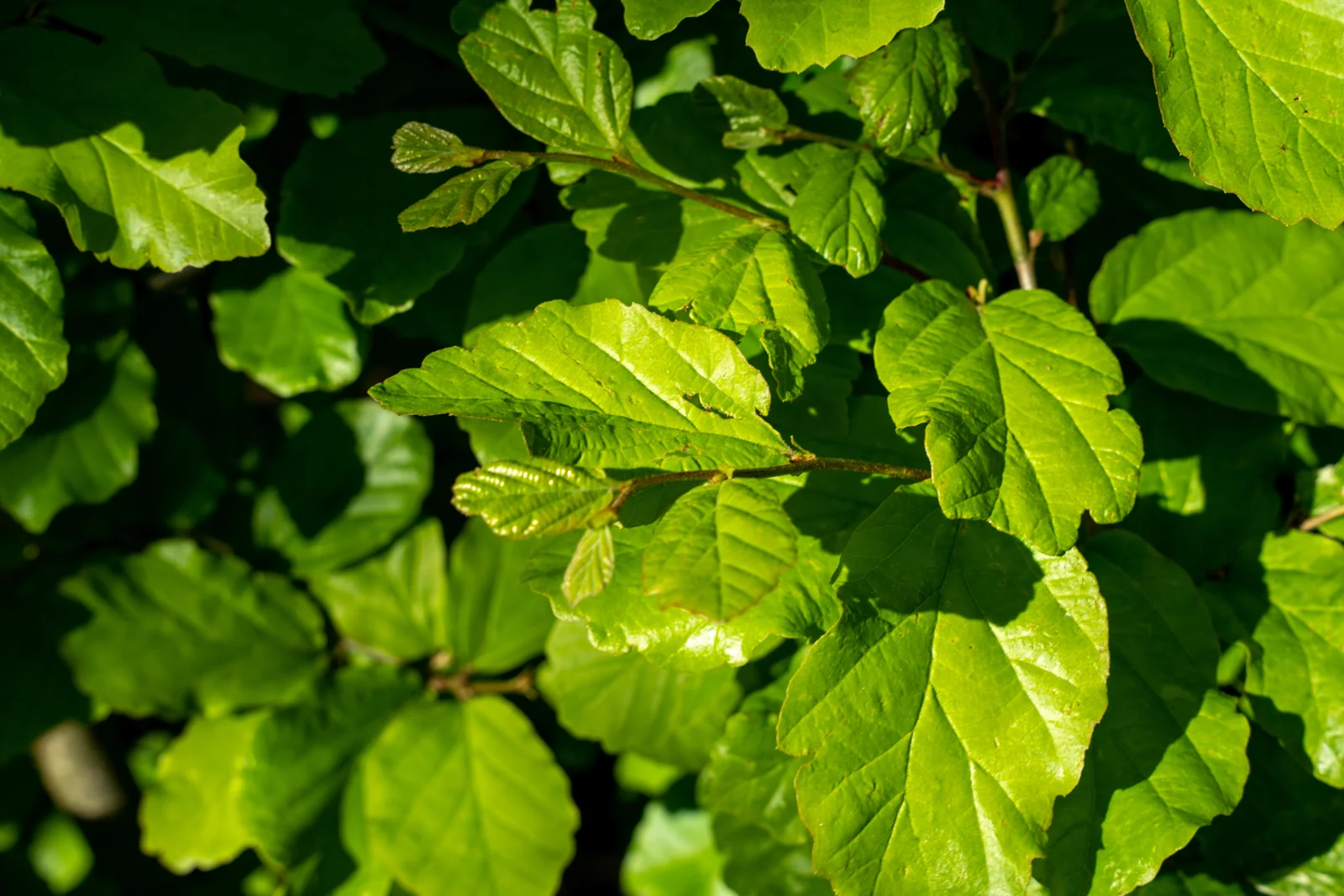
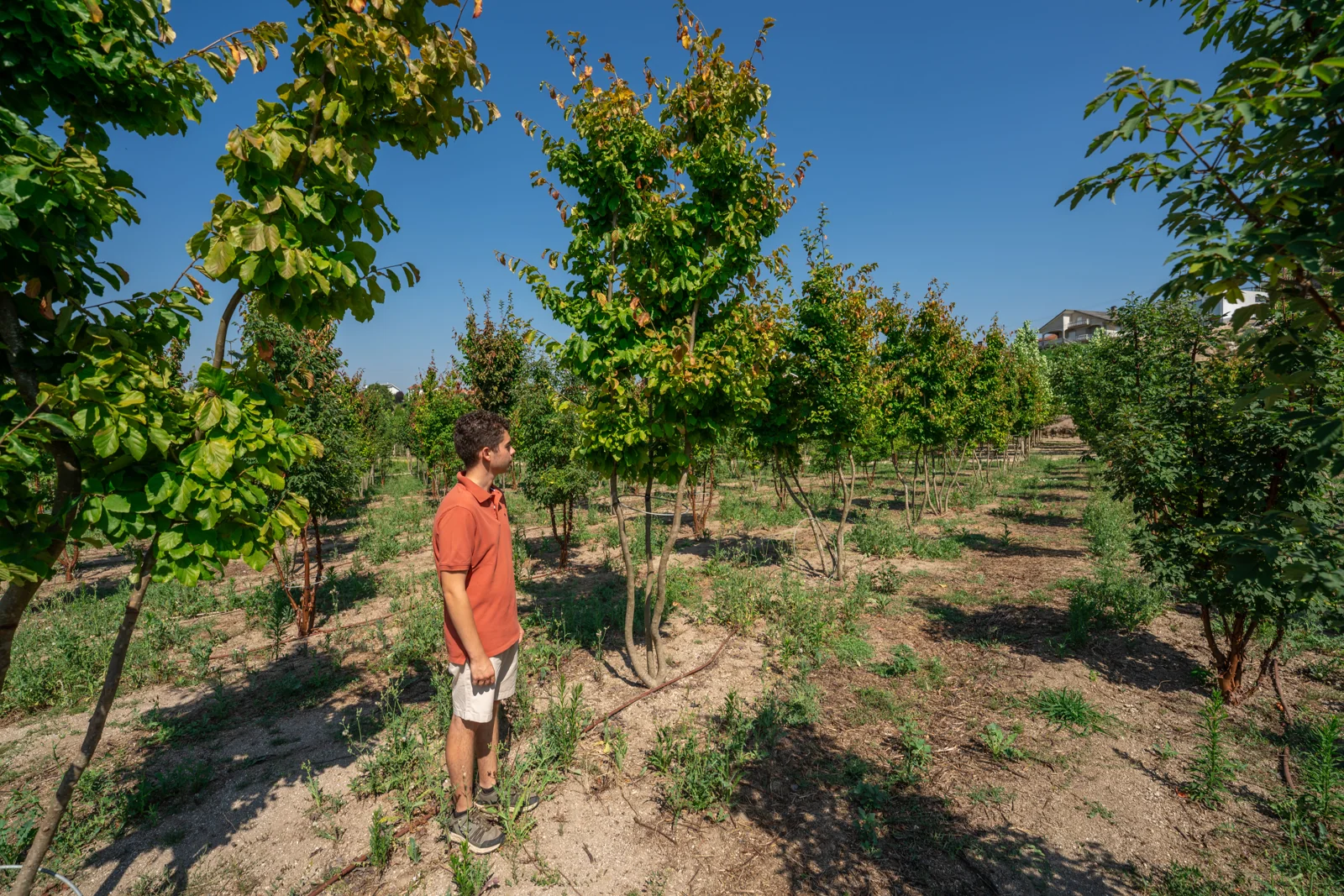
The Persian ironwood (árbol de hierro) belongs to the Hamamelidaceae and is native to the montane forests of northern Iran and the Caucasus. It is not widely specified in Spain, but it fills a role that few trees of comparable size occupy: a slow-growing, spreading specimen between 6 and 12 m at maturity that delivers genuine multi-season interest without demanding a large maintenance budget. For international professionals unfamiliar with it, the closest functional parallel is a small Platanus (plátano de sombra) in terms of bark character and crown density, but without the Ceratocystis platani risk, the aggressive root system, or the nuisance fruit.
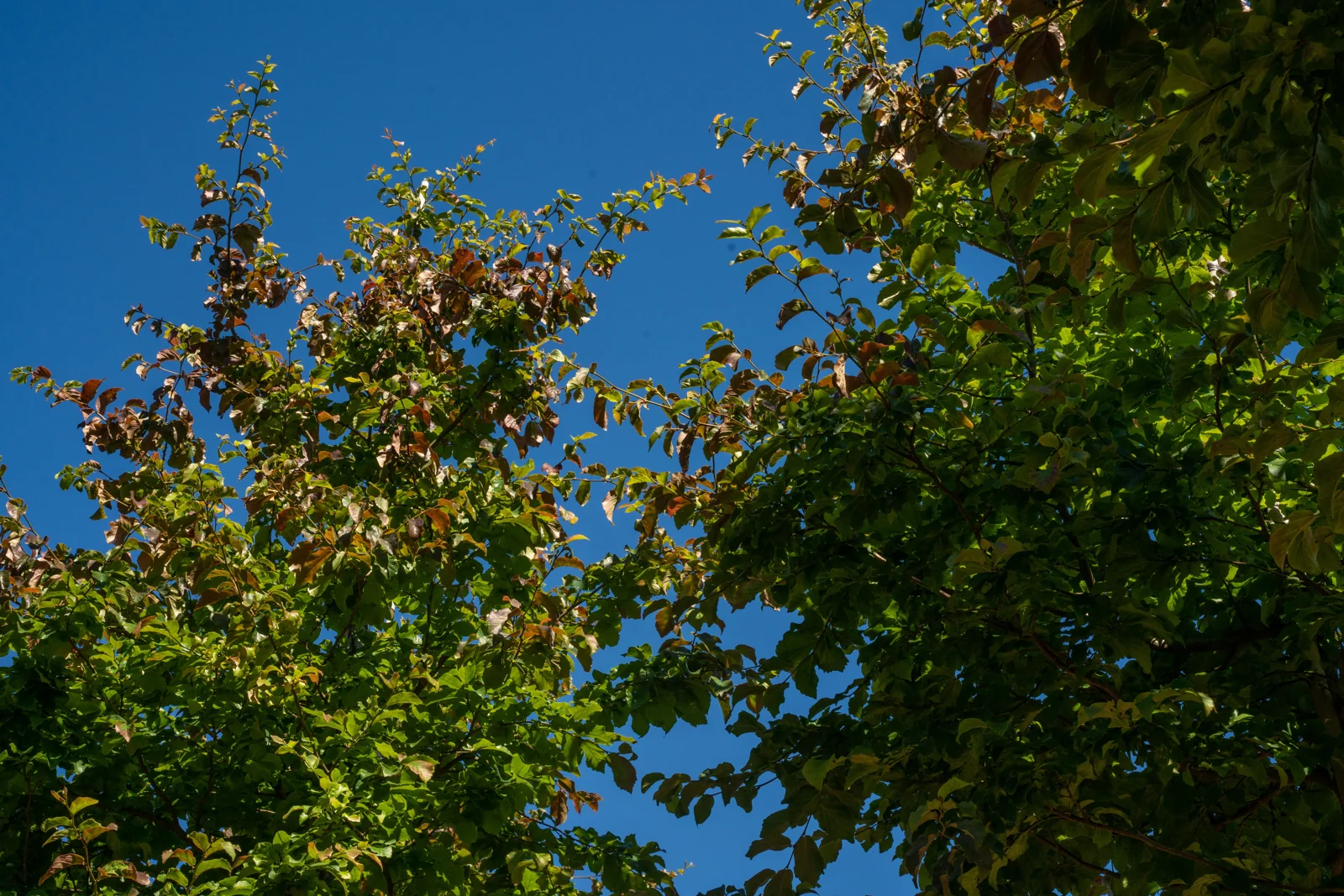
The bark is the tree's most persistent ornamental asset. On mature specimens the outer layer exfoliates in irregular plates to reveal a mosaic of green, cream, and cinnamon patches, reminiscent of Platanus but on a more intimate scale suited to courtyards, institutional forecourts, and residential streetscapes. In late winter, clusters of petal-less flowers with conspicuous crimson stamens appear on bare wood, a quiet but distinctive display that signals spring weeks before most deciduous trees break dormancy. Autumn colour is where provenance and siting matter most: the foliage transitions through yellow, orange, burnt sienna, and deep crimson, and the range is widest in climates with cool nights and warm days. In Spain, this means the continental interior and the northern plateaux deliver the strongest autumn display, while mild coastal winters produce a more muted palette.
Climatically, Parrotia persica is hardy to approximately -19 degrees C, verified in Belgian trials during the severe 2009 to 2010 winter. It is reliable across the humid Atlantic northwest (cornisa cantábrica), comfortable through the continental interior including Greater Madrid, and viable in sheltered positions along the northern Mediterranean coast. In the semi-arid southeast, where summer temperatures regularly exceed 40 degrees C and annual rainfall drops below 300 mm, the species reaches its useful limit: its moderate heat tolerance and moderate drought tolerance are insufficient without sustained supplementary irrigation, which defeats the low-water logic of most projects in that zone. During establishment, two to three summers of regular irrigation are necessary in any Spanish climate; once rooted, the deep lateral root system sustains the tree through standard Mediterranean dry spells without supplementary water in zones receiving at least 500 mm annual rainfall.
Soil adaptability is broad. The species tolerates lime-rich and alkaline substrates, an important qualification for the calcareous soils widespread across the Ebro valley, the meseta, and the Mediterranean littoral. It also performs on compacted urban substrates and tolerates air pollution, making it viable for confined planting pits in urban schemes. Salt tolerance is low, so exposed coastal sites are not appropriate. The root system is non-aggressive and pavement-compatible, a practical advantage in streetscape and plaza projects where root heave is a recurring specification concern.
Disease and pest resistance is a defining strength. No serious pathogens or insect pests affect Parrotia persica in European cultivation. For projects where Ceratocystis platani has compromised Platanus, or where the specification team is looking beyond the standard plátano de sombra and encina palette, the Persian ironwood offers a low-risk alternative with comparable structural presence at a smaller scale.



Advice on this species
Want to know more about Parrotia persica?
Tell us about your project and we'll advise you on this species — where it thrives, which size makes sense, and what to expect once planted.
- Produção própria
- Exemplares adultos
- Resposta em 1–2 dias
Sem compromisso · orçamento personalizado