

Fragrant evergreen structure for a low-water garden
Holly Olive · Osmanthus heterophyllus
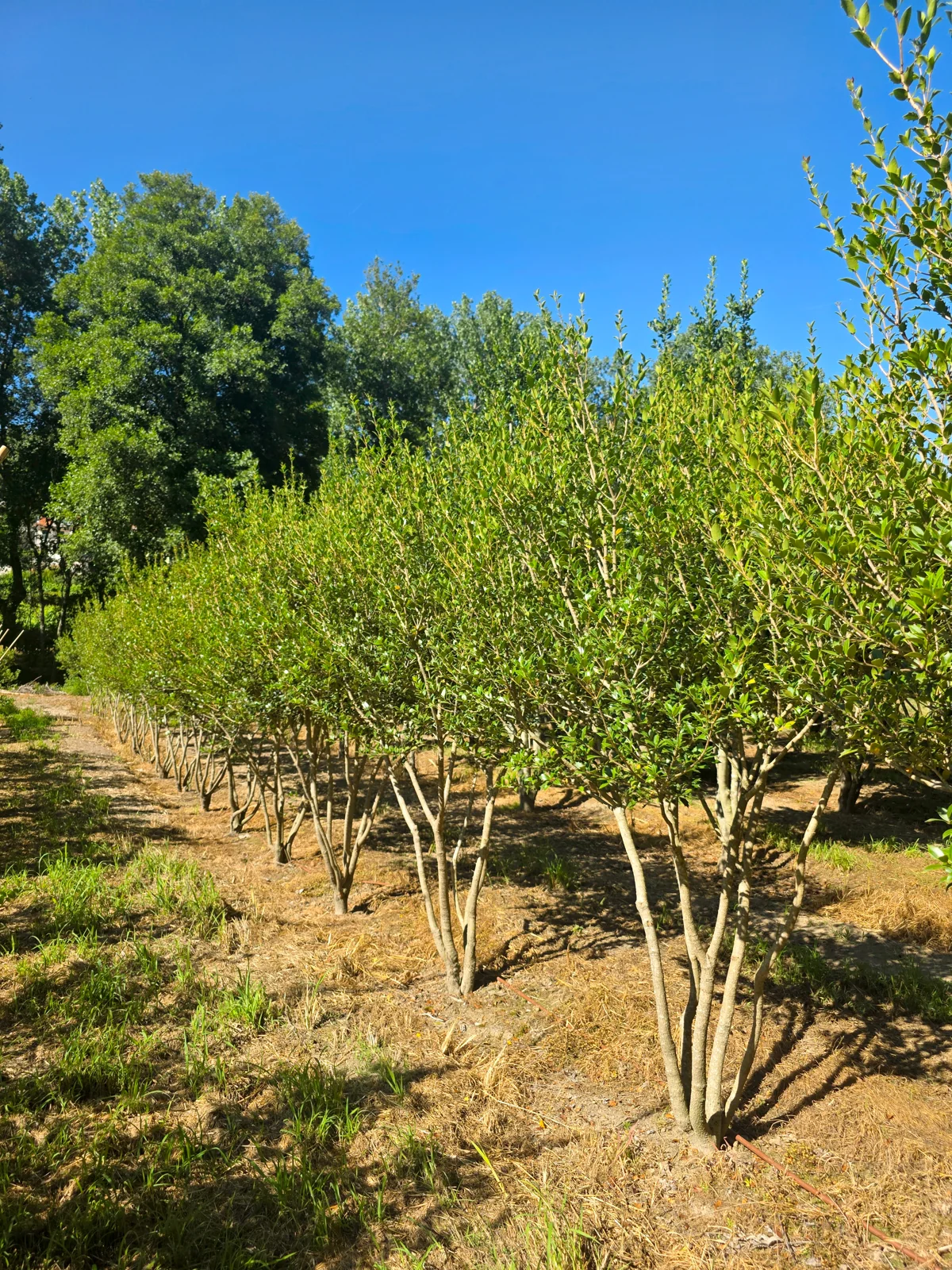
Specified in Spain primarily as a structural evergreen hedge or barrier plant where Buxus sempervirens has been compromised by box moth pressure, or wherever a dense, pruning-tolerant screen is required.
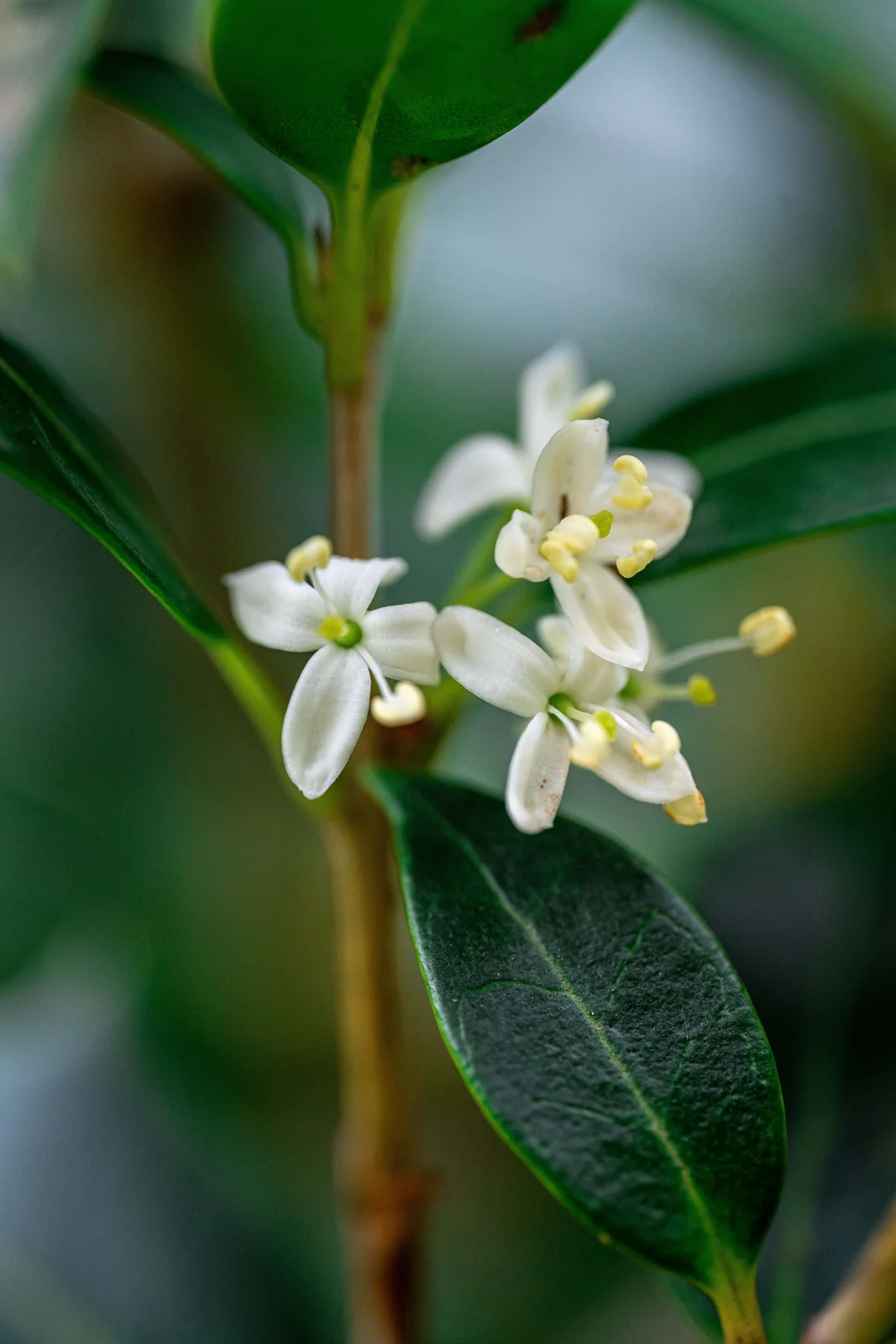
- Intensely fragrant white flowers, September to November, hidden beneath the foliage
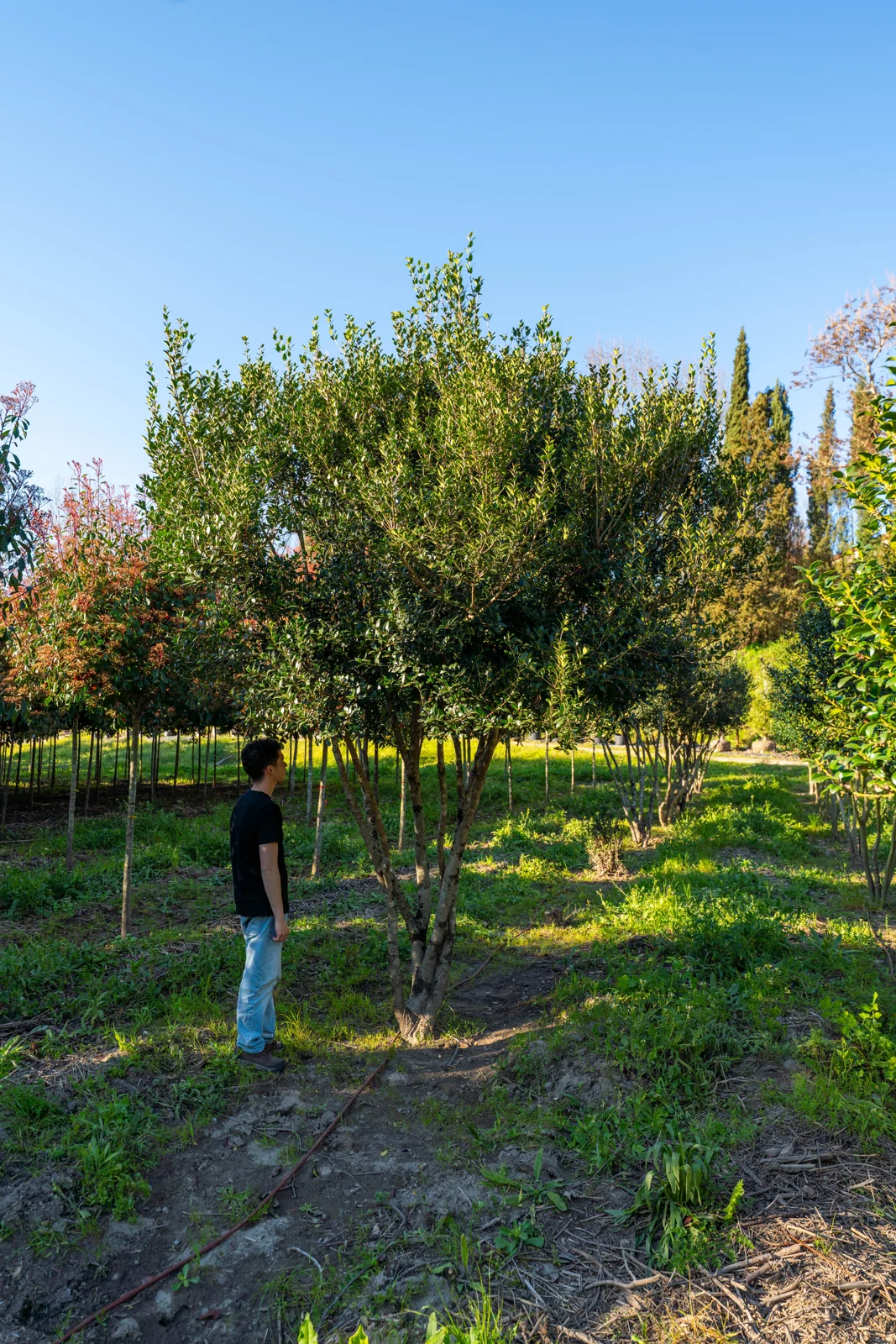
- Dense evergreen structure reaching three to six metres; holds a clipped form well
- Tolerates alkaline and clay soils; reliable across coastal and interior Spanish gardens
About this Species
In the Spanish specification context, Osmanthus heterophyllus occupies a functional niche that Ilex aquifolium fills in cooler Atlantic climates but handles better in the drier, more alkaline conditions typical of Madrid, Barcelona, and the Levant coast. The leaves are coriaceous and dimorphic, superficially resembling holly (Ilex) but arranged in opposite…
Read more
Show less
In the Spanish specification context, Osmanthus heterophyllus occupies a functional niche that Ilex aquifolium fills in cooler Atlantic climates but handles better in the drier, more alkaline conditions typical of Madrid, Barcelona, and the Levant coast. The leaves are coriaceous and dimorphic, superficially resembling holly (Ilex) but arranged in opposite pairs, a detail that separates the genus immediately. Dense branching from the base produces a rounded, self-supporting crown that reaches 3 to 6 m in height and 3 to 5 m in spread under typical conditions, making it serviceable for both clipped privacy screens and unclipped specimen planting.
Hardiness is a clear specification strength: the species tolerates winter minimums of approximately minus 20 degrees Celsius, meaning it performs without risk across the continental interior (meseta), where winter conditions periodically exclude less frost-resistant evergreens. On the Mediterranean coastal strip and in the south, the heat envelope is more moderate than that of Olea or Ceratonia, and supplementary irrigation during the first two to three establishment summers will be necessary on drier sites; once rooted, the plant functions on reduced water inputs, though it is not comparable in drought resilience to Quercus ilex or Pistacia lentiscus.
Soil tolerance is broad. The species accepts alkaline and calcareous substrates common across central and eastern Spain, manages in clay-heavy profiles with adequate drainage, and tolerates compacted urban conditions and atmospheric pollution, making it a credible candidate for inclusion in project specifications (pliego de condiciones) for urban plazas and residential perimeters. It accepts heavy pruning without dieback and responds to repeated cutting with dense regrowth.
Osmanthus heterophyllus does not appear in the host-range lists of Xylella fastidiosa under current European Food Safety Authority assessments, which removes one administrative complication that affects Olea and Nerium oleander on projects within or adjacent to demarcated zones. The white tubular flowers produced from September through November carry an intense fragrance disproportionate to their small size, an attribute worth noting in specifications for enclosed courtyards or pedestrian-level planting where sensory character contributes to the programme.



Advice on this species
Want to know more about Osmanthus heterophyllus?
Tell us about your project and we'll advise you on this species — where it thrives, which size makes sense, and what to expect once planted.
- Produção própria
- Exemplares adultos
- Resposta em 1–2 dias
Sem compromisso · orçamento personalizado