

Autumn fire for the acid-soil garden
Black Tupelo · Nyssa sylvatica
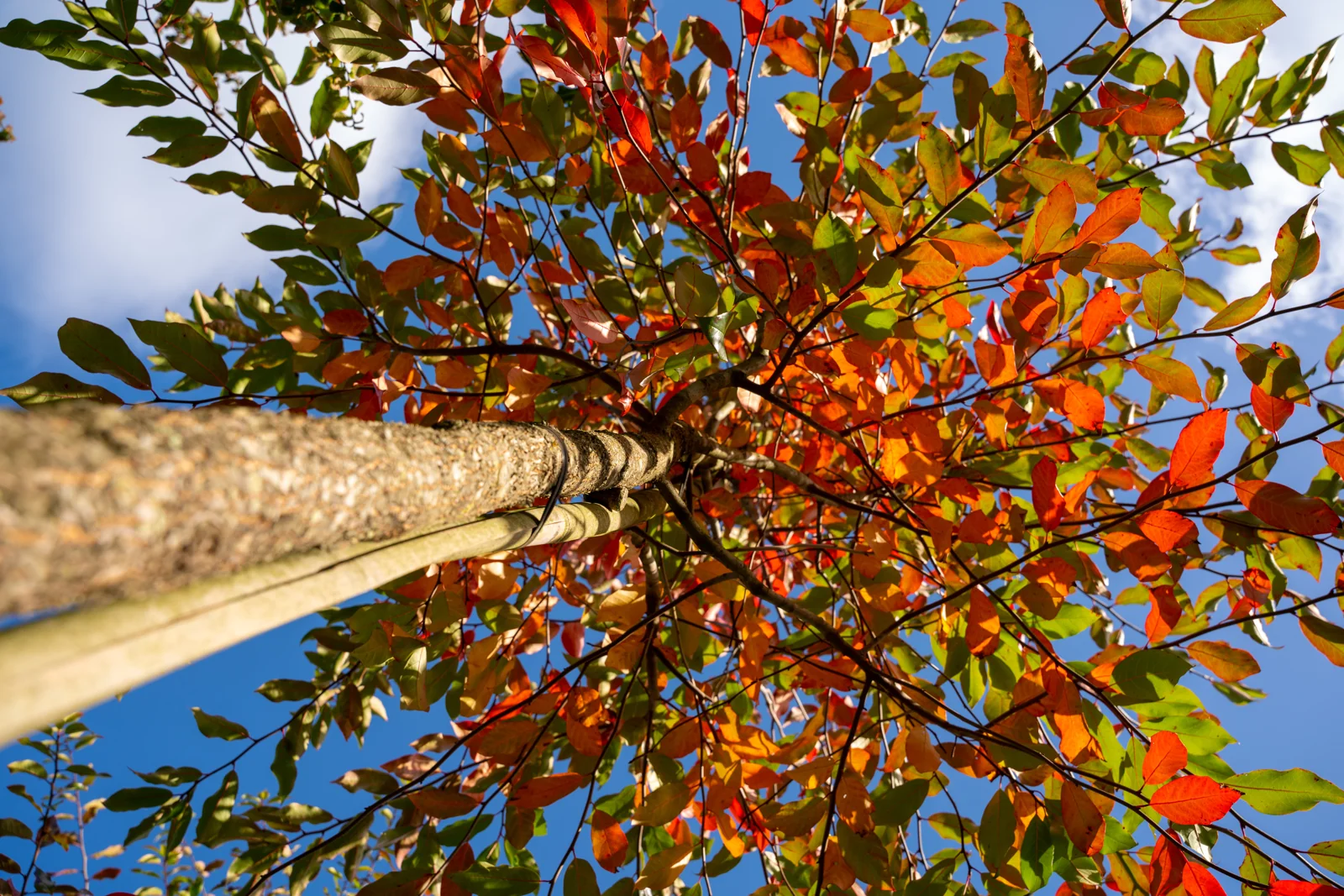
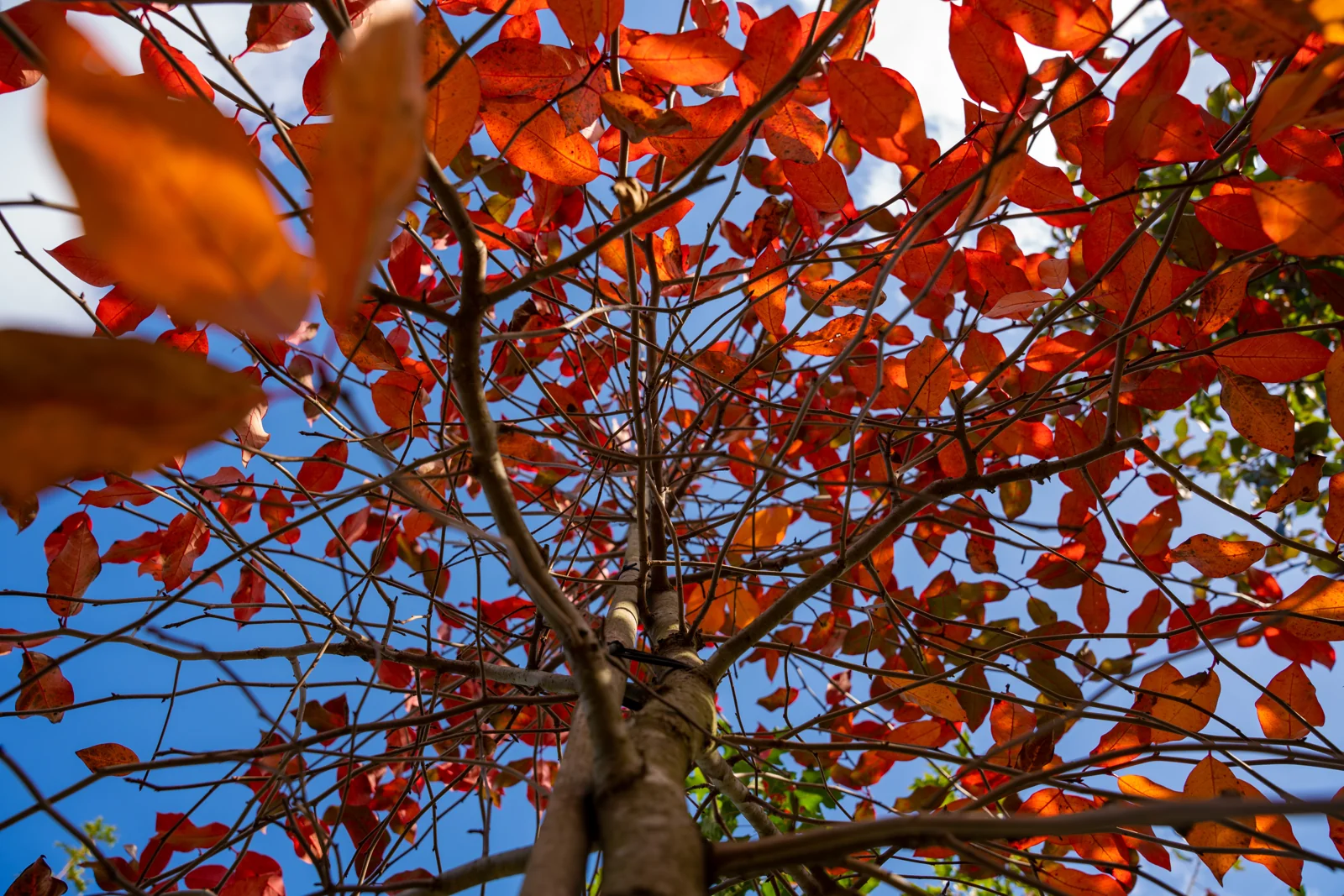
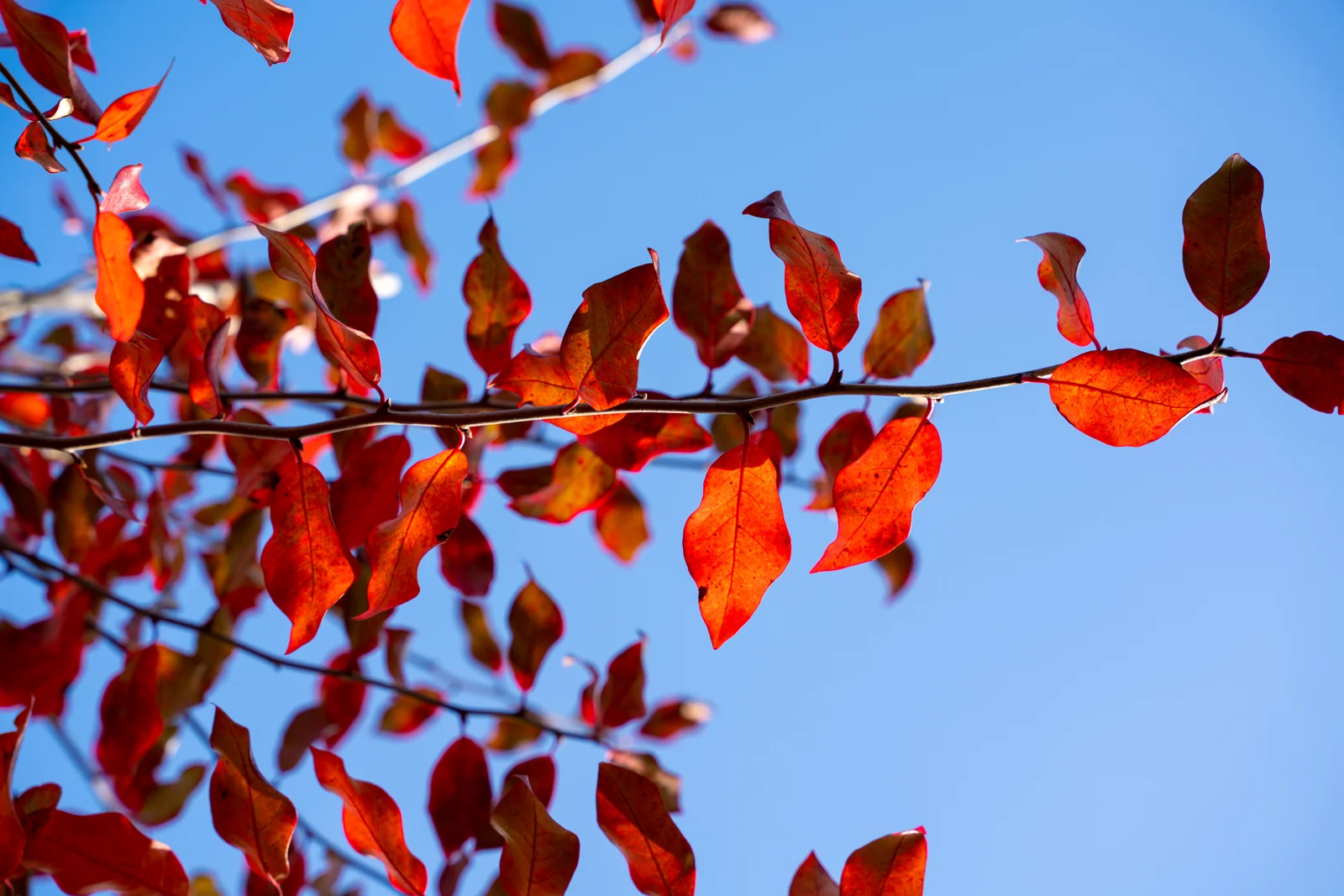
Slow-growing and deciduous, this eastern North American tree is specified above all for its intense autumn foliage. In Spain it performs best in the humid Atlantic northwest, on acidic soils with consistent moisture, where colour rivals any broadleaf.
- Autumn colour ranges from scarlet through orange to deep purple over several weeks
- Thrives on acidic to neutral soils, ideal for naturally siliceous ground
- Moderate drought tolerance once established, with light summer irrigation in central and southern Spain
About this Species
The species reaches 10 to 20 metres at maturity with a conical to upright crown spreading 6 to 10 metres. Growth is slow, roughly 3 to 4 metres per decade under favourable conditions. Winter hardiness extends to approximately −37 °C, so cold is never the limiting factor in any Spanish location. The constraint is soil chemistry and water: Nyssa sylvatica…
Read more
Show less
The species reaches 10 to 20 metres at maturity with a conical to upright crown spreading 6 to 10 metres. Growth is slow, roughly 3 to 4 metres per decade under favourable conditions. Winter hardiness extends to approximately −37 °C, so cold is never the limiting factor in any Spanish location. The constraint is soil chemistry and water: Nyssa sylvatica requires acidic to neutral pH (below 6.5) and performs poorly on calcareous or alkaline substrates. This rules out most of the Mediterranean littoral, the meseta interior, the Ebro valley, and the semi-arid southeast, where limestone-derived and gypsiferous soils dominate.
The realistic specification zone within Spain is the Atlantic strip (cornisa cantábrica) from Galicia through Asturias, Cantabria, and the Basque Country, where annual rainfall exceeds 1,000 mm, summers remain cool, and soils are characteristically acidic. In these conditions the tree establishes reliably and produces the scarlet-to-purple autumn colour that is its primary specification argument. Outside the Atlantic corridor, autumn colour is muted and establishment mortality rises. Projects in Greater Bilbao or Donostia-San Sebastián with confirmed acidic substrates are the strongest use cases.
Water demand during establishment is high. The first two to three summers require consistent irrigation, and even once established the tree depends on regular moisture. It tolerates waterlogged and poorly drained soils, including compacted urban substrates, but it does not tolerate sustained drought. Under irrigation restriction (sequía decrees), an established specimen on a moist Atlantic site will persist, but one planted into a marginal location with limited summer water will decline. Describe it in the landscape project submission (proyecto de ajardinamiento) as a high-water-demand species.
Nyssa sylvatica is not within the known host range of Xylella fastidiosa, which removes one regulatory layer from the specification process. Disease and pest resistance are both strong; leaf spot and cankers occur but rarely threaten established trees. The species has low flammability, a useful attribute where projects border the wildland-urban interface (interfaz urbano-forestal). The deep taproot that develops in youth makes later transplanting difficult, so it should be sited as a permanent specimen from the outset. Field-grown stock with a well-managed root ball avoids the taproot problem at planting.
As a functional reference, the tree occupies a niche comparable to Liquidambar styraciflua in the autumn-colour category but on a smaller scale, with a narrower crown and lower ultimate height. Where Liquidambar is already specified for Atlantic Spanish projects, Nyssa offers a tighter form and stronger resistance to pests, at the cost of slower growth and greater sensitivity to soil alkalinity. It is a specialist tree for a specific envelope, not a general-purpose urban species.



Advice on this species
Want to know more about Nyssa sylvatica?
Tell us about your project and we'll advise you on this species — where it thrives, which size makes sense, and what to expect once planted.
- Produção própria
- Exemplares adultos
- Resposta em 1–2 dias
Sem compromisso · orçamento personalizado