

Fast shade and fragrant spring flowers on lean soil
Chinaberry Tree · Melia azedarach
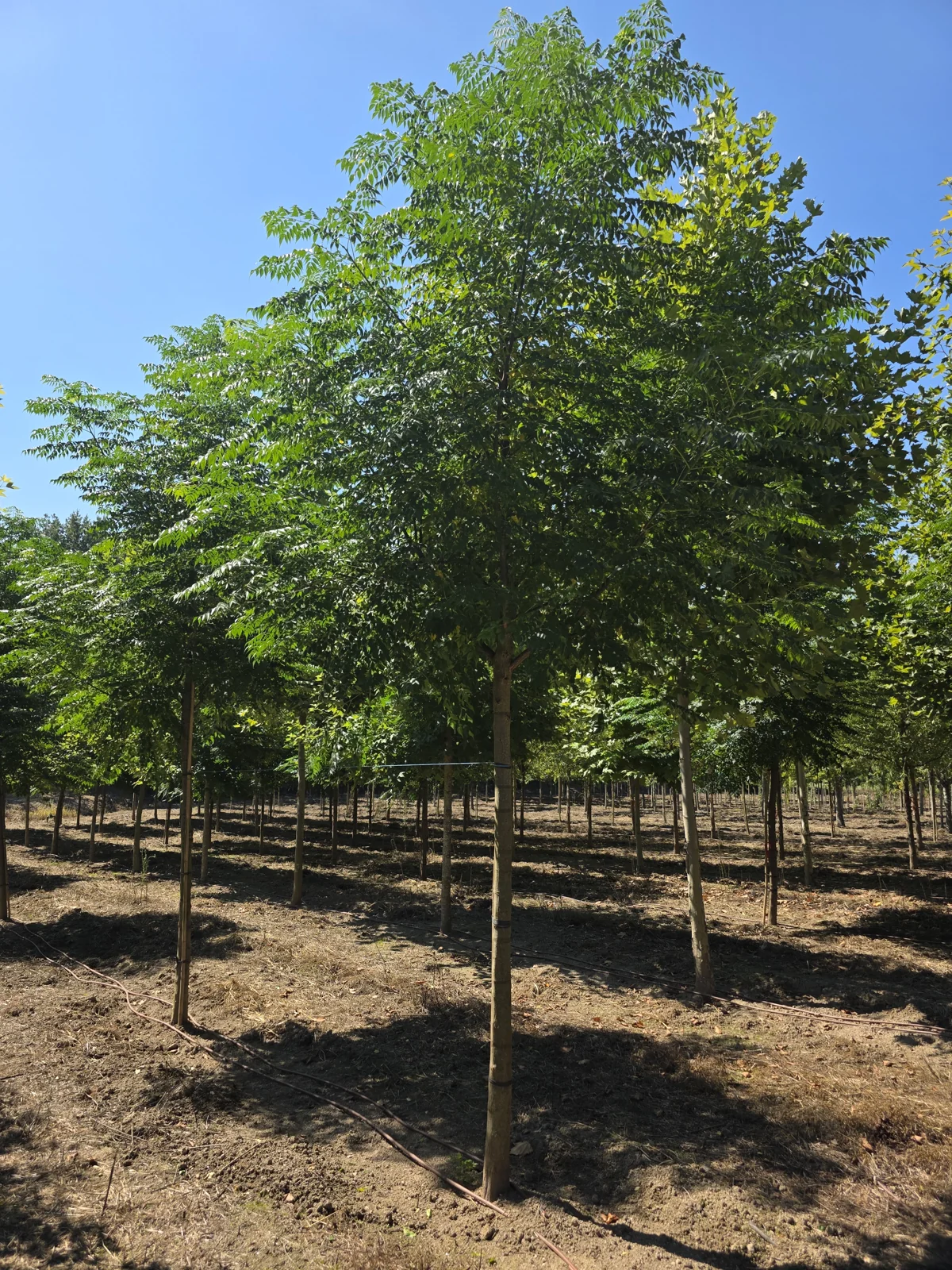
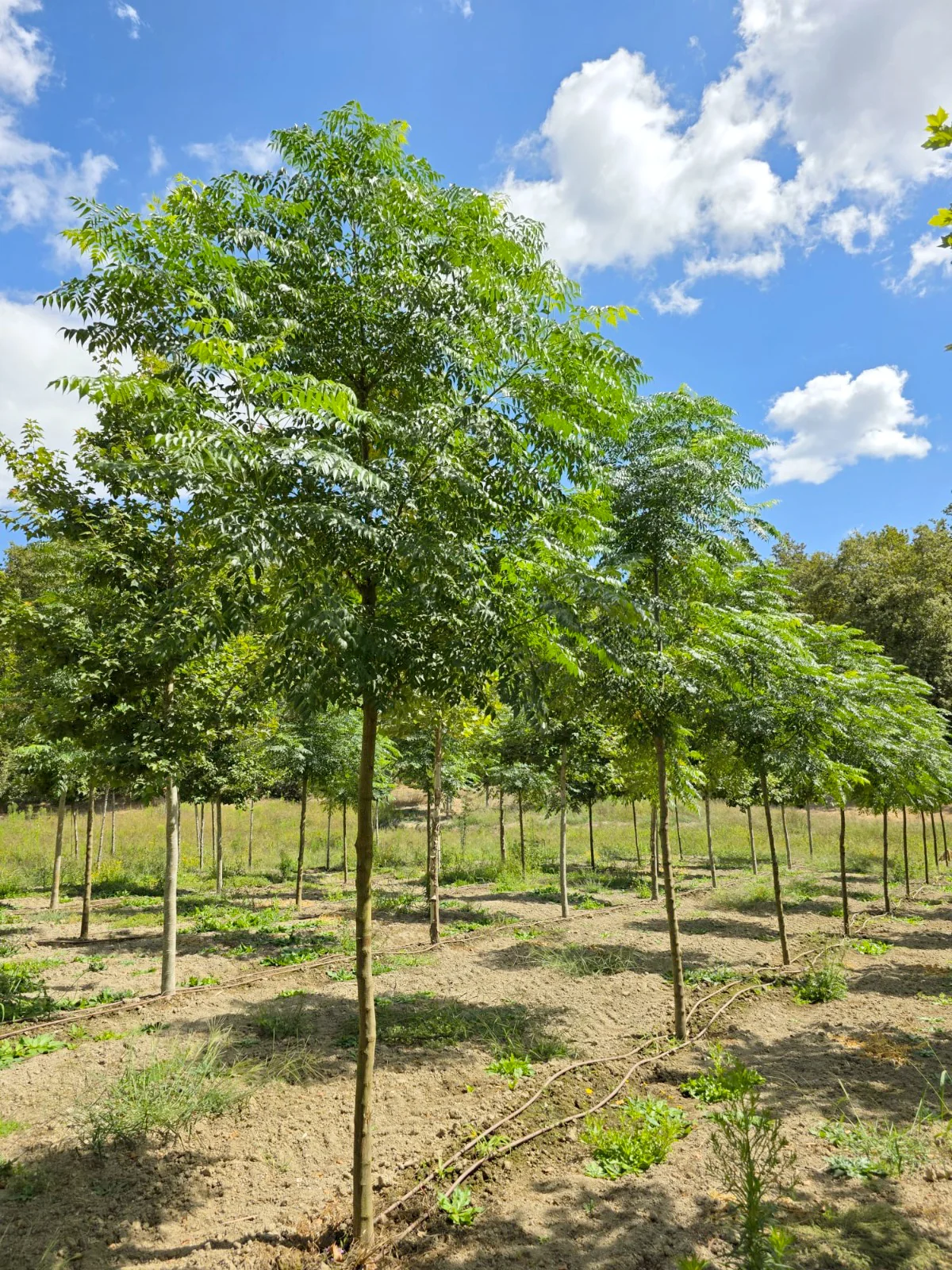
A fast-growing deciduous shade tree specified across southern and eastern Spain, where it meets high summer heat loads and restricted irrigation budgets that slower-maturing species cannot. Its open, rounded crown and tolerance of poor soils suit urban alignment contexts.
- Reaches useful shade canopy within three to four years of planting
- Thrives without irrigation once established across coastal and inland Spain
- Fragrant lavender flower sprays from April to June, with a distinctive chocolate scent
About this Species
Known to Spanish municipal teams as cinamomo, Melia azedarach is already a familiar presence in urban planting across the Mediterranean coastal belt and the Guadalquivir basin, where it is valued for rapid canopy establishment and low water demand once past the two to three summer establishment phase. A mature tree reaches 8 to 12 m in height with a…
Read more
Show less
Known to Spanish municipal teams as cinamomo, Melia azedarach is already a familiar presence in urban planting across the Mediterranean coastal belt and the Guadalquivir basin, where it is valued for rapid canopy establishment and low water demand once past the two to three summer establishment phase. A mature tree reaches 8 to 12 m in height with a spreading crown of 6 to 10 m, producing functional shade within five to seven years of planting at final site, a timeline that few comparable deciduous species can match under Spanish conditions.
Climatic range within Spain is broad but not unlimited. The tree performs reliably across Mediterranean coastal zones, the Levante, Andalusia, and the semi-arid southeast, tolerating sustained summer temperatures above 38 degrees C and prolonged dry periods once established. On the continental interior (meseta), winter minimums near -15 degrees C represent its practical cold limit; late spring frosts in Castilla or Aragon can damage new growth, and the tree should be specified with caution above 700 m elevation in the central plateau. In the humid Atlantic northwest (cornisa cantabrica), excessive winter moisture and reduced summer heat make it a poor fit.
Water performance is a primary argument for specification. After two to three irrigated establishment summers, mature trees tolerate extended irrigation cut-off under Mediterranean and semi-arid conditions, maintaining canopy without supplemental water through standard drought episodes. This positions it well for landscape project submissions (proyecto de ajardinamiento) in comunidades autonomas with active drought decrees restricting public landscape irrigation. In the driest southeast sites around Almeria or Murcia, occasional deep irrigation during extreme multi-year drought is prudent.
Soil tolerance is wide: alkaline and calcareous substrates common across eastern and southern Spain, sandy coastal profiles, and moderately compacted urban fills are all acceptable, though waterlogged or heavy clay soils reduce performance. Moderate salt tolerance extends its range to second-line coastal projects, though it is not a first choice for exposed seafront sites. The root system is not aggressive toward pavement, making it suitable for urban tree pits where faster canopy closure is needed as an alternative to slower-establishing species such as Celtis australis or Tipuana tipu.
Fragrant lavender flowers appear in large panicles from April through June, followed by persistent yellow drupes that remain on bare branches through winter. The fruit is toxic to mammals and should be noted in specifications for school grounds, playgrounds, or livestock-adjacent sites. Bipinnate foliage gives a light, filtered shade rather than dense canopy cover, which suits underplanting schemes. Lifespan averages around 20 years, shorter than most specification alternatives, so it functions best where rapid amenity is the priority and long-term canopy succession is planned alongside it.



Advice on this species
Want to know more about Melia azedarach?
Tell us about your project and we'll advise you on this species — where it thrives, which size makes sense, and what to expect once planted.
- Produção própria
- Exemplares adultos
- Resposta em 1–2 dias
Sem compromisso · orçamento personalizado