

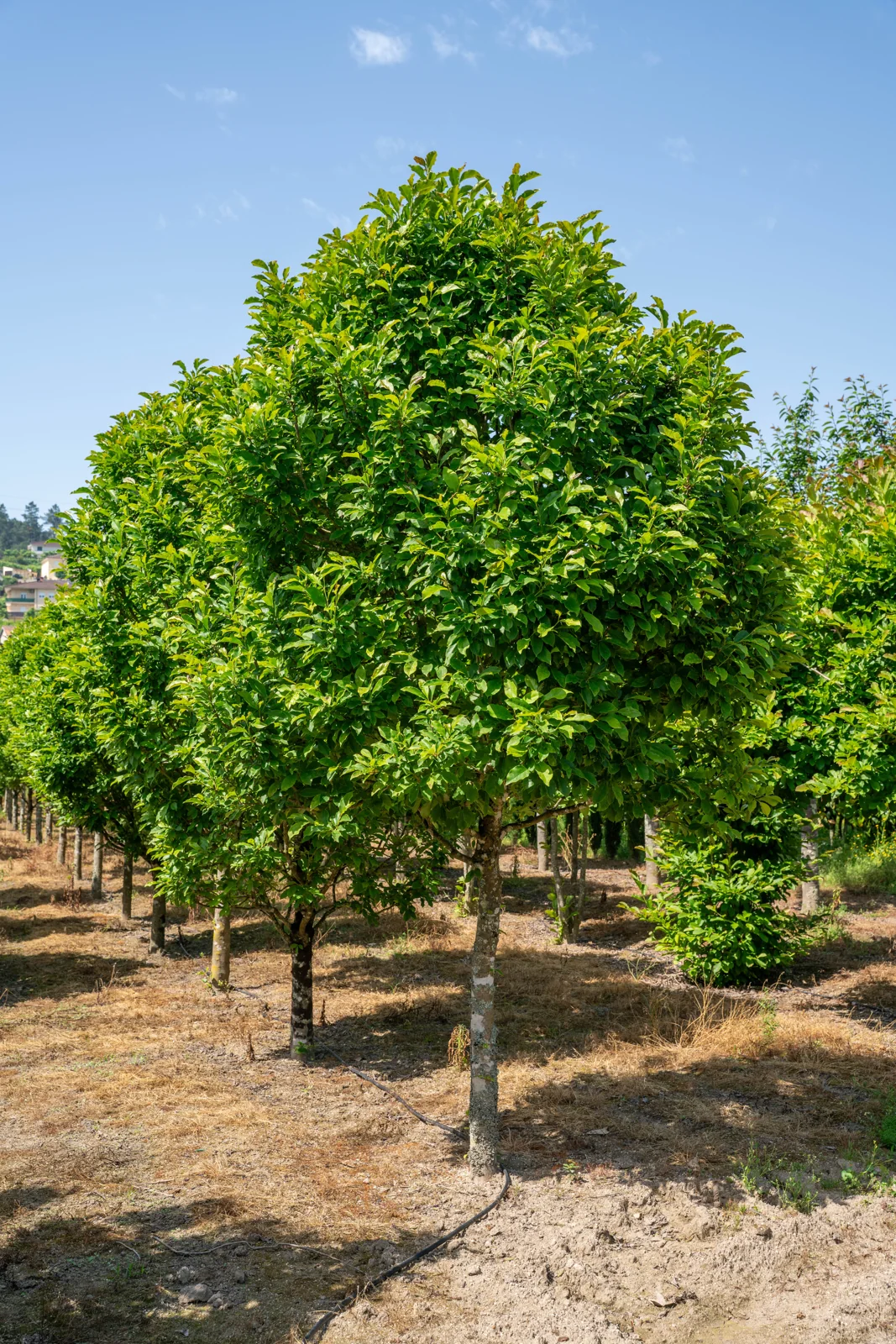
Late-flowering specimen for a sheltered courtyard or terrace pot
Susan Magnolia · Magnolia susan
A slow-growing deciduous hybrid specified as a spring-flowering focal tree in northern Spanish projects where acidic soils, moderate rainfall, and sheltered positions support reliable establishment without intensive irrigation.
- Cold-hardy to roughly minus 30 °C; temperature is no constraint anywhere in Spain
- Requires acidic to neutral soil; on alkaline ground, grow in a container with ericaceous compost
- Rewards moderate summer irrigation once established with steady growth
About this Species
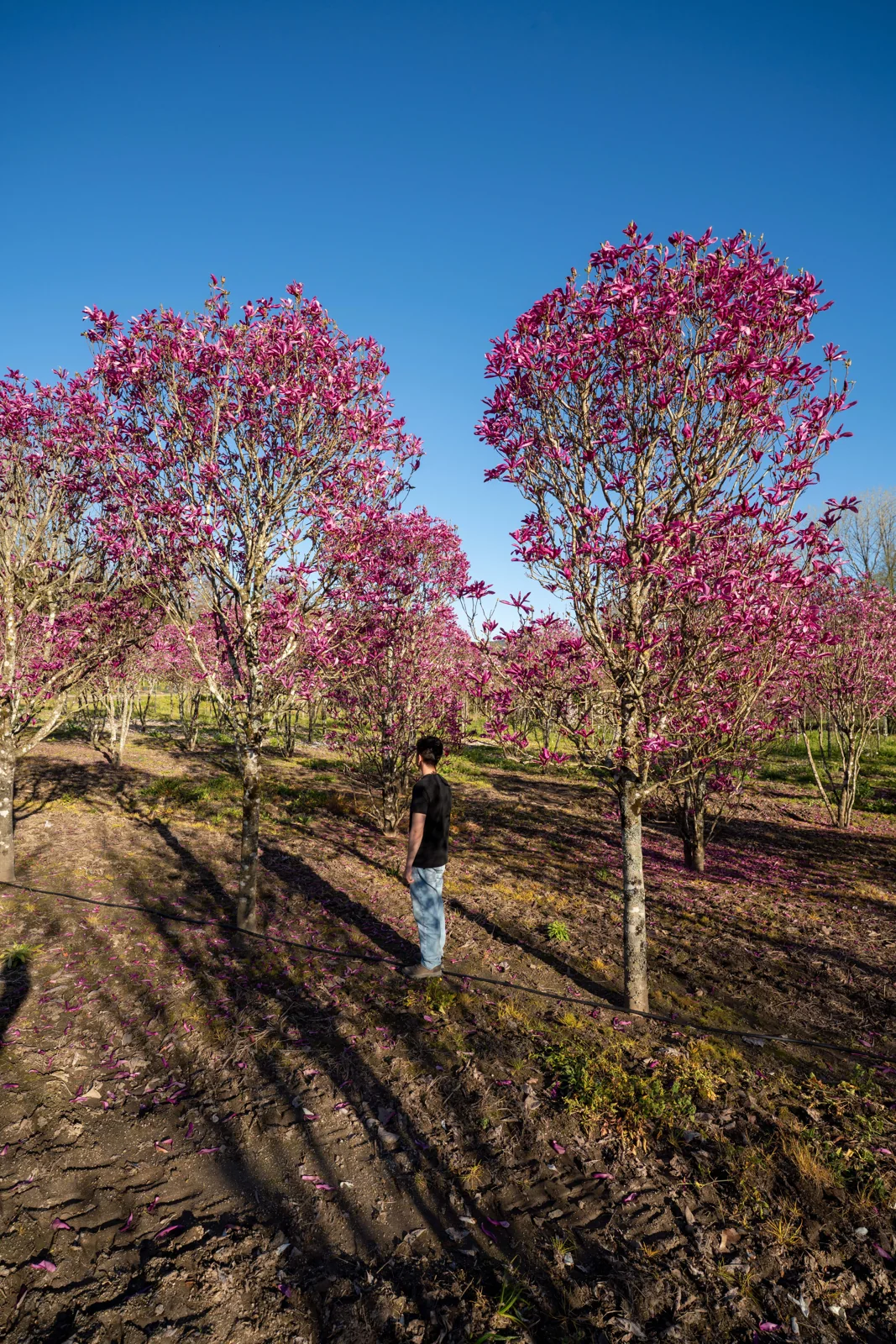
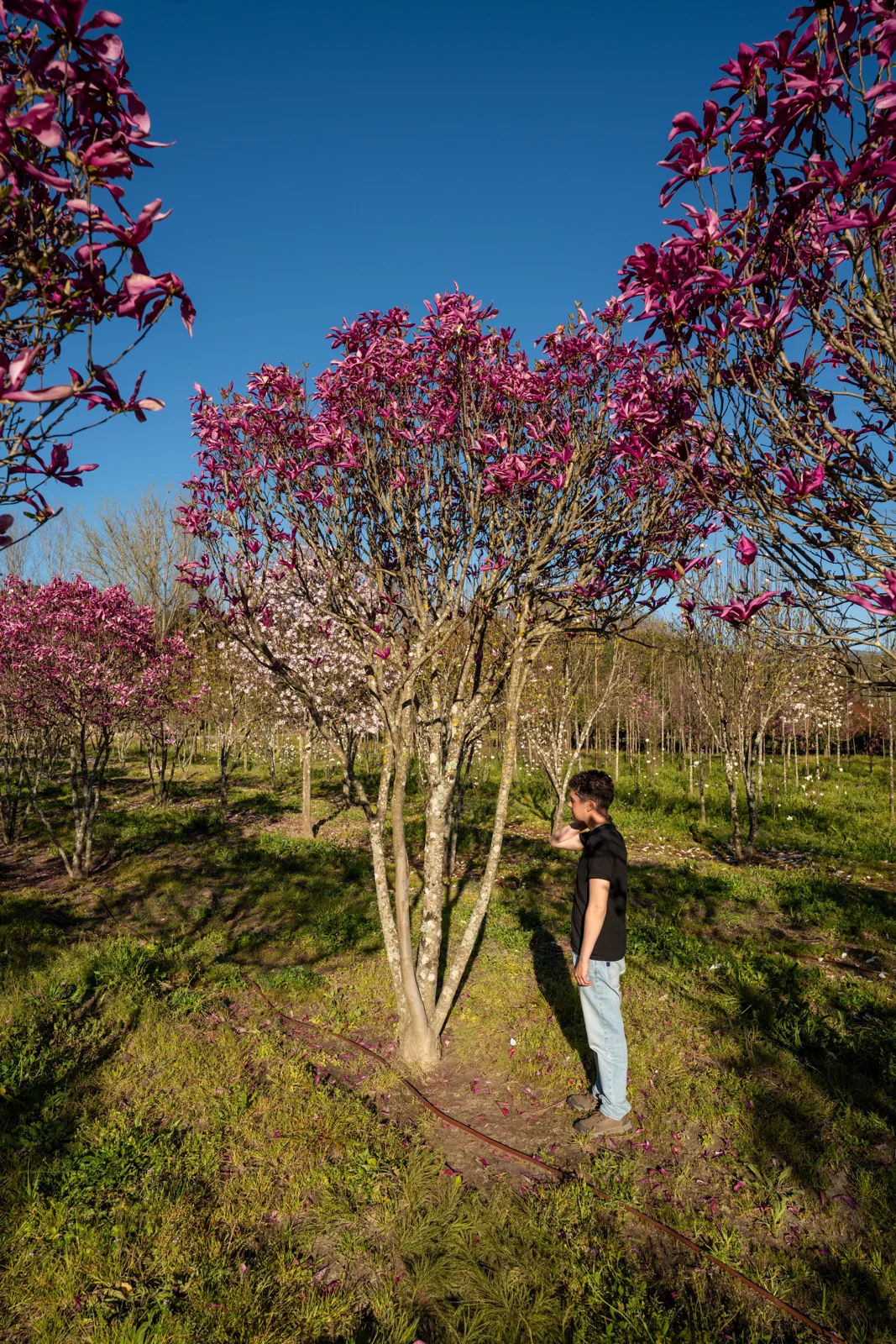
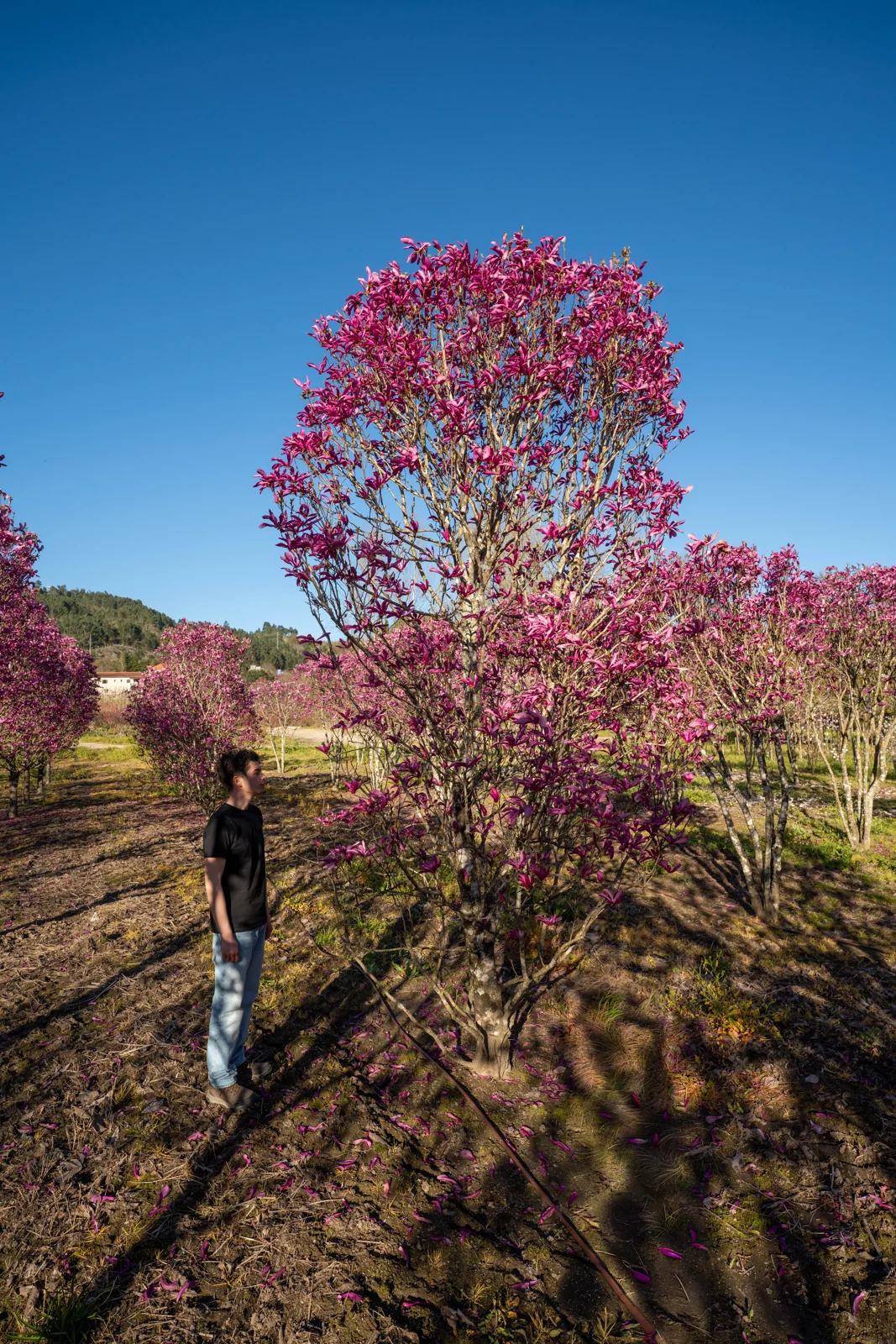
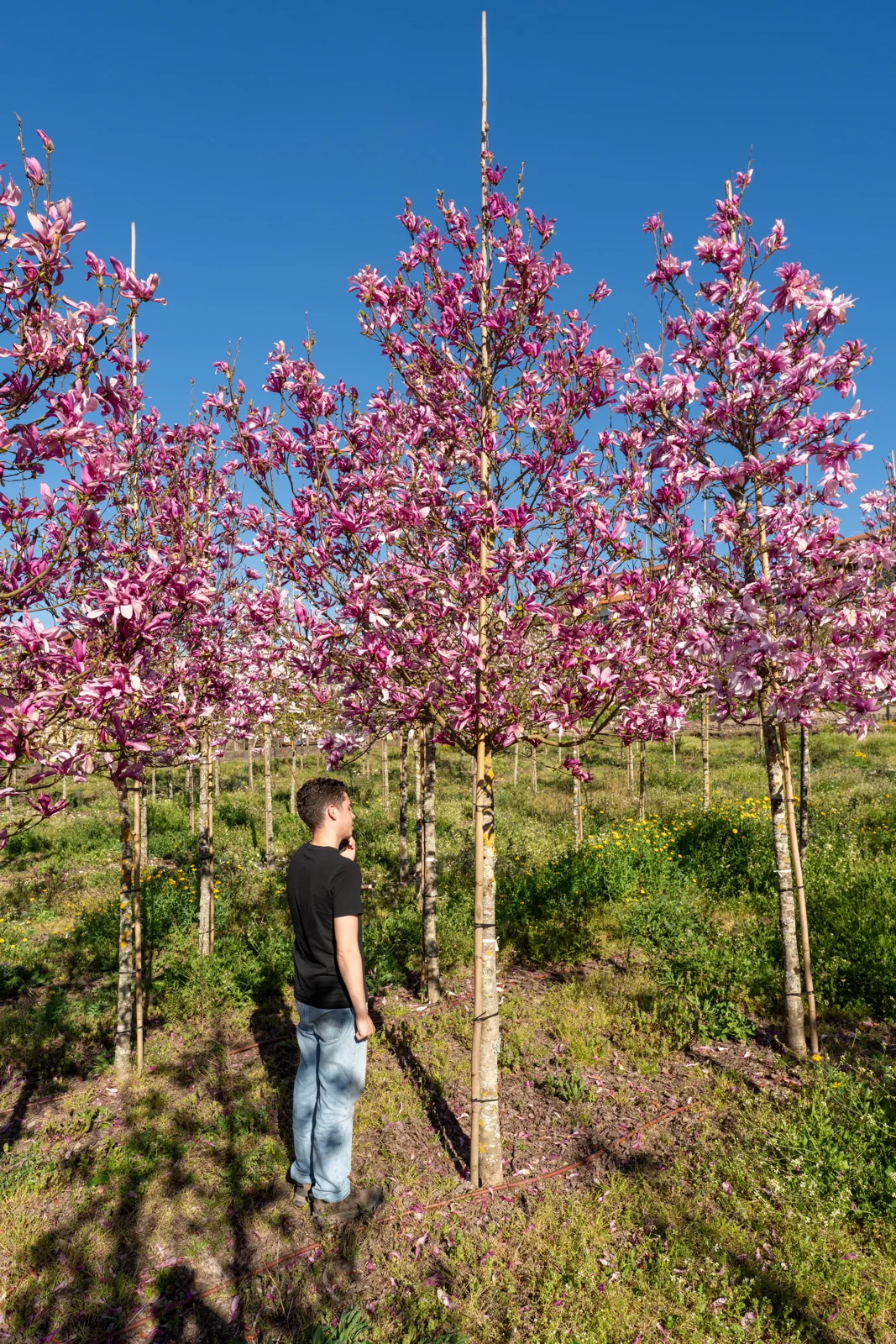
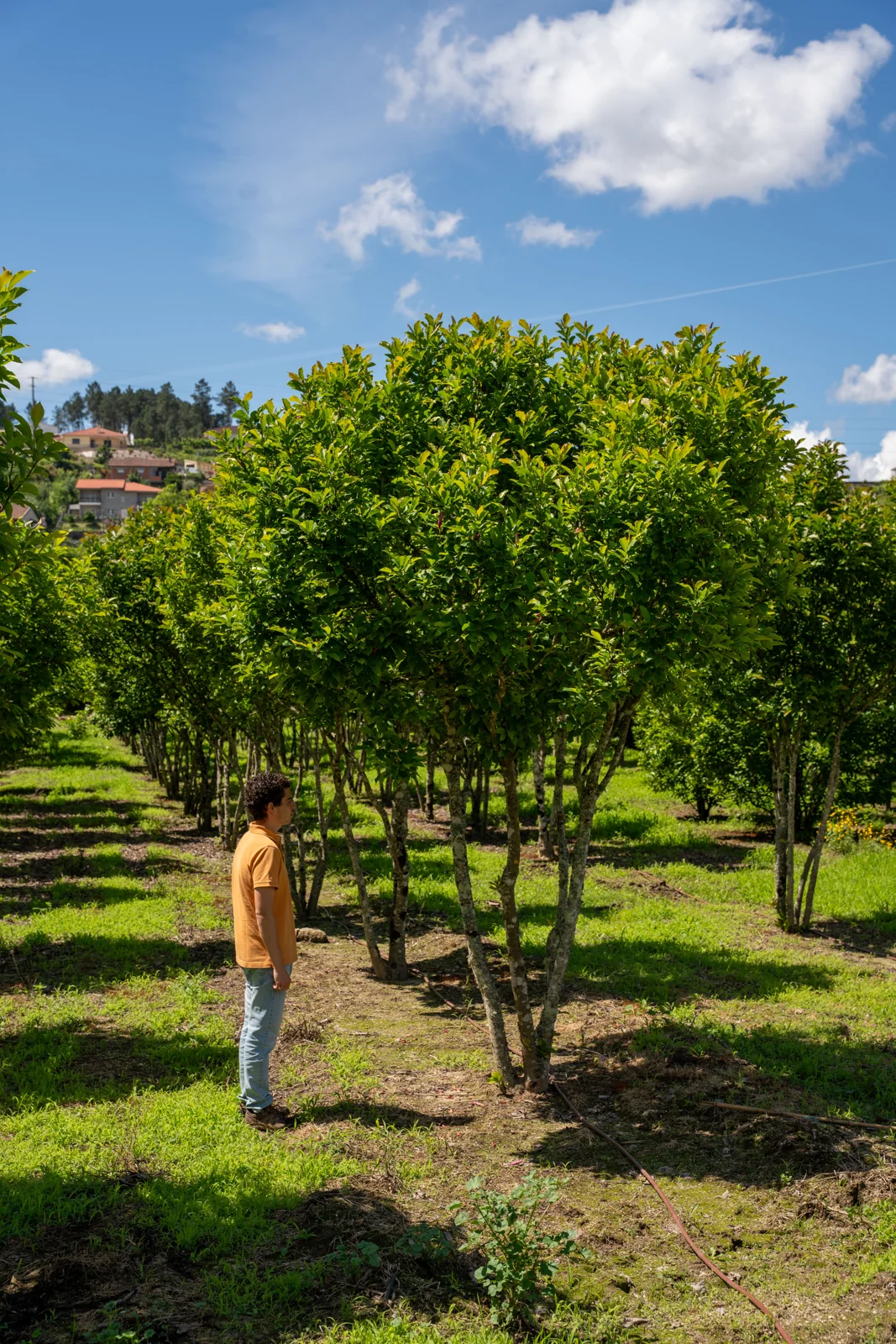
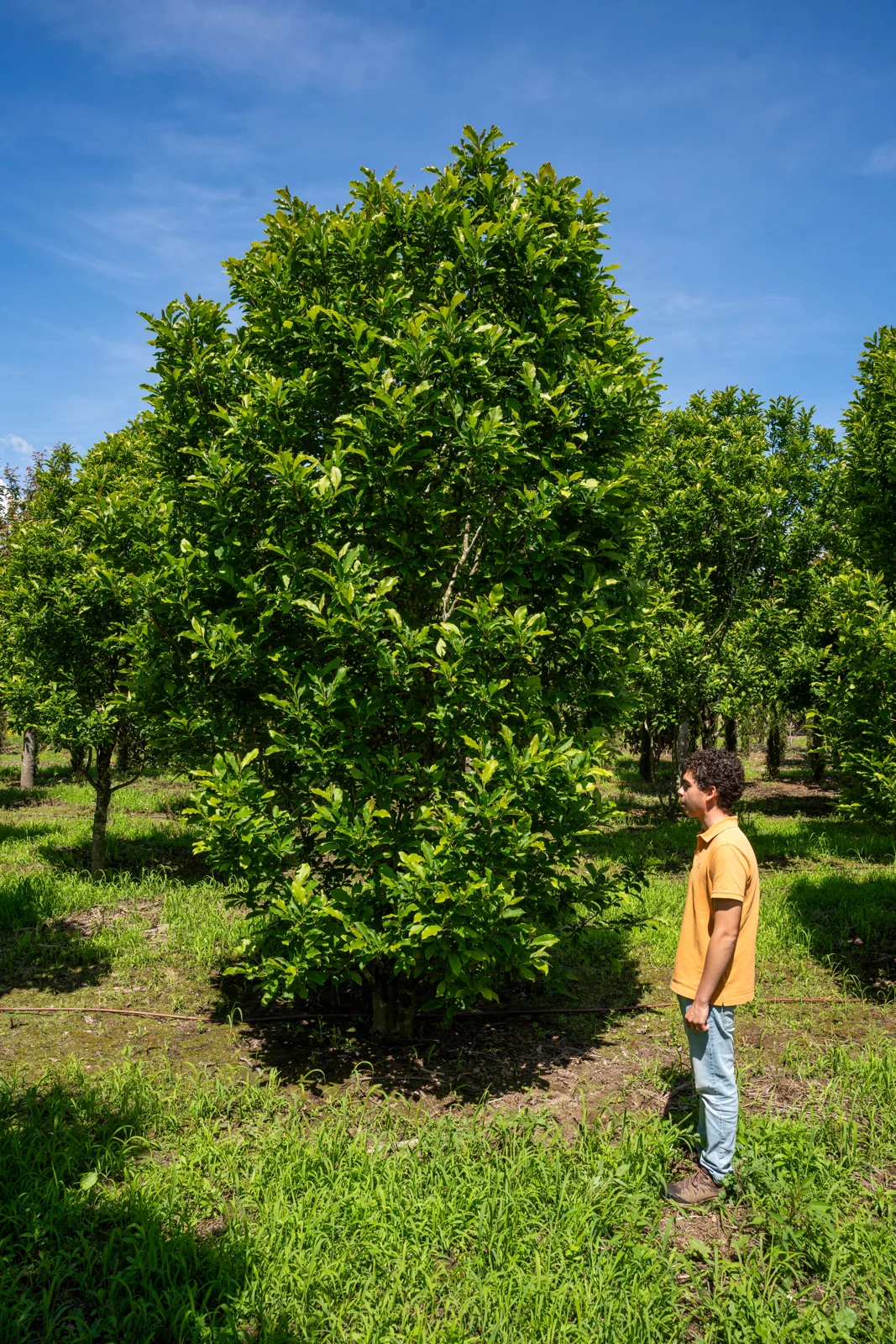
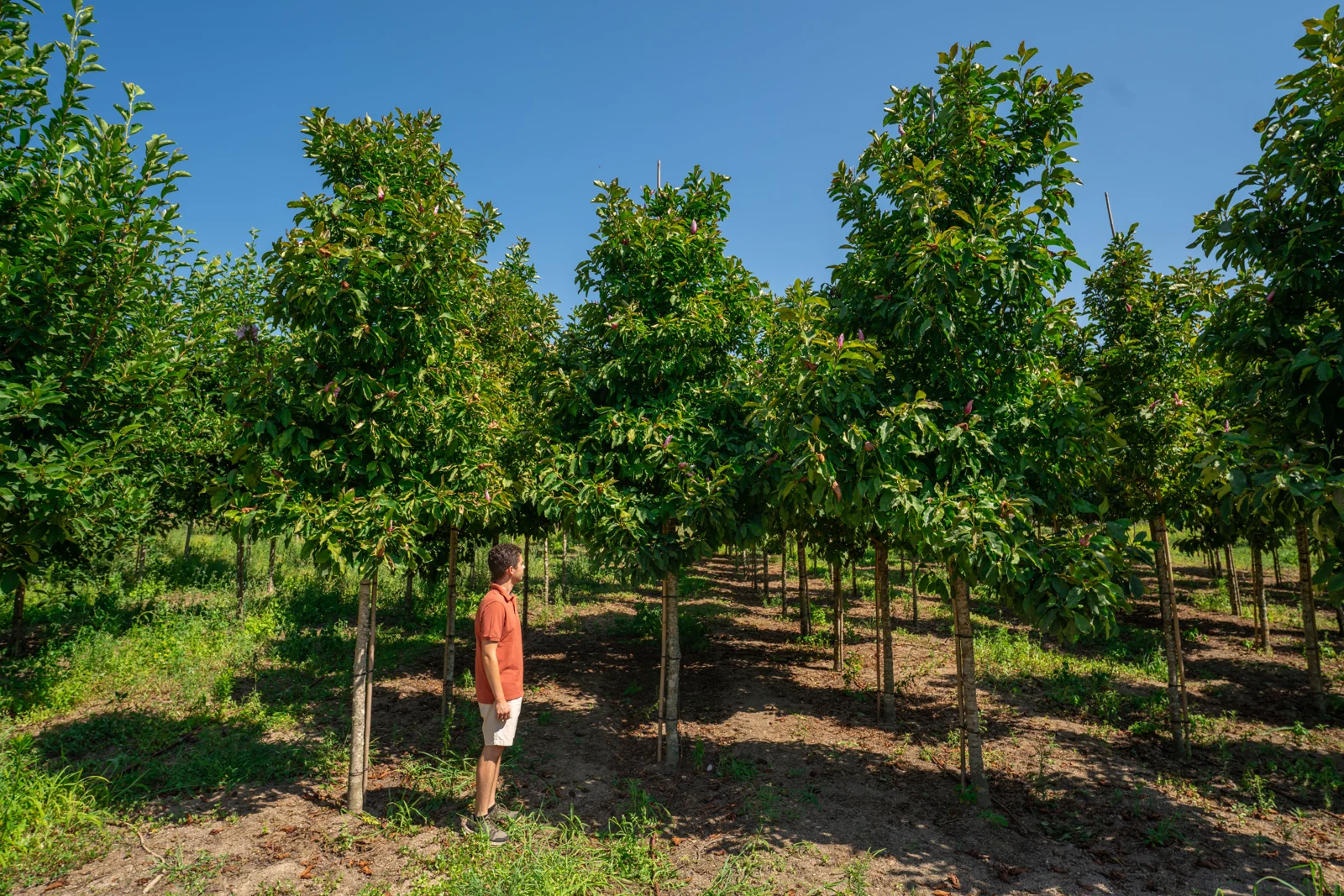
A hybrid from the Little Girl series developed at the US National Arboretum in the 1950s, Magnolia 'Susan' crosses M. liliiflora 'Nigra' with M. stellata 'Rosea'. The result is a compact, upright-rounded small tree reaching 3 to 5 m in height with a spread of 2 to 4 m. Growth is slow, and the plant matures as a multi-stemmed specimen or a low single-trunked…
Read more
Show less
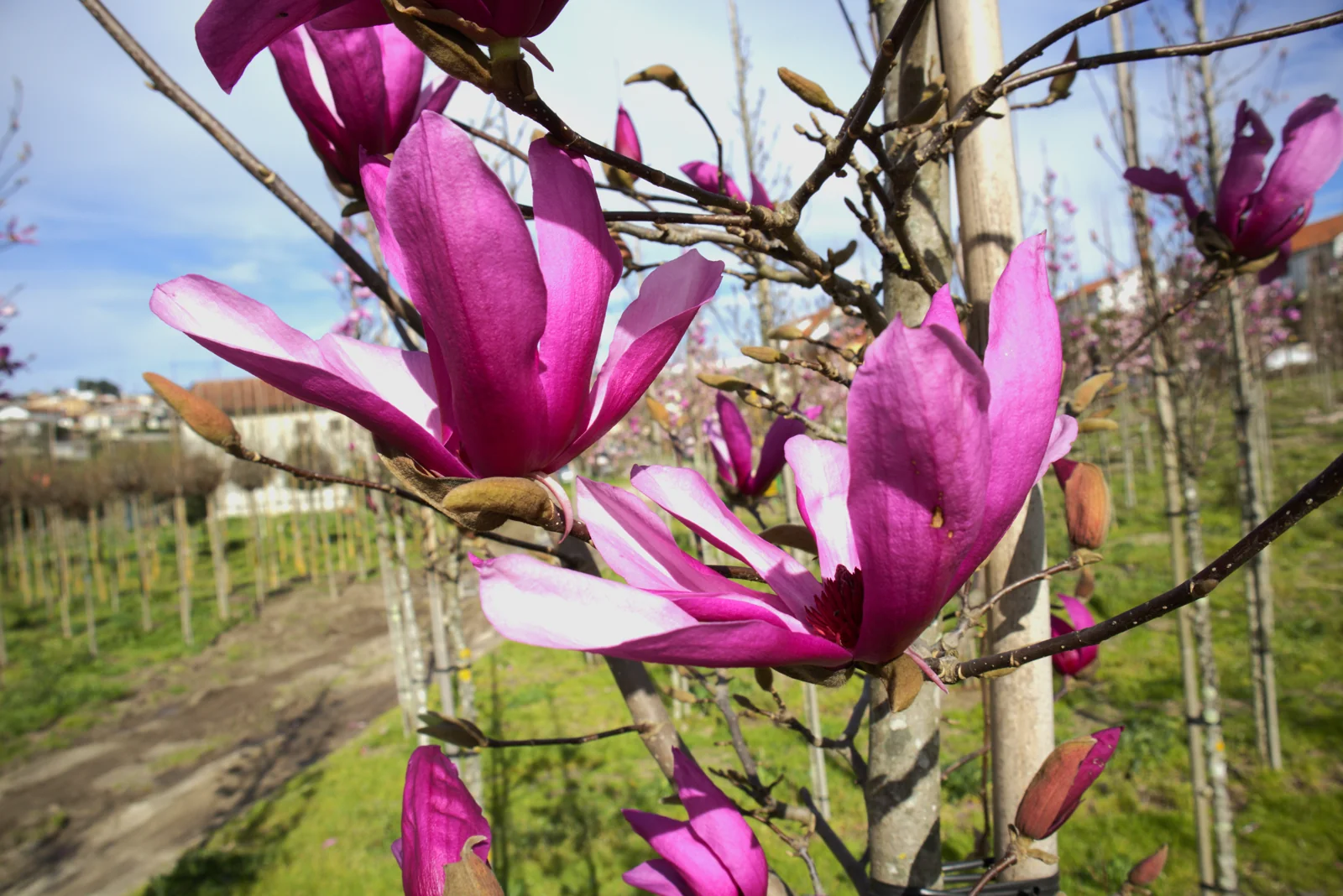
A hybrid from the Little Girl series developed at the US National Arboretum in the 1950s, Magnolia 'Susan' crosses M. liliiflora 'Nigra' with M. stellata 'Rosea'. The result is a compact, upright-rounded small tree reaching 3 to 5 m in height with a spread of 2 to 4 m. Growth is slow, and the plant matures as a multi-stemmed specimen or a low single-trunked tree depending on early training. Its principal ornamental phase is a goblet-shaped fuchsia flower with six slightly twisted tepals, appearing from mid-April into May, two to four weeks later than M. stellata and M. x soulangeana. That delayed bloom is the cultivar's key specification advantage: it avoids the late spring frosts that frequently damage earlier-flowering magnolias, a relevant consideration in projects across the humid Atlantic northwest (cornisa cantabrica) and the Basque foothills where April frosts are common.
Climatic fit within Spain is narrow but well defined. The tree performs reliably in the Atlantic strip from Galicia through Asturias, Cantabria, and the Basque Country, where mild wet winters, cool summers, and naturally acidic soils match its requirements. Hardy to approximately -31 degrees C, winter cold is not the limiting factor anywhere on the peninsula. Summer heat and drought are. Magnolia 'Susan' has moderate heat tolerance and moderate drought tolerance; it requires consistent soil moisture through the growing season and suffers in prolonged dry heat. Projects in the continental interior (meseta) face both alkaline soils and severe summer drying, making the cultivar a poor fit without significant soil amendment and permanent irrigation. Mediterranean coastal and semi-arid southeastern sites are outside its functional envelope.
Soil chemistry is a hard constraint. Magnolia 'Susan' requires neutral to acidic, organically rich, moist but well-drained ground. It does not tolerate calcareous, gypsiferous, or alkaline substrates. In much of Spain, where limestone-derived soils dominate, this limits specification to the Atlantic provinces and isolated acid-soil pockets. Compacted urban substrates require structural improvement; the fleshy root system is sensitive to damage and does not re-establish well in heavy or waterlogged conditions.
Disease resistance is generally good. Powdery mildew can affect foliage in late summer, particularly in humid, poorly ventilated positions, but rarely threatens the plant's health. No serious pest pressures are documented. The genus Magnolia is not within the known host range of Xylella fastidiosa, which simplifies specification in demarcated zones. For landscape professionals coordinating with municipal parks departments (servicio de parques y jardines) in northern Spanish cities, Magnolia 'Susan' offers a manageable flowering accent where the more familiar M. x soulangeana carries frost-damage risk and where acid-loving Camellia or Rhododendron would occupy a different scale. Its compact form suits confined courtyards, institutional entrance plantings, and residential garden focal points where a restrained canopy and seasonal flower interest are specified together.
Advice on this species
Want to know more about Magnolia susan?
Tell us about your project and we'll advise you on this species — where it thrives, which size makes sense, and what to expect once planted.
- Produção própria
- Exemplares adultos
- Resposta em 1–2 dias
Sem compromisso · orçamento personalizado