

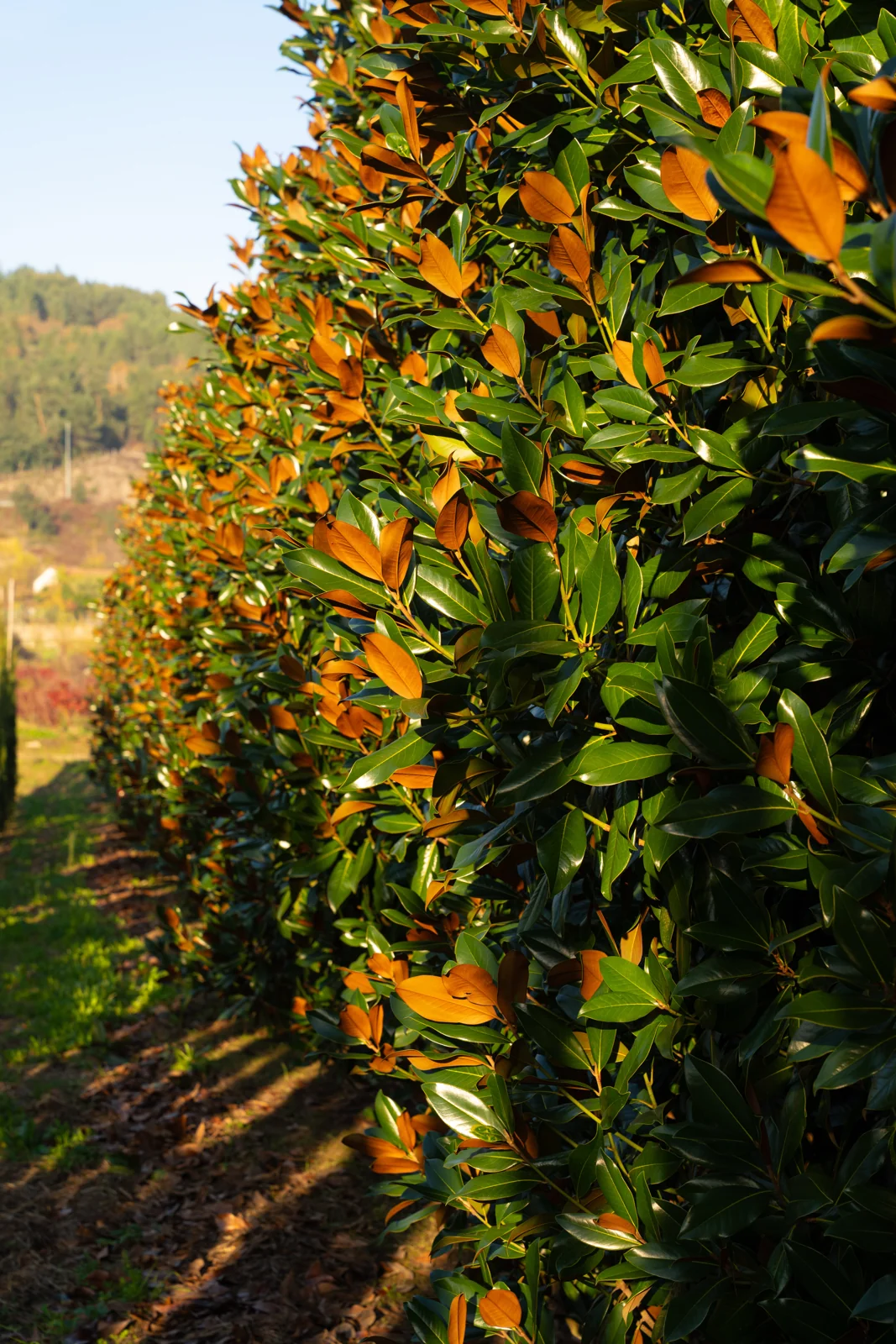
Evergreen canopy tree with large fragrant summer flowers
Southern Magnolia ‘Gallisoniensis’ · Magnolia grandiflora ‘Gallisoniensis’
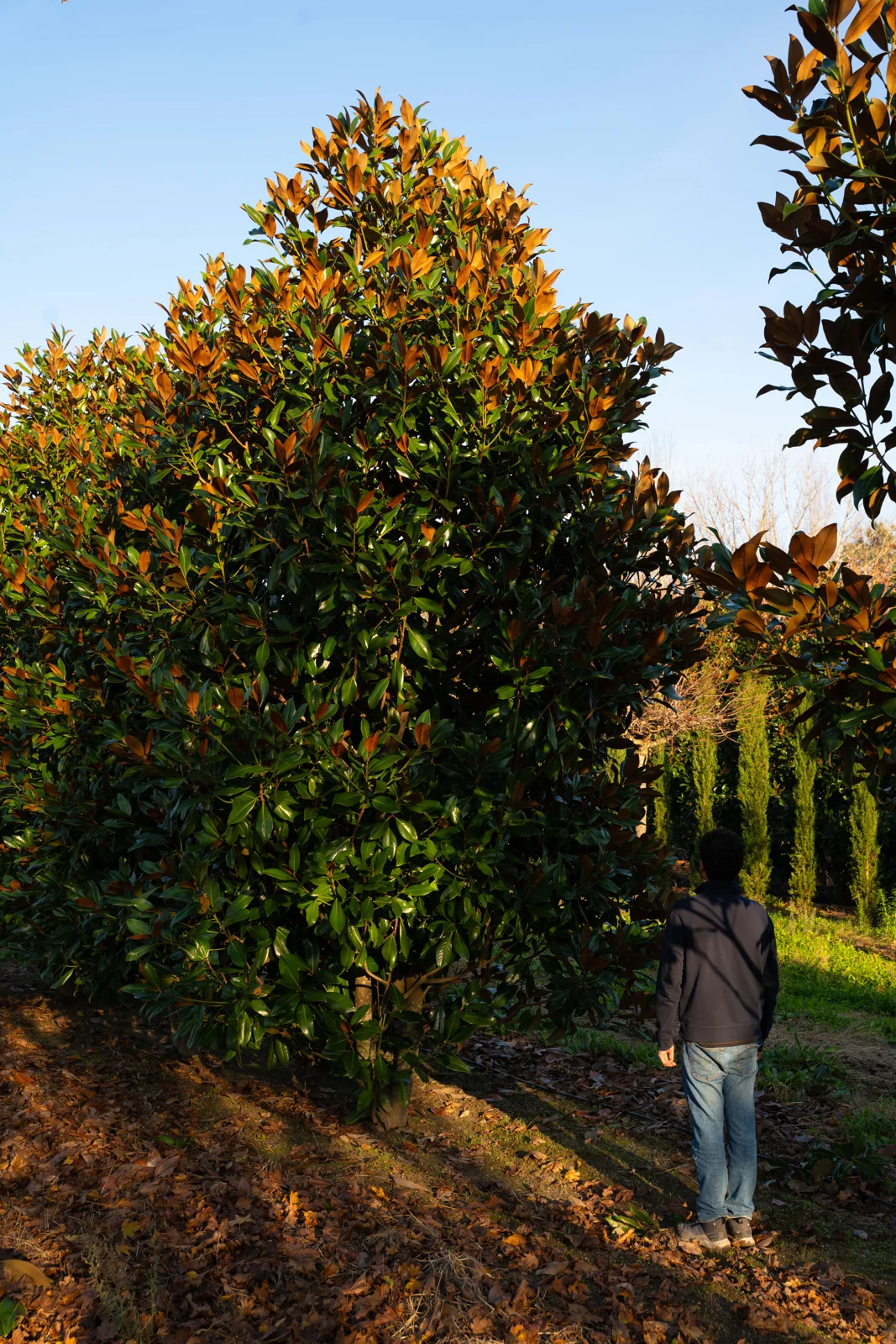
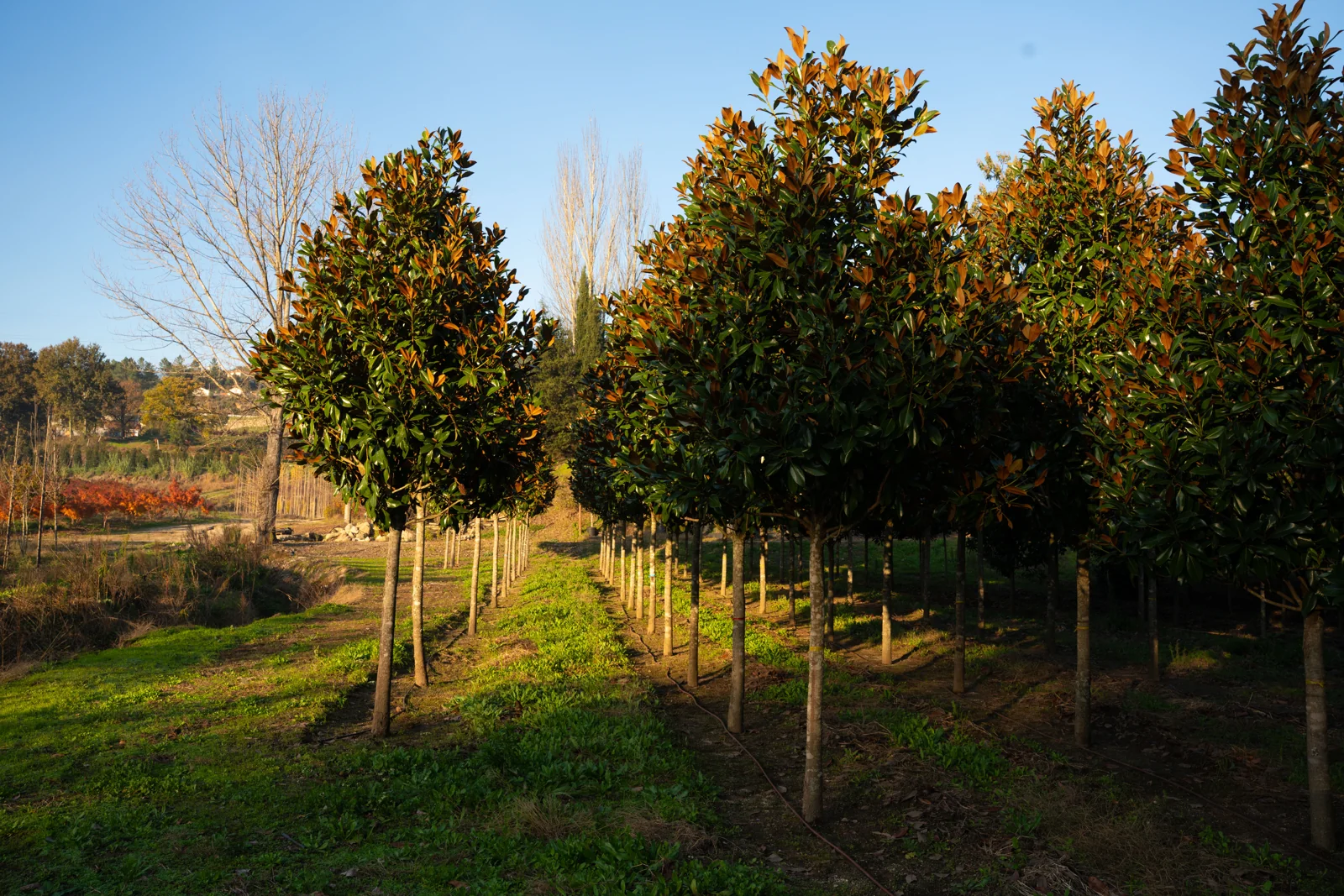
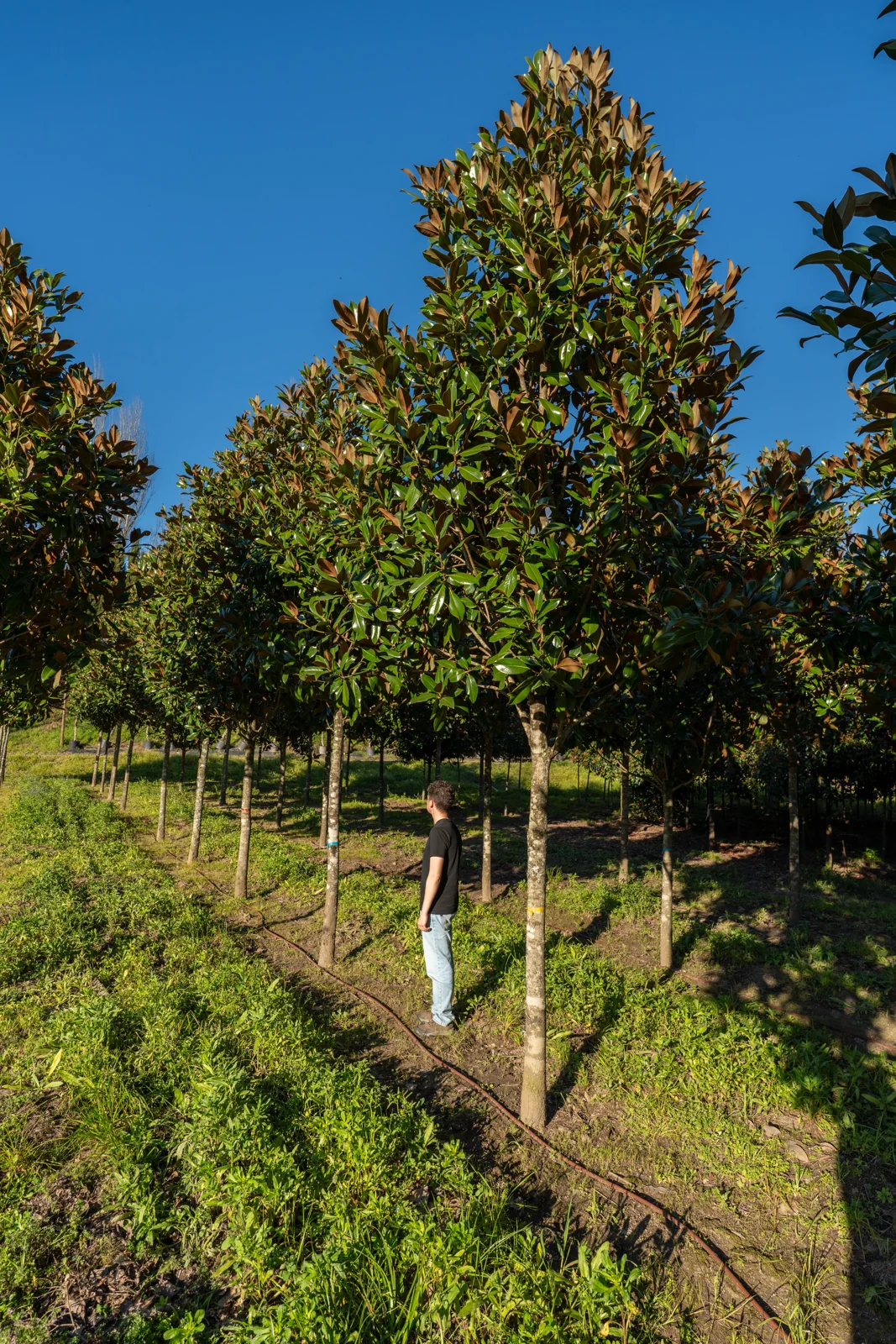
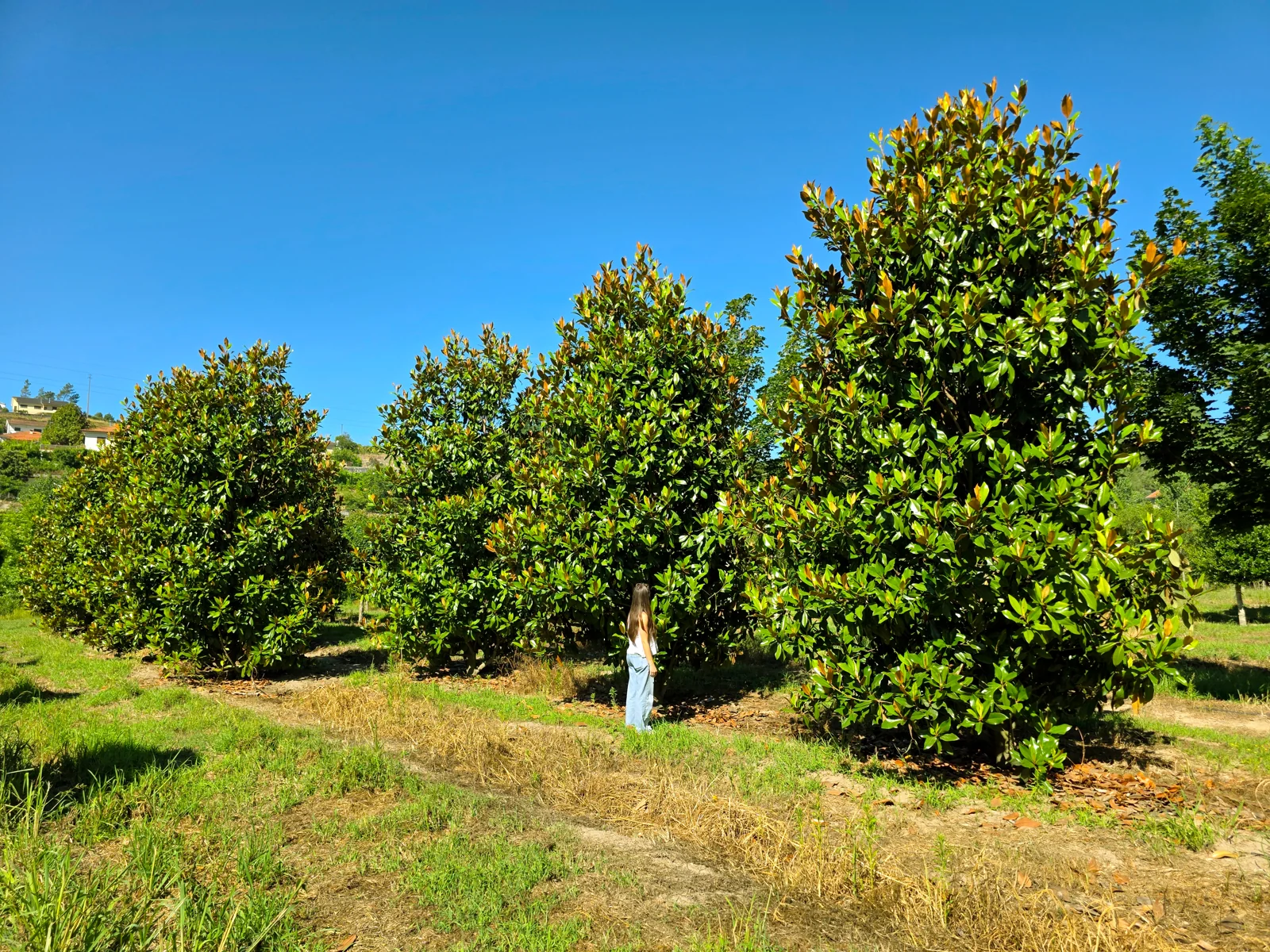
Among the most widely planted selections of the species for good reason, Magnolia grandiflora 'Gallisoniensis' offers a reliably dense, broad-pyramidal crown delivering consistent screening and shade across the range of Spanish climatic conditions where the species is viable.
- Hardy across coastal and inland Spain, tolerating winter lows to around minus 15 degrees Celsius
- Requires regular summer watering during establishment; benefits from occasional irrigation once mature
- Flowers generously from June into early autumn, each bloom up to 25 cm across
Key Facts
About this Cultivar
Where the straight species produces variable seedling forms, some open and irregular, 'Gallisoniensis' develops a predictably dense, broad-pyramidal habit reaching 15 to 20 m in height with an 8 to 12 m spread. The canopy remains furnished to near ground level unless limbed up, making it effective as a freestanding specimen or as a visual screen in parkland…
Read more
Show less
Where the straight species produces variable seedling forms, some open and irregular, 'Gallisoniensis' develops a predictably dense, broad-pyramidal habit reaching 15 to 20 m in height with an 8 to 12 m spread. The canopy remains furnished to near ground level unless limbed up, making it effective as a freestanding specimen or as a visual screen in parkland and large-scale developments. Crown density suppresses underplanting in most light conditions, simplifying maintenance but requiring consideration in shade-garden schemes.
The foliage is the primary year-round asset: large, leathery, glossy dark-green leaves with distinctive rusty-brown indumentum on the underside. Interior leaf drop is continuous and the thick, slow-decomposing foliage accumulates beneath the canopy, a maintenance factor for paved or high-visibility settings. Flowering runs from June through early September, producing solitary white cup-shaped blooms up to 25 cm across with a strong, clean fragrance. Flower production in 'Gallisoniensis' is notably abundant compared to many other cultivars.
Hardiness extends to roughly -17 °C, placing the cultivar comfortably within Mediterranean coastal conditions, the humid Atlantic northwest (cornisa cantábrica), and warmer sectors of the central plateau (meseta). In the coldest meseta interiors, where sustained cold combines with drying winter wind, leaf bronzing and marginal burn are likely. The semi-arid southeast is viable only with reliable supplementary irrigation. Establishment requires consistent deep watering through the first two to three summers; once rooted, the tree manages moderate summer drought but shows stress under prolonged irrigation cut-off in exposed continental sites.
Soil tolerance is broader than often assumed. While the species performs best in deep, fertile, acidic to neutral substrates, it accepts alkaline and calcareous soils common across eastern and southern Spain. Compacted urban soils reduce vigour and canopy density. The tree tolerates urban air pollution well, supporting its established use in municipal planting (servicio de parques y jardines). Wind tolerance is moderate; exposed coastal sites with direct salt spray are not suitable, though sheltered coastal projects are within range. Fire-risk rating is medium, neither a liability nor an advantage in wildland-urban interface (interfaz urbano-forestal) planning.
Advice on this species
Want to know more about Magnolia grandiflora 'Gallisoniensis'?
Tell us about your project and we'll advise you on this species — where it thrives, which size makes sense, and what to expect once planted.
- Produção própria
- Exemplares adultos
- Resposta em 1–2 dias
Sem compromisso · orçamento personalizado