

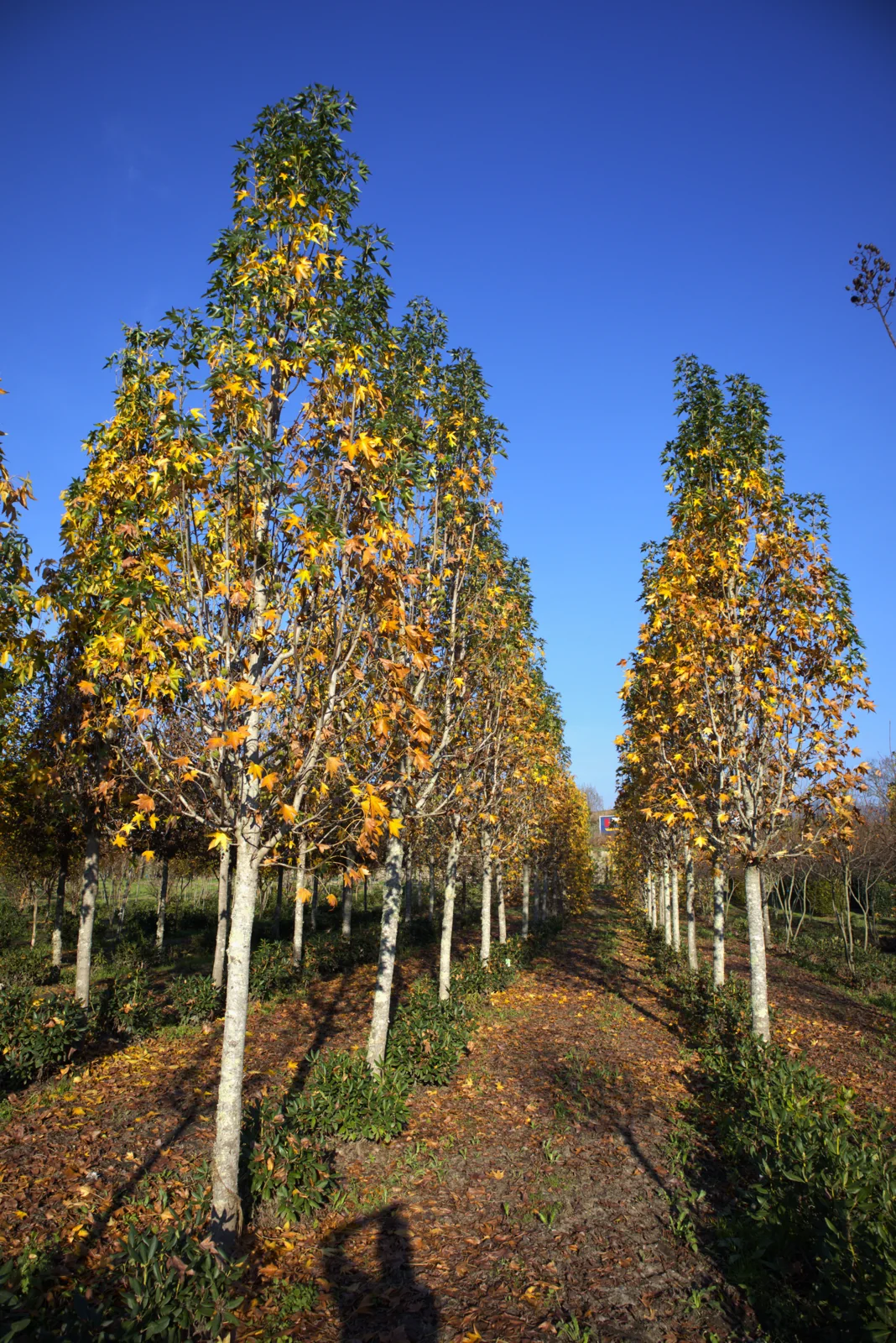
Uniform autumn fire for the warm Spanish garden
Sweet Gum ‘Paarl’ · Liquidambar styraciflua ‘Paarl’
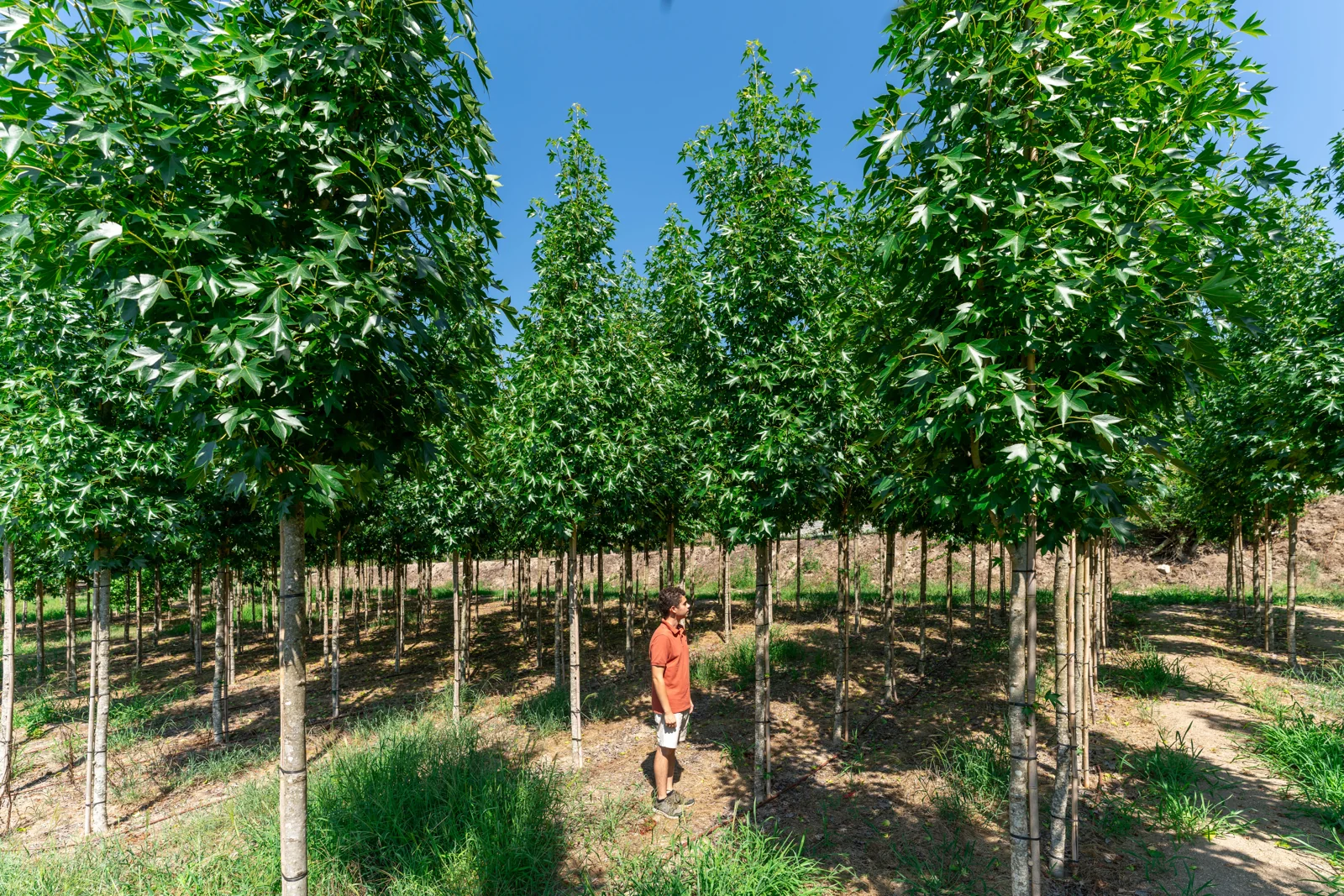
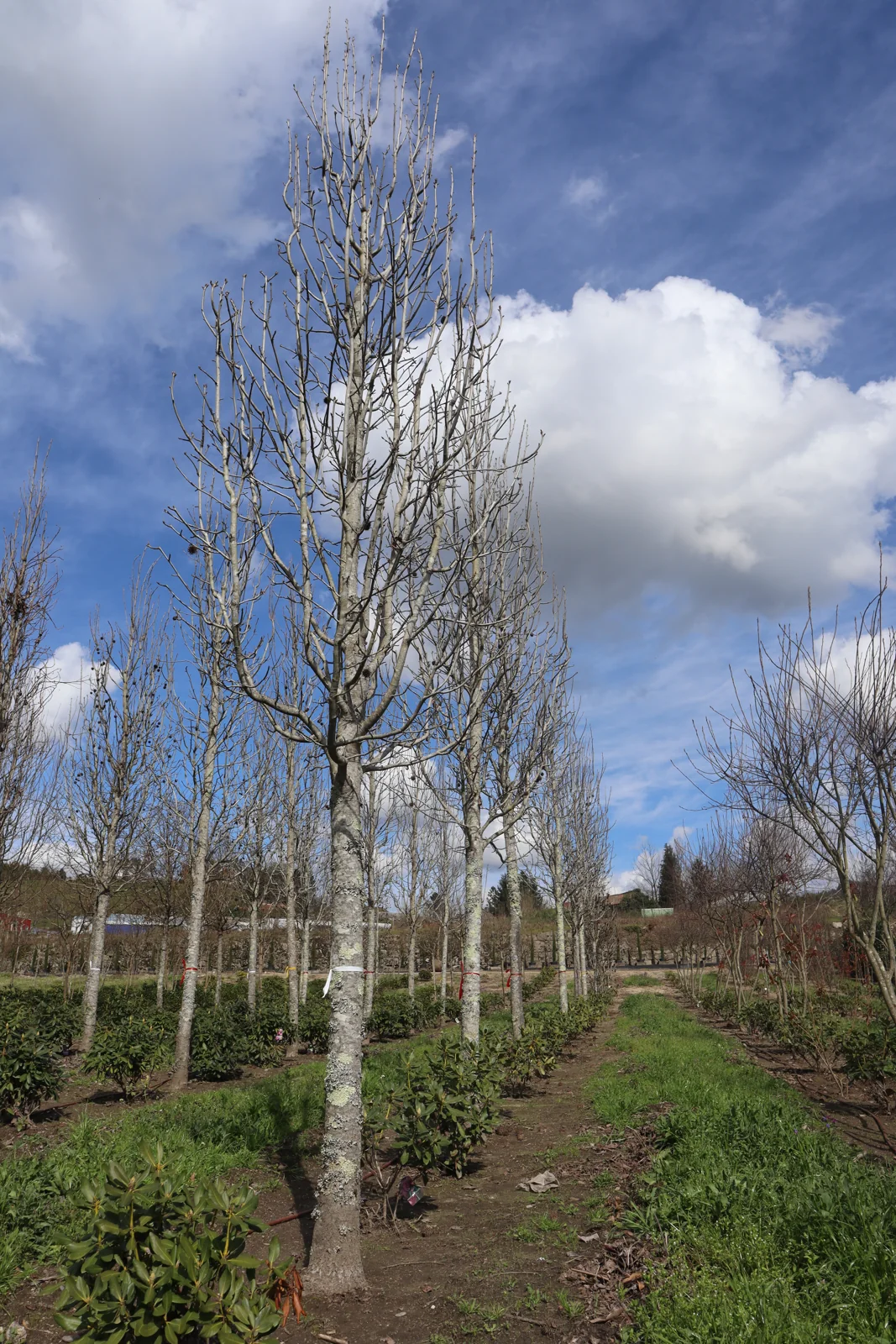
A compact-crowned sweetgum cultivar selected in South Africa for consistent autumn colour intensity, fitting alignment and park planting across the humid Atlantic northwest and temperate northern Spain, where cool autumns let the foliage display develop fully.
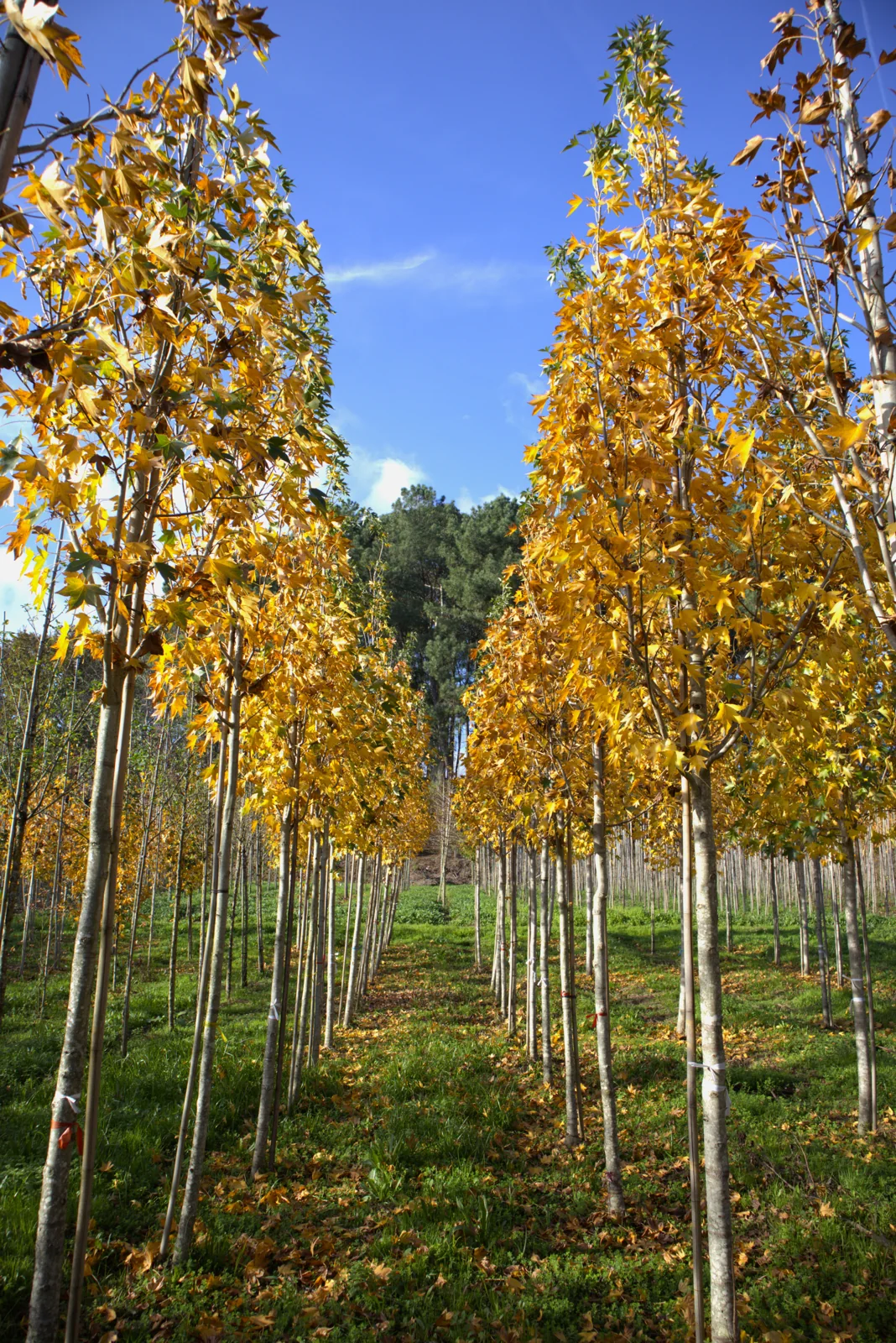
- Autumn colour is notably uniform, from scarlet through purple to deep orange
- Hardy to around minus 15 degrees Celsius across all main Spanish planting zones
- Moderate drought tolerance once established; self-sufficient after two to three seasons
Key Facts
About this Cultivar
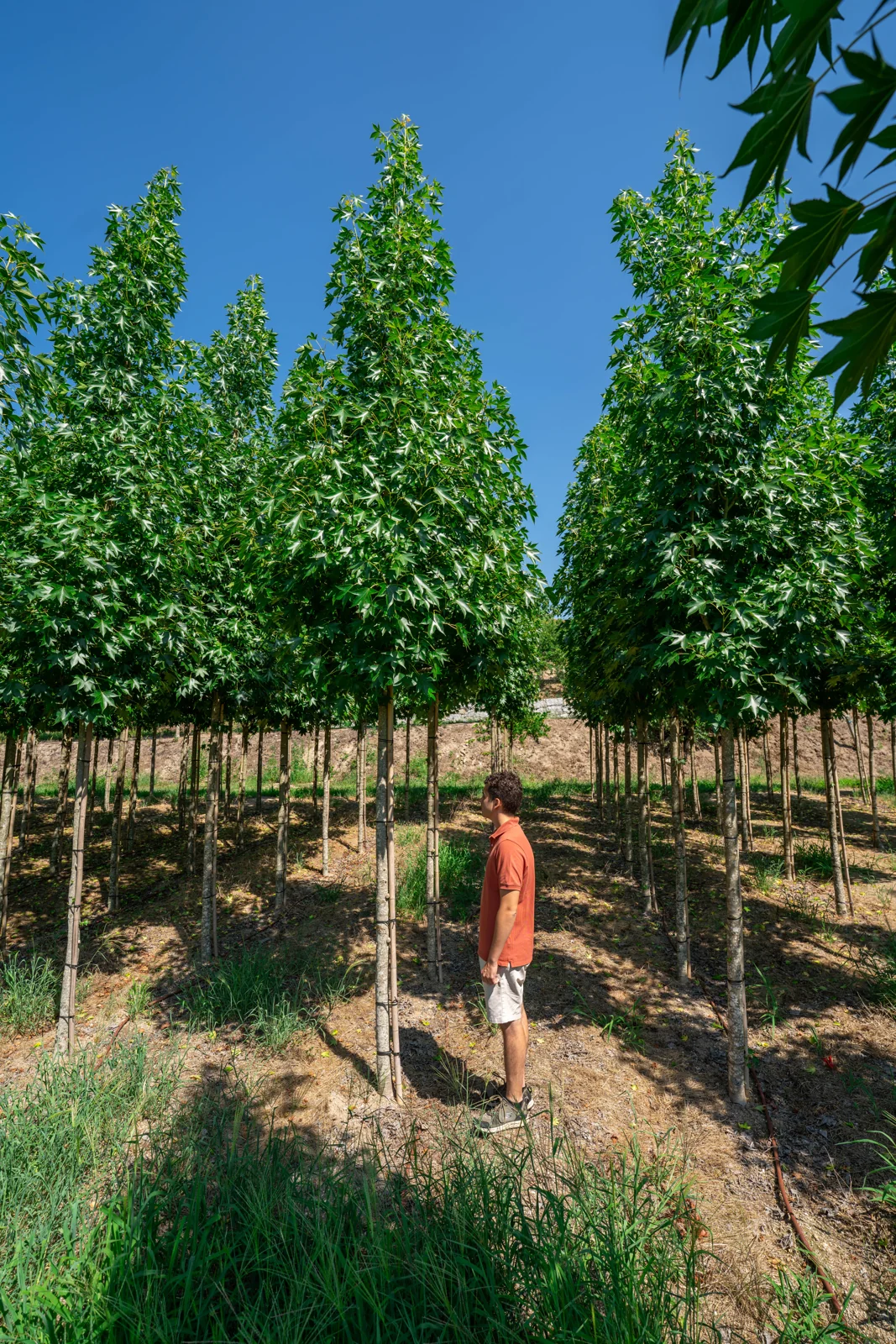
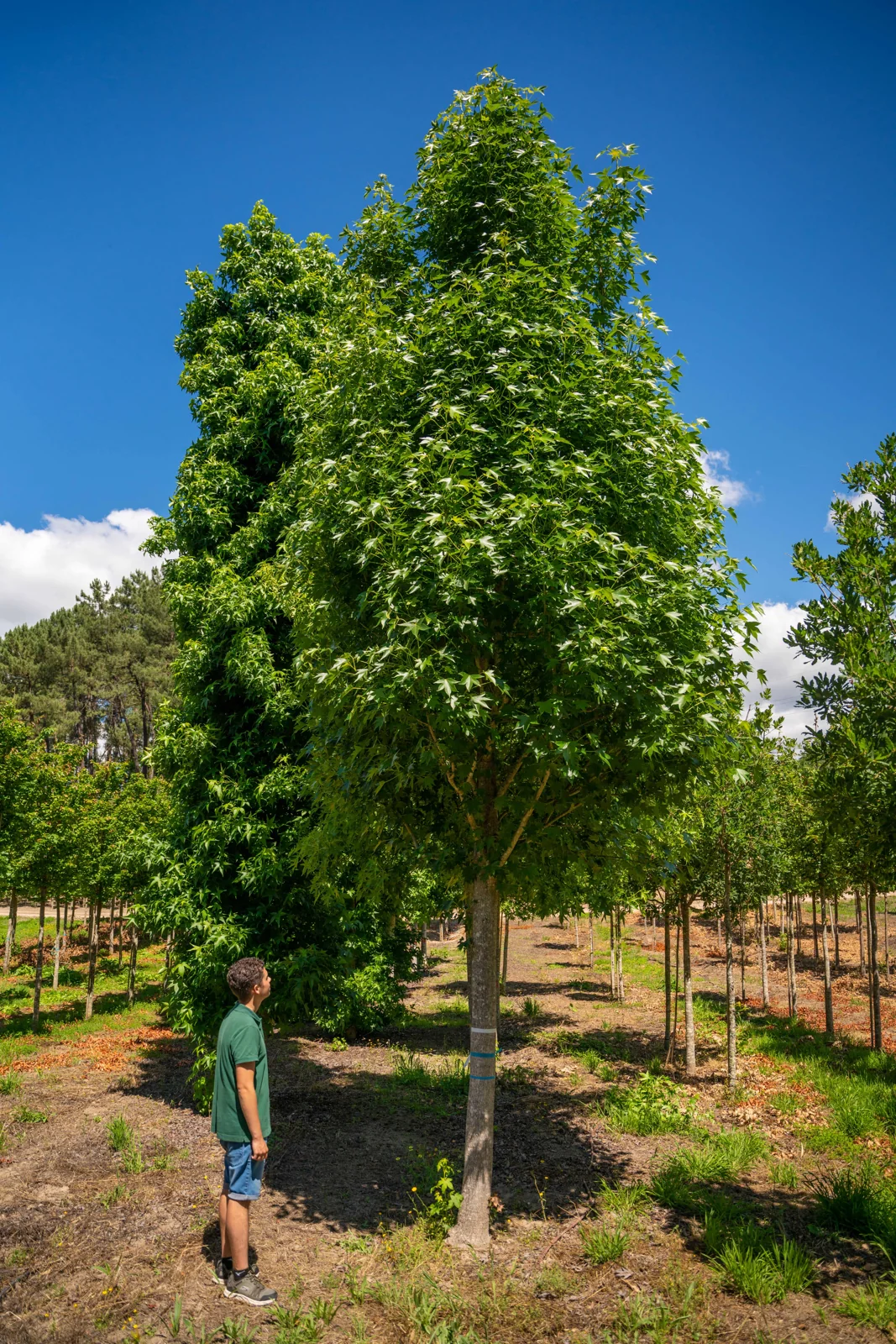
‘Paarl’ differs from the straight species in two respects that matter for specification. First, its autumn foliage transitions more uniformly, moving through scarlet, purple and deep orange with less of the patchwork variation typical of seed-grown Liquidambar. Second, its mature dimensions are more contained: 12 to 18 m in height with a spread of 6 to 8 m,…
Read more
Show less
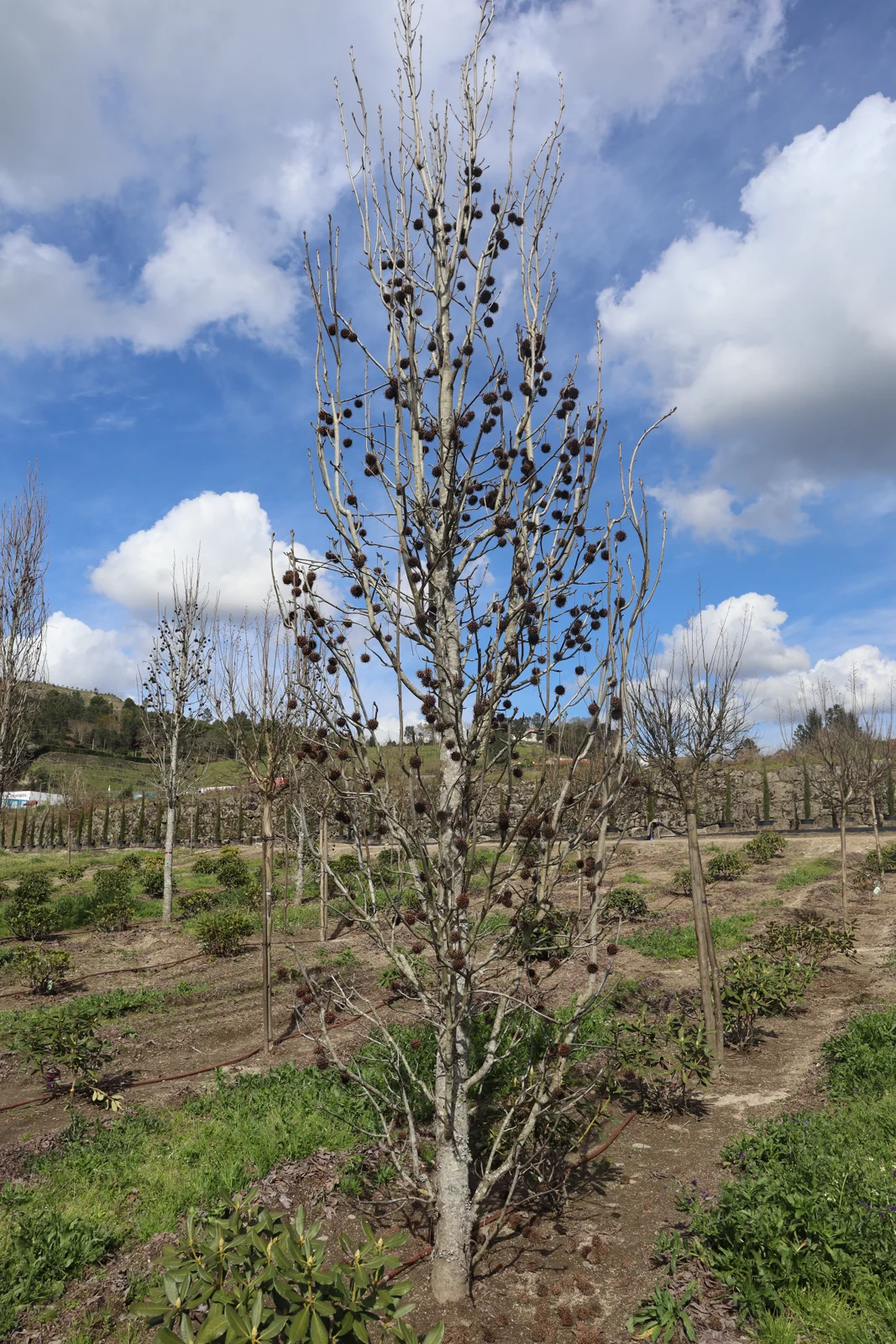
‘Paarl’ differs from the straight species in two respects that matter for specification. First, its autumn foliage transitions more uniformly, moving through scarlet, purple and deep orange with less of the patchwork variation typical of seed-grown Liquidambar. Second, its mature dimensions are more contained: 12 to 18 m in height with a spread of 6 to 8 m, producing a pyramidal to oval crown narrower than a seedling-origin tree. That tighter silhouette makes it a more predictable choice for formal alignments and structured urban plantings.
The species is native to the eastern seaboard of North America and tolerates summer heat well, but ‘Paarl’ delivers its strongest ornamental performance in zones with distinct cool autumns. In Spain, that means the Atlantic strip (the cornisa cantabrica) from Galicia through Asturias, Cantabria and the Basque Country, plus sheltered sites in the northern meseta interior around Burgos and Soria. In Mediterranean coastal zones or the semi-arid southeast, autumn colour development is unreliable because warm night temperatures in October and November delay pigment formation, and the dry heat of the Levante and Andalusia stresses a tree that prefers consistent soil moisture during the growing season. Hardy to roughly -29 degrees C, winter cold is not a limiting factor anywhere in Spain.
Water demand is moderate but real. Through the establishment phase, two to three summers of supplemental irrigation are needed to support root development. Once established, the tree performs well under the rainfall regime of the Atlantic northwest without irrigation, but on the drier meseta it will need periodic deep watering during summer drought episodes. The species shows moderate drought tolerance once rooted, yet prolonged soil moisture deficit reduces canopy density and suppresses autumn colour. Where municipal sequia decrees restrict landscape irrigation, this is a tree for sites with reliable natural moisture or a guaranteed water allocation in the landscape project submission (proyecto de ajardinamiento).
Soil tolerance is broad within limits. ‘Paarl’ accepts acidic Atlantic soils, clay, sandy substrates and moderately alkaline conditions. On strongly calcareous or gypsiferous soils common in the Ebro valley and parts of Castilla, iron chlorosis can develop, visible as interveinal yellowing on new growth. Where soil pH exceeds 7.5, a soil amendment programme or an alternative species should be considered. The root system tolerates pavement and compacted urban substrates, and the spiny globose fruits that persist into winter are a maintenance consideration in high-footfall areas. Salt tolerance is low, so coastal sites exposed to direct spray are unsuitable. The species has low flammability, which is a useful attribute for projects in the wildland-urban interface (interfaz urbano-forestal) of northern Spain.
Advice on this species
Want to know more about Liquidambar styraciflua 'Paarl'?
Tell us about your project and we'll advise you on this species — where it thrives, which size makes sense, and what to expect once planted.
- Produção própria
- Exemplares adultos
- Resposta em 1–2 dias
Sem compromisso · orçamento personalizado